⅓ Guinea - George III Pattern (1776)
| Country | United Kingdom |
| Year | 1776 |
| Denomination | ⅓ Guinea |
| Face value | 35p |
| Mint | Royal Mint · Llantrisant |
| Circulation | Non-circulating |
| Demonetised | Yes |
| Composition | Gold (.9167) (917/1000 fine) |
| Shape | Round |
| Edge | Plain |
| Orientation | Coin alignment ↑↓ |
| Obv. artist | Richard Yeo |
| Rev. artist | Richard Yeo |
| Grade scale | UK (EF/UNC) |
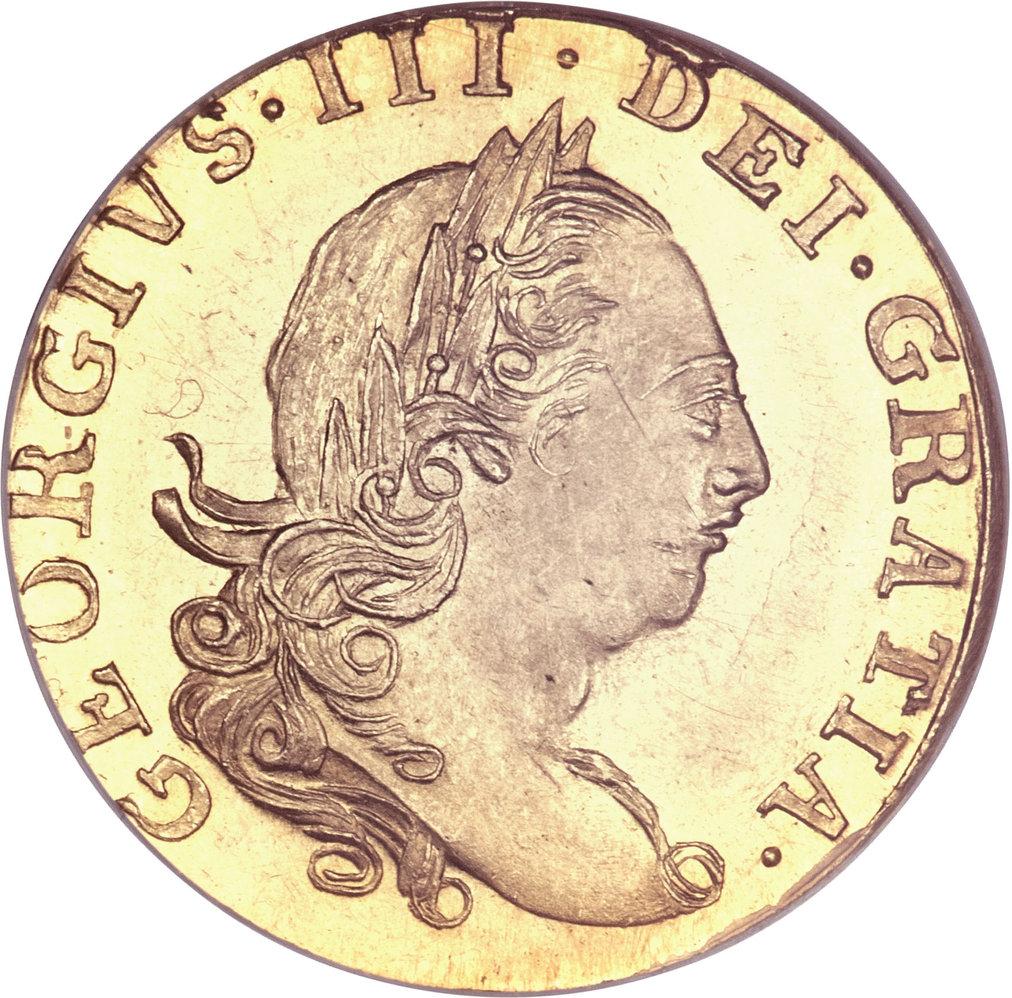
Bust of George III right
GEORGIVS. III. DEI. GRATIA.
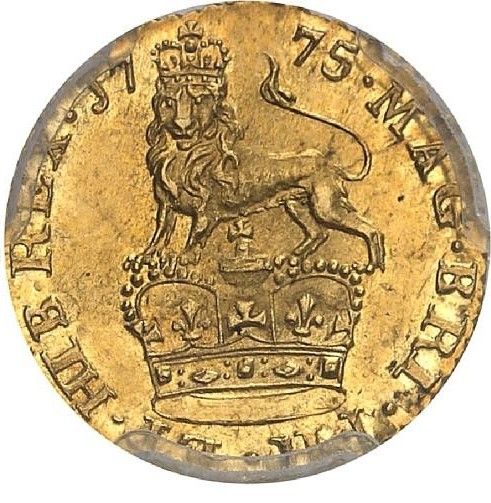
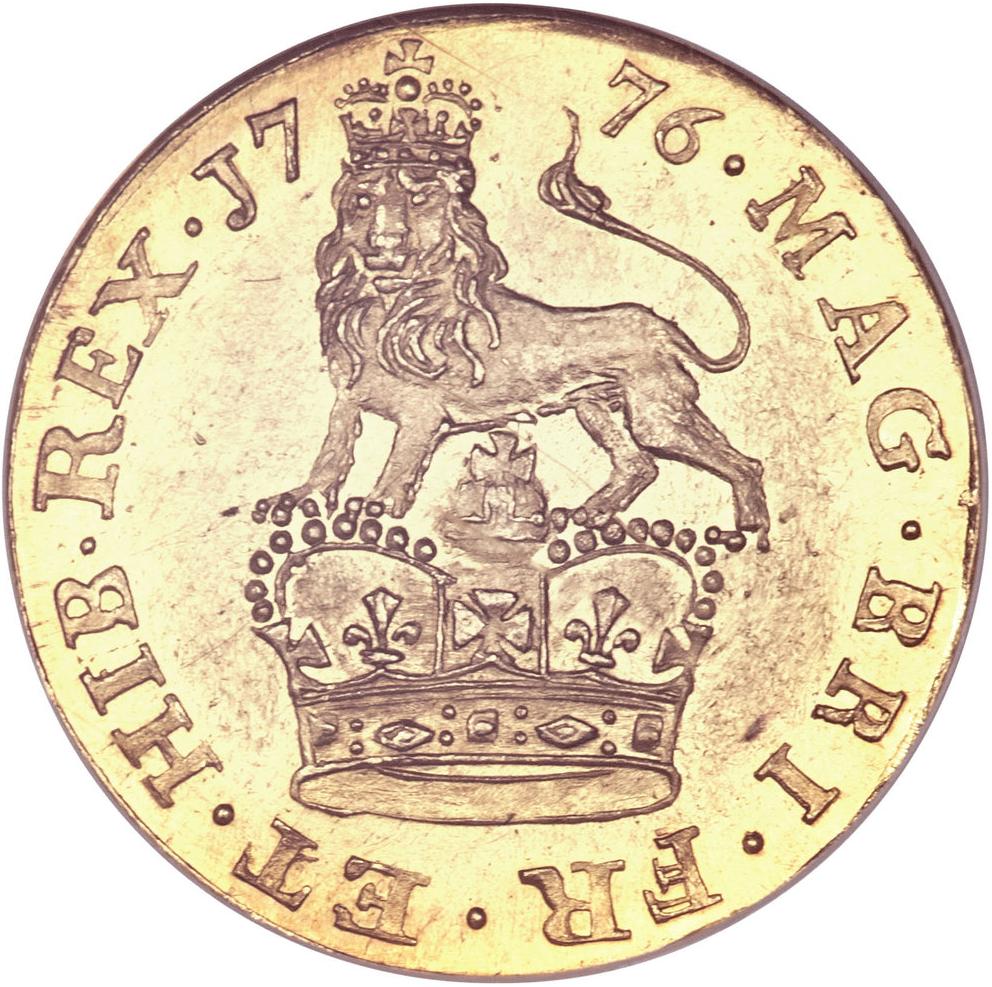
A lion on a crown.This is an automatic translation. The original text is:Un lion sur une couronne.
MAG. BRI. FR. ET. HIB. REX.
Find this on eBay
AffiliateAbout the 1776 Third Guinea - George III Pattern
The 1776 Third Guinea - George III Pattern is a collector ⅓ guinea coin, struck in 91.67% gold. Reverse design: A lion on a crown.This is an automatic translation. The original text is:Un lion sur une couronne.
It is no longer legal tender, so its value is to collectors only.
Common questions
How much is the 1776 Third Guinea - George III Pattern worth?
No verified sale of the 1776 Third Guinea - George III Pattern has been logged on MyCoinage yet.
Who made the 1776 pattern third guinea?
Richard Yeo, according to Baldwin's and the Ponterio catalogue quoted by CoinVarieties. Yeo was chief assistant to the Chief Engraver John Sigismund Tanner, did much of the Mint's die work in Tanner's last years, and succeeded him.
Is the 1776 third guinea a currency coin?
No. It is a pattern. The seven shilling piece was introduced only by a proclamation of 29 November 1797, and CoinVarieties notes that a different bust was used when production began. The 1776 piece has a plain edge, unlike the grained edge of issued third guineas.
How many 1776 pattern third guineas exist?
No number struck is recorded. Baldwin's quotes a rarity of R3 in Wilson and Rasmussen, as does the Ponterio catalogue. The Royal Mint Museum holds one example, which appears in the Mint's 1874 and 1906 collection catalogues and the Banks list.
How is the 1776 pattern different from the 1775 pattern?
Both have a crowned lion on a crown. Baldwin's describes the 1776 lion as passant over a larger, ornate crown with its tail rising to the left of the date, and the edge as plain; the 1775 pattern sold by Sovereign Rarities has a grained edge.
History and design
Britain did without a seven shilling gold coin until 1797, when, as Wikipedia records, the third guinea was introduced by proclamation to help the Bank of England pay its dividends at a time of gold shortage. The idea had been tried more than twenty years before. Patterns dated 1775 and 1776 show a quite different design from the coin that was eventually issued.
The 1776 pattern was engraved by Richard Yeo. Wikipedia's account of John Sigismund Tanner, Chief Engraver from 1741 to 1775, notes that in his last years Tanner took little part in die work, which was done by his chief assistant and successor, Yeo. Why the third guinea was not adopted in the 1770s is not recorded.
The obverse is a laureate head of George III facing right, with curls extending below the truncation, and the legend GEORGIVS. III. DEI. GRATIA. The reverse shows a crowned lion passant standing over a larger, ornate crown, with its tail rising to the left of the date and the legend MAG. BRI. FR. ET. HIB. REX., King of Great Britain, France and Ireland.
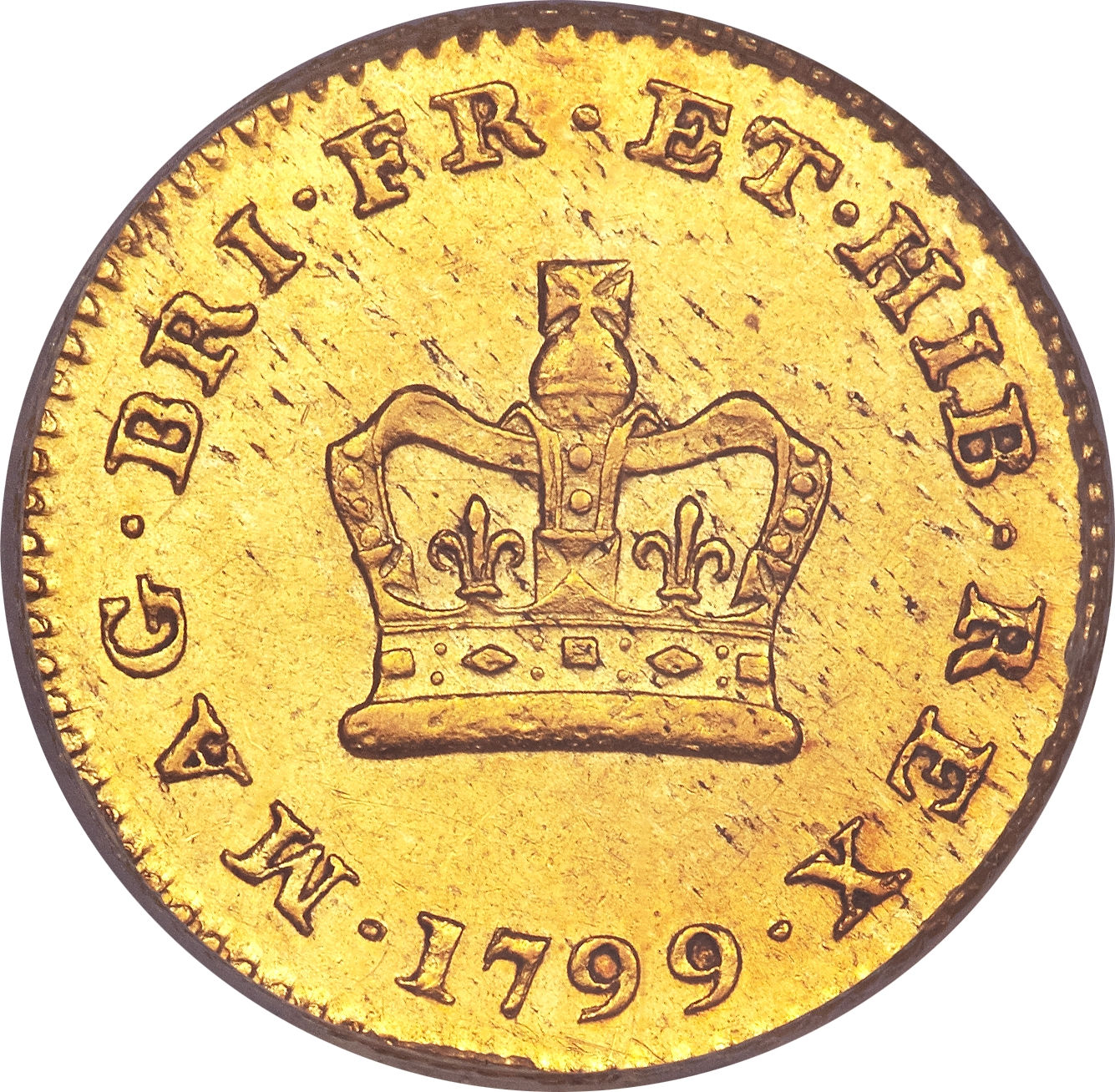
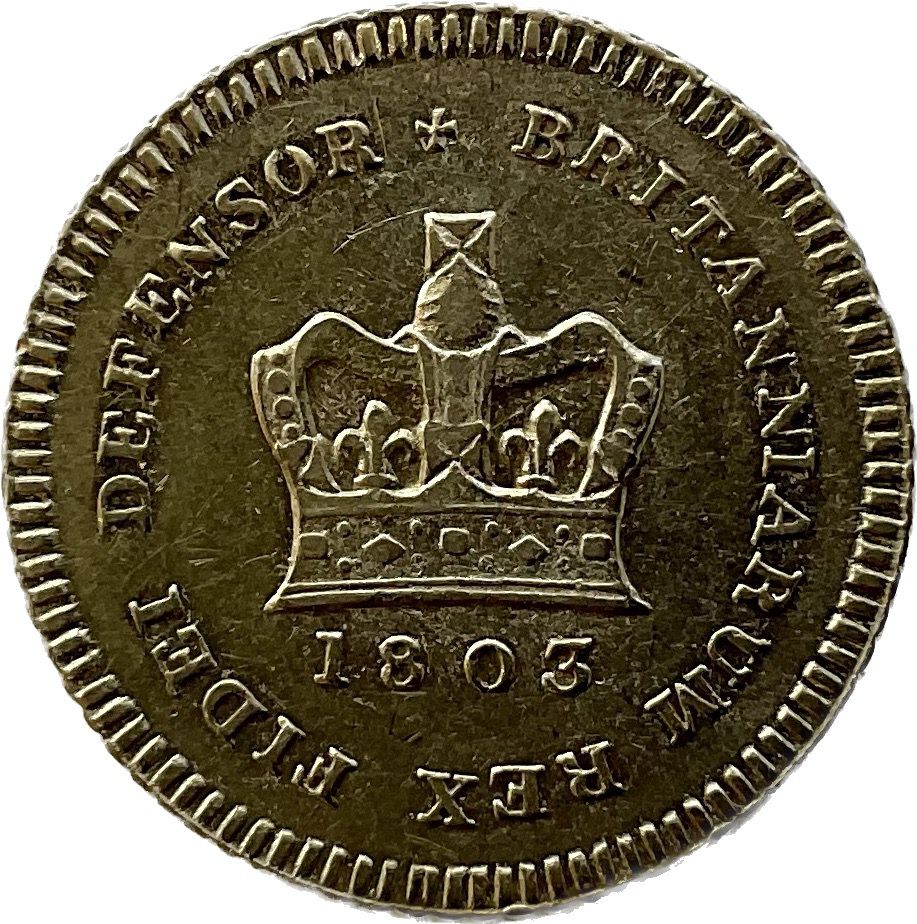
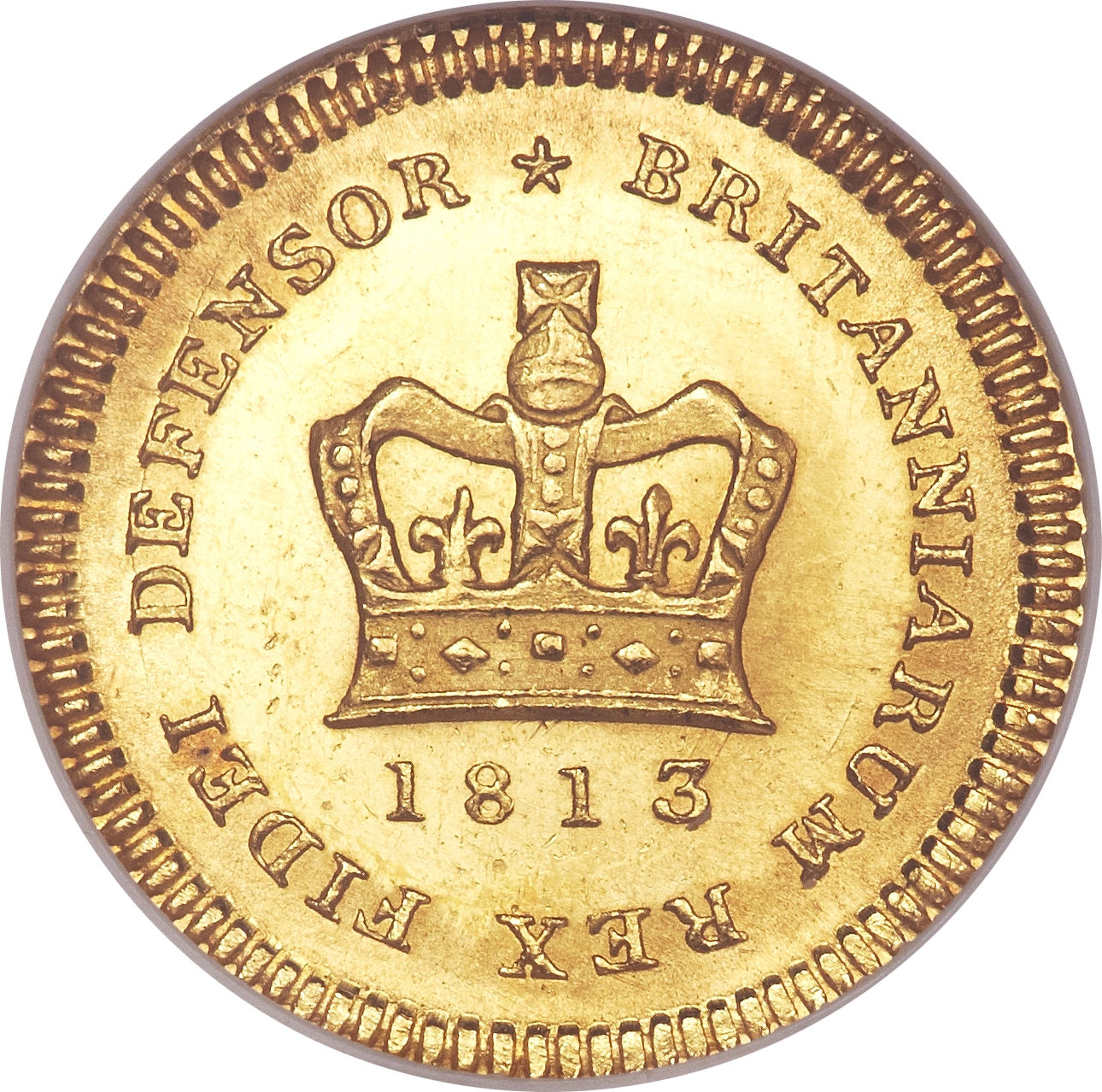
The edge is plain and the dies are aligned with both sides upright. The Royal Mint Museum's example weighs 2.65 g, a little under the 2.8 g of the issued coin. When the third guinea went into production in 1797, CoinVarieties notes, a different bust was used, and the reverse became a crown alone.
Collecting notes
No number struck is recorded. The Royal Mint Museum holds an example, catalogued in the Mint's collection lists of 1874 and 1906 and in the Banks list. Baldwin's offered a piece graded Proof 62 by PCGS, and a piece graded PF62 by NGC was sold by Ponterio in Chicago in 2013, catalogued as a proof though, in the cataloguer's words, some diagnostics fit and some do not.
The plain edge separates this pattern from the issued third guineas, which have grained edges, as on the Royal Mint Museum's 1798 coin. Also check the date: the [1775 pattern](/coin/⅓-guinea-george-iii-pattern-1775) has a similar lion and crown but a grained edge.
Sources
The history, design, varieties and collecting notes on this page are drawn from these sources. Prices come from recorded sales, not from them.
- George III pattern third-guinea, 1776 (RMM 969), The Royal Mint Museum, via Museum Data Service (read 12 Oct 2026)
- 1776 George III Proof Third Guinea WR137, Baldwin's (read 12 Oct 2026)
- Great Britain 1776 1/3 guinea, CoinVarieties (read 12 Oct 2026)
- Third guinea, Wikipedia (read 12 Oct 2026)
- John Sigismund Tanner, Wikipedia (read 12 Oct 2026)
- George III 1775 pattern Third-Guinea, SP58, rarest initial date, Sovereign Rarities (read 12 Oct 2026)
- George III third-guinea, 1798 (RMM 970), The Royal Mint Museum, via Museum Data Service (read 12 Oct 2026)