Rarely sells: 1 verified sales in the last 12 months.
1 Guinea - George III Pattern (1774)
| Country | United Kingdom |
| Year | 1774 |
| Denomination | 1 Guinea |
| Face value | £1.05 |
| Mint | Royal Mint · Llantrisant |
| Circulation | Non-circulating |
| Demonetised | Yes |
| Composition | Gold (.9167) (917/1000 fine) |
| Shape | Round |
| Edge | Plain |
| Grade scale | UK (EF/UNC) |
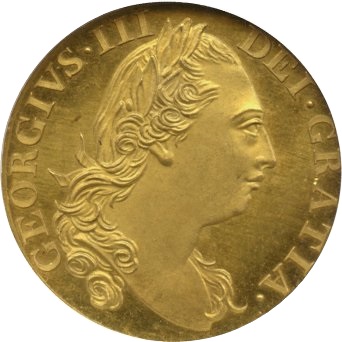
Fourth laureate portrait of King George III right, legend around.
GEORGIVS III DEI GRATIA
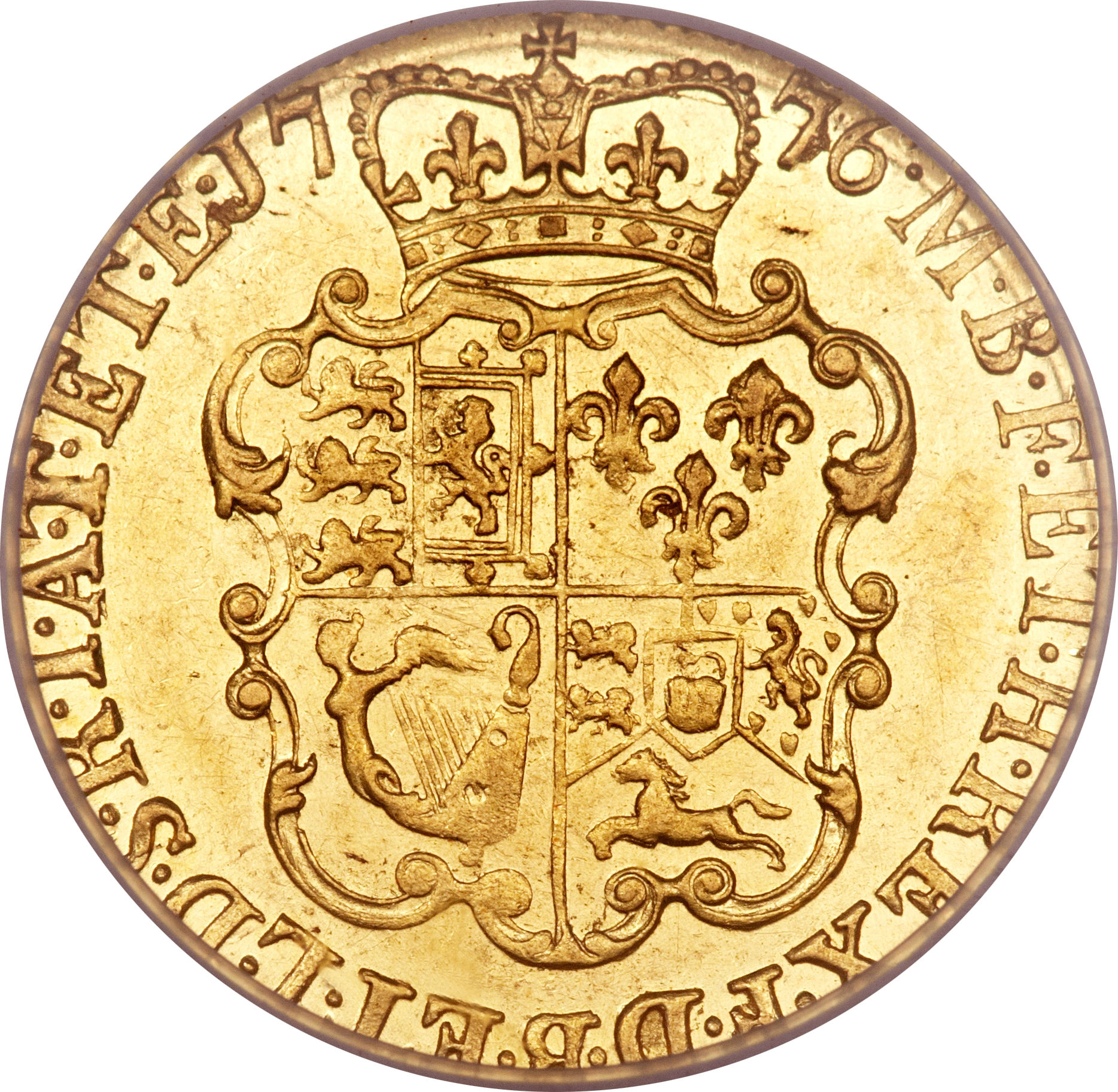
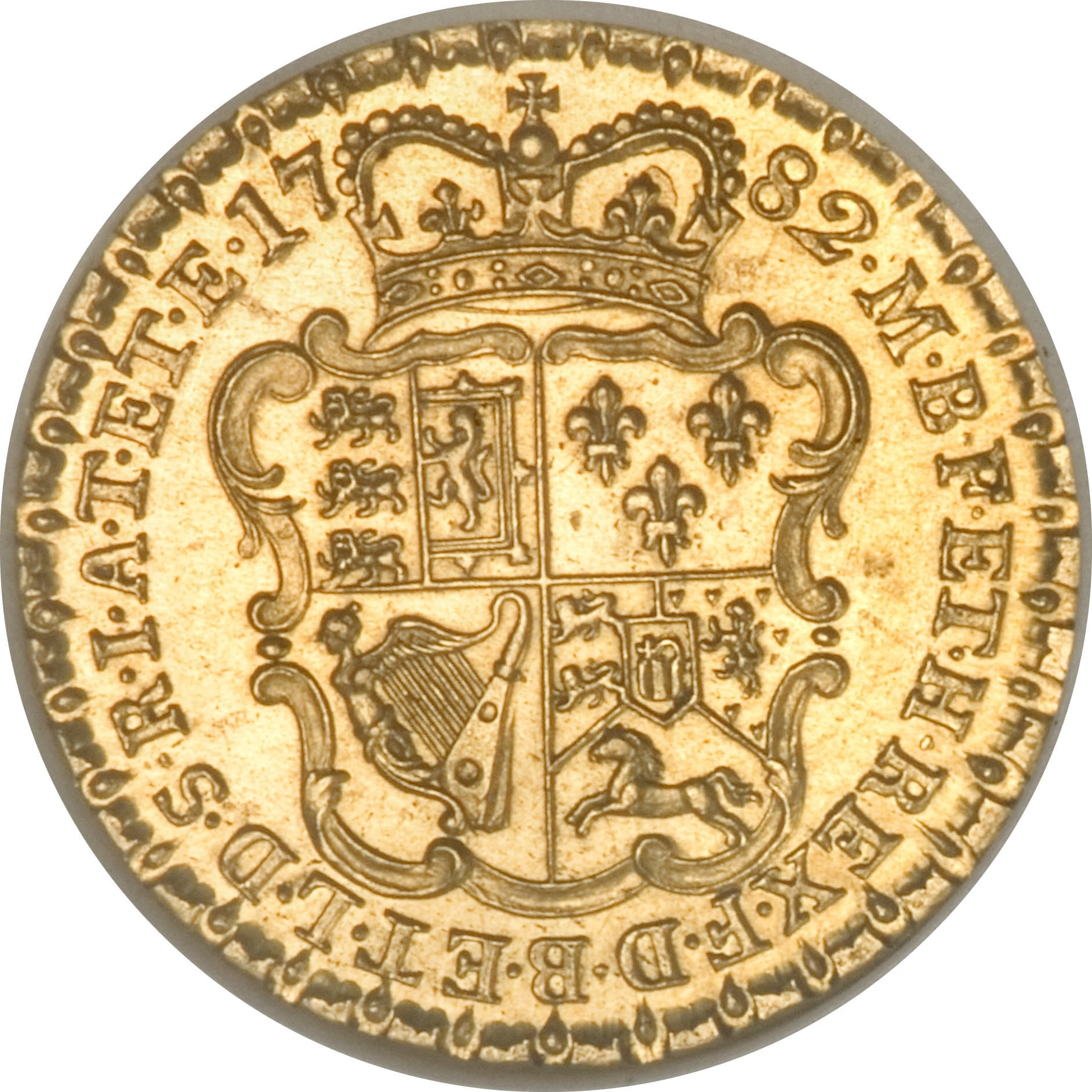
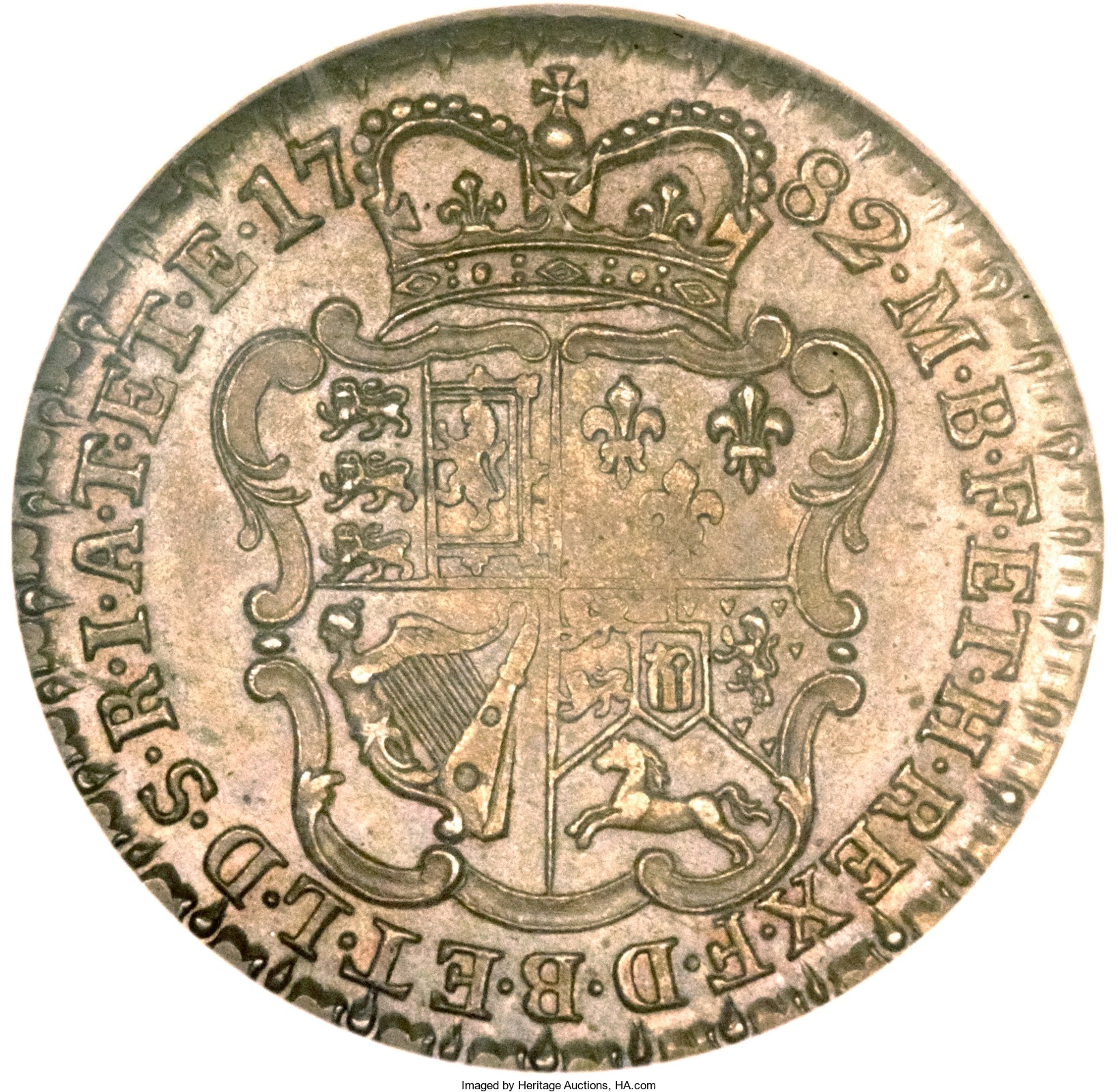
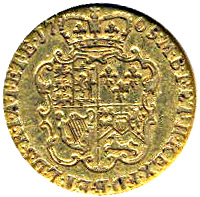
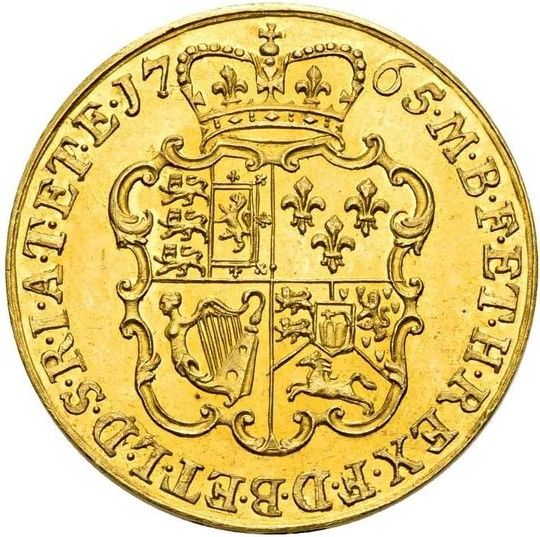
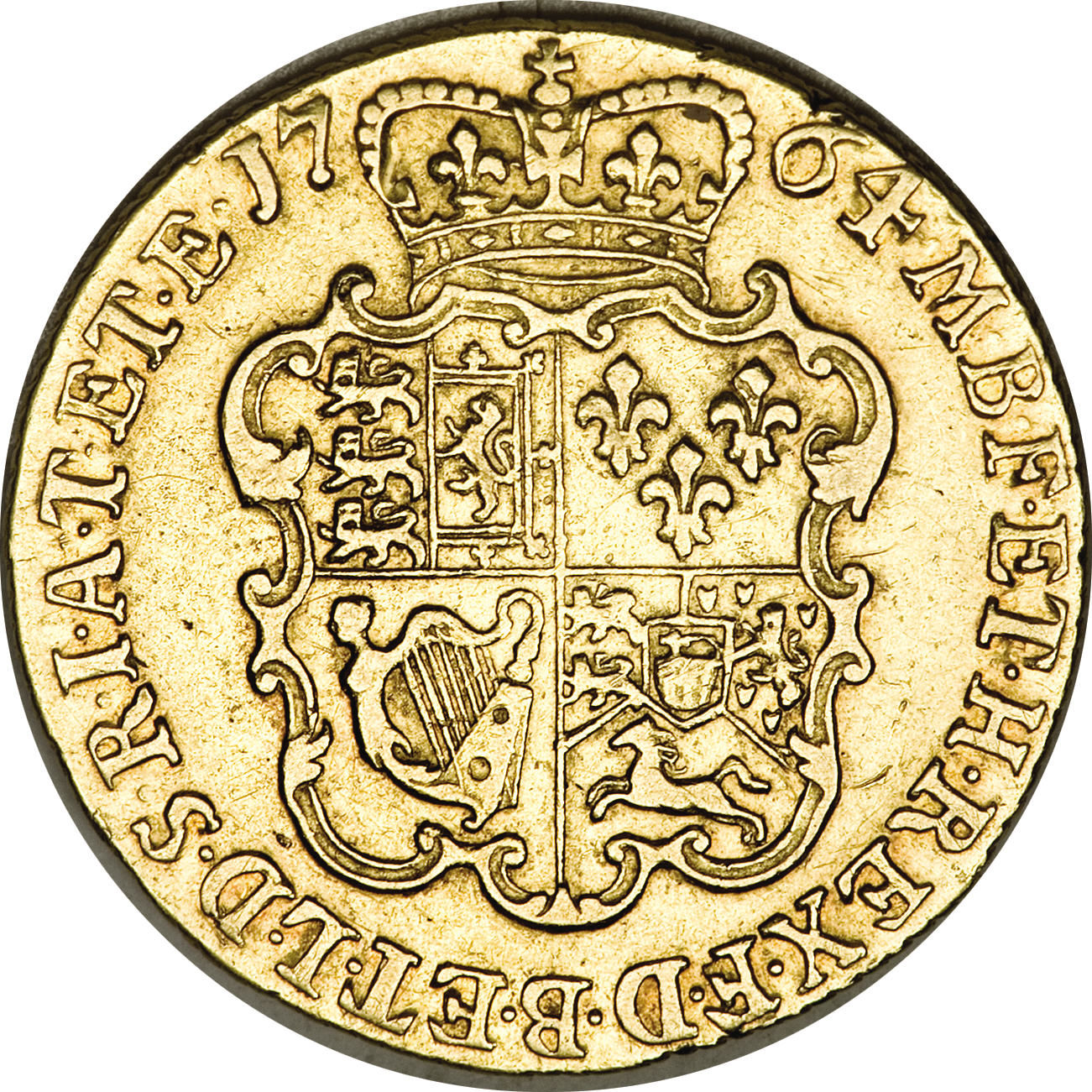
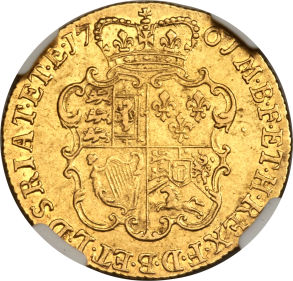
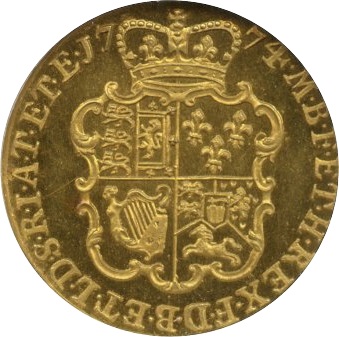
Crowned, quartered and garnished shield of arms with divided date above and legend around.
M B F ET H REX F D B ET L D S R I A T ET E
1 Guinea - George III Pattern market value
Find this on eBay
Affiliate1 Guinea - George III Pattern price history
Daily limit reached1 Guinea - George III Pattern value by grade
Realised auction prices · ⭐ Pro Expand rows for individual sale records| Grade | Latest | Median | 30d Δ | All-time range | Sales (1yr) | Total sales | Last sale | |
|---|---|---|---|---|---|---|---|---|
| VF | £1,118.86 🔒 | £1,118.86 (1) | – | £1,118.86 – £1,118.86 | 1 | 1 | 12-04-2026 | |
|
Loading…
|
||||||||
About the 1774 1 Guinea - George III Pattern
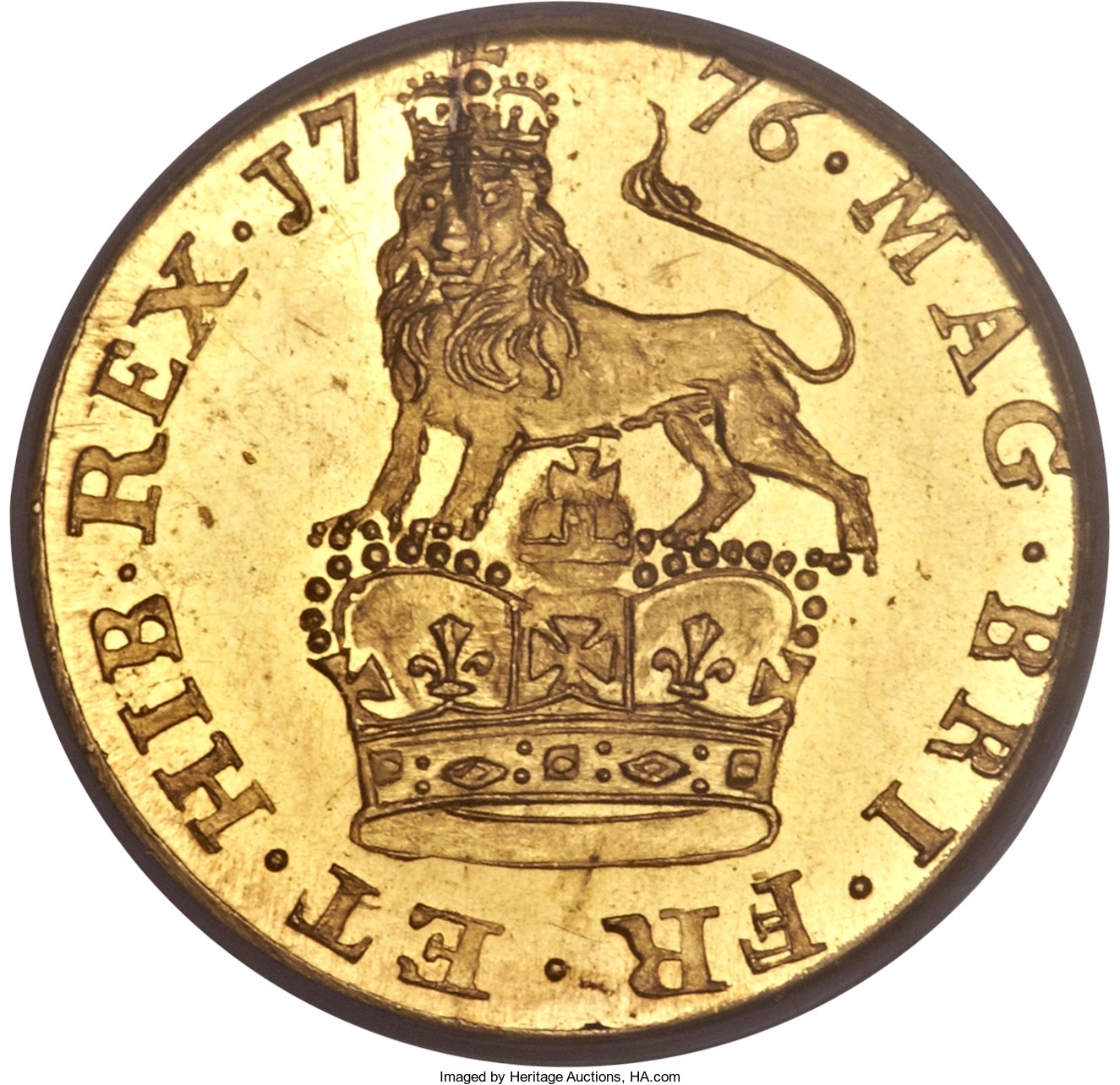
The 1774 1 Guinea - George III Pattern is a collector 1 guinea coin, struck in 91.67% gold. Reverse design: Crowned, quartered and garnished shield of arms with divided date above and legend around.
It is no longer legal tender, so its value is to collectors only.
Common questions
How much is the 1774 1 Guinea - George III Pattern worth?
The 1774 1 Guinea - George III Pattern has a price in one grade on MyCoinage so far: £1,119 in VF, the median of its verified sales.
What is the 1774 proof guinea?
A proof striking of George III's guinea with the new fourth portrait, made in 1774 with a plain edge. It shares its design with the currency guineas of 1774 to 1786 but was made to a higher finish for presentation or record rather than for circulation.
Where can you see a 1774 proof guinea?
The Royal Mint Museum holds one (RMM 943, 8.21 g, plain edge), listed in its 1874 and 1906 catalogues. The Fitzwilliam Museum in Cambridge has another, bequeathed by James Stewart Henderson in 1933, which weighs 8.26 g and measures 24 mm.
How many 1774 proof guineas were struck?
No number is recorded. The two museum examples are documented, and the type is catalogued by Wilson and Rasmussen as number 95, but no published census of surviving pieces could be checked.
How do you tell the proof from an ordinary 1774 guinea?
Look at the edge and the surfaces. The Royal Mint Museum's proof has a plain edge, as Hocking also records, so the edge and the mirrored proof finish are the tests. Weight will not separate them, as the proofs weigh 8.21 and 8.26 g.
History and design
The fourth portrait of George III appeared on the guinea in 1774, the year an Act of Parliament set legal lower weight limits for guineas and the Mint began recoining large quantities of light gold. A proof of the new guinea was struck in that first year, with a plain edge, as both Hocking and the Royal Mint Museum's record note. Hocking's 1906 catalogue lists it as No. 1778 among the proofs of the reign, next to a proof half guinea of 1775 with the same head.
Two examples are in public collections. The Royal Mint Museum's (RMM 943, Wilson and Rasmussen 95) weighs 8.21 g and was already in the Mint's 1874 catalogue. The Fitzwilliam Museum's, bequeathed by James Stewart Henderson in 1933, weighs 8.26 g and measures 24 mm. Both are struck with the two sides the same way up. No number struck is recorded.
The obverse carries the more mature laureate head that the Royal Mint Museum credits to Thomas and Lewis Pingo; the Metropolitan Museum credits a 1777 guinea with this head to Thomas Pingo, then Assistant Engraver. Hocking describes the bust as having long flowing hair behind, curling under the truncation, with a love-lock over the left shoulder, and gives the legends as those of the 1761 pieces: GEORGIVS III DEI GRATIA, with the crowned and garnished shield of arms and M B F ET H REX F D B ET L D S R I A T ET E on the reverse, the date split by the crown.
Collecting notes
The plain edge is the key test, together with mirrored proof fields. The proof otherwise matches the fourth portrait guinea, which CoinVarieties notes is not a rare date in 1774, so a proof claim needs to rest on the edge and finish rather than the date. A matching proof half guinea dated 1775 is also in the Royal Mint Museum.
Sources
The history, design, varieties and collecting notes on this page are drawn from these sources. Prices come from recorded sales, not from them.
- George III proof guinea, 1774 (RMM 943), The Royal Mint Museum, via Museum Data Service (read 12 Oct 2026)
- Catalogue of the Coins, Tokens, Medals, Dies and Seals in the Museum of the Royal Mint, Vol. I Part I (Hocking, 1906), page 172, proofs of George III, Royal Mint Museum library (read 12 Oct 2026)
- Proof Guinea, 1774 (CM.5.1626-1933), Fitzwilliam Museum, via Museum Data Service (read 12 Oct 2026)
- Great Britain 1774 guinea, CoinVarieties (read 12 Oct 2026)
- George III, Royal Mint Museum (read 12 Oct 2026)
- George III guinea, 1777 (2003.406.9), The Metropolitan Museum of Art (read 12 Oct 2026)
- Guinea (coin), Wikipedia (read 12 Oct 2026)
More 1 Guinea coins from nearby years