1 Guinea - George III Pattern (1782)
| Country | United Kingdom |
| Year | 1782 |
| Denomination | 1 Guinea |
| Face value | £1.05 |
| Mint | Royal Mint · Llantrisant |
| Circulation | Non-circulating |
| Demonetised | Yes |
| Composition | Copper |
| Shape | Round |
| Grade scale | UK (EF/UNC) |
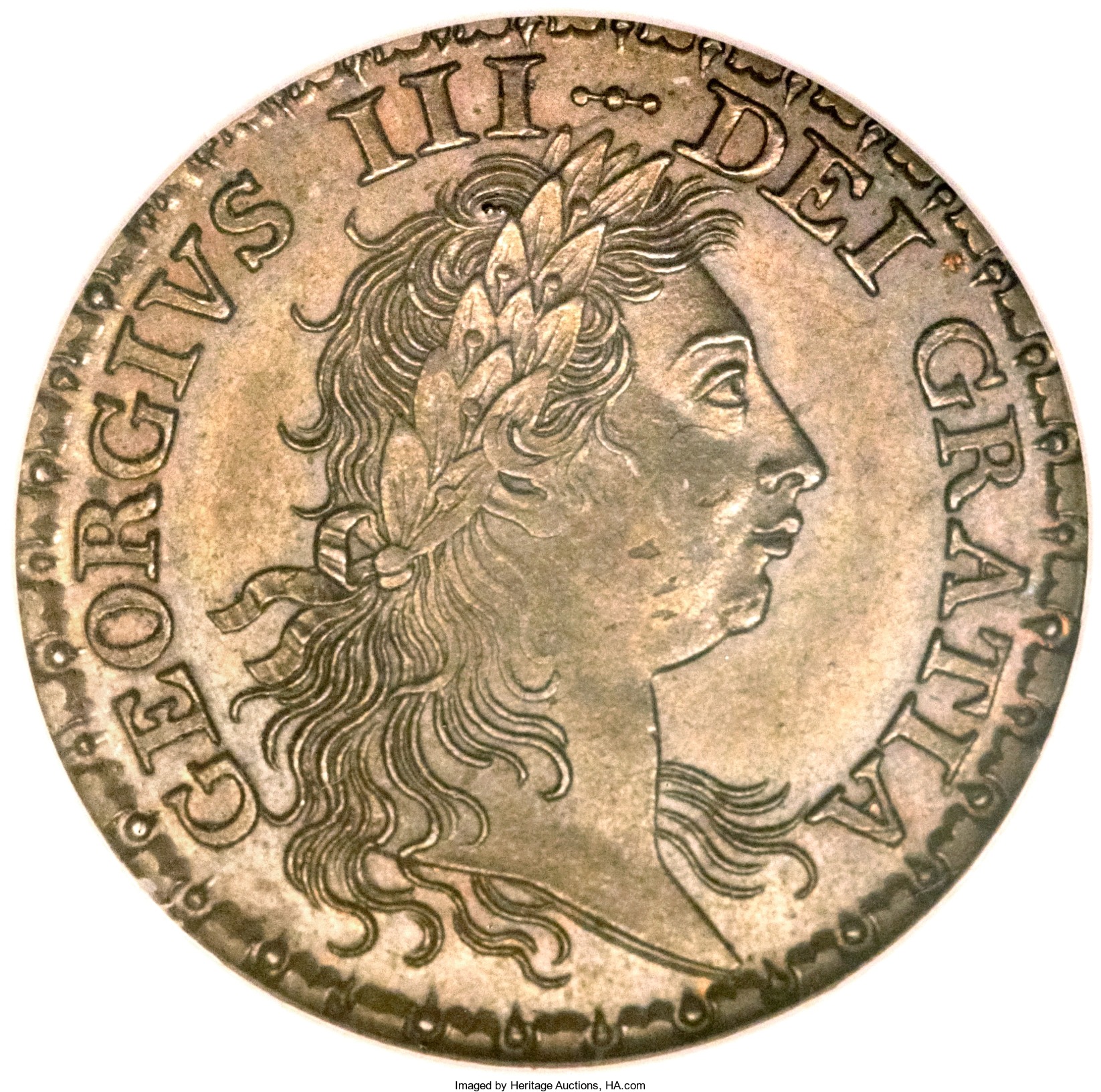
Laureate portrait of King George III right, legend around.
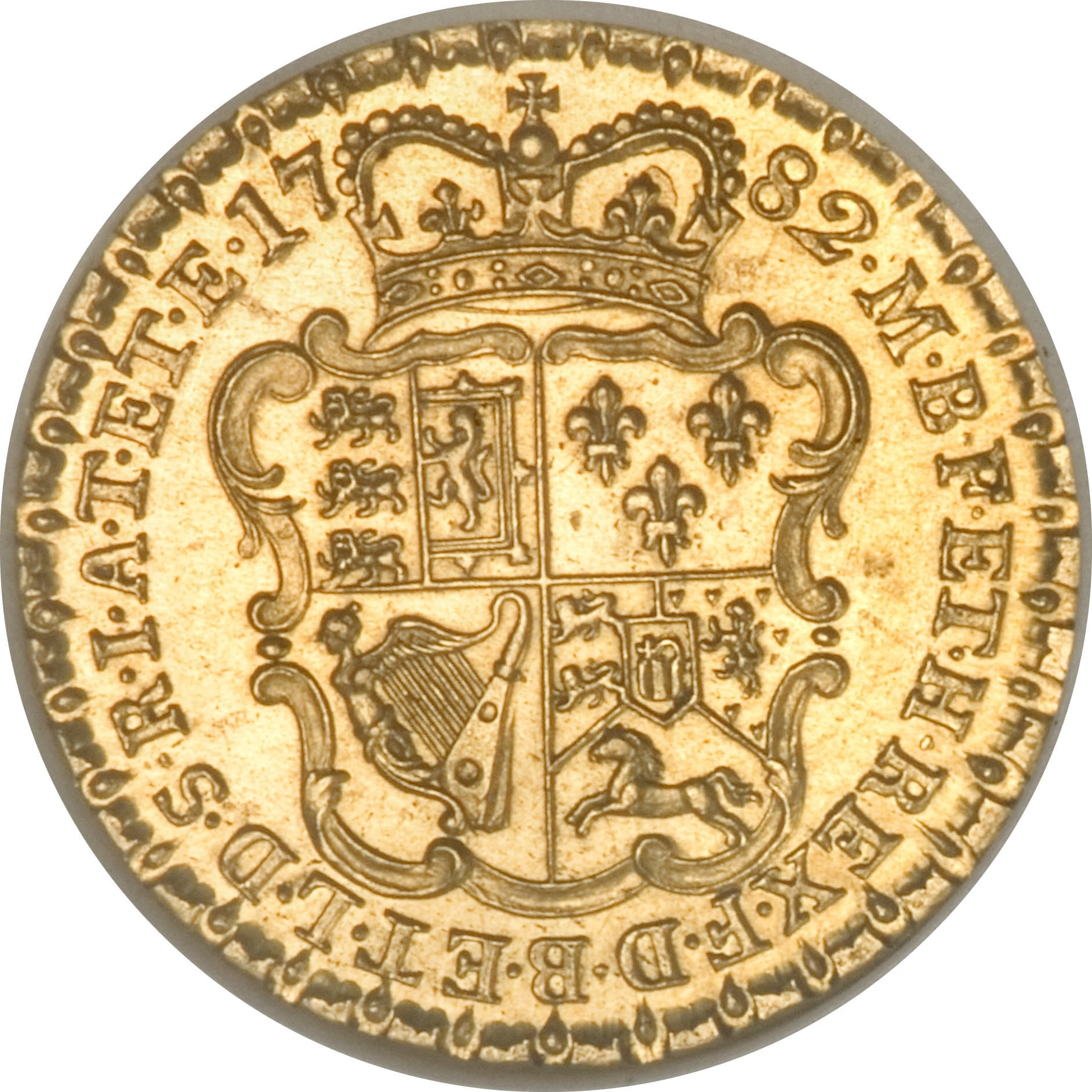
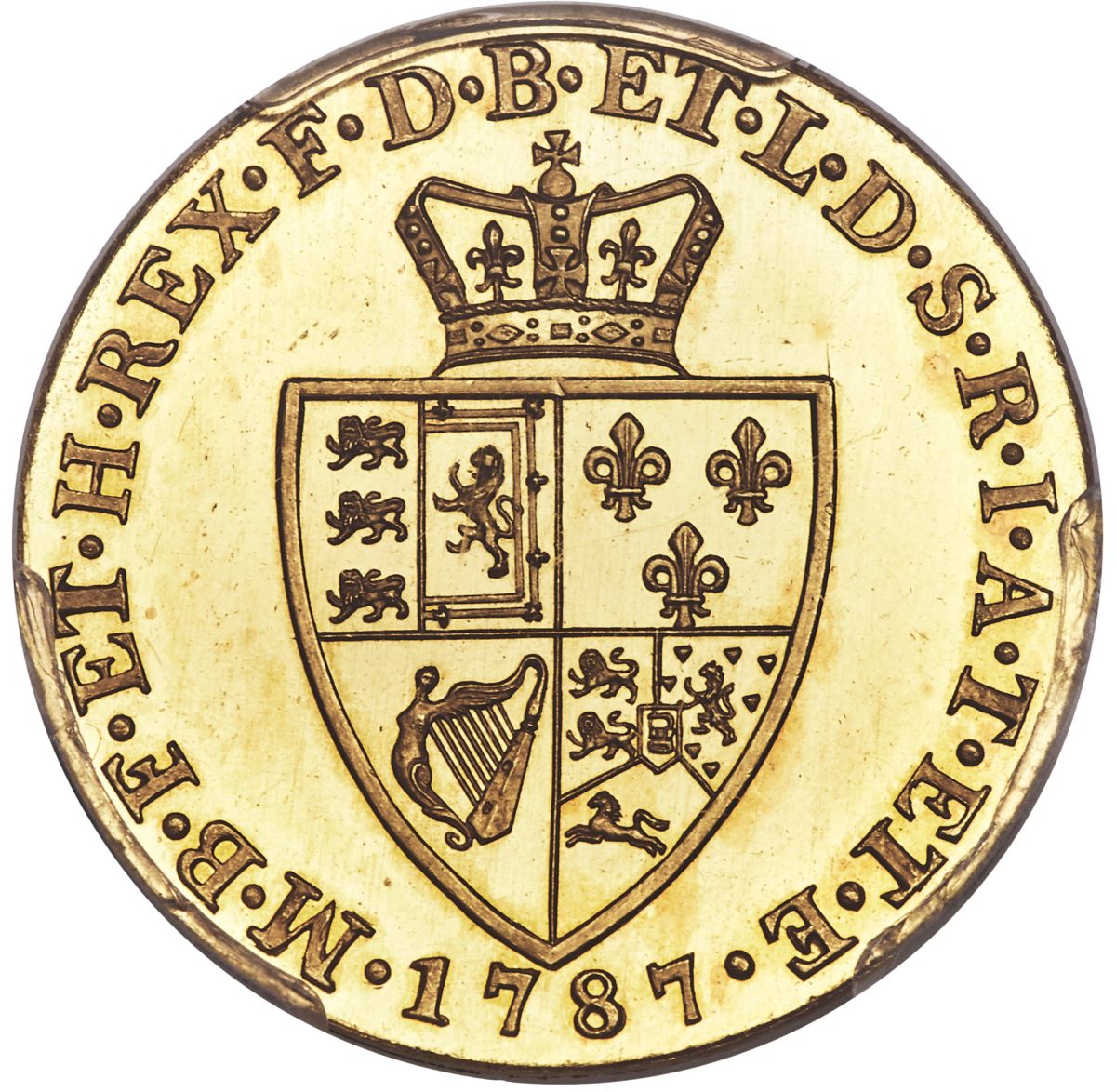
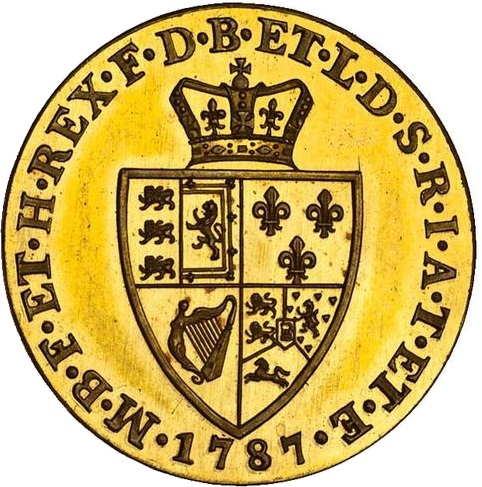
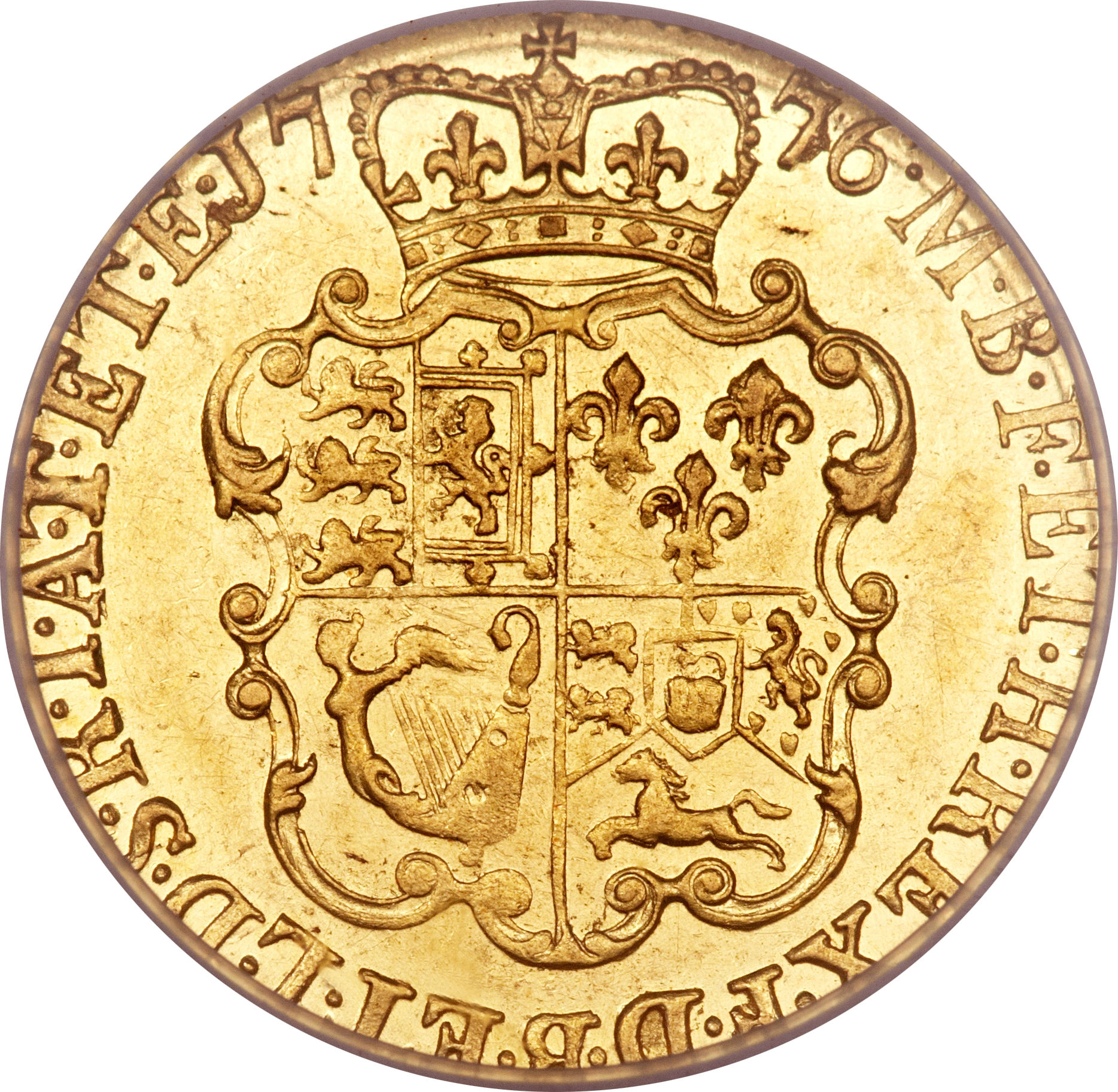
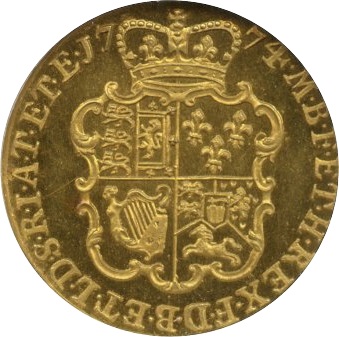
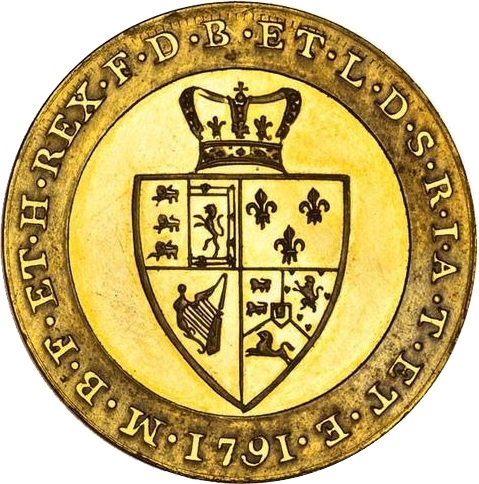
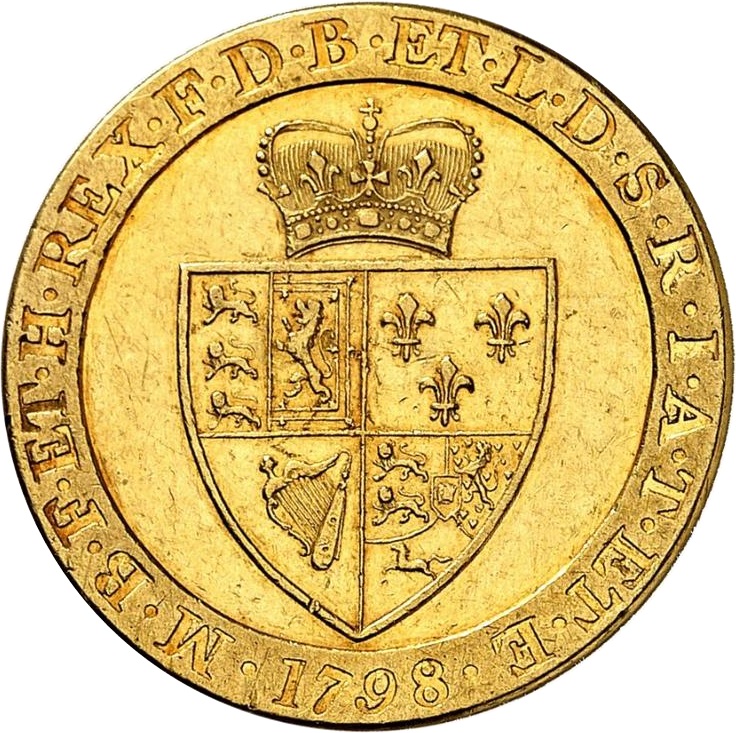
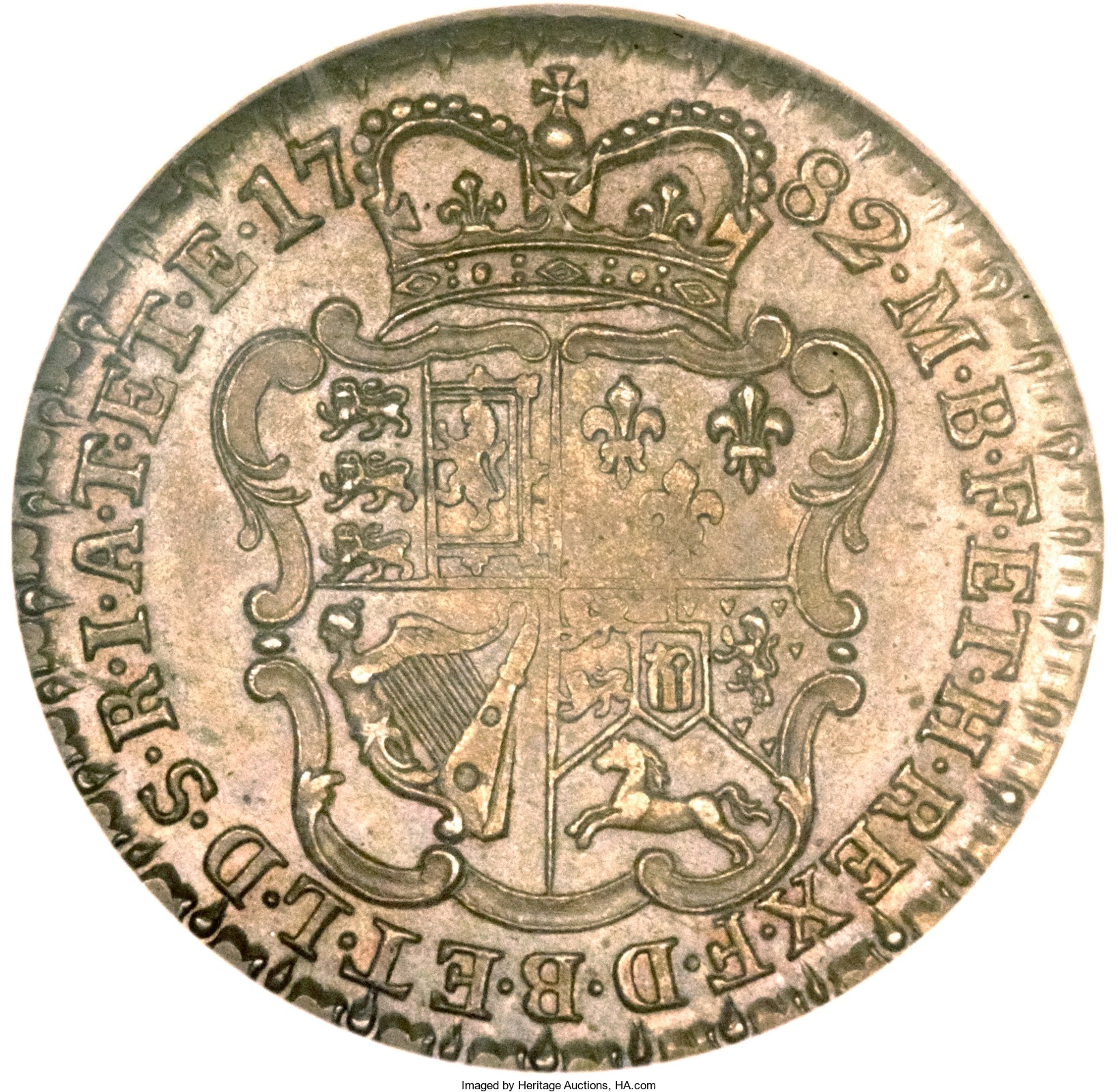
Crowned quartered shield showing the arms of England & Scotland, France, Ireland and Hanover, divided date above, legend around.
Find this on eBay
Affiliate1 Guinea - George III Pattern price history
Daily limit reachedAbout the 1782 1 Guinea - George III Pattern
The 1782 1 Guinea - George III Pattern is a collector 1 guinea coin, struck in copper. Reverse design: Crowned quartered shield showing the arms of England & Scotland, France, Ireland and Hanover, divided date above, legend around.
It is no longer legal tender, so its value is to collectors only.
Common questions
How much is the 1782 1 Guinea - George III Pattern worth?
No verified sale of the 1782 1 Guinea - George III Pattern has been logged on MyCoinage yet.
What is the 1782 copper pattern guinea?
It is catalogued as a copper striking of the guinea pattern that Lewis Pingo engraved in 1782 for Lord Mahon, later the third Earl Stanhope. The gold version carries small raised letters on the edge and was made to show how forgery might be prevented.
Was the 1782 copper guinea ever money?
No. It is a pattern struck in a base metal, and the gold pieces it copies were themselves never issued. Sincona says the gold 1782 pieces were not intended as patterns for a proposed coinage but served to demonstrate Lord Mahon's anti-forgery theory.
Does the Royal Mint Museum have a 1782 copper pattern?
Yes, though it catalogues them as half guineas. Hocking's 1906 catalogue lists three 1782 copper patterns, all called half guineas, with plain edges or with MDCCLXXXII on the edge four times, and two different treatments of the king's hair.
How do you tell the 1782 copper pattern from the 1781 one?
By the date and the edge. Baldwin's records a copper pattern for a gold coinage dated 1781, struck on a 22 mm flan and weighing 3.41 g, and notes that Eimer records that type with either a grained or a lettered edge.
History and design
In 1782 Lewis Pingo, Chief Engraver at the Mint since 1779, engraved a series of trial pieces for Lord Mahon, the inventor and politician who became the third Earl Stanhope in 1786. Sincona, describing the gold guinea of the series (Wilson and Rasmussen 100), says the pieces were not intended as patterns for a new coinage but were made to demonstrate Mahon's theory of how forgery could be prevented by several techniques at once. The gold pieces have small raised letters on the edge.
This entry is catalogued as a copper striking of the same year. The Royal Mint's own collection, as catalogued by Hocking in 1906, holds three 1782 patterns in copper, though it describes all three as half guineas: two with plain edges, with different treatments of the hair, and one with MDCCLXXXII, the date in Roman numerals, repeated four times on the edge. No number struck is recorded for any of them.
The designs follow the gold coinage of the time. Hocking describes the obverse of the copper half guinea patterns as a bare laureate bust facing right with GEORGIVS III DEI GRATIA, the hair flowing behind and curling under the truncation, and the reverse as the garnished, crowned shield of arms with the usual long titles and the date 1782. Wikipedia's article on Pingo records that he made patterns for the guinea, seven shilling piece, penny and halfpenny of George III.
Collecting notes
Size, weight and edge are the points to record, since 1782 copper patterns are recorded under both guinea and half guinea labels and with different edges. A related copper pattern dated 1781 is also known: Baldwin's describes one on a 22 mm flan weighing 3.41 g with a plain edge, citing Eimer, who records that type with grained or lettered edges. The gold version is described under the 1782 pattern guinea.
Sources
The history, design, varieties and collecting notes on this page are drawn from these sources. Prices come from recorded sales, not from them.
- SINCONA British Collection, auction highlights, Sincona (read 12 Oct 2026)
- Catalogue of the Coins, Tokens, Medals, Dies and Seals in the Museum of the Royal Mint, Vol. I Part I (Hocking, 1906), page 173, proofs and patterns of George III, Royal Mint Museum library (read 12 Oct 2026)
- George III, Copper Pattern Guinea, 1781, Baldwin's (read 12 Oct 2026)
- Lewis Pingo, Wikipedia (read 12 Oct 2026)
- Charles Stanhope, 3rd Earl Stanhope, Wikipedia (read 12 Oct 2026)
More 1 Guinea coins from nearby years