1 Guinea - George III Pattern (1787)
| Country | United Kingdom |
| Year | 1787 |
| Denomination | 1 Guinea |
| Face value | £1.05 |
| Mint | Royal Mint · Llantrisant |
| Circulation | Non-circulating |
| Demonetised | Yes |
| Composition | Gold (.9167) (917/1000 fine) |
| Weight | 8.360g · 0.2464 t oz |
| Shape | Round |
| Edge | Plain |
| Obv. artist | Lewis Pingo |
| Rev. artist | Lewis Pingo |
| Grade scale | UK (EF/UNC) |
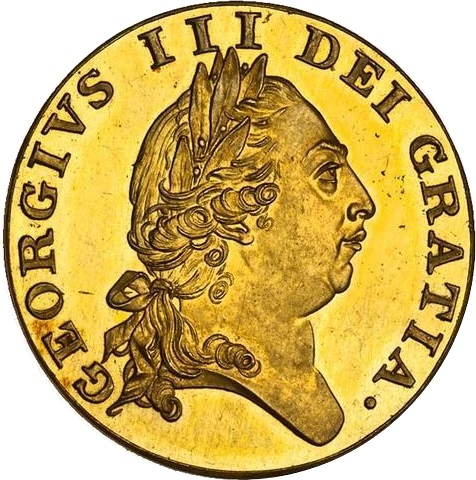
Laureate portrait of King George III right, legend around.
GEORGIVS III DEI GRATIA
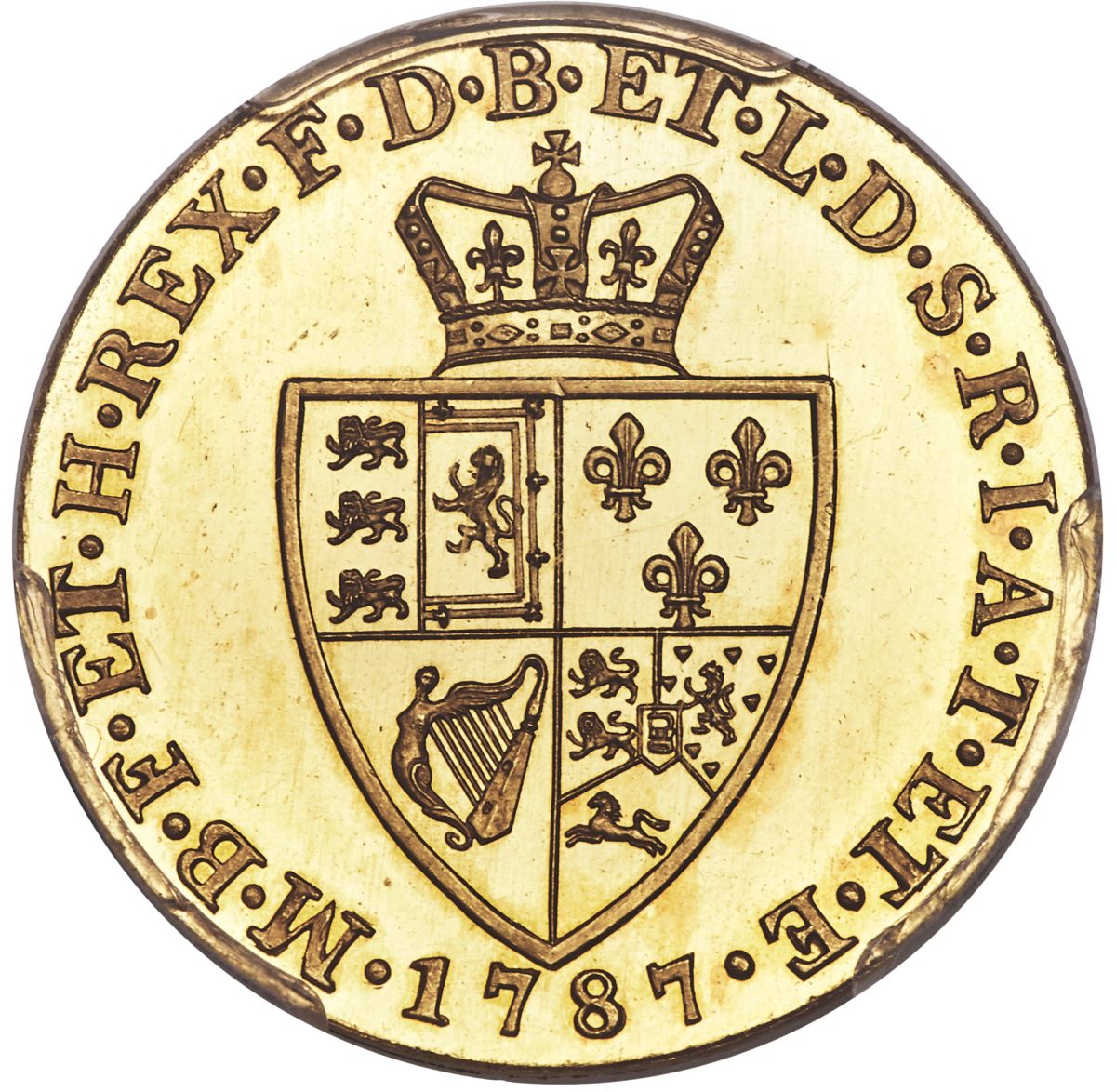
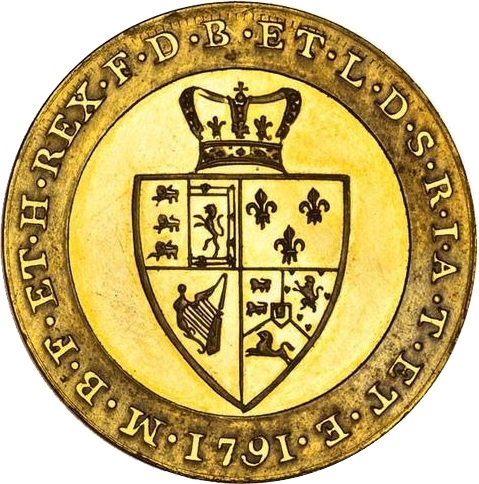
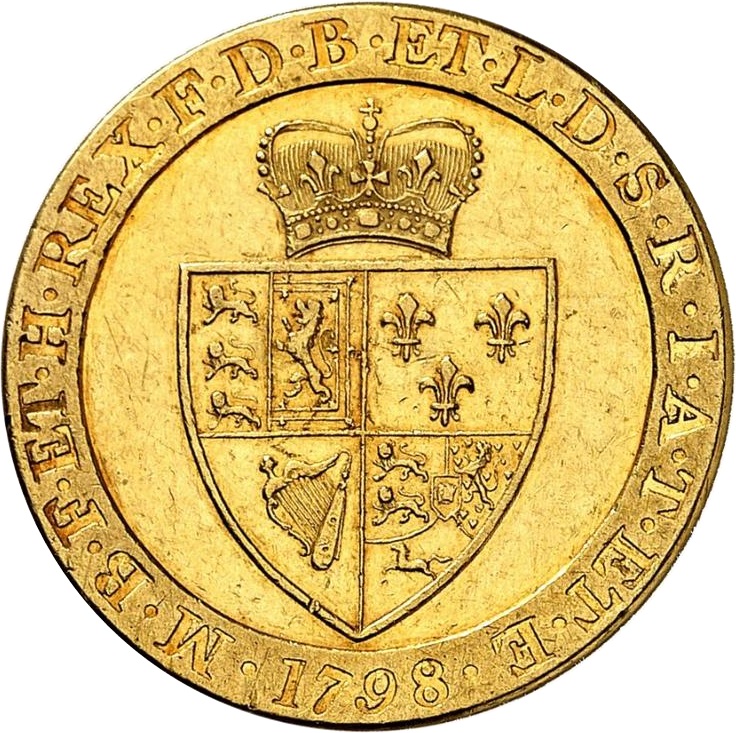
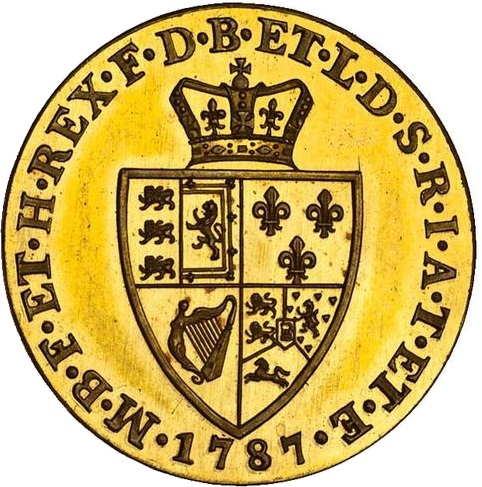
Crowned and quartered, spade-shaped shield of arms, legend around, date below.
M B F ET H REX F D B ET L D S R I A T ET E
Find this on eBay
Affiliate1 Guinea - George III Pattern price history
Daily limit reachedAbout the 1787 1 Guinea - George III Pattern
The 1787 1 Guinea - George III Pattern is a collector 1 guinea coin, struck in 91.67% gold. It weighs 8.36g. Reverse design: Crowned and quartered, spade-shaped shield of arms, legend around, date below.
It is no longer legal tender, so its value is to collectors only.
Common questions
How much is the 1787 1 Guinea - George III Pattern worth?
No verified sale of the 1787 1 Guinea - George III Pattern has been logged on MyCoinage yet. Its gold content is worth about £738 at today's spot price, which puts a floor under its value.
What is the 1787 pattern guinea?
A proof striking of the new spade guinea, made in its first year with a plain edge and polished dies. It shows the same fifth head and spade-shaped shield as the ordinary 1787 guinea, which was struck for circulation with a grained edge.
How rare is the 1787 proof guinea?
No number struck is recorded. Baldwin's calls the proof a rarity, citing Wilson and Rasmussen 102 to 104, and Wessex Coins says the same of its example. Neither gives a count of known pieces, and the ordinary 1787 guinea is a different coin with a grained edge.
How can you tell a 1787 proof guinea from a currency one?
Look at the edge first. The proof is described with a plain edge, while currency guineas of the type are grained. A grained-edge coin is a circulation strike.
How do I identify the 1787 1 Guinea - George III Pattern?
Check the weight 8.36g and the metal (91.67% gold) against the specification table on this page. The reverse design is described above.
History and design
The spade guinea was introduced in 1787, when Lewis Pingo's plain pointed shield replaced the ornate shield used on George III's guineas since 1761. In that first year the Mint also struck proofs of the new coin, with plain edges and carefully finished dies. Collectors and catalogues file them as patterns or proofs; they show the issued design rather than a trial of a different one.
Baldwin's lists the 1787 proof guinea as a rarity and cites Wilson and Rasmussen's catalogue of English patterns and proofs, numbers 102 to 104. A matching proof half guinea of 1787 is in the Royal Mint Museum's collection. No number struck is recorded for either.
Both sides are credited to Lewis Pingo. The obverse is the fifth laureate head of the king facing right with the legend GEORGIVS III DEI GRATIA, the portrait used on all spade guineas.
The reverse shows the crowned spade-shaped shield of arms, quartering England and Scotland, France, Ireland and Hanover, with the date below and the legend M B F ET H REX F D B ET L D S R I A T ET E. Wessex Coins describes the edge of its example as plain.
Collecting notes
The edge is the quickest test: currency spade guineas are grained, the proof is plain. The Royal Mint Museum's 1798 currency guinea, for comparison, is recorded with a grained edge.
The currency coin is the spade guinea, struck from 1787 to 1799, and the companion proof is the 1787 pattern half guinea.
Sources
The history, design, varieties and collecting notes on this page are drawn from these sources. Prices come from recorded sales, not from them.
- 1787-1800 George III Gold 'Spade' Guinea, The Royal Mint (read 12 Oct 2026)
- George III (1760-1820), Guinea, 1787, Fifth head, Baldwin's (read 12 Oct 2026)
- George III, 1787 Proof Gold Guinea, Wessex Coins (read 12 Oct 2026)
- George III, Royal Mint Museum (read 12 Oct 2026)
- Spade guinea of George III, 1787 (V&A 1624-1902), Science Museum Group, via Museum Data Service (read 12 Oct 2026)
- George III proof half-guinea, 1787 (RMM 962), The Royal Mint Museum, via Museum Data Service (read 12 Oct 2026)
- George III guinea, 1798 (RMM 945), The Royal Mint Museum, via Museum Data Service (read 12 Oct 2026)
More 1 Guinea coins from nearby years