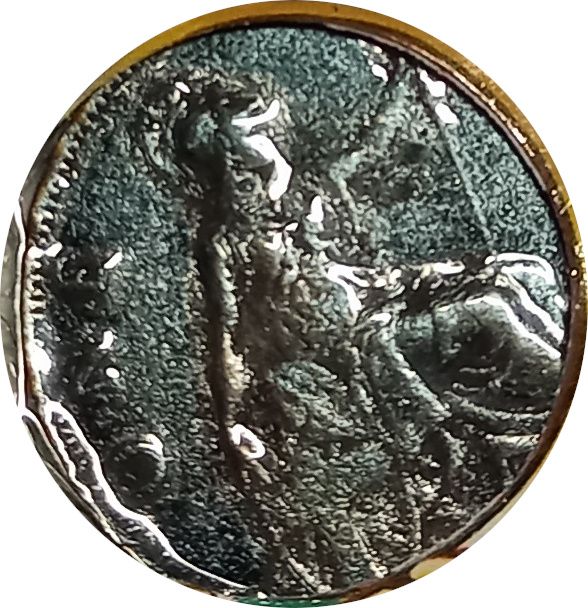
A coin's grade is the biggest single factor in its value after rarity. The same 1912 George V penny is worth £5 in Good, £40 in Very Fine, and £250 in Brilliant Uncirculated. Here's the UK grading scale explained in plain English.
The UK grade scale, worst to best
| Grade | Abbr. | What you see |
|---|---|---|
| Poor | P | Design barely visible. Date may be illegible. |
| Fair | Fr | Heavy wear; date visible. Legends partly worn. |
| About Good | AG | All major design elements visible but heavily worn. |
| Good | G | Full date and legends readable. Worn but whole. |
| Very Good | VG | Major details visible. Some fine detail worn smooth. |
| Fine | F | Most detail visible. Definite wear on high points. |
| Very Fine | VF | All detail sharp. Minor wear on highest points only. |
| Extremely Fine | EF | Very little wear. Minor surface marks acceptable. |
| Almost Uncirculated | aUNC | Traces of wear only on highest points. Mint lustre partly retained. |
| Uncirculated | UNC | No wear. Full mint lustre. Minor bag marks. |
| Brilliant Uncirculated | BU | As-minted. Full lustre, no toning. Typical of presentation packs. |
| Fleur-de-coin | FDC | Proof-struck, mirror fields. Collector grade only. |
How Americans say it (Sheldon 1–70)
US collectors use the Sheldon numeric scale where 1 is Poor and 70 is perfect Mint State. PCGS and NGC grade British coins on this scale:
- VG-8 / VG-10 = UK Very Good
- F-12 / F-15 = UK Fine
- VF-20 / VF-25 / VF-30 / VF-35 = UK Very Fine (spread across four grades)
- EF-40 / EF-45 = UK Extremely Fine
- AU-50 / AU-53 / AU-55 / AU-58 = UK Almost Uncirculated
- MS-60 through MS-70 = UK Uncirculated to Perfect Mint State
What to look for when grading yourself
Highest-point wear
Coin wear always starts at the highest-relief parts of the design. On an Elizabeth II portrait, that's the cheek and the tiara. On a Britannia reverse, it's her helmet and shield boss. A VF coin shows light rubbing on these points; an EF shows virtually none.
Full original lustre
"Mint lustre" is the fine, cartwheeling sheen on a freshly-struck coin. Any circulation wear dulls it progressively. A UNC coin has full lustre; an aUNC has traces of loss; a VF or below has essentially none.
Contact marks and bag marks
Even UNC coins pick up small nicks and scratches from banging against each other in bulk shipment bags. Heavy bag-marking can drop a nominally UNC grade to aUNC or EF.
The £5 → £50 condition jump
For most UK coins, the price-to-grade relationship looks like this (typical, not universal):
- Poor → Fine: prices roughly double at each grade step
- Fine → VF: roughly 2–3× increase
- VF → EF: 2–3× increase
- EF → UNC: 3–10× increase (big jump)
- UNC → BU → FDC: further 2–3× premiums, especially for rarer dates
This is why professional grading (PCGS, NGC) pays for itself above about £100 coin value, accurate authentication to a published standard adds 10–40% to realised price.
See our full grading guide with photo examples of each UK grade.