Sells occasionally: 7 verified sales in the last 12 months.
½ Guinea - George III 6th portrait (1801–1803)
| Country | United Kingdom |
| Year | 1801–1803 |
| Denomination | ½ Guinea |
| Face value | 52.5p |
| Mint | Royal Mint · Llantrisant |
| Circulation | Circulating |
| Demonetised | 1891 |
| Composition | Gold (.9167) (917/1000 fine) |
| Weight | 4.200g · 0.1238 t oz |
| Diameter | 20.0mm |
| Shape | Round |
| Edge | Milled |
| Orientation | Medal alignment ↑↑ |
| Grade scale | UK (EF/UNC) |
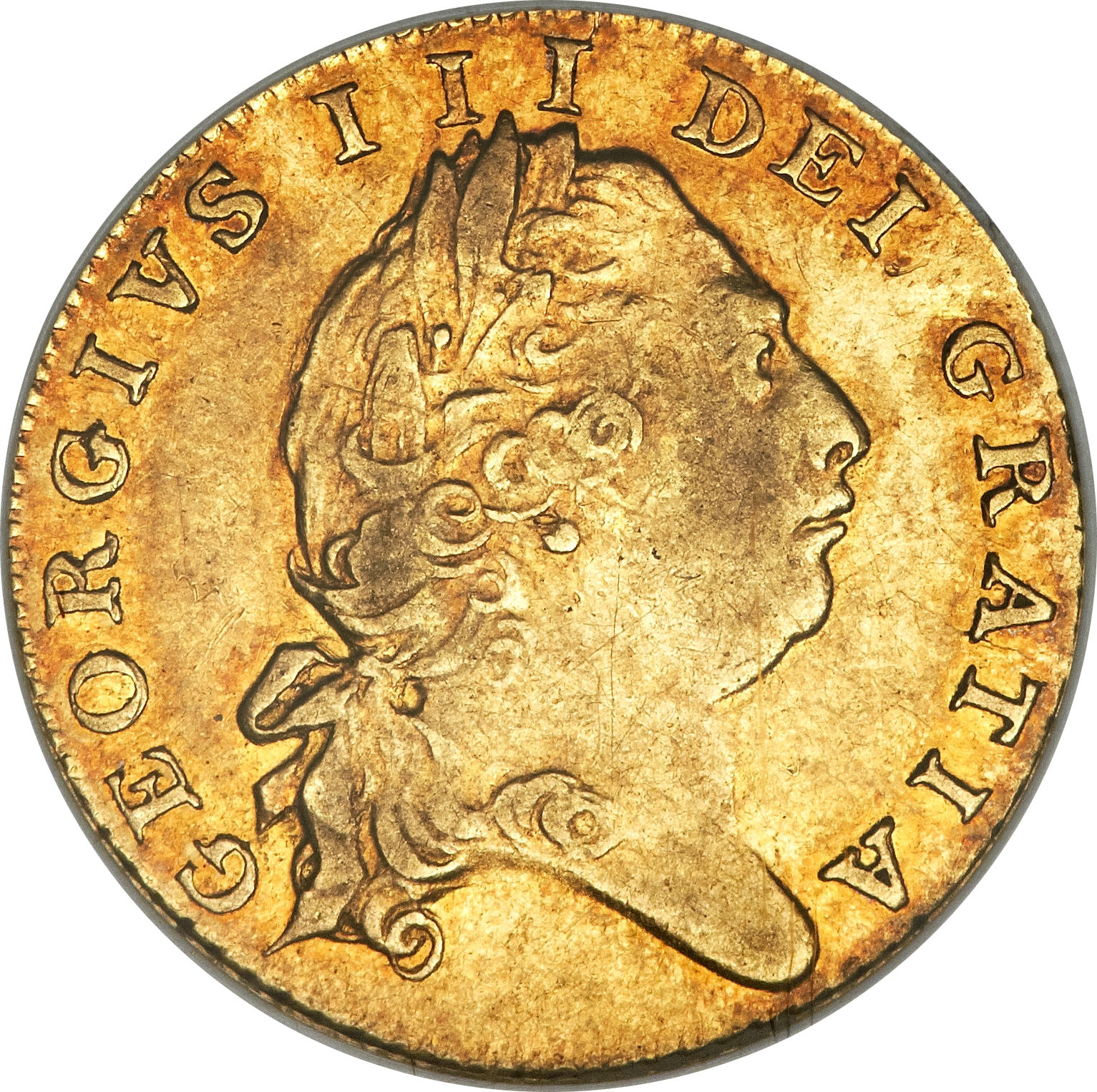
Sixth laureate portrait of King George III right, legend around.
GEORGIVS III DEI GRATIA
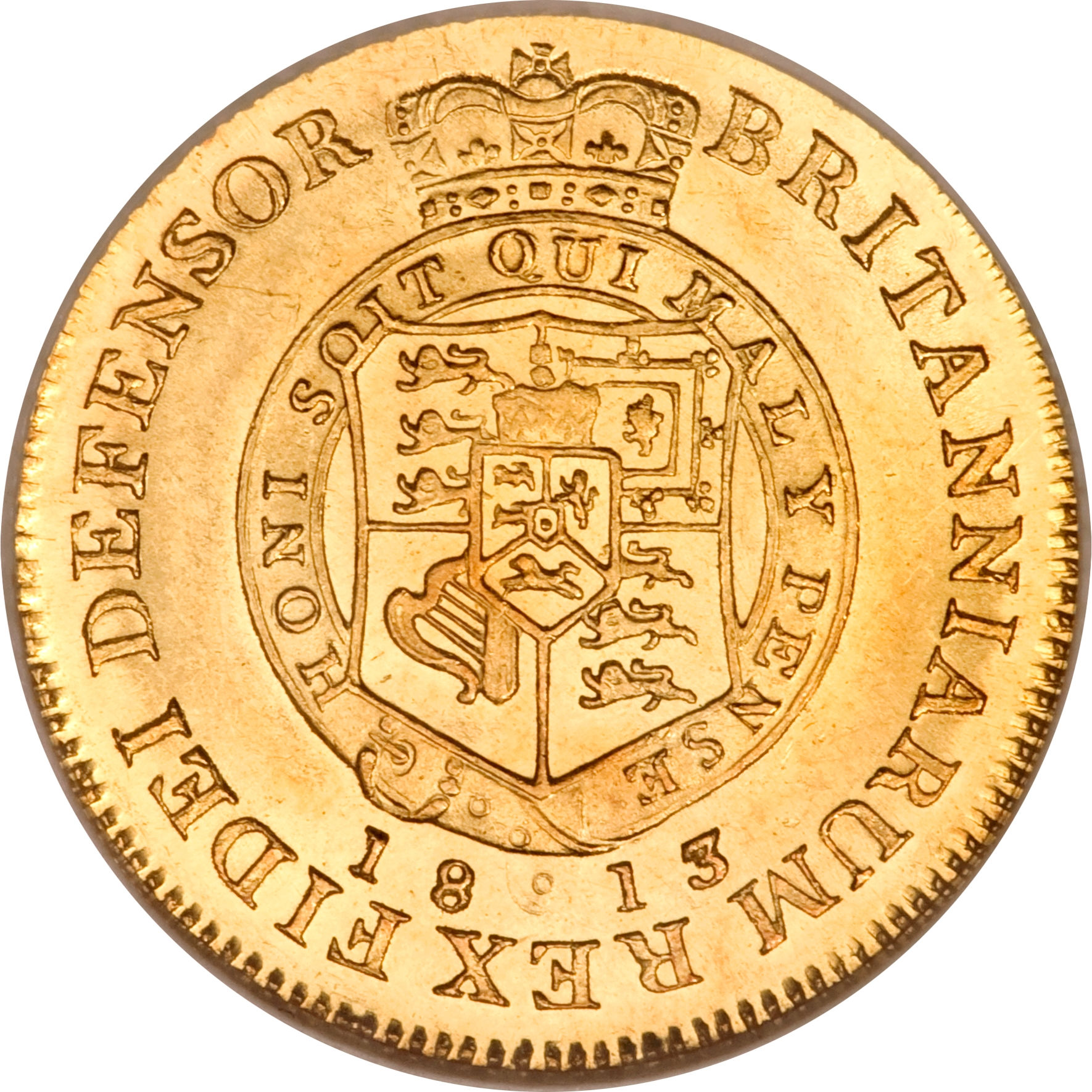
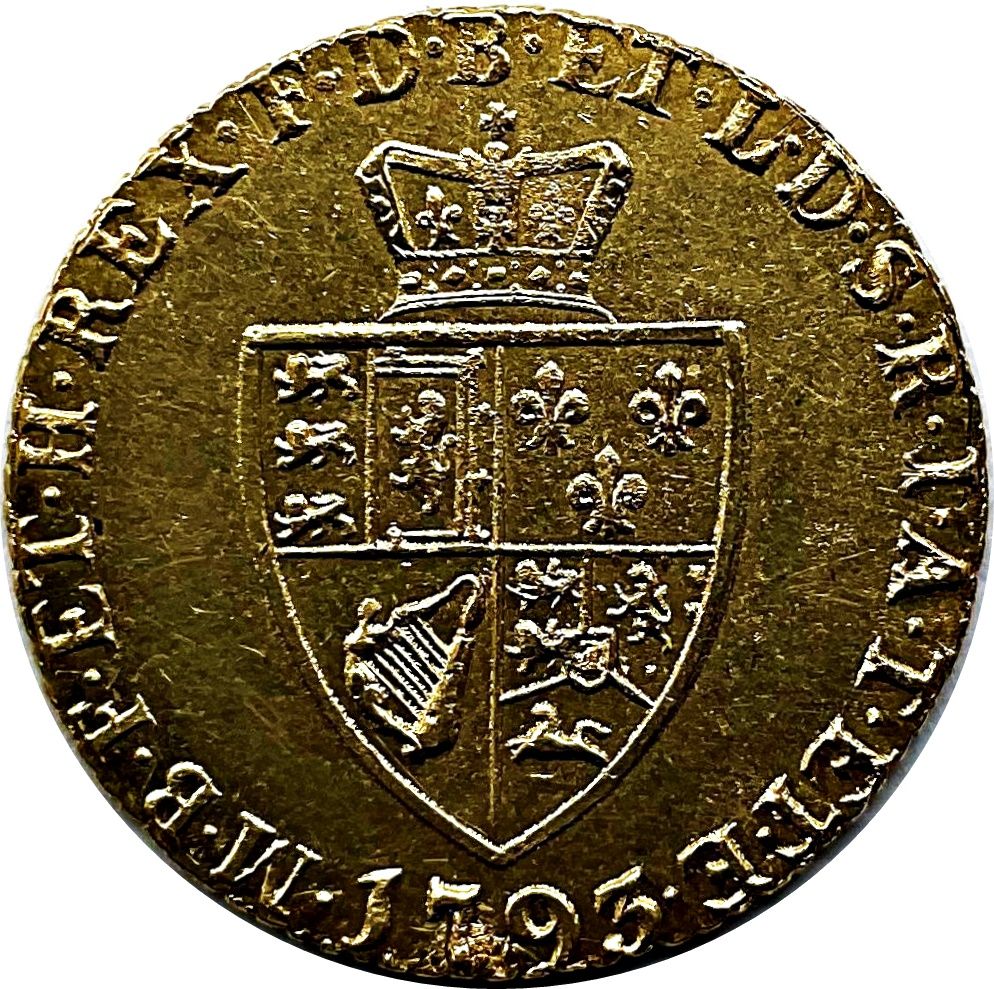
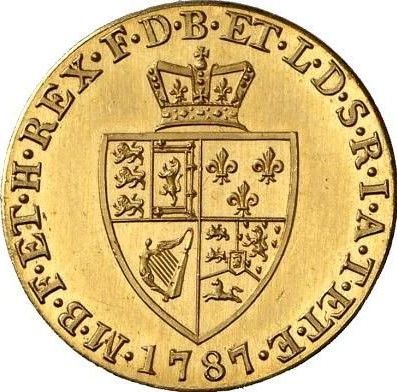
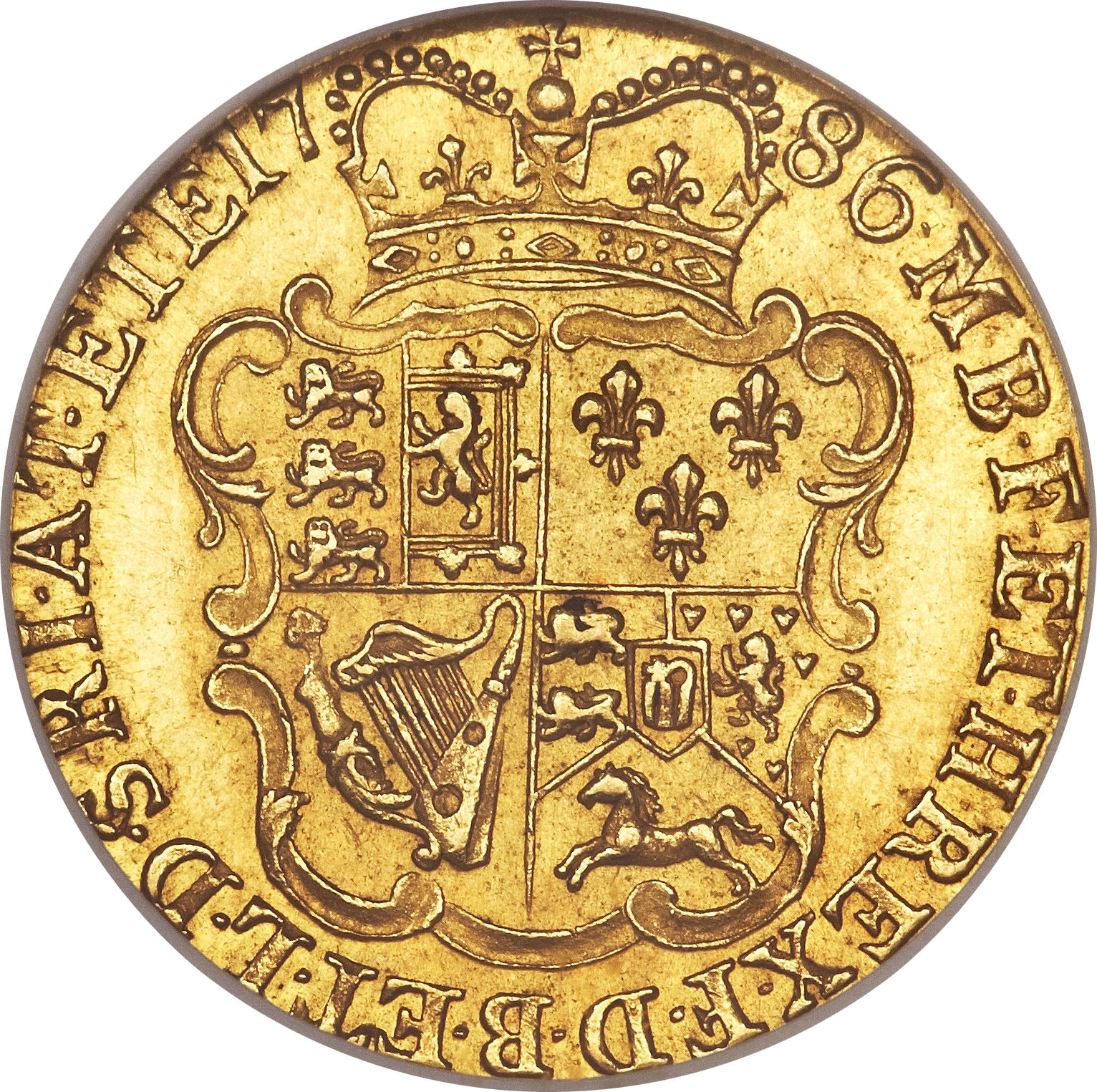
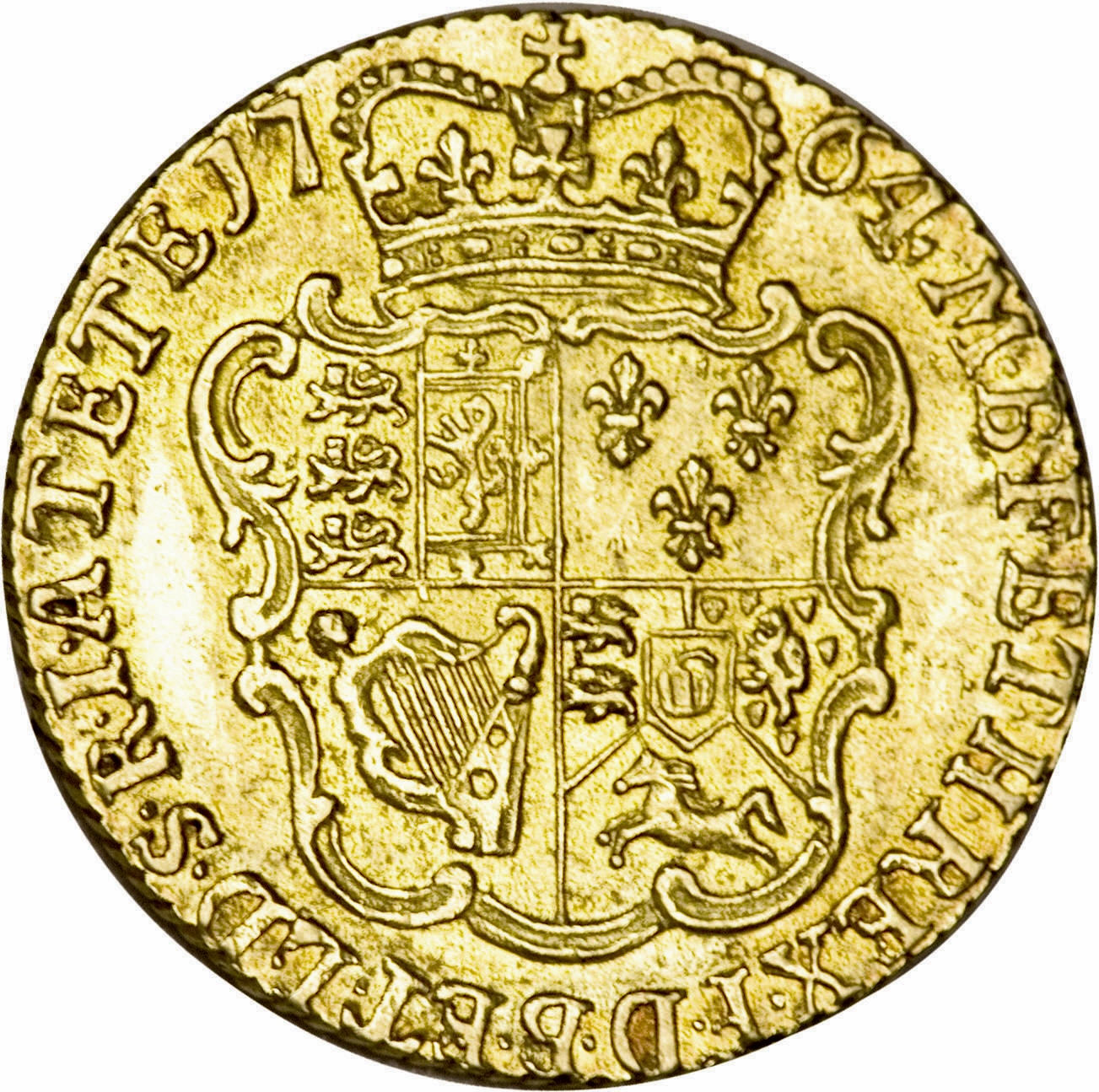
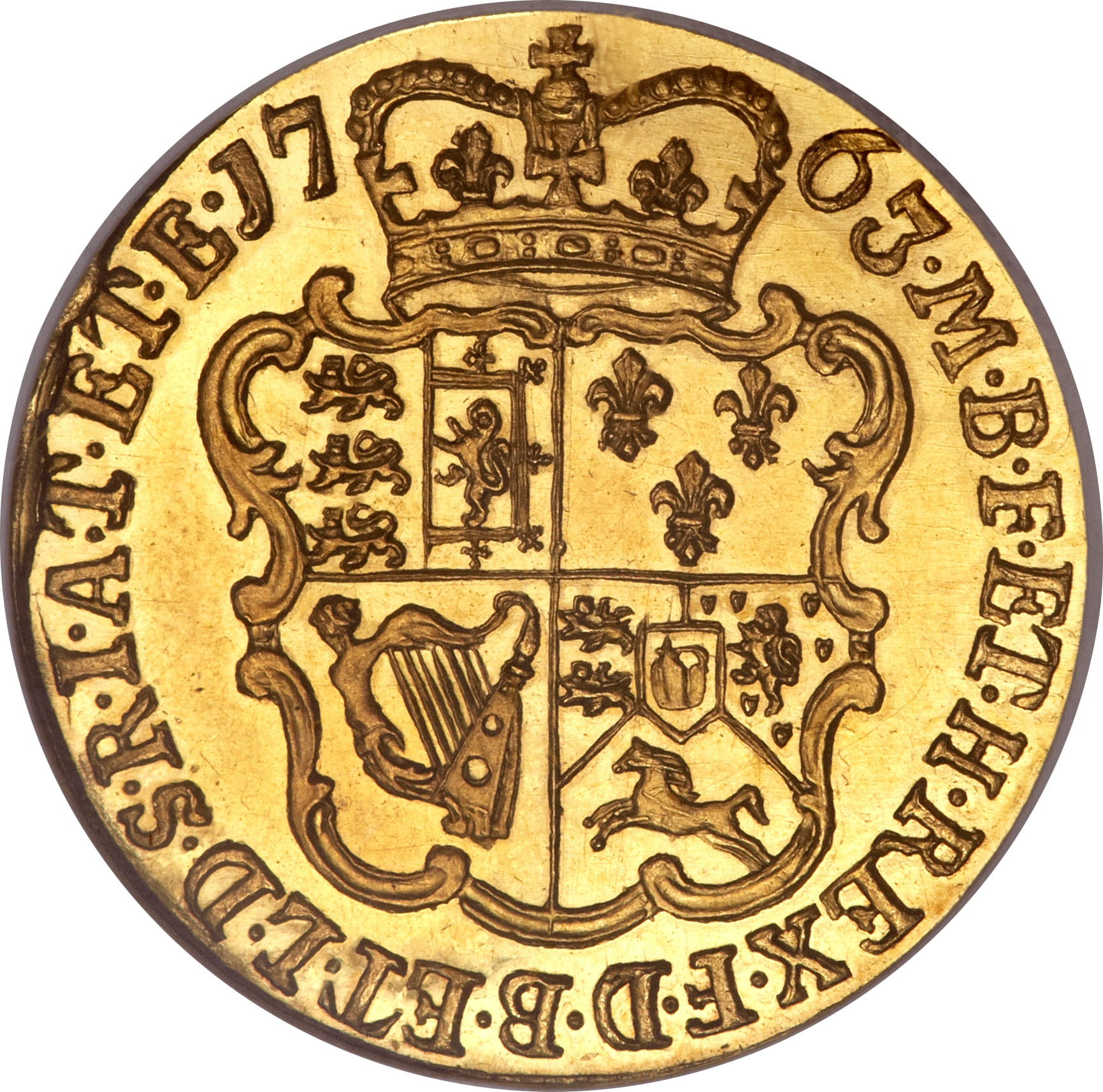
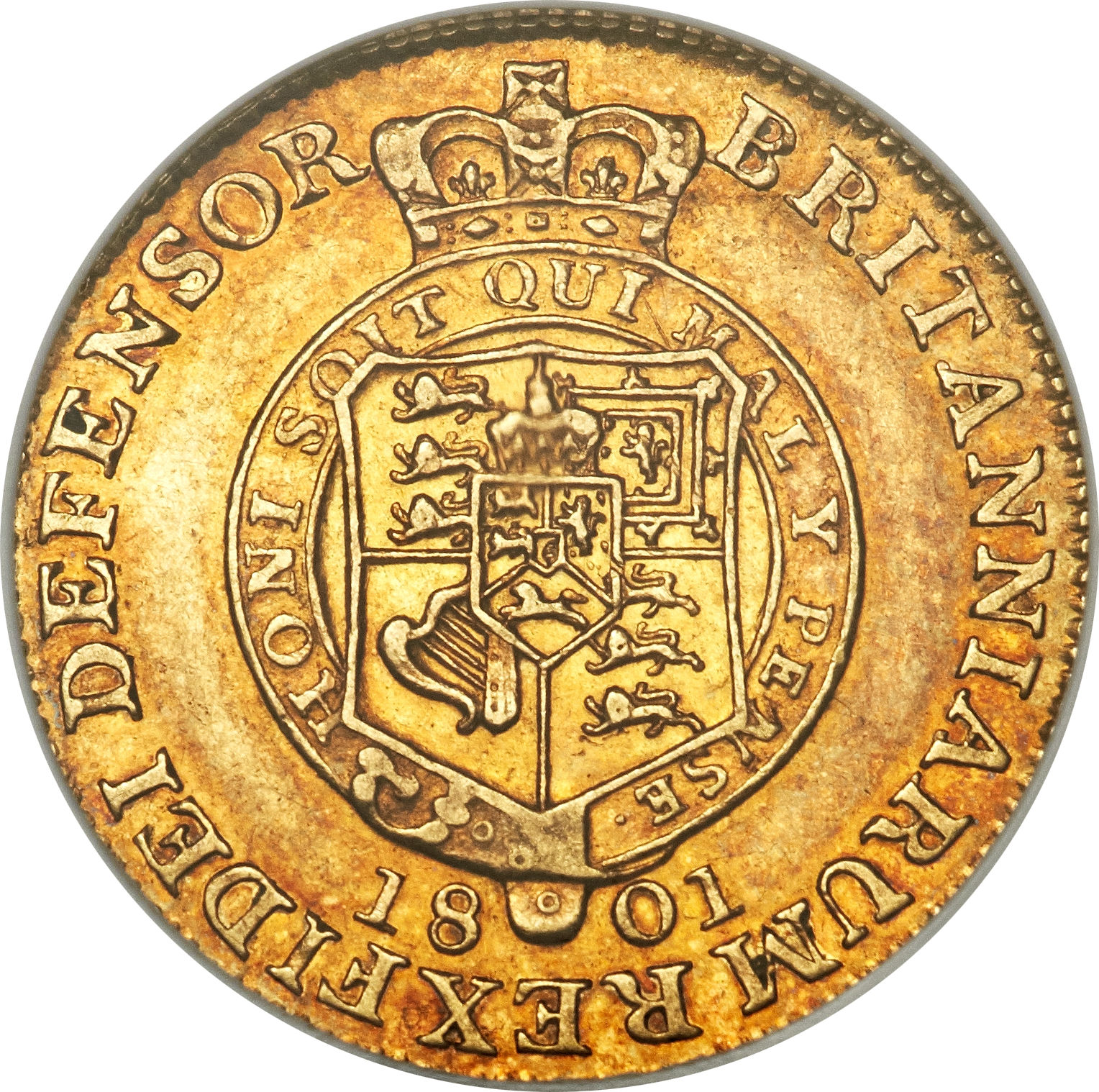
Crowned shield of arms within garter, legend around, divided date below.
BRITANNIARUM REX FIDEI DEFENSOR
Half Guinea - George III market value
Find this on eBay
AffiliateHalf Guinea - George III value by grade
Realised auction prices · ⭐ Pro Expand rows for individual sale records| Grade | Latest | Median | 30d Δ | All-time range | Sales (1yr) | Total sales | Last sale | |
|---|---|---|---|---|---|---|---|---|
| UNC | £340.00 🔒 | £340.00 (1) | – | £340.00 – £340.00 | 1 | 1 | 07-03-2026 | |
|
Loading…
|
||||||||
| EF | £850.00 🔒 | £850.00 | – | £400.00 – £1,000.00 | 1 | 5 | 25-02-2026 | |
|
Loading…
|
||||||||
| VF | £535.00 🔒 eBay | £650.00 | – | £65.00 – £900.00 | 5 | 24 | 15-08-2026 | |
|
Loading…
|
||||||||
| F | £350.00 🔒 | £240.00 (2) | – | £130.00 – £350.00 | 0 | 2 | 06-06-2021 | |
|
Loading…
|
||||||||
| AU-58 | £566.17 🔒 | £490.68 | – | £450.00 – £566.17 | 0 | 3 | 16-03-2025 | |
|
Loading…
|
||||||||
| MS-64 | £850.00 🔒 | £850.00 (1) | – | £850.00 – £850.00 | 0 | 1 | 06-09-2015 | |
|
Loading…
|
||||||||
About the 1801 Half Guinea - George III
The 1801 Half Guinea - George III is a circulating ½ guinea coin issued from 1801 to 1803, struck in 91.67% gold. It weighs 4.2g and measures 20mm across. Reverse design: Crowned shield of arms within garter, legend around, divided date below.
It is no longer legal tender (withdrawn 1891), so its value is to collectors only.
Common questions
How much is the 1801 Half Guinea - George III worth?
Verified sold prices for the 1801 Half Guinea - George III run from £240 to £850 across 6 grades, taking the median for each grade. Condition makes the difference, so check the grade table above before pricing one. Its gold content is worth about £372 at today's spot price, which puts a floor under its value.
Why did the half guinea change in 1801?
The Act of Union with Ireland in 1800 changed the king's titles, and in 1801 the British monarch's old claim to the French throne was dropped. The French arms left the shield, the long Latin legend was replaced by BRITANNIARUM REX FIDEI DEFENSOR, and the shield was placed within the Garter.
How many 1801 to 1803 half guineas were made?
No reliable mintage is published for any of the three dates. CoinVarieties records the mintage as unknown but describes the type as not rare, and Clayton lists 1801, 1802 and 1803 without marking any of them as scarce.
What does BRITANNIARUM REX FIDEI DEFENSOR mean?
King of the Britains, Defender of the Faith. It replaced the older legend, which named the king as ruler of France and Duke of Brunswick and Lüneburg among other titles, after the royal style was changed in 1801.
Is a George III half guinea still legal tender?
No. Wikipedia records that all gold coins from before Queen Victoria's reign were called in by Royal Proclamation on 22 November 1890 and demonetised with effect from 28 February 1891. The half guinea itself had been replaced by the half sovereign in the recoinage of 1816 to 1817.
How do I identify the 1801 Half Guinea - George III?
Check the weight 4.2g and diameter 20mm and the metal (91.67% gold) against the specification table on this page. The reverse design is described above.
History and design
The Act of Union with Ireland in 1800 changed the king's titles, and in 1801 the British monarch's claim to the French throne was dropped in negotiations with France. The Royal Mint's 1906 catalogue records that the French and German titles were then omitted from the coin legends and the arms of France were taken off the shield. The half and third guineas carried the change, since the striking of guineas had been halted in 1799 while the smaller gold continued.
This type was struck in 1801, 1802 and 1803, the dates both Clayton and Coin Hunter list. No mintage is recorded for any of them. Gold was scarce and rising in value through the wars with France, and from 1804 the half guinea took a new portrait.
The obverse shows the king laureate to right with GEORGIVS III DEI GRATIA. The 1906 catalogue describes the head as similar to the spade guinea portrait, with the hair tied behind and a love-lock over the right shoulder.
The reverse is new. The royal arms (England in the first and fourth quarters, Scotland in the second, Ireland in the third) carry the Electoral escutcheon and cap of Hanover in the centre, set within the Garter with its motto HONI SOIT QUI MAL Y PENSE and crowned. Around it runs BRITANNIARUM REX FIDEI DEFENSOR, King of the Britains, Defender of the Faith, with the date below. The edge is milled obliquely.
Collecting notes
Clayton lists all three dates without marking any as scarce; his scarce George III half guineas are 1774 and 1805. The Royal Mint Museum's currency example of 1801 weighs 4.19 g, against the standard of about 4.2 g, so a weight well below that suggests wear, filing or a copy. Look at the hair above the ear and the Garter lettering for wear, and at the edge for signs of mounting.
Half guineas ceased with the recoinage of 1816 to 1817, when the half sovereign replaced them. The next type is the seventh portrait half guinea of 1804 to 1813.
Sources
The history, design, varieties and collecting notes on this page are drawn from these sources. Prices come from recorded sales, not from them.
- Half guinea, Wikipedia (read 12 Oct 2026)
- Ten Shillings and Half Guinea, Tony Clayton, Coins of the UK (read 12 Oct 2026)
- Guinea (coin), Wikipedia (read 12 Oct 2026)
- Catalogue of the Coins, Tokens, Medals, Dies and Seals in the Museum of the Royal Mint, Vol. I Part I (Hocking, 1906), pages 154 to 156, Royal Mint Museum library (read 12 Oct 2026)
- George III, Royal Mint Museum (read 12 Oct 2026)
- George III half-guinea, 1801 (RMM 964), The Royal Mint Museum, via Museum Data Service (read 12 Oct 2026)
- Values of half guineas and half sovereigns, Tony Clayton, Coins of the UK (read 12 Oct 2026)
- Coin values by year, George III (year pages 1801 to 1804), Coin Hunter (read 12 Oct 2026)
- Great Britain 1801 1/2 guinea, CoinVarieties (read 12 Oct 2026)
- Sovereign (British coin), Wikipedia (read 12 Oct 2026)
More ½ Guinea coins from nearby years