Rarely sells: 1 verified sales in the last 12 months.
1 Guinea - George III Pattern (1813)
| Country | United Kingdom |
| Year | 1813 |
| Denomination | 1 Guinea |
| Face value | £1.05 |
| Mintage | 5 |
| Mint | Royal Mint · Llantrisant |
| Circulation | Non-circulating |
| Demonetised | Yes |
| Composition | Gold (.9167) (917/1000 fine) |
| Shape | Round |
| Grade scale | UK (EF/UNC) |
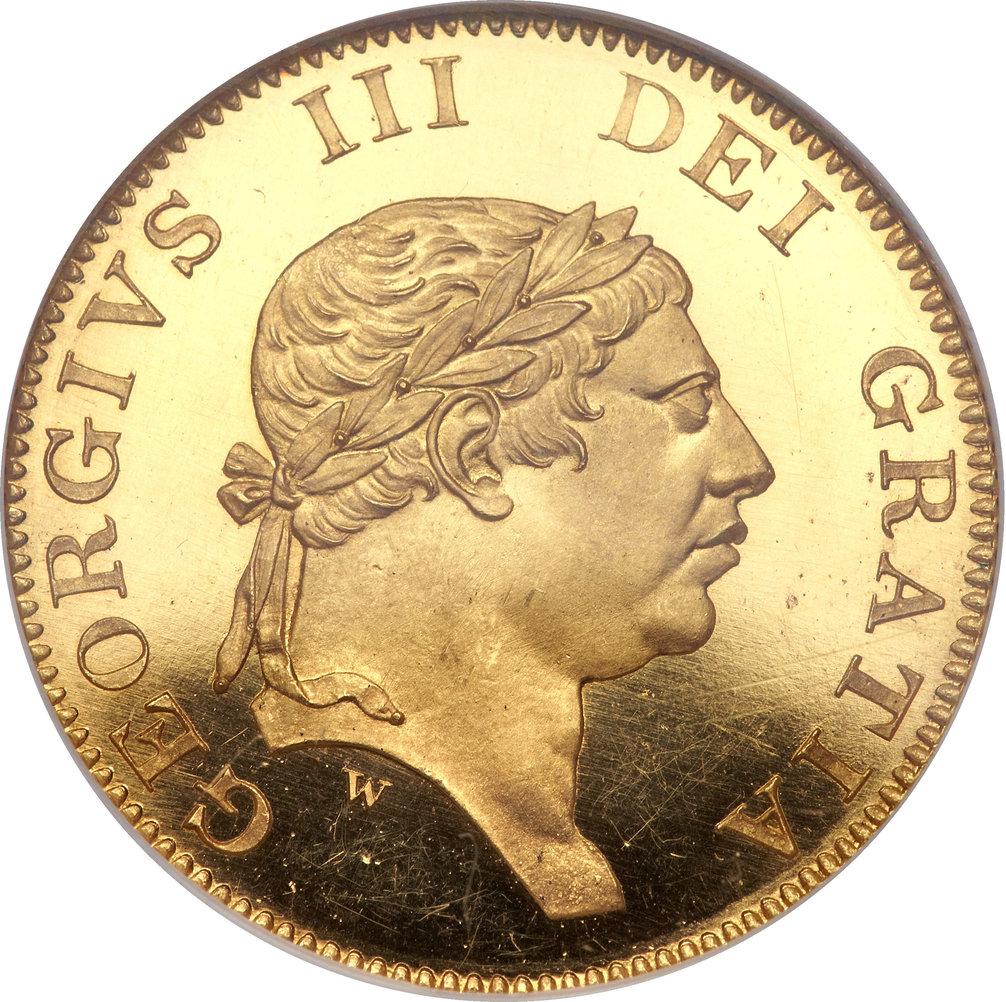
Right effigy of King George III surrounded by the inscription "GEORGIVS III DEI GRATIA-" (George III by the grace of God).This is an automatic translation. The original text is:Effigie droite du roi George III entourée par l'inscription "GEORGIVS III DEI GRATIA·" (George III par la grâce de Dieu).
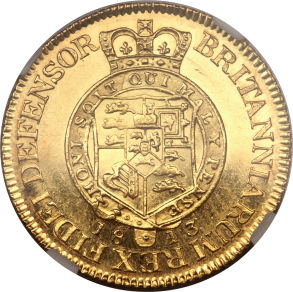
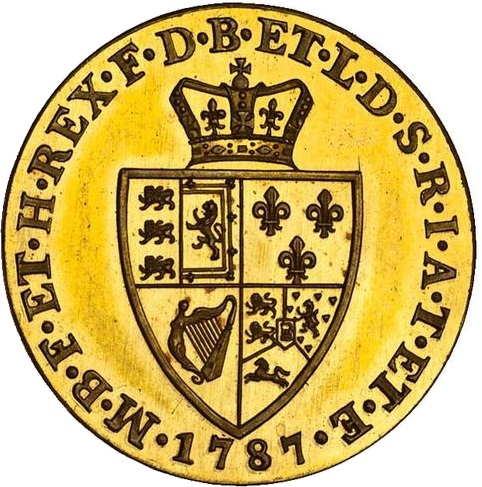
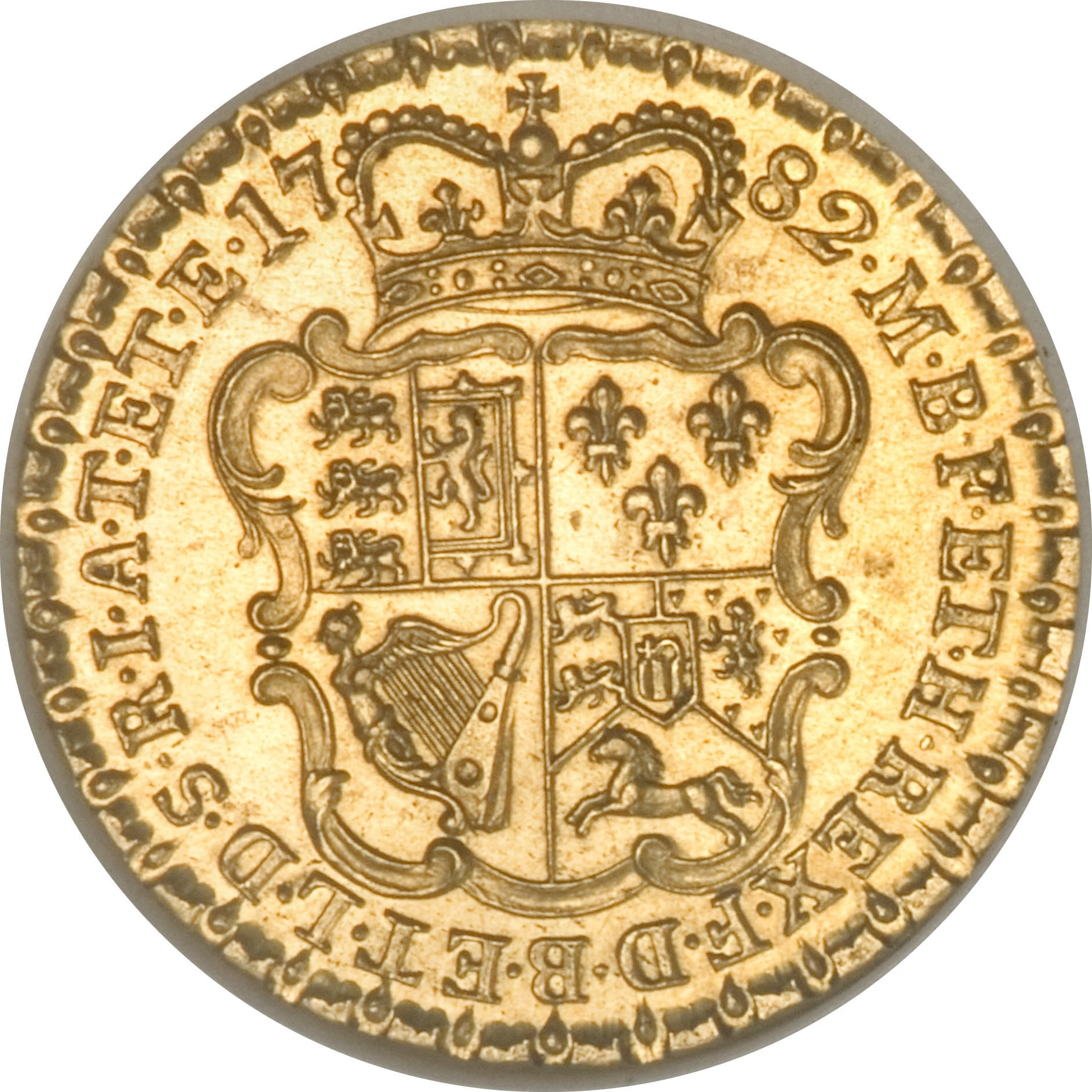
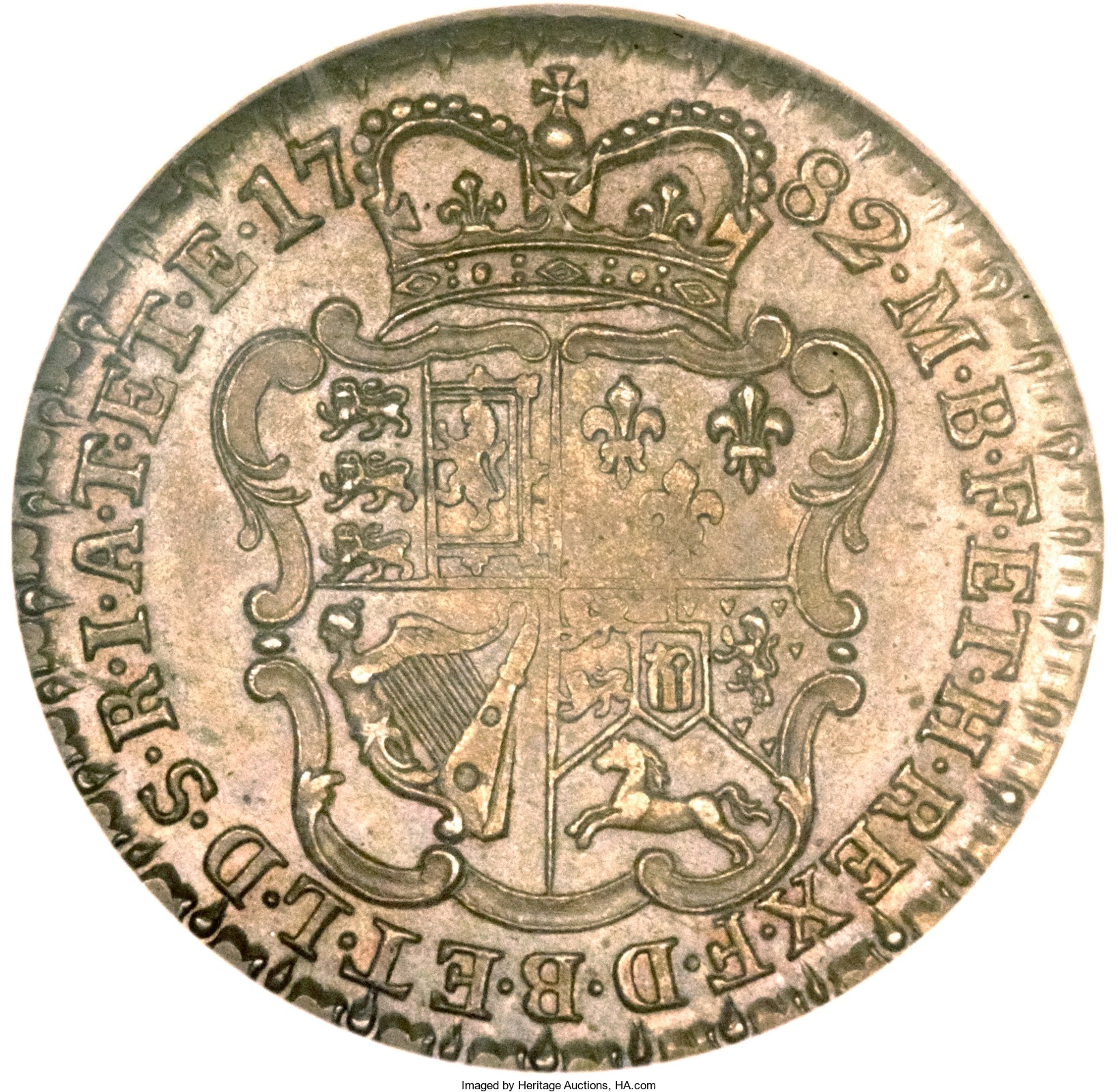
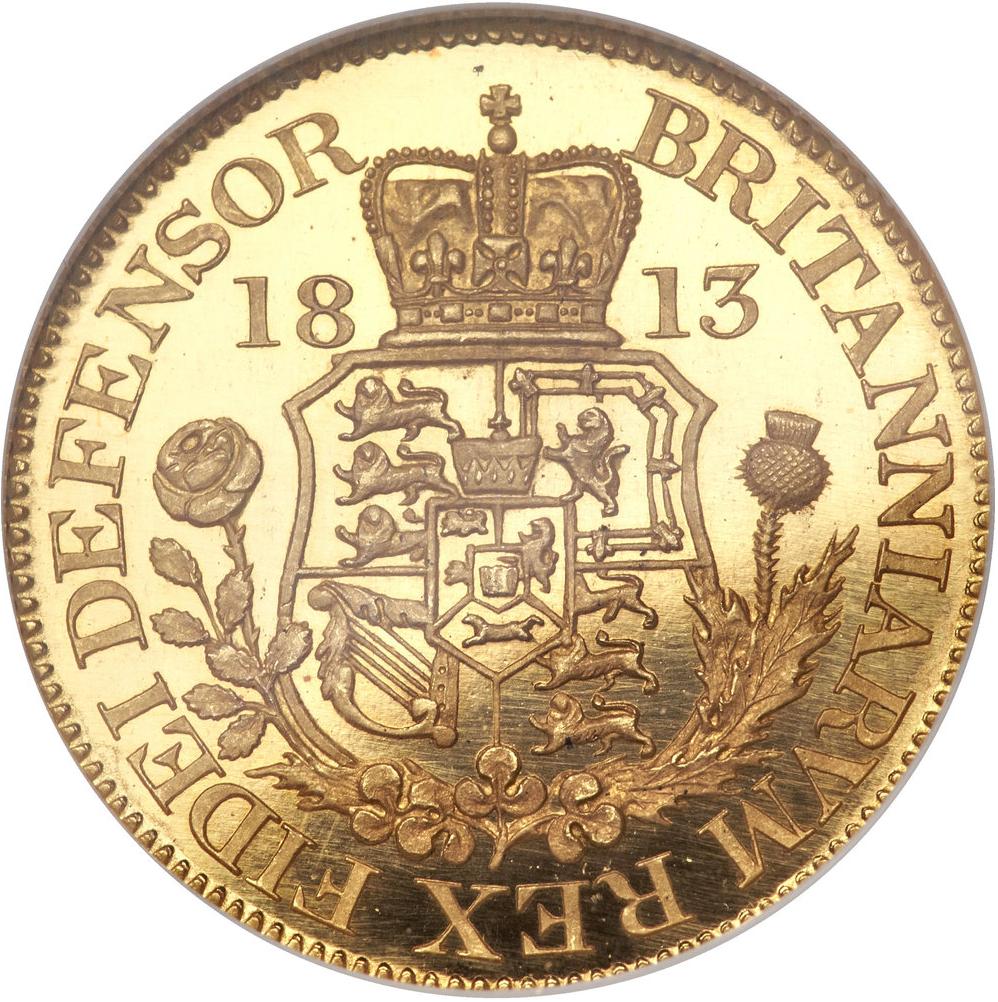
Coat of arms of the United Kingdom during the reign of George III.This is an automatic translation. The original text is:Blason du Royaume-Uni durant le règne de George III.
1 Guinea - George III Pattern market value
Find this on eBay
Affiliate1 Guinea - George III Pattern price history
Daily limit reached1 Guinea - George III Pattern value by grade
Realised auction prices · ⭐ Pro Expand rows for individual sale records| Grade | Latest | Median | 30d Δ | All-time range | Sales (1yr) | Total sales | Last sale | |
|---|---|---|---|---|---|---|---|---|
| PR-63 | £26,500.00 🔒 | £26,500.00 (1) | – | £26,500.00 – £26,500.00 | 0 | 1 | 24-05-2025 | |
|
Loading…
|
||||||||
| PR-65 | £25,666.19 🔒 | £25,666.19 (1) | – | £25,666.19 – £25,666.19 | 1 | 1 | 12-01-2026 | |
|
Loading…
|
||||||||
About the 1813 1 Guinea - George III Pattern
The 1813 1 Guinea - George III Pattern is a collector 1 guinea coin, struck in 91.67% gold. Reverse design: Coat of arms of the United Kingdom during the reign of George III.This is an automatic translation. The original text is:Blason du Royaume-Uni durant le règne de George III.
It is no longer legal tender, so its value is to collectors only.
Common questions
How much is the 1813 1 Guinea - George III Pattern worth?
Verified sold prices for the 1813 1 Guinea - George III Pattern run from £25,666 to £26,500 across 2 grades, taking the median for each grade. Condition makes the difference, so check the grade table above before pricing one.
What is the difference between the 1813 pattern guinea and the military guinea?
The military guinea is the currency coin, struck from February to June 1813 to pay Wellington's army. The patterns are separate trial pieces of the same year, catalogued by Wilson and Rasmussen as numbers 117 to 122, struck with both plain and milled edges at the Tower Hill Mint.
How many 1813 pattern guineas were made?
No number struck is recorded. The Royal Mint Museum holds five examples, catalogued in its 1874 and 1906 collection catalogues, two of them from the collection of Sir Joseph Banks. That count is of surviving museum pieces, not a mintage.
Who engraved the 1813 pattern guinea?
Clayton captions a proof pattern of 1813 as by Thomas Wyon, without saying whether the father or the son. The Royal Mint Museum credits the portrait on the issued military guinea to Nathaniel Marchant.
History and design
The guinea came back in 1813 after a gap of 14 years, struck to pay Wellington's army in the Peninsular War. The Royal Mint Museum notes it was the only guinea struck at the Mint's new premises on Tower Hill, and the Royal Mint says the currency coins were struck only between February and June of that year. Alongside them the Mint produced pattern guineas, trial strikings that are catalogued separately by Wilson and Rasmussen as numbers 117 to 122.
The Royal Mint Museum holds five of them, RMM 948 to 952, all in gold and all recorded in the Mint's collection catalogues of 1874 and 1906. Two carry numbers from the collection of Sir Joseph Banks, the botanist and coin collector who sat on the Privy Council's committee on the coinage. No number struck is recorded.
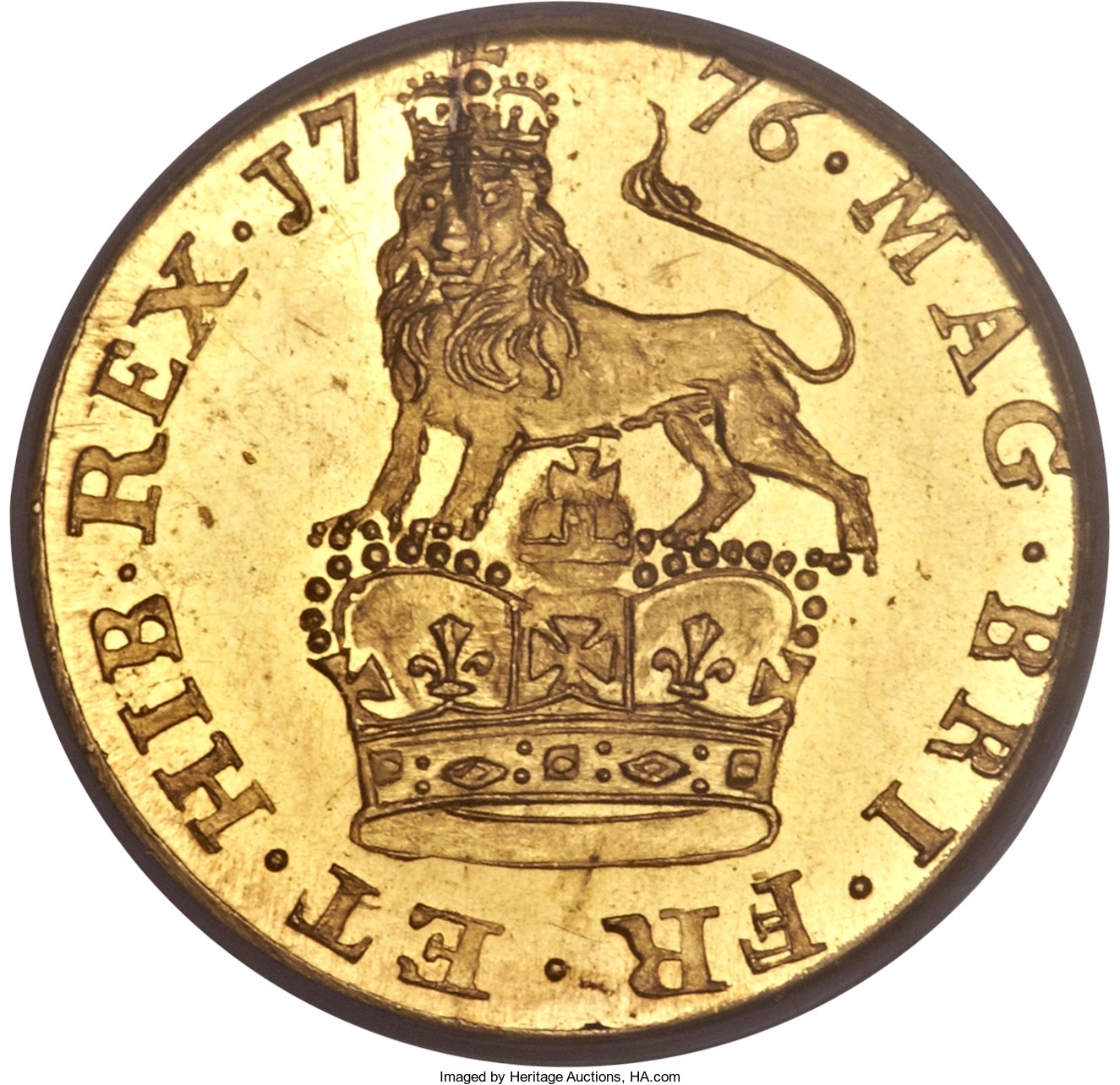
Clayton illustrates a proof pattern of 1813 as the work of Thomas Wyon. The Royal Mint Museum records that Thomas Wyon junior joined the Mint in 1811 as a young artist of promising abilities, assisted for a time by his father, and became Chief Engraver in 1815. On the issued military guinea the museum credits the portrait to Nathaniel Marchant and the reverse is attributed to Lewis Pingo: a crowned shield within the Garter with BRITANNIARUM REX FIDEI DEFENSOR.
The museum's five examples differ in their edges. Two are plain-edged and three are milled, and one milled piece weighs 9.74 g against about 8.4 g for the others.
Varieties and errors
The plain and milled edges are the recorded differences. Further die differences between the Wilson and Rasmussen numbers are not described in the museum records.
Collecting notes
Most 1813 guineas on the market are the currency military guinea or its proofs. A coin offered as a pattern should come with a Wilson and Rasmussen number and a clear description of how it differs from the issued coin. A plain edge is one sign, since the currency coin is grained.
Sources
The history, design, varieties and collecting notes on this page are drawn from these sources. Prices come from recorded sales, not from them.
- Object search: George III pattern guinea (RMM 948 to 952), The Royal Mint Museum, via Museum Data Service (read 12 Oct 2026)
- Pictures of Guineas and Sovereigns of George III, Tony Clayton, Coins of the UK (read 12 Oct 2026)
- George III, Royal Mint Museum (read 12 Oct 2026)
- 1813 George III 'Military' Guinea, The Royal Mint (read 12 Oct 2026)
- George III pattern guinea, 1813 (RMM 948), The Royal Mint Museum, via Museum Data Service (read 12 Oct 2026)
- Great Britain 1813 guinea, CoinVarieties (read 12 Oct 2026)
- George III guinea, 1813 (RMM 947), The Royal Mint Museum, via Museum Data Service (read 12 Oct 2026)
More 1 Guinea coins from nearby years