1 Guinea - George II Intermediate portrait (1739–1746)
| Country | United Kingdom |
| Year | 1739–1746 |
| Denomination | 1 Guinea |
| Face value | £1.05 |
| Mint | Royal Mint · Llantrisant |
| Circulation | Circulating |
| Demonetised | 1891 |
| Composition | Gold (.9167) (917/1000 fine) |
| Weight | 8.400g · 0.2476 t oz |
| Diameter | 25.0mm |
| Shape | Round |
| Edge | Milled |
| Orientation | Coin alignment ↑↓ |
| Obv. artist | John Sigismund Tanner |
| Rev. artist | John Sigismund Tanner |
| Grade scale | UK (EF/UNC) |
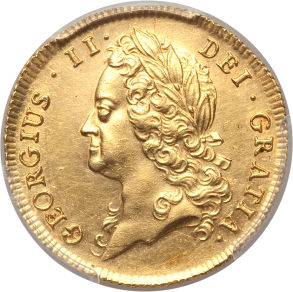
Intermediate laureate portrait of King George II left, legend around.
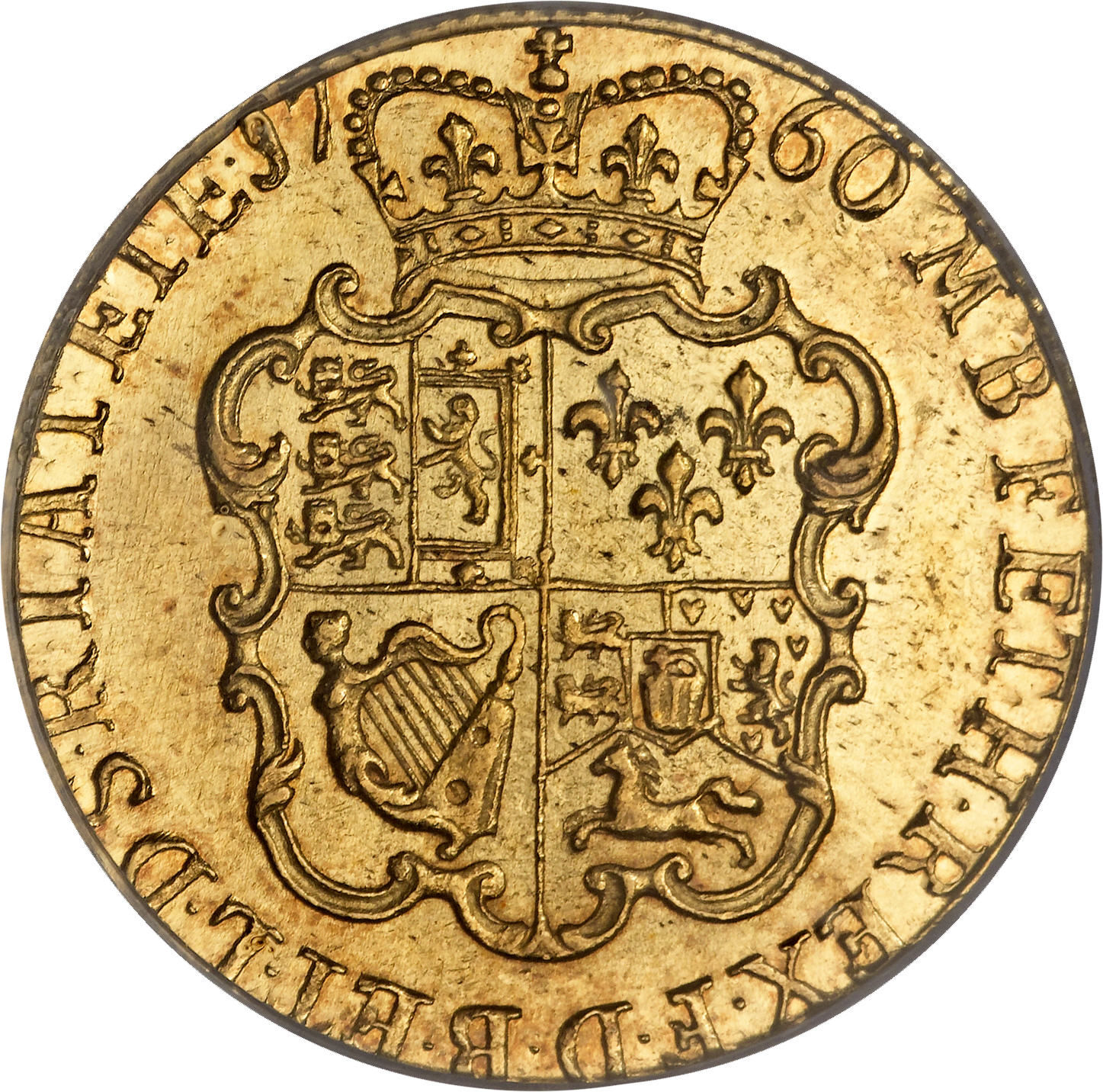
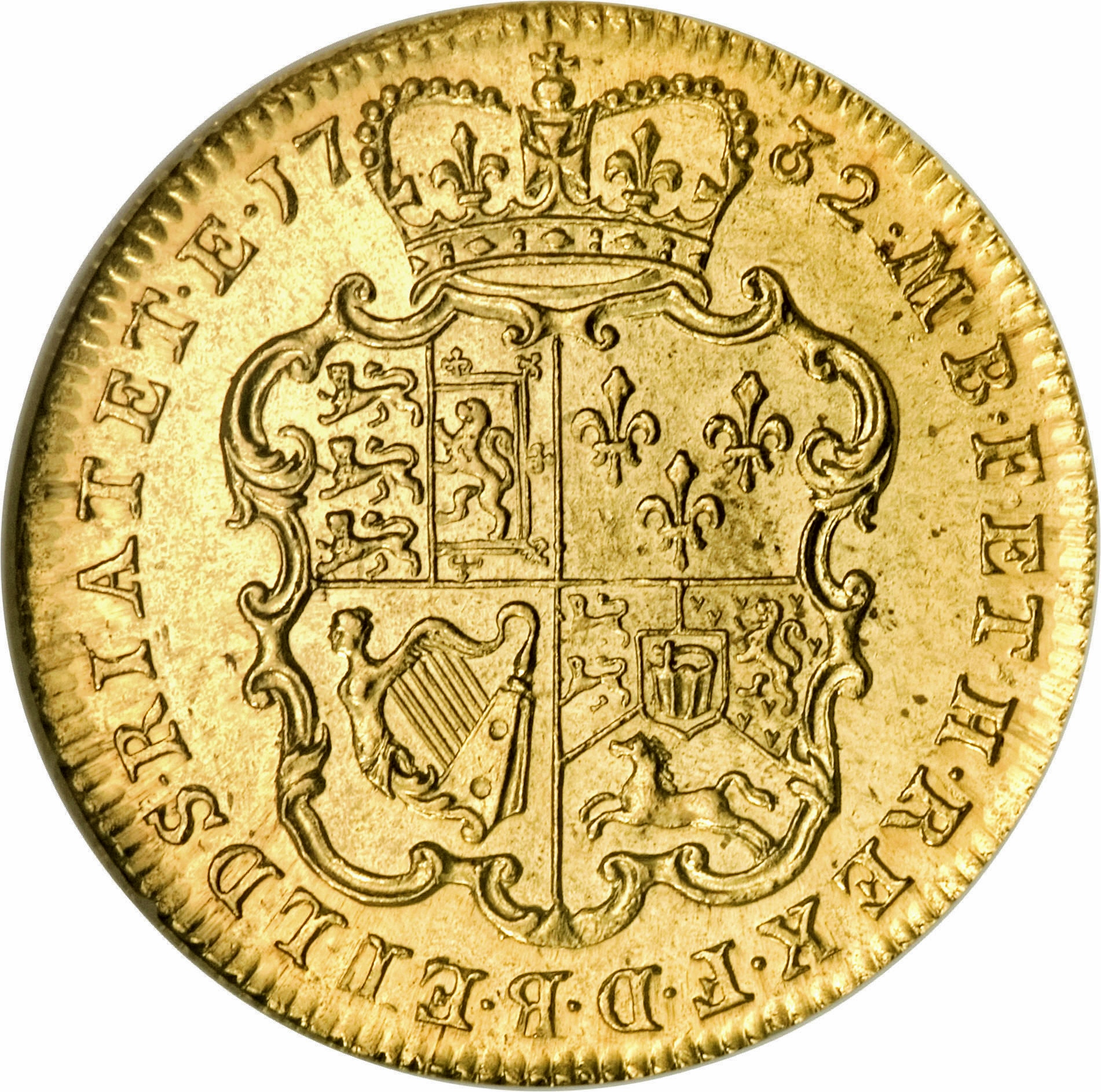
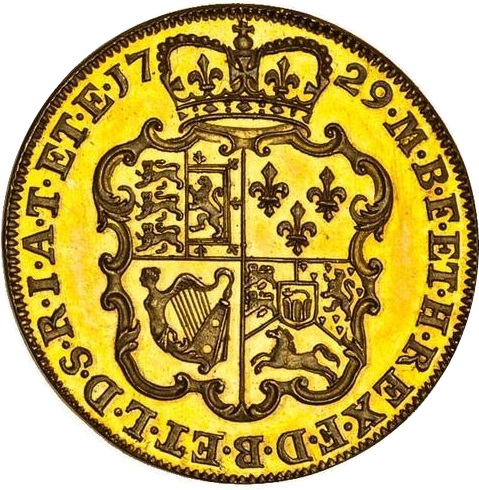
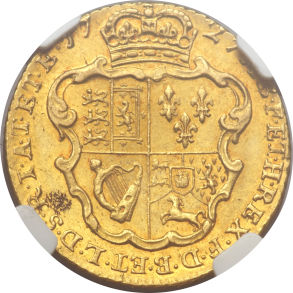
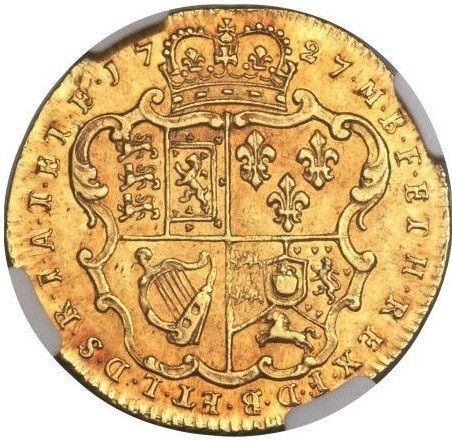
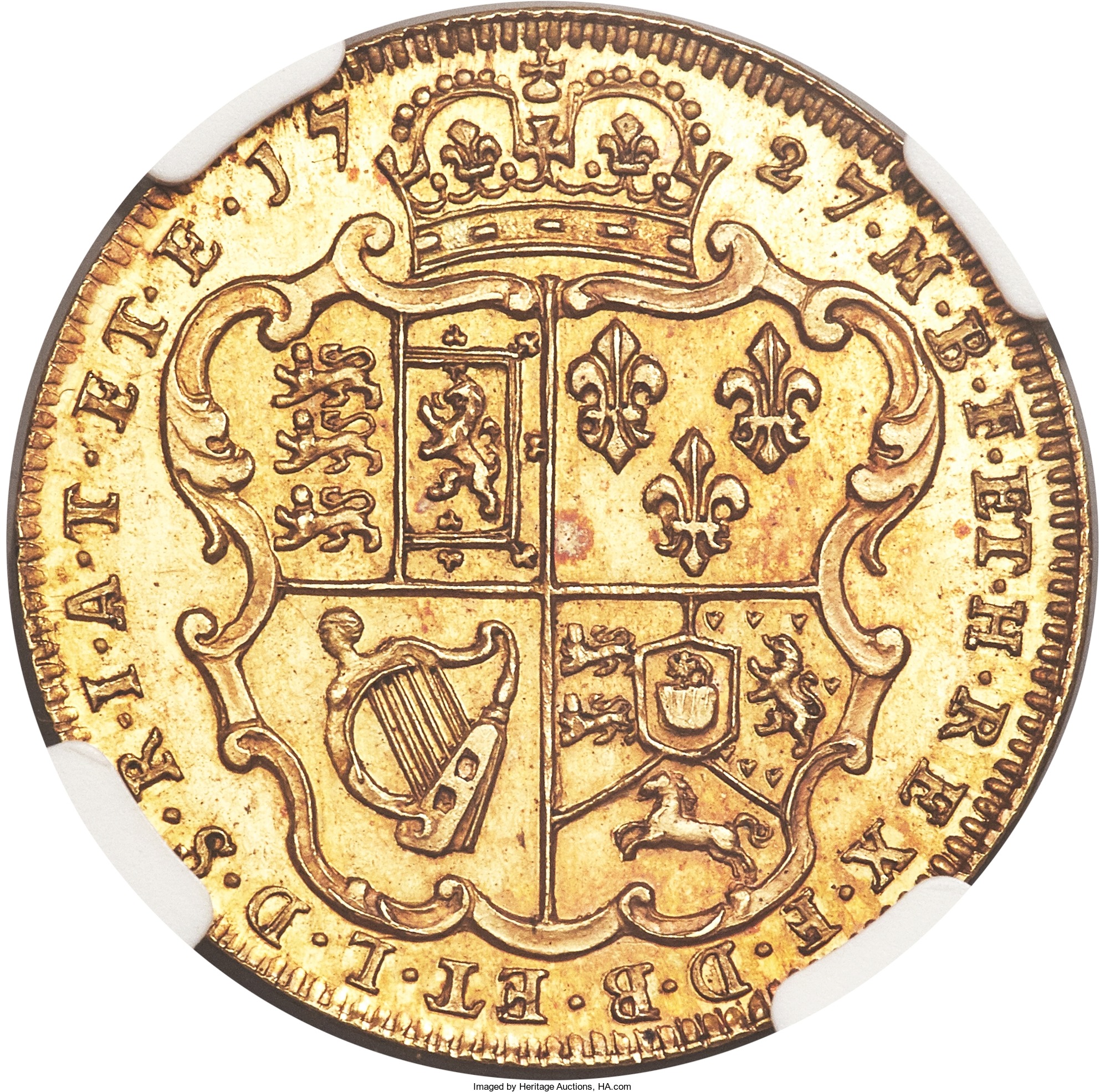
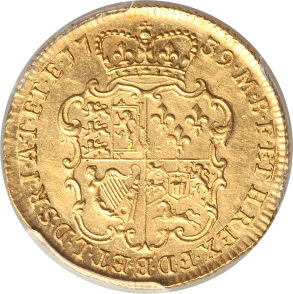
Crowned quartered shield of arms, divided date above, legend around.
Find this on eBay
Affiliate1 Guinea - George II Intermediate portrait value by grade
Realised auction prices · ⭐ Pro Expand rows for individual sale records| Grade | Latest | Median | 30d Δ | All-time range | Sales (1yr) | Total sales | Last sale | |
|---|---|---|---|---|---|---|---|---|
| F | £1,100.00 🔒 | £1,100.00 (1) | – | £1,100.00 – £1,100.00 | 0 | 1 | 02-09-2018 | |
|
Loading…
|
||||||||
About the 1739 1 Guinea - George II Intermediate portrait
The 1739 1 Guinea - George II Intermediate portrait is a circulating 1 guinea coin issued from 1739 to 1746, struck in 91.67% gold. It weighs 8.4g and measures 25mm across. Reverse design: Crowned quartered shield of arms, divided date above, legend around.
It is no longer legal tender (withdrawn 1891), so its value is to collectors only.
Common questions
How much is the 1739 1 Guinea - George II Intermediate portrait worth?
The 1739 1 Guinea - George II Intermediate portrait has a price in one grade on MyCoinage so far: £1,100 in F, the median of its verified sales. Its gold content is worth about £744 at today's spot price, which puts a floor under its value.
How many George II intermediate head guineas were made?
No mintage is published for any date of this type, and CoinVarieties records the figure as unknown. The Royal Mint notes that gold to the value of 283,854 pounds was coined in calendar year 1739, but that total covers every gold denomination, not guineas alone.
What does LIMA mean on a 1745 guinea?
It marks gold that the Royal Mint Museum says was mined in Peru. Wikipedia links it to Admiral Anson's voyage round the world. The museum says it was more likely brought home by the privateers Duke and Prince Frederick, who captured it from French ships sailing from Callao in Peru.
What is the EIC guinea?
A guinea with the letters EIC under the king's head, struck from gold imported by the East India Company. A Royal Warrant of November 1729 authorised the mark, and the Royal Mint Museum records it on guineas of 1729, 1731, 1732 and 1739. The 1739 coins carry this intermediate head.
Who designed the intermediate head guinea?
John Sigismund Tanner. The Royal Mint Museum says that by 1739 John Croker, then 69, was too infirm to cut the dies for a new, older portrait of George II, so Tanner made them. He succeeded Croker as Chief Engraver in 1741.
Is a George II guinea still legal tender?
No. Wikipedia records that all gold coins from before Victoria's reign were called in by Royal Proclamation on 22 November 1890 and demonetised from 28 February 1891. The guinea had already been replaced by the sovereign after the Great Recoinage of 1816.
How do I identify the 1739 1 Guinea - George II Intermediate portrait?
Check the weight 8.4g and diameter 25mm and the metal (91.67% gold) against the specification table on this page. The reverse design is described above.
History and design
The intermediate head was the second portrait of George II on his guinea. The Royal Mint says it was introduced in 1739 for the two guineas and guinea, a year before it reached the half guinea. The Royal Mint Museum explains why: John Croker, who had cut the young head, was 69 by 1739 and too infirm to make the tooling for an older portrait, so the dies were the work of his assistant, John Sigismund Tanner.
Clayton lists the type for 1739, 1740, 1741 (as 1741/39), 1743, 1745 and 1746; Wikipedia notes no guineas were struck in 1742 or 1744. No mintage is published for any date, though the Royal Mint records that 283,854 pounds' worth of gold was coined in 1739 across all denominations. Clayton calls 1741 and 1743 rare. Two dates carry provenance marks: EIC in 1739 for East India Company gold, and LIMA in 1745.
The obverse is Tanner's laureate head facing left. Wikipedia and the Royal Mint both give the legend with a U, GEORGIUS II, for 1739 to 1743, where the young head reads GEORGIVS. CoinVarieties records a subtype with larger obverse letters for 1745 and 1746.
The reverse is a single crowned shield quartering the arms of England and Scotland, France, Hanover and Ireland, with the date divided by the crown and the legend M B F ET H REX F D B ET L D S R I A T ET E. The Royal Mint Museum credits the shield to John Ochs. In 1739 the edge graining was changed to a curved or chevron pattern after the Reverend Peter Vallavine suggested it to deter filing.
Varieties and errors
The 1739 EIC guinea uses this head, and CoinVarieties notes EIC appears with it only in that year. The Royal Mint Museum holds a 1745 LIMA guinea weighing 8.38 g. The museum attributes the LIMA gold to the privateers Duke and Prince Frederick, who took it from French ships out of Callao; Wikipedia links it instead to Admiral Anson's voyage. Clayton lists the 1741 date only as an overdate, 1741/39.
Collecting notes
Check the portrait first, since 1739 was also struck with the young head on the two guineas, and look under the head for EIC or LIMA. The chevron graining should run evenly round the edge; filing or a smooth band suggests the coin was trimmed or mounted. Clayton describes the LIMA coin as scarce.
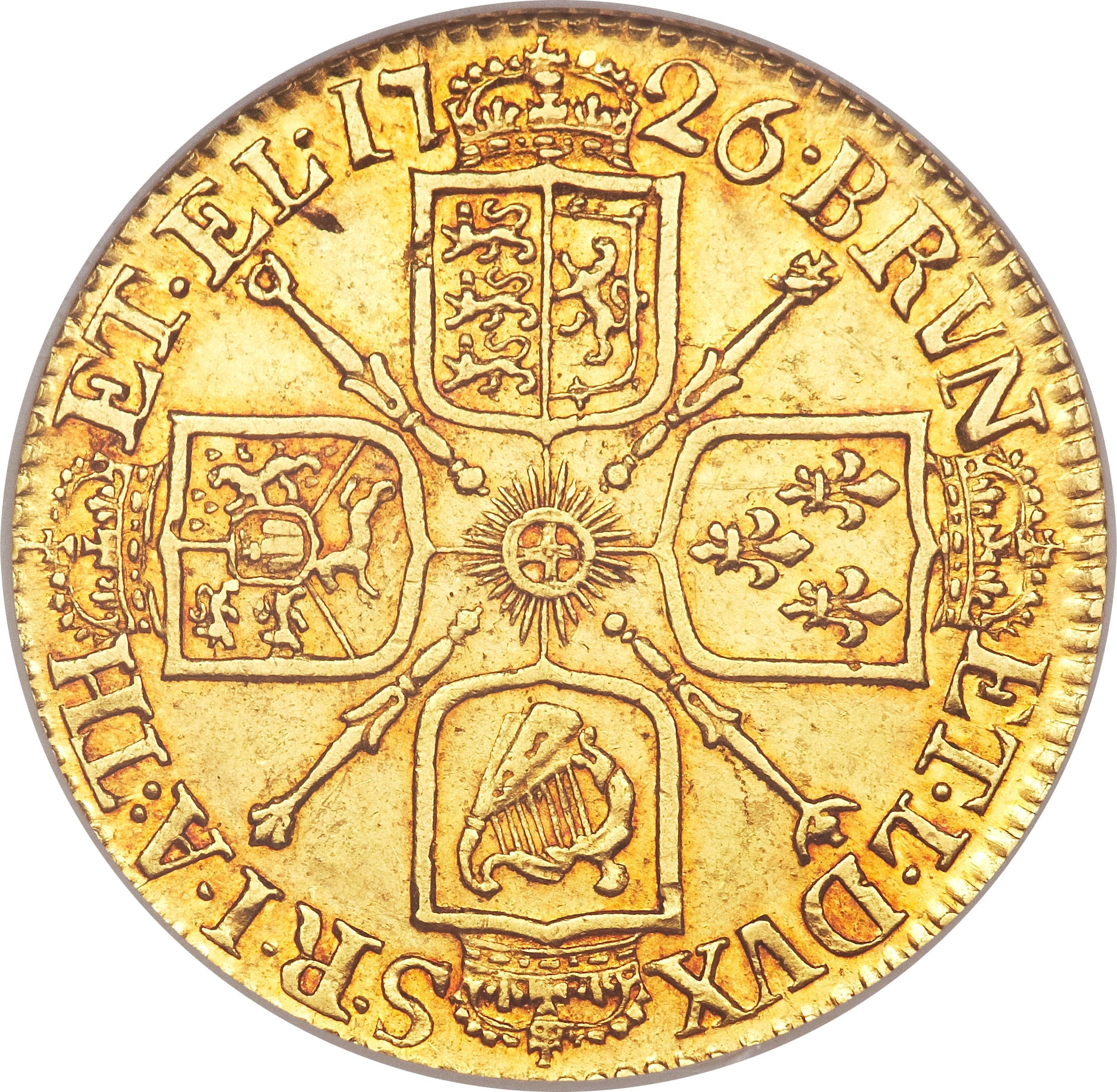
The type was followed in 1747 by the older head guinea.
Sources
The history, design, varieties and collecting notes on this page are drawn from these sources. Prices come from recorded sales, not from them.
- George II, Royal Mint Museum (read 12 Oct 2026)
- Great Britain 1739 guinea, CoinVarieties (read 12 Oct 2026)
- George II 1739 Guinea, First Year For The Intermediate Bust, The Royal Mint (read 12 Oct 2026)
- Guinea (coin), Wikipedia (read 12 Oct 2026)
- One Pound (The Sovereign or Guinea), Tony Clayton, Coins of the UK (read 12 Oct 2026)
- Values of One Pound coins and Guineas, Tony Clayton, Coins of the UK (read 12 Oct 2026)
- Great Britain 1745 guinea, CoinVarieties (read 12 Oct 2026)
- Great Britain 1739-EIC guinea, CoinVarieties (read 12 Oct 2026)
- George II guinea, 1745, LIMA (RMM 470), The Royal Mint Museum, via Museum Data Service (read 12 Oct 2026)
- Sovereign (British coin), Wikipedia (read 12 Oct 2026)
More 1 Guinea coins from nearby years