1 Guinea - George I Pattern (1727)
| Country | United Kingdom |
| Year | 1727 |
| Denomination | 1 Guinea |
| Face value | £1.05 |
| Mint | Royal Mint · Llantrisant |
| Circulation | Non-circulating |
| Demonetised | Yes |
| Composition | Gold (.9167) (917/1000 fine) |
| Weight | 8.410g · 0.2479 t oz |
| Shape | Round |
| Edge | Milled |
| Orientation | Coin alignment ↑↓ |
| Grade scale | UK (EF/UNC) |
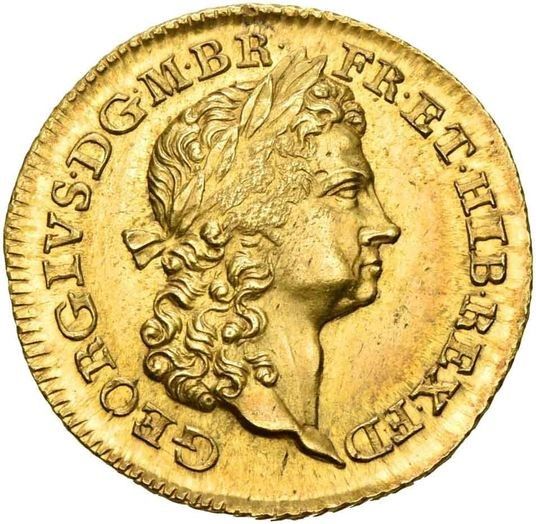
Legend around laureate portrait of King George I right.
GEORGIVS D G M BR FR ET HIB REX F D
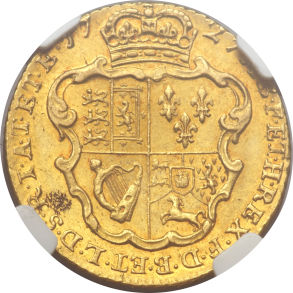
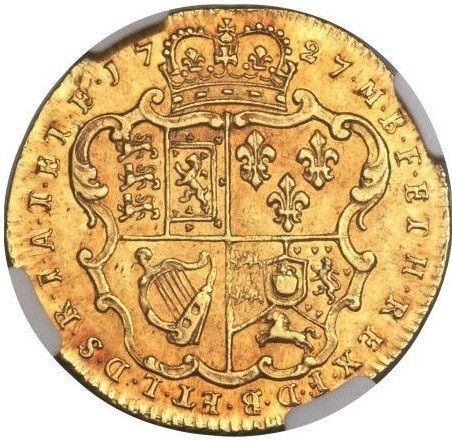
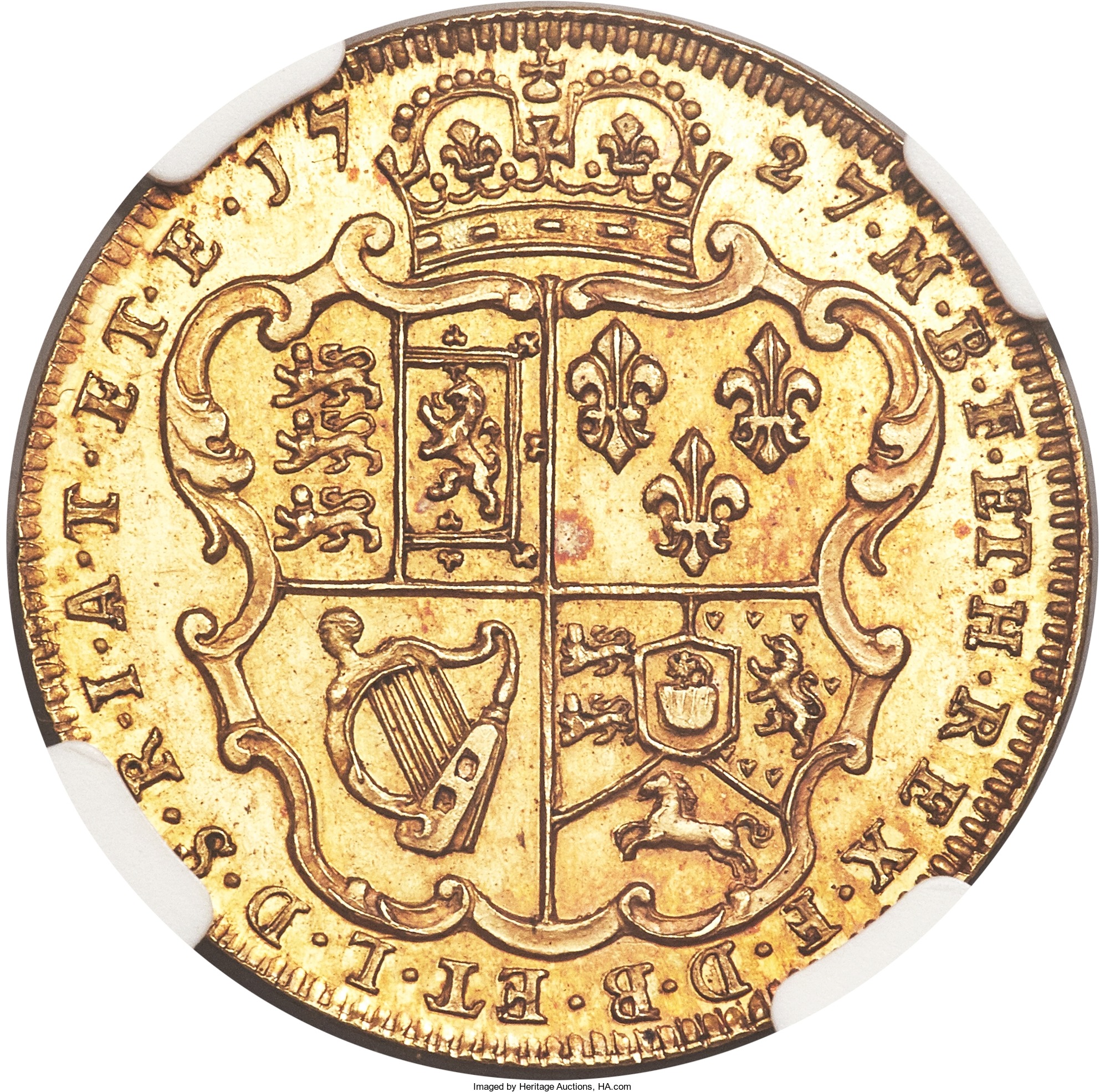
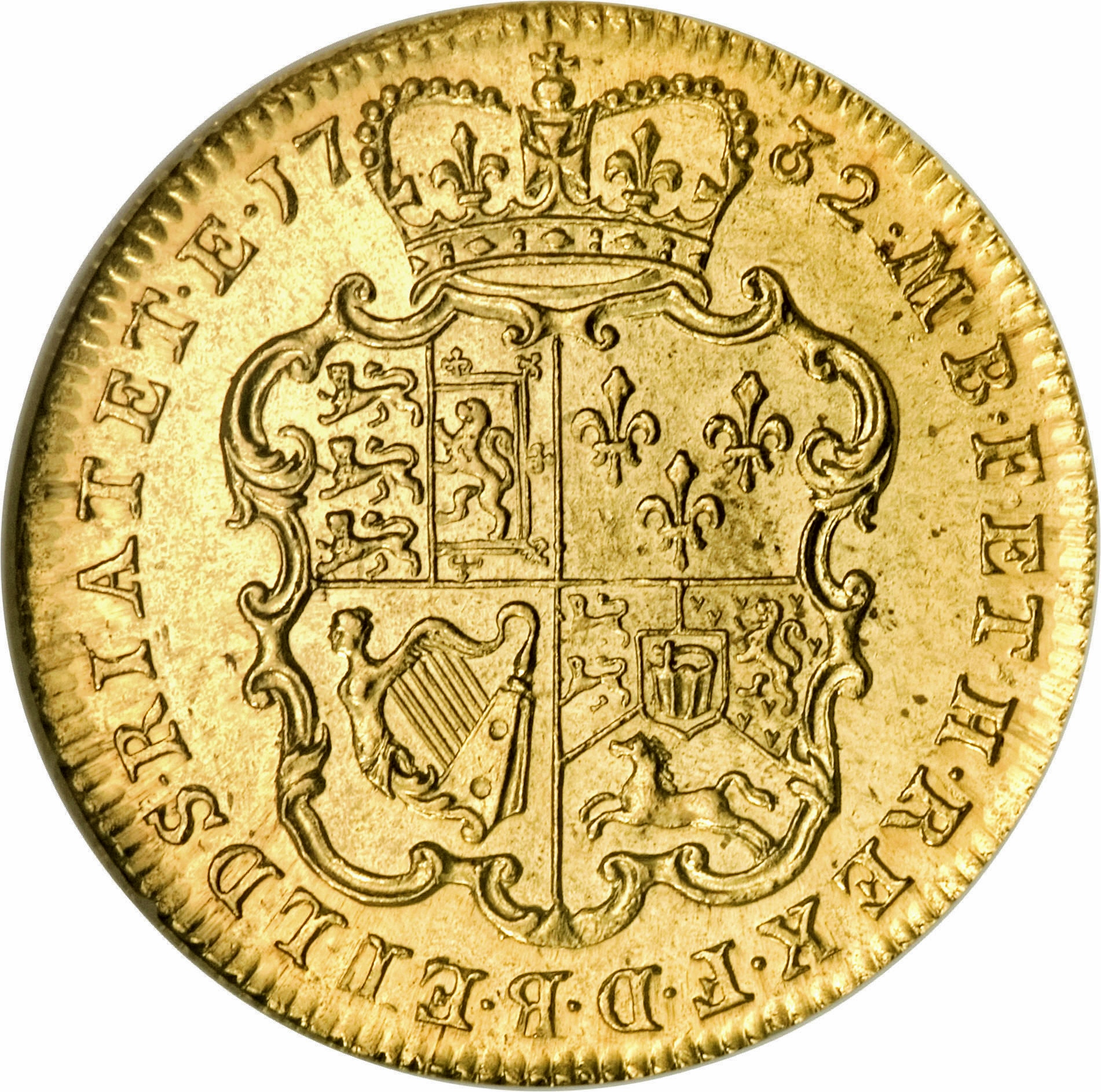
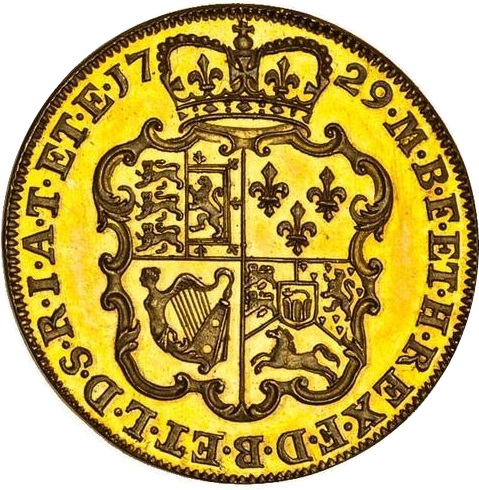
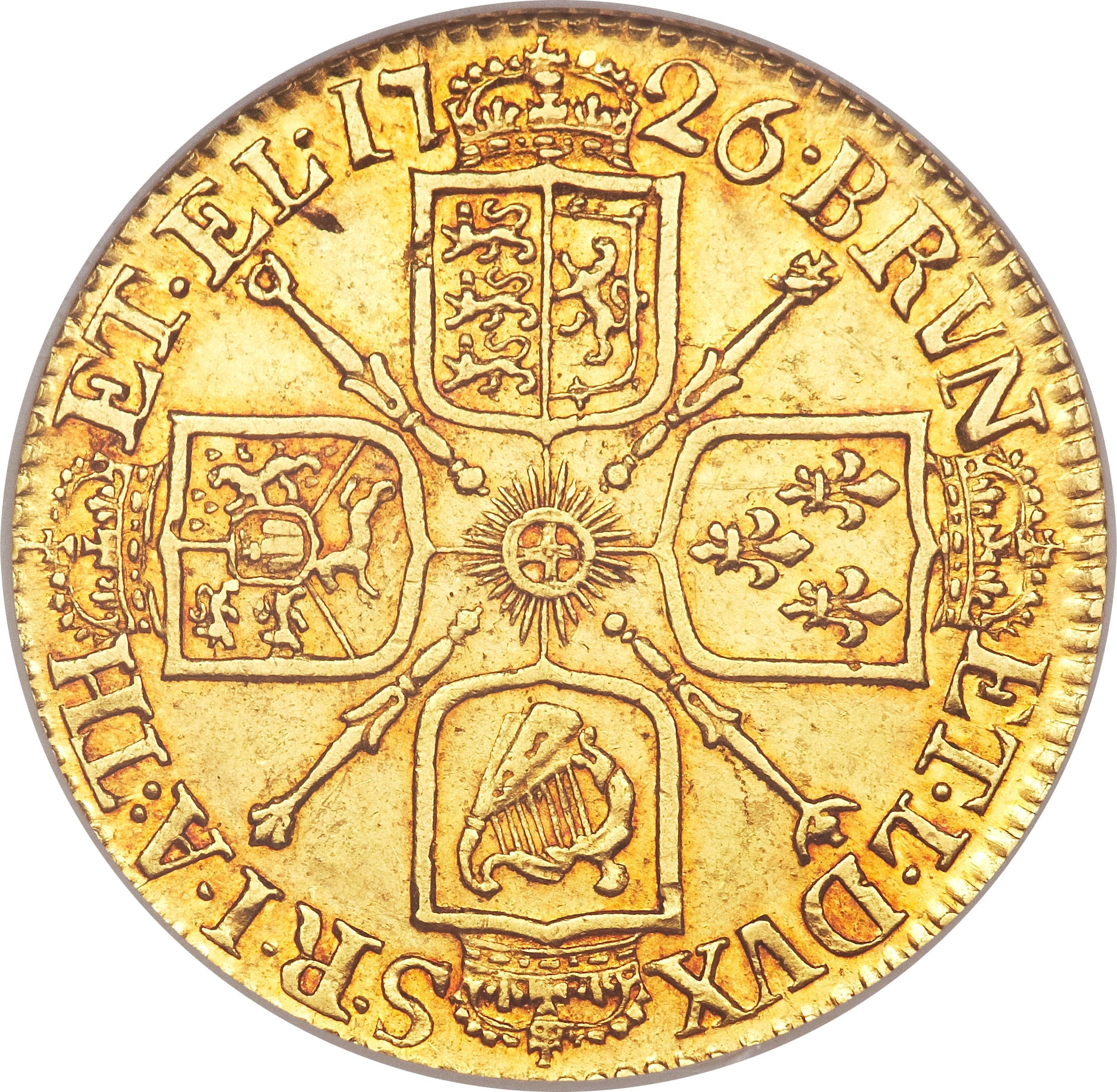
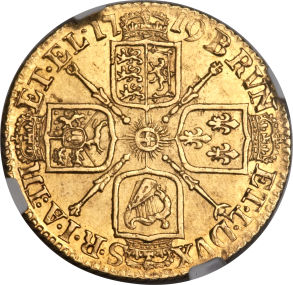
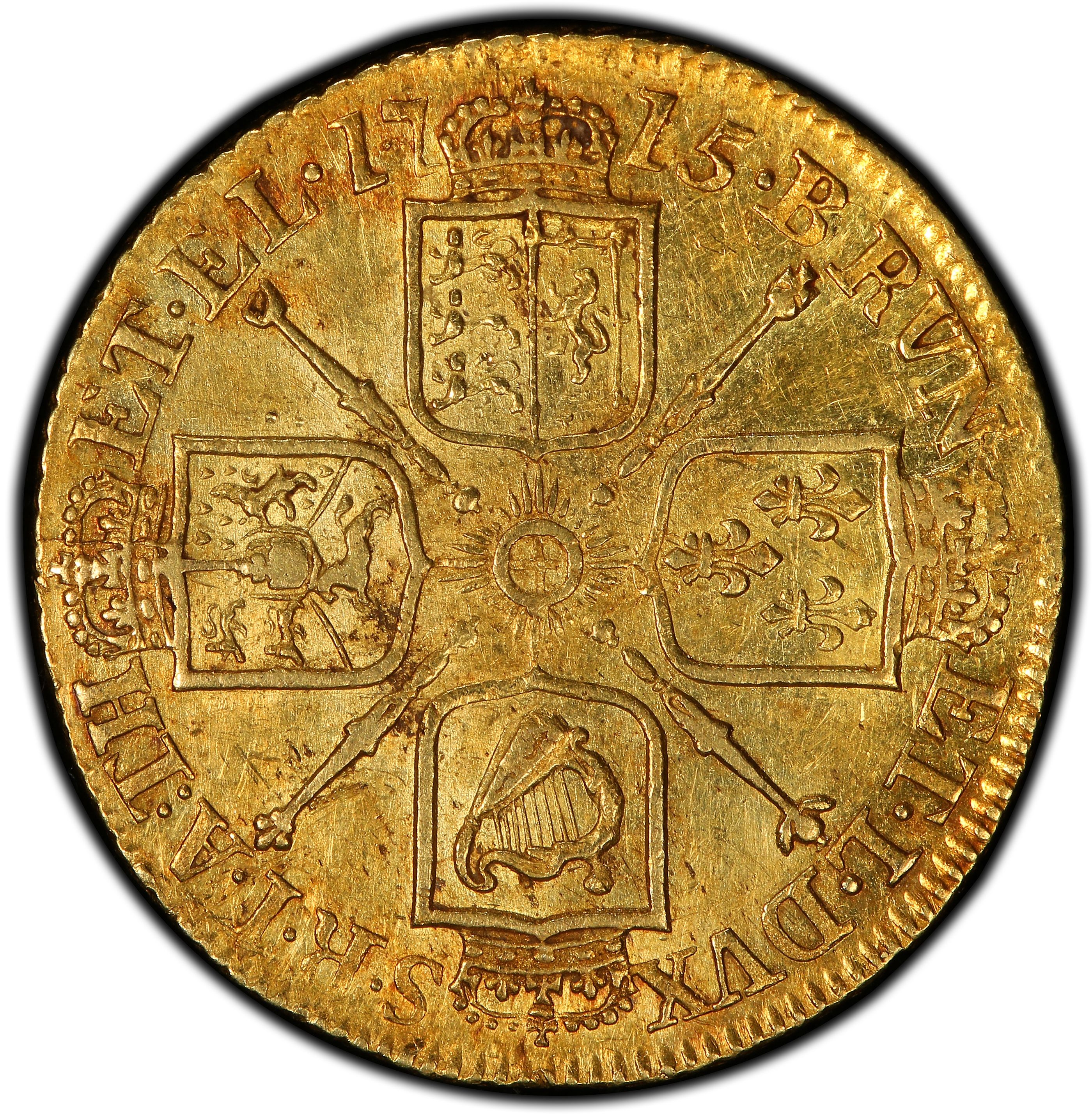
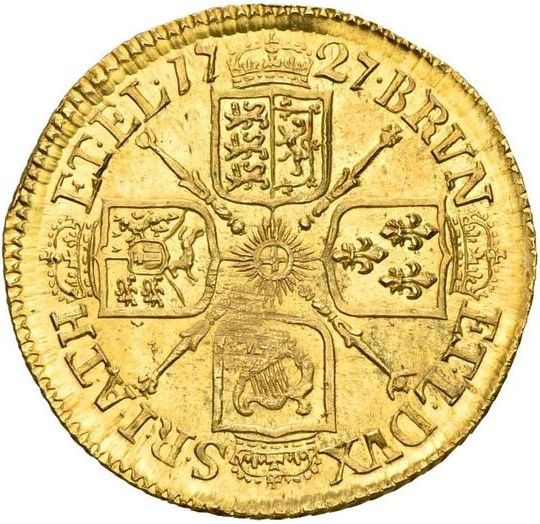
Crowned cruciform shields of arms around central Garter star, sceptres in angles, legend around, divided date above.
BRVN ET L DVX S R I A TH ET EL
Find this on eBay
Affiliate1 Guinea - George I Pattern price history
Daily limit reachedAbout the 1727 1 Guinea - George I Pattern
The 1727 1 Guinea - George I Pattern is a collector 1 guinea coin, struck in 91.67% gold. It weighs 8.41g. Reverse design: Crowned cruciform shields of arms around central Garter star, sceptres in angles, legend around, divided date above.
It is no longer legal tender, so its value is to collectors only.
Common questions
How much is the 1727 1 Guinea - George I Pattern worth?
No verified sale of the 1727 1 Guinea - George I Pattern has been logged on MyCoinage yet. Its gold content is worth about £743 at today's spot price, which puts a floor under its value.
What is the 1727 George I pattern guinea?
A trial striking of a guinea dated 1727, catalogued by the Royal Mint Museum as a pattern rather than a coin issued for circulation. It pairs a new portrait, with long curly hair and a bare neck reaching almost to the edge, with the usual four-shield guinea reverse.
How many 1727 pattern guineas were made?
No number struck is recorded. The Royal Mint Museum's example, RMM 293, is listed in the Mint's collection catalogues of 1874 and 1906 and in Wilson and Rasmussen's pattern catalogue as number 66. Other examples were not traced.
How is the pattern different from an ordinary 1727 guinea?
The reverse and legends follow the circulating guinea. The difference is the portrait: Hocking's 1906 catalogue describes long curly hair and a bare neck that extends almost to the rim, unlike the small fifth head on guineas issued from 1723 to 1727.
How do I identify the 1727 1 Guinea - George I Pattern?
Check the weight 8.41g and the metal (91.67% gold) against the specification table on this page. The reverse design is described above.
History and design
This is a pattern guinea dated 1727, the last year of George I's reign. A pattern is a trial striking made to test or show a design, not a coin issued into circulation. The Royal Mint Museum holds an example, RMM 293, in gold and weighing 8.37 g. It has been in the Mint's collection since at least the 1874 catalogue by Webster, and Hocking listed it among the patterns and proofs of the reign in 1906.
Circulating guineas of 1727 carry the fifth portrait, the small older head introduced in 1723. The pattern's interest lies in a different and fuller portrait that was not adopted for the currency. No number struck is recorded, and the Museum's record cites it as number 66 in Wilson and Rasmussen's pattern catalogue.
Hocking describes the obverse as a laureate bust of the king to the right, with long, curly hair and a bare neck that extends almost to the edge of the coin. The legend is the usual GEORGIVS D G M BR FR ET HIB REX F D.
The reverse follows the circulating guinea: four crowned shields arranged in a cross, with sceptres between them topped by an orb, a thistle, a lis and a harp, and the Star of the Garter at the centre. The legend begins BRVN and gives the king's German titles with the date. The edge is grained obliquely, and the Museum records a die axis of 180 degrees, the same as its circulating George I guineas.
Collecting notes
This is a pattern, not a circulating coin, and the Royal Mint Museum example is the only one traced. Anything offered as a 1727 pattern should be compared with that record: gold, about 8.37 g, obliquely grained edge, and the long-haired, bare-necked head reaching close to the rim. An ordinary 1727 guinea with the small fifth head is not a pattern.
The circulating guinea of the same year is the fifth portrait guinea.
Sources
The history, design, varieties and collecting notes on this page are drawn from these sources. Prices come from recorded sales, not from them.
- George I pattern guinea, 1727 (RMM 293), The Royal Mint Museum, via Museum Data Service (read 12 Oct 2026)
- Catalogue of the Coins, Tokens, Medals, Dies and Seals in the Museum of the Royal Mint, Vol. I Part I (Hocking, 1906), patterns and proofs of George I, Royal Mint Museum library (read 12 Oct 2026)
- Guinea (coin), Wikipedia (read 12 Oct 2026)
- George II, Royal Mint Museum (read 12 Oct 2026)
- Guinea, 1723, fifth laureate head right (lot 96), Spink (read 12 Oct 2026)
More 1 Guinea coins from nearby years