1 Guinea - George II 1st young portrait (1727–1728)
| Country | United Kingdom |
| Year | 1727–1728 |
| Denomination | 1 Guinea |
| Face value | £1.05 |
| Mint | Royal Mint · Llantrisant |
| Circulation | Circulating |
| Demonetised | 1891 |
| Composition | Gold (.9167) (917/1000 fine) |
| Weight | 8.400g · 0.2476 t oz |
| Shape | Round |
| Edge | Milled |
| Orientation | Coin alignment ↑↓ |
| Obv. artist | John Croker |
| Rev. artist | John Ochs |
| Grade scale | UK (EF/UNC) |
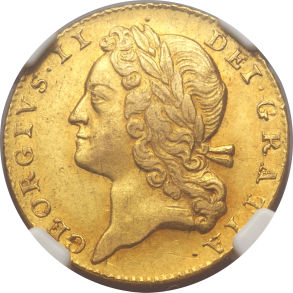
First young laureate portrait of King George II left, legend around.
GEORGIVS II DEI GRATIA
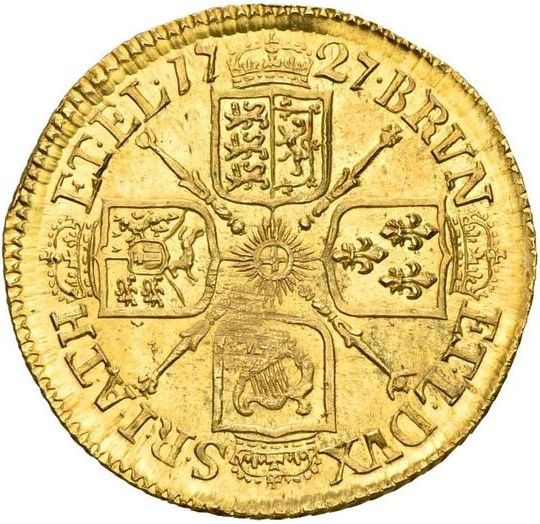
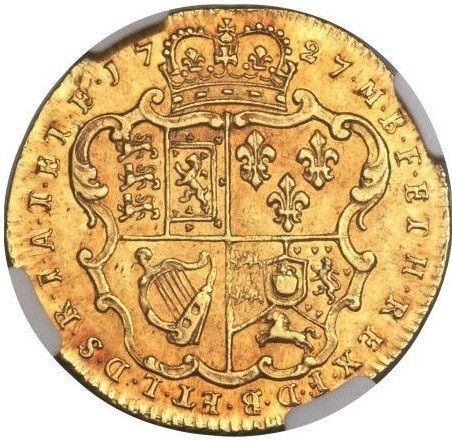
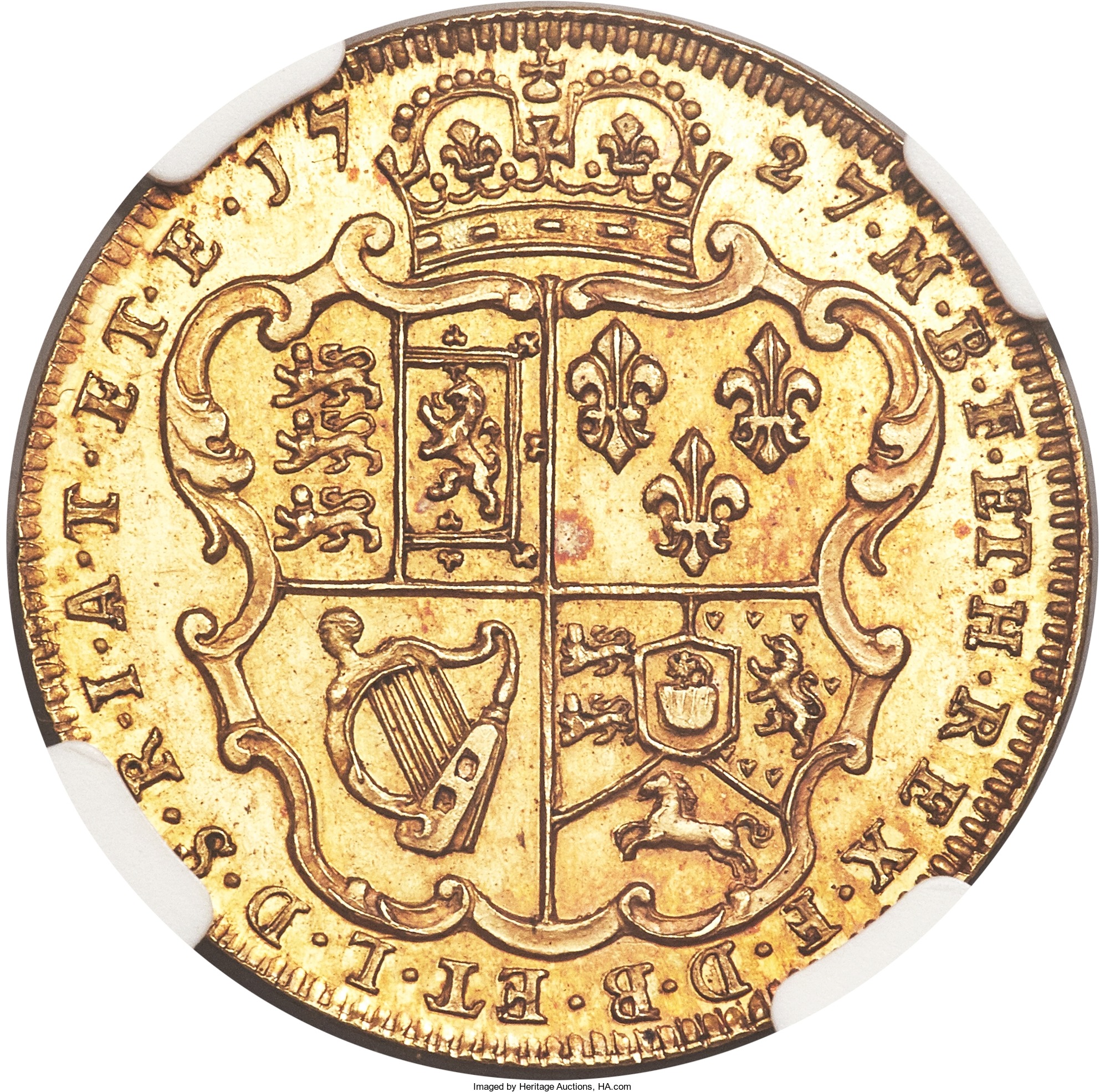
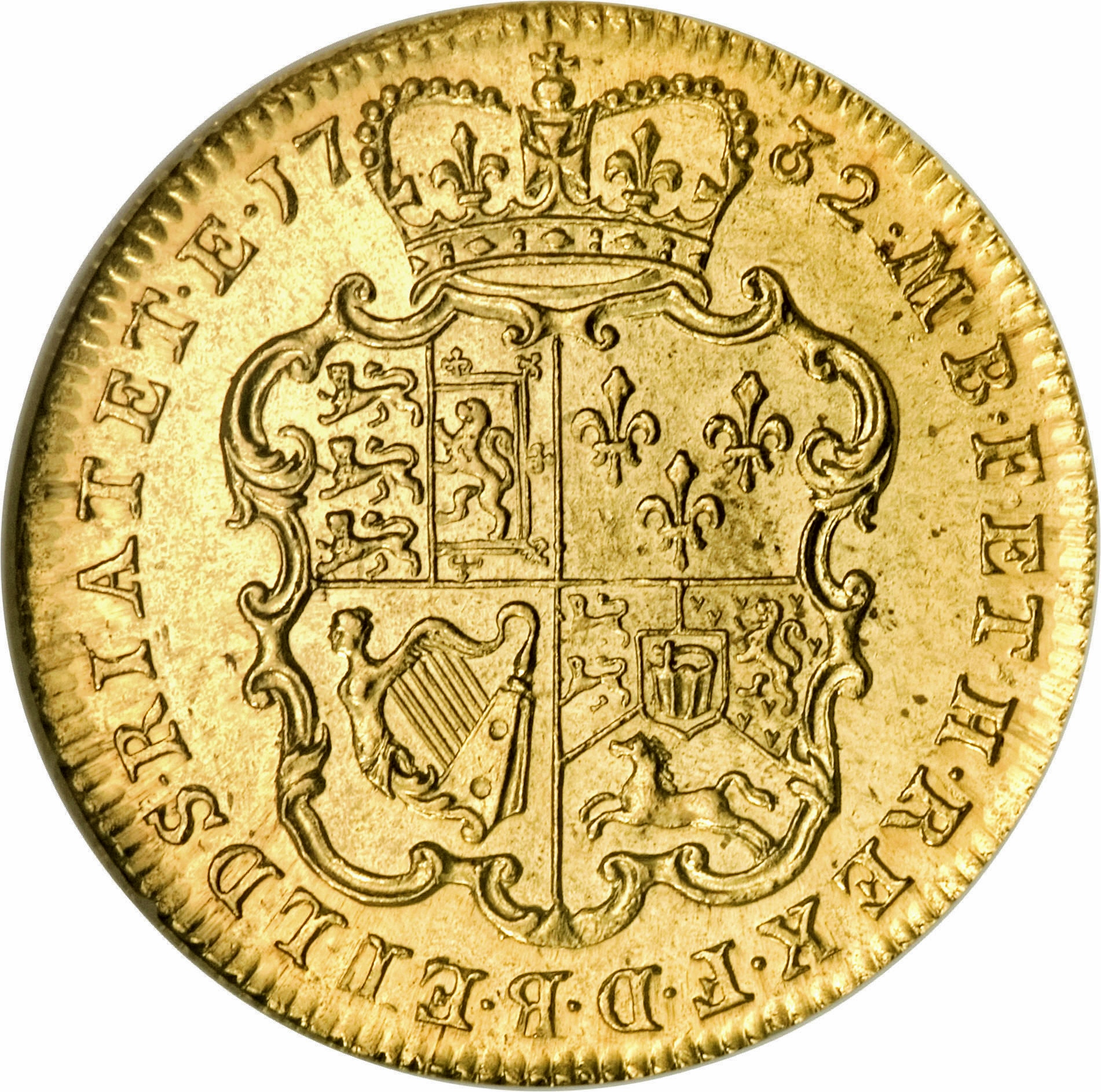
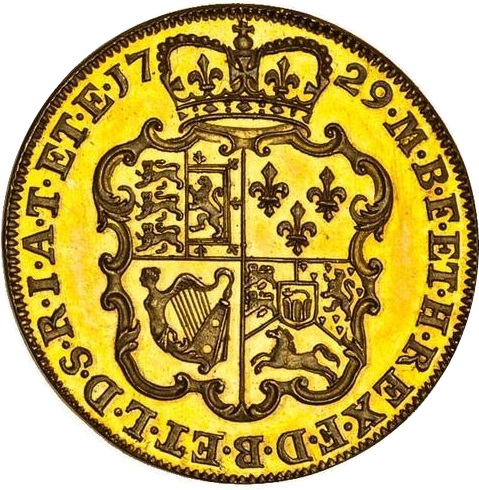
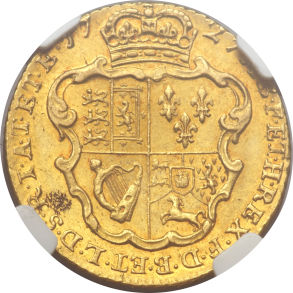
Crowned quartered shield of arms, divided date above, legend around.
M B F ET H REX F D B ET L D S R I A T ET E
Find this on eBay
Affiliate1 Guinea - George II 1st young portrait price history
Daily limit reachedAbout the 1727 1 Guinea - George II 1st young portrait
The 1727 1 Guinea - George II 1st young portrait is a circulating 1 guinea coin issued from 1727 to 1728, struck in 91.67% gold. It weighs 8.4g. Reverse design: Crowned quartered shield of arms, divided date above, legend around.
It is no longer legal tender (withdrawn 1891), so its value is to collectors only.
Common questions
How much is the 1727 1 Guinea - George II 1st young portrait worth?
No verified sale of the 1727 1 Guinea - George II 1st young portrait has been logged on MyCoinage yet. Its gold content is worth about £742 at today's spot price, which puts a floor under its value.
How many 1727 and 1728 George II guineas were struck?
No figure survives. CoinVarieties records the mintage of this type as unknown, which is normal for guineas of the period. It describes the type, struck in 1727 and 1728, as quite scarce.
What is the difference between the two 1727 George II guineas?
The lettering. The first obverse, used only in 1727, has very small letters around the young head. This second obverse has different, larger lettering and was used in both 1727 and 1728. The Royal Mint's 1906 catalogue also notes a large shield and small crown on the first.
Who made the dies for this guinea?
John Croker, Chief Engraver of the Royal Mint, engraved the young head of George II. The Royal Mint Museum says the single crowned shield on the reverse was the work of John Ochs. From 1729 John Sigismund Tanner took over the reverse dies.
Can a George II guinea still be spent?
No. All gold coins from before Queen Victoria's reign were called in by royal proclamation in November 1890 and demonetised from 28 February 1891. The guinea was already obsolete as a denomination after the sovereign replaced it from 1817.
How do I identify the 1727 1 Guinea - George II 1st young portrait?
Check the weight 8.4g and the metal (91.67% gold) against the specification table on this page. The reverse design is described above.
History and design
George II's guineas went through many changes of portrait and lettering; Wikipedia counts eight obverses and five reverses over a reign of 33 years. This entry is the second obverse of the first young head, with lettering different from the small-letter guinea used only in 1727. It was struck in 1727 and again in 1728, and in 1729 a narrower second young head replaced it.
The guinea passed for 21 shillings, the value fixed in 1717. No mintage is recorded for either date, and CoinVarieties, drawing on the standard catalogues, describes the type as quite scarce. An NGC AU58 example of 1728 weighed 8.32 g against a standard of 8.35 g.
The obverse carries John Croker's young laureate head of the king facing left, with GEORGIVS II DEI GRATIA. Croker, born in Dresden, had been Chief Engraver since 1705; in 1729 the Master of the Mint warned that he was the only man then living able to make the puncheons for the king's head, and John Sigismund Tanner was appointed as his assistant.
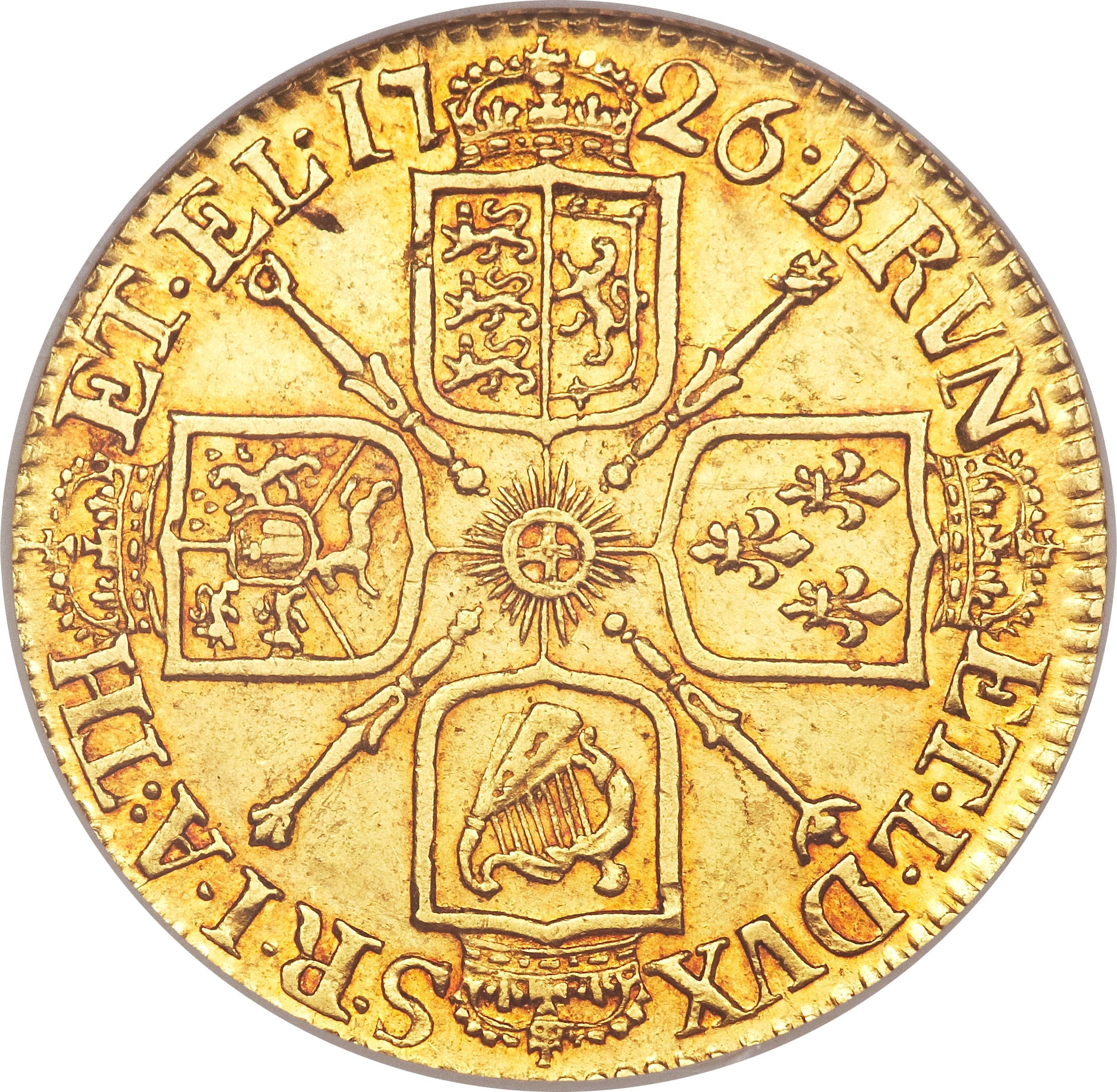
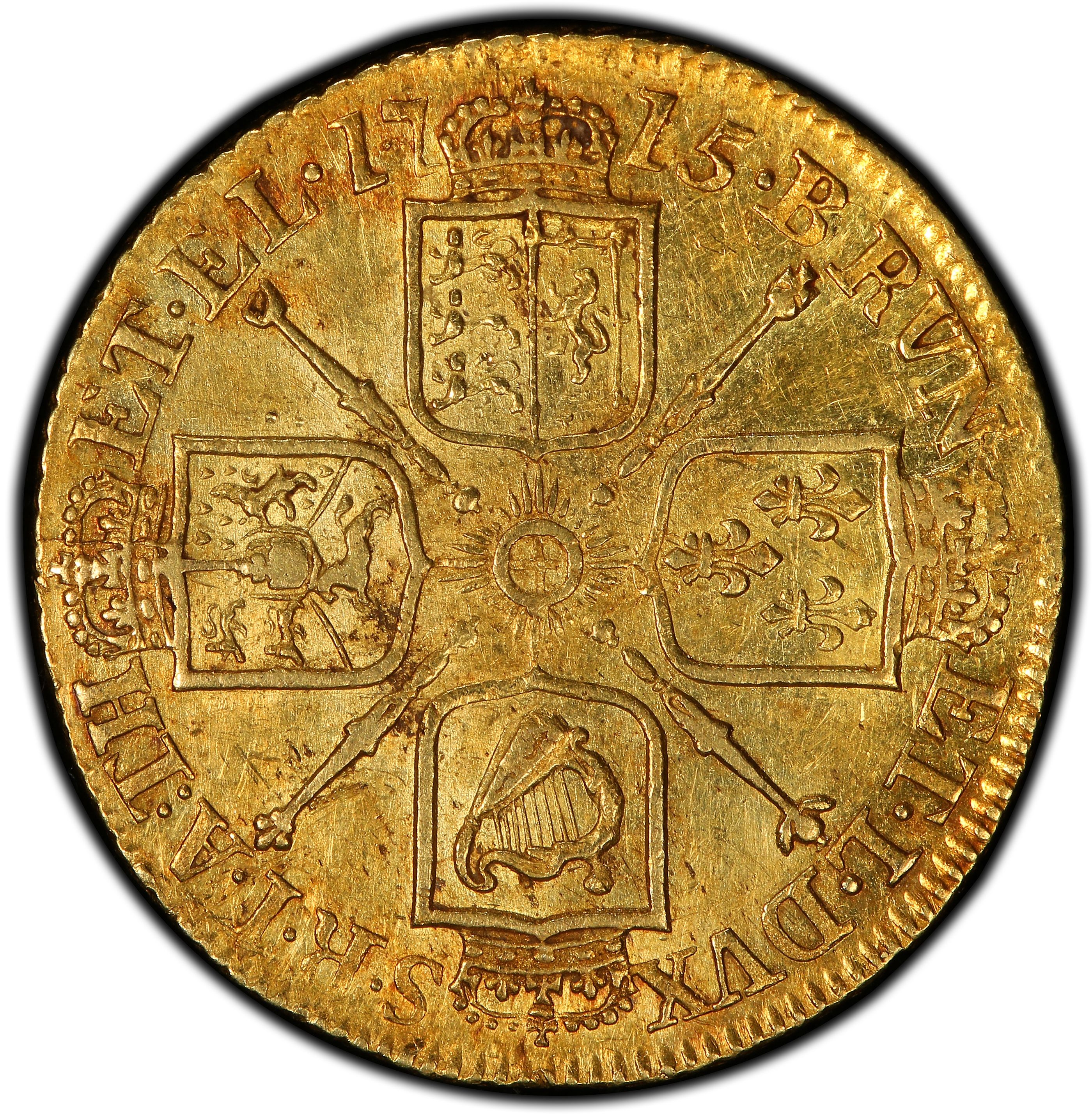
The reverse is the new design of the reign: a single ornate crowned shield, which the Royal Mint Museum credits to John Ochs, replacing the four shields and Garter star used under George I. Its quarters show England and Scotland, France, Ireland and Hanover, with the date and the legend M B F ET H REX F D B ET L D S R I A T ET E around. The edge is grained obliquely, as on all guineas before the change to curved graining in 1739.
Collecting notes
Compare the lettering with an illustrated example of the 1727 small-letter coin before buying a 1727; a 1728 date settles the type, since only this obverse was used that year. Gold of this period was often filed or clipped, so check the edge graining is even all round, and weigh the coin.
Look for mount marks at the rim and for smoothed or tooled fields. The small-lettering 1727 guinea and the second young head guinea of 1729 to 1738 are the neighbouring types.
Sources
The history, design, varieties and collecting notes on this page are drawn from these sources. Prices come from recorded sales, not from them.
- Guinea (coin), Wikipedia (read 12 Oct 2026)
- George II, Royal Mint Museum (read 12 Oct 2026)
- Great Britain 1728 guinea, CoinVarieties (read 12 Oct 2026)
- Great Britain 1727 guinea Fr-339, CoinVarieties (read 12 Oct 2026)
- Catalogue of the Coins, Tokens, Medals, Dies and Seals in the Museum of the Royal Mint, Vol. I Part I (Hocking, 1906), pages 158 to 159, Royal Mint Museum library (read 12 Oct 2026)
- John Croker (engraver), Wikipedia (read 12 Oct 2026)
- George II guinea, 1727 (RMM 466), The Royal Mint Museum, via Museum Data Service (read 12 Oct 2026)
- Sovereign (British coin), Wikipedia (read 12 Oct 2026)
- Great Britain 1732 guinea, CoinVarieties (read 12 Oct 2026)
More 1 Guinea coins from nearby years