1 Decimal Penny Uniface Pattern (1963)
| Country | United Kingdom |
| Year | 1963 |
| Denomination | 1 Penny |
| Mint | Royal Mint · Llantrisant |
| Circulation | Non-circulating |
| Composition | Bronze |
| Weight | 3.550g |
| Shape | Round |
| Edge | Plain |
| Rev. artist | Christopher Ironside |
| Grade scale | UK (EF/UNC) |
| Spink | S9Standard |
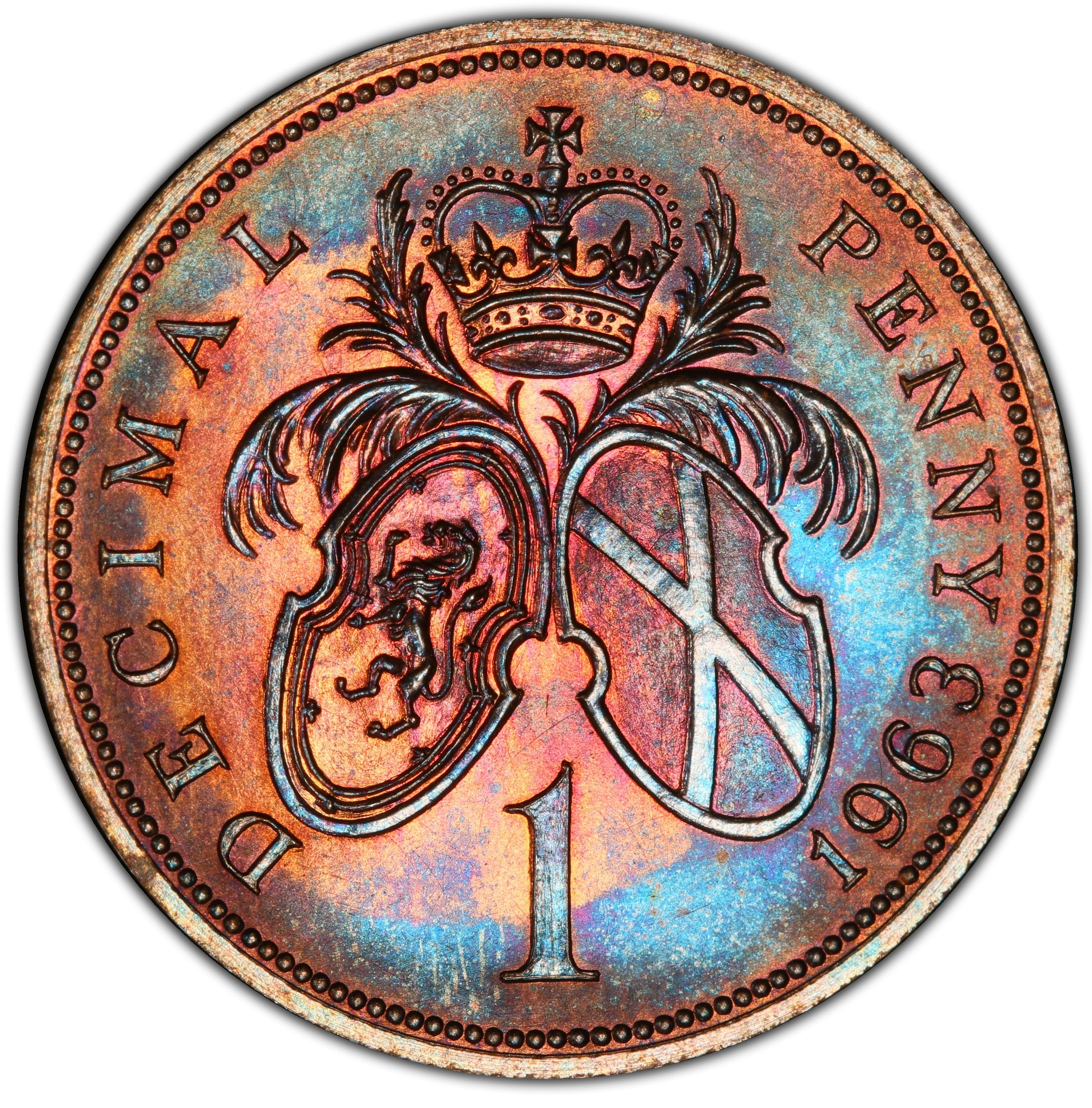
Scottish themed design with a crown above two escutcheons showing the Scottish lion and the Cross of St Andrew
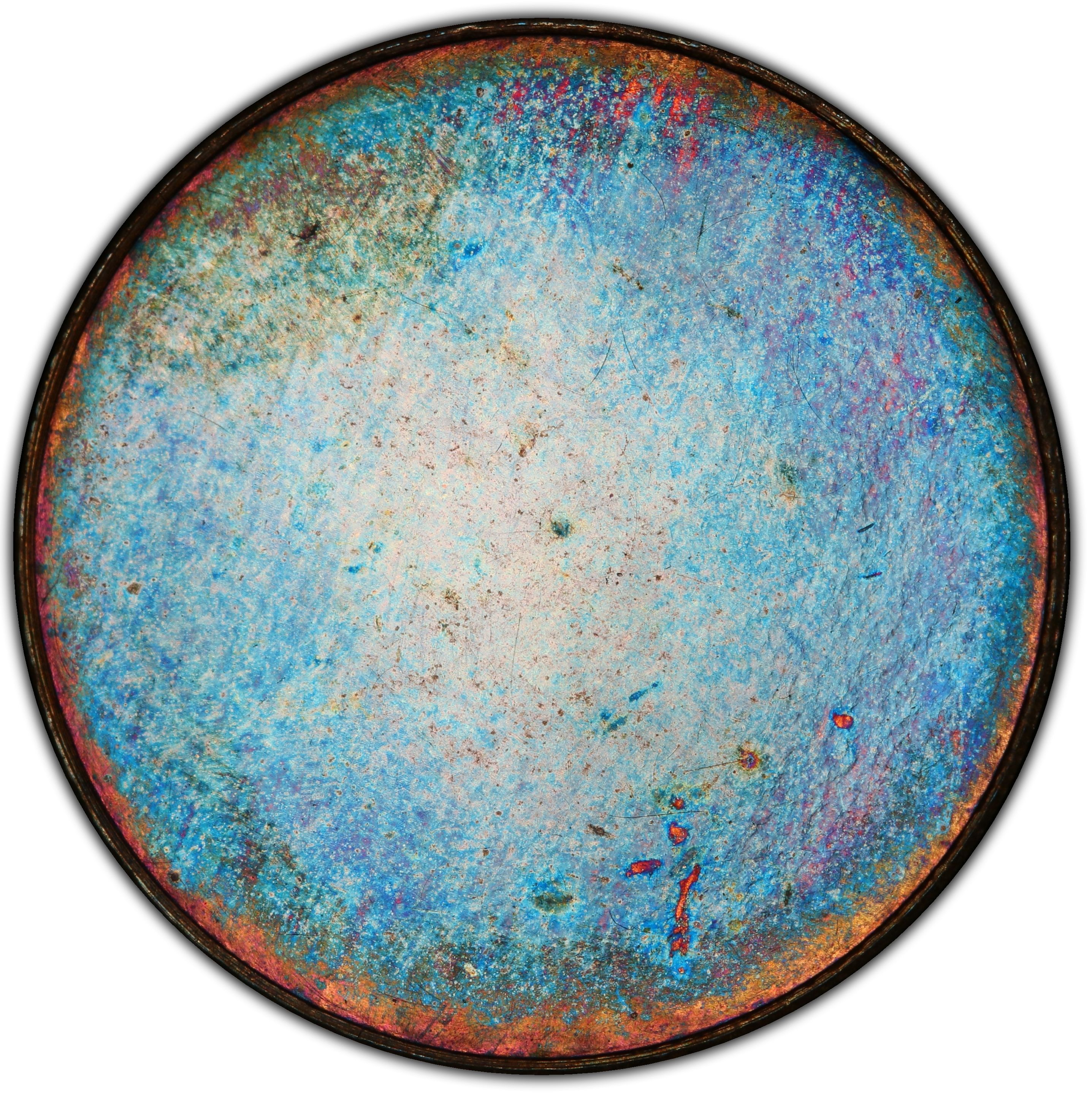
Blank.
DECIMAL PENNY 1963
Find this on eBay
Affiliate1 Decimal Penny Uniface Pattern price history
Daily limit reachedAbout the 1963 1 Decimal Penny Uniface Pattern
The 1963 1 Decimal Penny Uniface Pattern is a collector 1 penny coin, struck in bronze. It weighs 3.55g. Reverse design: Blank.
Common questions
How much is the 1963 1 Decimal Penny Uniface Pattern worth?
No verified sale of the 1963 1 Decimal Penny Uniface Pattern has been logged on MyCoinage yet.
What does the 1963 decimal penny pattern show?
Two shields with a crown and palm branches above and the value below, reading DECIMAL PENNY 1963, according to the Royal Collection. The design is by Christopher Ironside. On the uniface version the other side is blank.
Is there a two-sided version of the 1963 decimal penny pattern?
Yes. The Royal Mint Museum and the Royal Collection both hold 1963 decimal penny patterns that pair Ironside's reverse with Arnold Machin's portrait of the Queen reading ELIZABETH.II D.G.REGINA.F.D. These weigh about 3.53g to 3.55g, slightly less than the unifaces.
Was the 1963 decimal penny ever used as money?
No. It is a trial piece made during the Royal Mint's secret preparations for decimal coinage, years before decimalisation was announced in 1966. It was never issued and is not legal tender.
Who designed the 1963 decimal penny?
Christopher Ironside designed the reverse. He later won the open competition for the decimal coin reverses, and his designs for the ½p, 1p, 2p, 5p and 10p were unveiled in February 1968, though the issued penny did not use this 1963 design.
How do I identify the 1963 1 Decimal Penny Uniface Pattern?
Check the weight 3.55g and the metal (bronze) against the specification table on this page. The reverse design is described above.
History and design
The 1963 decimal penny uniface is a trial piece from the Royal Mint's early, confidential work on a decimal coinage. It was struck in bronze at Tower Hill with the design on one side only and a plain back, so that the design could be judged on its own. The Royal Mint says this design work began in 1962, before any official announcement, under a plan by which artistic bodies invited artists to submit designs.
The project was overtaken in 1966. The Chancellor, James Callaghan, announced on 1 March that year that Britain would go decimal, and the government required an open competition for the designs, which was launched that November. The decimal penny that reached the public in 1971 carried a later design, so this 1963 trial was never issued. No number struck has been published.
The Royal Collection describes the design as two shields with a crown and palm branches above and the value below, with the legend DECIMAL PENNY 1963. The designer was Christopher Ironside, the sculptor whose team won the Mint's first competition and who went on to design the reverses of all six decimal denominations.
The Royal Mint Museum's uniface examples weigh 3.61g to 3.62g, have a plain edge and are each noted as a modified design. The Royal Collection gives a diameter of 2.00 cm. Two-sided versions of the same date pair this reverse with Arnold Machin's crowned portrait of the Queen, which the Museum says had been prepared and approved with decimal coinage in mind.
Collecting notes
The documented examples are in the Royal Mint Museum and the Royal Collection; the Royal Collection's two-sided penny was presented by the Royal Mint. For a uniface, check that one side is completely blank and that the weight is close to 3.6g. A piece around 3.54g with a portrait on the other side is the two-sided pattern, which is a different object.
These trials were never currency and have no face value. Ironside's 1963 work for other values includes the two decimal pence uniface with a seated Britannia.
Sources
The history, design, varieties and collecting notes on this page are drawn from these sources. Prices come from recorded sales, not from them.
- Elizabeth II uniface reverse one decimal penny, 1963 (RMM 3200), The Royal Mint Museum, via Museum Data Service (read 10 Oct 2026)
- Elizabeth II Uniface pattern for 1 decimal penny, Royal Collection Trust (read 10 Oct 2026)
- Elizabeth II pattern decimal penny. Type II., Royal Collection Trust (read 10 Oct 2026)
- Elizabeth II pattern one decimal penny, 1963 (RMM 3186), The Royal Mint Museum, via Museum Data Service (read 10 Oct 2026)
- Decimalisation, Royal Mint Museum (read 10 Oct 2026)
- Christopher Ironside's decimal designs, The Royal Mint (read 10 Oct 2026)
More 1 Penny coins from nearby years