2 Decimal Pence Uniface Pattern (1963)
| Country | United Kingdom |
| Year | 1963 |
| Denomination | 2 Pence |
| Mint | Royal Mint · Llantrisant |
| Circulation | Non-circulating |
| Composition | Bronze |
| Weight | 7.100g |
| Shape | Round |
| Edge | Plain |
| Rev. artist | Christopher Ironside |
| Grade scale | UK (EF/UNC) |
| Spink | S10Standard |
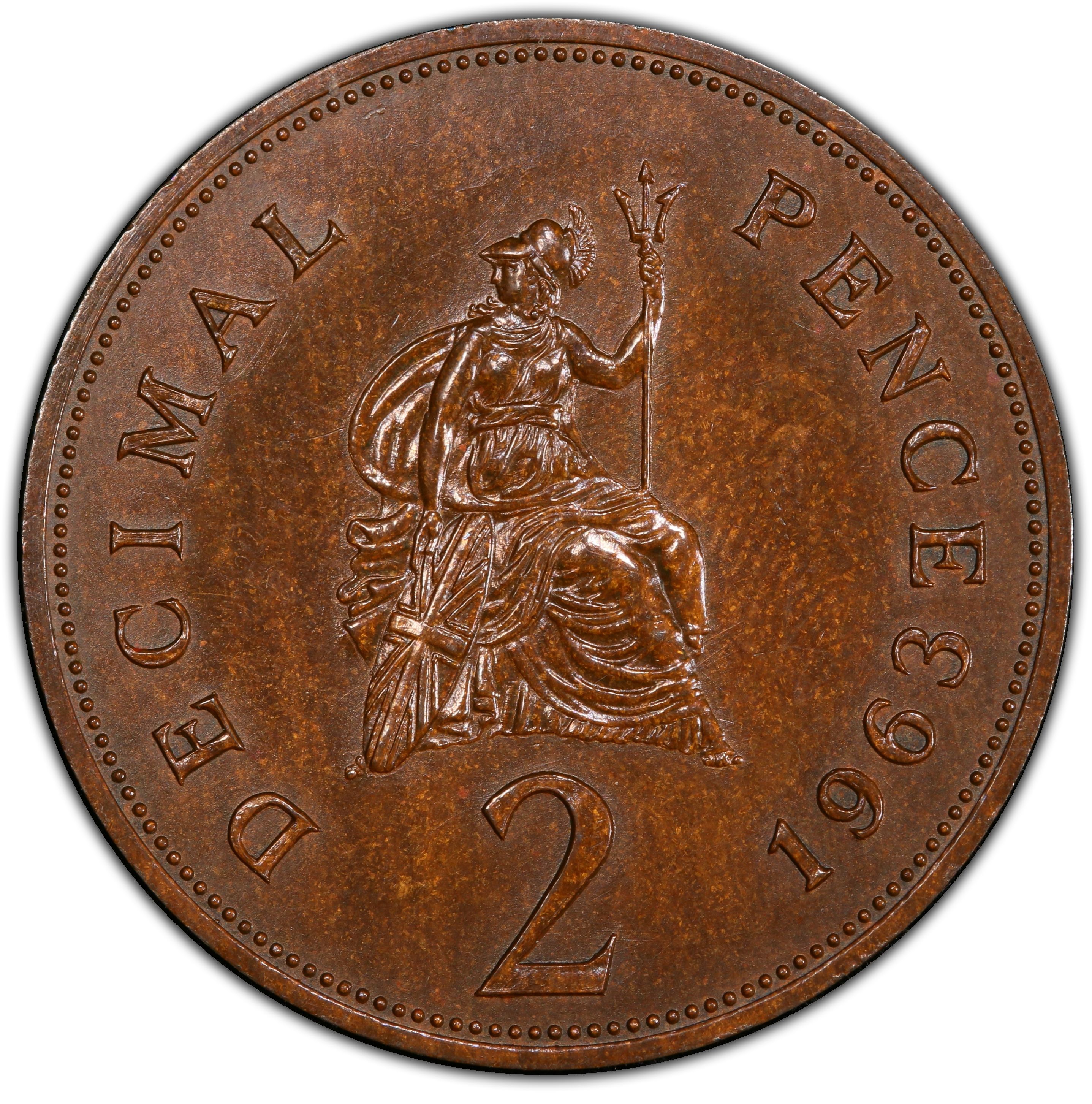
Seated figure of Britannia above denomination, legend and date around.
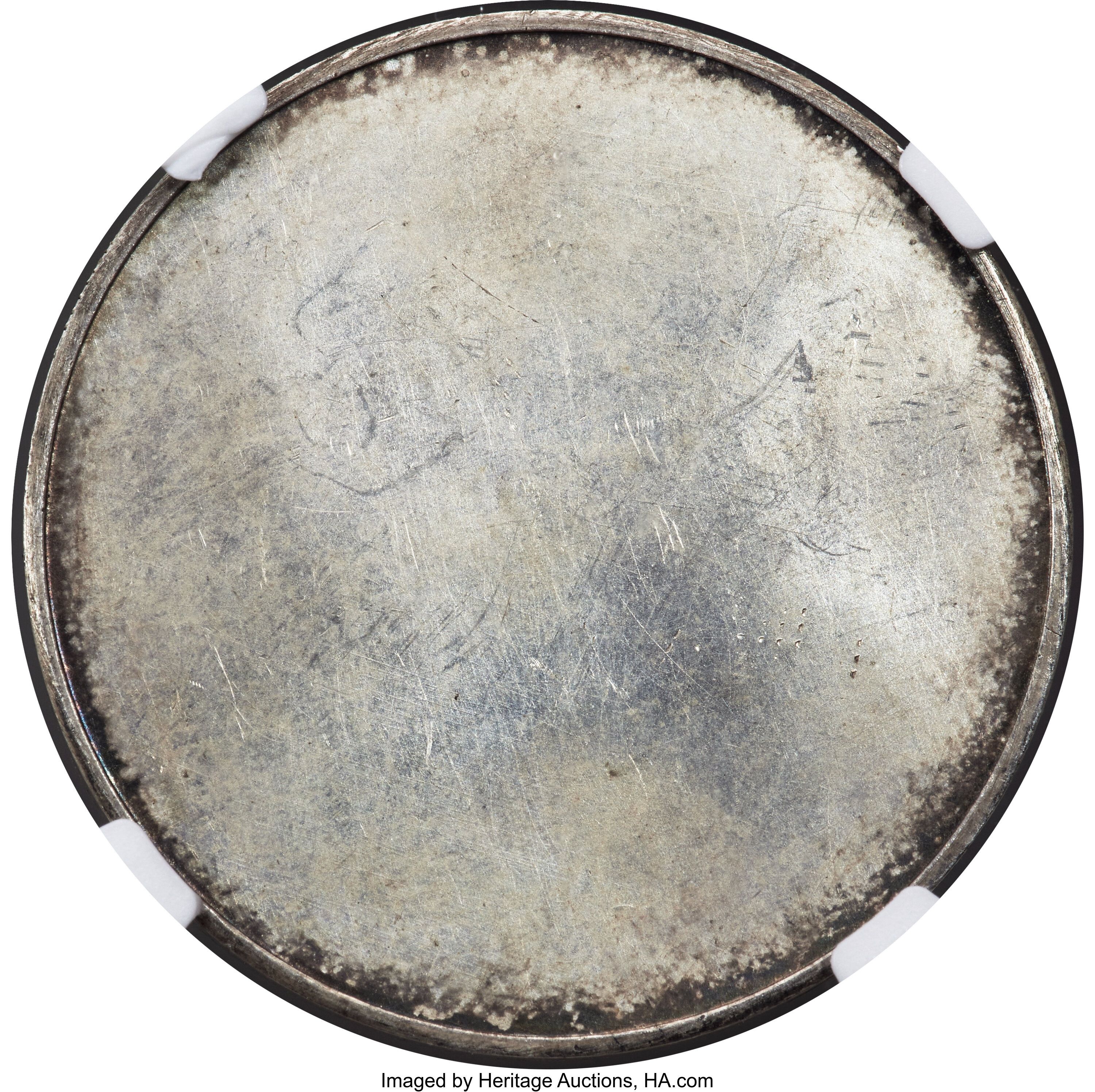
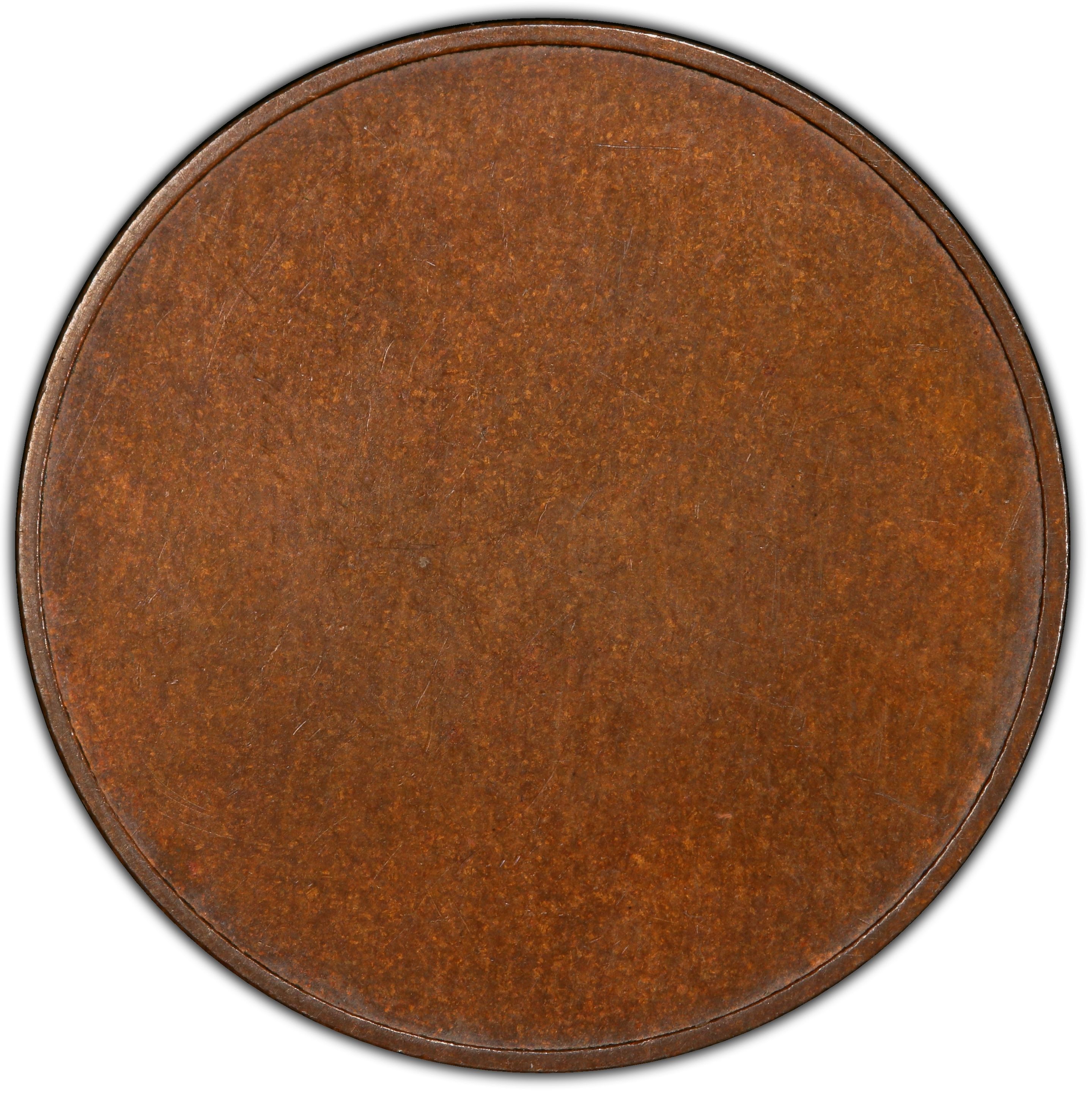
Blank.
DECIMAL PENCE 1963
Find this on eBay
Affiliate2 Decimal Pence Uniface Pattern price history
Daily limit reachedAbout the 1963 2 Decimal Pence Uniface Pattern
The 1963 2 Decimal Pence Uniface Pattern is a collector 2 pence coin, struck in bronze. It weighs 7.1g. Reverse design: Blank.
Common questions
How much is the 1963 2 Decimal Pence Uniface Pattern worth?
No verified sale of the 1963 2 Decimal Pence Uniface Pattern has been logged on MyCoinage yet.
What is the 1963 two decimal pence uniface?
A one-sided bronze trial piece struck at the Royal Mint in 1963, showing Christopher Ironside's seated Britannia holding a trident with the value below and the legend DECIMAL PENCE 1963. The back is blank and it was never issued as coin.
Is the 1963 Britannia pattern the same as the later 2p?
No. It is an early trial from the Mint's secret preparations of 1962 onwards. That work was set aside after the 1966 announcement of decimalisation, and the decimal reverses that were issued came from Ironside's later entry to the open competition.
How heavy is the 1963 two decimal pence uniface?
Royal Mint Museum examples weigh 7.14g to 7.16g for the original design and 7.23g to 7.27g for the modified design. The Royal Collection's two examples weigh 7.16g and 7.28g, both 2.58 cm across. Two-sided patterns with Machin's portrait are lighter, at 7.04g to 7.10g.
Can a 1963 decimal pattern be spent?
No. It is a trial piece made for the Royal Mint's design work and was never issued, so it has no legal tender status and no face value.
How do I identify the 1963 2 Decimal Pence Uniface Pattern?
Check the weight 7.1g and the metal (bronze) against the specification table on this page. The reverse design is described above.
History and design
The two decimal pence uniface is a bronze trial piece struck at the Royal Mint on Tower Hill in 1963. It carries a design on one side and nothing on the other. Pieces like it were made during the Mint's confidential preparations for a decimal coinage, which the Royal Mint dates from 1962, four years before the government announced the change.
That early programme did not produce the coins people eventually spent. After the Chancellor's announcement on 1 March 1966, the government called for an open competition, announced in November 1966, and the Royal Mint Museum records that more than 80 artists submitted around 900 designs. Ironside's new series won, and the 2p reached the public on Decimal Day, 15 February 1971. No figure for the number of 1963 trials struck has been published.
The Royal Collection describes the design as Britannia seated holding a trident, with the value below and the legend DECIMAL PENCE 1963. It is the work of Christopher Ironside, the sculptor whose combined Royal College of Art and Royal Designers for Industry team won the Mint's first, private competition.
The back is blank and the edge plain. The Royal Collection gives a diameter of 2.58 cm. The Royal Mint Museum also holds two-sided 1963 two decimal pence patterns that pair an Ironside reverse with Arnold Machin's crowned portrait of the Queen.
Varieties and errors
The Royal Mint Museum's records divide its two pence unifaces into an original design at 7.14g to 7.16g and a modified design at 7.23g to 7.27g. The change itself is not described. The Royal Collection's two examples, at 7.16g and 7.28g, fall into the same two weight groups.
Collecting notes
Weight is the most useful check. A blank-backed piece should weigh about 7.1g to 7.3g, while a two-sided pattern with the Machin portrait is a little lighter. The legend and the seated Britannia should be sharp, and the back should show no trace of a portrait.
These pieces were never currency and are not legal tender. For the same design programme in a smaller value, see the 1963 decimal penny uniface.
Sources
The history, design, varieties and collecting notes on this page are drawn from these sources. Prices come from recorded sales, not from them.
- Elizabeth II uniface reverse two decimal pence, 1963 (RMM 3174), The Royal Mint Museum, via Museum Data Service (read 10 Oct 2026)
- Elizabeth II uniface reverse two decimal pence, 1963, modified design (RMM 3180), The Royal Mint Museum, via Museum Data Service (read 10 Oct 2026)
- Elizabeth II Uniface pattern 2 decimal pence, Royal Collection Trust (read 10 Oct 2026)
- Elizabeth II Uniface Pattern 2 decimal pence. Type II, Royal Collection Trust (read 10 Oct 2026)
- Elizabeth II pattern two decimal pence, 1963 (RMM 3173), The Royal Mint Museum, via Museum Data Service (read 10 Oct 2026)
- Decimalisation, Royal Mint Museum (read 10 Oct 2026)
- Christopher Ironside's decimal designs, The Royal Mint (read 10 Oct 2026)
More 2 Pence coins from nearby years