Exceptional: fewer than 1,000 minted.
1 Penny - Elizabeth II Maundy pre-decimal 1st issue (1953)
| Country | United Kingdom |
| Year | 1953 |
| Denomination | 1 Penny |
| Mintage | 1,050 |
| Mint | Royal Mint · Llantrisant |
| Series | Maundy Money |
| Circulation | Non-circulating |
| Composition | Silver (.925) (925/1000 fine) |
| Weight | 0.470g · 0.0140 t oz |
| Diameter | 11.0mm |
| Shape | Round |
| Orientation | Medal alignment ↑↑ |
| Obv. artist | Mary Gillick |
| Rev. artist | Jean Baptiste Merlen |
| Grade scale | UK (EF/UNC) |
Young laureate bust of Queen Elizabeth II right, legend around.
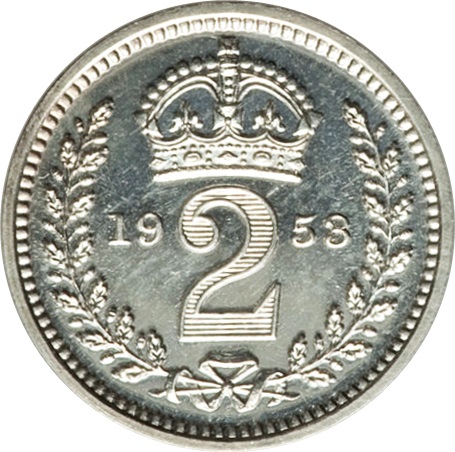
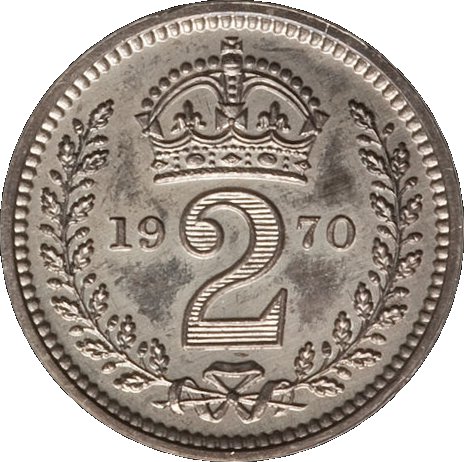
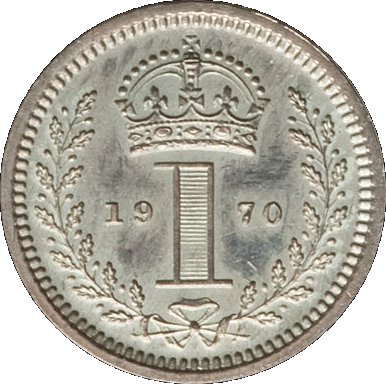
Crowned denomination dividing date within oak wreath.
Find this on eBay
Affiliate1st issue 1p price history
Daily limit reachedAbout the 1953 1 Penny - Elizabeth II Maundy pre-decimal – 1st issue
The 1953 1 Penny - Elizabeth II Maundy pre-decimal – 1st issue is a collector 1 penny coin in the Maundy Money series, struck in 92.5% silver. It weighs 0.47g and measures 11mm across. Reverse design: Crowned denomination dividing date within oak wreath.
1,050 were struck.
Common questions
How much is the 1953 1 Penny - Elizabeth II Maundy pre-decimal – 1st issue worth?
No verified sale of the 1953 1 Penny - Elizabeth II Maundy pre-decimal – 1st issue has been logged on MyCoinage yet.
Where was the 1953 Maundy money given out?
At St Paul's Cathedral. The Royal Mint's list of Maundy locations gives St Paul's for 1953. Wikipedia explains that in coronation years Westminster Abbey was closed for the preparations, so the service moved to St Paul's.
What is different about 1953 Maundy money?
The legend. Like the other 1953 coins, the Maundy pieces include BRITT OMN, calling the Queen ruler of all the Britains. Tony Clayton notes that the legend was the only obverse change in the whole Elizabeth II Maundy series, which is why the 1953 coins are in such demand.
Is a 1953 Maundy penny legal tender?
Yes, technically. Wikipedia notes that Maundy coins are legal tender but do not normally circulate. Since decimalisation all Maundy pieces, including those struck before 1971, are deemed to be denominated in new pence, so the 1953 penny counts as 1p.
What metal is the 1953 Maundy penny?
Sterling silver. Wikipedia and Tony Clayton both record that when the ordinary silver coinage became cupro-nickel in 1947, Maundy money returned to 0.925 silver rather than being struck in base metal.
How do I identify the 1953 1 Penny - Elizabeth II Maundy pre-decimal – 1st issue?
Check the weight 0.47g and diameter 11mm and the metal (92.5% silver) against the specification table on this page. The reverse design is described above.
History and design
Maundy money is the set of four small silver coins, from one penny to four pence, that the sovereign gives to elderly recipients at the Royal Maundy service on the day before Good Friday. The Royal Mint Museum explains that recipients number as many men and as many women as the monarch's years, each receiving as many pence as the sovereign's age, in a white purse.
The 1953 service was held in the coronation year. The Royal Mint lists it at St Paul's Cathedral, and Wikipedia explains that in coronation years Westminster Abbey was closed for preparations, so the ceremony moved to St Paul's. The penny is the smallest coin of the set.
Like the rest of the 1953 coinage, the Maundy pieces were struck with BRITT OMN in the Queen's titles, and from 1954 the words were dropped. That makes 1953 a one-year type within a series that otherwise ran unchanged for seven decades.
The obverse is Mary Gillick's portrait of the Queen, the first coinage portrait of the reign. The Royal Mint and the Royal Mint Museum both record that, although the portrait on circulating coins changed four times, Maundy money kept Gillick's portrait throughout the reign.
The reverse is the traditional crowned numeral, here a 1, within an oak wreath. Wikipedia attributes the wreath design to Jean Baptiste Merlen in 1822, with the crown altered by Leonard Charles Wyon in 1888. The coins are sterling silver: Maundy money returned to 0.925 fineness in 1947 when the ordinary coinage went over to cupro-nickel.
Collecting notes
The penny was issued as part of the four-coin Maundy set, and Clayton prices both sets and single pennies, so it is collected either way. Tony Clayton notes that because the legend was the only change to the Elizabeth II Maundy obverse, the 1953 coins are in very great demand. His value tables also record 1953 Maundy sets in gold proof and matt proof.
No recognised varieties or mint errors are documented for this coin. Later pennies without BRITT OMN are on the 1954 to 1970 Maundy penny page.
Sources
The history, design, varieties and collecting notes on this page are drawn from these sources. Prices come from recorded sales, not from them.
- Royal Maundy, Wikipedia (read 10 Oct 2026)
- Maundy Money, The Royal Mint (read 10 Oct 2026)
- Maundy Money, Royal Mint Museum (read 10 Oct 2026)
- Maundy Money, Coins of the UK (Tony Clayton) (read 10 Oct 2026)
- Values of Maundy Sets, Coins of the UK (Tony Clayton) (read 10 Oct 2026)
- Values of Silver (Maundy) Pennies, Coins of the UK (Tony Clayton) (read 10 Oct 2026)
- Mary Gillick, Royal Mint Museum (read 10 Oct 2026)
More from Maundy Money