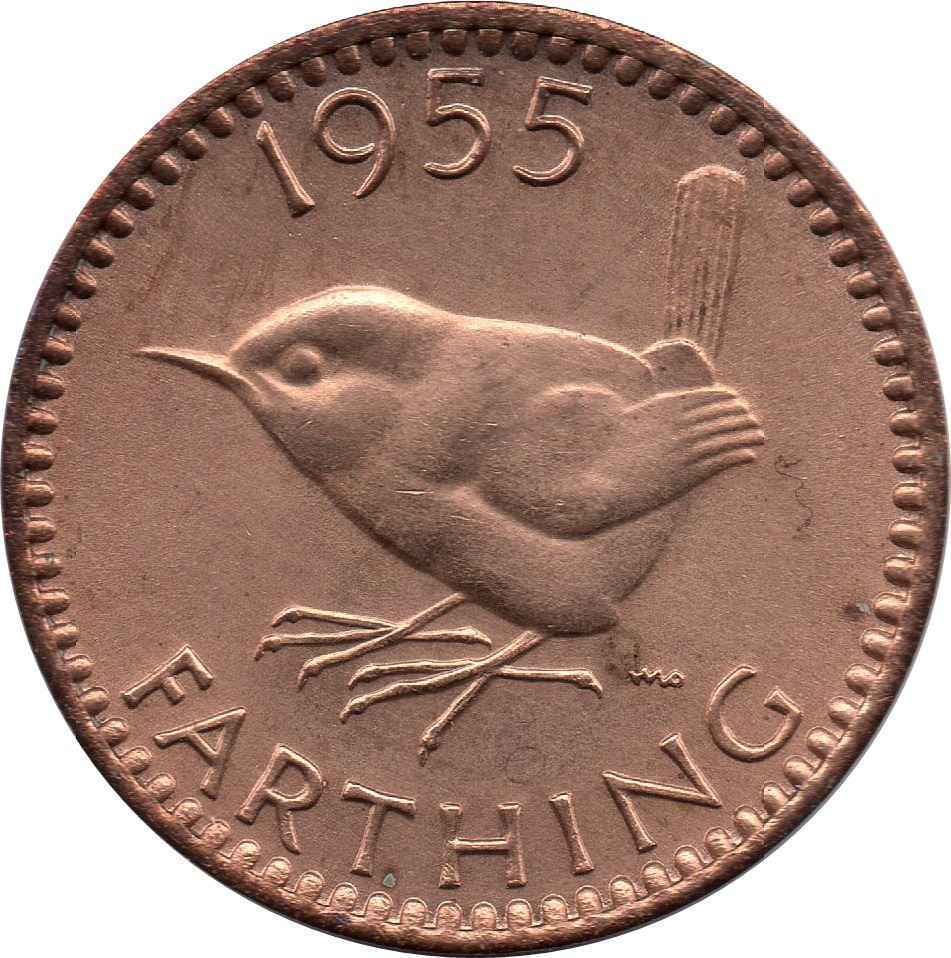
Quick answer
The farthing went out of circulation at the end of 1960: the Royal Mint Museum records that minting ceased in 1956 and farthings were demonetised at the end of 1960. The old halfpenny followed in 1969, the half crown at the end of 1969, the penny and threepence in 1971, the sixpence in 1980 and the shilling in 1990.
When each British coin stopped being legal tender
| Coin | Old value | Decimal equivalent | Stopped being legal tender |
|---|---|---|---|
| Farthing | ¼d | About 0.1p | 31 December 1960 |
| Halfpenny (pre-decimal) | ½d | About 0.2p | 31 July 1969 |
| Half crown | 2s 6d | 12.5p | 31 December 1969 |
| Penny (pre-decimal) | 1d | About 0.4p | 31 August 1971 |
| Threepence (brass, twelve-sided) | 3d | 1.25p | 31 August 1971 |
| Sixpence | 6d | 2.5p | 30 June 1980 |
| Decimal halfpenny | Not applicable | 0.5p | December 1984 |
| Shilling | 1s | 5p | 31 December 1990 |
| Large 5p | Not applicable | 5p | 31 December 1990 |
| Florin (two shillings) | 2s | 10p | 30 June 1993 |
| Large 10p | Not applicable | 10p | 30 June 1993 |
| Large 50p | Not applicable | 50p | 1998 (28 February is the date usually quoted) |
| Round £1 | Not applicable | £1 | 15 October 2017 |
| Crown (five shillings) | 5s | 25p | Never: still legal tender for 25p |
The years in this table come from the Royal Mint and the Royal Mint Museum. Where those bodies publish only a year, the day shown is the one given by museum catalogues and contemporary reports, and the notes below say which is which.
When was the farthing withdrawn?
The farthing, worth a quarter of an old penny, was the first of the modern withdrawals.
The Royal Mint Museum states that "minting ceased in 1956 and farthings were demonetised at the end of 1960". So the last farthings are dated 1956, and the coin could be spent for four more years.
The farthing values guide covers which dates are worth more than a few pence.
When did the halfpenny stop?
There are two halfpennies, and they stopped at different times.
The pre-decimal halfpenny, worth half an old penny, survived until just before decimalisation. The Royal Mint Museum says it ceased to be legal tender from 31 July 1969.
The decimal halfpenny, worth half a new penny, was introduced with decimal coinage in 1971. The Royal Mint records that it was withdrawn in 1984, and it was demonetised in December of that year. It was not replaced by another coin.
When did the half crown go out of circulation?
The half crown, worth two shillings and sixpence, was withdrawn before decimalisation. Its decimal value would have been 12.5p.
The Royal Mint Museum records that the half crown was demonetised at the end of 1969, and that it "ceased to be legal tender" in January 1970. In practice 31 December 1969 was the last day it could be spent. The half crown values guide explains which are silver.
The penny and threepence: gone in 1971
Decimal Day was 15 February 1971. Old and new coins circulated together for a changeover period so that people could adjust.
The old penny and the twelve-sided brass threepence did not survive that period. The Royal Mint Museum says twelve-sided threepenny pieces "were demonetised at the end of the decimal transitional period in 1971". The date recorded for both coins is 31 August 1971, a little over six months after Decimal Day.
Neither coin had an exact decimal equivalent: an old penny was worth about 0.4p and a threepence 1.25p. The old money converter will turn any pounds, shillings and pence amount into decimal.
When did the sixpence go out of circulation?
The sixpence outlived Decimal Day by nine years. At decimalisation it became worth 2.5 new pence and carried on in change.
The Royal Mint says the sixpence was withdrawn in 1980, and the Royal Mint Museum confirms it "was demonetised in 1980". The date it ceased to be legal tender was 30 June 1980.
For dates and silver content, see the sixpence values guide.
When did the shilling stop being legal tender?
The shilling survived decimalisation because it had an exact decimal match. One shilling was exactly 5p, so shillings were re-denominated and circulated alongside the 5p coin from 1968.
That ended when the 5p was made smaller. The smaller 5p was introduced in June 1990, and the Royal Mint Museum records that shillings "remained in circulation as 5p pieces until 31 December 1990". The large 5p coins of 1968 to 1990 were demonetised at the same time.
The shilling values guide covers English and Scottish types and which dates contain silver.
The florin and the large 10p
The florin, a two shilling coin first issued in 1849, followed the same route. It was re-denominated as 10p at decimalisation and stayed in use beside the large 10p.
The smaller 10p was first issued on 30 September 1992. The Royal Mint Museum says the old-sized 10p pieces "ceased to be legal tender at the end of June 1993", which removed the florin from circulation after 144 years.
Coins withdrawn from circulation in the UK since decimalisation
Four decimal coins have been withdrawn and replaced by smaller or redesigned versions, plus the decimal halfpenny, which was not replaced.
| Coin | Introduced | Replacement issued | Old coin demonetised |
|---|---|---|---|
| Decimal halfpenny | 1971 | None | December 1984 |
| Large 5p | 1968 | June 1990 | 31 December 1990 |
| Large 10p | 1968 | 30 September 1992 | 30 June 1993 |
| Large 50p | 1969 | 1 September 1997 | 1998 |
| Round £1 | 21 April 1983 | 2017 (12-sided £1) | 15 October 2017 |
The round pound is the most recent, and the one most people still have. There is a separate guide to whether you can still use old round pound coins.
Which old coins are still legal tender?
The crown is the surprise. The Royal Mint lists the 25p crown among current legal tender coins, valid for payments up to £10. Its guidance says crowns dating back to 1818 remain legal tender at 25p, because the five shilling crown was re-denominated at decimalisation.
That does not mean a shop or bank will take one. The Royal Mint is clear that crowns are legal tender but banks and retailers are not required to accept them.
The single-metal commemorative £2 coins issued from 1986 to 1996 are also still legal tender, on the same terms.
What a withdrawn coin means in practice
A demonetised coin cannot be used to pay for anything. It keeps whatever value collectors or the metal market give it.
The Royal Mint says most high-street banks are willing to accept demonetised coins from their customers, and that larger Post Office branches are usually willing to accept them in exchange for goods and services. Both are under no legal obligation, and policies vary by bank. Pre-decimal coins such as farthings and old pennies are a different matter: banks will not exchange them at face value, so their only value is to collectors.
Melting old coins down is restricted. Under section 10 of the Coinage Act 1971, nobody may melt or break up a coin that is current, or that ceased to be current after 16 May 1969, without a Treasury licence.
How to check what your old coins are worth
Start with are old coins worth anything?, which sets out the key dates and the silver cut-off years. The pre-decimal coins guide explains each denomination, and the story of the changeover is in how Britain changed its money in 1971.
If you have a tin of withdrawn coins you plan to keep, you can list them in the physical coin tracker on MyCoinage, which is free to start, and see their sold prices in one place.
FAQ
When did the farthing stop being legal tender?
The farthing stopped being legal tender at the end of 1960. The Royal Mint Museum records that minting ceased in 1956 and farthings were demonetised at the end of 1960, so 31 December 1960 was the last day a farthing could be spent.
When did the sixpence go out of circulation?
The sixpence went out of circulation in 1980. It had been worth 2.5 new pence since decimalisation in 1971. The Royal Mint Museum confirms it was demonetised in 1980, and the date it ceased to be legal tender was 30 June 1980.
When did the half crown cease to be legal tender?
The half crown ceased to be legal tender at the start of January 1970. The Royal Mint Museum says it was demonetised at the end of 1969, so the last day it could be spent was 31 December 1969, more than a year before Decimal Day.
When did the shilling stop being legal tender?
The shilling stopped being legal tender on 31 December 1990. It had circulated as a 5p piece since decimalisation, and was demonetised along with the large 5p six months after the smaller 5p coin was introduced in June 1990.
When was the decimal halfpenny withdrawn?
The decimal halfpenny was withdrawn in 1984, according to the Royal Mint, and was demonetised in December 1984. Introduced with decimal coinage in 1971, it was worth half a new penny and was not replaced by another coin.