Scotland 4 Shillings - James VI 3rd Coinage (1581)
| Country | Scotland (United Kingdom) |
| Year | 1581 |
| Denomination | 4 Shillings |
| Circulation | Circulating |
| Demonetised | Yes |
| Composition | Silver (.916) (916/1000 fine) |
| Weight | 2.780g · 0.0819 t oz |
| Diameter | 26.0mm |
| Shape | Round (irregular) |
| Orientation | Variable alignment ↺ |
| Grade scale | UK (EF/UNC) |
| Spink | 5484 |
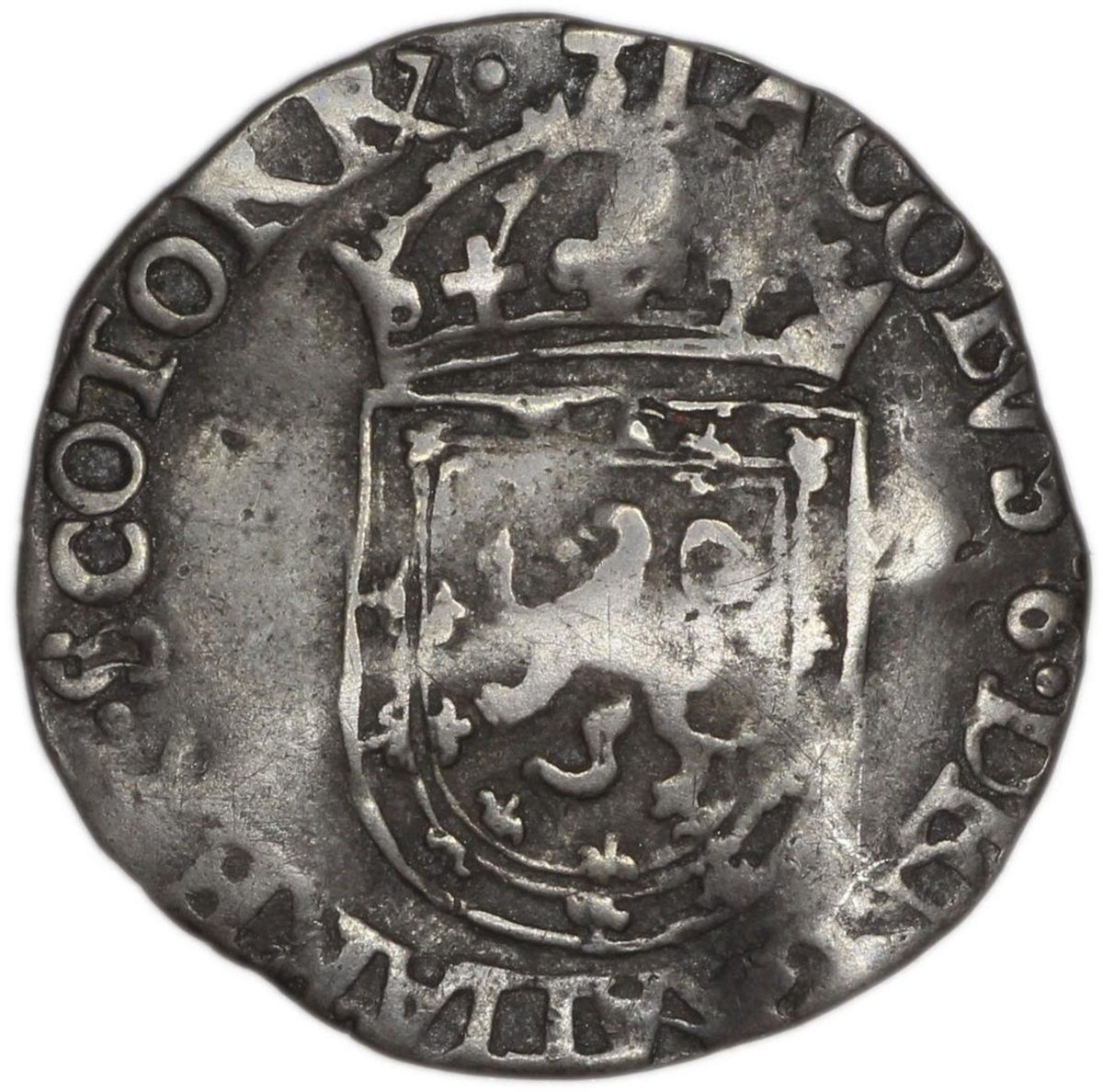
Crowned royal arms.
IACOBVS · 6 · DEI · GRATIA · REX · SCOTORR ·
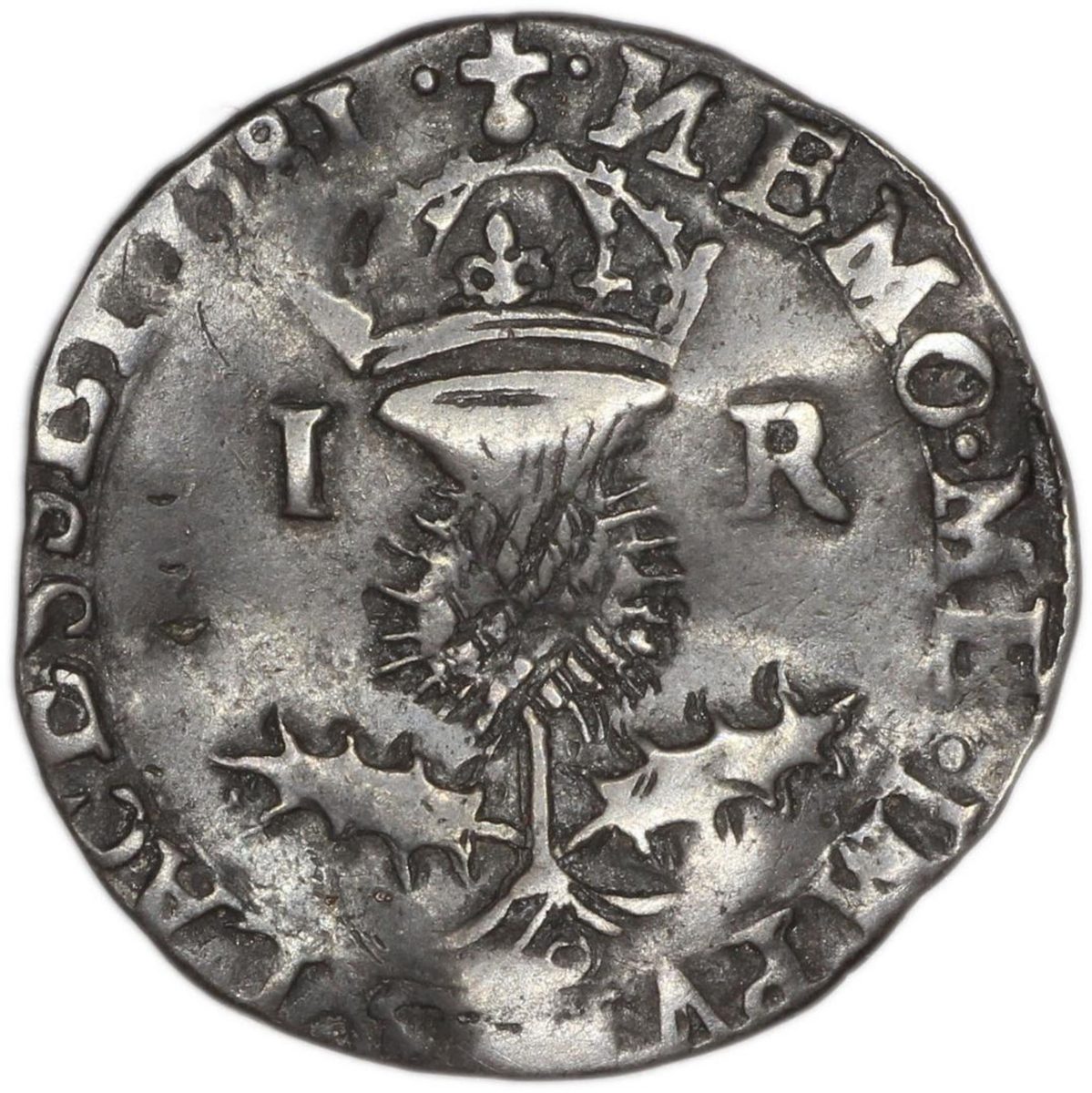
Crowned thistle, 'I' to the left and 'R' to the right.
· NEMO · ME · IMPVNE · LACESSET 1581 ·
Find this on eBay
AffiliatePrice History
Daily limit reachedAbout the 1581 Scotland 4 Shillings - James VI 3rd Coinage
The 1581 Scotland 4 Shillings - James VI 3rd Coinage is a circulating 4 shillings coin, struck in 91.6% silver. It weighs 2.78g and measures 26mm across. Reverse design: Crowned thistle, 'I' to the left and 'R' to the right.
It is no longer legal tender, so its value is to collectors only.
Common questions
How much is the 1581 Scotland 4 Shillings - James VI 3rd Coinage worth?
No verified sale of the 1581 Scotland 4 Shillings - James VI 3rd Coinage has been logged on MyCoinage yet. Its silver content is worth about £3.66 at today's spot price, which puts a floor under its value.
How do I identify the 1581 Scotland 4 Shillings - James VI 3rd Coinage?
Check the weight 2.78g and diameter 26mm and the metal (91.6% silver) against the specification table on this page. The reverse design is described above.