½ Guinea - George I (1715–1724)
| Country | United Kingdom |
| Year | 1715–1724 |
| Denomination | ½ Guinea |
| Face value | 52.5p |
| Mint | Royal Mint · Llantrisant |
| Circulation | Circulating |
| Demonetised | Yes |
| Composition | Gold (.9167) (917/1000 fine) |
| Weight | 4.200g · 0.1238 t oz |
| Diameter | 20.0mm |
| Shape | Round |
| Edge | Milled |
| Orientation | Coin alignment ↑↓ |
| Obv. artist | John Croker |
| Rev. artist | John Croker |
| Grade scale | UK (EF/UNC) |
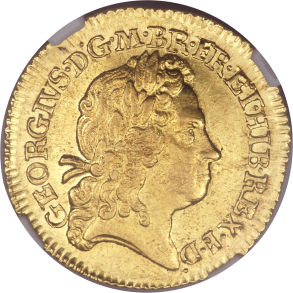
Young first laureate portrait of King George I right, legend around.
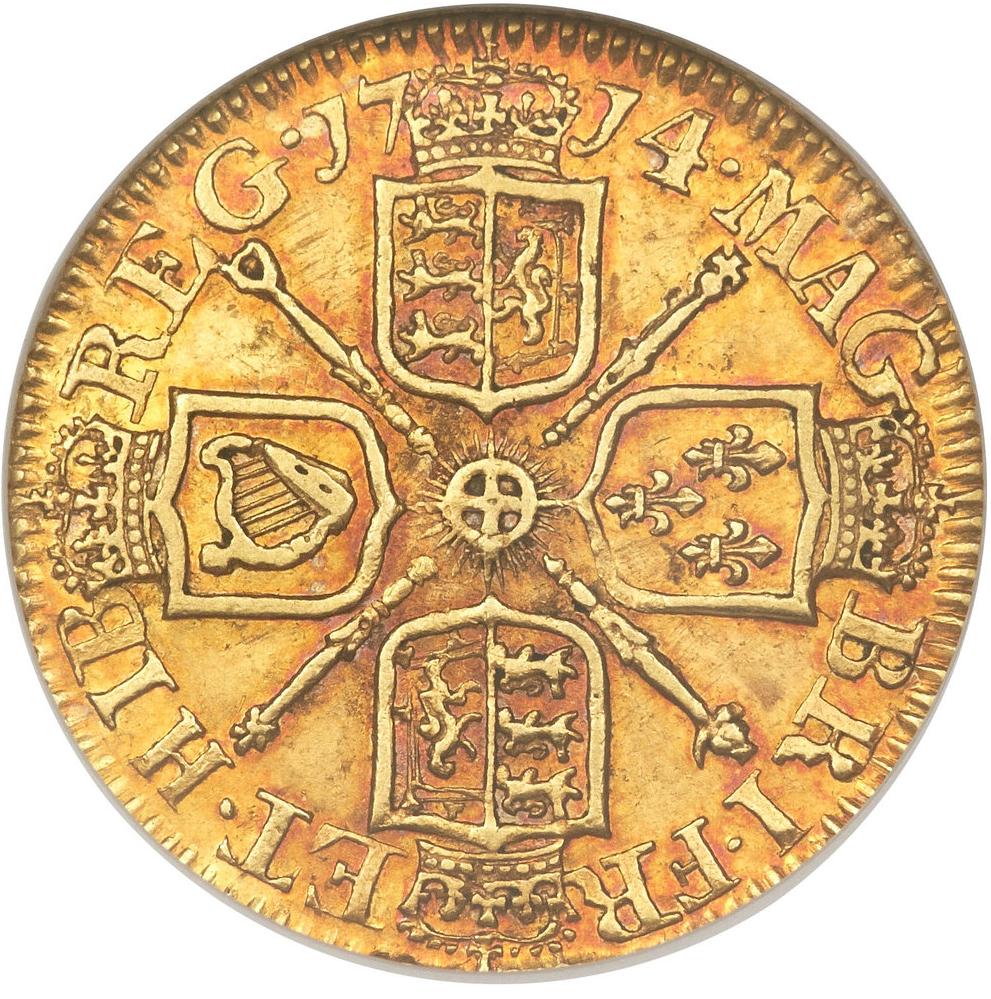
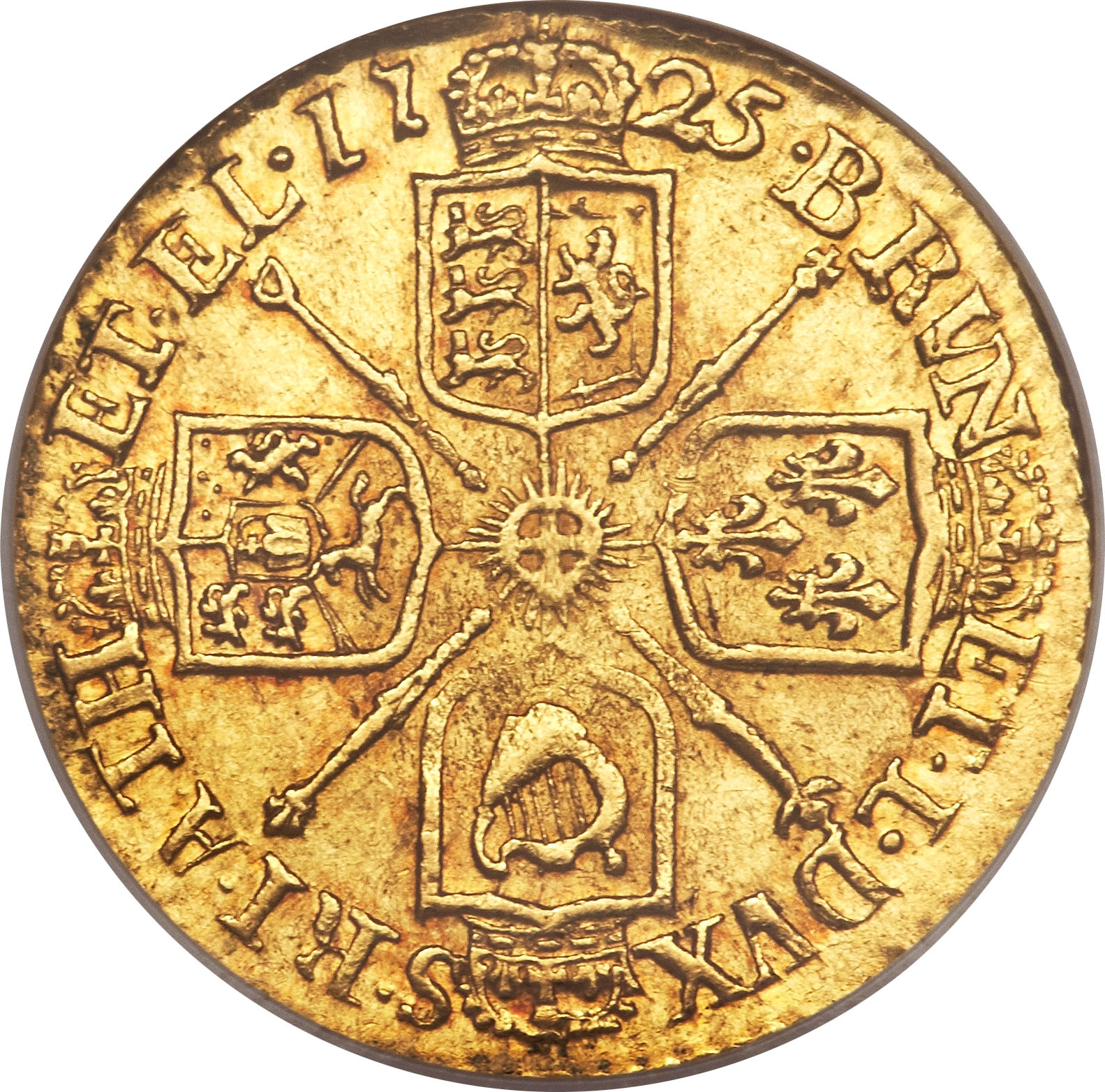
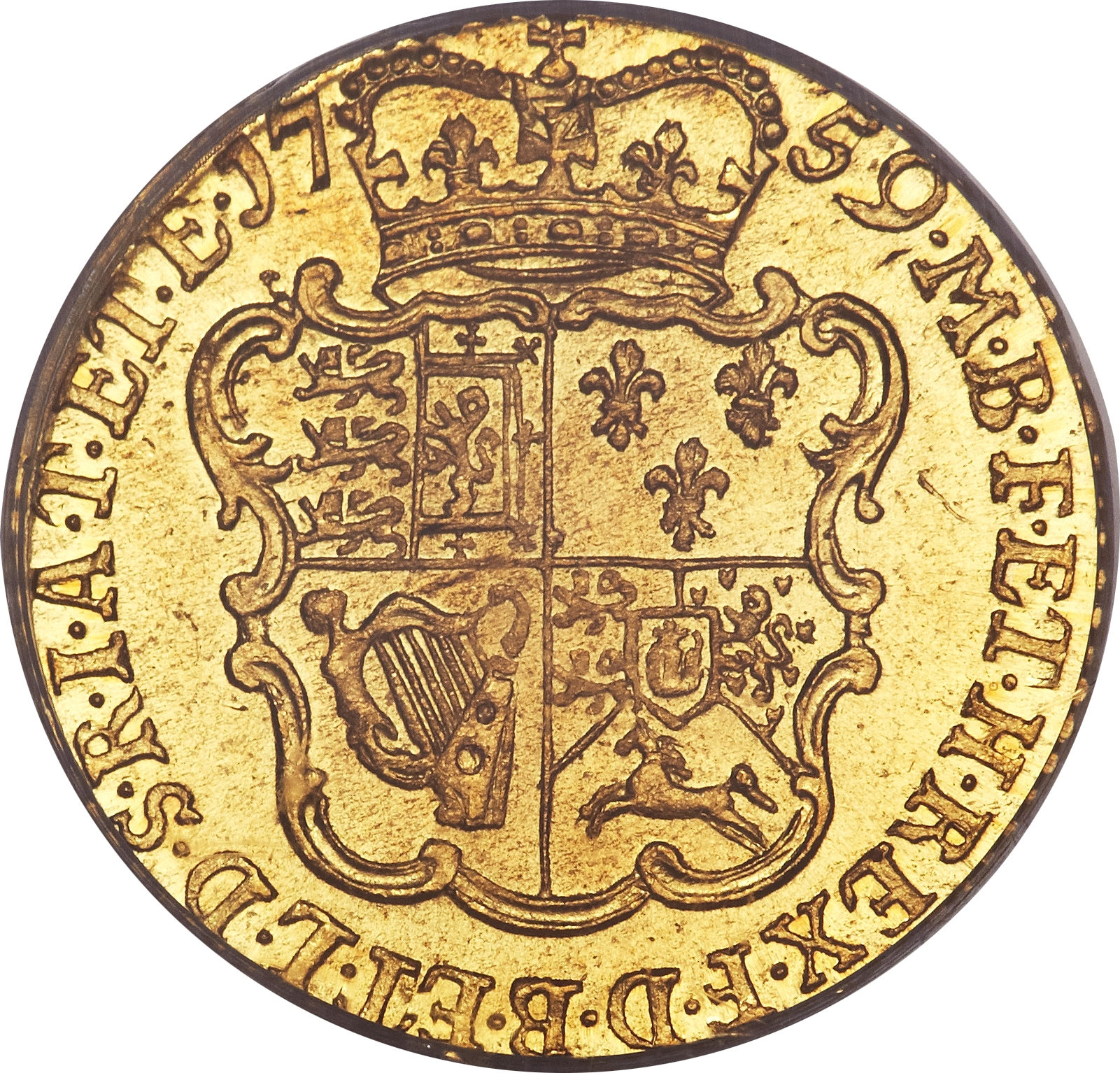
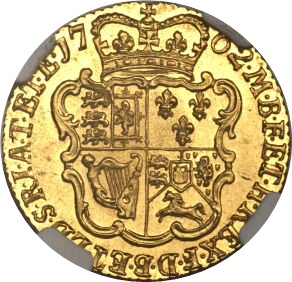
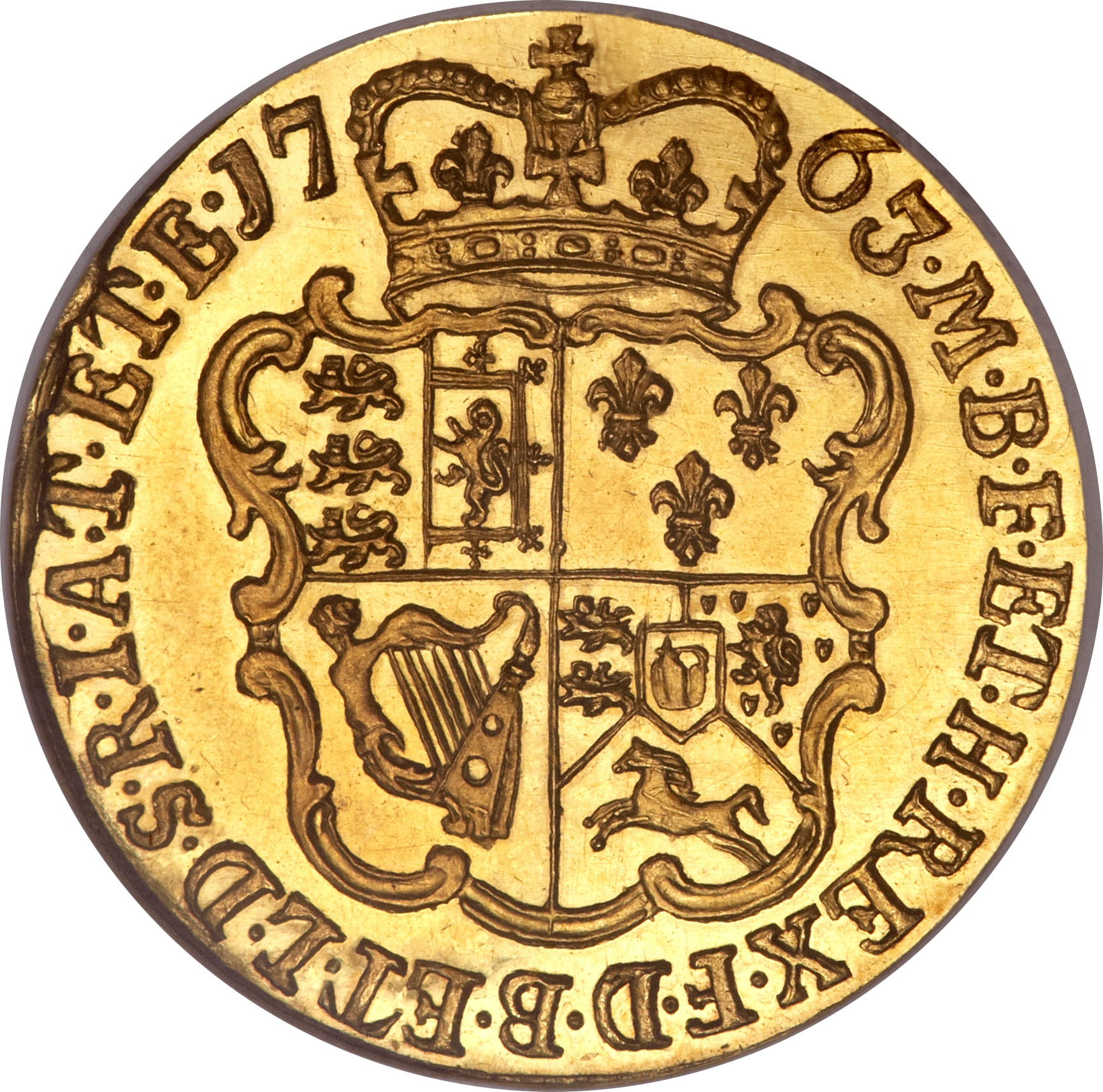
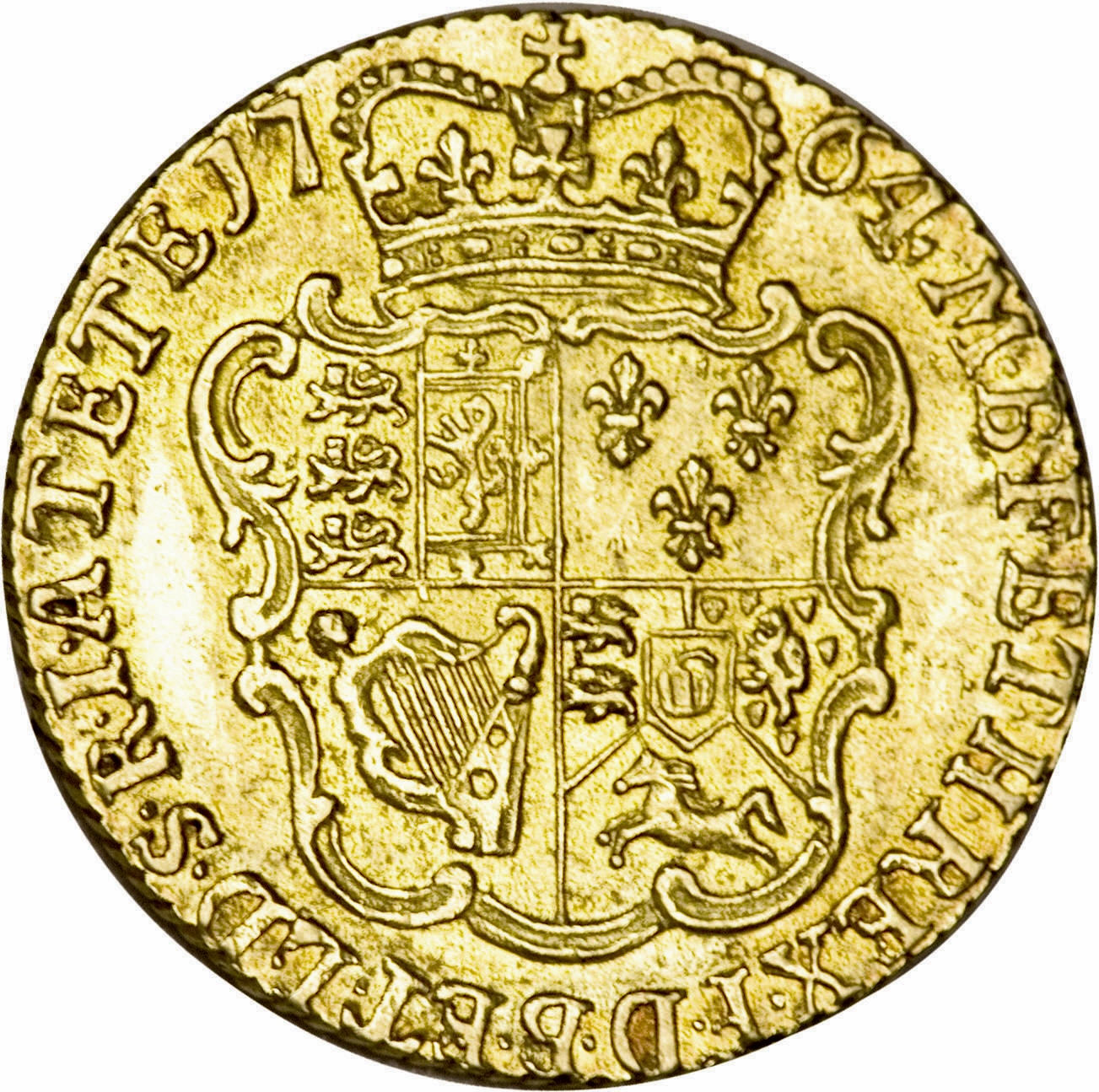
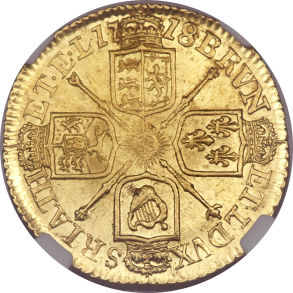
Crowned cruciform shields around central Garter star with sceptres bearing national emblems in angles, divided date above, legend around.
Find this on eBay
AffiliateHalf Guinea - George I price history
Daily limit reachedAbout the 1715 Half Guinea - George I
The 1715 Half Guinea - George I is a circulating ½ guinea coin issued from 1715 to 1724, struck in 91.67% gold. It weighs 4.2g and measures 20mm across. Reverse design: Crowned cruciform shields around central Garter star with sceptres bearing national emblems in angles, divided date above, legend around.
It is no longer legal tender, so its value is to collectors only.
Common questions
How much is the 1715 Half Guinea - George I worth?
No verified sale of the 1715 Half Guinea - George I has been logged on MyCoinage yet. Its gold content is worth about £371 at today's spot price, which puts a floor under its value.
Why is a half guinea worth 10s 6d?
Because a royal proclamation of December 1717 fixed the guinea at 21 shillings, making the half guinea ten shillings and sixpence. Before that the value moved with the price of gold, and Tony Clayton notes it ranged between ten and fifteen shillings.
How many George I half guineas were made?
No mintage by date has been published for George I half guineas. Wikipedia records that they were struck every year from 1715 to 1727 except 1716; the first head covers 1715 and 1717 to 1724.
What is the elephant and castle on a 1721 half guinea?
It is a provenance mark below the king's bust showing that the gold came through the Africa Company. Wikipedia says it appears on some 1721 half guineas, and Tony Clayton lists the 1721 elephant and castle as the rare George I date.
How do you tell a half guinea from a gilded sixpence?
Clayton explains that sixpences were gilded and passed as half guineas, so the king's bust was draped on the sixpence but undraped on the half guinea. The half guinea also has sceptres between the shields, which the sixpence lacks.
How do I identify the 1715 Half Guinea - George I?
Check the weight 4.2g and diameter 20mm and the metal (91.67% gold) against the specification table on this page. The reverse design is described above.
History and design
The half guinea was the guinea's half in gold, and at the start of George I's reign its value still moved with the price of gold. Tony Clayton notes that it ranged between ten and fifteen shillings before 1717. A royal proclamation of December 1717 fixed the guinea at 21 shillings, and the half guinea at ten shillings and sixpence, the value it kept until the Great Recoinage of 1816.
Wikipedia records that George I's half guineas were struck in every year from 1715 to 1727 except 1716. The first head was used from 1715 to 1724, according to Clayton, before a second, older portrait took over in 1725. No mintage by date has been published. The coins weighed 4.2 grams and measured 20 mm.
The obverse shows the laureate head of George I facing right. Clayton explains why the bust is undraped: sixpences of similar size were being gilded and passed as half guineas, so the portrait was draped on the sixpence and left bare on the gold coin.
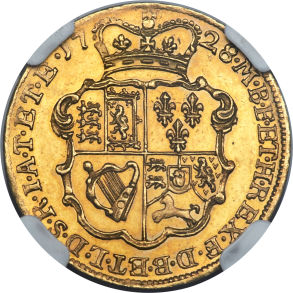
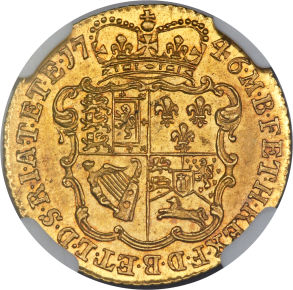
The reverse has four crowned shields arranged as a cross, for England and Scotland, France, Ireland and the Electoral dominions, with the Garter star at the centre and sceptres between the shields, another feature the sixpence lacks. The edge is milled diagonally. John Croker, Chief Engraver at the Royal Mint, engraved the dies for all half guineas of George I.
Varieties and errors
The rare variety is the 1721 elephant and castle, with the mark of the Africa Company below the bust, which Clayton singles out as the rare George I half guinea. His values page also lists a 1718 over 7 overdate.
Collecting notes
Check the area under the bust for an elephant and castle on any 1721 coin, and look closely at a 1718 for the overdate. The Royal Mint Museum describes the filing of gold coins as a problem the Mint was still fighting under George II, so the diagonal milling should be complete all round and the weight close to 4.2 grams.
The second head half guinea of 1725 to 1727 shares the reverse. Wikipedia records that the guinea was demonetised in the Great Recoinage of 1816 and replaced by the sovereign.
Sources
The history, design, varieties and collecting notes on this page are drawn from these sources. Prices come from recorded sales, not from them.
- Half guinea, Wikipedia (read 12 Oct 2026)
- Ten Shillings and Half Guinea, Tony Clayton, Coins of the UK (read 12 Oct 2026)
- Values of Half Guineas and Half Sovereigns, Tony Clayton, Coins of the UK (read 12 Oct 2026)
- Coin values by year, George I (year pages 1715 to 1724, read one by one), Coin Hunter (read 12 Oct 2026)
- Half-Guinea coin of George I (1718), Science Museum Group, via Museum Data Service (read 12 Oct 2026)
- George II, Royal Mint Museum (read 12 Oct 2026)
- Halfcrown (provenance mark list), Tony Clayton, Coins of the UK (read 12 Oct 2026)
- Guinea (coin), Wikipedia (read 12 Oct 2026)