Rarely sells: 1 verified sales in the last 12 months.
1 Guinea - George I 4th portrait (1716–1723)
| Country | United Kingdom |
| Year | 1716–1723 |
| Denomination | 1 Guinea |
| Face value | £1.05 |
| Mint | Royal Mint · Llantrisant |
| Circulation | Circulating |
| Demonetised | Yes |
| Composition | Gold (.9167) (917/1000 fine) |
| Weight | 8.400g · 0.2476 t oz |
| Diameter | 25.0mm |
| Shape | Round |
| Edge | Milled |
| Orientation | Coin alignment ↑↓ |
| Grade scale | UK (EF/UNC) |
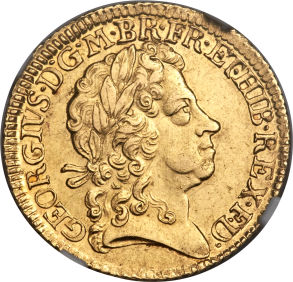
Fourth laureate portrait of King George I right, legend around.
GEORGIVS D G M BR FR ET HIB REX F D
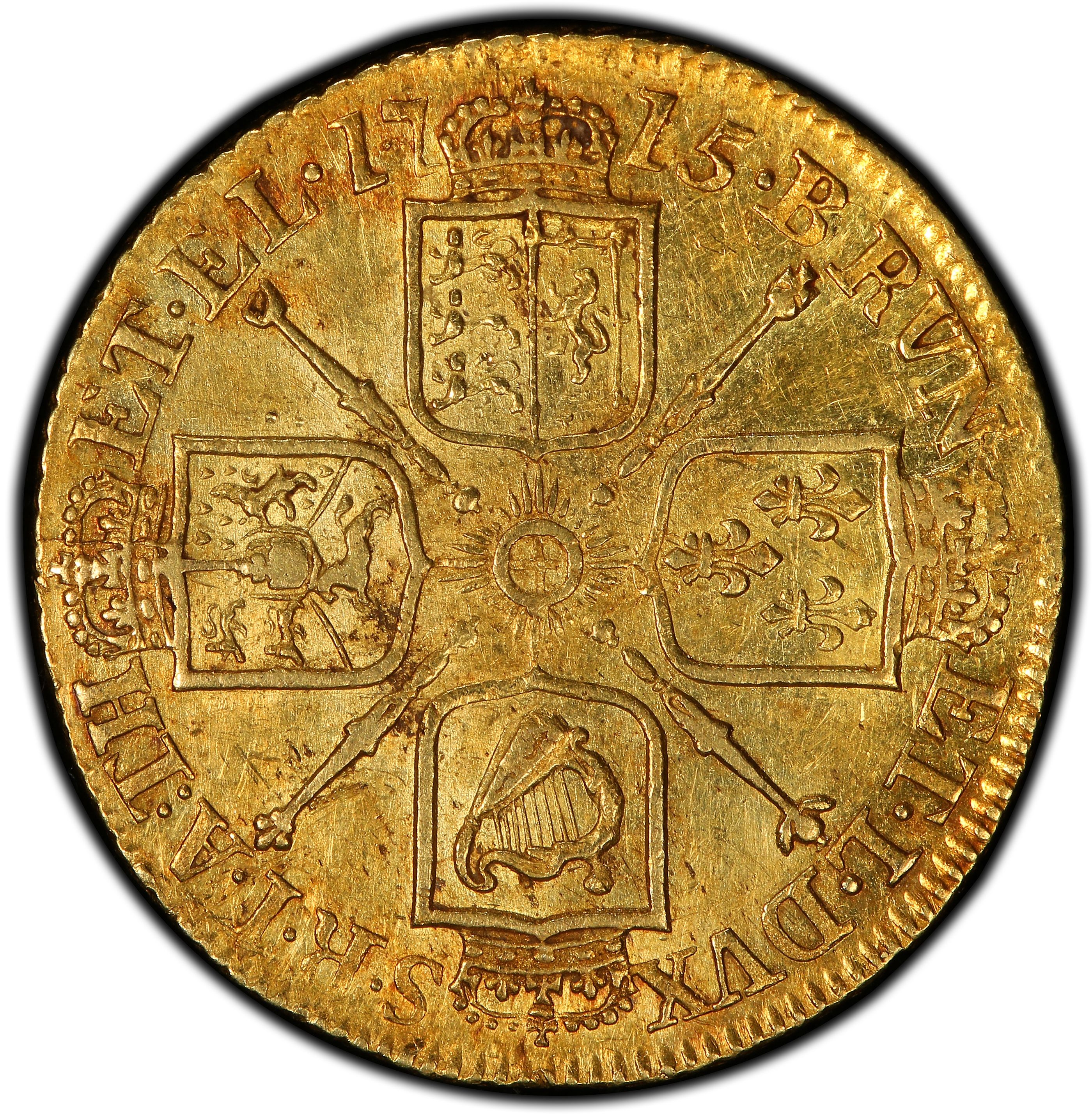
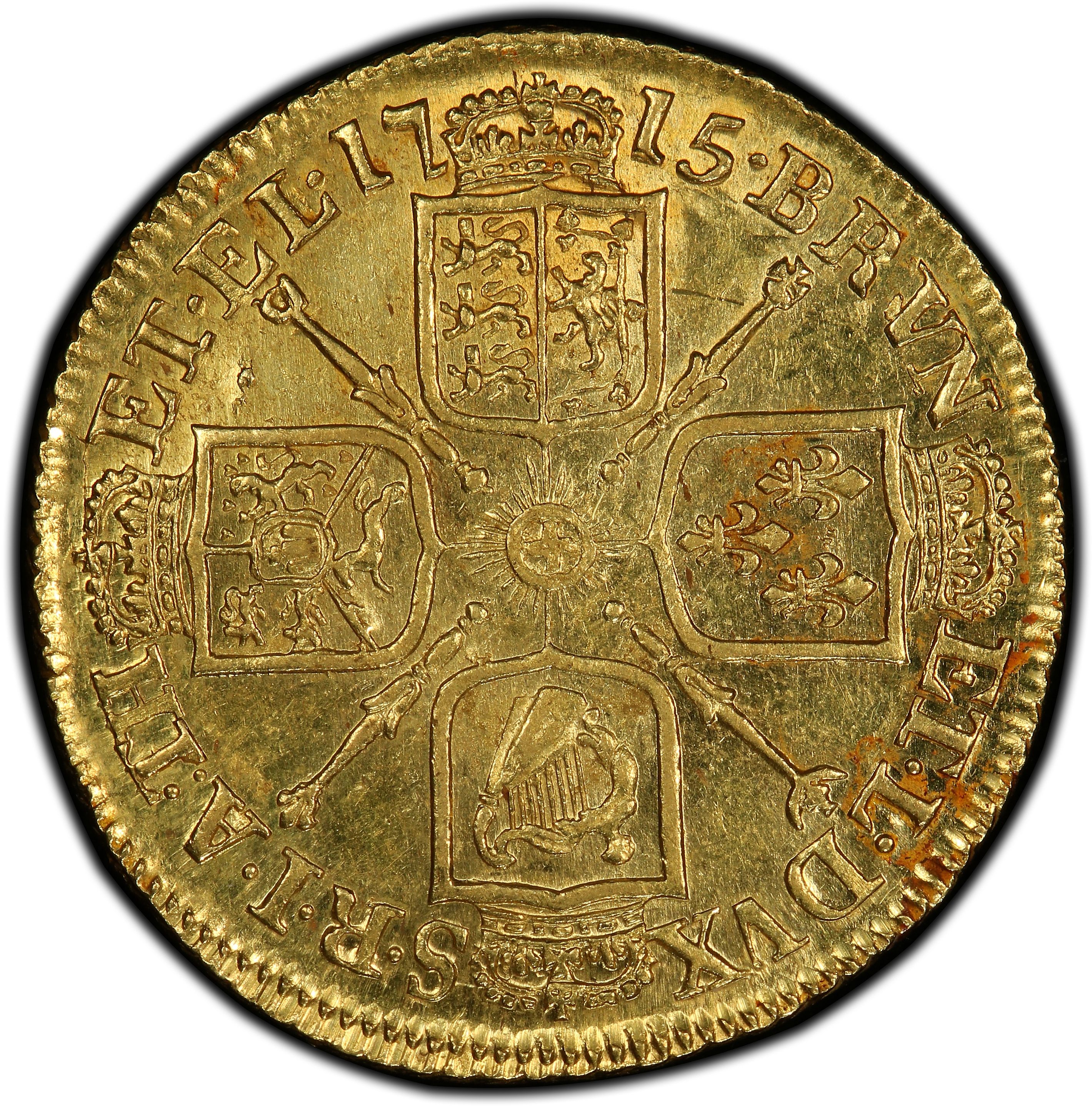
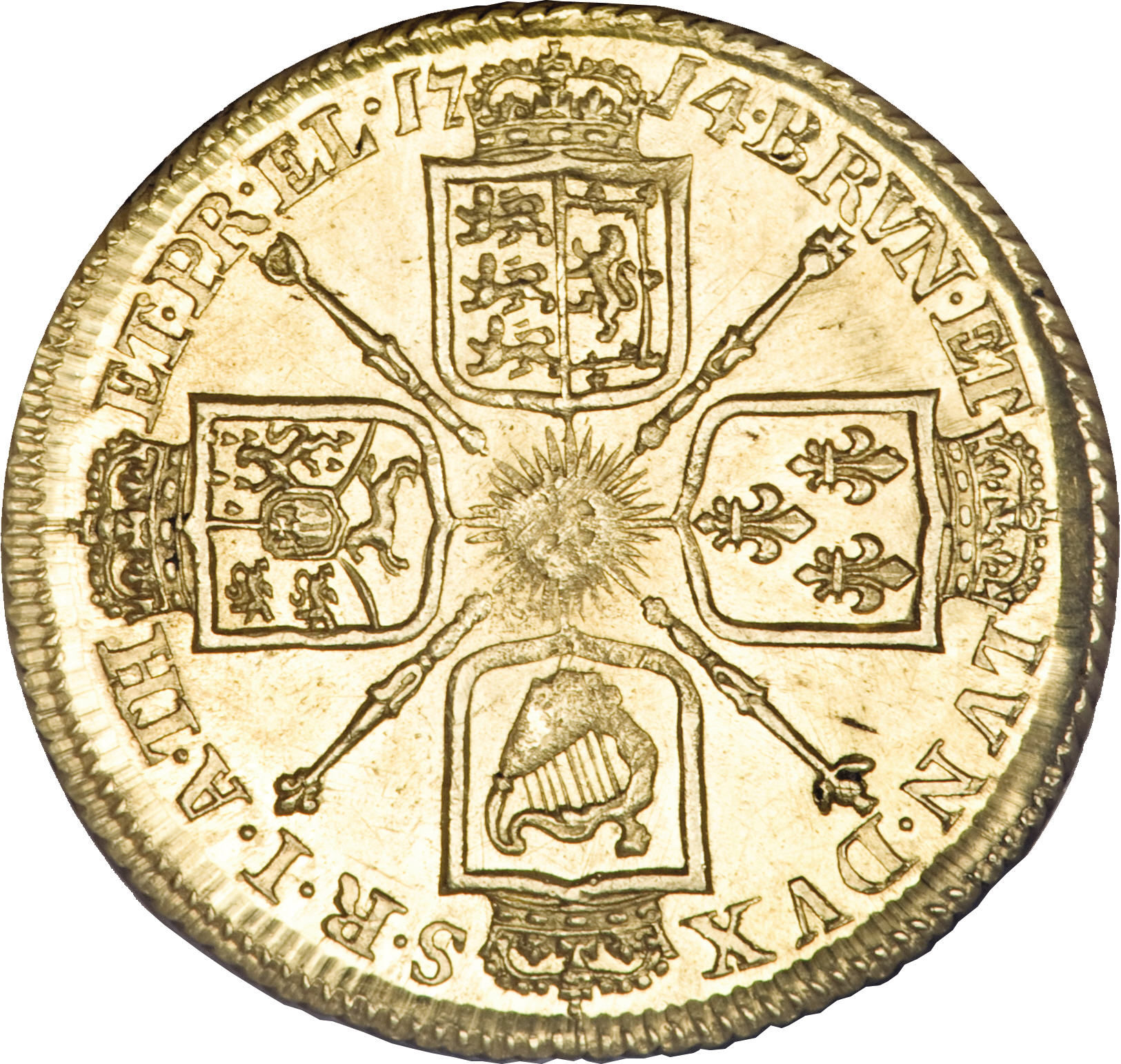
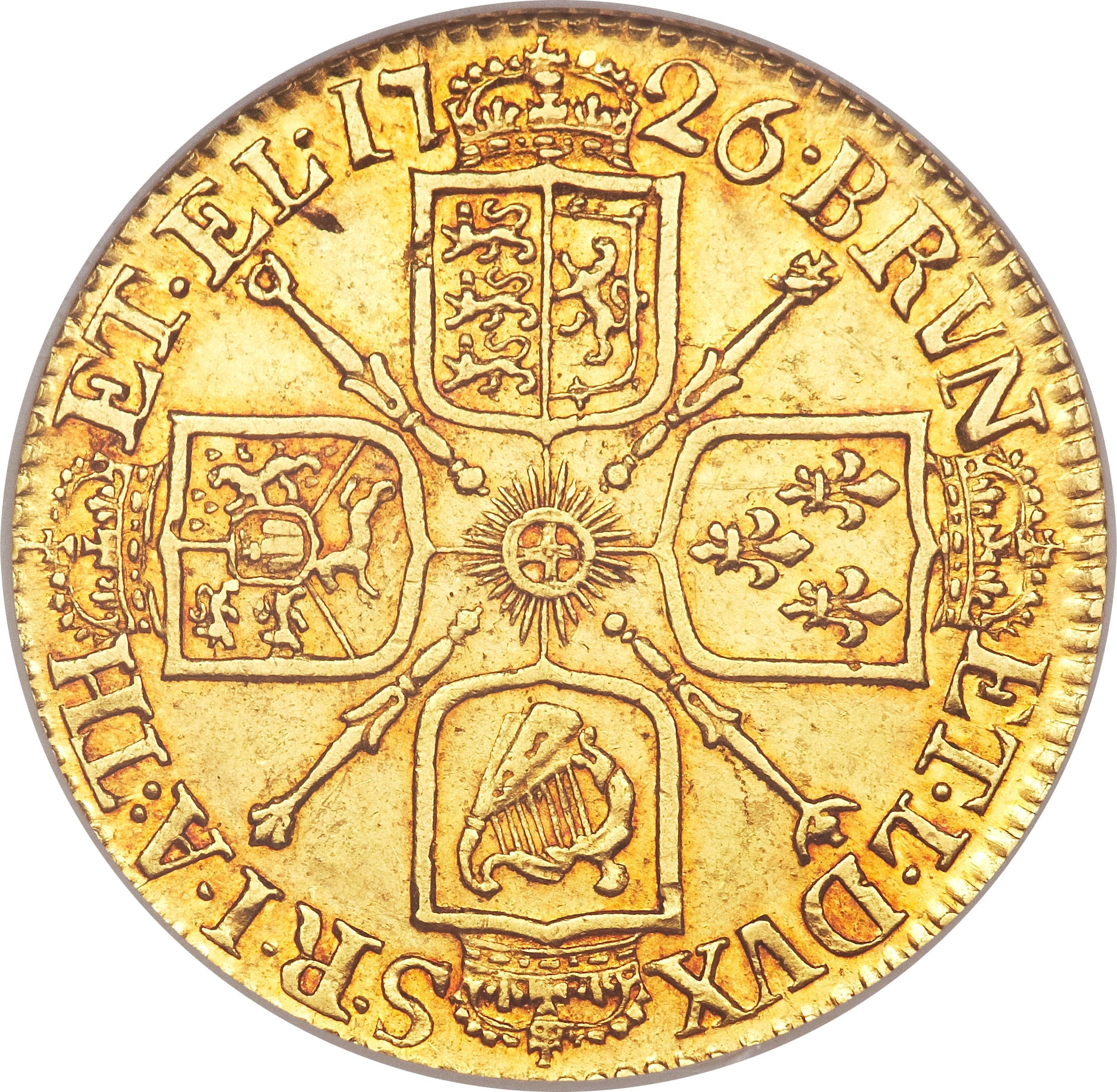
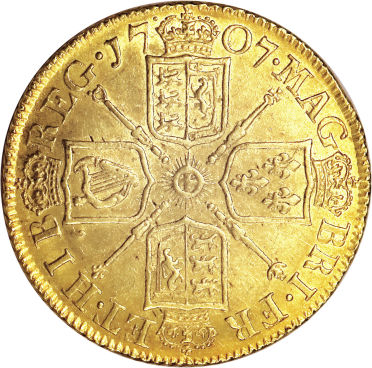
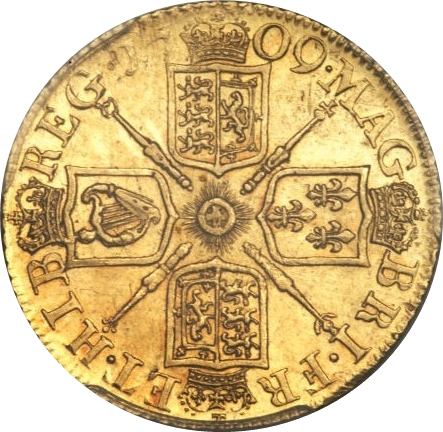
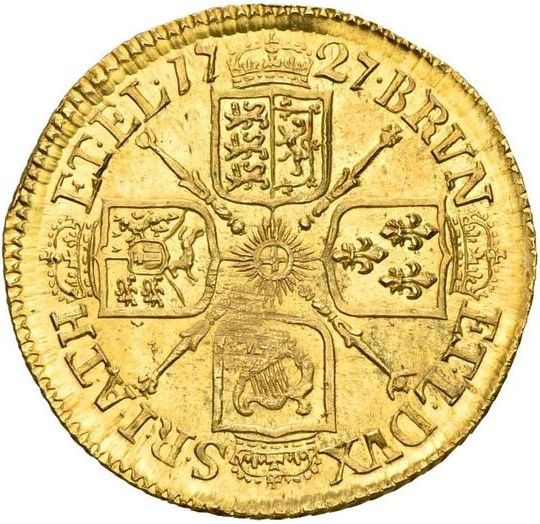
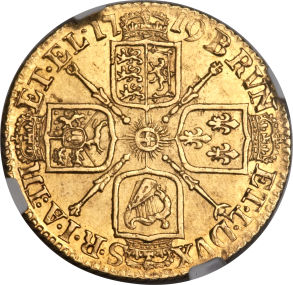
Crowned cruciform shields around central Garter star with sceptres bearing national emblems in angles, divided date above, legend around.
BRVN ET L DVX S R I A TH ET EL
1 Guinea - George I market value
Find this on eBay
Affiliate1 Guinea - George I price history
Daily limit reached1 Guinea - George I value by grade
Realised auction prices · ⭐ Pro Expand rows for individual sale records| Grade | Latest | Median | 30d Δ | All-time range | Sales (1yr) | Total sales | Last sale | |
|---|---|---|---|---|---|---|---|---|
| BU | £1,800.00 🔒 | £1,800.00 | – | £650.00 – £2,600.00 | 1 | 8 | 07-12-2025 | |
|
Loading…
|
||||||||
| EF | £1,500.00 🔒 | £1,500.00 (1) | – | £1,500.00 – £1,500.00 | 0 | 1 | 07-06-2015 | |
|
Loading…
|
||||||||
| VF | £1,600.00 🔒 | £1,600.00 (1) | – | £1,600.00 – £1,600.00 | 0 | 1 | 04-03-2012 | |
|
Loading…
|
||||||||
| F | £550.00 🔒 | £750.00 | – | £550.00 – £850.00 | 0 | 3 | 02-09-2018 | |
|
Loading…
|
||||||||
About the 1716 1 Guinea - George I
The 1716 1 Guinea - George I is a circulating 1 guinea coin issued from 1716 to 1723, struck in 91.67% gold. It weighs 8.4g and measures 25mm across. Reverse design: Crowned cruciform shields around central Garter star with sceptres bearing national emblems in angles, divided date above, legend around.
It is no longer legal tender, so its value is to collectors only.
Common questions
How much is the 1716 1 Guinea - George I worth?
Verified sold prices for the 1716 1 Guinea - George I run from £750 to £1,800 across 4 grades, taking the median for each grade. Condition makes the difference, so check the grade table above before pricing one. Its gold content is worth about £744 at today's spot price, which puts a floor under its value.
How many George I fourth portrait guineas were made?
No figure is published. Guineas of George I are not recorded by date or portrait, and catalogues list every date of this type with an unknown mintage. The fourth head was in use for longer than any other of the reign, from 1716 to 1723.
What is the Hanover arms error guinea?
A 1716 fourth-portrait guinea struck with the reverse shields turned 90 degrees, so the arms of Hanover appear at the date instead of the arms of England and Scotland. The Standard Catalogue of British Coins lists it, and Stack's Bowers counted three examples in auction records.
What does the elephant and castle mean on a guinea?
It was the badge of the Royal African Company, placed under the monarch's head on coins struck from gold the company imported. Under George I it appears on some guineas of 1721, 1722 and 1726; the first two dates use this fourth portrait.
When was the guinea fixed at 21 shillings?
In 1717. Isaac Newton, Master of the Mint, reported on the coinage on 21 September 1717 and a royal proclamation that December fixed the guinea at 21 shillings. It kept that value until the last guineas were struck in 1813.
How do I identify the 1716 1 Guinea - George I?
Check the weight 8.4g and diameter 25mm and the metal (91.67% gold) against the specification table on this page. The reverse design is described above.
History and design
George I's fourth portrait was the longest-lived of the five used on his guineas. It appears from 1716, when it replaced the third head, until 1723, when Spink records the year struck with both this large head and the smaller fifth portrait. The Royal Mint Museum's own 1717 guinea, catalogued as Spink 3631, is a fourth-head coin.
These were the years in which the guinea's value was settled. Isaac Newton, Master of the Mint, reported on the coinage on 21 September 1717, and a royal proclamation that December fixed the guinea at 21 shillings, ending the floating rate of the previous half century. No mintage figures by date are published for any George I guinea, and catalogues record each date of this type as unknown.
The obverse is John Croker's laureate head of the king facing right. Hocking's 1906 catalogue of the Royal Mint collection describes it on the 1717 guinea with long hair lying across the truncation but not below it, and the neck bare. The legend reads GEORGIVS D G M BR FR ET HIB REX F D. The Royal Mint names Croker as obverse designer and Johann Ochs as reverse designer.
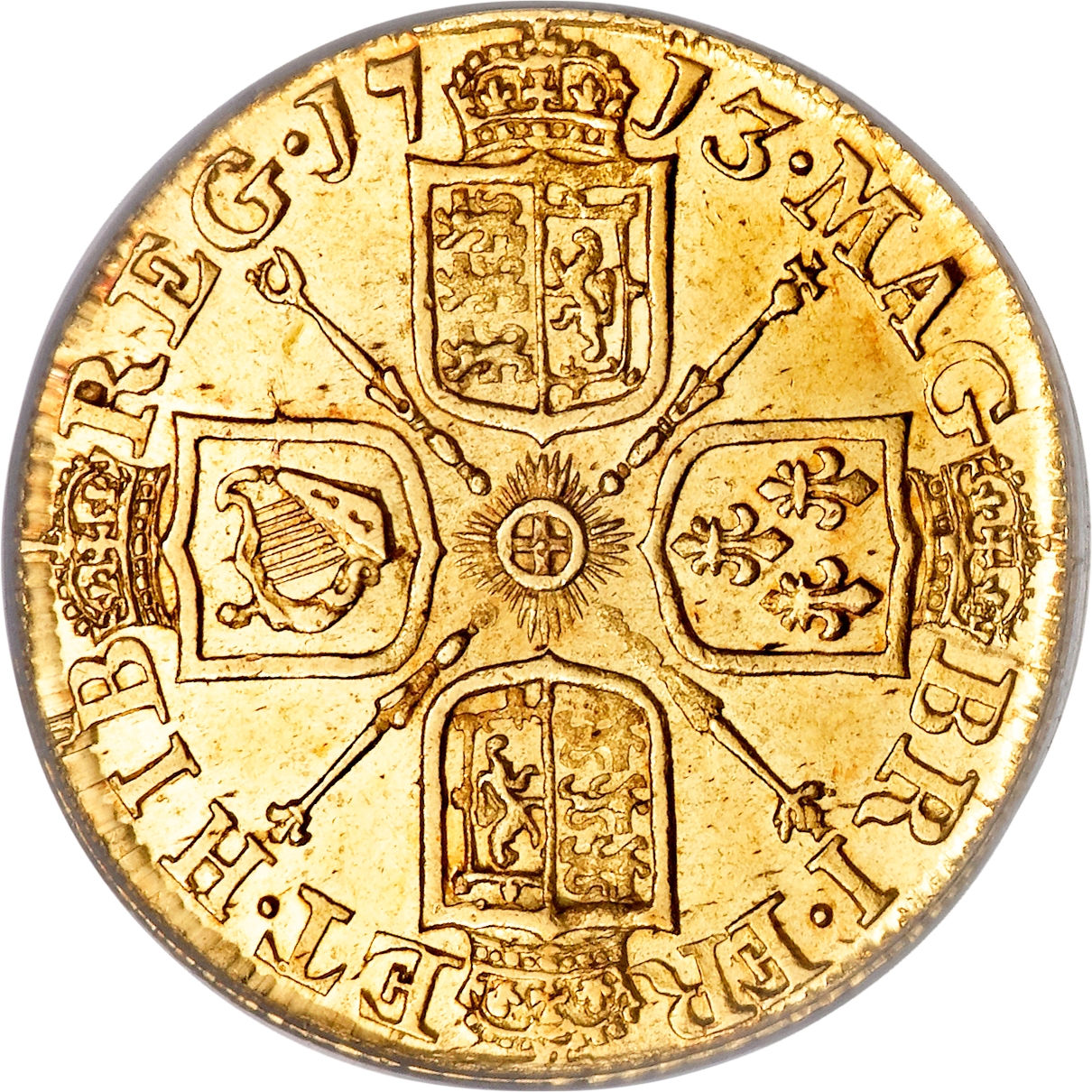
The reverse has four crowned shields in a cross, bearing England and Scotland, France, Ireland and Hanover, with sceptres between and the Star of the Garter in the centre. The legend BRVN ET L DVX S R I A TH ET EL, with the date, gives the king's titles as Duke of Brunswick and Lüneburg, Arch-Treasurer and Elector of the Holy Roman Empire. The edge is grained obliquely.
Varieties and errors
The best-known error is the 1716 guinea with the reverse shields rotated by 90 degrees, putting the arms of Hanover at the date. The Standard Catalogue of British Coins lists it, and Stack's Bowers found three examples in auction records. Spink's cataloguers add that this error has so far been seen only on the fourth head.
Some guineas of 1721 and 1722 carry the elephant and castle of the Royal African Company below the bust, marking gold the company supplied.
Collecting notes
For a 1716 coin, confirm the head, since the third portrait was also used that year. For 1723, the fifth portrait is the scarcer partner: Spink traced 13 fourth-head and six fifth-head examples at major auctions over two decades. Check the oblique edge graining for filing and the weight, close to 8.4 g. The guinea was replaced by the sovereign after the Coinage Act of 1816.
Sources
The history, design, varieties and collecting notes on this page are drawn from these sources. Prices come from recorded sales, not from them.
- Guinea (coin), Wikipedia (read 12 Oct 2026)
- Isaac Newton, Royal Mint Museum (read 12 Oct 2026)
- George II, Royal Mint Museum (read 12 Oct 2026)
- John Croker (engraver), Wikipedia (read 12 Oct 2026)
- Catalogue of the Coins, Tokens, Medals, Dies and Seals in the Museum of the Royal Mint, Vol. I Part I (Hocking, 1906), George I pages, Royal Mint Museum library (read 12 Oct 2026)
- 1716 George I Guinea, Fourth Head, ex Ellerby Area Hoard, The Royal Mint (read 12 Oct 2026)
- Guinea, 1716, fourth laureate bust right (lot 1608), Spink (read 12 Oct 2026)
- Great Britain 1716 guinea, CoinVarieties (read 12 Oct 2026)
- Guinea, 1723, fifth laureate head right (lot 96), Spink (read 12 Oct 2026)
- George I guinea, 1717 (RMM 291), The Royal Mint Museum, via Museum Data Service (read 12 Oct 2026)
More 1 Guinea coins from nearby years