1 Guinea - George I 1st portrait (1714)
| Country | United Kingdom |
| Year | 1714 |
| Denomination | 1 Guinea |
| Face value | £1.05 |
| Mint | Royal Mint · Llantrisant |
| Circulation | Circulating |
| Demonetised | Yes |
| Composition | Gold (.9167) (917/1000 fine) |
| Weight | 8.400g · 0.2476 t oz |
| Diameter | 25.4mm |
| Shape | Round |
| Edge | Milled |
| Orientation | Coin alignment ↑↓ |
| Obv. artist | John Croker |
| Rev. artist | John Croker |
| Grade scale | UK (EF/UNC) |
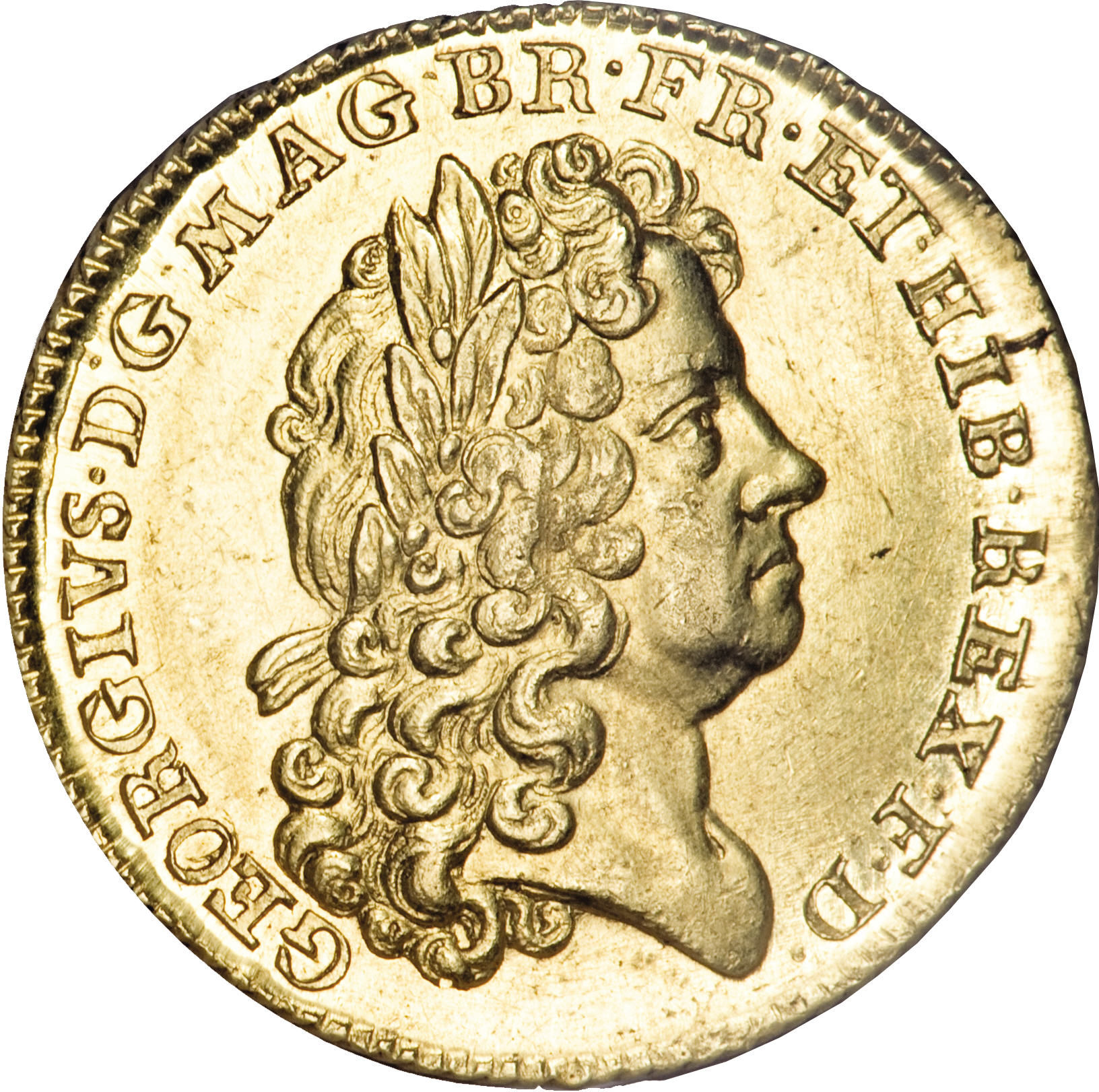
First laureate portrait of King George I right, legend around.
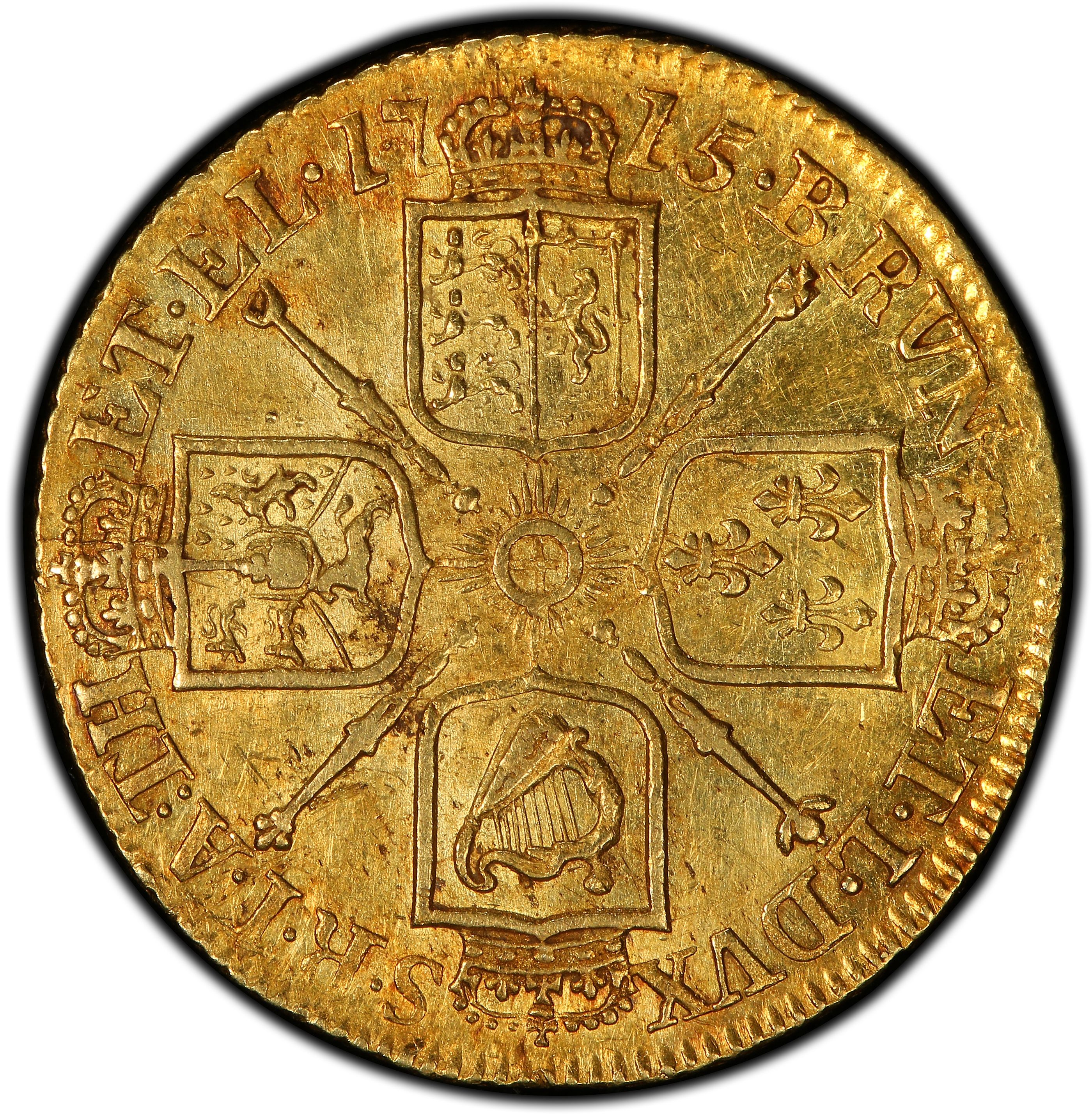
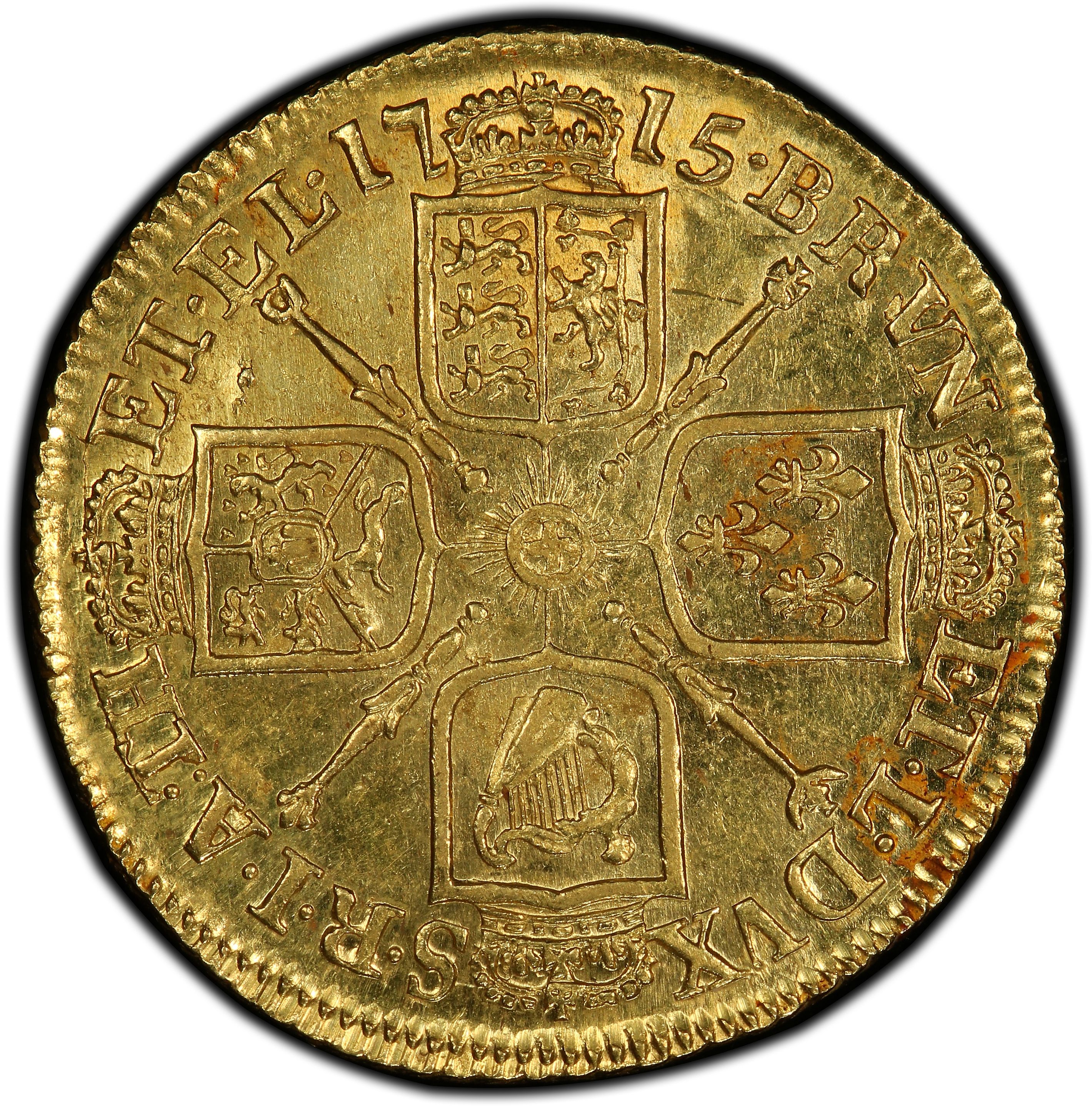
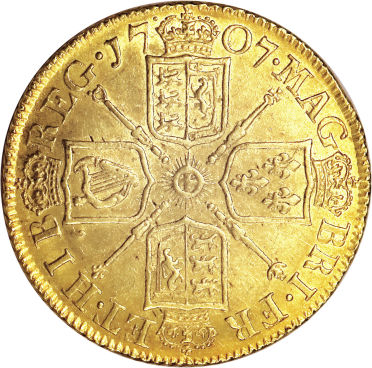
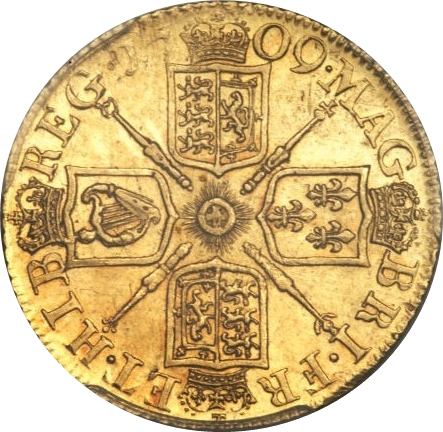
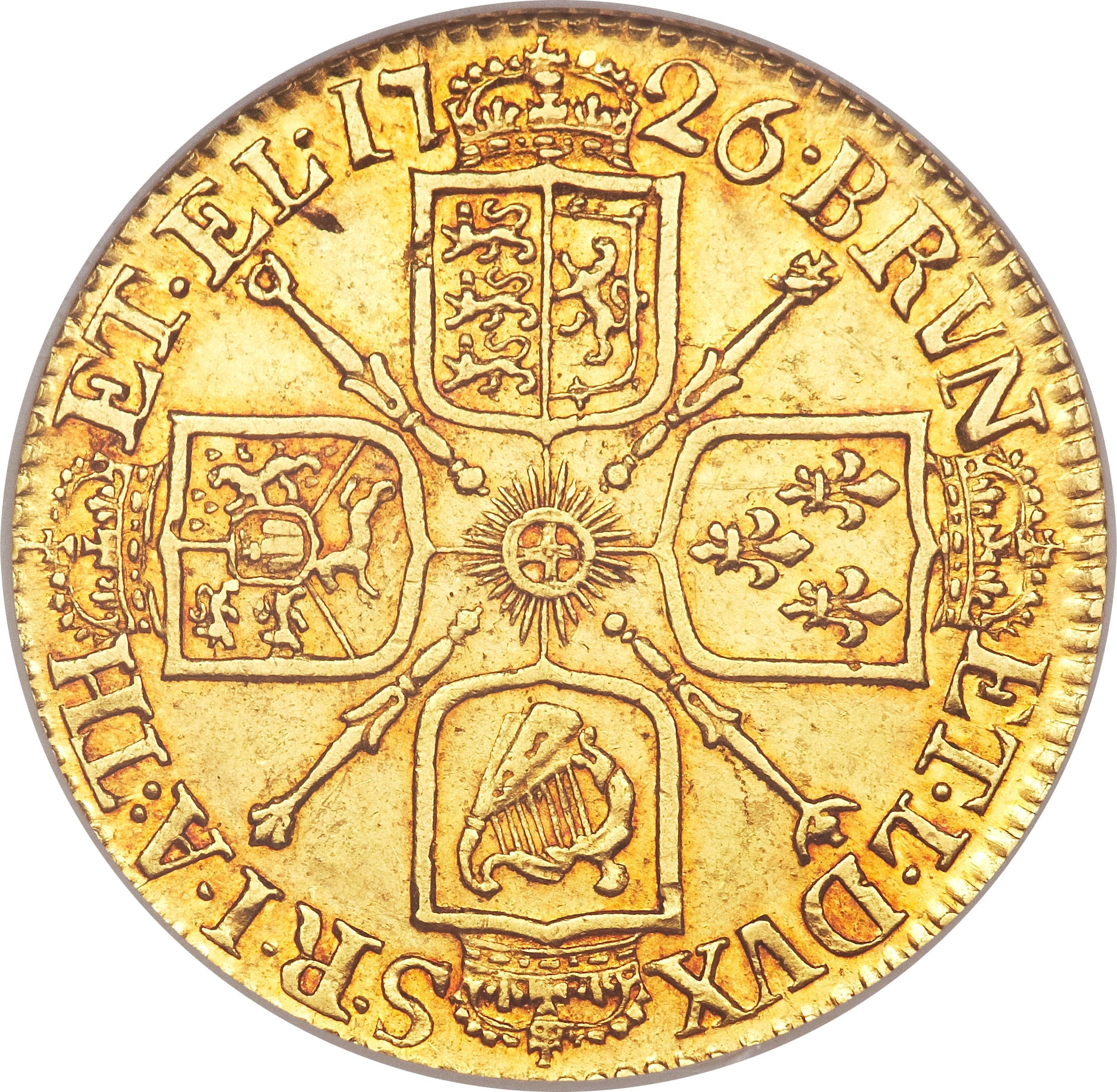
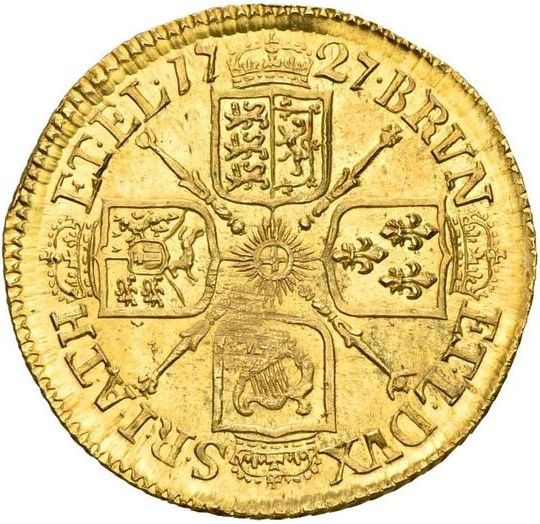
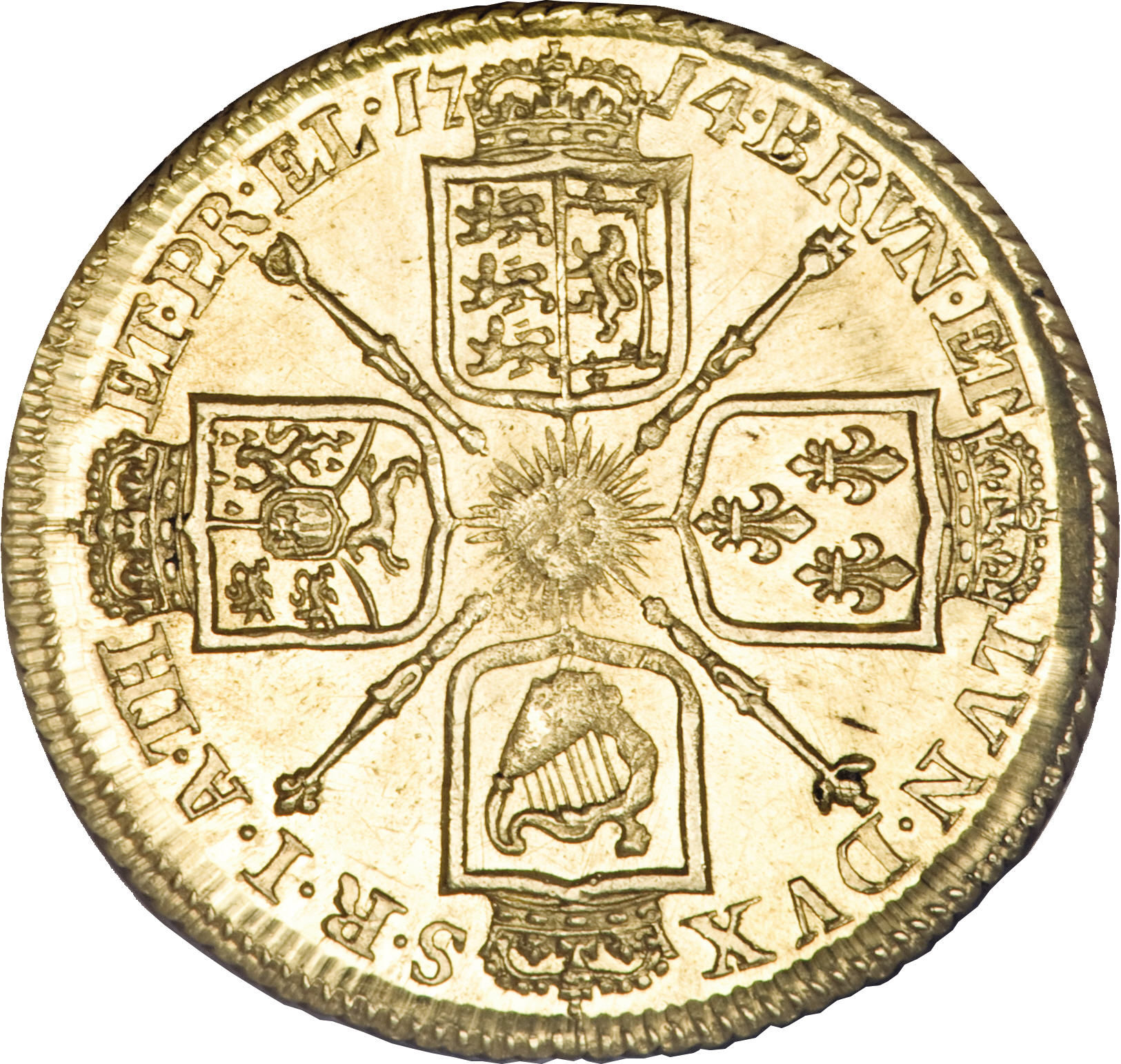
Crowned cruciform shields around central Garter star with sceptres bearing national emblems in angles, divided date above, legend around.
1 Guinea - George I market value
Find this on eBay
Affiliate1 Guinea - George I value by grade
Realised auction prices · ⭐ Pro Expand rows for individual sale records| Grade | Latest | Median | 30d Δ | All-time range | Sales (1yr) | Total sales | Last sale | |
|---|---|---|---|---|---|---|---|---|
| BU | £950.00 🔒 | £750.00 | – | £650.00 – £950.00 | 0 | 3 | 01-09-2013 | |
|
Loading…
|
||||||||
| EF | £6,500.00 🔒 | £4,800.00 | – | £3,000.00 – £6,500.00 | 0 | 5 | 01-03-2015 | |
|
Loading…
|
||||||||
| VF | £1,750.00 🔒 | £1,750.00 | – | £700.00 – £2,300.00 | 0 | 3 | 06-12-2015 | |
|
Loading…
|
||||||||
| F | £1,300.00 🔒 | £700.00 | – | £600.00 – £1,300.00 | 0 | 3 | 09-09-2017 | |
|
Loading…
|
||||||||
| AU-58 | £8,000.00 🔒 | £8,000.00 (1) | – | £8,000.00 – £8,000.00 | 0 | 1 | 03-12-2023 | |
|
Loading…
|
||||||||
About the 1714 1 Guinea - George I
The 1714 1 Guinea - George I is a circulating 1 guinea coin, struck in 91.67% gold. It weighs 8.4g and measures 25.4mm across. Reverse design: Crowned cruciform shields around central Garter star with sceptres bearing national emblems in angles, divided date above, legend around.
It is no longer legal tender, so its value is to collectors only.
Common questions
How much is the 1714 1 Guinea - George I worth?
Verified sold prices for the 1714 1 Guinea - George I run from £700 to £8,000 across 5 grades, taking the median for each grade. Condition makes the difference, so check the grade table above before pricing one. Its gold content is worth about £744 at today's spot price, which puts a floor under its value.
Why does the 1714 guinea say PR EL?
PR EL stands for Prince Elector of the Holy Roman Empire. Wikipedia notes that the 1714 coin is the only guinea of the reign to use that title; from 1715 the legend reads simply EL, Elector.
How many 1714 guineas were made?
No mintage figure has been published for the 1714 guinea, or for any guinea of George I by date. The 1714 is the only date with the first portrait, and the Royal Mint Museum holds one in its collection.
How many portraits are there on George I guineas?
Five. Wikipedia notes that George I's guineas use five different portraits of the king, struck in every year from 1714 to 1727. The first portrait appears only on the 1714 coin.
What was a guinea worth in 1714?
About 21 shillings and sixpence. Wikipedia records that the guinea's value had fallen back to that level by the start of George I's reign, before a royal proclamation of December 1717 fixed it at 21 shillings.
How do I identify the 1714 1 Guinea - George I?
Check the weight 8.4g and diameter 25.4mm and the metal (91.67% gold) against the specification table on this page. The reverse design is described above.
History and design
The guinea was the main gold coin of the realm, and George I's guineas were struck in every year of the reign from 1714 to 1727, as both Wikipedia and Tony Clayton record. The first portrait was used only on coins dated 1714. No mintage figure has been published for any George I guinea by date.
What sets the 1714 coin apart is its legend. Wikipedia notes that it is the only guinea of the reign to call George Prince Elector of the Holy Roman Empire, a title dropped from 1715. At the start of the reign the guinea passed for about 21 shillings and sixpence. Isaac Newton, Master of the Mint from 1699 until his death in 1727, reported on the guinea in September 1717, and a proclamation that December fixed it at 21 shillings.
The obverse shows the first laureate portrait of George I facing right with GEORGIVS D G MAG BR FR ET HIB REX F D: George, by the grace of God, King of Great Britain, France and Ireland, Defender of the Faith. Later guineas shorten MAG to M.
The reverse has four crowned shields arranged as a cross, in the order England and Scotland, France, Ireland and Hanover, with the Garter star at the centre and sceptres between them. The legend reads BRVN ET LVN DVX S R I A TH ET PR EL 1714: Duke of Brunswick and Lüneburg, Arch-Treasurer and Prince Elector of the Holy Roman Empire. The edge is milled diagonally. The dies for all George I guineas were engraved by John Croker.
Collecting notes
The 1714 guinea is a single-date, single-portrait type, so the key checks are the legend and the condition. Confirm MAG on the obverse and PR EL on the reverse, which separate it from the later guineas. Check that the diagonal milling is complete and the weight sits near the 8.3 to 8.4 grams Wikipedia gives for the reign.
Four further portraits followed between 1715 and 1727; the second portrait guinea is the next type. The Royal Mint Museum holds a 1714 example in its collection.
Sources
The history, design, varieties and collecting notes on this page are drawn from these sources. Prices come from recorded sales, not from them.
- Guinea (coin), Wikipedia (read 12 Oct 2026)
- One Pound (The Sovereign or Guinea), Tony Clayton, Coins of the UK (read 12 Oct 2026)
- Values of Guineas and Sovereigns, Tony Clayton, Coins of the UK (read 12 Oct 2026)
- 1714 Coin Values, George I, Coin Hunter (read 12 Oct 2026)
- George I guinea, 1714 (RMM 290), The Royal Mint Museum, via Museum Data Service (read 12 Oct 2026)
- John Croker (engraver), Wikipedia (read 12 Oct 2026)
- Isaac Newton, Royal Mint Museum (read 12 Oct 2026)
More 1 Guinea coins from nearby years