1 Penny - George I incl. Maundy (1716–1727)
| Country | United Kingdom |
| Year | 1716–1727 |
| Denomination | 1 Penny |
| Mint | Royal Mint · Llantrisant |
| Series | Maundy Money |
| Circulation | Non-circulating |
| Demonetised | Yes |
| Composition | Silver (.925) (925/1000 fine) |
| Weight | 0.500g · 0.0149 t oz |
| Diameter | 12.0mm |
| Shape | Round |
| Edge | Plain |
| Orientation | Coin alignment ↑↓ |
| Grade scale | UK (EF/UNC) |
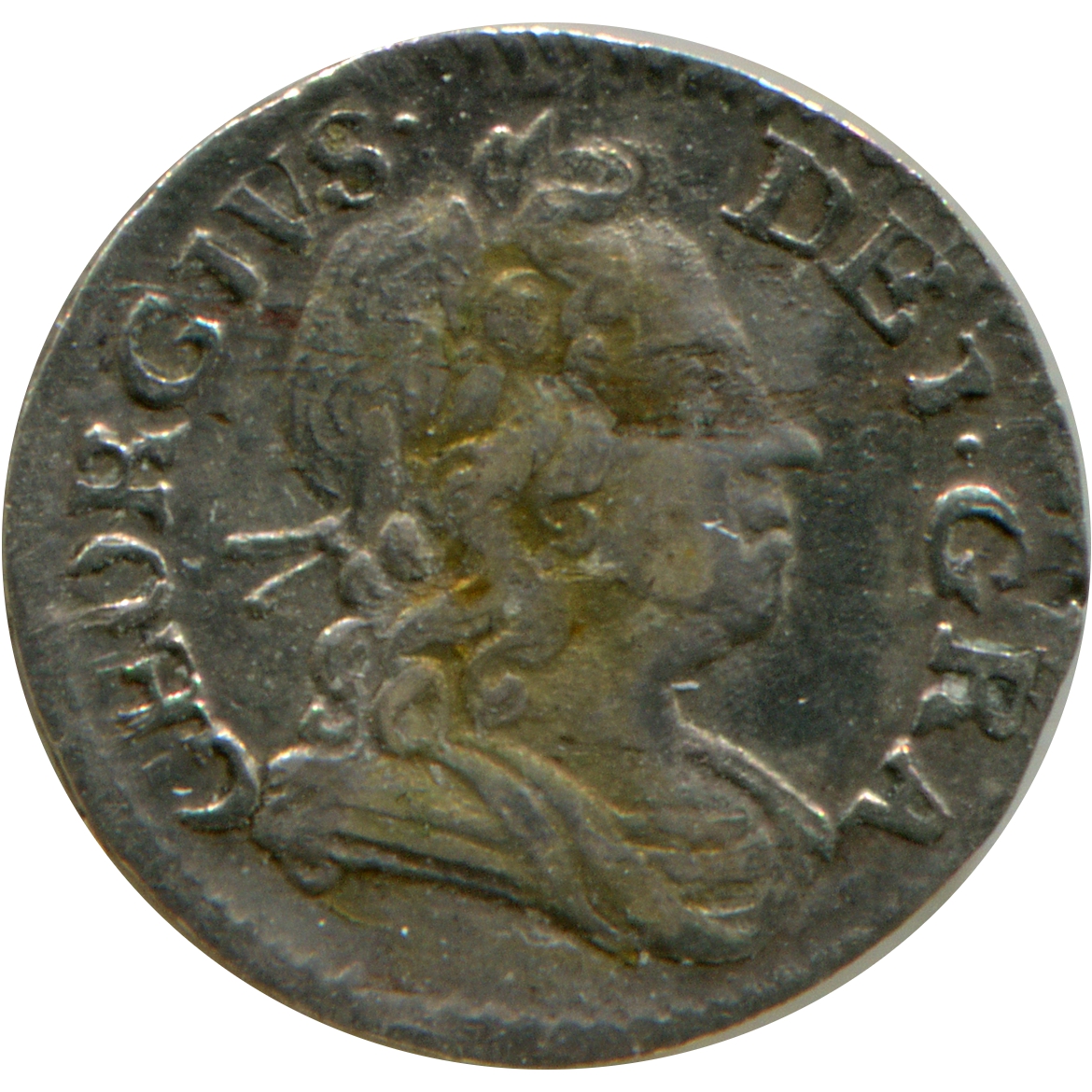
Laureate and cuirassed bust of King George I right, legend around.
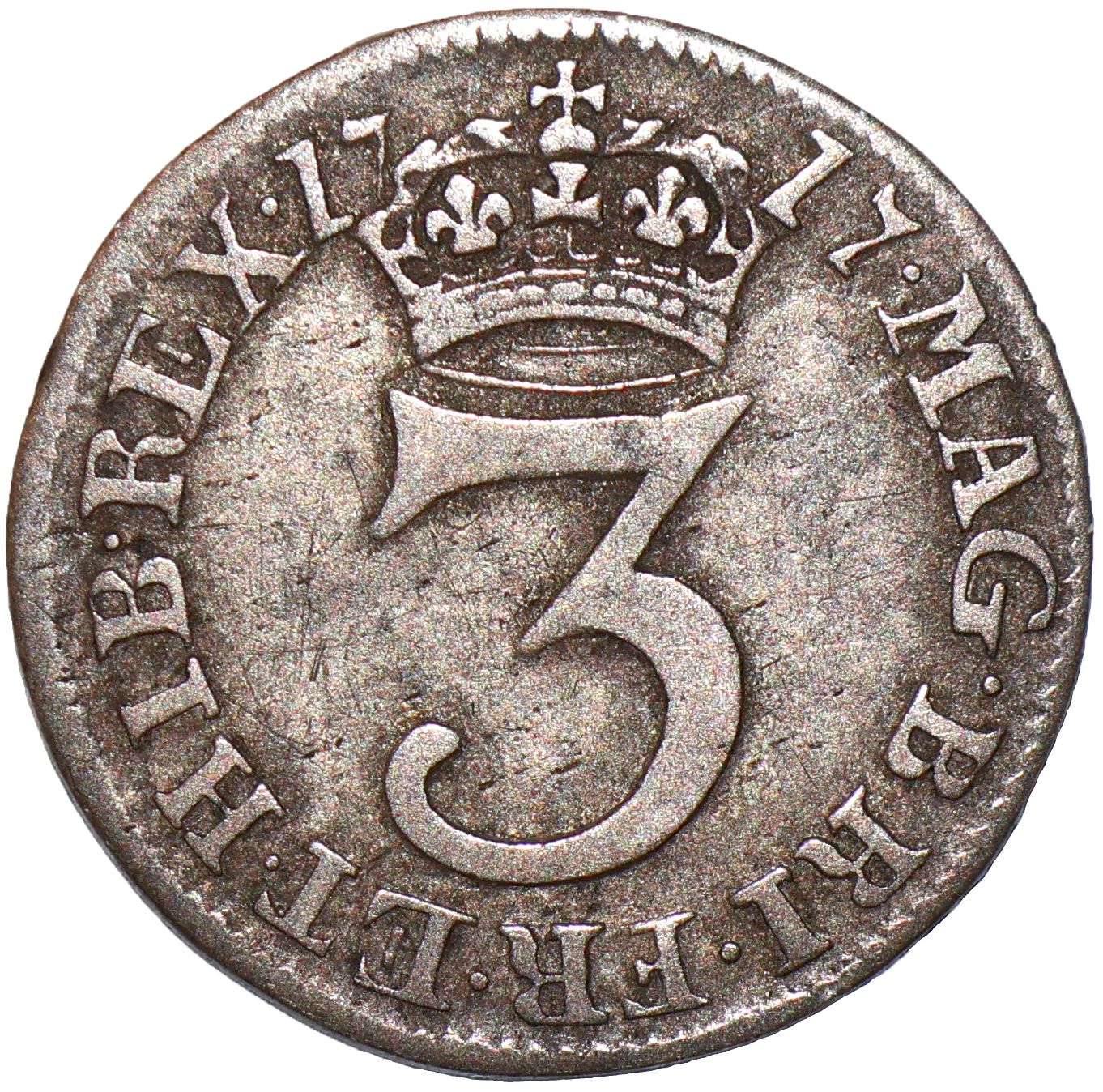
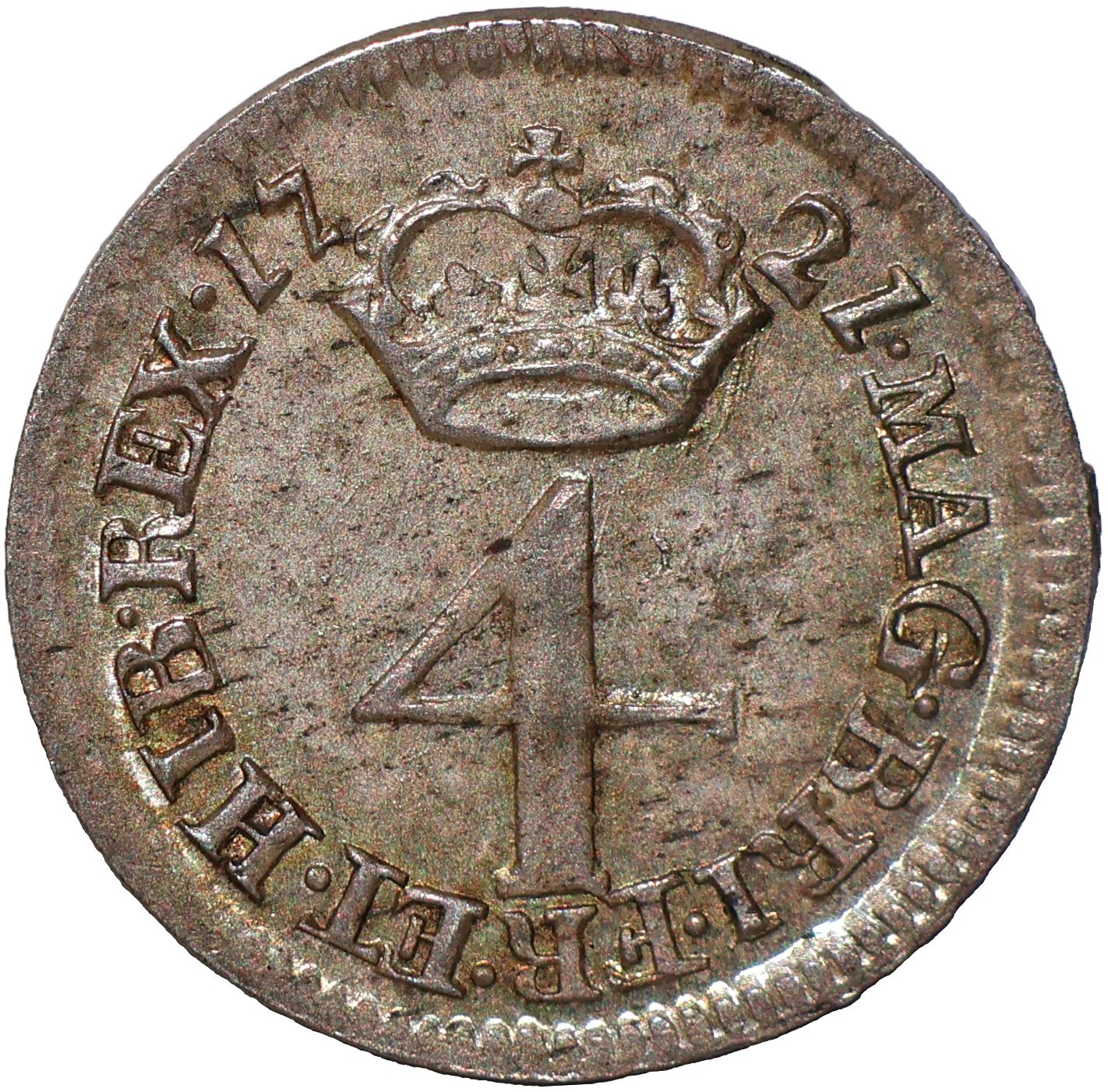
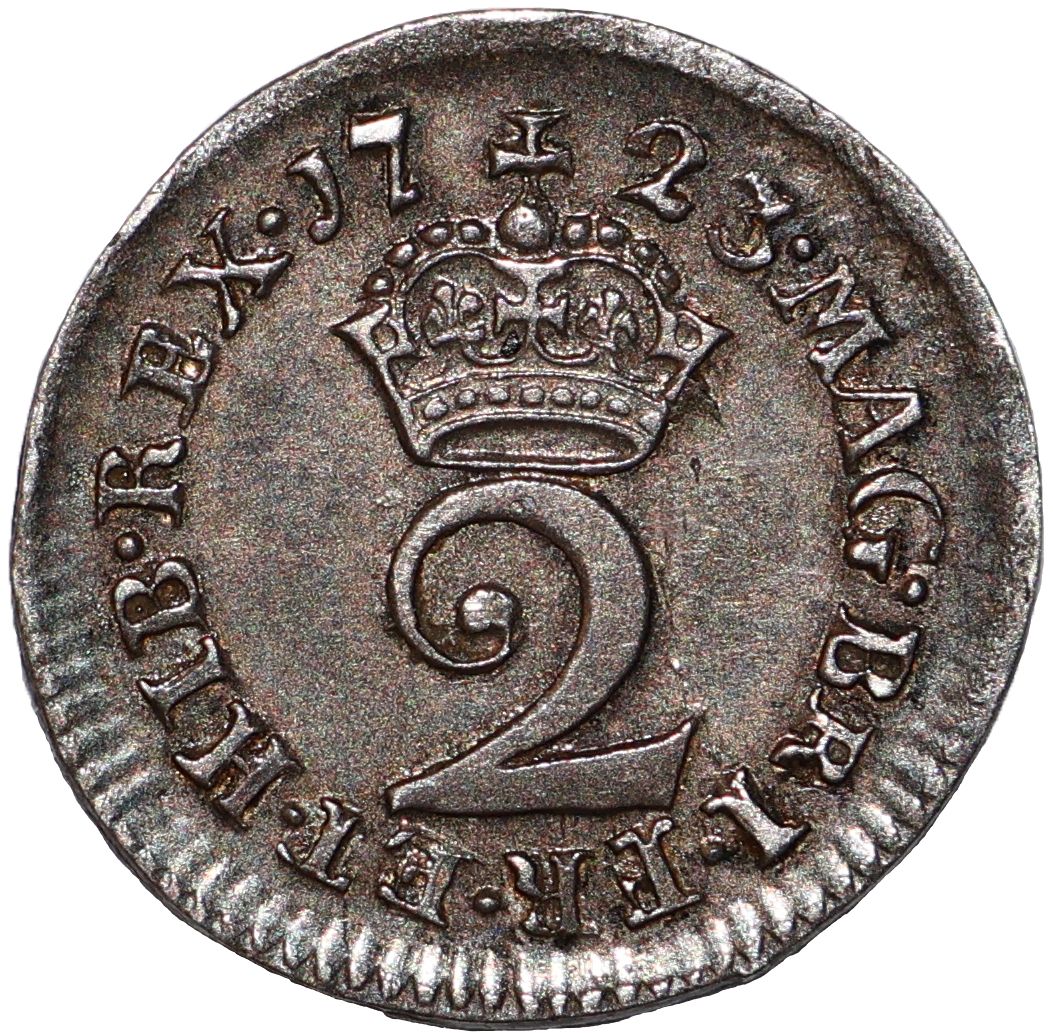
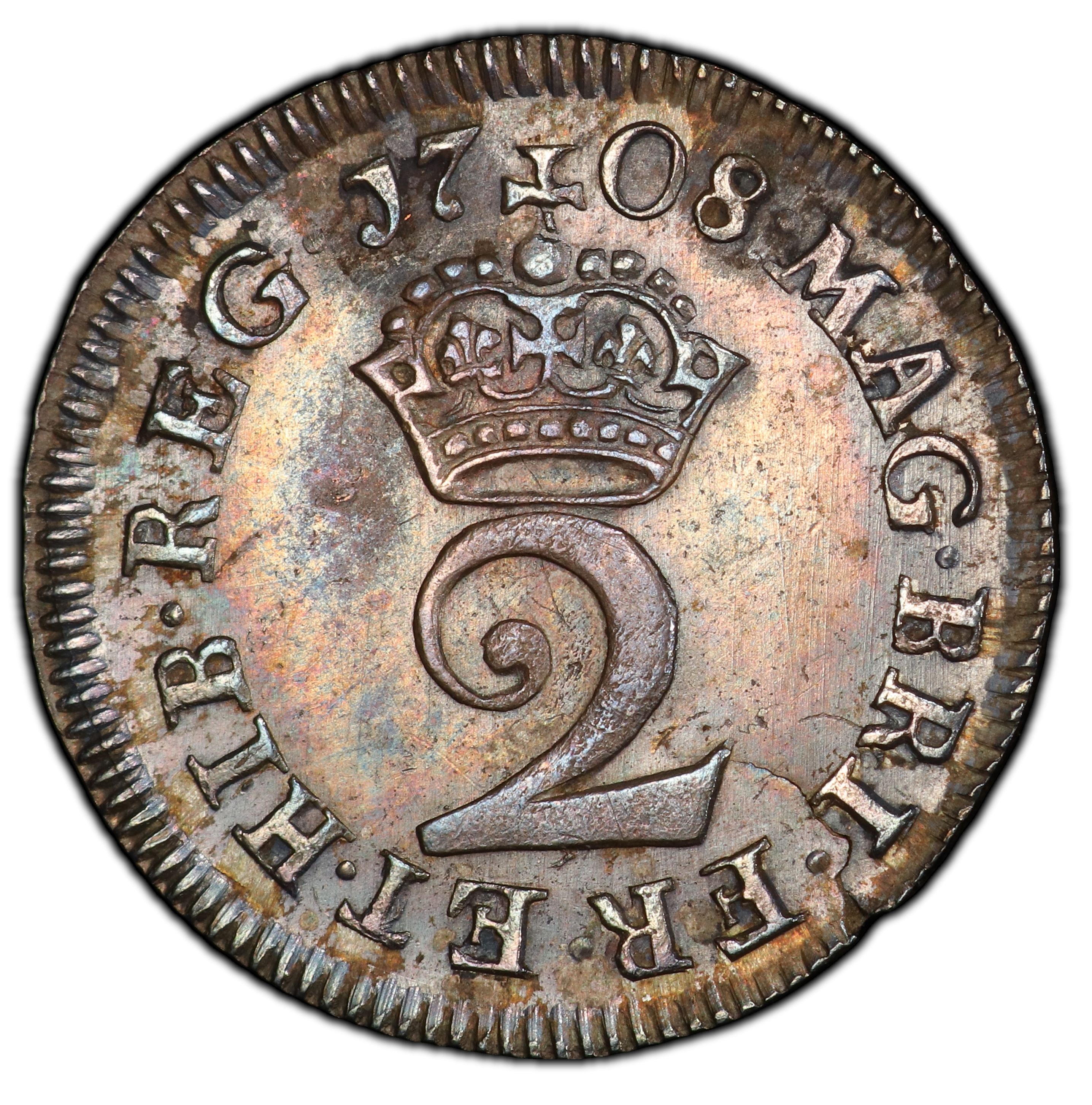
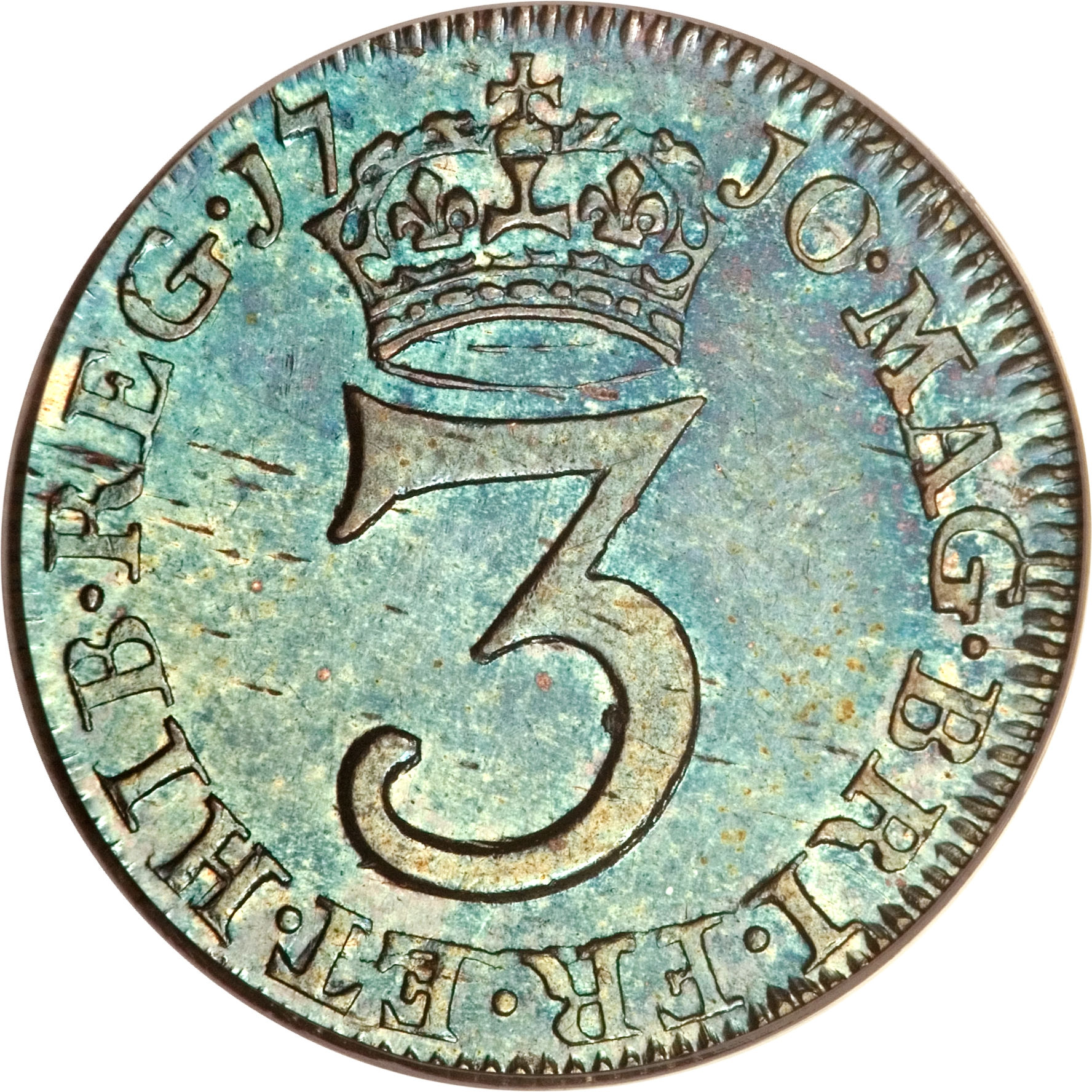
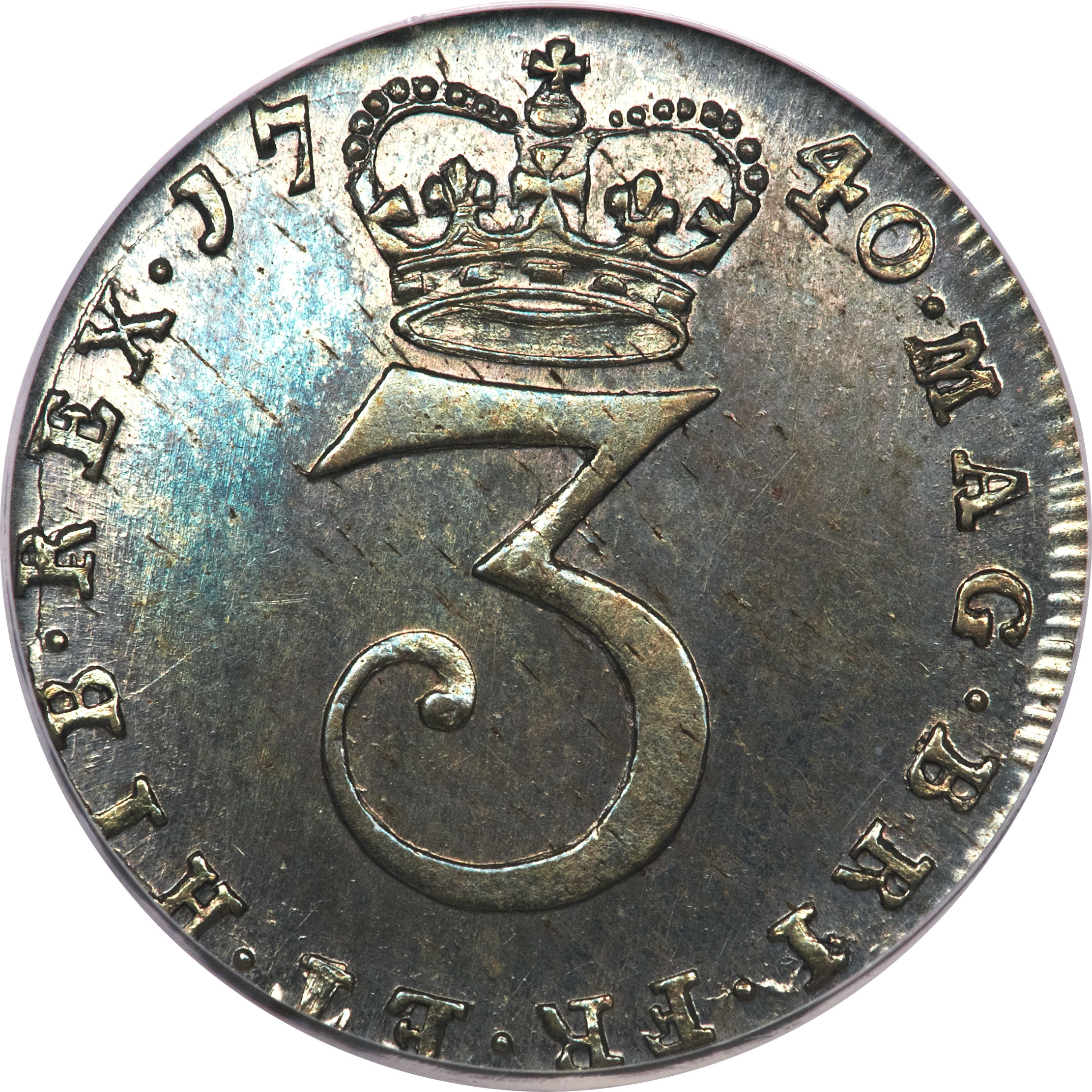
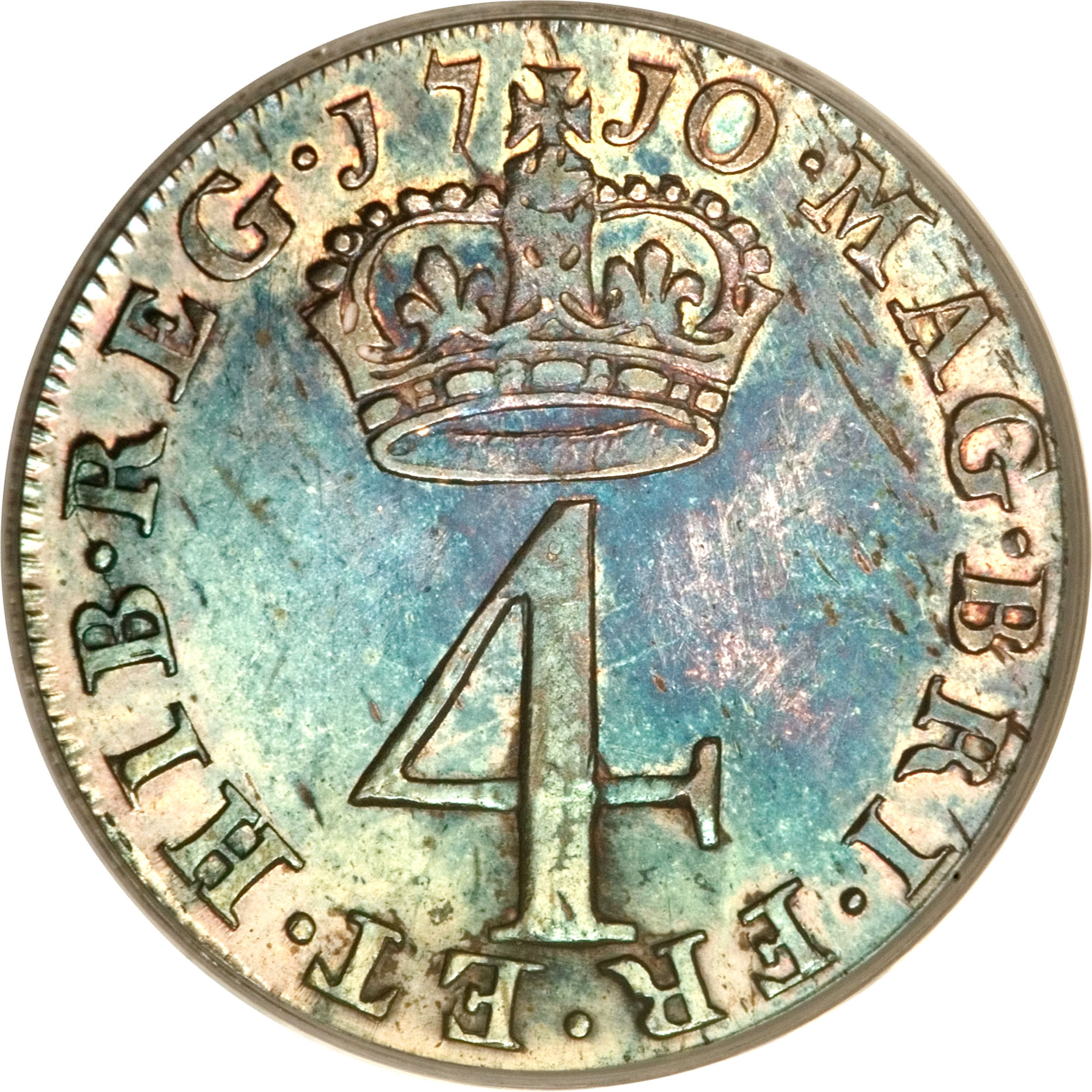
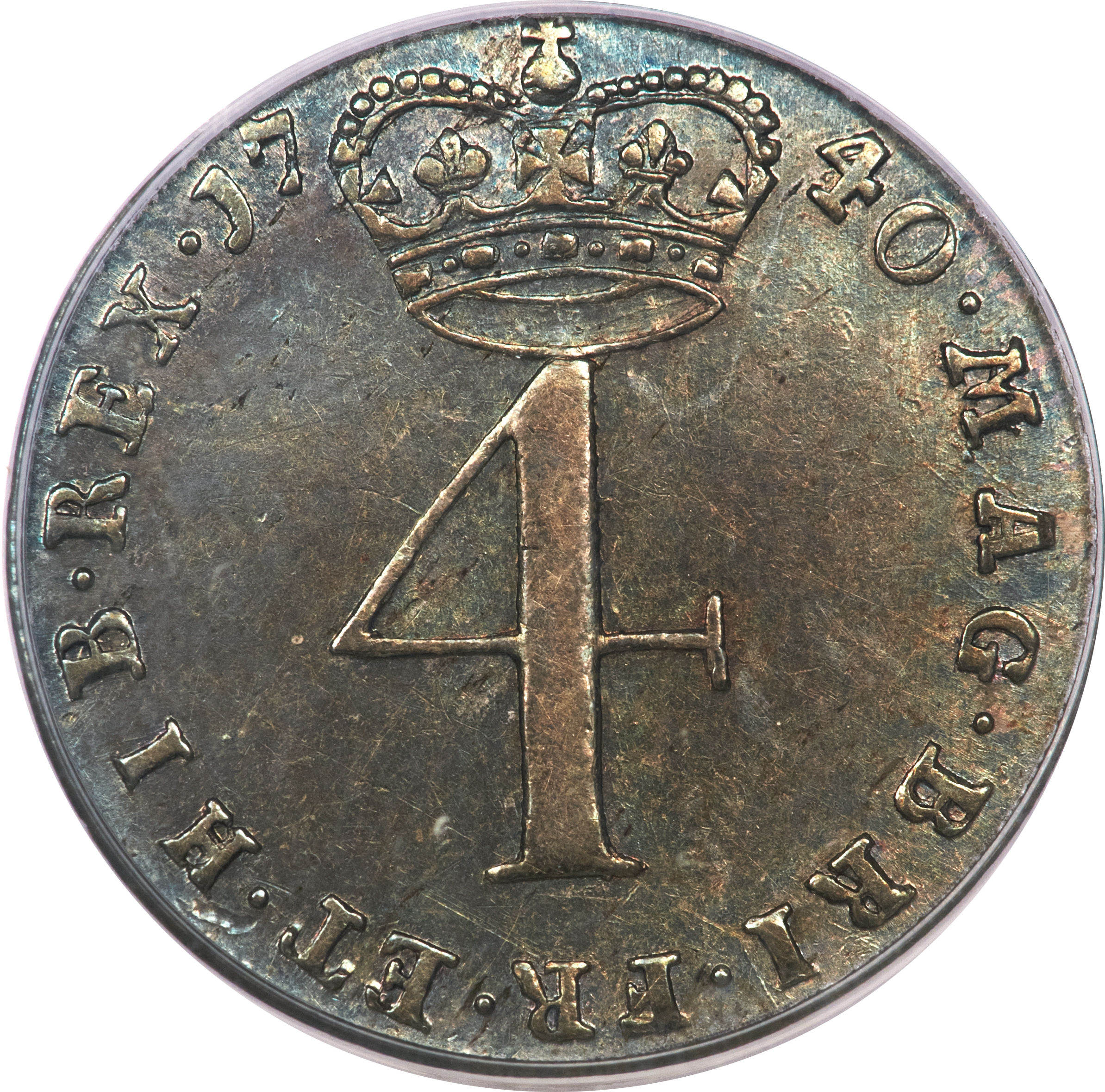
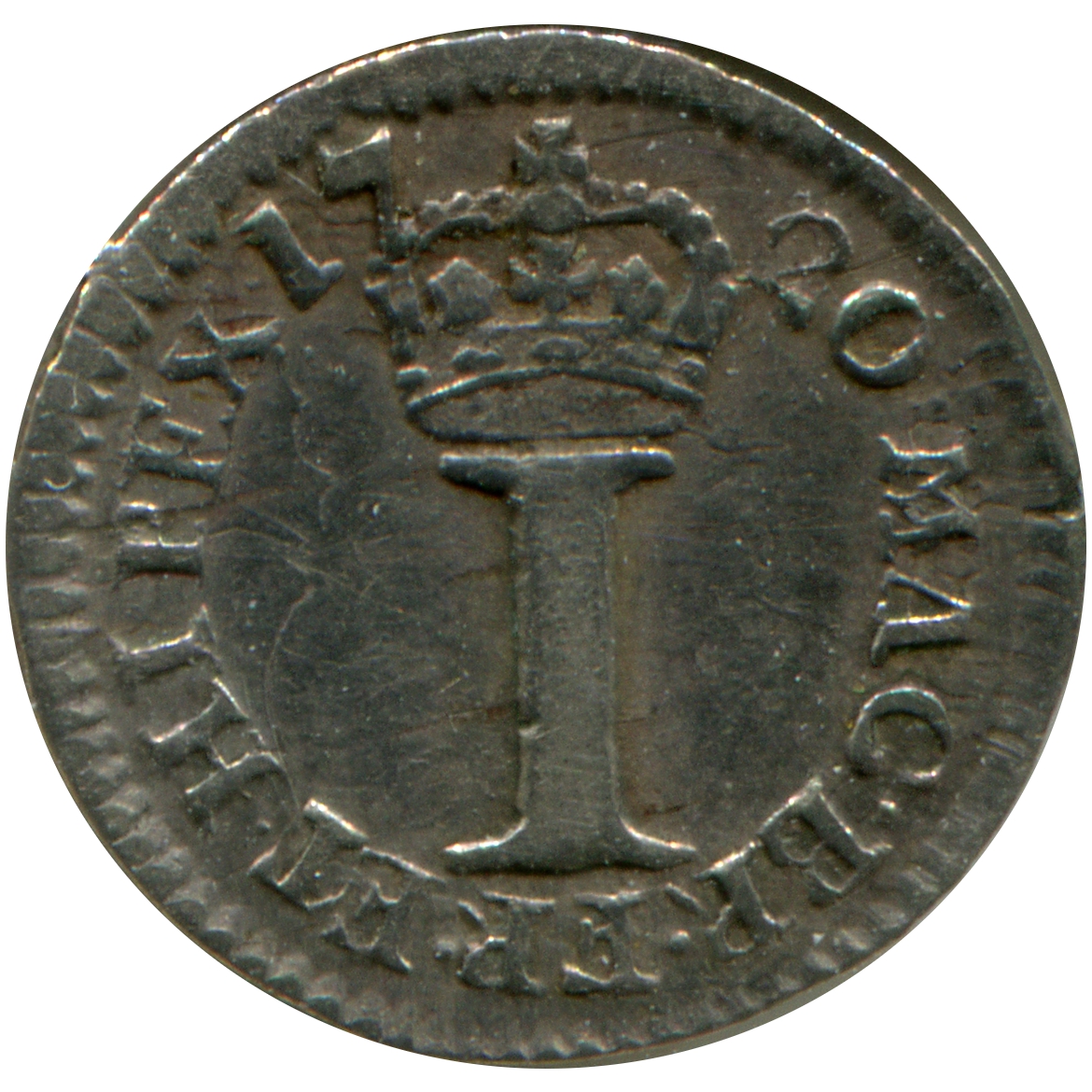
Large central denomination below crown dividing date, legend around.
Find this on eBay
Affiliate1 Penny - George I incl. Maundy price history
Daily limit reachedAbout the 1716 1 Penny - George I incl. Maundy
The 1716 1 Penny - George I incl. Maundy is a collector 1 penny coin issued from 1716 to 1727 in the Maundy Money series, struck in 92.5% silver. It weighs 0.5g and measures 12mm across. Reverse design: Large central denomination below crown dividing date, legend around.
It is no longer legal tender, so its value is to collectors only.
Common questions
How much is the 1716 1 Penny - George I incl. Maundy worth?
No verified sale of the 1716 1 Penny - George I incl. Maundy has been logged on MyCoinage yet.
What dates were George I silver pennies struck?
Wikipedia lists 1716, 1718, 1720, 1723, 1725, 1726 and 1727, the last being the year of George's death. Tony Clayton's list of Maundy dates agrees, showing a penny for every one of those years and the other Maundy denominations only in some.
Was the George I penny made for Maundy money?
Largely. Wikipedia says only small quantities of silver pennies were struck early in the reign, and that the penny's main purpose in the 18th century was as Maundy money. There are records of pennies alone being given in the Maundy before 1731.
What does the penny's legend mean?
The legend runs from the obverse onto the reverse and abbreviates Georgius Dei Gratia Magnae Britanniae Franciae et Hiberniae Rex, 'George by the Grace of God King of Great Britain, France and Ireland'. Wikipedia notes the claim to France was by then purely historic.
Is a George I Maundy penny legal tender?
Maundy coins have never been demonetised. Wikipedia states that at decimalisation all Maundy pieces, before and after Decimal Day, were deemed by law to be denominated in new pence, so a Maundy penny counts as 1p, though it is only ever collected.
How do I identify the 1716 1 Penny - George I incl. Maundy?
Check the weight 0.5g and diameter 12mm and the metal (92.5% silver) against the specification table on this page. The reverse design is described above.
History and design
When George I came to the throne in 1714 the penny was still a small silver coin, as it had been for about a thousand years. Wikipedia's history of the penny explains that silver reached the Mint only in small amounts during the reign, so only small quantities of pennies were struck, and the penny and twopence were in any case unpopular because of their tiny size. Pennies were dated 1716, 1718, 1720, 1723, 1725, 1726 and 1727.
The penny's main use in the 18th century was as Maundy money, given by the sovereign to the poor on Maundy Thursday. Under George I both men and women received gifts, each group numbering the King's age, according to Wikipedia's article on the Royal Maundy, which also says that no denomination above the penny is recorded in the Maundy gift before 1731. No mintage figures are published for these pennies.
The obverse shows a laureate bust of George I facing right. Wikipedia attributes it to John Croker, Chief Engraver, or his assistant Samuel Bull, who had also made the busts of William III and Anne on earlier pennies. The legend starts on the obverse and continues on the reverse as MAG BR FR ET HIB REX with the date, around a crowned Roman numeral I. Wikipedia notes that the I goes back to James II and was kept when the higher Maundy coins took Arabic numerals.
The coin is sterling silver, about 12 mm across and 0.5 g. The Royal Mint Museum's 1716 and 1720 examples each weigh 0.53 g, with a plain edge.
Varieties and errors
Clayton lists a 1720 penny reading HIP for HIB in the reverse legend, and the Royal Mint Museum holds one, noted as HIPEX on the reverse.
Collecting notes
Clayton's Maundy list shows the penny as the only Maundy denomination in 1716, 1718, 1720 and 1725, and complete four-coin dates only for 1723 and 1727. Check the date and legend carefully with a lens, since the lettering is very small, and look for signs of mounting or piercing. Like all Maundy pieces it was revalued as one new penny at decimalisation.
Sources
The history, design, varieties and collecting notes on this page are drawn from these sources. Prices come from recorded sales, not from them.
- History of the British penny (1714 to 1901), Wikipedia (read 12 Oct 2026)
- Royal Maundy, Wikipedia (read 12 Oct 2026)
- Values of Maundy Sets, Tony Clayton, Coins of the UK (read 12 Oct 2026)
- Values of silver pennies, Tony Clayton, Coins of the UK (read 12 Oct 2026)
- George I penny, 1716 (RMM 346), The Royal Mint Museum, via Museum Data Service (read 12 Oct 2026)
- George I penny, 1720 (RMM 348), The Royal Mint Museum, via Museum Data Service (read 12 Oct 2026)
- Maundy penny, 1723 (BC348), Culture Perth and Kinross, via Museum Data Service (read 12 Oct 2026)
- Maundy Money, Tony Clayton, Coins of the UK (read 12 Oct 2026)
More from Maundy Money