1 Dollar - George III Type I countermark oval (1797)
| Country | United Kingdom |
| Year | 1797 |
| Denomination | 4 Shillings 9 Pence |
| Mint | Royal Mint · Llantrisant |
| Circulation | Circulating |
| Demonetised | 1797 |
| Composition | Silver (.903) (903/1000 fine) |
| Weight | 27.100g · 0.7868 t oz |
| Diameter | 39.0mm |
| Shape | Round |
| Grade scale | UK (EF/UNC) |
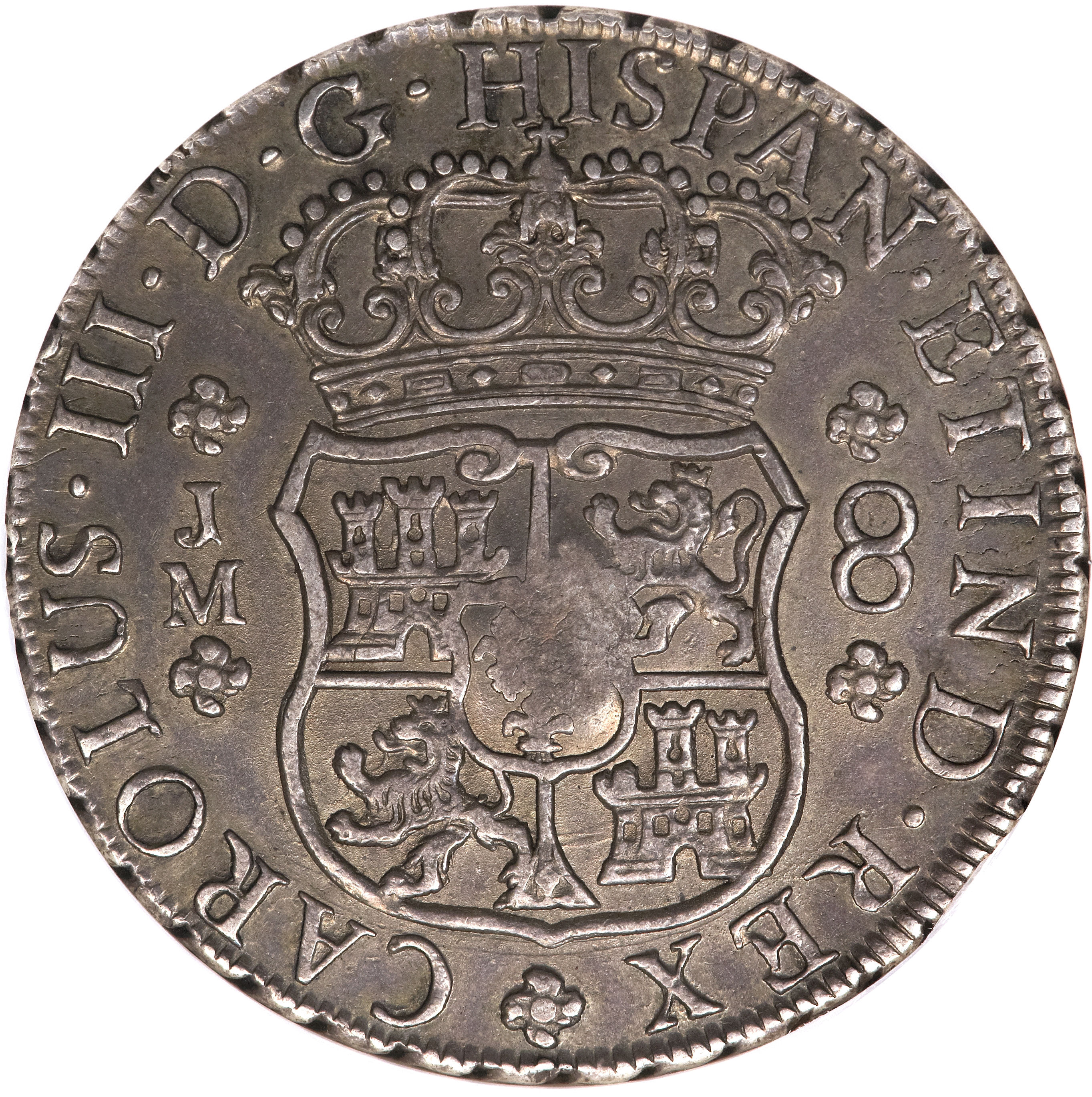
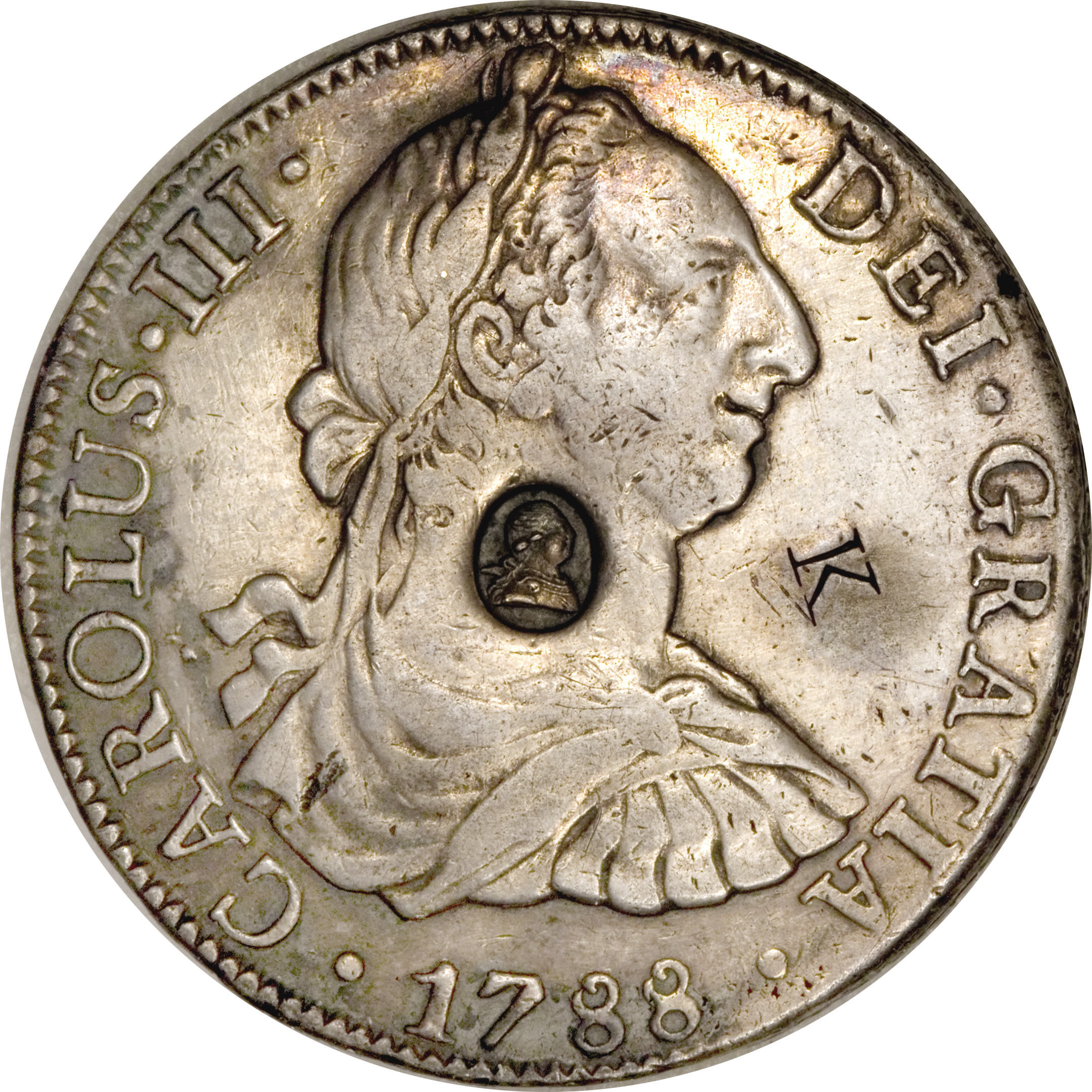
Laureate and cuirassed bust of King Carlos III facing right above date, legend around.
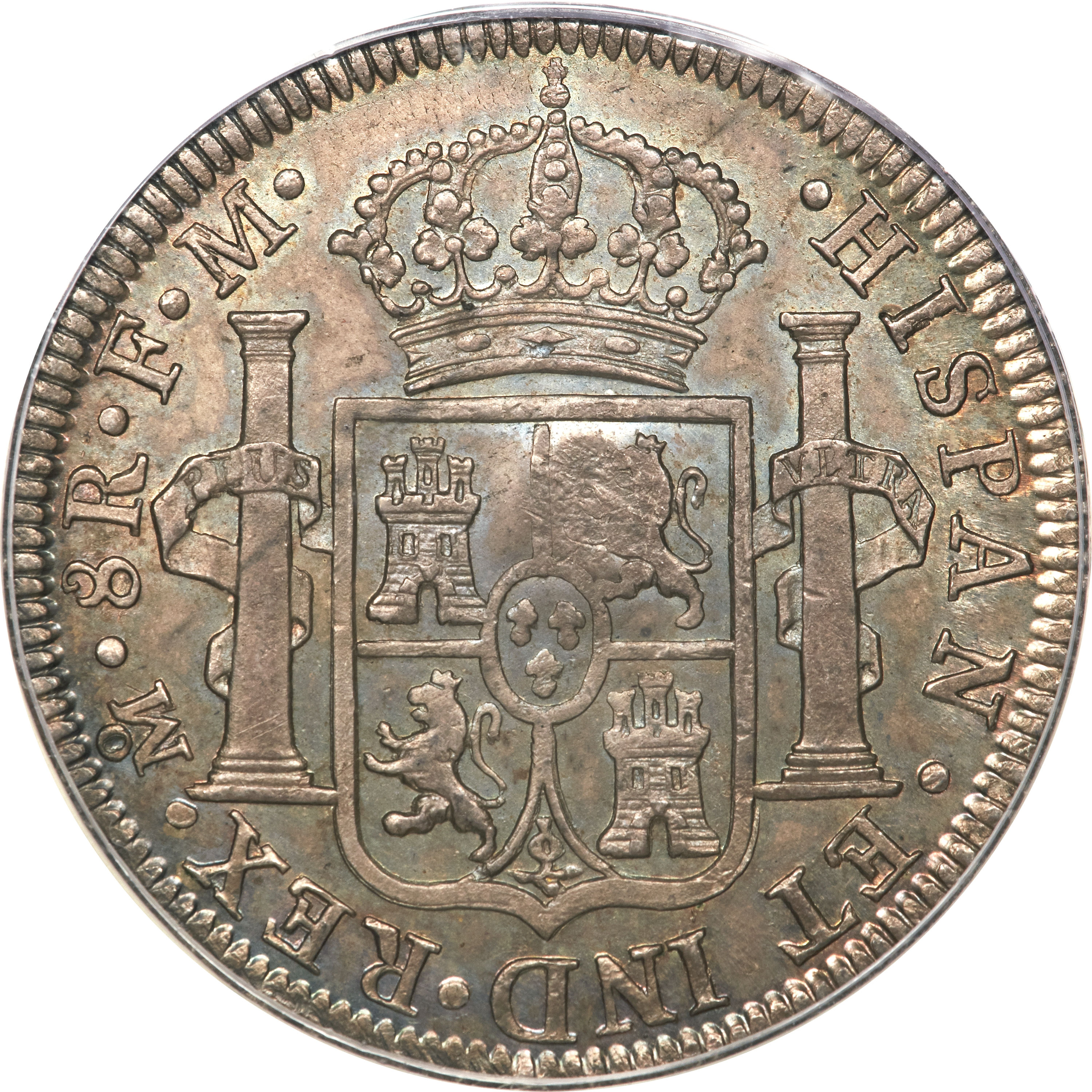
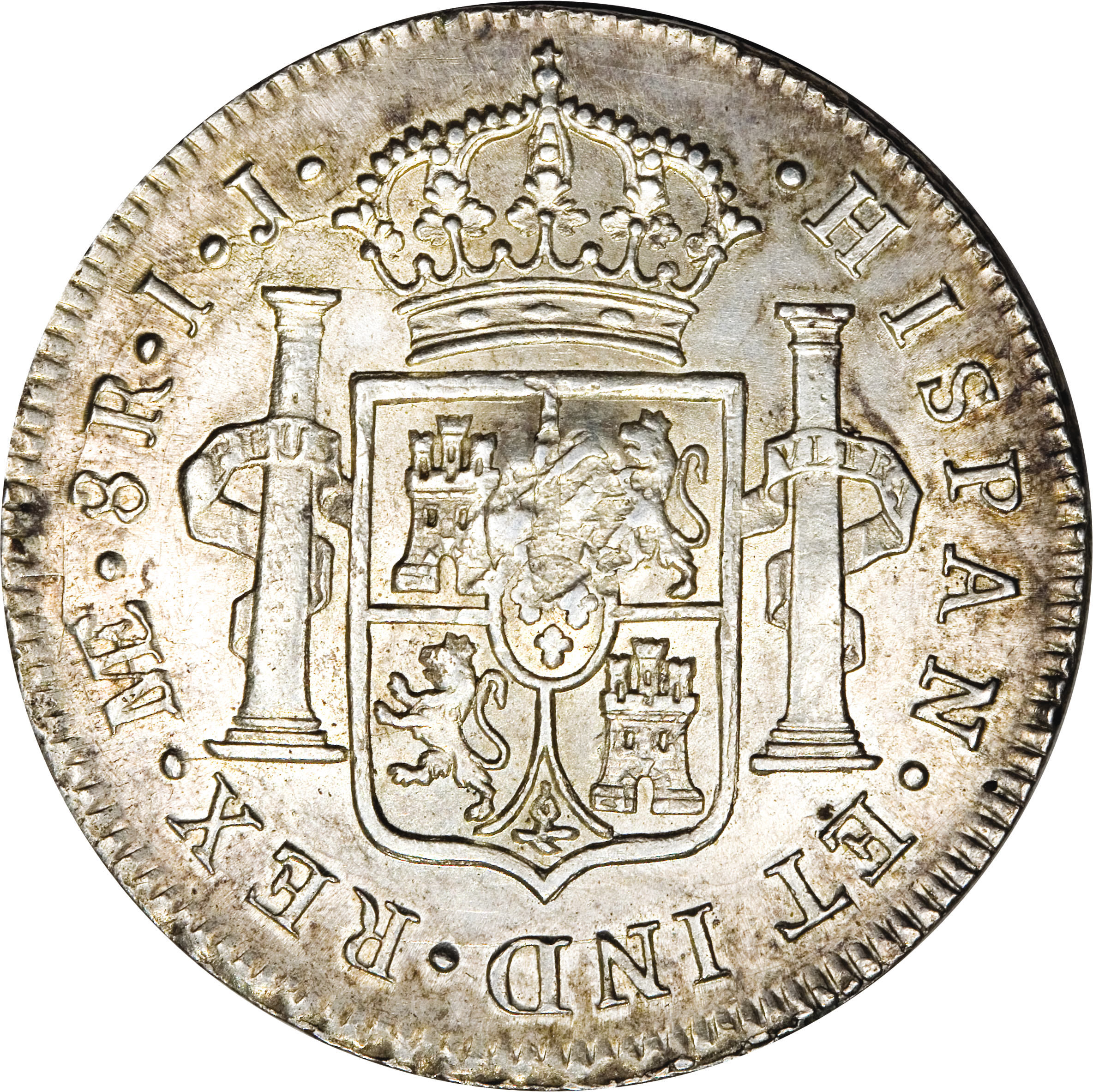
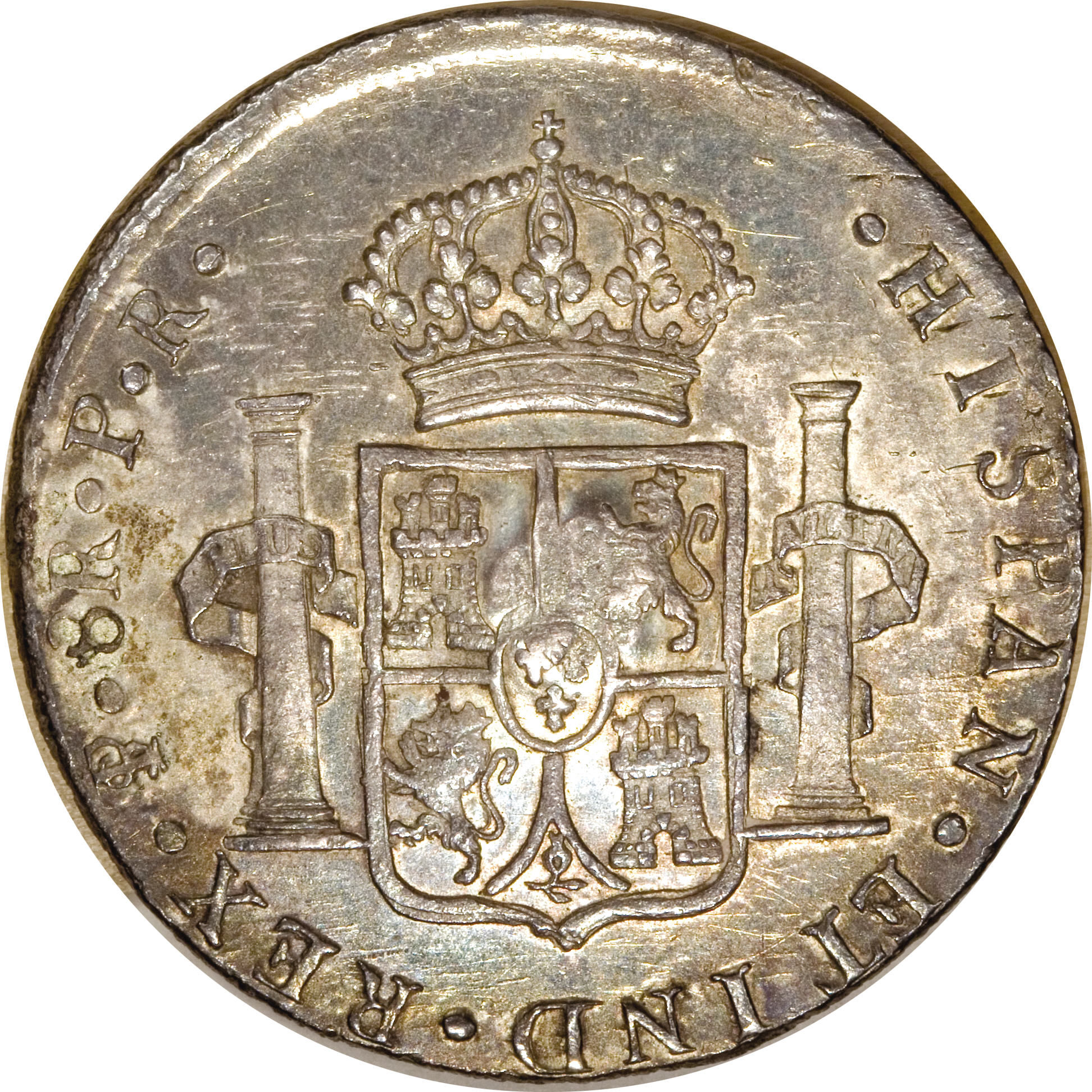
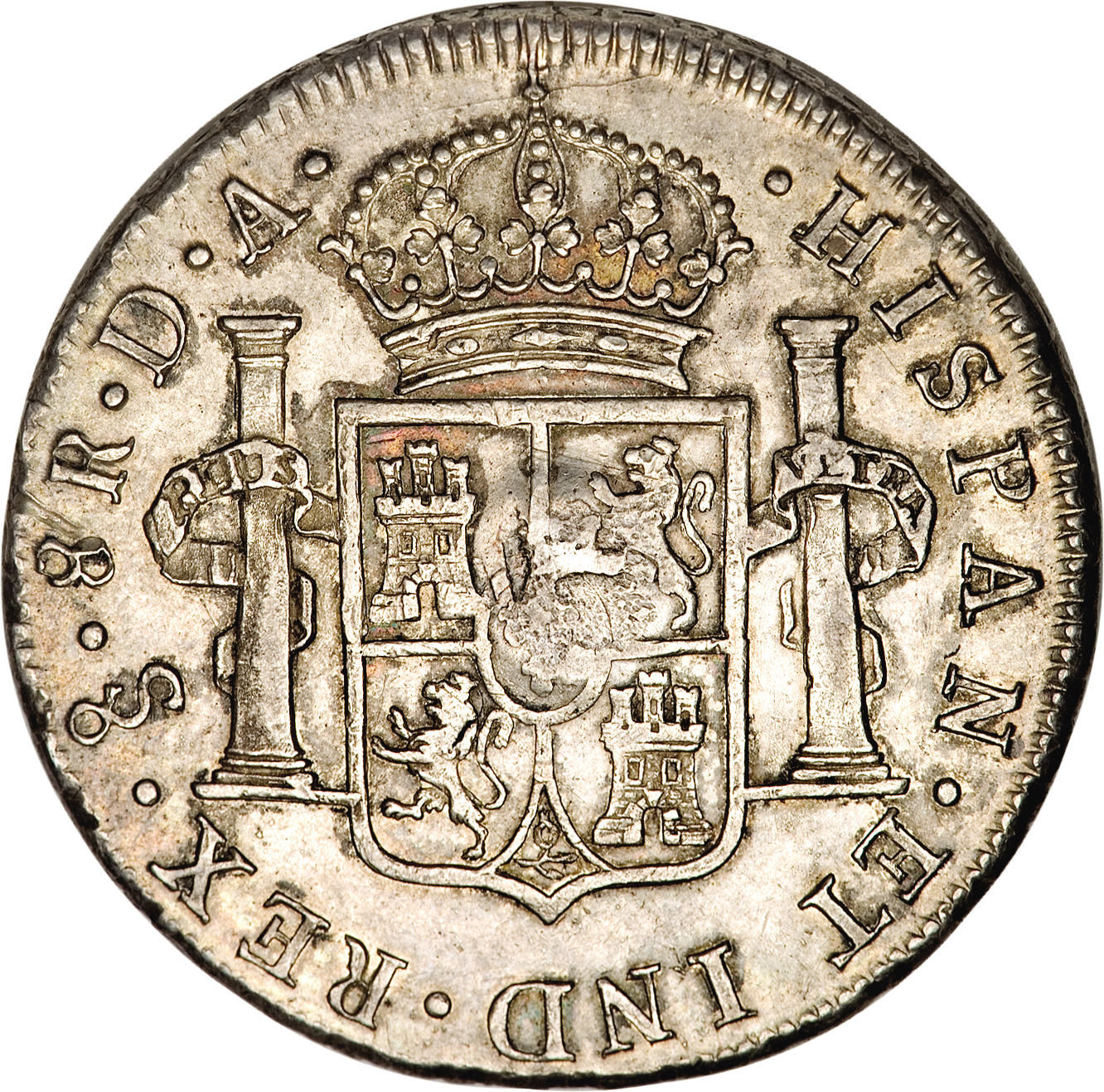
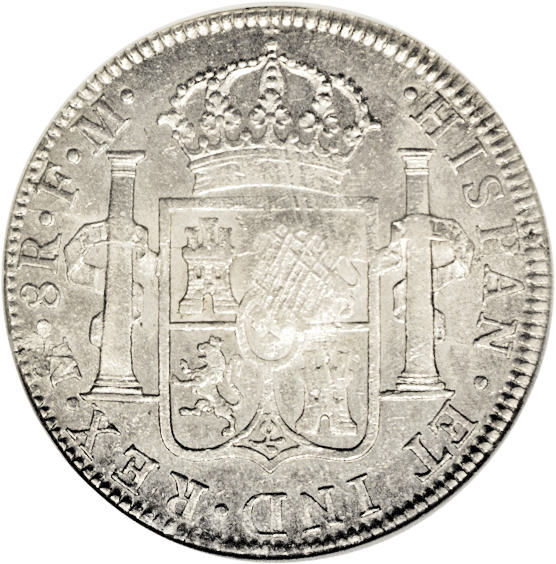
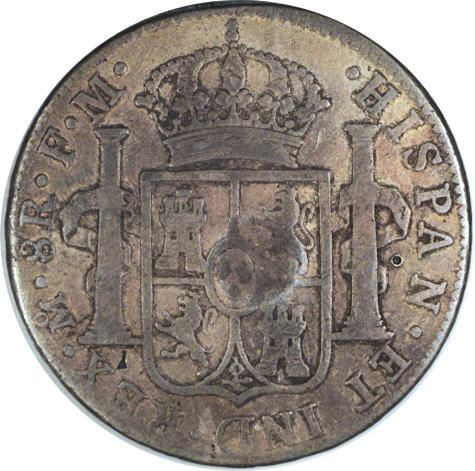
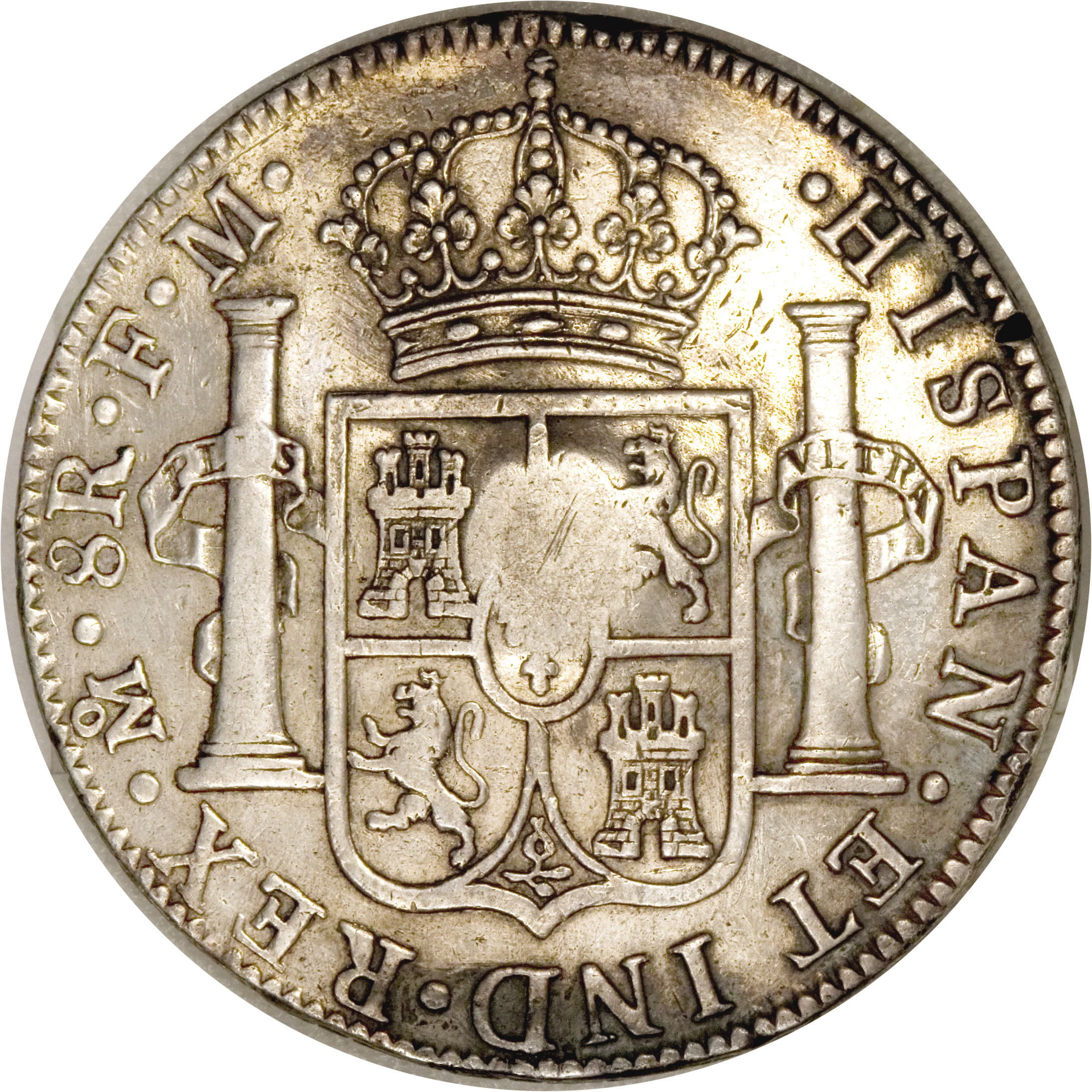
Crowned quartered shield of arms between pillars, legend around.
Find this on eBay
Affiliateoval 1 Dollar price history
Daily limit reachedAbout the 1797 1 Dollar - George III Type I countermark – oval
The 1797 1 Dollar - George III Type I countermark – oval is a circulating 4 shillings 9 pence coin, struck in 90.3% silver. It weighs 27.1g and measures 39mm across. Reverse design: Crowned quartered shield of arms between pillars, legend around.
It is no longer legal tender (withdrawn 1797), so its value is to collectors only.
Common questions
How much is the 1797 1 Dollar - George III Type I countermark – oval worth?
No verified sale of the 1797 1 Dollar - George III Type I countermark – oval has been logged on MyCoinage yet. Its silver content is worth about £31.41 at today's spot price, which puts a floor under its value.
Why is a Carlos III dollar countermarked for Britain?
The Bank of England stamped whatever Spanish dollars it held, and many were struck years earlier under Carlos III. Amgueddfa Cymru holds a Mexico City 8 reales of Carlos III given the oval George III mark in 1797.
What was a countermarked dollar worth?
4s 9d. The Royal Mint Museum notes that the dollars were lighter than an English crown and of lower fineness, which is why they were rated below five shillings and why people joked that two kings' heads were not worth a crown.
When did the oval countermarked dollars stop being legal tender?
At the end of October 1797. The Royal Mint Museum records that heavy counterfeiting, including false marks on genuine dollars, led the Bank of England to call them in only months after their issue in the spring of that year.
How do you tell the oval mark from the octagonal one?
The 1797 mark is an oval taken from a Goldsmiths' Hall hallmarking punch. The 1804 mark is eight-sided and used the Maundy money punch for the King's head. Both were applied to Spanish dollars, but they are different issues.
How do I identify the 1797 1 Dollar - George III Type I countermark – oval?
Check the weight 27.1g and diameter 39mm and the metal (90.3% silver) against the specification table on this page. The reverse design is described above.
History and design
The Bank of England's dollars of 1797 were not new coins. When silver ran short, the Bank bought up Spanish 8 reales pieces and the Royal Mint Museum records that they were reissued to the public in the spring of 1797 at 4s 9d, having been stamped with a small oval head of George III. Many of the coins it held were already decades old, including dollars struck under Carlos III.
The scheme was short-lived. Forgers stamped false marks on good dollars and made complete copies, and the Bank began calling the coins in; the Royal Mint Museum says they were no longer legal tender from the end of October 1797. Matthew Boulton later persuaded the government to let him overstrike the Bank's remaining dollars entirely. No figure is published for how many were countermarked in 1797.
The host is a Spanish colonial pillars dollar of Carlos III: his laureate and cuirassed bust on the obverse, and on the reverse the crowned Spanish arms between the pillars. The British element is a single oval punch with the head of George III, which the Royal Mint Museum identifies as the punch Goldsmiths' Hall used to hallmark silver plate, struck over the Spanish king's portrait side.
Amgueddfa Cymru holds an example of exactly this kind: a Carlos III 8 reales of the Mexico mint with the 1797 countermark, weighing 26.74 g, catalogued among its emergency issues.
Collecting notes
The countermark is what makes the coin British, so it deserves the closest look. Genuine oval marks were struck with a hallmarking punch, so compare the portrait with a known genuine mark. The Royal Mint Museum notes that genuine dollars were sometimes given false countermarks, so a sound host coin does not prove the mark is right.
Record the host's mint mark, assayer's initials and date, since these vary from piece to piece. The later octagonal countermark of 1804 used a different punch and is a separate issue.
Sources
The history, design, varieties and collecting notes on this page are drawn from these sources. Prices come from recorded sales, not from them.
- George III, Royal Mint Museum (read 12 Oct 2026)
- Five Shillings, Quarter Guinea and Five and Six, Tony Clayton, Coins of the UK (read 12 Oct 2026)
- Bank of England countermarked dollar, 52.194/67, Amgueddfa Cymru - Museum Wales, via Museum Data Service (read 12 Oct 2026)
- George III one dollar (RMM 1135), The Royal Mint Museum, via Museum Data Service (read 12 Oct 2026)
- Matthew Boulton, Wikipedia (read 12 Oct 2026)
- Pictures of Crowns of George III, Tony Clayton, Coins of the UK (read 12 Oct 2026)
More 4 Shillings 9 Pence coins from nearby years