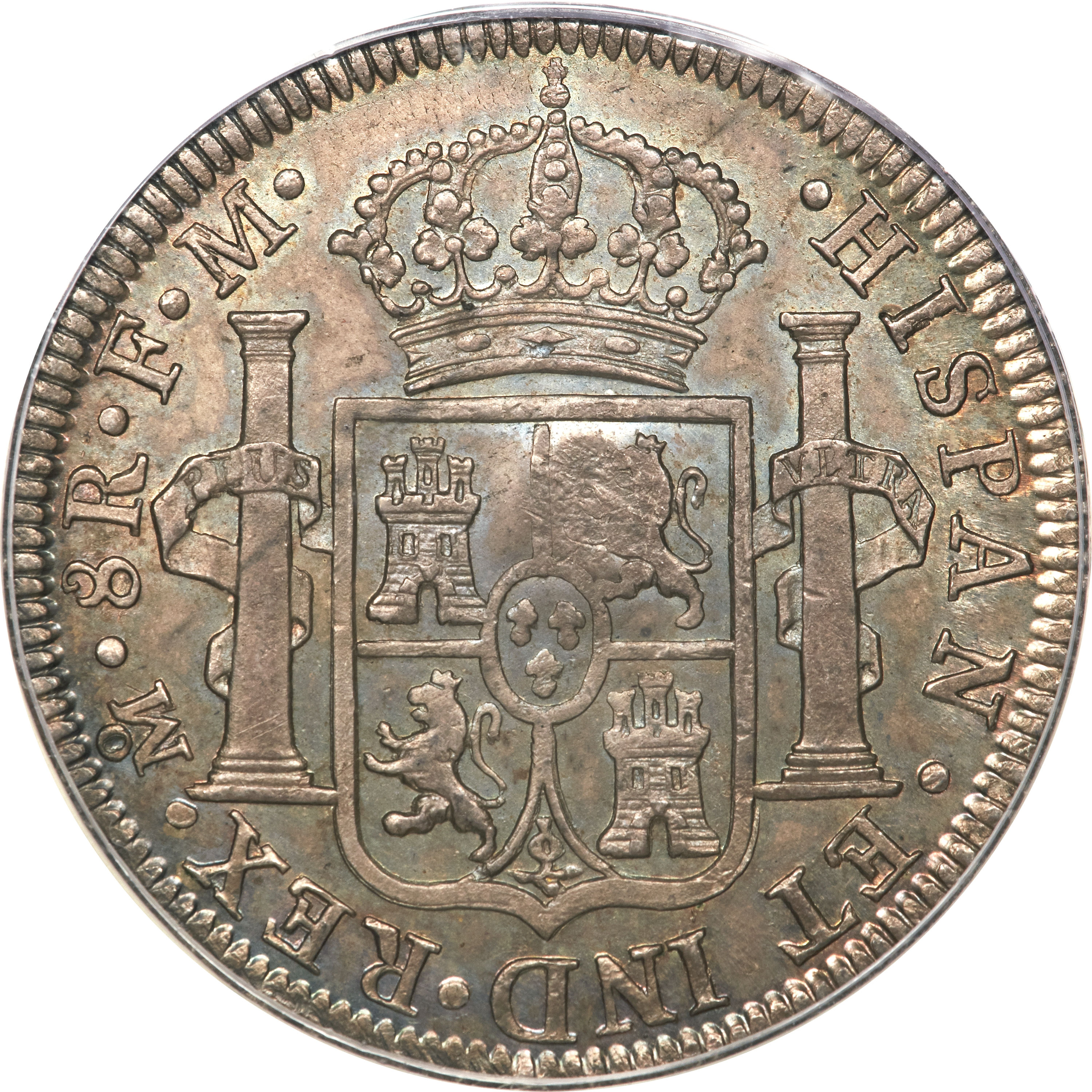
1 Dollar - George III Type I countermark oval (1797)
| Country | United Kingdom |
| Year | 1797 |
| Denomination | 4 Shillings 9 Pence |
| Mint | Royal Mint · Llantrisant |
| Circulation | Circulating |
| Demonetised | 1797 |
| Composition | Silver (.896) (896/1000 fine) |
| Weight | 27.100g · 0.7807 t oz |
| Diameter | 39.0mm |
| Shape | Round |
| Orientation | Medal alignment ↑↑ |
| Grade scale | UK (EF/UNC) |
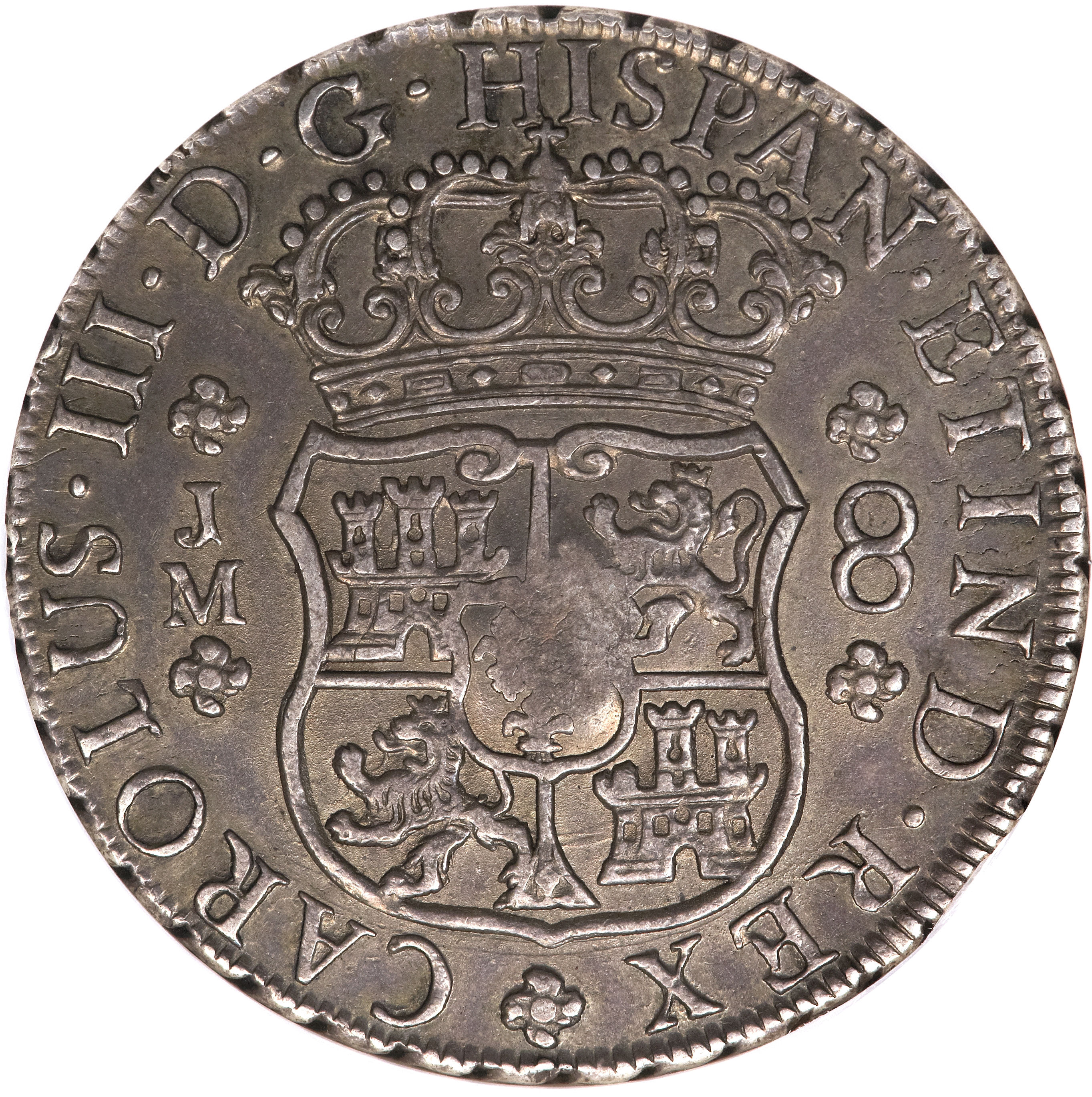
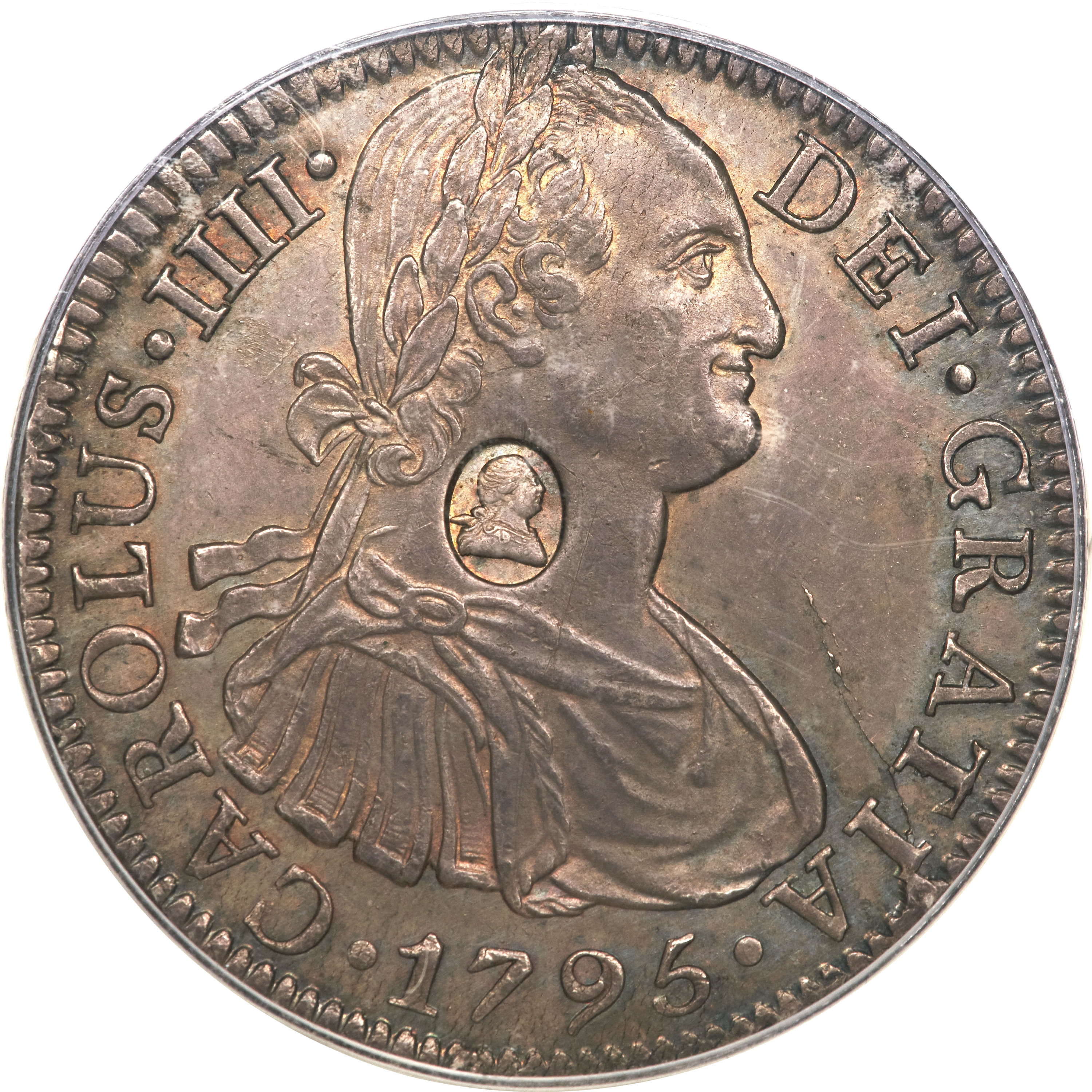
Laureate and cuirassed bust of King Carlos IV facing right above date, legend around.
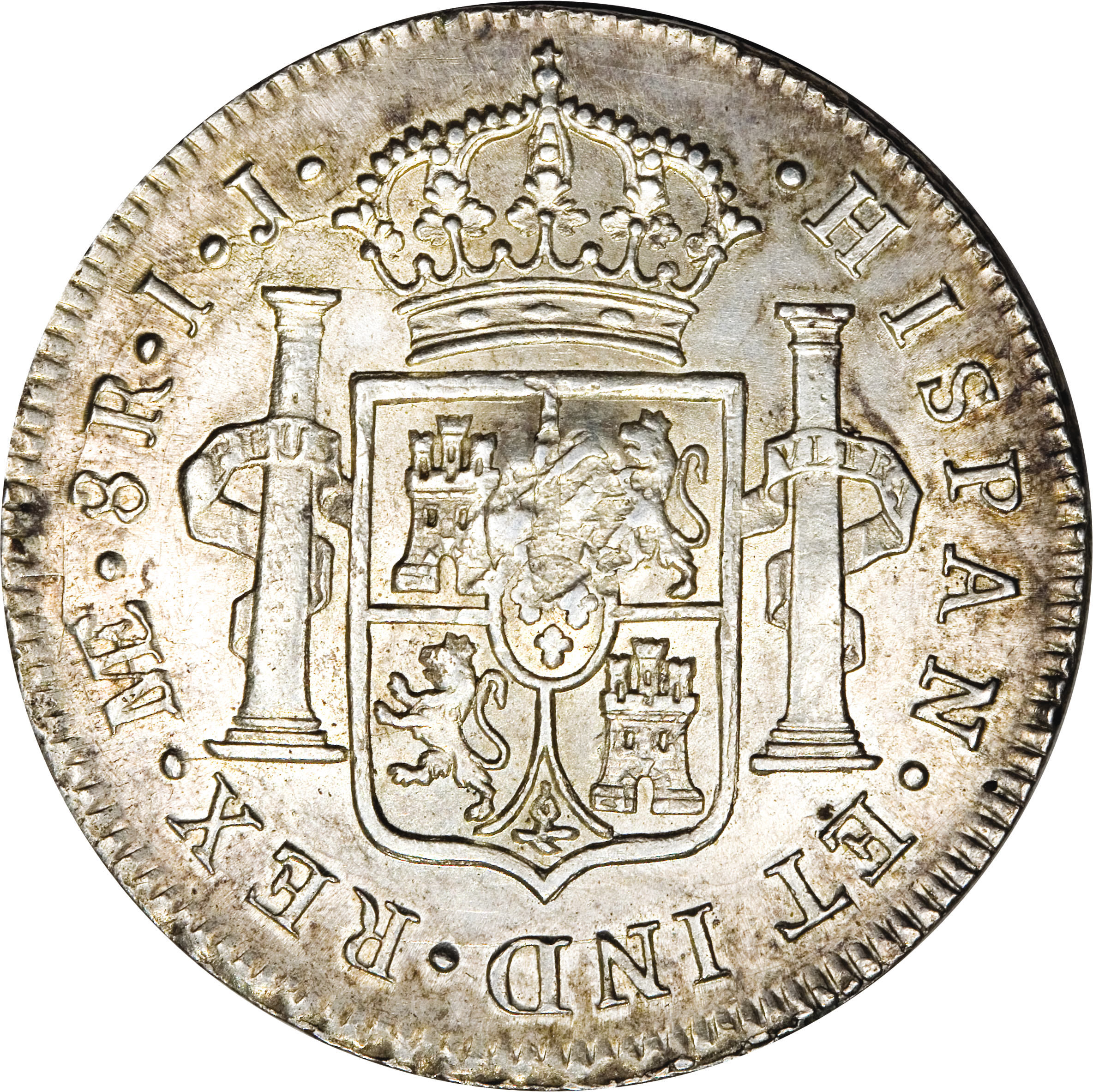
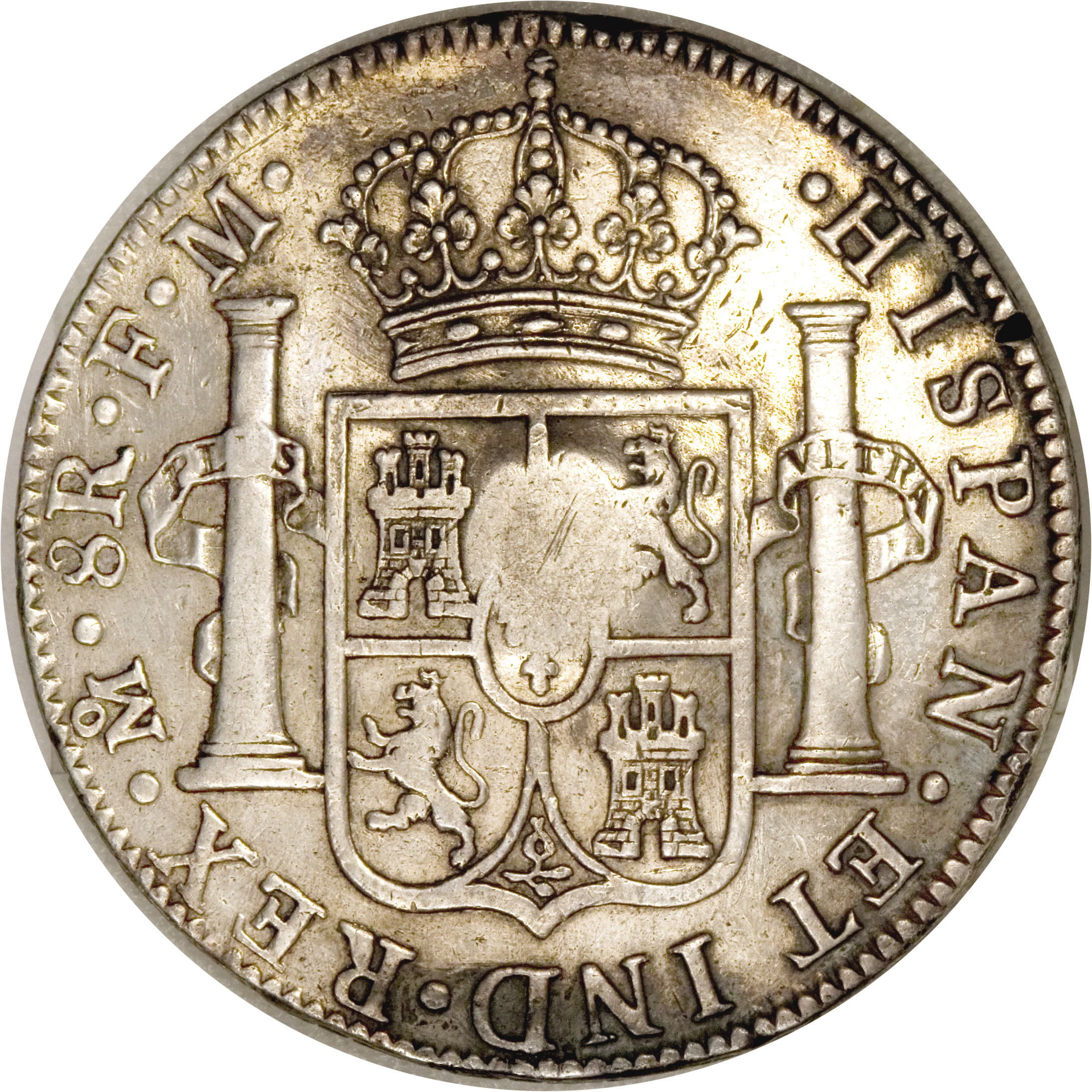
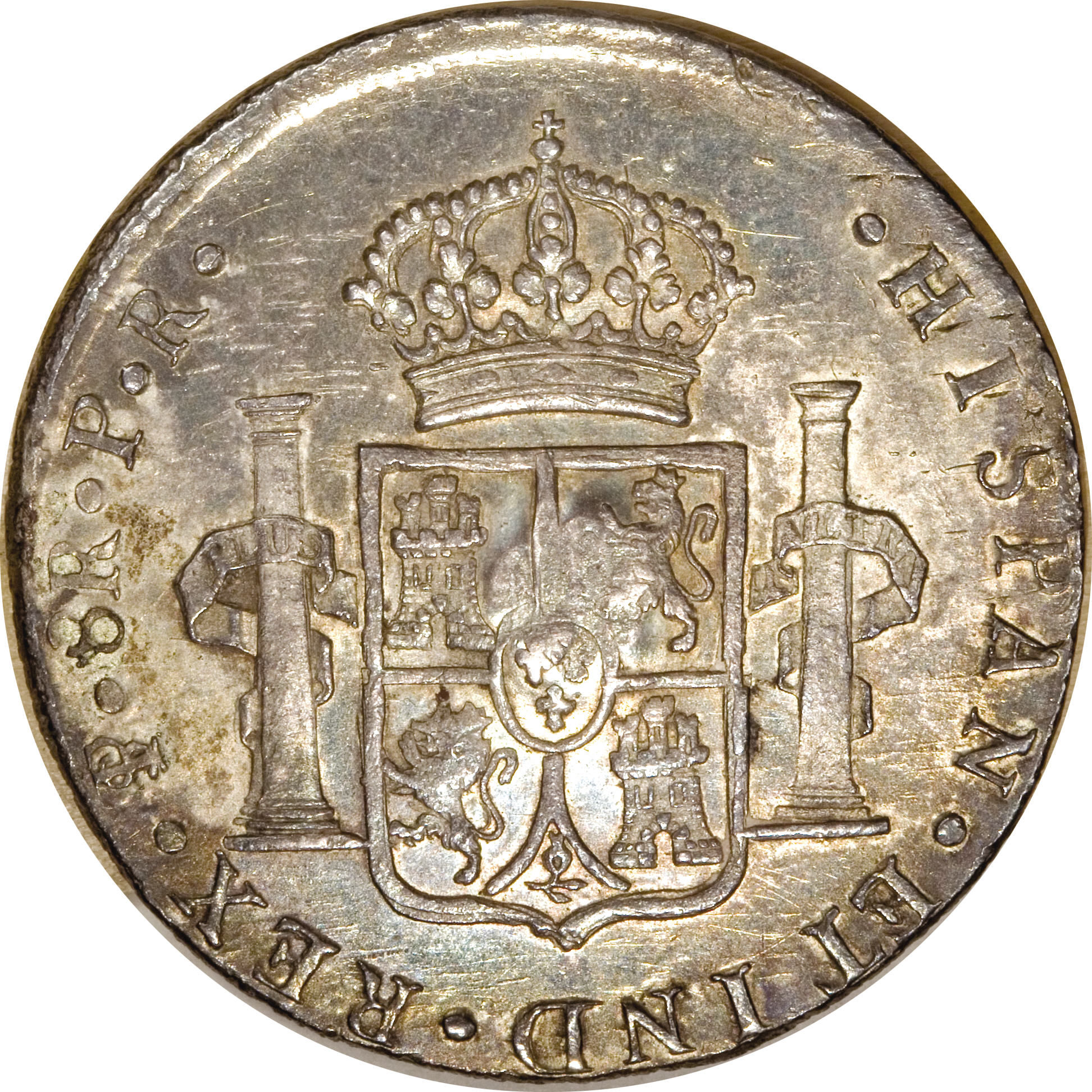
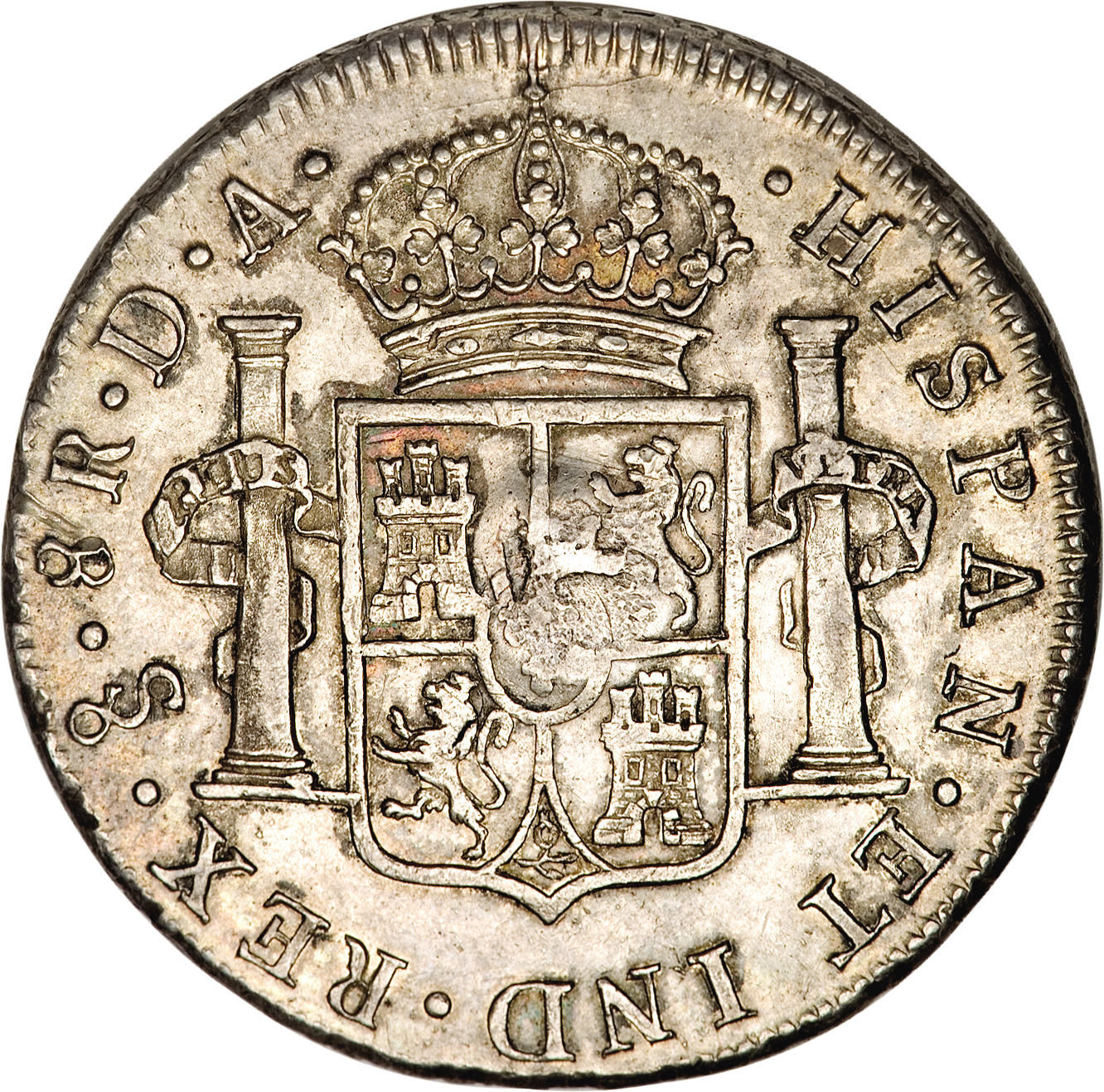
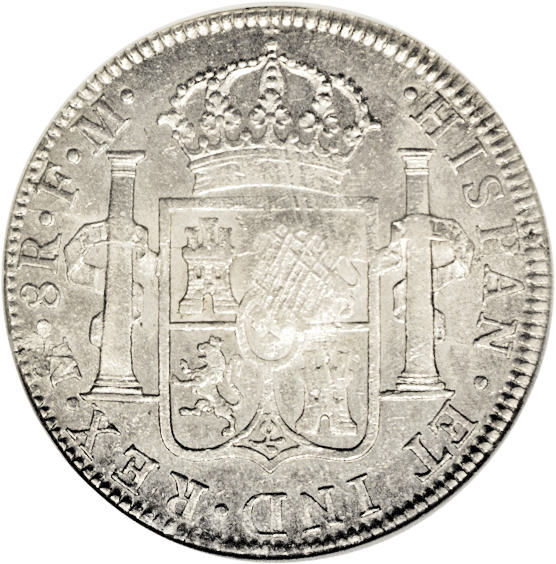
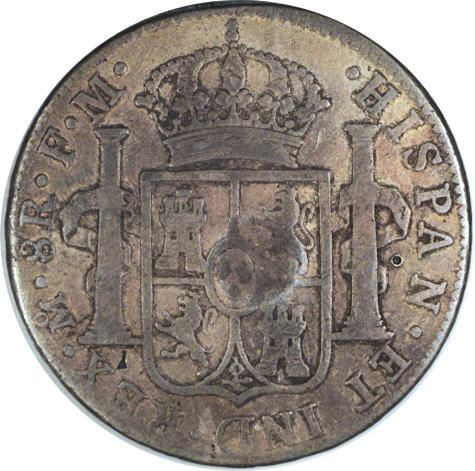
Crowned shield of arms dividing pillars, legend around.
Find this on eBay
Affiliateoval 1 Dollar price history
Daily limit reachedAbout the 1797 1 Dollar - George III Type I countermark – oval
The 1797 1 Dollar - George III Type I countermark – oval is a circulating 4 shillings 9 pence coin, struck in 89.6% silver. It weighs 27.1g and measures 39mm across. Reverse design: Crowned shield of arms dividing pillars, legend around.
It is no longer legal tender (withdrawn 1797), so its value is to collectors only.
Common questions
How much is the 1797 1 Dollar - George III Type I countermark – oval worth?
No verified sale of the 1797 1 Dollar - George III Type I countermark – oval has been logged on MyCoinage yet. Its silver content is worth about £31.16 at today's spot price, which puts a floor under its value.
How common are forged countermarked dollars?
Common enough to end the issue. The Royal Mint Museum says the oval dollars were extensively counterfeited and genuine dollars were given false countermarks. Leicester and Nottingham museums both hold contemporary copies of countermarked Charles IV dollars made in silvered copper alloy.
How can you tell a forged countermarked dollar?
Weight and metal are the first checks. Genuine examples weigh about 26.6 to 27 g, while a silvered-copper forgery in Leicester weighs 26.19 g and one in Nottingham 25.9 g. Both copies are silvered copper alloy, not silver.
What was the countermark punch?
A small oval bust of George III. The Royal Mint Museum explains it was the punch normally used by Goldsmiths' Hall for hallmarking silver plate, and Nottingham's museum record describes it as the oval die of the Goldsmiths' Company.
Why does one countermarked dollar have writing coming from the king's mouth?
The Bank of England Museum holds a Charles IV dollar with an oval George III mark to which someone added graffiti from Charles's mouth commenting on the restriction of cash payments, the 1797 suspension of gold payments by the Bank.
How do I identify the 1797 1 Dollar - George III Type I countermark – oval?
Check the weight 27.1g and diameter 39mm and the metal (89.6% silver) against the specification table on this page. The reverse design is described above.
History and design
In February 1797 the Bank of England stopped paying out gold for its notes, and with silver coin already scarce, it released its stock of Spanish dollars. The Royal Mint Museum records that these were stamped with a small oval head of George III and issued that spring at 4s 9d. Forgers responded at once. Copies of the dollar were made, and genuine dollars were given false countermarks, so the Bank called the coins in and they ceased to be legal tender at the end of October 1797.
This entry covers hosts of Charles IV, king of Spain from 1788. Spink describes one oval-countermarked Charles IV host as having a laureate, draped and cuirassed bust. No published figure exists for how many dollars were stamped.
The host is a Spanish colonial 8 reales of Charles IV: the king's armoured bust to the right with CAROLUS IIII DEI GRATIA and the date, and on the reverse the crowned arms of Spain between two pillars. The Bank of England Museum holds an example from the Mexico City mint.
The countermark is a small oval with the head of George III, which the Royal Mint Museum identifies as the Goldsmiths' Hall hallmarking punch. A Nottingham museum forgery's record calls it the oval die of the Goldsmiths' Company. The Bank of England Museum also holds a dollar on which someone added graffiti from Charles's mouth commenting on the restriction of cash payments.
Collecting notes
Weight is the first test. The Royal Mint Museum's genuine Charles IV dollar weighs 27.02 g and Spink lots run from about 26.6 to 27.04 g. Contemporary forgeries in silvered copper alloy are recorded at 26.19 g (Leicester) and 25.9 g (Nottingham), so they can come close. Both are silvered, so check for copper showing through the surface, and compare the countermark with an example of known origin.
Sources
The history, design, varieties and collecting notes on this page are drawn from these sources. Prices come from recorded sales, not from them.
- George III, Royal Mint Museum (read 12 Oct 2026)
- George III, Oval-Countermarked Dollar, struck over Charles IV 1793-FM, Mexico City, lot 2087, Spink (read 12 Oct 2026)
- George III oval countermark upon Peru 1793 IJ 8 reales, Lima mint, Sovereign Rarities (read 12 Oct 2026)
- Coin (oval countermarked), T404, Bank of England Museum, via Museum Data Service (read 12 Oct 2026)
- Forgery, dollar, George III countermarked coin (L.N232.1983.0.0), Leicester Museums and Galleries, via Museum Data Service (read 12 Oct 2026)
- Dollar (countermarked) (forgery), NCM 1928-129, Nottingham Museums, via Museum Data Service (read 12 Oct 2026)
- George III, Octagonal-Countermark Dollar 1795-FM and Oval-Countermark Dollar of Carlos IV, lot 276, Spink (read 12 Oct 2026)
- George III one dollar (RMM 1135), The Royal Mint Museum, via Museum Data Service (read 12 Oct 2026)
- George III, Oval-Countermark Dollar, 1794-FM, Mexico City, lot 324, Spink (read 12 Oct 2026)
- Coin (oval countermarked), T406, Bank of England Museum, via Museum Data Service (read 12 Oct 2026)
- Matthew Boulton, Wikipedia (read 12 Oct 2026)
More 4 Shillings 9 Pence coins from nearby years