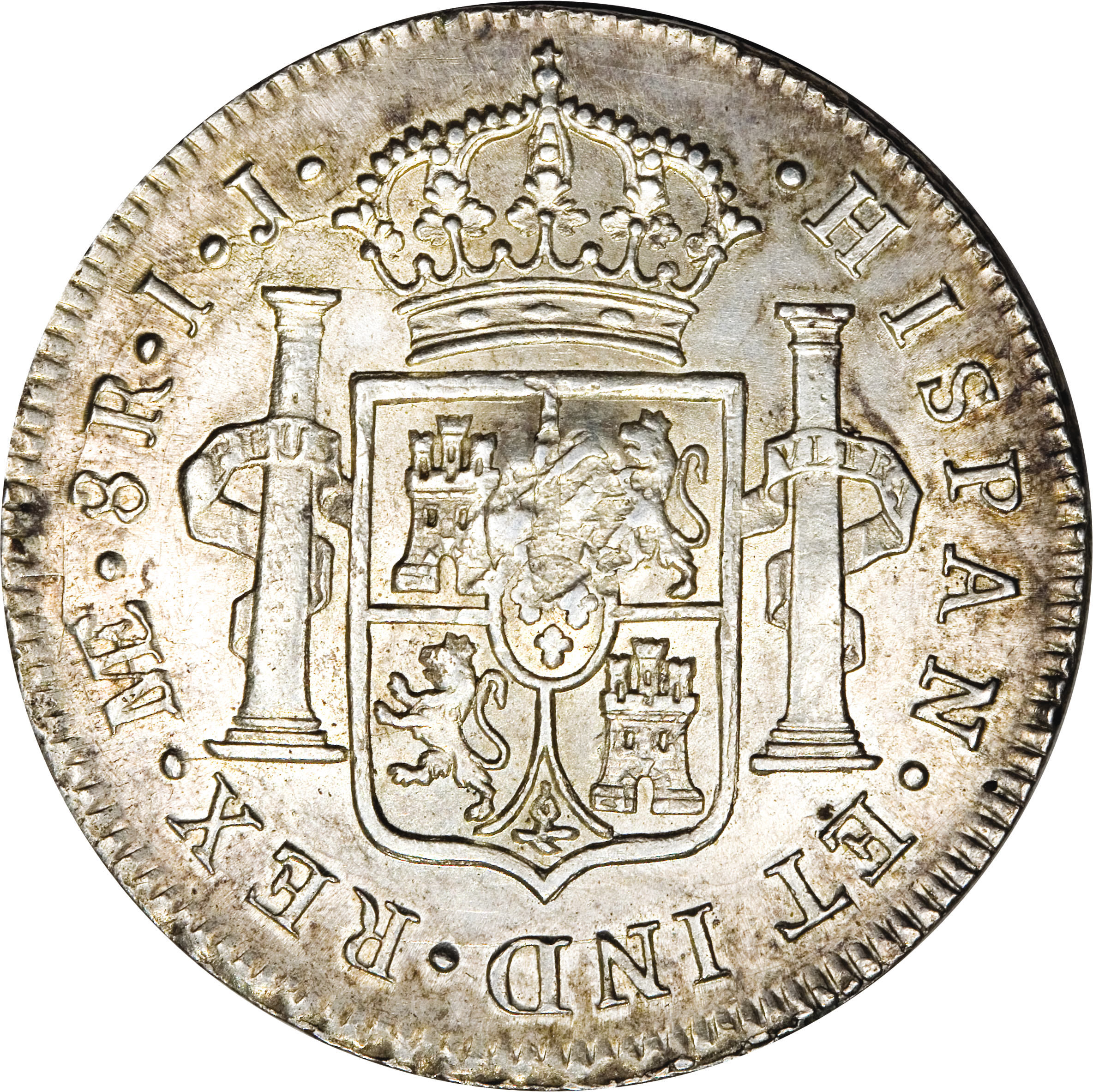
1 Dollar - George III Type I countermark oval (1797)
| Country | United Kingdom |
| Year | 1797 |
| Denomination | 4 Shillings 9 Pence |
| Mint | Royal Mint · Llantrisant |
| Circulation | Circulating |
| Demonetised | 1797 |
| Composition | Silver (.896) (896/1000 fine) |
| Weight | 27.067g · 0.7797 t oz |
| Diameter | 40.0mm |
| Shape | Round |
| Grade scale | UK (EF/UNC) |
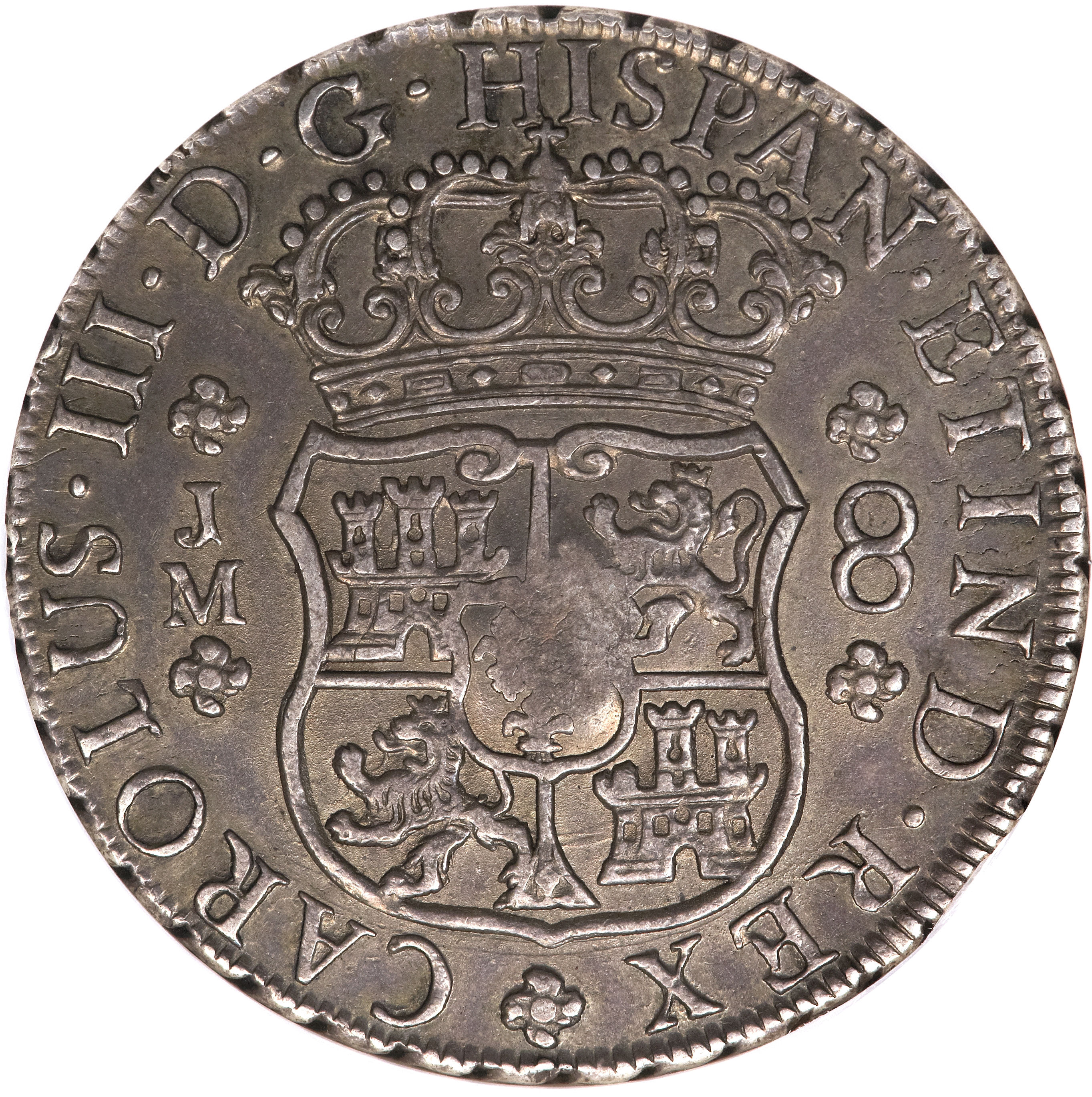
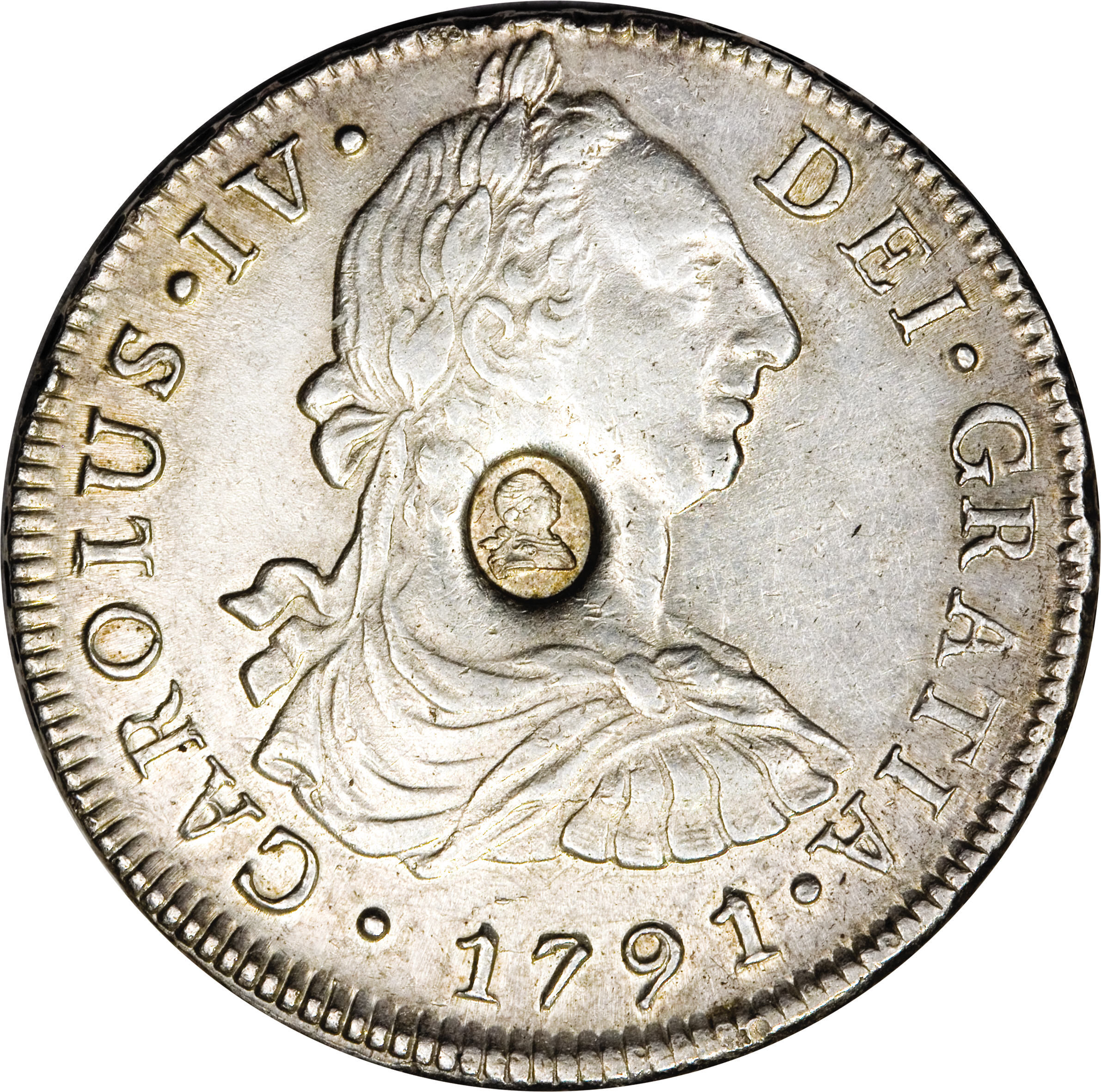
Draped bust of King Carlos IV facing right above date, legend around.
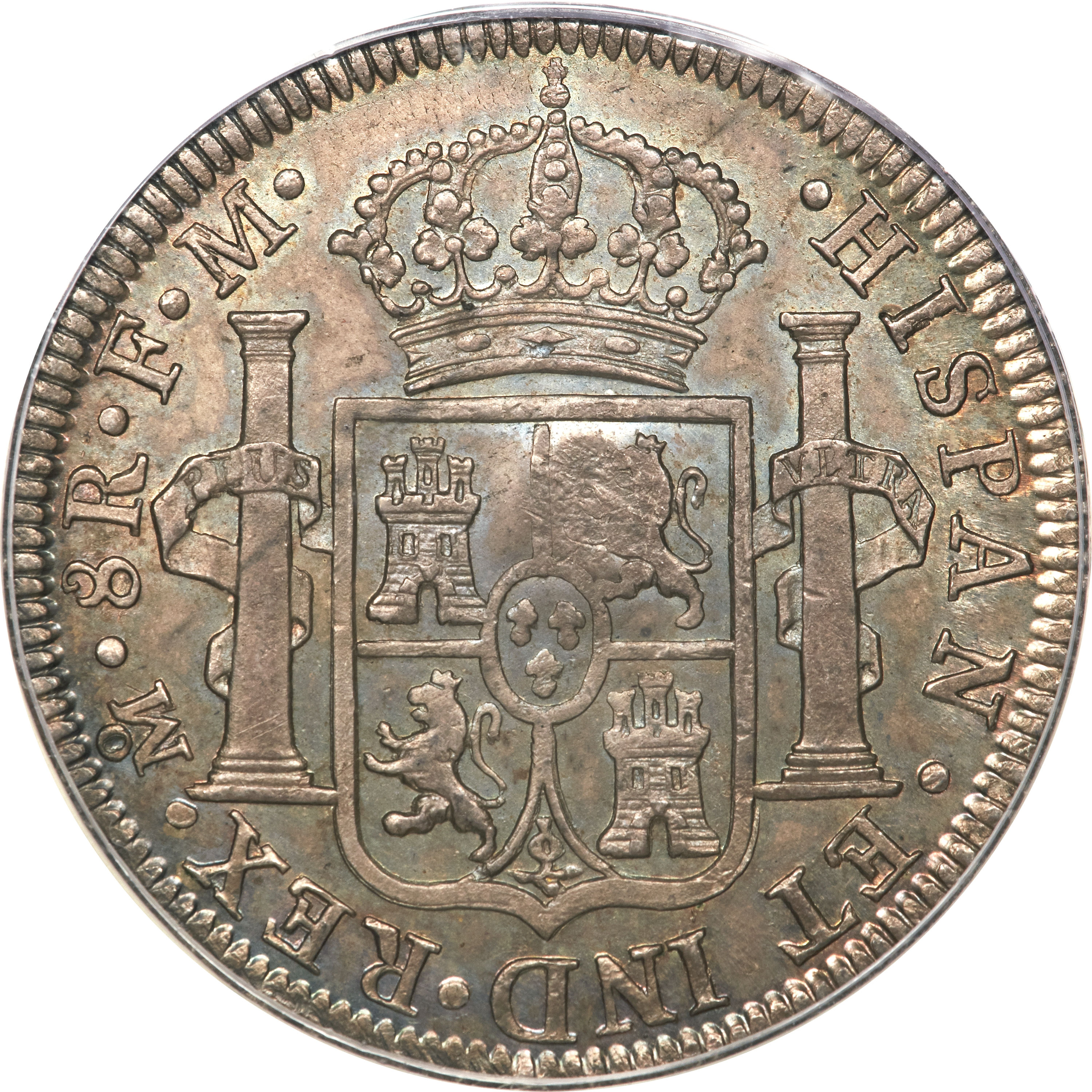
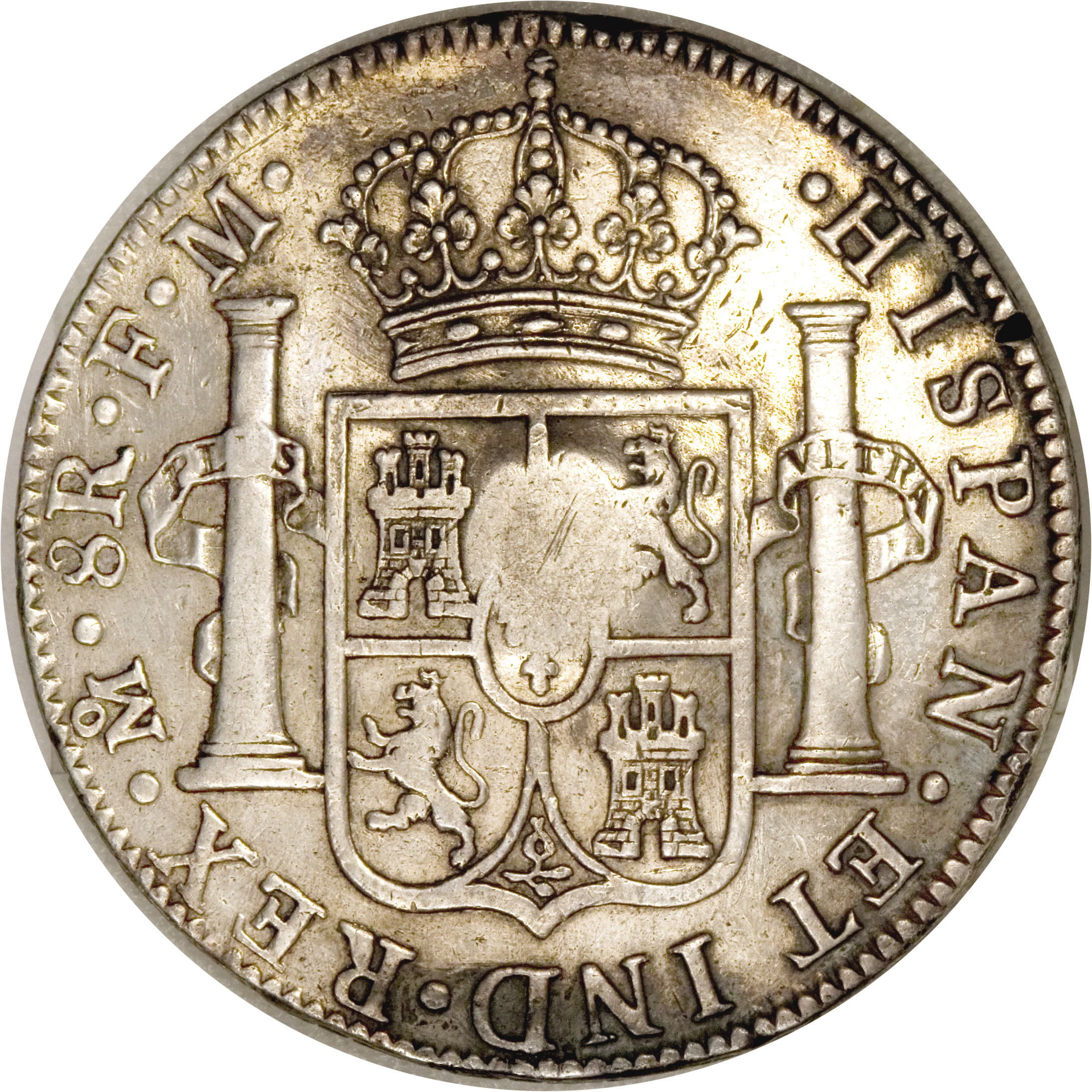
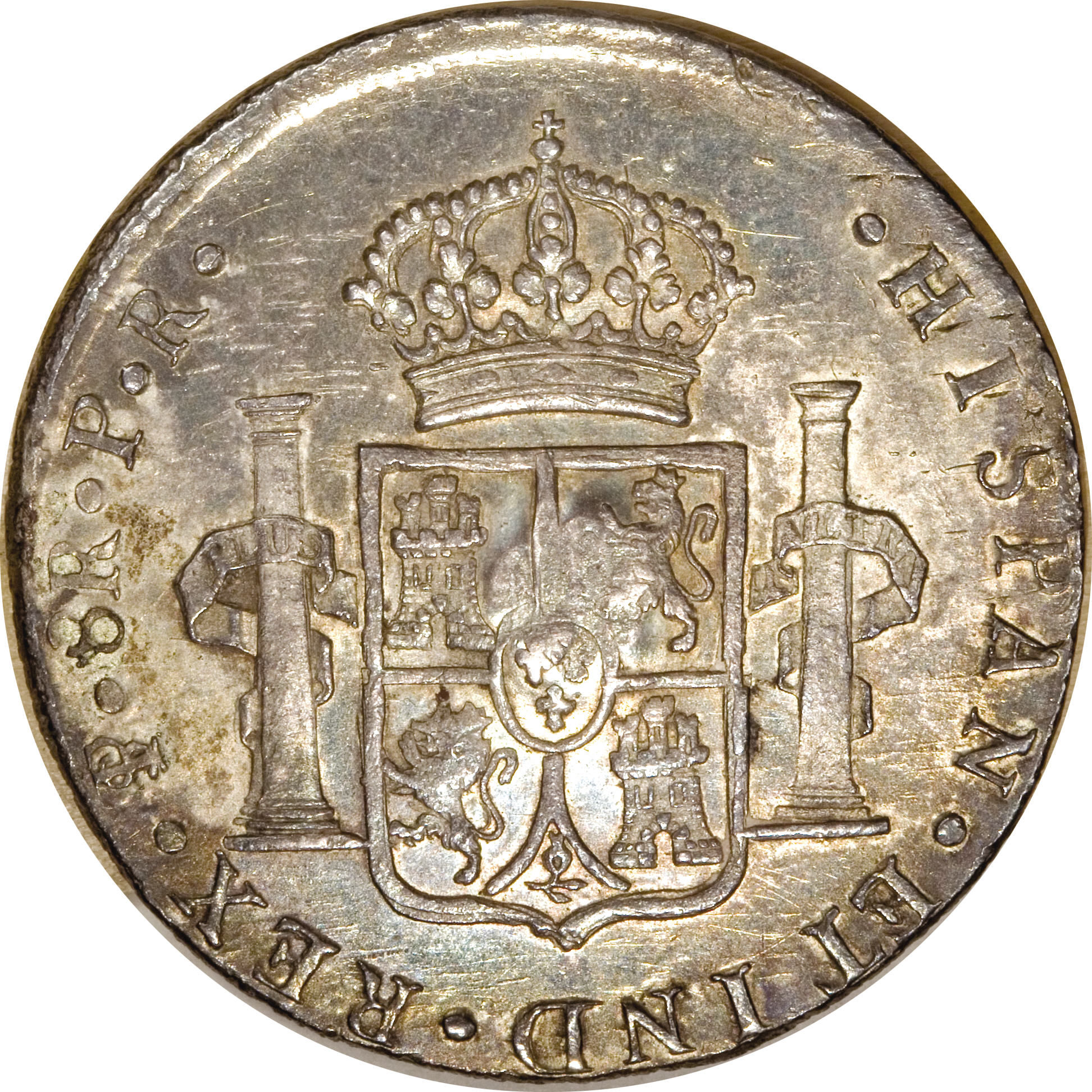
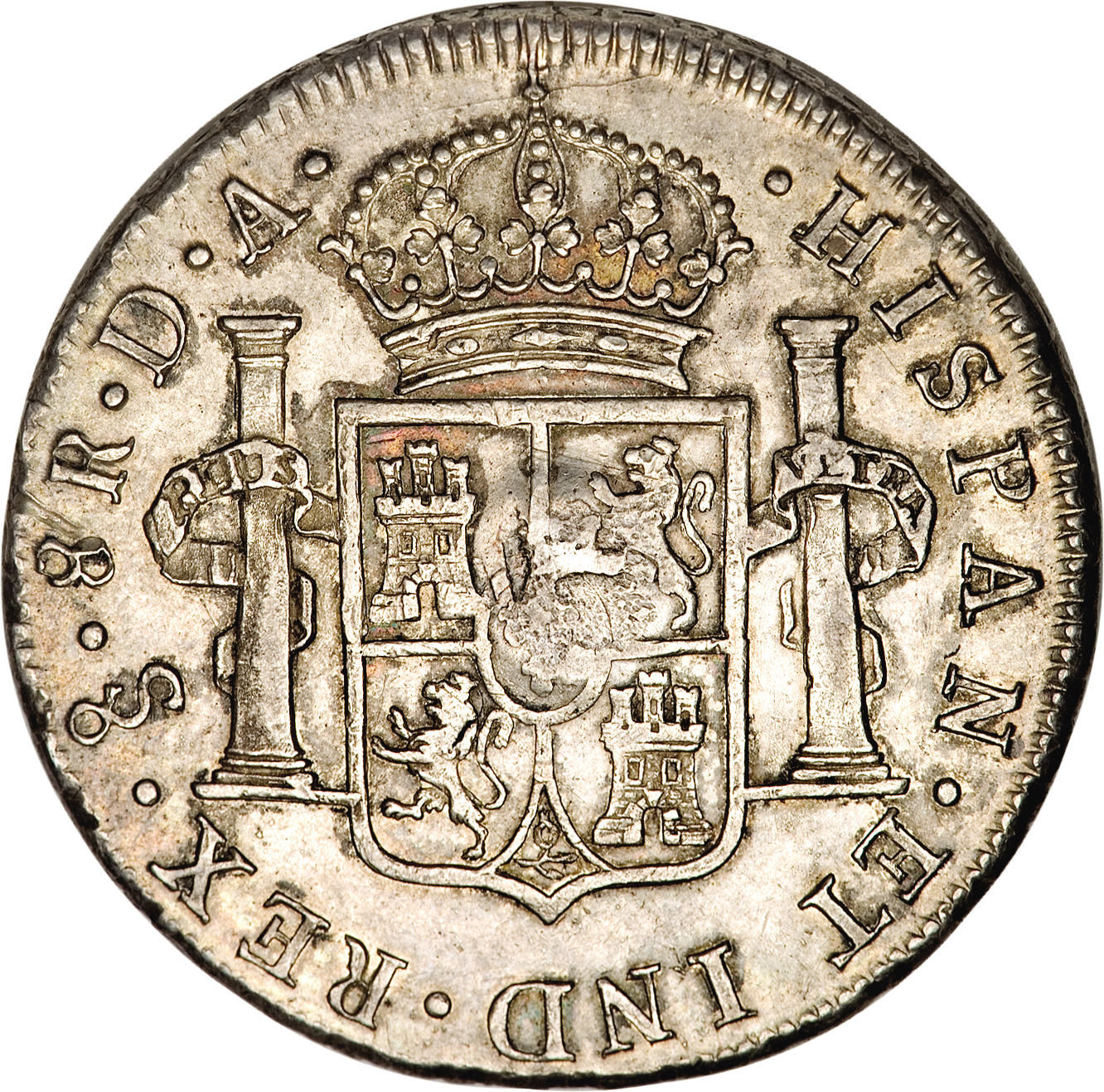
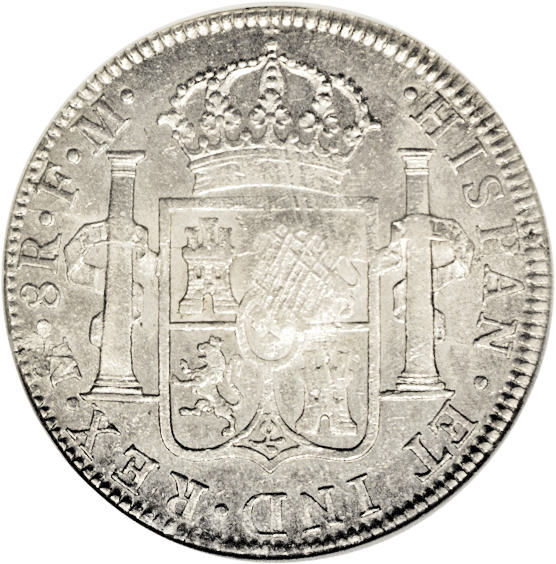
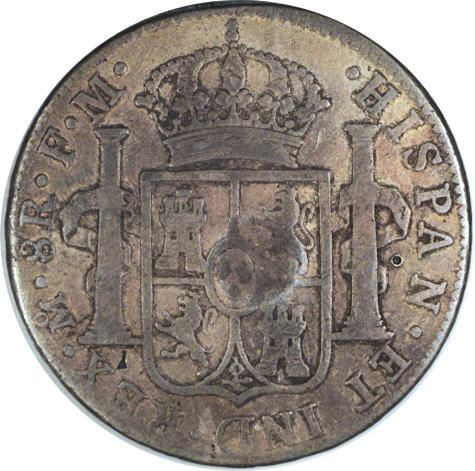
Crowned quartered shield of arms dividing denomination, legend around.
Find this on eBay
Affiliateoval 1 Dollar price history
Daily limit reachedAbout the 1797 1 Dollar - George III Type I countermark – oval
The 1797 1 Dollar - George III Type I countermark – oval is a circulating 4 shillings 9 pence coin, struck in 89.6% silver. It weighs 27.07g and measures 40mm across. Reverse design: Crowned quartered shield of arms dividing denomination, legend around.
It is no longer legal tender (withdrawn 1797), so its value is to collectors only.
Common questions
How much is the 1797 1 Dollar - George III Type I countermark – oval worth?
No verified sale of the 1797 1 Dollar - George III Type I countermark – oval has been logged on MyCoinage yet. Its silver content is worth about £31.12 at today's spot price, which puts a floor under its value.
Why was a Spanish dollar stamped with George III's head?
Britain had almost no new silver coin by 1797. The Bank of England bought Spanish dollars, stamped them with a small oval head of the King to show they were officially sanctioned, and paid them out in the spring of 1797 at 4s 9d each.
What was the oval countermark punch?
The Royal Mint Museum says the oval punch bearing the King's head was the one normally used by Goldsmiths' Hall for hallmarking silver plate.
How long were countermarked dollars legal tender?
Only a few months. They were issued in the spring of 1797, were counterfeited on a large scale, and the Bank called them in. The Royal Mint Museum records that they ceased to be legal tender from the end of October 1797.
Are fake countermarks common?
Yes. Forged countermarks were applied to genuine Spanish dollars, and whole coins were counterfeited. Leicester Museums holds a forged Carlos IV dollar with an oval mark, recorded as probably copper alloy with a silver wash.
How do I identify the 1797 1 Dollar - George III Type I countermark – oval?
Check the weight 27.07g and diameter 40mm and the metal (89.6% silver) against the specification table on this page. The reverse design is described above.
History and design
The Royal Mint Museum describes the silver coinage of George III as notable mainly for its absence. By 1797 the shortage was so acute that the Bank of England bought Spanish silver 8 reales, or dollars, and countermarked them for use in Britain. They were slightly lighter than an English crown and of lower fineness, and were issued to the public in the spring of 1797 at 4s 9d.
The value gave rise to the saying that two kings' heads were not worth a crown. Wikipedia's Boulton article quotes another jibe: "The Bank to make their Spanish Dollars pass / Stamped the head of a fool on the neck of an ass." The dollars were counterfeited on a large scale, and the Bank called them in; they stopped being legal tender from the end of October 1797. No total for the number stamped is published.
The countermark is a small oval punch with the head of George III, the punch normally used by Goldsmiths' Hall to hallmark silver plate. It was struck on the side of the coin showing the Spanish king, in this case Carlos IV.
This entry covers the mark on a Carlos IV dollar with the draped bust on the obverse and the crowned arms of Spain on the reverse, with the shield dividing the mark of value. The oval stamp is the only British element: the legends, date and mint mark all belong to the Spanish host. Leicester Museums holds a Carlos IV dollar of 1794 with the oval mark, catalogued as a dollar of 4s 9d and weighing 26.61 g.
Collecting notes
The countermark matters more than the host coin, and it is the part most often faked. Contemporary forgers both stamped false marks on genuine dollars and made complete copies; a Leicester example is recorded as probably silver-washed copper alloy. Compare the head with a known genuine mark, check that the punch sits cleanly in the surface, and make sure the host is solid silver of about 27 g.
Spanish dollars also carry their own mint, assayer and date, which are worth recording. The later octagonal mark of 1804 and the overstruck Bank of England dollar have their own pages, including the octagonal countermark.
Sources
The history, design, varieties and collecting notes on this page are drawn from these sources. Prices come from recorded sales, not from them.
- George III, Royal Mint Museum (read 12 Oct 2026)
- Five Shillings, Quarter Guinea and Five and Six, Tony Clayton, Coins of the UK (read 12 Oct 2026)
- Matthew Boulton, Wikipedia (read 12 Oct 2026)
- George III one dollar (RMM 1135), The Royal Mint Museum, via Museum Data Service (read 12 Oct 2026)
- Dollar, eight reales, countermarked coin, Carlos IV (L.N392.1982.0.0), Leicester Museums and Galleries, via Museum Data Service (read 12 Oct 2026)
- Forgery, dollar, George III countermarked coin (L.N232.1983.0.0), Leicester Museums and Galleries, via Museum Data Service (read 12 Oct 2026)
- Pictures of Crowns of George III, Tony Clayton, Coins of the UK (read 12 Oct 2026)
More 4 Shillings 9 Pence coins from nearby years