1 Dollar - George III Type I countermark oval (1797)
| Country | United Kingdom |
| Year | 1797 |
| Denomination | 4 Shillings 9 Pence |
| Mint | Royal Mint · Llantrisant |
| Circulation | Circulating |
| Demonetised | 1797 |
| Composition | Silver (.903) (903/1000 fine) |
| Weight | 27.100g · 0.7868 t oz |
| Diameter | 39.0mm |
| Shape | Round |
| Orientation | Medal alignment ↑↑ |
| Grade scale | UK (EF/UNC) |
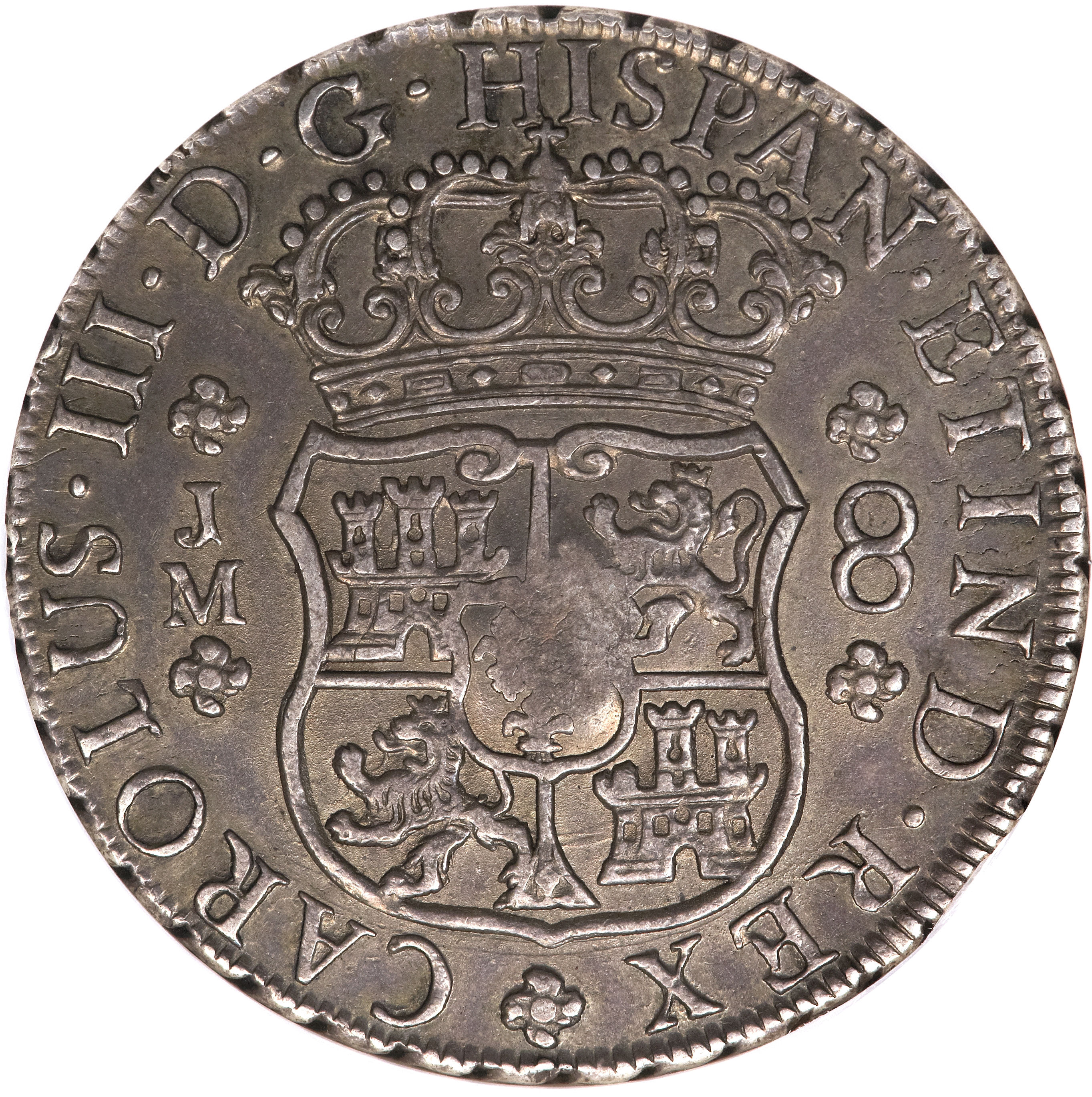
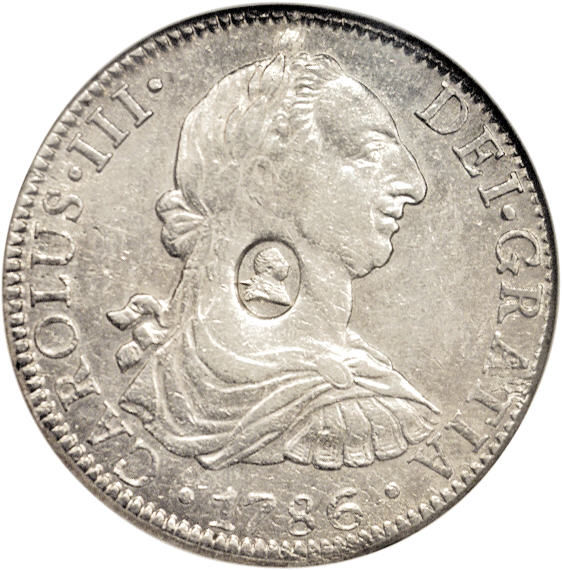
Laureate and draped bust of King Carlos III right above date, legend around.
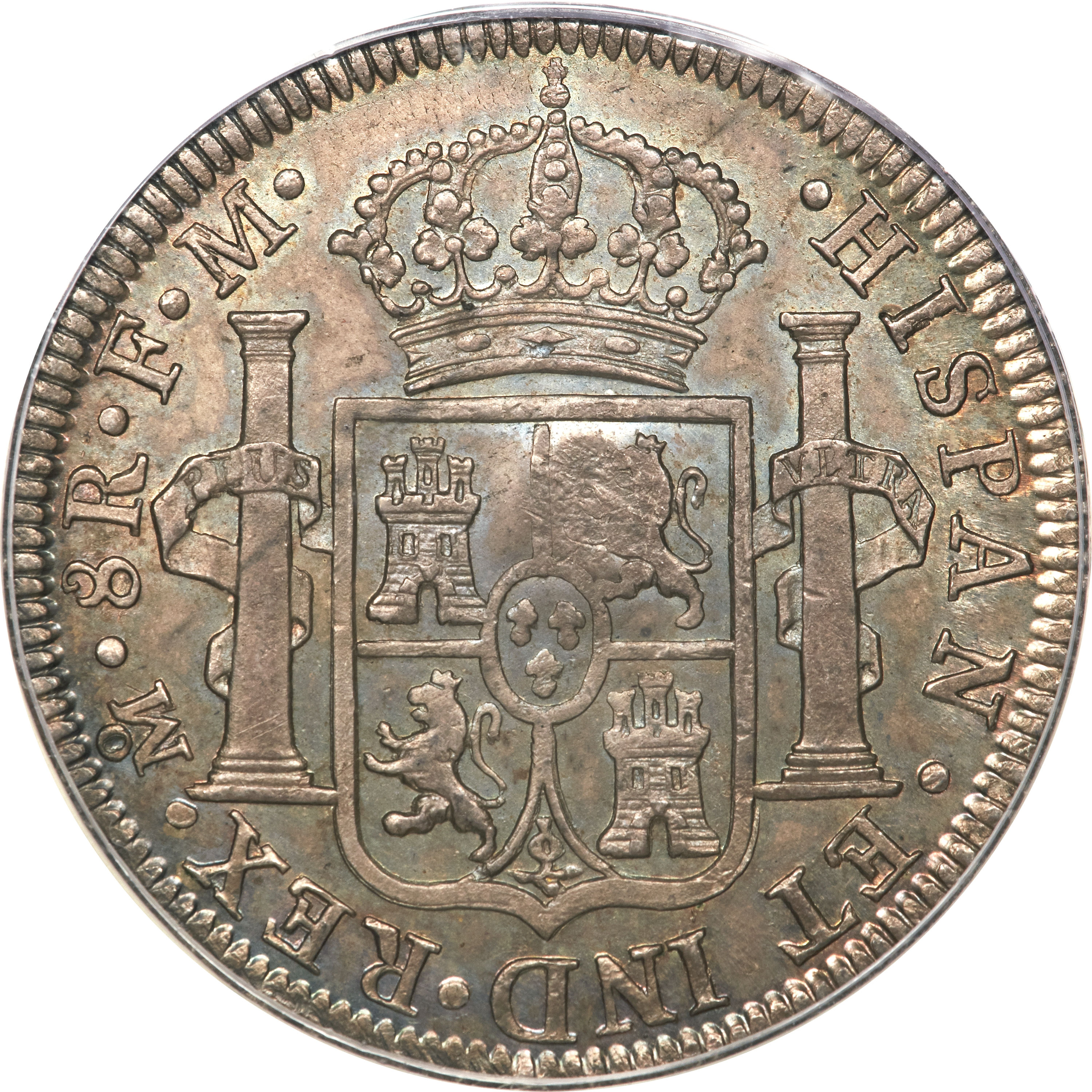
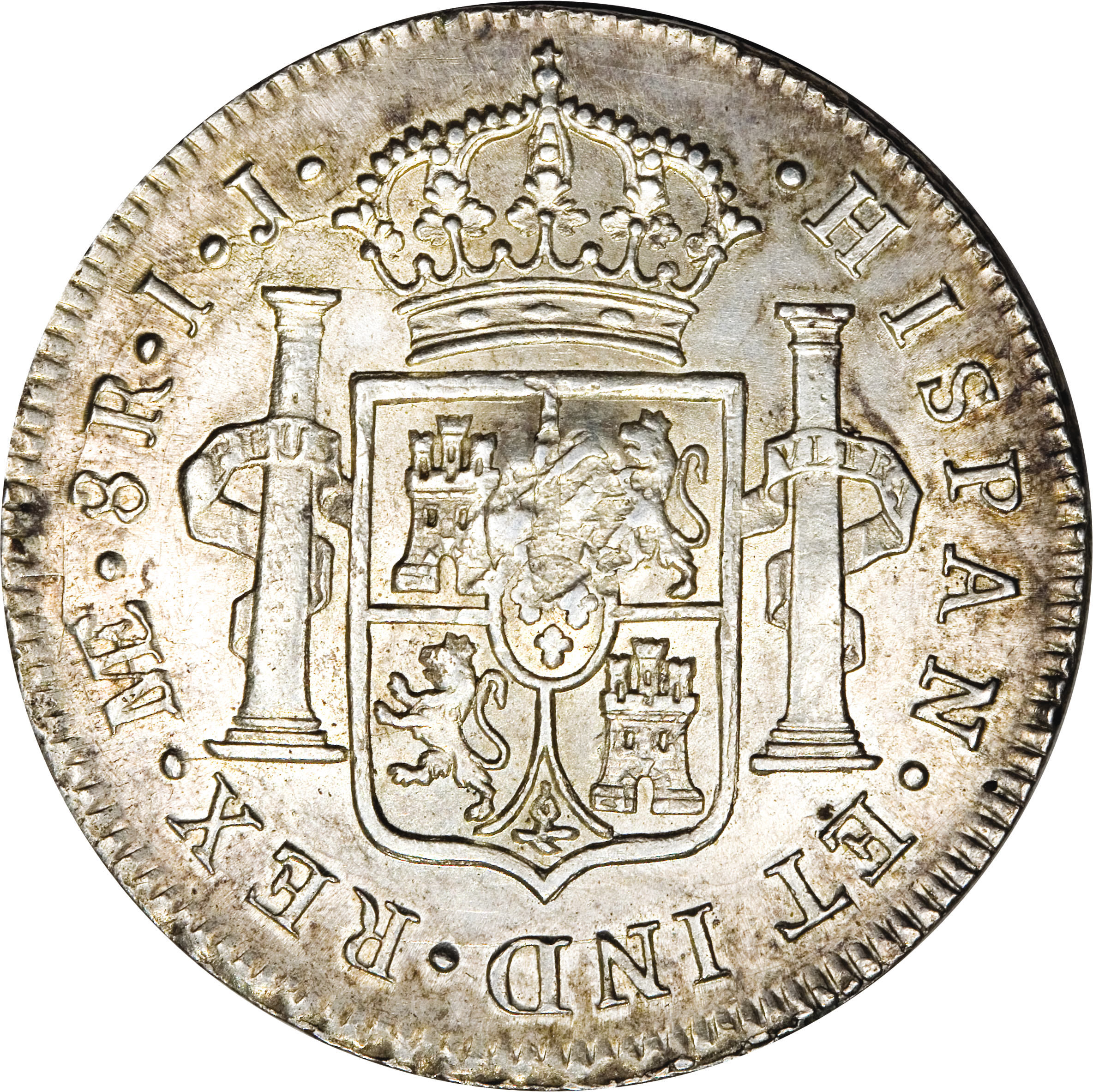
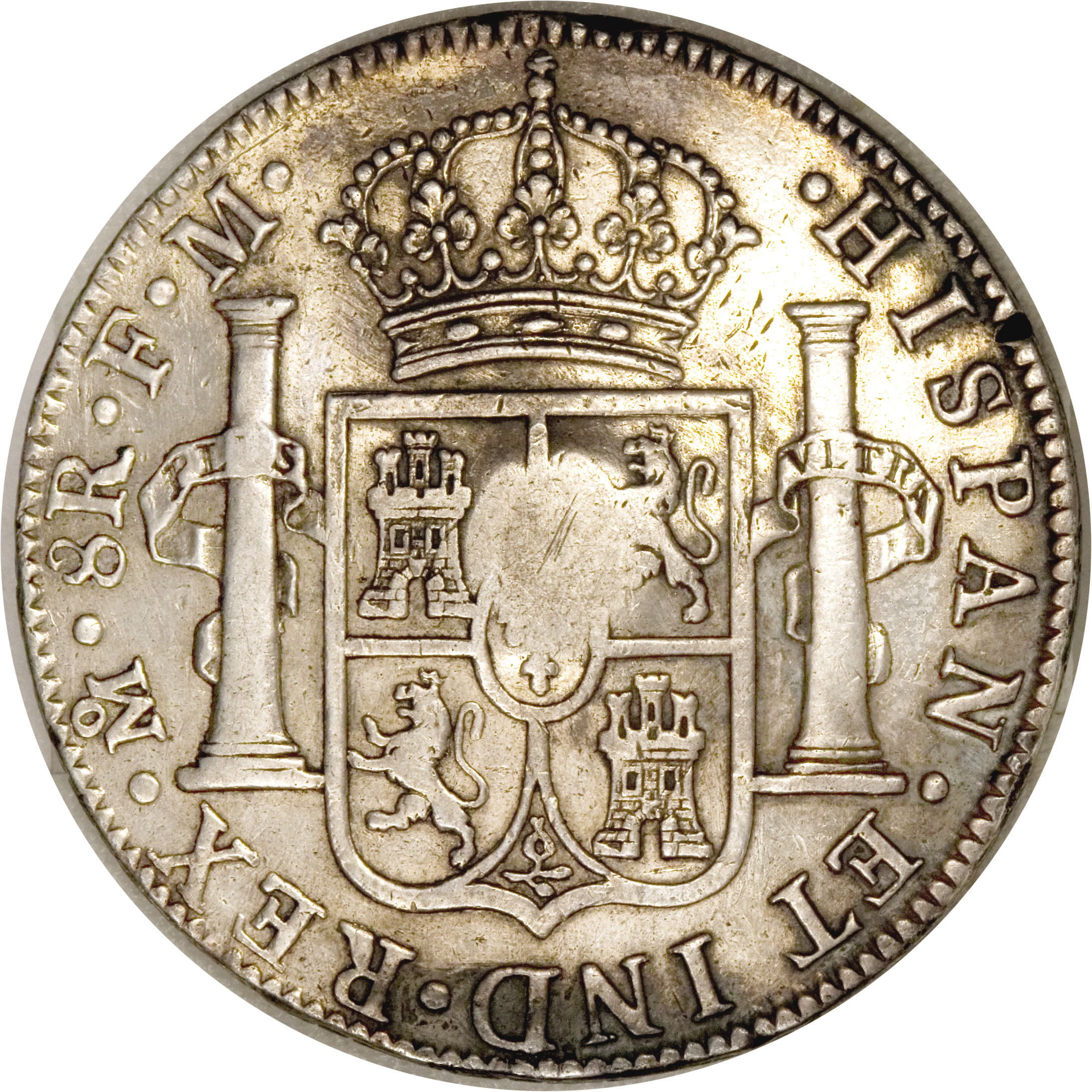
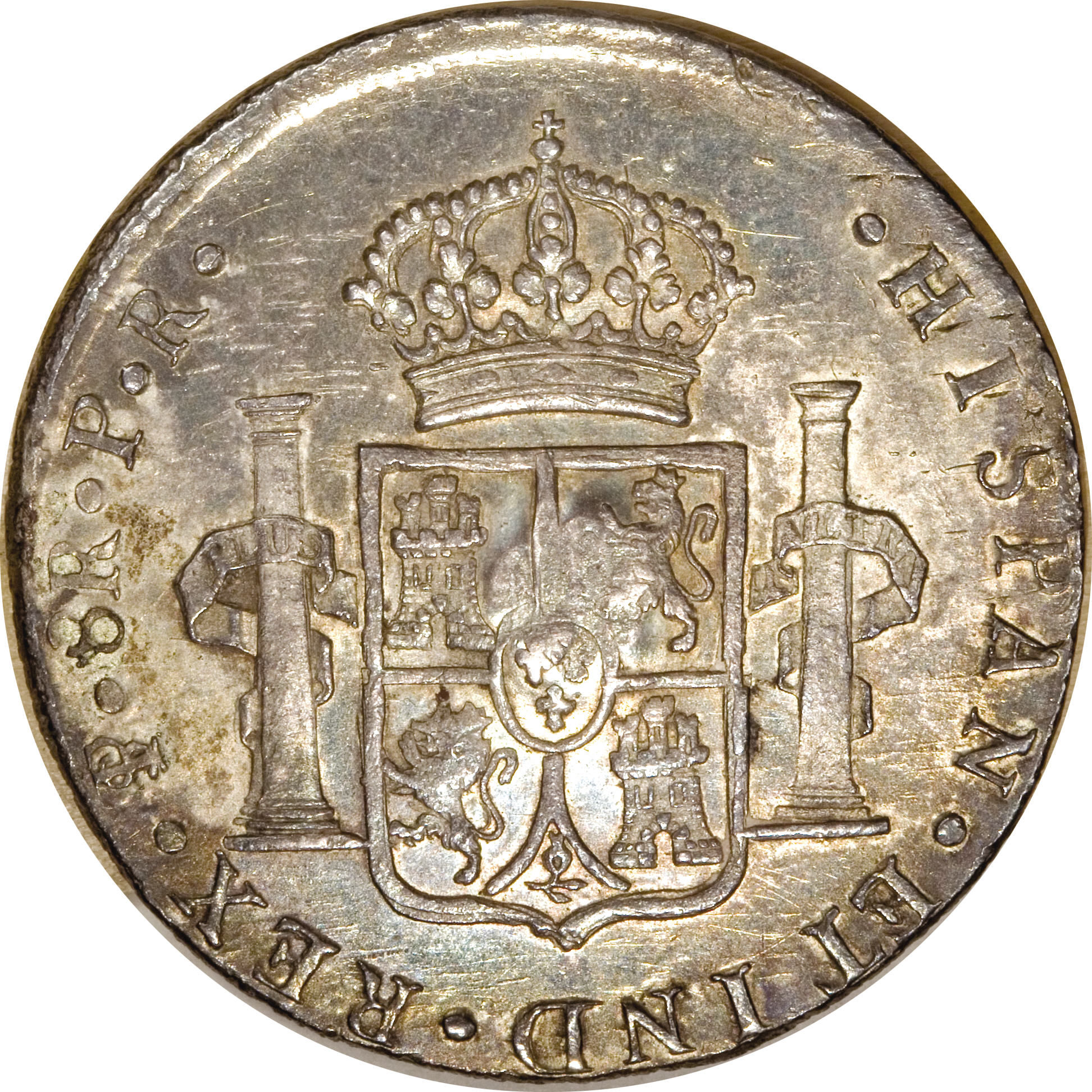
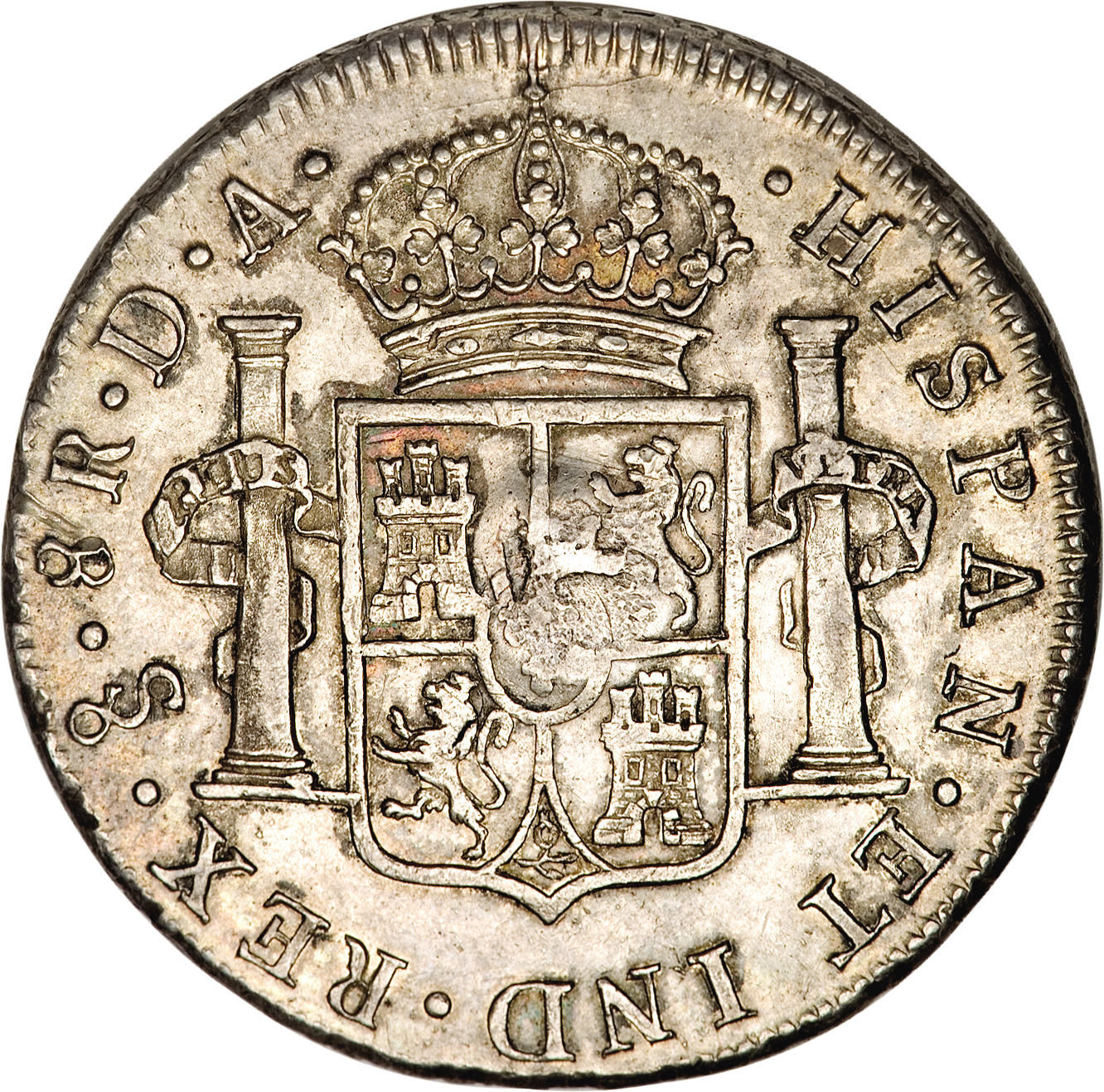
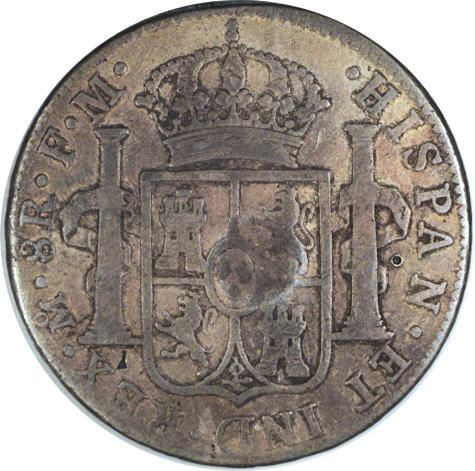
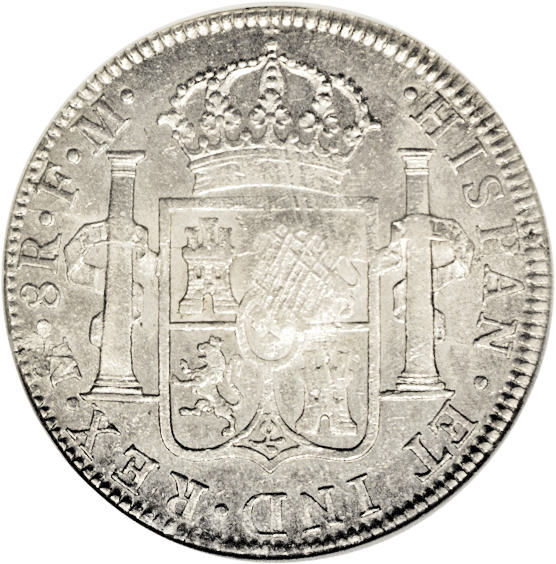
Crowned shield of arms dividing pillars, legend around.
Find this on eBay
Affiliateoval 1 Dollar price history
Daily limit reachedAbout the 1797 1 Dollar - George III Type I countermark – oval
The 1797 1 Dollar - George III Type I countermark – oval is a circulating 4 shillings 9 pence coin, struck in 90.3% silver. It weighs 27.1g and measures 39mm across. Reverse design: Crowned shield of arms dividing pillars, legend around.
It is no longer legal tender (withdrawn 1797), so its value is to collectors only.
Common questions
How much is the 1797 1 Dollar - George III Type I countermark – oval worth?
No verified sale of the 1797 1 Dollar - George III Type I countermark – oval has been logged on MyCoinage yet. Its silver content is worth about £31.41 at today's spot price, which puts a floor under its value.
Were Charles III dollars countermarked as well as Charles IV ones?
Yes. The Bank of England stamped whatever Spanish dollars it held, so hosts from Charles III's reign appear alongside the newer Charles IV coins. Documented examples include a Mexico City dollar of 1778 and a Potosí dollar of 1780, each with George III's oval mark.
How pure is the silver in a Charles III dollar?
Wikipedia gives the Spanish standard from 1772 as 130/144 fine, about 0.903, though it notes the true fineness from 1772 to 1821 is believed to have been only about 0.89. That lower standard is why the dollar was valued below an English crown.
Where can you see a countermarked Charles III dollar?
Amgueddfa Cymru, Museum Wales, holds a George III countermark on a Charles III 8 reales of the Mexico mint, weighing 26.74 g, and Bradford Museums holds another recorded as current in Britain at 4s 9d.
Why were countermarked dollars withdrawn so quickly?
They were forged on a large scale, and genuine dollars were sometimes given false countermarks. The Royal Mint Museum says the Bank began calling them in and they ceased to be legal tender at the end of October 1797, a few months after issue.
How do I identify the 1797 1 Dollar - George III Type I countermark – oval?
Check the weight 27.1g and diameter 39mm and the metal (90.3% silver) against the specification table on this page. The reverse design is described above.
History and design
The Bank of England's dollars were bought as bullion, not as fresh coin, so many had been in use for decades by 1797. The Royal Mint Museum records that the Bank stamped them with a small oval head of George III and issued them at 4s 9d in the spring of that year, to stand in for the crown pieces the Mint had not struck since 1751.
Among them were dollars of Charles III, who reigned in Spain from 1759 to 1788. Sovereign Rarities describes a Mexico City dollar of 1778 with the oval mark, calling it an early date for a Mexico piece, and Spink sold a Potosí dollar of 1780 with the same mark. Amgueddfa Cymru, Museum Wales, holds a Charles III dollar of the Mexico mint with the countermark, weighing 26.74 g. No figures survive for how many of any host were stamped.
The host obverse shows Charles III laureate and draped to the right with the legend CAROLVS.III. DEI. GRATIA and the date. The reverse shows the crowned arms of Spain between the Pillars of Hercules with the PLUS ULTRA ribbon, and a legend naming the mint and its assayers, for example .HISPAN. ET IND. REX. M. 8R. on the Mexico City piece.
Wikipedia gives the Spanish dollar's standard from 1772 as 130/144 fine, about 0.903, which is why it was valued below the English crown. On top sits the British countermark, a small oval bust of George III right, using the punch that Goldsmiths' Hall applied when hallmarking plate.
Collecting notes
Grade the host and the countermark separately, since the two often differ. Check the date and mint letters to place the host. Bradford Museums records its example simply as current in Britain at 4s 9d, a reminder that contemporaries made no distinction by Spanish king. As with every oval dollar, compare the head with known genuine marks, since false countermarks were applied to real coins.
Sources
The history, design, varieties and collecting notes on this page are drawn from these sources. Prices come from recorded sales, not from them.
- George III, Royal Mint Museum (read 12 Oct 2026)
- George III oval countermark on Mexico 1778 FM 8 reales, Sovereign Rarities (read 12 Oct 2026)
- George III, Oval-Countermark Dollar, 1780-PR, Potosí, lot 2101, Spink (read 12 Oct 2026)
- Bank of England countermarked dollar (52.194/67), Amgueddfa Cymru, Museum Wales, via Museum Data Service (read 12 Oct 2026)
- Coin: Spanish dollar, George III countermarked over Charles III (62:1942), Bradford District Museums and Galleries, via Museum Data Service (read 12 Oct 2026)
- Spanish dollar, Wikipedia (read 12 Oct 2026)
- Five Shillings, Quarter Guinea and Five and Six, Tony Clayton, Coins of the UK (read 12 Oct 2026)
More 4 Shillings 9 Pence coins from nearby years