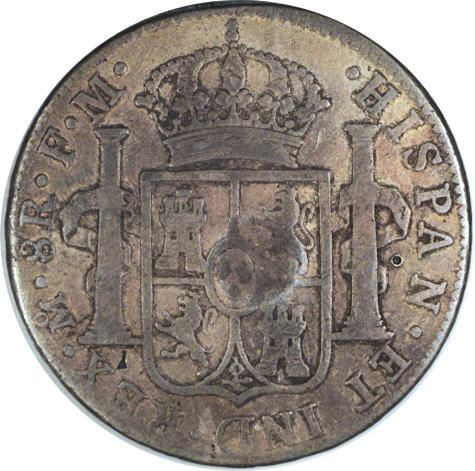
1 Dollar - George III Type I countermark oval (1797)
| Country | United Kingdom |
| Year | 1797 |
| Denomination | 4 Shillings 9 Pence |
| Mint | Royal Mint · Llantrisant |
| Circulation | Circulating |
| Demonetised | 1797 |
| Composition | Silver (.903) (903/1000 fine) |
| Weight | 27.100g · 0.7868 t oz |
| Diameter | 38.3mm |
| Shape | Round |
| Grade scale | UK (EF/UNC) |
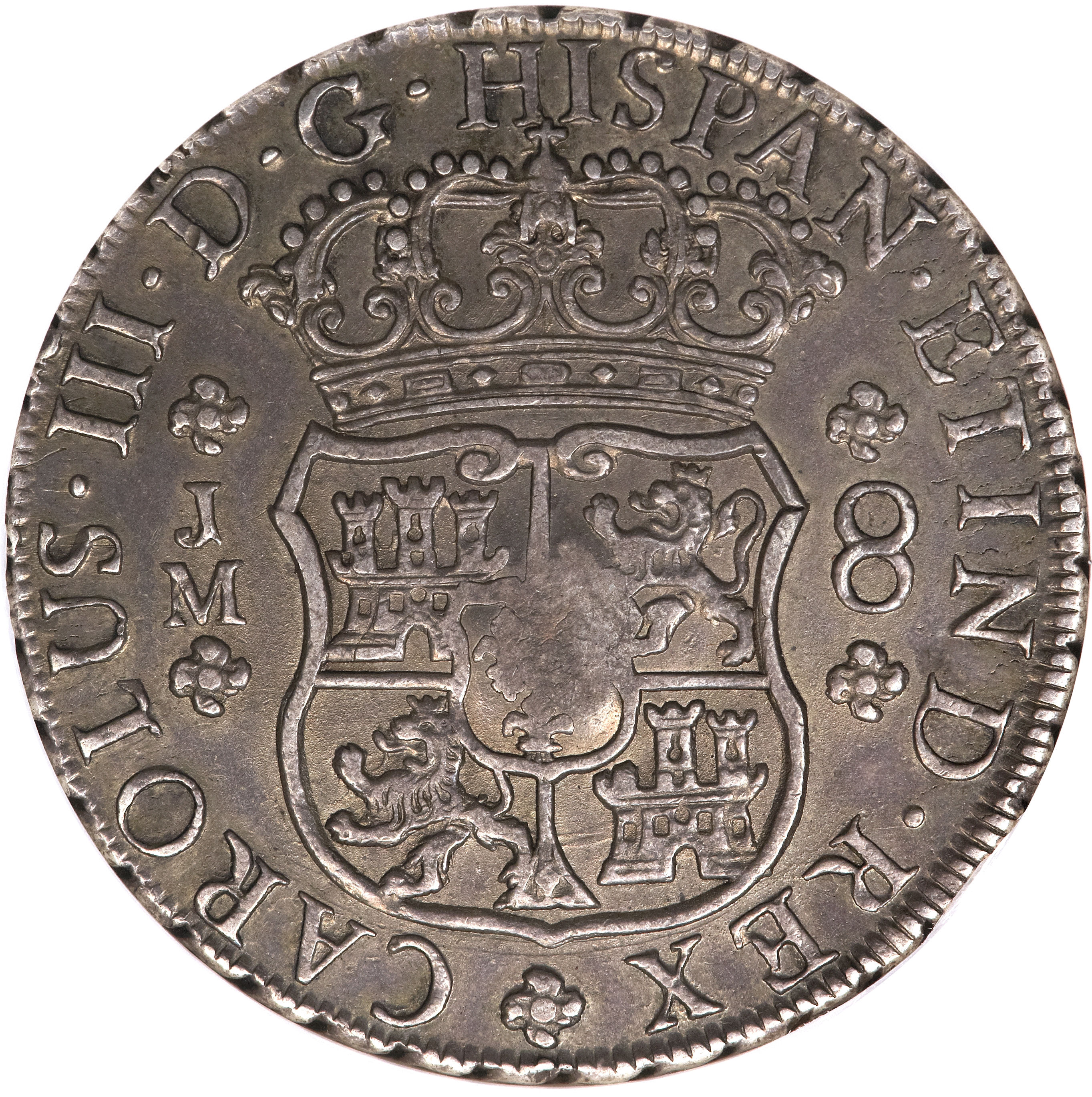
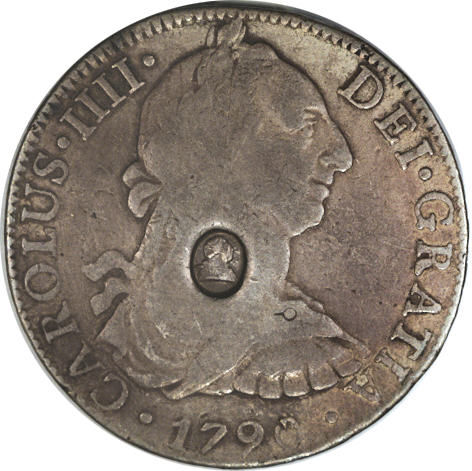
Laureate and cuirassed bust of King Carlos III facing right above date, legend around.
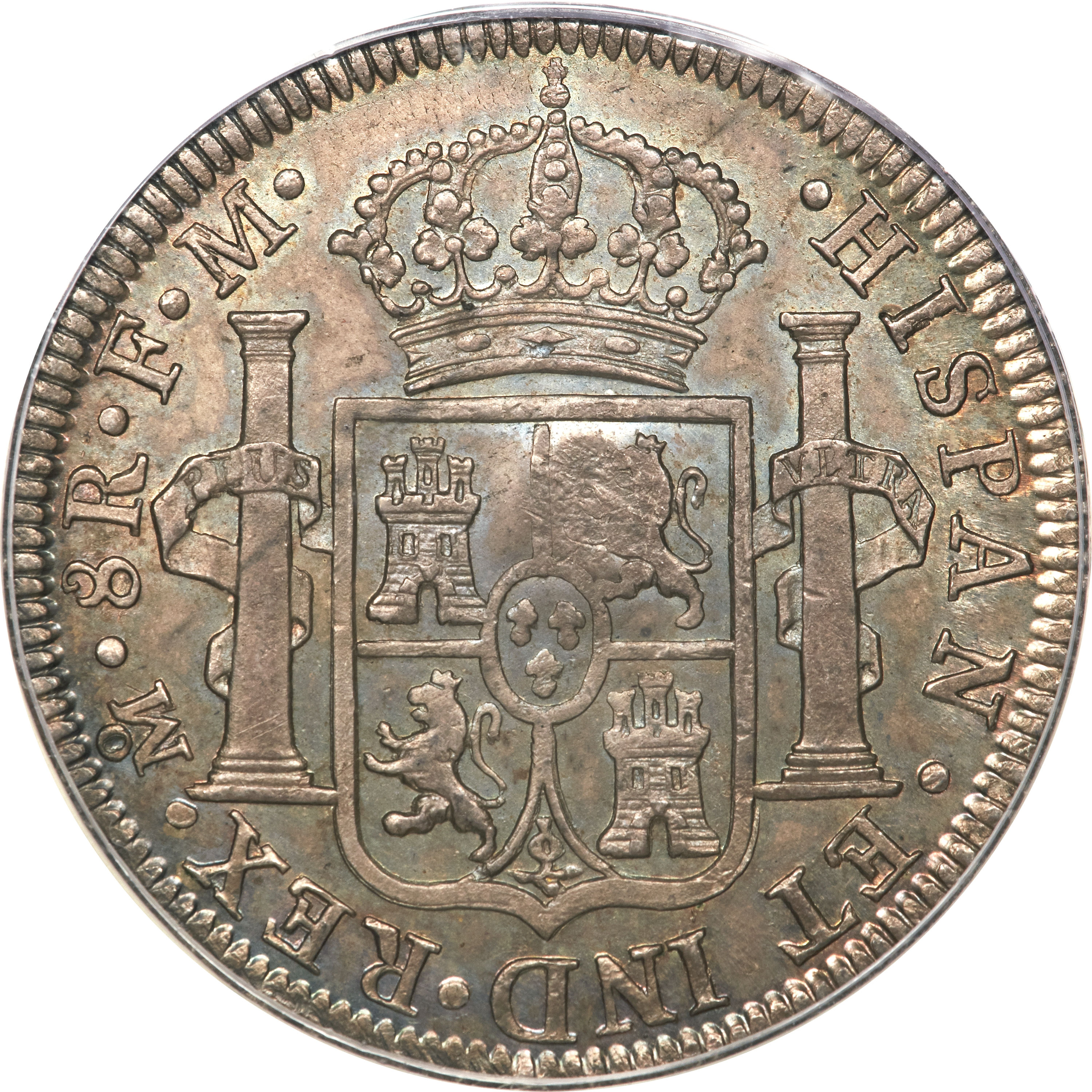
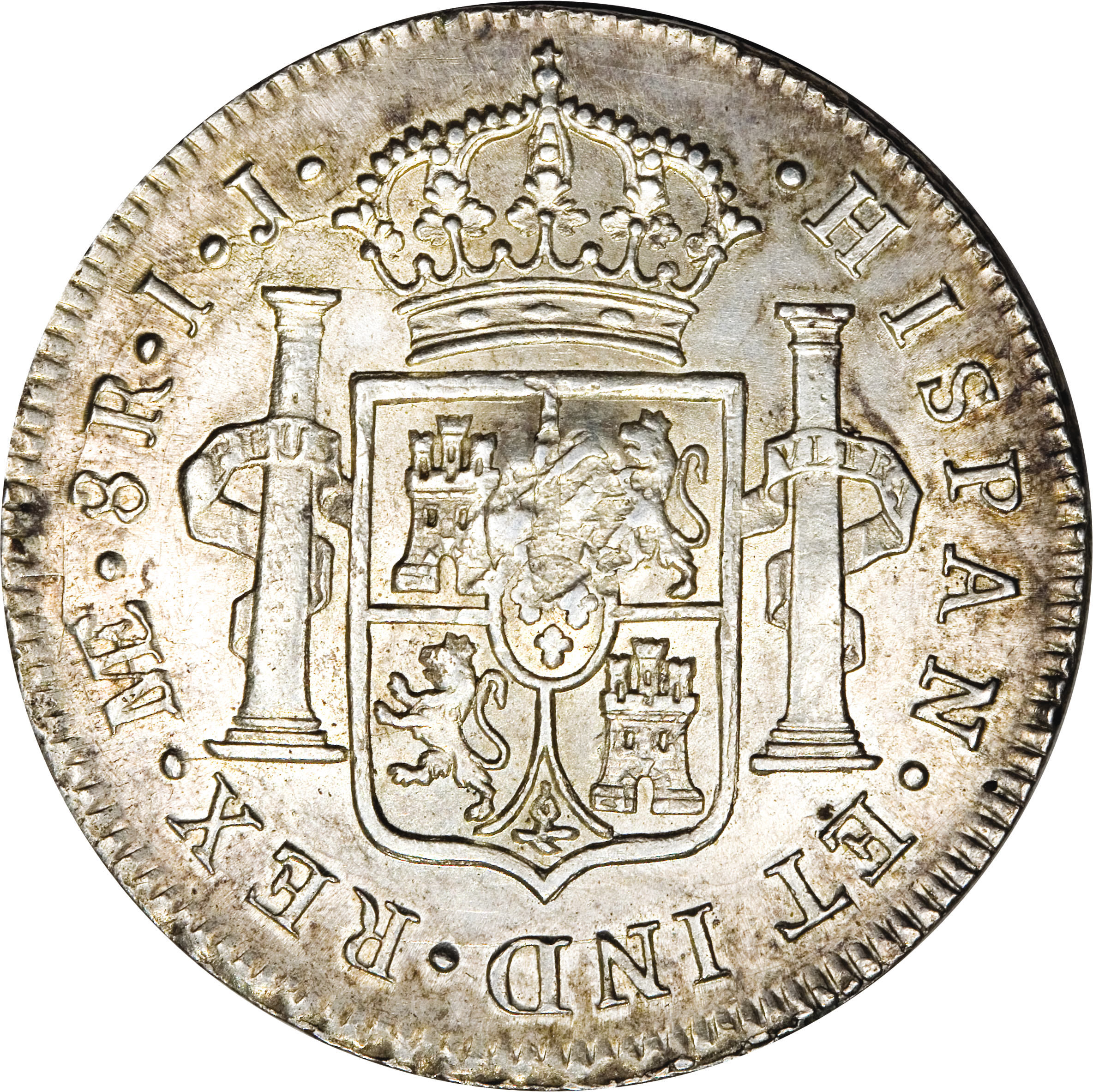
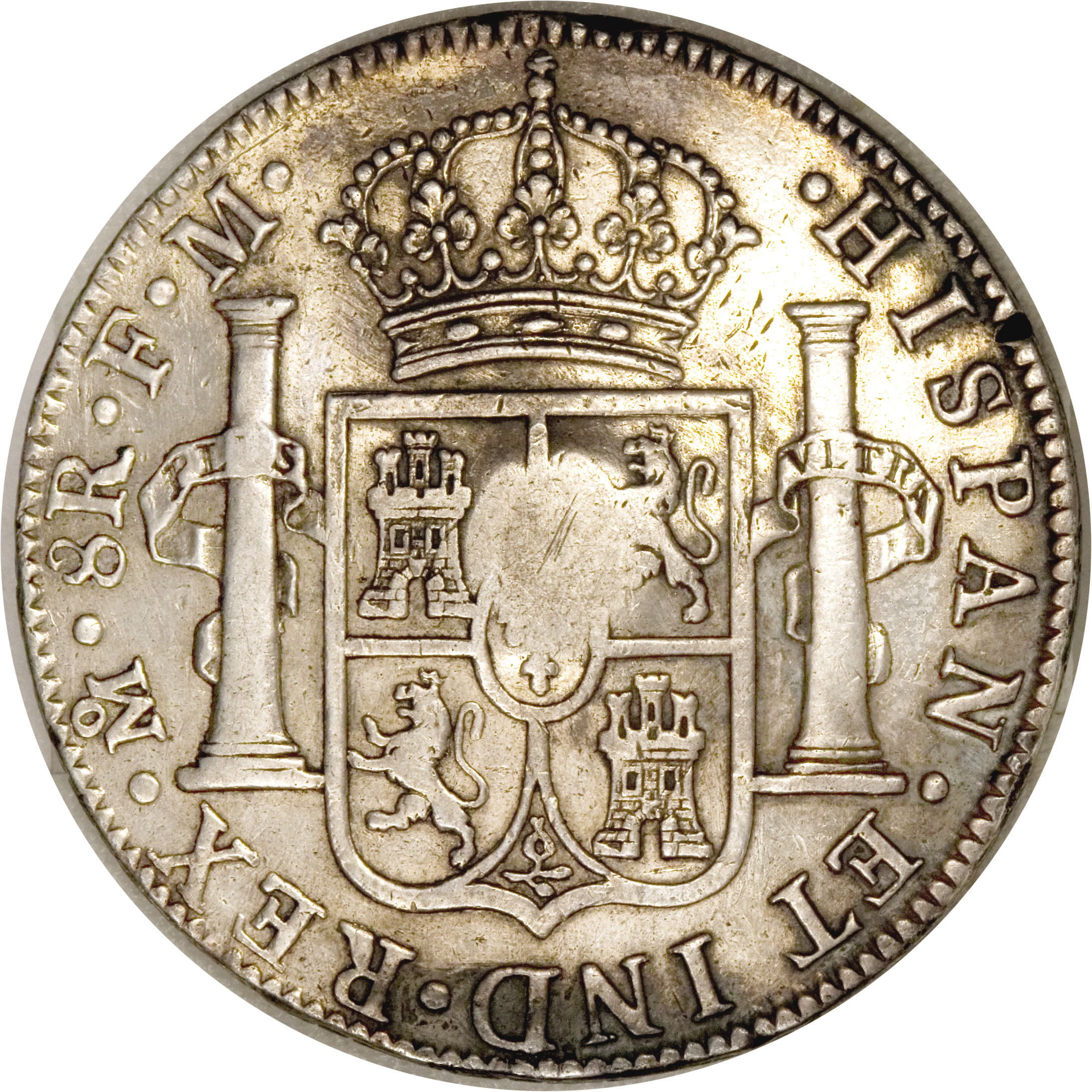
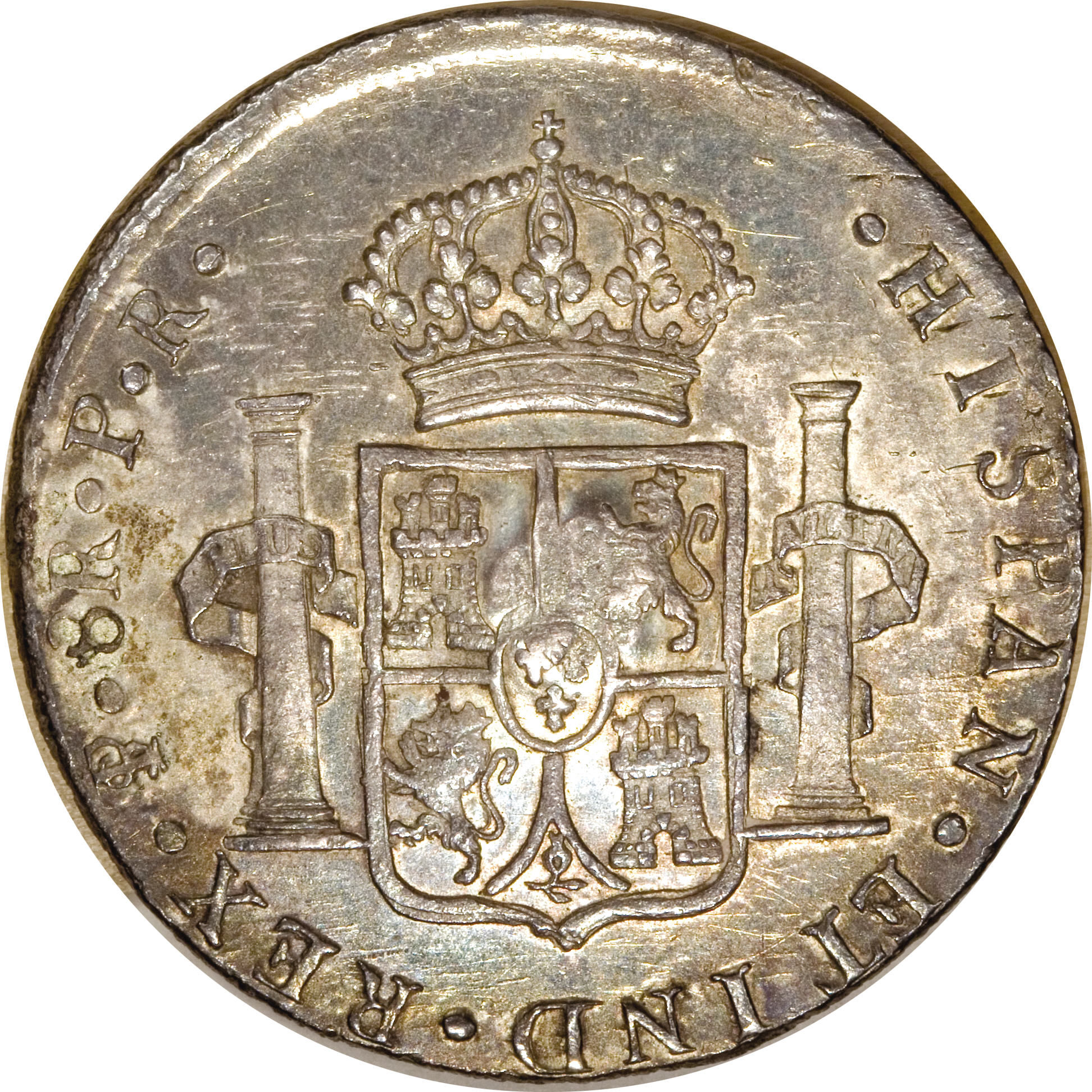
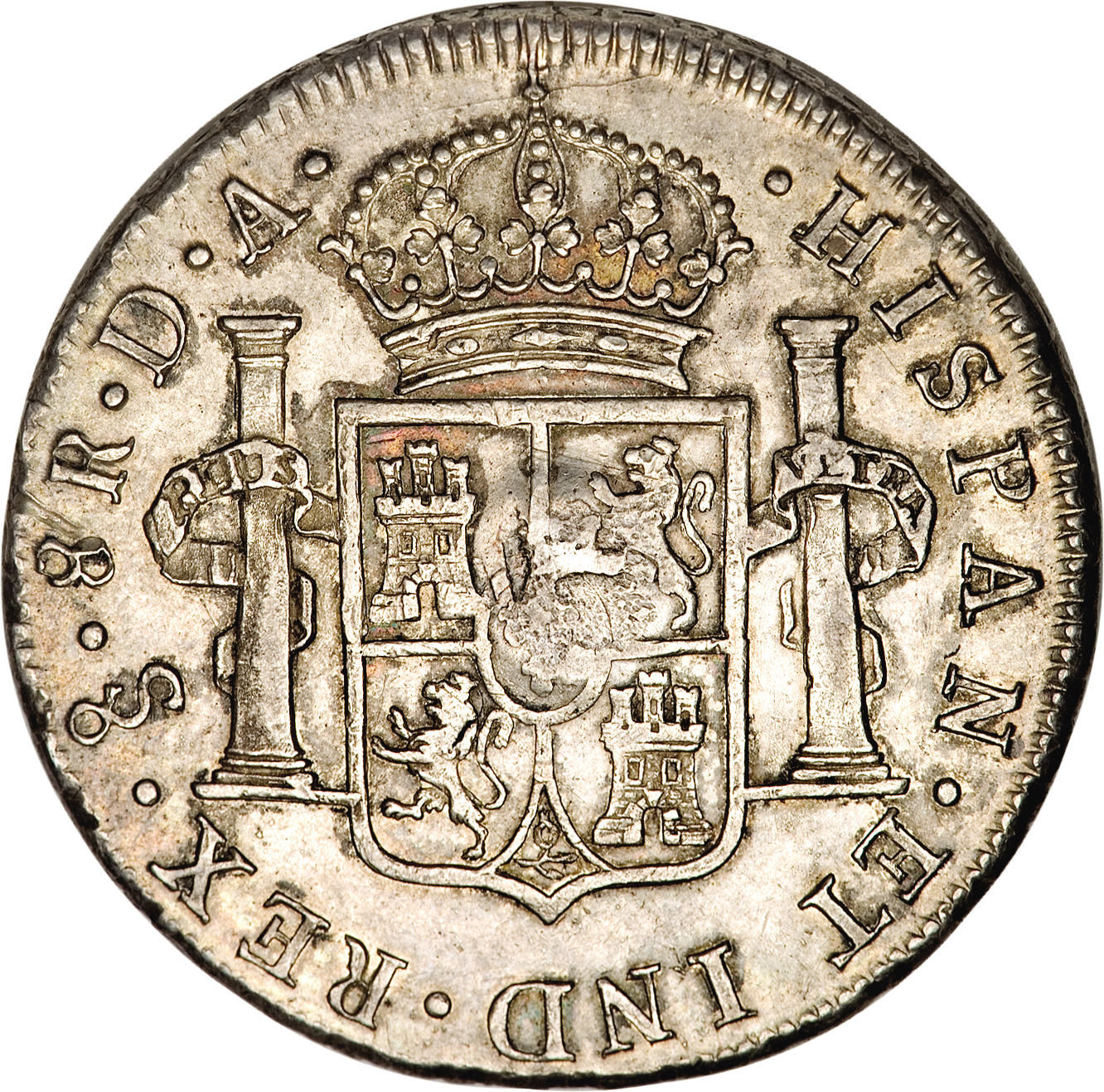
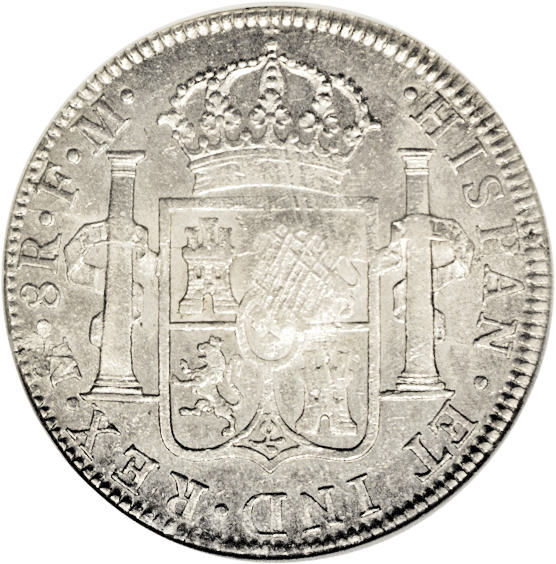
Crowned shield of arms dividing pillars, legend around.
Find this on eBay
Affiliateoval 1 Dollar price history
Daily limit reachedAbout the 1797 1 Dollar - George III Type I countermark – oval
The 1797 1 Dollar - George III Type I countermark – oval is a circulating 4 shillings 9 pence coin, struck in 90.3% silver. It weighs 27.1g and measures 38.25mm across. Reverse design: Crowned shield of arms dividing pillars, legend around.
It is no longer legal tender (withdrawn 1797), so its value is to collectors only.
Common questions
How much is the 1797 1 Dollar - George III Type I countermark – oval worth?
No verified sale of the 1797 1 Dollar - George III Type I countermark – oval has been logged on MyCoinage yet. Its silver content is worth about £31.41 at today's spot price, which puts a floor under its value.
Why do some countermarked dollars show Charles III but name Charles IV?
Charles III died in 1788 and new portrait dies for Charles IV were not ready until 1791. Potosí used the old bust with the new king's name in 1789 and 1790, Lima did so in 1790, and some of these coins later received George III's oval mark.
What is the 'Devil horn' countermarked dollar?
A Lima dollar of 1790, with Charles III's bust in Charles IV's name, struck from an obverse die with a large flaw projecting from the back of the king's head. Spink offered one with George III's oval countermark, catalogued as ESC 133.
What happened to the Bank's Spanish dollars after 1797?
The oval dollars were called in after heavy forgery. The Bank tried again in 1804 with an octagonal countermark, then had Matthew Boulton's Soho Mint overstrike the dollars completely as the Bank of England dollar, valued at five shillings.
Is a countermarked dollar a British coin?
Only partly. The coin itself is Spanish colonial silver; the British element is the small oval head of George III, applied for the Bank of England in 1797 so the dollar could pass in Britain at 4s 9d for a few months.
How do I identify the 1797 1 Dollar - George III Type I countermark – oval?
Check the weight 27.1g and diameter 38.25mm and the metal (90.3% silver) against the specification table on this page. The reverse design is described above.
History and design
The Bank of England had no say in which Spanish dollars came into its vaults, and its 1797 countermark was applied to whatever it held. The Royal Mint Museum records that the coins were stamped with a small oval head of George III and issued in the spring of 1797 at 4s 9d. They were withdrawn within months: forgery was rife, and the oval dollars ceased to be legal tender at the end of October 1797.
This entry covers hosts bearing Charles III's bust. These include not only coins of his reign but also transitional pieces struck after his death. CoinVarieties explains that Charles III died in 1788 and new dies for Charles IV were not ready until 1791, so mints such as Potosí issued dollars in 1789 and 1790 with the old bust and the new king's name.
The Spanish obverse shows the laureate bust of Charles III facing right in armour, with the date below. On transitional coins the legend gives the king's number as IV or IIII. The reverse is the crowned arms of Spain between the Pillars of Hercules. Wikipedia gives the dollar's legal standard from 1772 as about 0.903 fine.
The British countermark, a small oval head of George III, is usually struck at the centre of the obverse. Spink offered a Lima dollar of 1790 in Charles IV's name with a large die flaw rising from the back of Charles III's head, known as the 'Devil horn', with the oval mark applied over it.
Collecting notes
Identify the host by its date, mint letters and legend; a 1789 or 1790 date with Charles III's bust indicates a transitional coin. Clayton notes that the oval was later replaced by an octagonal stamp, and Wikipedia's account of Boulton records that the Bank's remaining dollars were finally overstruck at Soho. The couplet it quotes, about stamping "the head of a fool on the neck of an ass", mocked the oval countermark itself.
Sources
The history, design, varieties and collecting notes on this page are drawn from these sources. Prices come from recorded sales, not from them.
- George III, Royal Mint Museum (read 12 Oct 2026)
- George III, Oval-Countermark Dollar, 1790-IJ Lima, with a 'Devil Horn' flaw, lot 2562, Spink (read 12 Oct 2026)
- Bolivia 1790-PTS PR 8 reales, CoinVarieties (read 12 Oct 2026)
- Mexico 1790-Mo FM 4 reales, CoinVarieties (read 12 Oct 2026)
- Matthew Boulton, Wikipedia (read 12 Oct 2026)
- Five Shillings, Quarter Guinea and Five and Six, Tony Clayton, Coins of the UK (read 12 Oct 2026)
- Spanish dollar, Wikipedia (read 12 Oct 2026)
More 4 Shillings 9 Pence coins from nearby years