1 Dollar - George III Type I countermark oval (1797)
| Country | United Kingdom |
| Year | 1797 |
| Denomination | 4 Shillings 9 Pence |
| Mint | Royal Mint · Llantrisant |
| Circulation | Circulating |
| Demonetised | 1797 |
| Composition | Silver (.896) (896/1000 fine) |
| Weight | 27.067g · 0.7797 t oz |
| Diameter | 40.0mm |
| Shape | Round |
| Grade scale | UK (EF/UNC) |
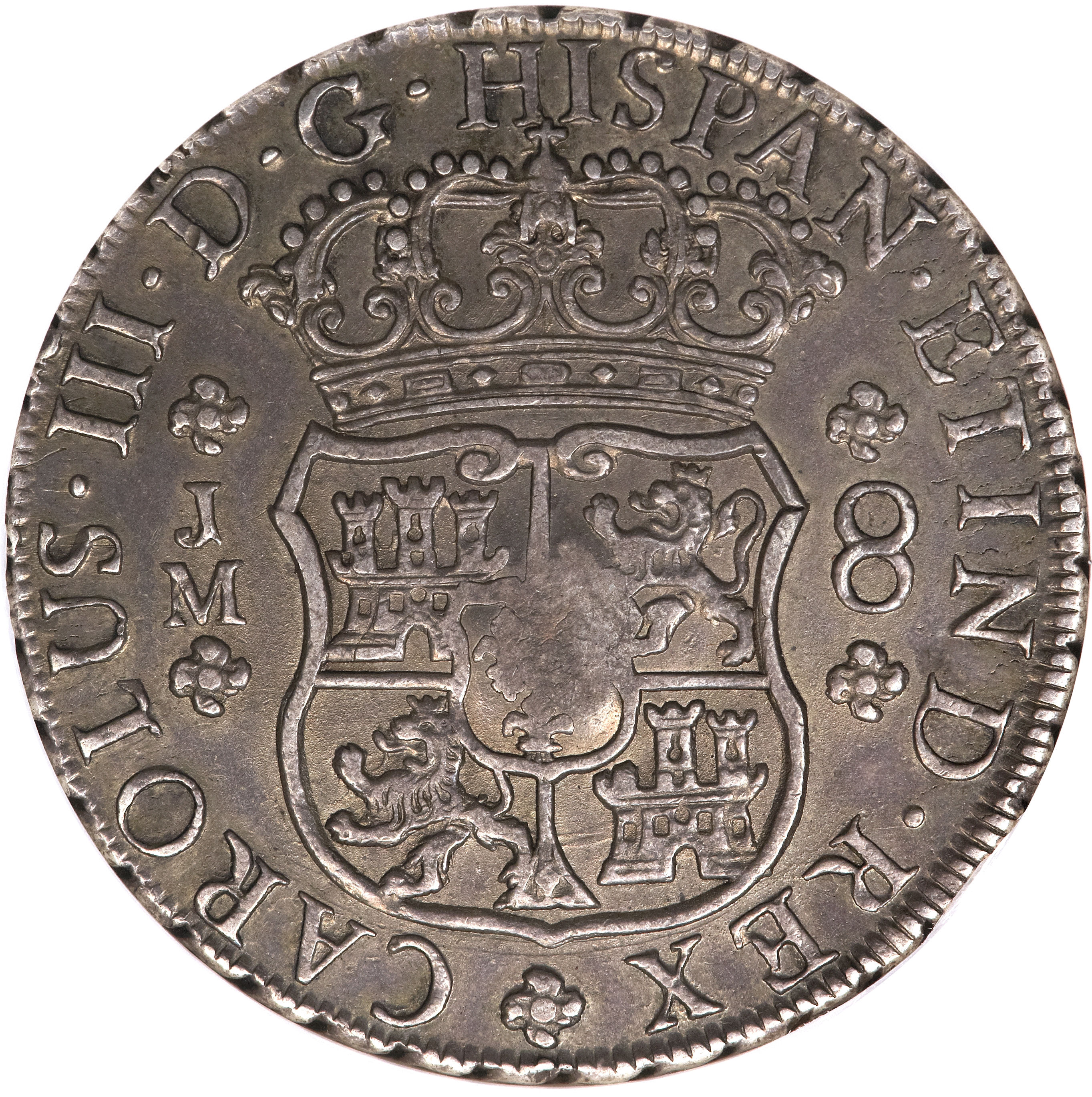
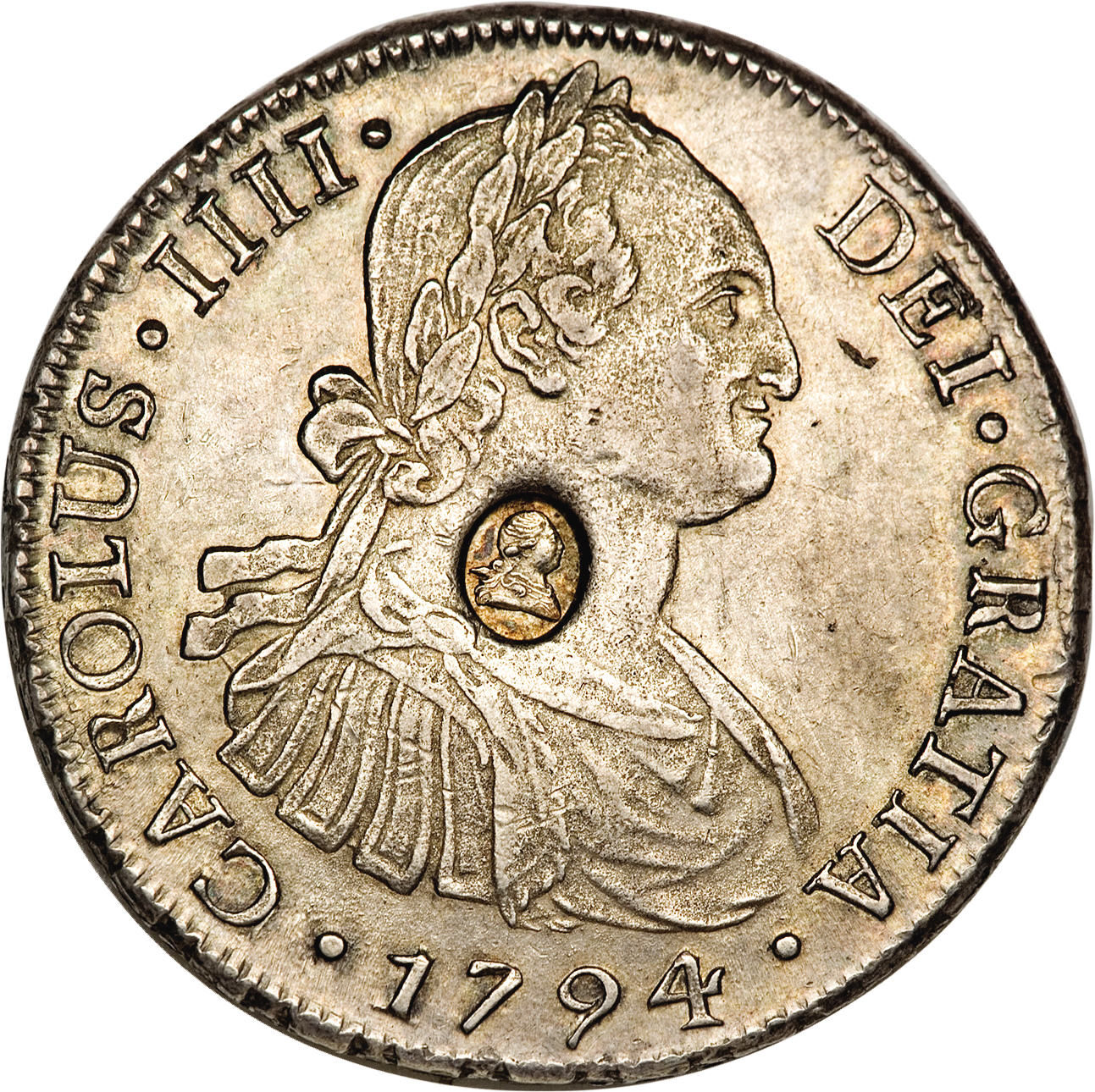
Laureate and draped bust of King Carlos IIII right above date, legend around.
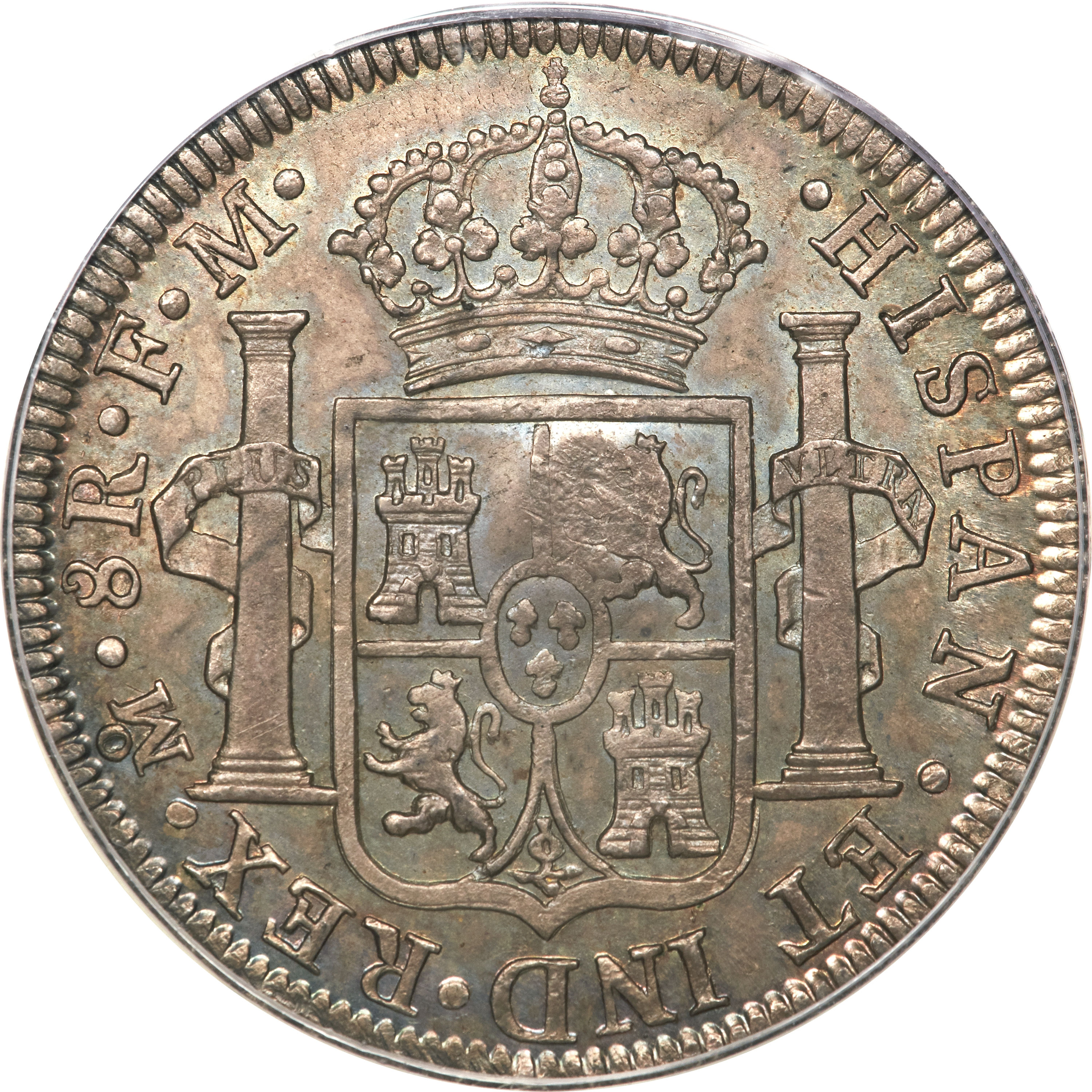
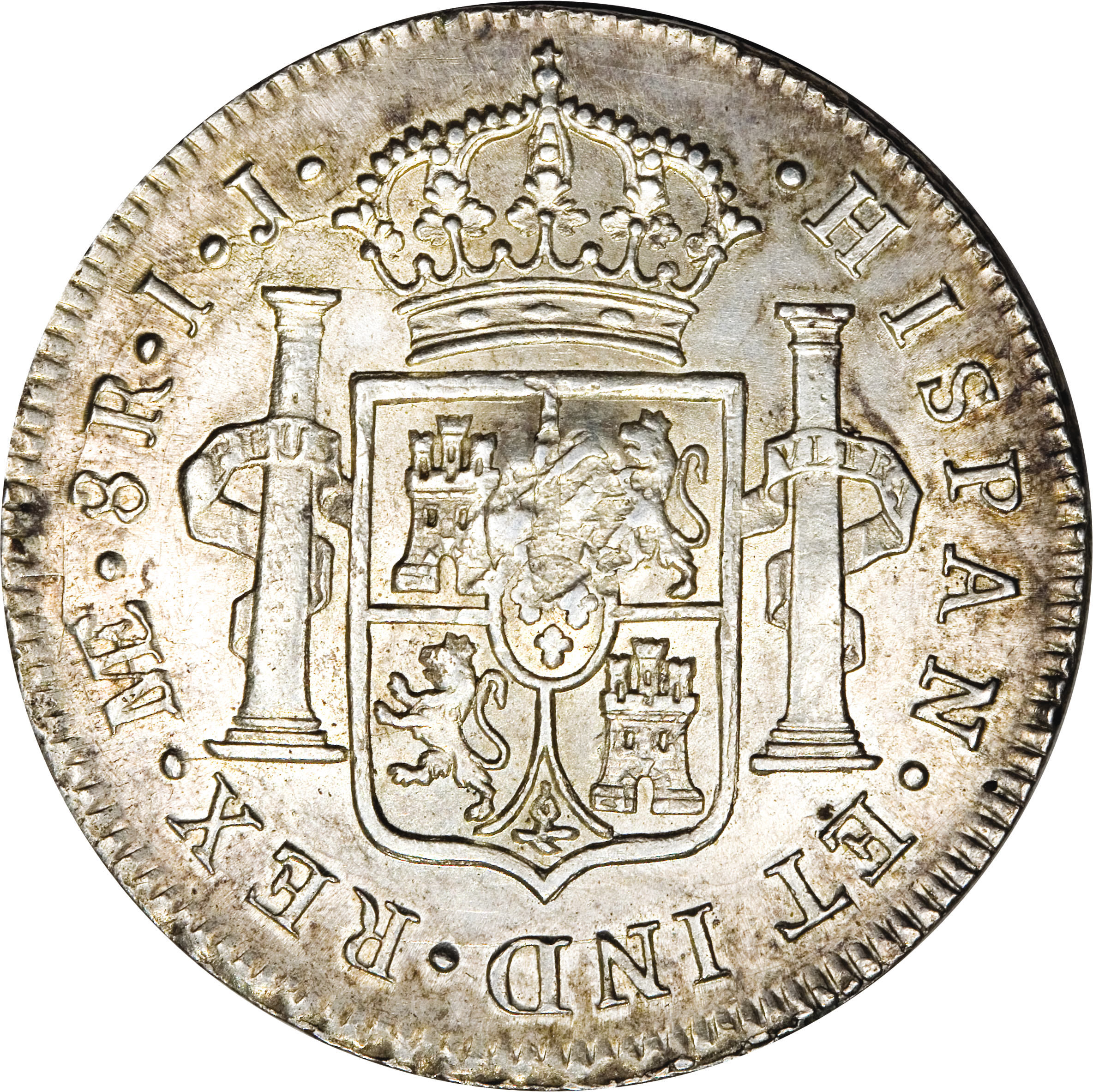
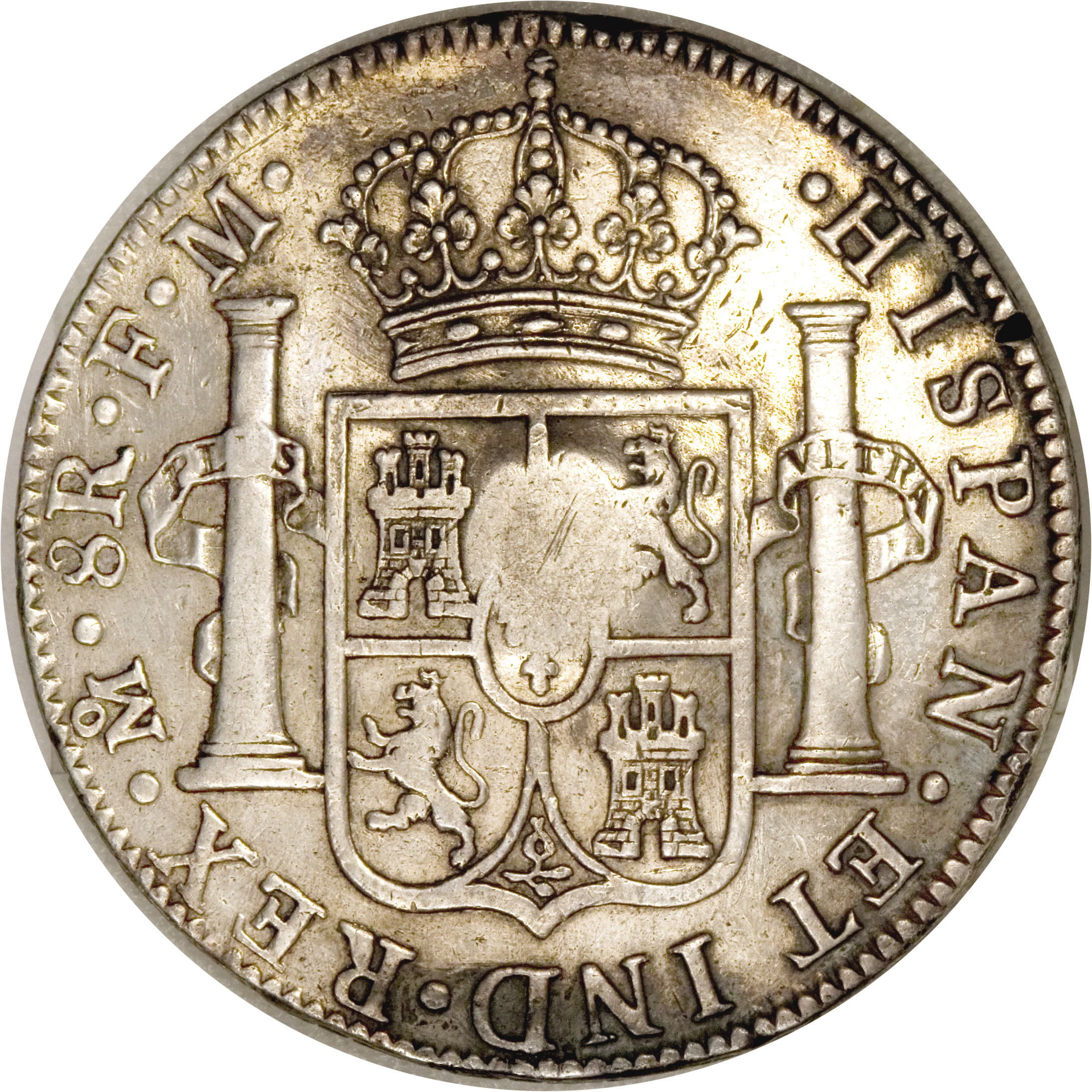
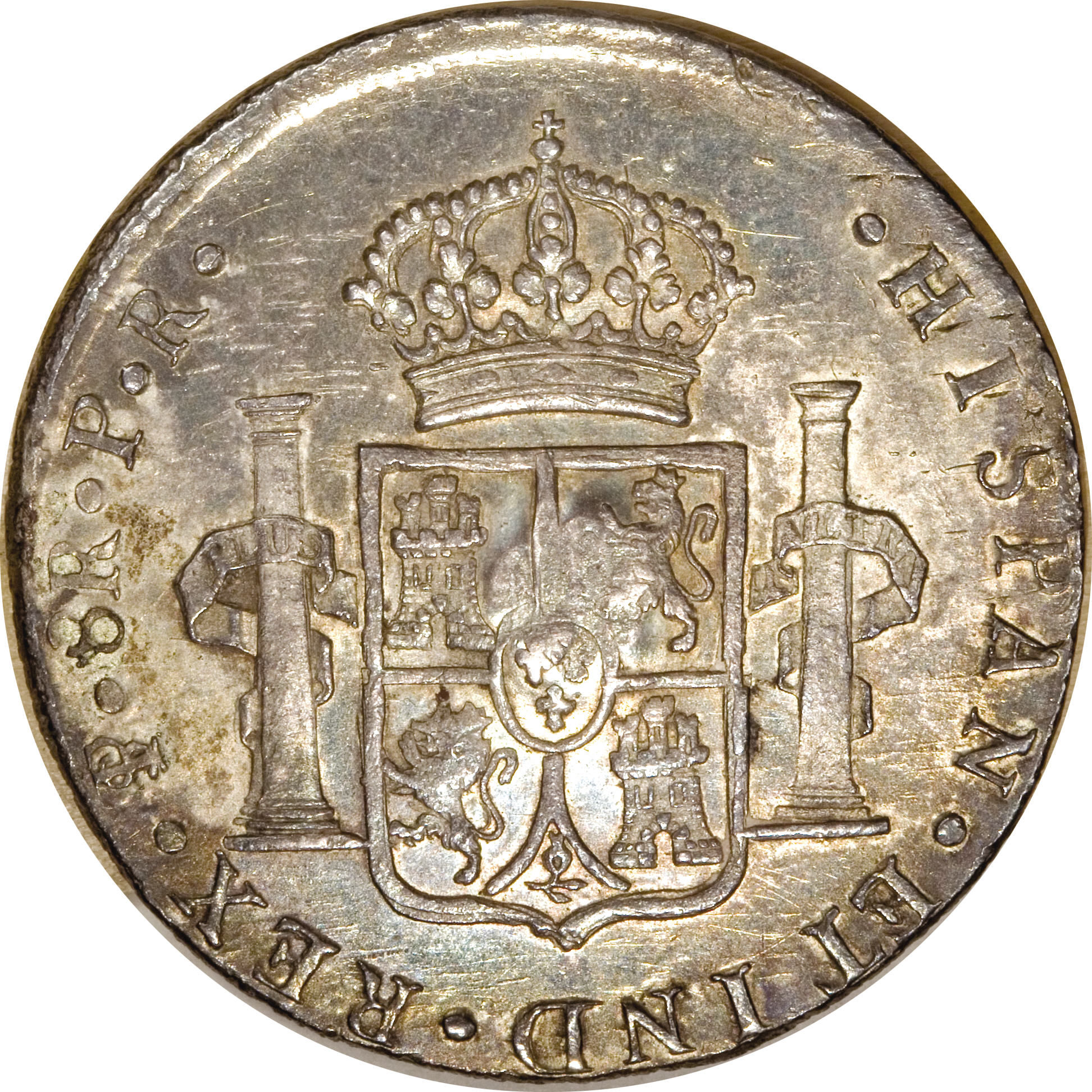
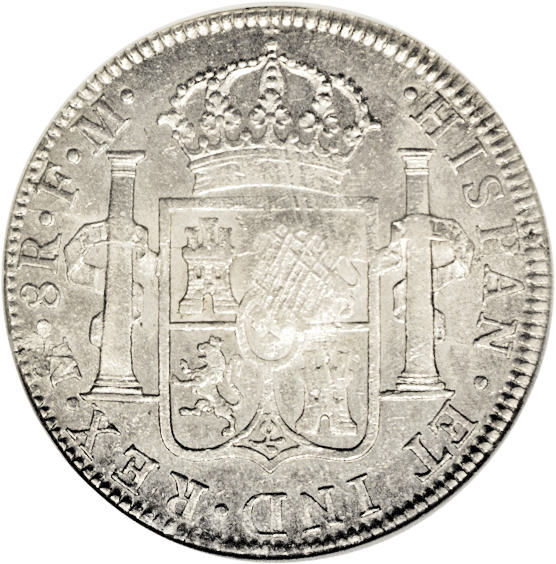
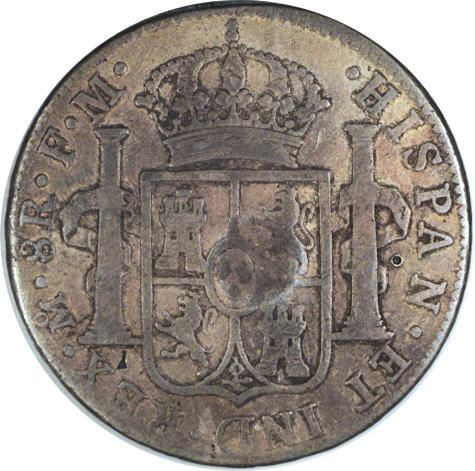
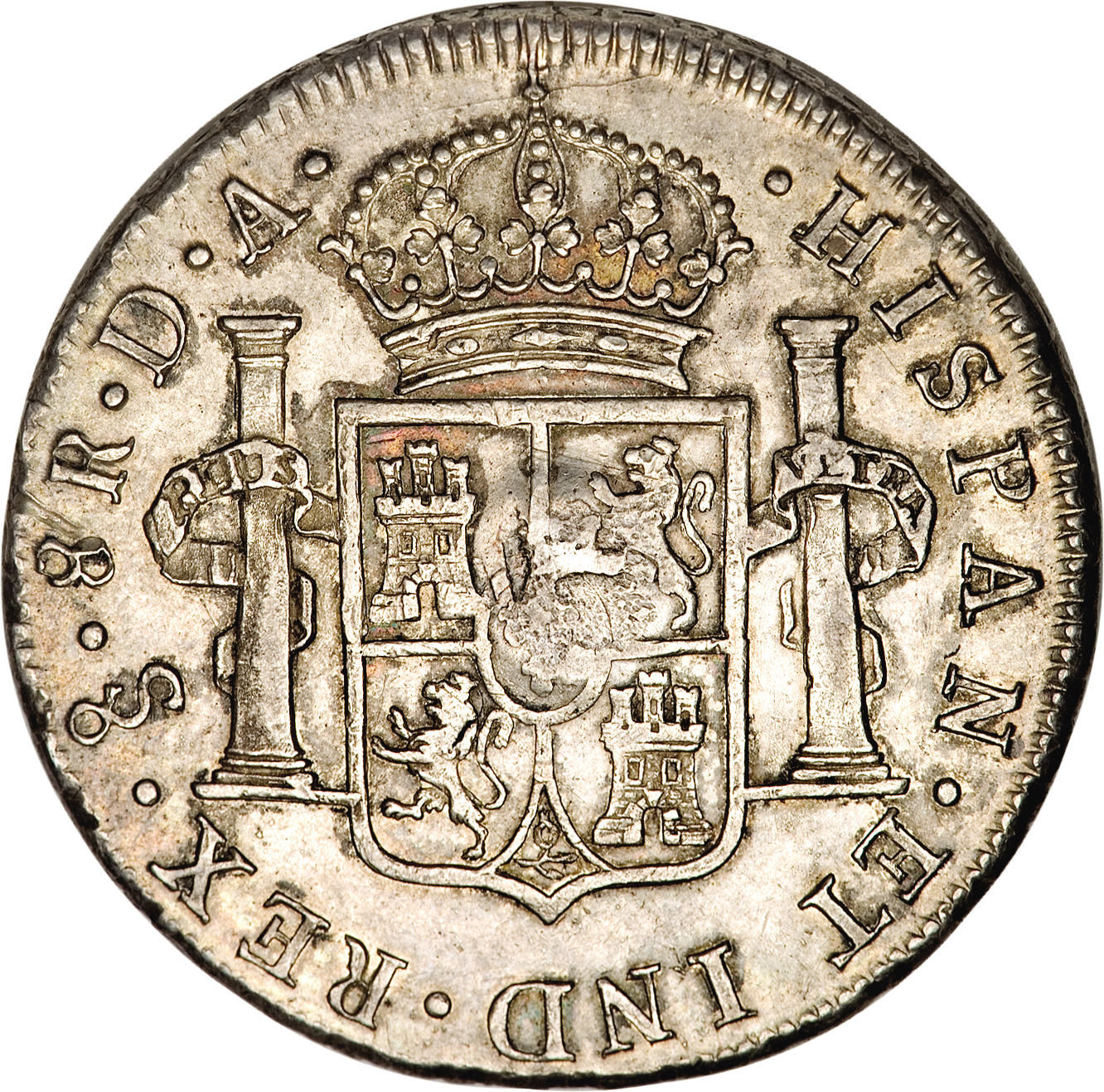
Crowned shield of arms dividing pillars, legend around.
Find this on eBay
Affiliateoval 1 Dollar price history
Daily limit reachedAbout the 1797 1 Dollar - George III Type I countermark – oval
The 1797 1 Dollar - George III Type I countermark – oval is a circulating 4 shillings 9 pence coin, struck in 89.6% silver. It weighs 27.07g and measures 40mm across. Reverse design: Crowned shield of arms dividing pillars, legend around.
It is no longer legal tender (withdrawn 1797), so its value is to collectors only.
Common questions
How much is the 1797 1 Dollar - George III Type I countermark – oval worth?
No verified sale of the 1797 1 Dollar - George III Type I countermark – oval has been logged on MyCoinage yet. Its silver content is worth about £31.23 at today's spot price, which puts a floor under its value.
Why does the Spanish king's name read CAROLUS IIII?
Charles IV's colonial 8 reales spell his number as IIII, as on the Lima dollar of 1793 and the Potosí dollar of 1795 described by Sovereign Rarities. Some 1790 Mexico City dollars read CAROLUS IV instead, so both spellings exist.
What is the 'three kings' countermarked dollar?
Charles III died in 1788 and new dies for Charles IV were not ready until 1791, so some dollars paired the old king's bust with the new king's name. Countermarked by the Bank in 1797, a Mexico City 1790 piece carries three kings: two Spanish and one British.
Which mints supplied the dollars the Bank of England countermarked?
Documented examples include Mexico City (ESC 129), Potosí in modern Bolivia (ESC 131) and Lima in Peru (ESC 133), along with Spanish mainland dollars from Seville. Dealers describe the Potosí and Lima hosts as scarcer than Mexico City.
What was the countermarked dollar worth in 1797?
It passed for 4s 9d, three pence less than an English crown, because the Spanish dollar was slightly lighter and of lower silver fineness. The Royal Mint Museum notes the value gave rise to the saying 'two King's heads not worth a crown'.
How do I identify the 1797 1 Dollar - George III Type I countermark – oval?
Check the weight 27.07g and diameter 40mm and the metal (89.6% silver) against the specification table on this page. The reverse design is described above.
History and design
When the Bank of England put its stock of Spanish dollars into circulation in the spring of 1797, it did not choose them by king or mint. The Royal Mint Museum records that they were simply stamped with an oval head of George III and paid out at 4s 9d. As a result the host coins vary widely, and collectors sort them by the Spanish ruler and the mint that struck them.
This entry covers hosts whose obverse names Charles IV as CAROLUS IIII. Sovereign Rarities describes a Lima dollar of 1793 reading CAROLVS.IIII. DEI. GRATIA and a Potosí dollar of 1795 with the same legend, both carrying the countermark at the centre of the obverse. Like every oval dollar, they lost their legal tender status at the end of October 1797, after heavy counterfeiting.
The host obverse shows Charles IV laureate and draped to the right with the date below. The reverse carries the crowned Spanish arms between two pillars with the PLUS VLTRA ribbon, and a legend naming the mint and assayers, such as HISPAN. ET IND. REX. MAE. 8R.I.J. on the Lima coin.
Charles III died in 1788 and new dies for his son were not ready until 1791, so for a time the old portrait was used with the new name. CoinVarieties records 1790 Mexico City coins with both CAROLUS IIII and CAROLUS IV. A countermarked Mexico City dollar of 1790 with Charles III's bust and the IIII legend has been called a coin with three kings on it.
Collecting notes
Check the legend and the reverse mint letters to identify the host. Mexico City dollars are the type most often found; dealers call Potosí and Lima hosts scarcer. Leicester Museums holds a Charles IV dollar of 1794 that its record ties to Seaby 3765, showing how the type was catalogued for British collectors. Look closely at the oval head: false countermarks were applied to genuine dollars in 1797.
Sources
The history, design, varieties and collecting notes on this page are drawn from these sources. Prices come from recorded sales, not from them.
- George III, Royal Mint Museum (read 12 Oct 2026)
- George III oval countermark upon Peru 1793 IJ 8 reales, Lima mint, Sovereign Rarities (read 12 Oct 2026)
- George III oval countermark on Bolivia 1795-PP 8 reales, Potosí, Sovereign Rarities (read 12 Oct 2026)
- George III oval countermark on Mexico 8 reales 1790 FM, Sovereign Rarities (read 12 Oct 2026)
- Mexico 1790-Mo FM 4 reales, CoinVarieties (read 12 Oct 2026)
- Dollar, eight reales, countermarked coin, Seaby 3765 (L.N392.1982.0.0), Leicester Museums and Galleries, via Museum Data Service (read 12 Oct 2026)
- George III oval countermark on Spain 1795 8 reales, Seville, Sovereign Rarities (read 12 Oct 2026)
- George III, Oval-Countermark Dollar, 1790-IJ Lima, and Potosí, lot 2562, Spink (read 12 Oct 2026)
More 4 Shillings 9 Pence coins from nearby years