Very Rare: fewer than 100,000 minted. Sells often: 30 verified sales in the last 12 months.
2 Pounds - Edward VII (1902)
"Double sovereign"
| Country | United Kingdom |
| Year | 1902 |
| Denomination | 2 Sovereigns |
| Face value | £2 |
| Mintage | 45,807 |
| Mint | Royal Mint · Llantrisant |
| Circulation | Circulating |
| Composition | Gold (.916) (916/1000 fine) |
| Weight | 15.980g · 0.4706 t oz |
| Diameter | 28.4mm |
| Shape | Round |
| Edge | Milled |
| Orientation | Medal alignment ↑↑ |
| Obv. artist | George William de Saulles |
| Rev. artist | Benedetto Pistrucci |
| Grade scale | UK (EF/UNC) |
Uncrowned portrait of King Edward VII right, legend around.
EDWARDVS VII DEI GRA BRITT OMN REX FID DEF IND IMP
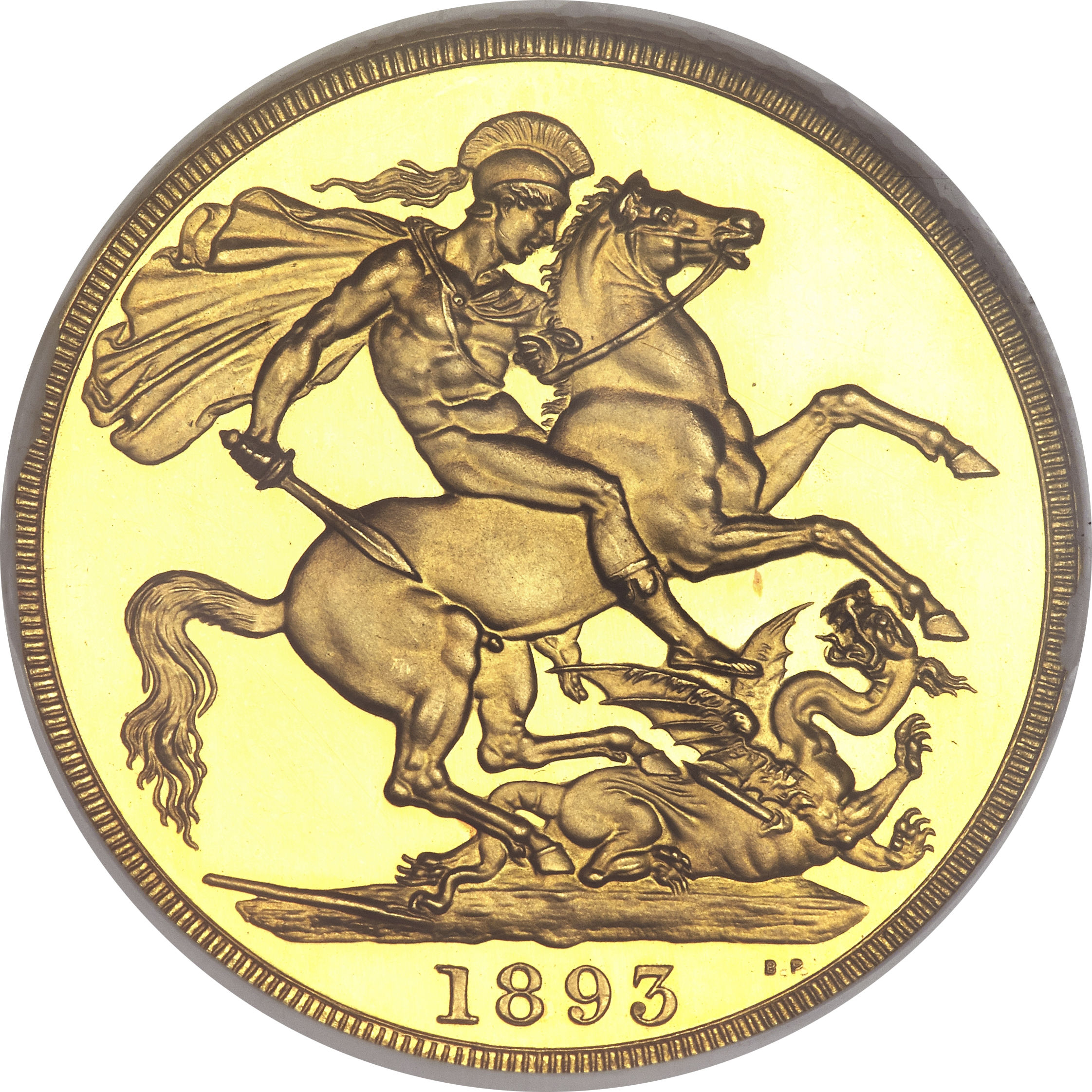
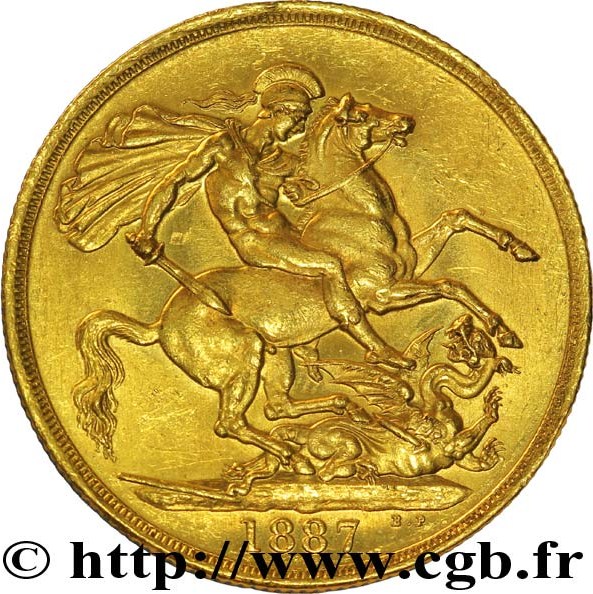
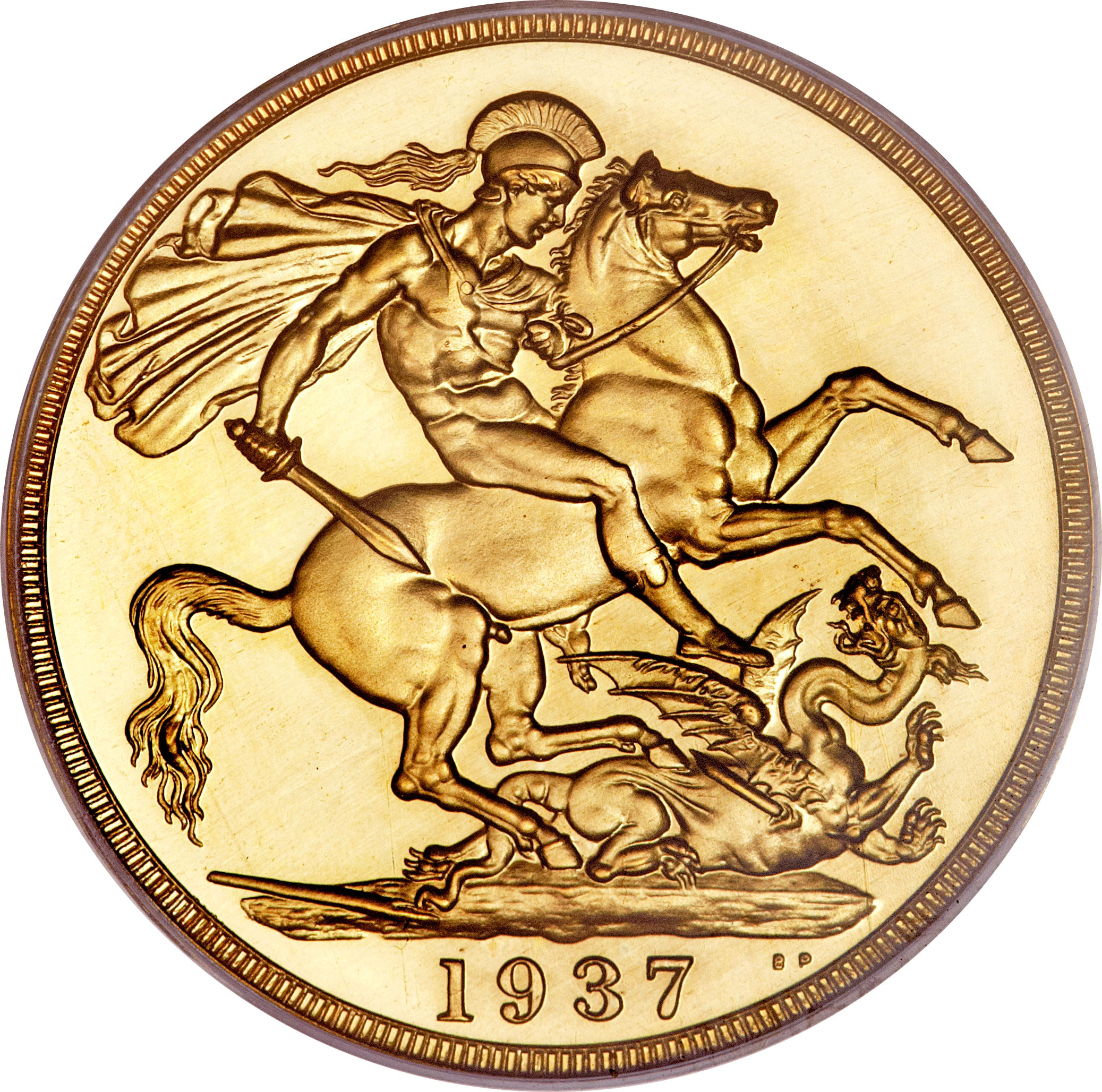
St. George on horseback slaying the dragon right, date in exergue.
2 Pounds - Edward VII market value
Find this on eBay
Affiliate2 Pounds - Edward VII price history
Daily limit reached2 Pounds - Edward VII value by grade
Realised auction prices · ⭐ Pro Expand rows for individual sale records| Grade | Latest | Median | 30d Δ | All-time range | Sales (1yr) | Total sales | Last sale | |
|---|---|---|---|---|---|---|---|---|
| FDC | £1,600.00 🔒 | £1,550.00 | – | £1,500.00 – £2,080.00 | 1 | 6 | 07-12-2025 | |
|
Loading…
|
||||||||
| UNC | £1,400.00 🔒 | £1,248.00 | – | £1,166.00 – £2,300.00 | 2 | 5 | 10-12-2025 | |
|
Loading…
|
||||||||
| BU | £1,200.00 🔒 | £1,087.50 (2) | – | £975.00 – £1,200.00 | 0 | 2 | 17-06-2025 | |
|
Loading…
|
||||||||
| EF | £30.00 🔒 | £1,050.00 | – | £30.00 – £1,404.00 | 1 | 5 | 28-04-2026 | |
|
Loading…
|
||||||||
| VF | £2,236.00 🔒 | £1,908.00 | – | £770.00 – £2,650.00 | 9 | 32 | 12-09-2026 | |
|
Loading…
|
||||||||
| G | £1,200.00 🔒 | £1,200.00 (1) | – | £1,200.00 – £1,200.00 | 0 | 1 | 06-03-2025 | |
|
Loading…
|
||||||||
| MS-61 | £1,800.00 🔒 | £1,800.00 (1) | – | £1,800.00 – £1,800.00 | 1 | 1 | 20-01-2026 | |
|
Loading…
|
||||||||
| MS-62 | £1,811.73 🔒 | £1,811.73 (1) | – | £1,811.73 – £1,811.73 | 1 | 1 | 06-09-2026 | |
|
Loading…
|
||||||||
| MS-63 | £1,806.00 🔒 | £1,500.00 | – | £1,300.00 – £1,806.00 | 1 | 5 | 02-09-2026 | |
|
Loading…
|
||||||||
| MS-64 | £2,264.66 🔒 | £2,340.15 (2) | – | £2,264.66 – £2,415.64 | 1 | 2 | 06-11-2025 | |
|
Loading…
|
||||||||
| PR-60 | £1,736.24 🔒 | £1,736.24 (1) | – | £1,736.24 – £1,736.24 | 1 | 1 | 03-08-2026 | |
|
Loading…
|
||||||||
| PR-61 | £1,321.05 🔒 | £1,377.67 | – | £981.35 – £1,585.26 | 0 | 4 | 08-09-2025 | |
|
Loading…
|
||||||||
| PR-62 | £2,000.00 🔒 | £1,725.00 | – | £1,200.00 – £2,000.00 | 2 | 4 | 02-07-2026 | |
|
Loading…
|
||||||||
| PR-63 | £2,300.00 🔒 | £1,750.00 | – | £1,509.78 – £2,300.00 | 0 | 4 | 30-09-2025 | |
|
Loading…
|
||||||||
| PR-64 | £3,321.51 🔒 | £2,642.11 | – | £2,189.17 – £3,321.51 | 2 | 5 | 26-01-2026 | |
|
Loading…
|
||||||||
| PR-65 | £1,500.00 🔒 | £1,935.00 | – | £900.00 – £6,039.10 | 8 | 20 | 28-09-2026 | |
|
Loading…
|
||||||||
| PR-66 | £9,000.00 🔒 | £9,000.00 (1) | – | £9,000.00 – £9,000.00 | 0 | 1 | 30-09-2025 | |
|
Loading…
|
||||||||
About the 1902 2 Pounds - Edward VII
The 1902 2 Pounds - Edward VII is a circulating 2 sovereigns coin, struck in 91.6% gold. It weighs 15.98g and measures 28.4mm across. Reverse design: St. George on horseback slaying the dragon right, date in exergue.
45,807 were struck.
Common questions
How much is the 1902 2 Pounds - Edward VII worth?
Verified sold prices for the 1902 2 Pounds - Edward VII run from £1,050 to £9,000 across 17 grades, taking the median for each grade. Condition makes the difference, so check the grade table above before pricing one. Its gold content is worth about £1,410 at today's spot price, which puts a floor under its value.
How many 1902 double sovereigns were made?
Coin Hunter gives 45,807 ordinary coins and 8,066 matt proofs for the 1902 £2. A very small number were also struck at the Sydney Mint with an S mint mark. No other Edward VII date exists for the denomination.
Did the 1902 £2 coin circulate?
It was issued for circulation, but few were used. Wikipedia records that 1902 was the last of only four years (1823, 1887, 1893 and 1902) in which the double sovereign was struck for commerce, and that few surviving examples show signs of circulation.
Is the 1902 double sovereign legal tender?
Yes. Wikipedia's sovereign article states that the double sovereign, like the sovereign, half sovereign and five-pound piece, is still legal tender in the United Kingdom, having survived decimalisation in 1971. It is never used in payment.
What is a matt proof double sovereign?
The proofs made for Edward VII's coronation in 1902 had a textured, low-reflective matt surface rather than the usual mirror polish. MJ Hughes Coins explains that all the gold coins in the coronation sets had this finish, which was experimental at the time.
How do I identify the 1902 2 Pounds - Edward VII?
Check the weight 15.98g and diameter 28.4mm and the metal (91.6% gold) against the specification table on this page. The reverse design is described above.
History and design
The double sovereign, worth two pounds, was rarely struck. Wikipedia quotes the numismatist G. P. Dyer's view that by 1893 the two and five-pound pieces could be regarded as "hardly more than ornaments". It was issued for circulation in only four years, and 1902 was the last of them.
A proclamation dated 10 December 1901, in force from 1 January 1902, set out the designs for Edward VII's gold. The double sovereign was struck only in 1902, in 22 carat gold, both as an ordinary coin and as a matt proof for the 13-coin coronation set. Coin Hunter gives 45,807 ordinary coins and 8,066 matt proofs, and Wikipedia notes that a very small number were also struck at Sydney.
The obverse carries George William de Saulles's bare-headed portrait of the King facing right, signed De S below the neck. Under the proclamation it shares the five-pound piece's inscription, EDWARDVS VII DEI GRA BRITT OMN REX FID DEF IND IMP. Wikipedia explains that OMN, short for omnium ("of all"), was added after BRITT in recognition of the empire's help in the Boer War.
The reverse is Benedetto Pistrucci's St George, armed and on horseback, attacking the dragon with a sword, with a broken spear on the ground and the date below. Wikipedia records that the Mint deliberately left the reverse of the gold coins unchanged in 1902. The edge is milled.
Varieties and errors
Matt proofs were struck for the coronation long set. Tony Clayton also records a Sydney matt proof, which he singles out as a rarity, and Sydney currency coins carry an S mint mark. No recognised mint errors are documented.
Collecting notes
MJ Hughes Coins explains that the coronation proofs came in an 11-coin short set and a 13-coin long set, and only the long set contained the £2 and £5. Separate the matt proof from a currency strike by its finish: the proof has a uniform, low-reflective textured surface.
Wikipedia observes that worn double sovereigns are hard to find, and that the ones showing circulation come from the four commercial years such as 1902. Like the sovereign, the coin remains legal tender. The 1902 £5 carries the same designs at a larger size.
Sources
The history, design, varieties and collecting notes on this page are drawn from these sources. Prices come from recorded sales, not from them.
- 1902 Coin Values, Edward VII, Coin Hunter (read 10 Oct 2026)
- Double sovereign, Wikipedia (read 10 Oct 2026)
- Proclamation determining new designs for gold and bronze coins, 10 December 1901 (London Gazette issue 27385, page 8713), The London Gazette (read 10 Oct 2026)
- Two Pounds: Double Sovereign, Tony Clayton, Coins of the UK (read 10 Oct 2026)
- 1902 Gold 5 Pound Matt Proof, MJ Hughes Coins (read 10 Oct 2026)
- Initials on British coins, TreasureRealm (read 10 Oct 2026)
- Sovereign (British coin), Wikipedia (read 10 Oct 2026)
More 2 Sovereigns coins from nearby years