2 Pounds - George IV Shield reverse (1824–1826)
| Country | United Kingdom |
| Year | 1824–1826 |
| Denomination | 2 Sovereigns |
| Face value | £2 |
| Mint | Royal Mint · Llantrisant |
| Circulation | Non-circulating |
| Demonetised | Yes |
| Composition | Gold (.9167) (917/1000 fine) |
| Weight | 15.980g · 0.4710 t oz |
| Diameter | 28.0mm |
| Shape | Round |
| Edge | Lettered: DECUS ET TUTAMEN ANNO REGNI SEPTIMO |
| Orientation | Coin alignment ↑↓ |
| Obv. artist | Francis Chantrey, William Wyon |
| Rev. artist | Jean Baptiste Merlen |
| Grade scale | UK (EF/UNC) |
Uncrowned portrait of King George IV left, legend around, date below.
GEORGIUS IV DEI GRATIA
© Heritage Auctions
BRITANNIARUM REX FID: DEF:
Find this on eBay
Affiliate2 Pounds - George IV Shield reverse price history
Daily limit reachedAbout the 1824 2 Pounds - George IV Shield reverse
The 1824 2 Pounds - George IV Shield reverse is a collector 2 sovereigns coin issued from 1824 to 1826, struck in 91.67% gold. It weighs 15.98g and measures 28mm across. Reverse design: © Heritage Auctions.
It is no longer legal tender, so its value is to collectors only.
Common questions
How much is the 1824 2 Pounds - George IV Shield reverse worth?
No verified sale of the 1824 2 Pounds - George IV Shield reverse has been logged on MyCoinage yet. Its gold content is worth about £1,411 at today's spot price, which puts a floor under its value.
Was the George IV shield back £2 coin ever issued for circulation?
No. The double sovereigns dated 1824, 1825 and 1826 were struck only as patterns and proofs, the 1826 for that year's proof set. The only George IV double sovereign made for circulation is the 1823 coin with Pistrucci's St George reverse.
How many 1826 proof double sovereigns were struck?
There is no official figure. A 2013 Ponterio auction catalogue gave a reported 450 examples, while Baldwin's says mintages for the 1826 proof sets are usually estimated at between 150 and 225. No figures are published for 1824 or 1825.
Who designed the shield reverse double sovereign?
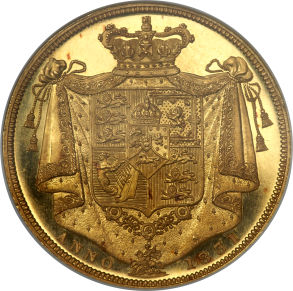
The bare head was engraved by William Wyon after a bust by Francis Chantrey, and the crowned shield of arms on a mantle is by Jean Baptiste Merlen. Merlen's reverse replaced St George after the new Master of the Mint, Thomas Wallace, disliked several existing designs.
How can you tell the 1824, 1825 and 1826 double sovereigns apart?
By the date under the head and the edge. The 1826 proof has DECUS ET TUTAMEN ANNO REGNI SEPTIMO on the edge; the 1825 has no edge inscription. The 1824 is a pattern, recorded in gold and in copper, with a slightly different hair arrangement.
How do I identify the 1824 2 Pounds - George IV Shield reverse?
Check the weight 15.98g and diameter 28mm and the metal (91.67% gold) against the specification table on this page. The reverse design is described above.
History and design
The double sovereign was authorised in the 1816 recoinage but struck for circulation under George IV only in 1823, with Pistrucci's St George reverse. By the mid-1820s the king, unhappy with Pistrucci's portrait, wanted a new one from a bust by Francis Chantrey, and the new Master of the Mint, Thomas Wallace, had Jean Baptiste Merlen prepare new reverses because he disliked several of the existing designs.
This shield-back double sovereign is the result. It was never put into circulation. Pieces dated 1824 are patterns, 1825 is a rare proof with a plain edge, and the 1826 coin was struck for the proof set of that year. No official mintage survives: one auction catalogue reported 450 proofs of 1826, while Baldwin's gives 150 to 225 as the usual estimate for the 1826 sets.
The obverse is a bare head of George IV facing left, engraved by William Wyon after Chantrey's bust, with the legend GEORGIUS IV DEI GRATIA and the date below. On the 1824 pattern the hair is arranged differently and the date sits between two rosettes close to the border.
Merlen's reverse shows the quartered royal arms with the arms of Hanover on an escutcheon, crowned and set on an ermine mantle, with the legend BRITANNIARUM REX FID: DEF:. The 1826 proof's edge reads DECUS ET TUTAMEN ANNO REGNI SEPTIMO, the seventh year of the reign; the 1825 has no edge inscription.
Varieties and errors
The three dates differ in status and edge. The 1824 is catalogued as a pattern (Wilson and Rasmussen 221), and the Royal Mint Museum's example is struck in copper with a plain edge; bronzed copper and gold pieces are also recorded. The 1825 gold proof is rated R6 by Wilson and Rasmussen. The 1826 proof, WR 228, carries the SEPTIMO edge.
Collecting notes
The 1826 proof is the date most likely to be met. It should show mirrored fields, frosted devices and the full SEPTIMO edge, and the date under the head should be checked against the edge. The 1824 and 1825 pieces are much rarer, and copper or bronzed 1824 patterns are a separate striking from the gold.
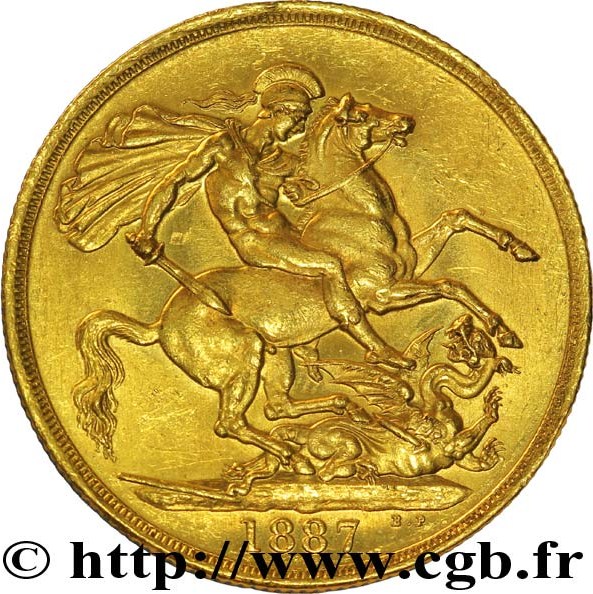
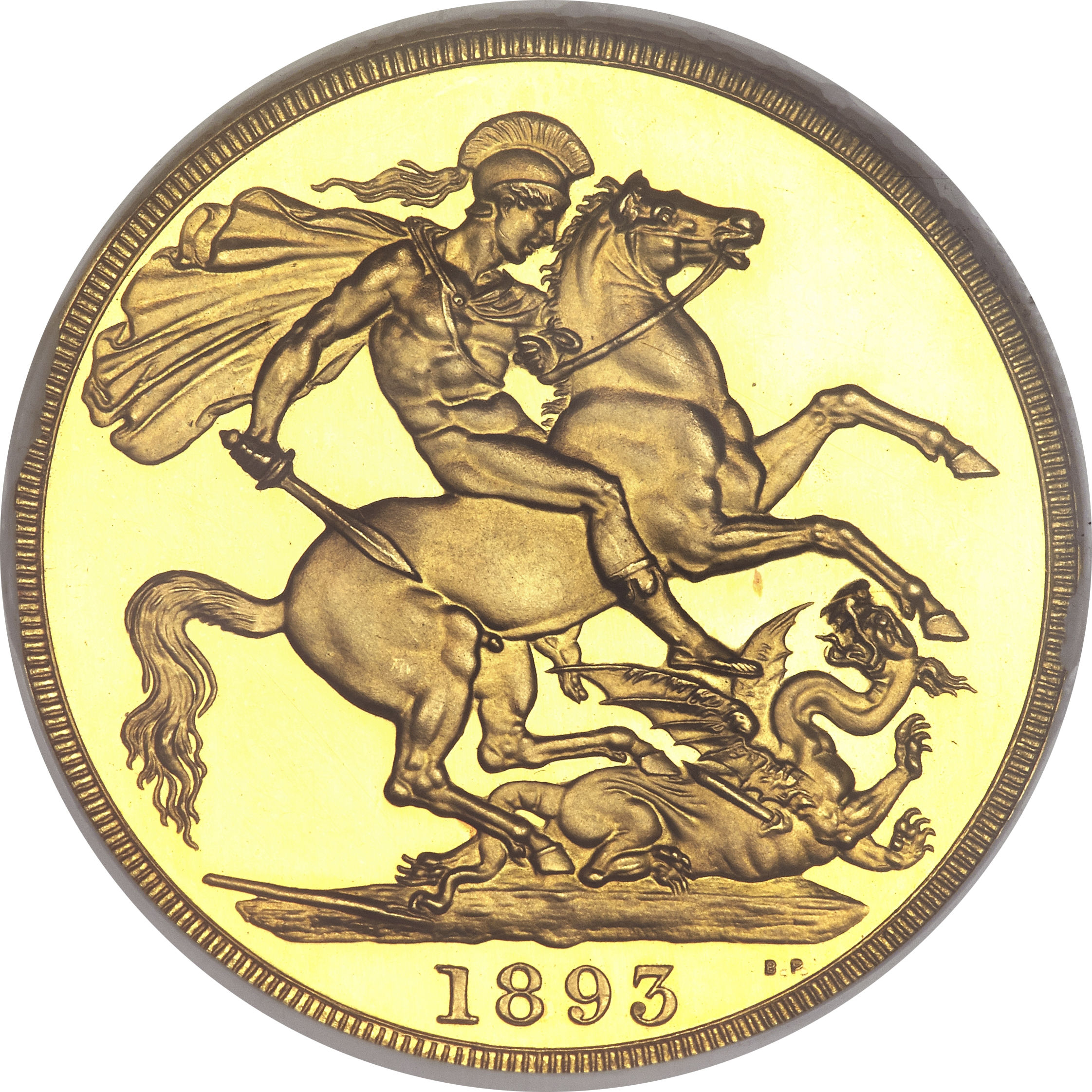
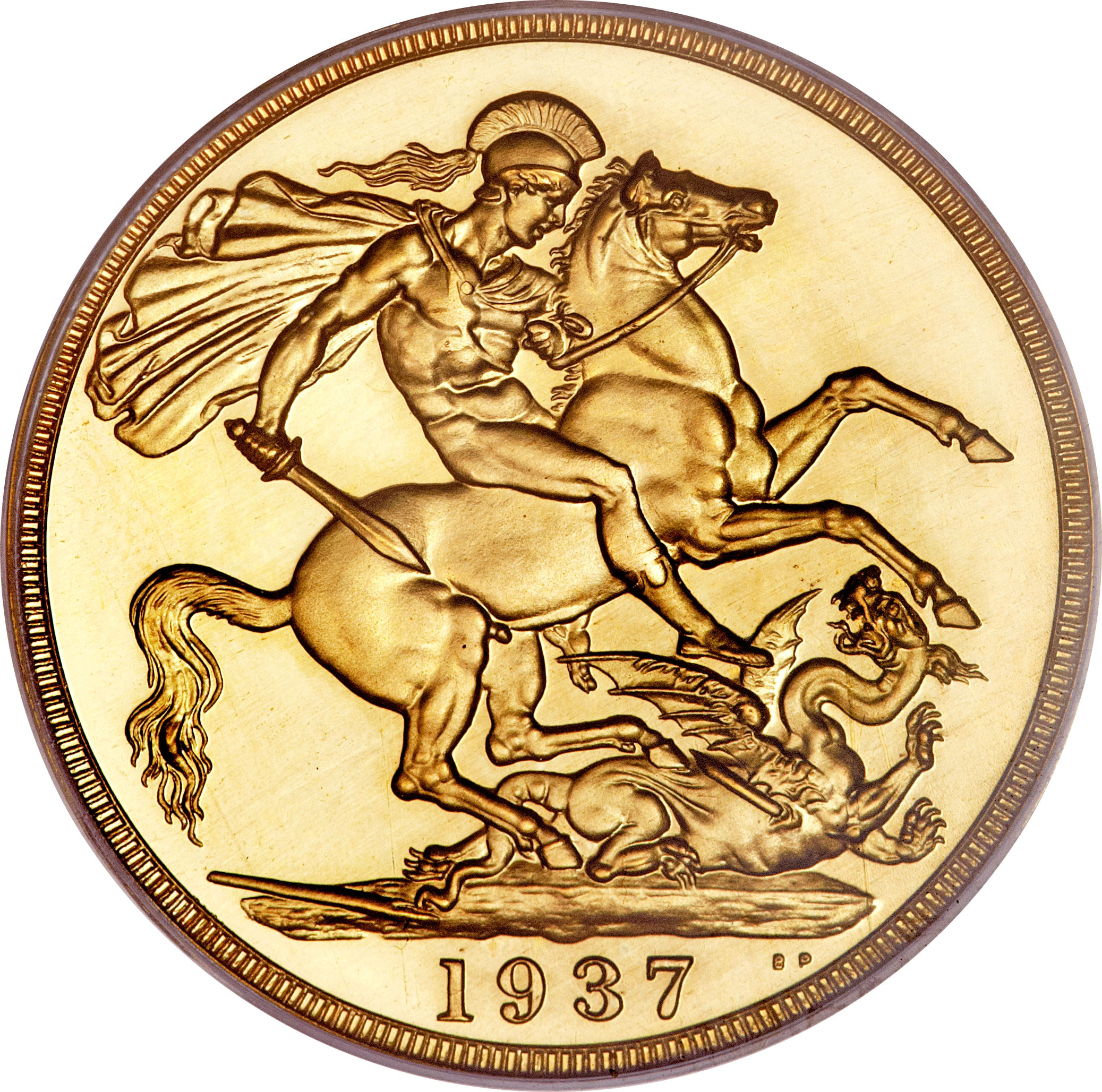
The circulating double sovereign of the reign is the 1823 St George coin. The 1826 proof set also contained the 1826 five pounds.
Sources
The history, design, varieties and collecting notes on this page are drawn from these sources. Prices come from recorded sales, not from them.
- Double sovereign, Wikipedia (read 12 Oct 2026)
- 1826 George IV Gold Proof Five Pounds, Baldwin's (read 12 Oct 2026)
- George IV pattern two pounds, 1824 (RMM 1294), The Royal Mint Museum, via Museum Data Service (read 12 Oct 2026)
- George IV 1824 bronzed copper Pattern Two-Pounds PR63, Sovereign Rarities (read 12 Oct 2026)
- Great Britain 1826 2 pounds, CoinVarieties (read 12 Oct 2026)
- George IV proof two pounds, 1826 (RMM 1295), The Royal Mint Museum, via Museum Data Service (read 12 Oct 2026)
- Great Britain 1824 2 pounds, CoinVarieties (read 12 Oct 2026)
- Two Pounds (gold coins), Tony Clayton, Coins of the UK (read 12 Oct 2026)
- Great Britain 1825 2 pounds, CoinVarieties (read 12 Oct 2026)
- Sovereign (British coin), Wikipedia (read 12 Oct 2026)
More 2 Sovereigns coins from nearby years