Scarce: fewer than 2,000,000 minted.
2 Pence - Victoria 1st portrait Colonial and Maundy issues (1838–1887)
| Country | United Kingdom |
| Year | 1838–1887 |
| Denomination | 2 Pence |
| Mintage by year |
Scarcest year: 261,000 struck
|
| Mint | Royal Mint · Llantrisant |
| Series | Maundy Money |
| Circulation | Non-circulating |
| Composition | Silver (.925) (925/1000 fine) |
| Weight | 0.940g · 0.0280 t oz |
| Diameter | 13.0mm |
| Shape | Round |
| Orientation | Coin alignment ↑↓ |
| Obv. artist | William Wyon |
| Rev. artist | Jean Baptiste Merlen |
| Grade scale | UK (EF/UNC) |
Young uncrowned portrait ('Young Head') of Queen Victoria left, legend around.
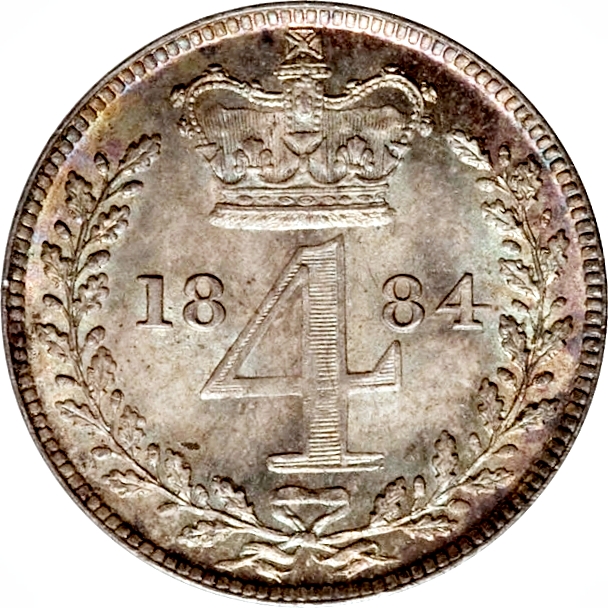
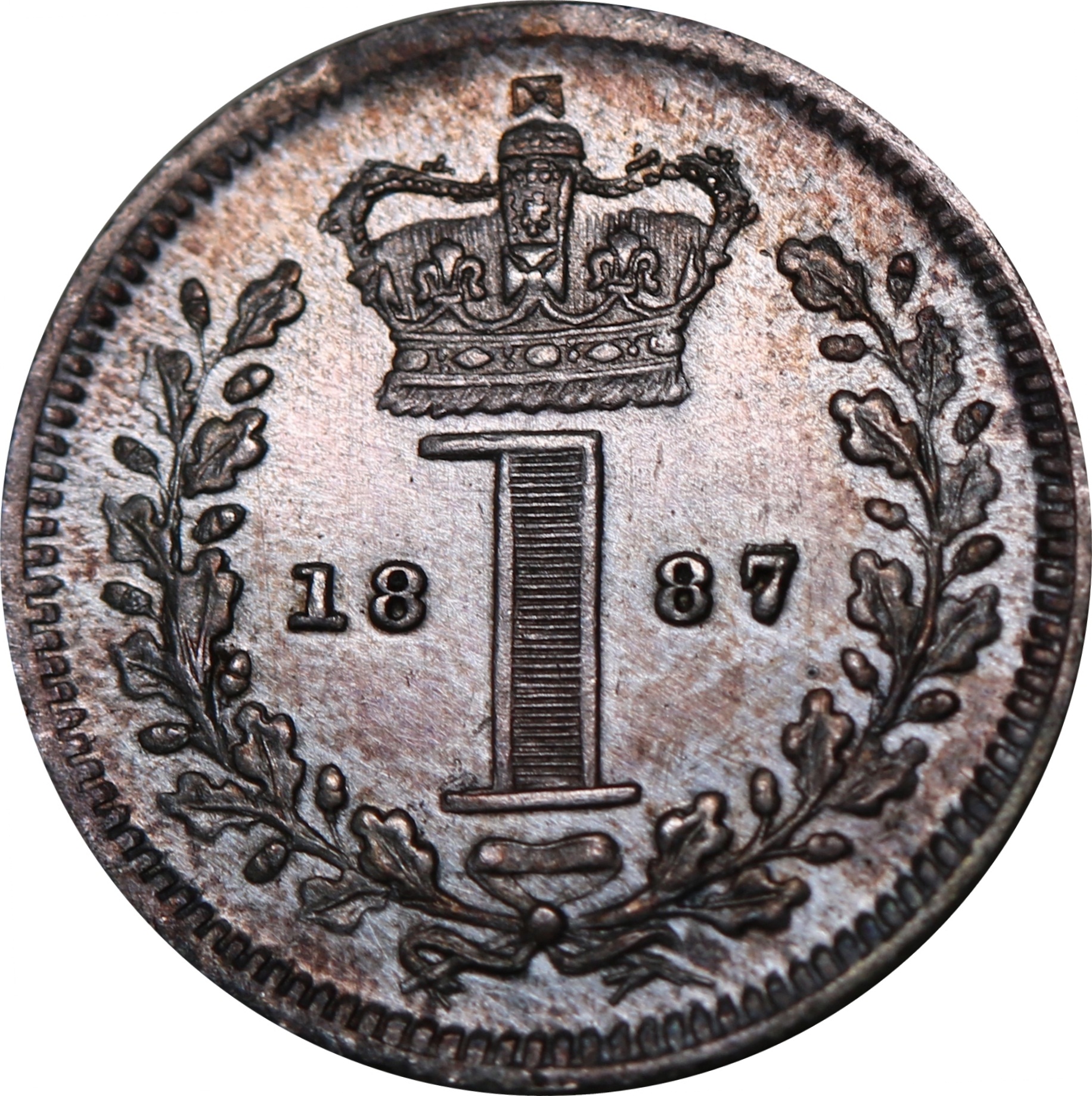
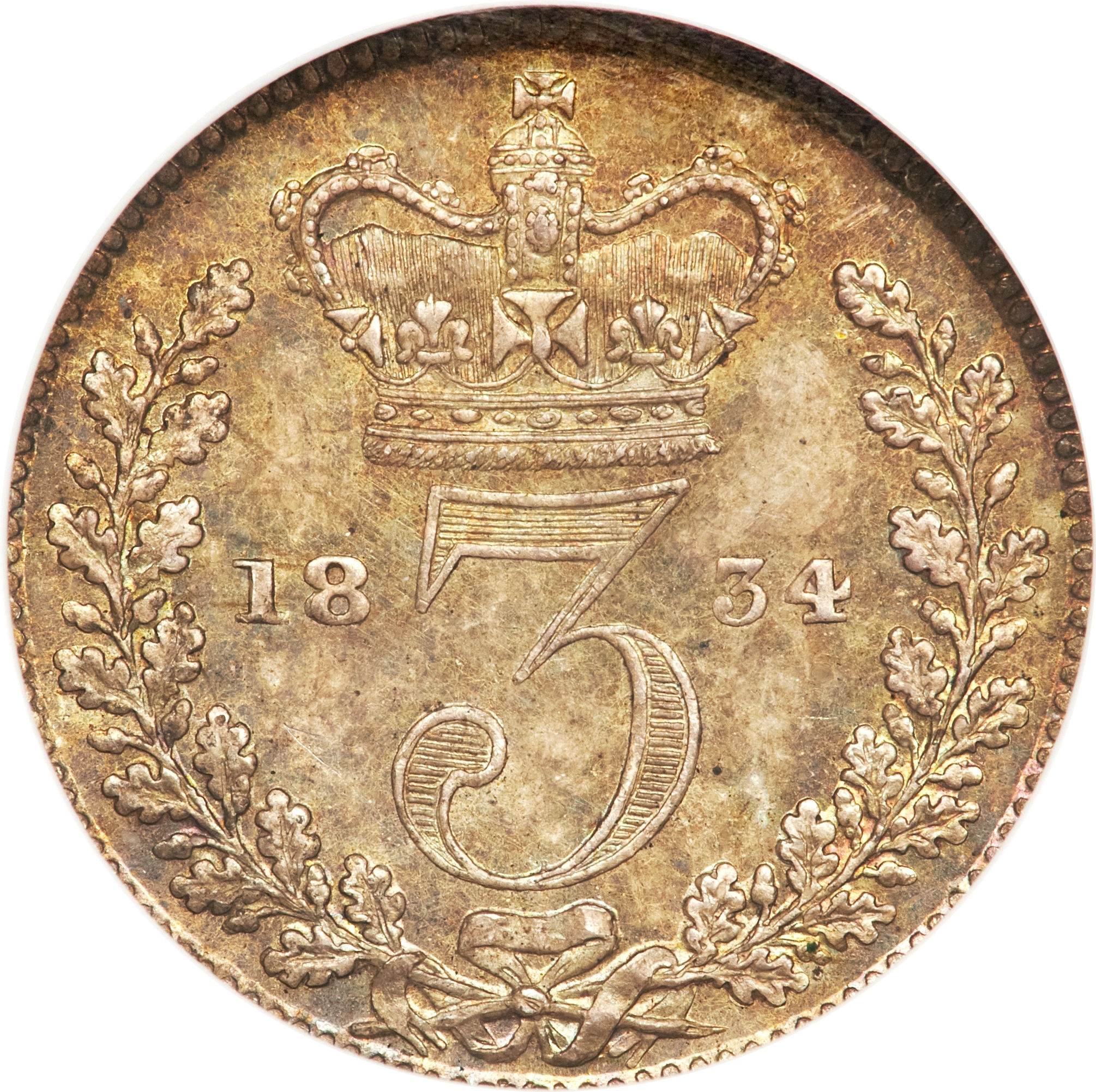
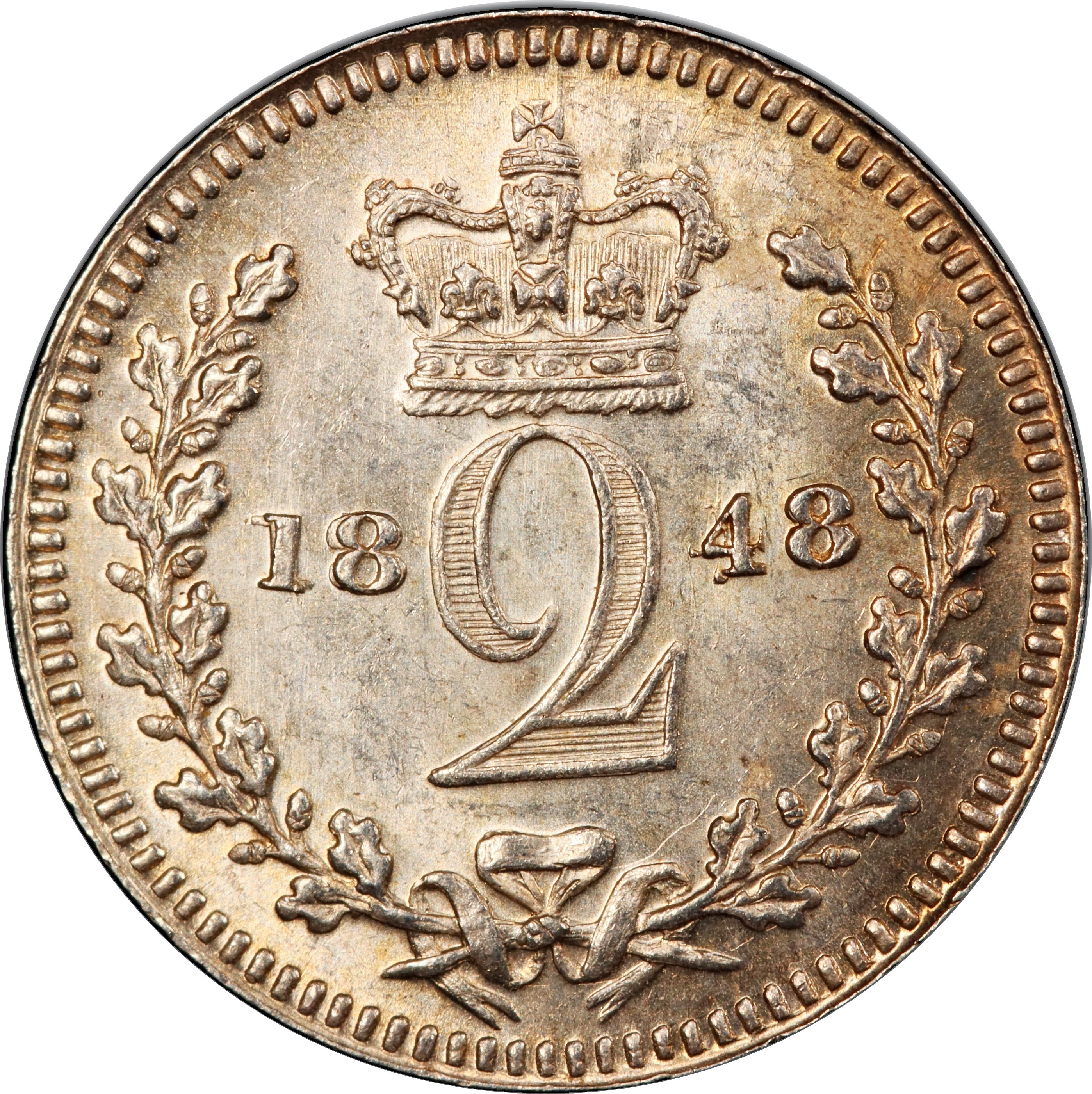
Crowned denomination dividing date within oak wreath.
Find this on eBay
AffiliateColonial and Maundy issues 2p price history
Daily limit reachedColonial and Maundy issues 2p value by year
1838 to 1848 · median sold prices| Year | Mintage | Circulated | Uncirculated | Sales | |
|---|---|---|---|---|---|
| 1838 | 1,045,000 | ||||
| 1843 | 903,000 | ||||
| 1848 scarcest | 261,000 |
One row for each year the 2 Pence - Victoria 1st portrait – Colonial and Maundy issues was struck. Prices are medians of verified sold listings matched to that year from the listing: circulated is worn condition up to Extremely Fine, uncirculated is About Uncirculated or better. A count in brackets means fewer than three sales behind the figure; a grey figure marked "type" is the median across every year, shown where that year has no sale of its own yet; years with no sales yet fill in as sales are recorded. Most types have been searched year by year only since October 2026, so later years are still filling in. Use the grade table below for a price by condition across all years.
About the 1838 2 Pence - Victoria – Colonial and Maundy issues
The 1838 2 Pence - Victoria – Colonial and Maundy issues is a collector 2 pence coin issued from 1838 to 1887 in the Maundy Money series, struck in 92.5% silver. It weighs 0.94g and measures 13mm across. Reverse design: Crowned denomination dividing date within oak wreath.
Mintage figures are recorded for 3 years between 1838 and 1848, 2,209,000 coins in all. 1848 is the scarcest date, with 261,000 struck.
Common questions
How much is the 1838 2 Pence - Victoria – Colonial and Maundy issues worth?
No verified sale of the 1838 2 Pence - Victoria – Colonial and Maundy issues has been logged on MyCoinage yet. Its silver content is worth about £1.12 at today's spot price, which puts a floor under its value.
Was the Victorian silver twopence ever a circulating coin?
Only for the colonies. Wikipedia's Royal Maundy article, citing Coincraft, records twopences identical to the Maundy pieces struck for colonial use in 1838, 1843 and 1848. CoinVarieties says they went to British Guiana and the Caribbean. Every other date was struck only for the Maundy ceremony.
How many Young Head Maundy twopences were made each year?
CoinVarieties, quoting Krause, gives 4,488 for 1839 and 1842, 4,752 for each year checked from 1853 to 1869, and figures rising to 9,167 by 1886. The numbers grew because the Maundy gift matched the monarch's age and because sets were also sold.
Is a Victorian Maundy twopence legal tender?
Wikipedia's Royal Maundy article, citing Coincraft, says all Maundy coins, before and after 1971, are by law treated as denominated in new pence. A Young Head twopence is therefore legal tender for 2p, though in practice it never circulates.
Who designed the Young Head twopence?
William Wyon made the Young Head portrait, which the Royal Mint credits on its Victorian Maundy set listings. The crowned 2 in an oak wreath on the reverse is Jean Baptiste Merlen's design of 1822, used on the Maundy coins ever since.
How do I identify the 1838 2 Pence - Victoria – Colonial and Maundy issues?
Check the weight 0.94g and diameter 13mm and the metal (92.5% silver) against the specification table on this page. The reverse design is described above.
History and design
By Victoria's reign the silver twopence had long since ceased to be everyday money in Britain. It survived because it was one of the four Maundy coins, given each Maundy Thursday to elderly recipients in a number matching the monarch's age. The Royal Mint Museum notes that money allowances replaced the old gifts of food and clothing in the 19th century.
This entry also covers a small colonial use. Wikipedia's Royal Maundy article, citing Coincraft, records twopences identical to the Maundy pieces struck for colonial use in 1838, 1843 and 1848, and CoinVarieties says they went to British Guiana and the Caribbean. Maundy output itself was small: CoinVarieties, quoting Krause, gives 4,488 for 1839, 4,752 in the 1850s and 1860s, and 9,167 by 1886. Wikipedia notes that in the 19th century far more pieces were struck than the ceremony needed, and that from 1846 the Queen asked for pieces for her own use.
The obverse carries William Wyon's Young Head of the Queen, the portrait the Royal Mint credits on its Victorian Maundy set listings. The Royal Mint Museum records the Queen telling Wyon, "You always represent me favourably."
The reverse is a crowned figure 2 within an oak wreath, with the date. Wikipedia credits this design to Jean Baptiste Merlen in 1822. Throughout the Young Head years it kept the earlier crown and the original shape of the 2, both of which were redrawn in 1888. The coin is sterling silver, 13 mm across.
Collecting notes
Tony Clayton notes that Victorian Maundy sets are relatively common because anyone could order them through a bank, and that Maundy pieces after 1820 rarely turn up in worse than very fine condition. CoinVarieties makes the same point: sets were kept, so the coins are easier to find than the small mintages suggest.
The colonial strikes of 1838, 1843 and 1848 cannot be told from Maundy pieces by design, so attribution rests on the date alone. The later Jubilee Head Maundy twopence shows the redrawn 2 for comparison.
Sources
The history, design, varieties and collecting notes on this page are drawn from these sources. Prices come from recorded sales, not from them.
- Royal Maundy, Wikipedia (read 10 Oct 2026)
- Great Britain 1839 to 1886 2 pence (pages read one by one), CoinVarieties (read 10 Oct 2026)
- Maundy Money (shop listing including Victoria Maundy sets of 1872 to 1881), The Royal Mint (read 10 Oct 2026)
- Maundy Money, Tony Clayton, Coins of the UK (read 10 Oct 2026)
- The Wyons: A Dynasty of Engravers, Royal Mint Museum (read 10 Oct 2026)
- Maundy Money, Royal Mint Museum (read 10 Oct 2026)
More from Maundy Money