Legendary: fewer than 100 minted.
3 Pence - Victoria 1st portrait incl. Maundy and Colonial (1838–1887)
"Threepenny bit"
| Country | United Kingdom |
| Year | 1838–1887 |
| Denomination | 3 Pence |
| Mintage | 1,200,000 |
| Mint | Royal Mint · Llantrisant |
| Series | Maundy Money |
| Circulation | Non-circulating |
| Composition | Silver (.925) (925/1000 fine) |
| Weight | 1.410g · 0.0419 t oz |
| Diameter | 16.0mm |
| Thickness | 0.60mm |
| Shape | Round |
| Edge | Plain |
| Orientation | Coin alignment ↑↓ |
| Obv. artist | William Wyon |
| Rev. artist | Jean Baptiste Merlen |
| Grade scale | UK (EF/UNC) |
Uncrowned portrait ('Young Head') of Queen Victoria left, legend around.
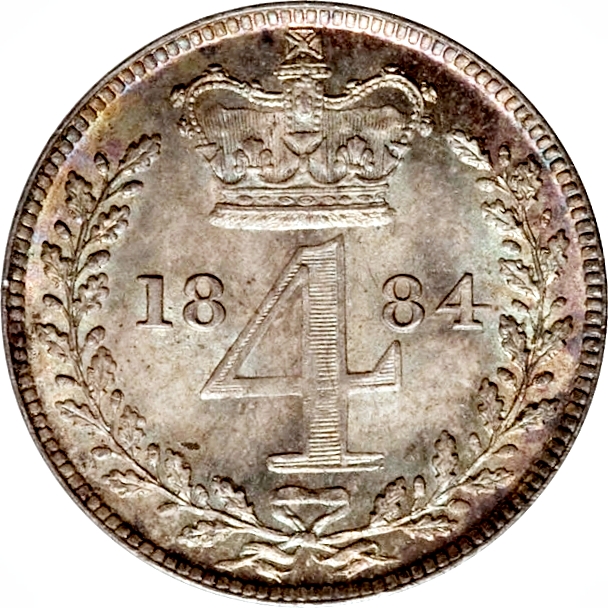
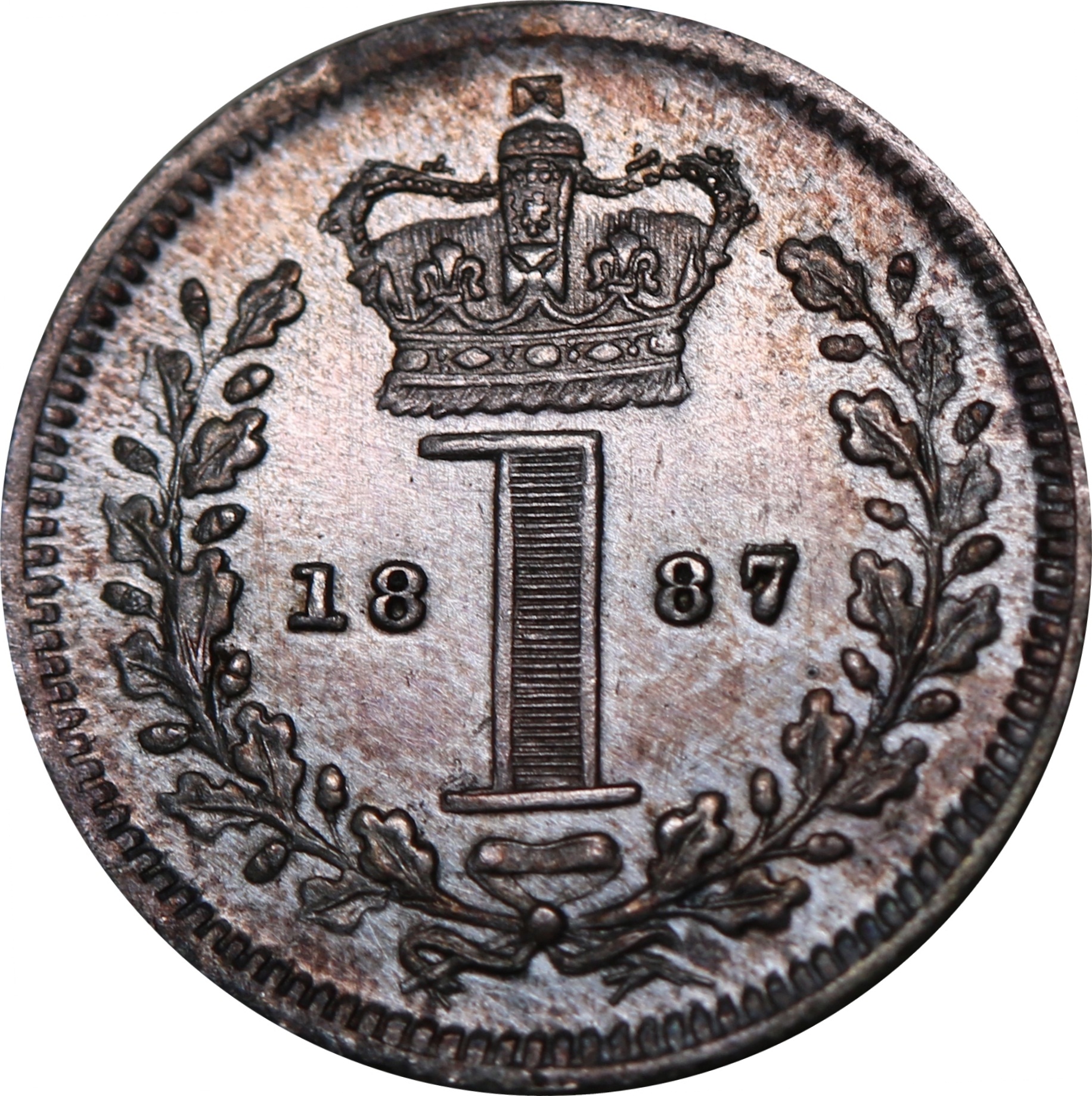
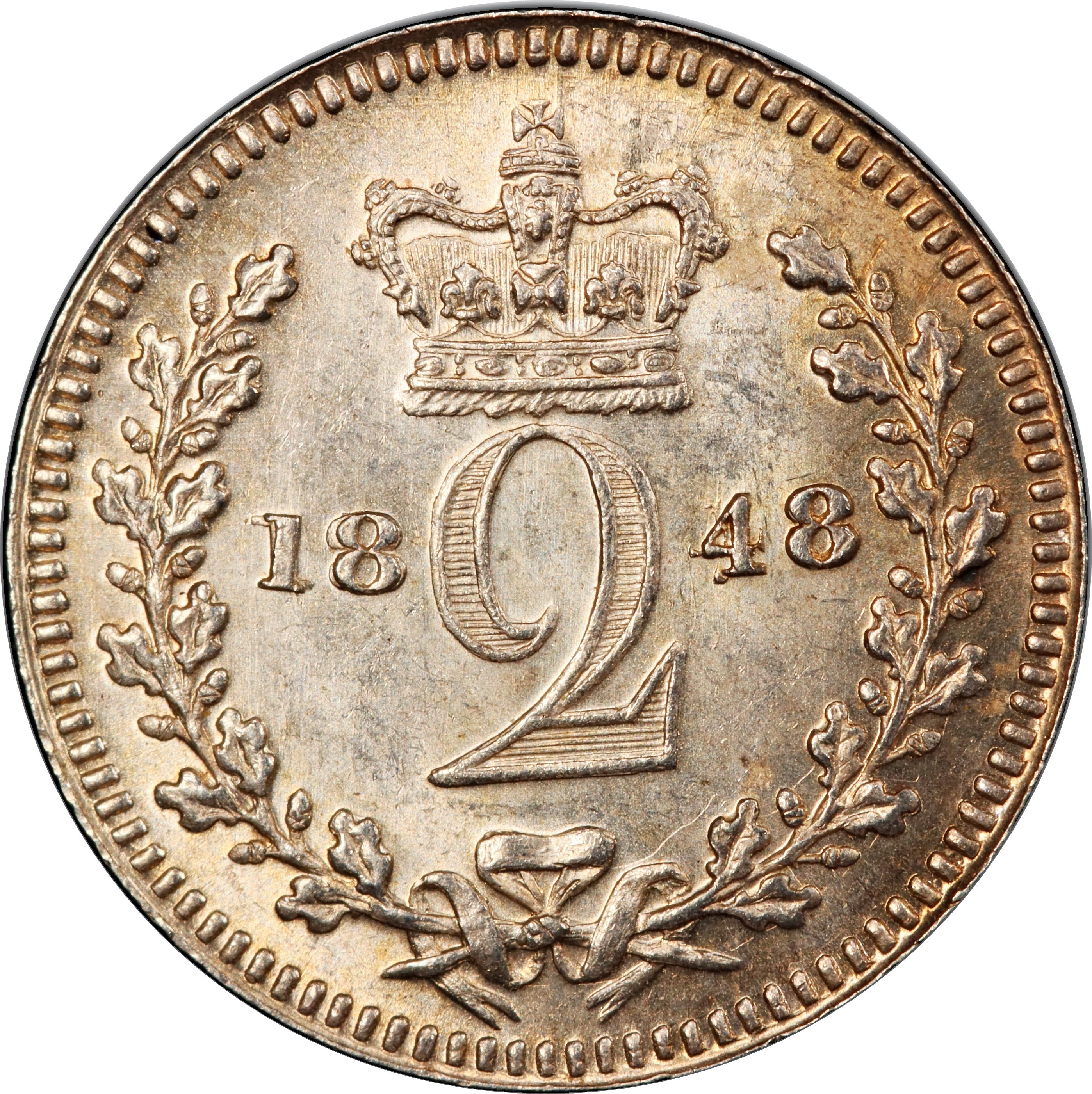
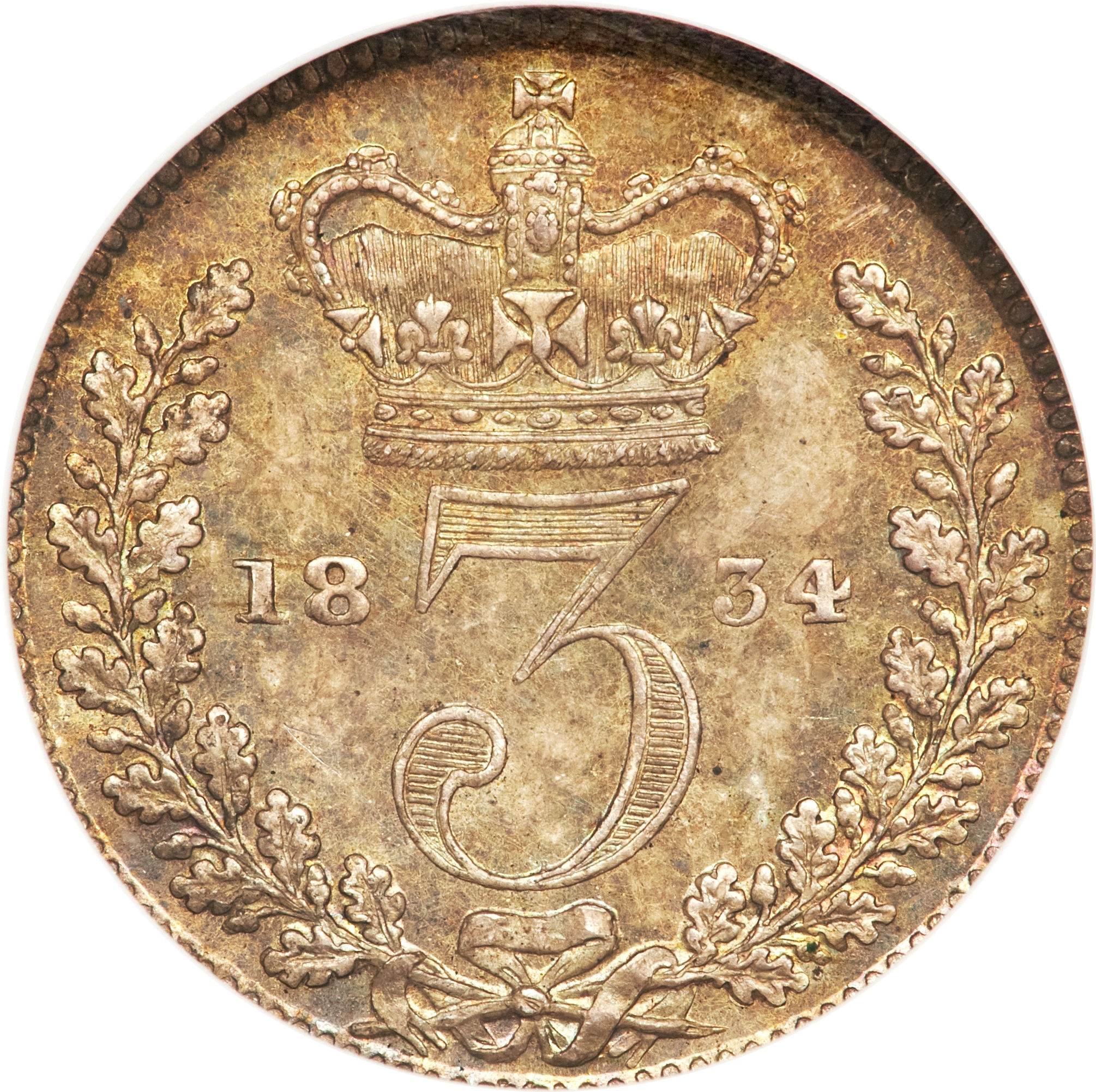
Crowned denomination divides date within oak wreath.
Find this on eBay
Affiliateincl. Maundy and Colonial Threepence price history
Daily limit reachedAbout the 1838 3 Pence - Victoria – incl. Maundy and Colonial
The 1838 3 Pence - Victoria – incl. Maundy and Colonial is a collector 3 pence coin issued from 1838 to 1887 in the Maundy Money series, struck in 92.5% silver. It weighs 1.41g and measures 16mm across. Reverse design: Crowned denomination divides date within oak wreath.
A mintage of 1,200,000 is recorded for one date of this type; figures for each year are not held.
Common questions
How much is the 1838 3 Pence - Victoria – incl. Maundy and Colonial worth?
No verified sale of the 1838 3 Pence - Victoria – incl. Maundy and Colonial has been logged on MyCoinage yet. Its silver content is worth about £1.67 at today's spot price, which puts a floor under its value.
When did the threepence start circulating in Britain?
In 1845. Before that the Young Head threepence was struck for the Maundy ceremony and, as currency, for the colonies, first the West Indies. Wikipedia and the Royal Mint Museum both date its issue for general circulation in Britain to 1845, when it began to be struck in large numbers.
Which Young Head threepence dates are scarce?
On Coin Hunter's figures the lowest currency dates are 1853 (36,168), 1846 (52,008) and 1849 (131,208). Wikipedia says no currency threepences were struck in 1847, 1848 or 1852, so those dates exist mainly as Maundy pieces. Most dates from 1859 run into millions.
How can I tell a Maundy threepence from a currency one?
The design is identical. Wikipedia notes that Maundy dies had a more highly polished field, and Tony Clayton says the depth of striking is the best clue. Heavy wear suggests a currency coin, though Wikipedia notes many Maundy threepences were spent.
Was the Victorian silver threepence revalued at decimalisation?
Wikipedia says that in 1971 all silver threepences from 1870 onwards were revalued at three new pence, not just the Maundy coins. Tony Clayton says silver threepences of the Maundy design were revalued at three new pence. Neither gives a separate rule for earlier dates.
How do I identify the 1838 3 Pence - Victoria – incl. Maundy and Colonial?
Check the weight 1.41g and diameter 16mm and the metal (92.5% silver) against the specification table on this page. The reverse design is described above.
History and design
For its first seven years Victoria's threepence was not a British circulating coin. It was struck each year for the Royal Maundy and, in larger numbers, for the colonies: Wikipedia's Royal Maundy article says the currency pieces were first meant for the West Indies. CoinVarieties, quoting Krause, gives 1,200,000 for 1838. In 1845 the Royal Mint began issuing it for general circulation in Britain, and the Royal Mint Museum notes the move succeeded, helped by the bulk of the copper coinage.
Coin Hunter's figures for currency coins from 1845 to 1886 (1869 has none) total about 78.3 million, rising from tens of thousands in the late 1840s to over six million in 1886. The lowest are 1853 (36,168), 1846 (52,008) and 1849 (131,208). Wikipedia says no currency threepences were struck in 1847, 1848 or 1852, possibly because a decimal coinage was then being considered. Maundy pieces added about 4,500 a year.
The obverse is William Wyon's Young Head with the legend VICTORIA D G BRITANNIAR REGINA F D. The Royal Mint Museum calls it his most famous design and records the Queen telling him, "You always represent me favourably."
The reverse is a crowned 3 within an oak wreath with the date, Jean Baptiste Merlen's Maundy design of 1822. Currency and Maundy coins share it exactly. The coin is sterling silver, 16 mm across, with a plain edge that distinguished it from the milled groat.
Varieties and errors
Tony Clayton picks out three legend and date errors: 1858 BRITANNIAB, 1868 RRITANNIAR, and an 1851 die with a 5 for the 8, reading 1551. Coin Hunter also lists BRITANNIAB for 1838 and several overdates, including 1843/34 and 1858/6.
Collecting notes
Clayton says the depth of strike is the best way to separate Maundy from currency pieces; Wikipedia adds that Maundy dies had more polished fields. Wikipedia also notes that many Maundy threepences given to poor recipients were spent, making them scarcer than the other Maundy values.
Check BRITANNIAR letter by letter under magnification. The Jubilee Head threepence follows from 1887.
Sources
The history, design, varieties and collecting notes on this page are drawn from these sources. Prices come from recorded sales, not from them.
- Threepence (British coin), Wikipedia (read 10 Oct 2026)
- Coin values by year, Victoria (year pages 1838 to 1887, read one by one), Coin Hunter (read 10 Oct 2026)
- Royal Maundy, Wikipedia (read 10 Oct 2026)
- Great Britain 1838 to 1886 3 pence (pages read one by one), CoinVarieties (read 10 Oct 2026)
- Three Pence, Tony Clayton, Coins of the UK (read 10 Oct 2026)
- The Wyons: A Dynasty of Engravers, Royal Mint Museum (read 10 Oct 2026)
- Fourpence (British coin), Wikipedia (read 10 Oct 2026)
- Threepence, Royal Mint Museum (read 10 Oct 2026)
More from Maundy Money