Rare: fewer than 500,000 minted.
4 Pence - Victoria 1st portrait Maundy issues (1838–1887)
"Maundy groat"
| Country | United Kingdom |
| Year | 1838–1887 |
| Denomination | 4 Pence |
| Mintage | 4,158 |
| Mint | Royal Mint · Llantrisant |
| Series | Maundy Money |
| Circulation | Non-circulating |
| Composition | Silver (.925) (925/1000 fine) |
| Weight | 1.890g · 0.0562 t oz |
| Diameter | 18.0mm |
| Shape | Round |
| Orientation | Coin alignment ↑↓ |
| Obv. artist | William Wyon |
| Rev. artist | Jean Baptiste Merlen |
| Grade scale | UK (EF/UNC) |
Young uncrowned portrait ('Young Head') of Queen Victoria left, legend around.
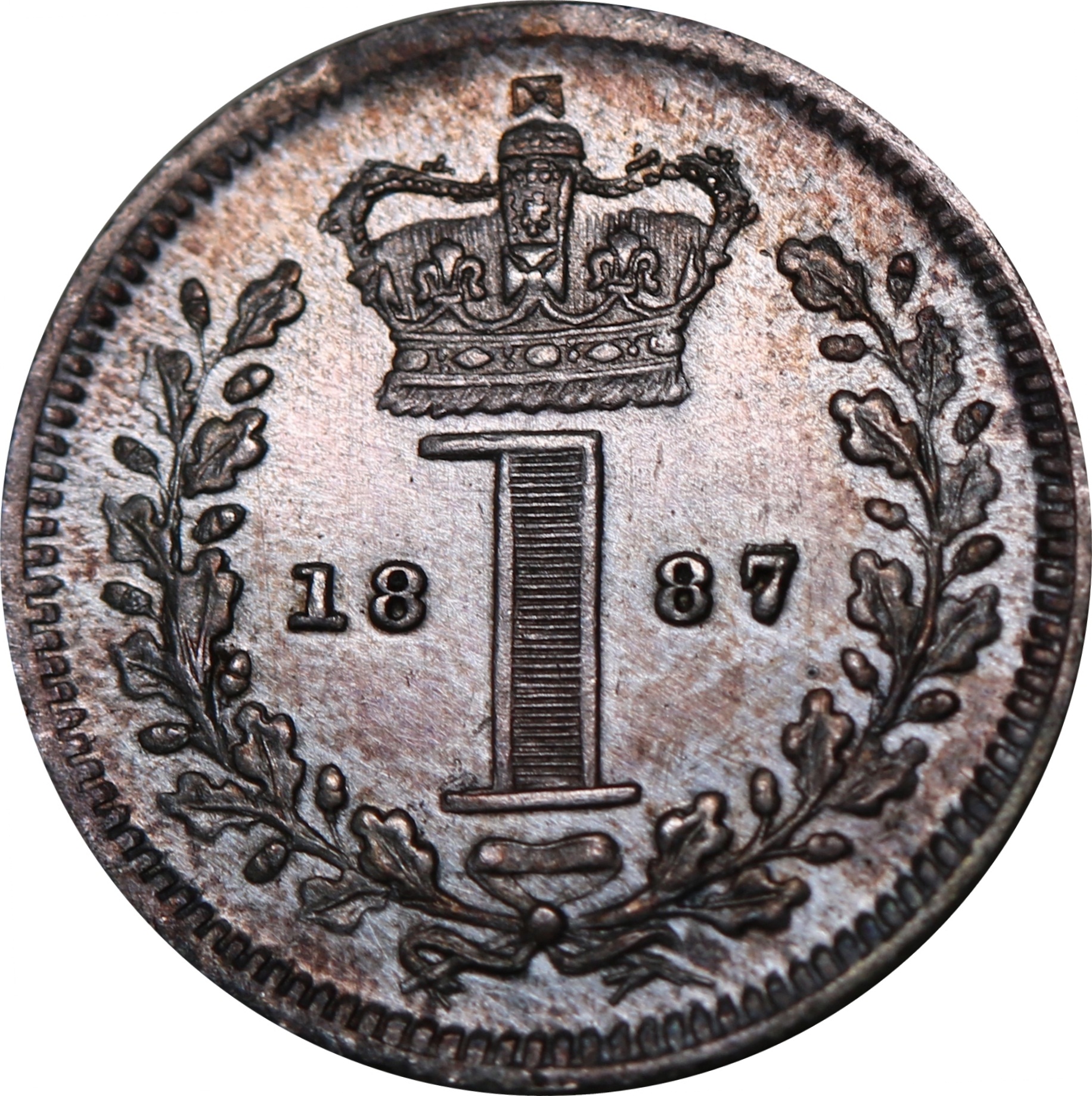
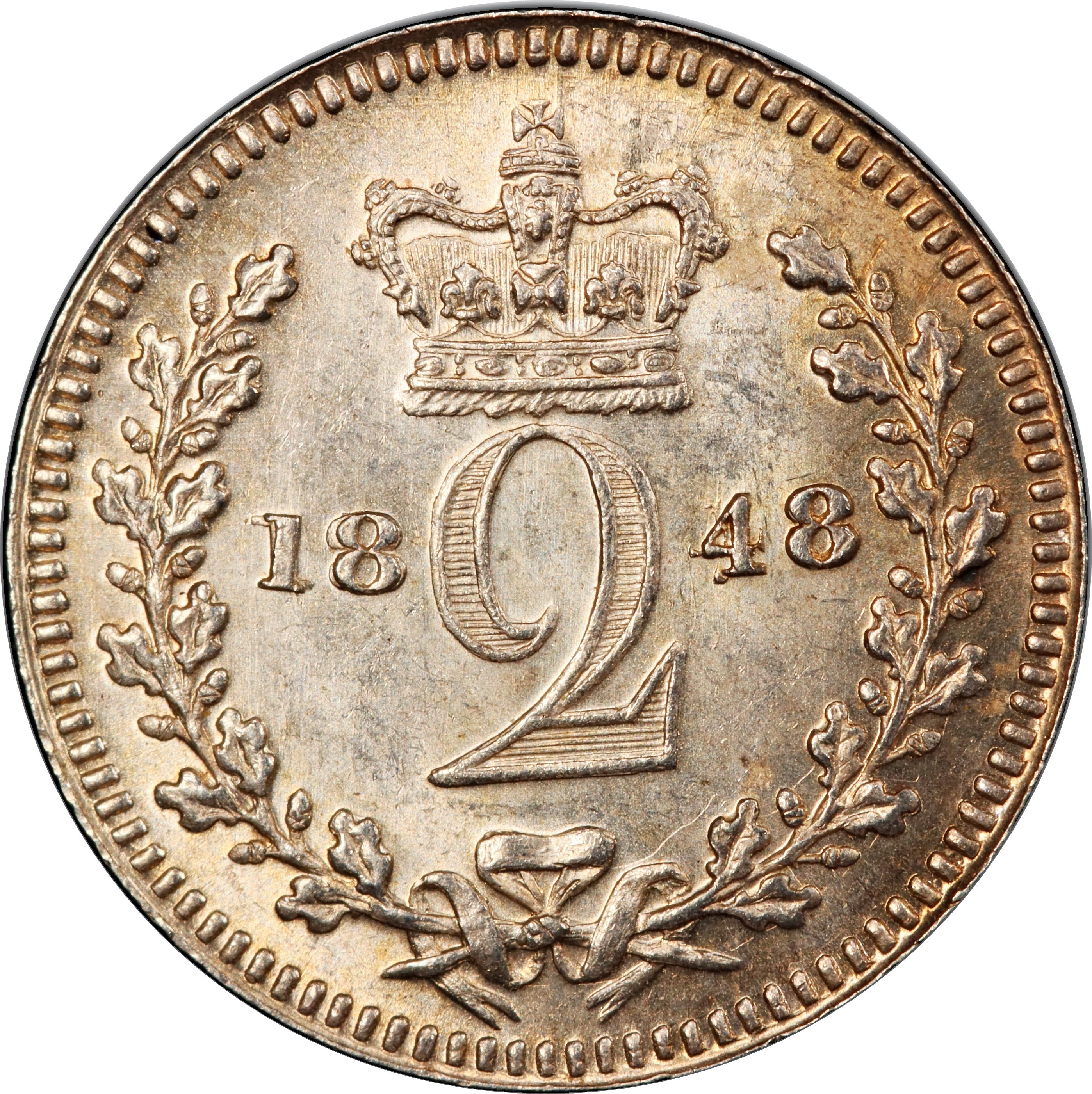
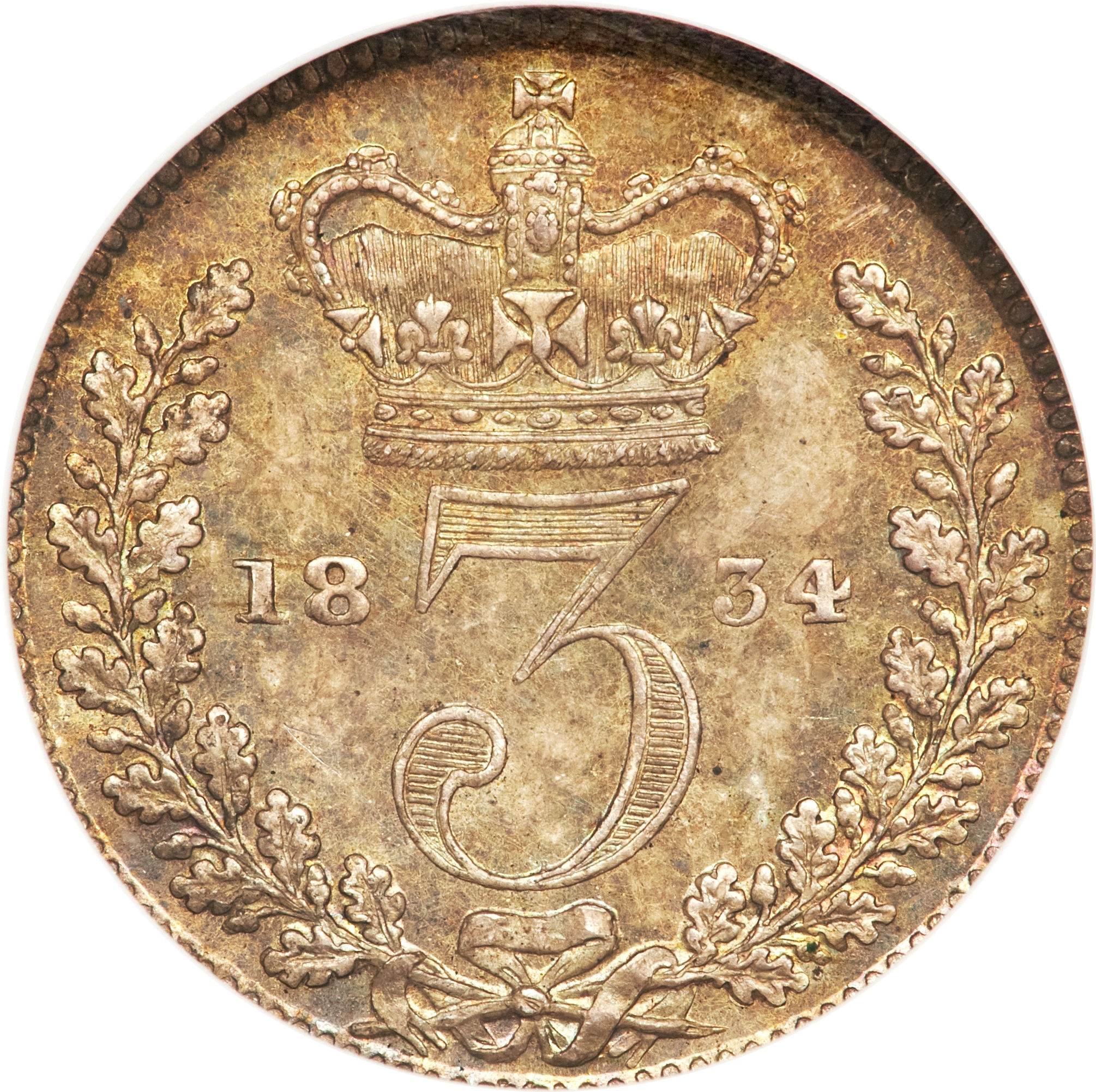
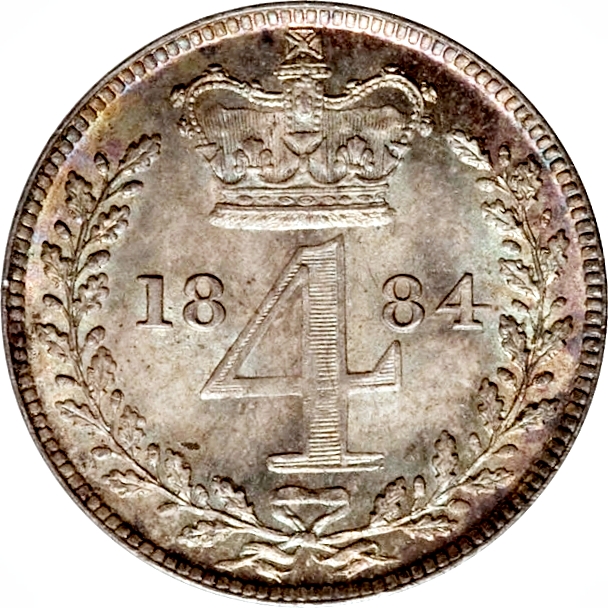
Crowned denomination divides date within oak wreath.
Find this on eBay
AffiliateMaundy issues 4 Pence price history
Daily limit reachedAbout the 1838 4 Pence - Victoria – Maundy issues
The 1838 4 Pence - Victoria – Maundy issues is a collector 4 pence coin issued from 1838 to 1887 in the Maundy Money series, struck in 92.5% silver. It weighs 1.89g and measures 18mm across. Reverse design: Crowned denomination divides date within oak wreath.
A mintage of 4,158 is recorded for one date of this type; figures for each year are not held.
Common questions
How much is the 1838 4 Pence - Victoria – Maundy issues worth?
No verified sale of the 1838 4 Pence - Victoria – Maundy issues has been logged on MyCoinage yet. Its silver content is worth about £2.24 at today's spot price, which puts a floor under its value.
How many Victorian Young Head Maundy fourpences were made?
Only a few thousand a year. CoinVarieties, quoting the Krause catalogue, gives 4,125 for 1839 and 4,158 for most dates of the 1850s and 1860s, rising to 5,202 in 1879 and 6,785 in 1886. These are tiny figures beside the circulating coins of the period.
Who designed the Young Head Maundy fourpence?
The portrait is William Wyon's Young Head, which the Royal Mint Museum says reached circulation in the summer of 1838. The crowned 4 in an oak wreath is Jean Baptiste Merlen's reverse of 1822, still used on Maundy money today.
Is a Victorian Maundy fourpence still legal tender?
Yes. Under the Coinage Act 1971 Maundy coins remained legal tender and are treated as denominated in new pence, so a Victorian fourpence has a face value of 4p. Its silver content and collector interest mean it never circulates.
Why are Victorian Maundy sets easy to find in good condition?
Tony Clayton notes that Victorian Maundy sets could be ordered from the bank by anyone who chose to. Wikipedia adds that far more pieces were struck than the ceremony needed, so many sets went straight to collectors and were never spent.
How do I identify the 1838 4 Pence - Victoria – Maundy issues?
Check the weight 1.89g and diameter 18mm and the metal (92.5% silver) against the specification table on this page. The reverse design is described above.
History and design
The fourpence, or groat, had been one of the four Maundy coins since the reign of George III, and Tony Clayton notes that after his reign the crowned 4 was struck solely for the Maundy ceremony. Under Victoria it was made every year from 1838 to 1887 with William Wyon's Young Head, until the Jubilee Head took over the Maundy coins in 1888.
The numbers were tiny. CoinVarieties, quoting the Krause catalogue, gives 4,125 for 1839 and 4,158 for most dates through the 1850s and 1860s, rising slowly to 5,202 in 1879 and 6,785 in 1886. Wikipedia records that in the 19th century as many as sixty times the pieces needed for the ceremony were struck, and that from 1846 the Queen herself asked for as much as 2,400 pence a year of Maundy coins for her own use.
The obverse carries Wyon's Young Head, which the Royal Mint Museum calls the portrait that undoubtedly takes pride of place among his work; it began to reach circulation in the summer of 1838. The reverse is the crowned numeral 4 within an oak wreath, dividing the date. This is Jean Baptiste Merlen's design of 1822, used on all four Maundy coins, and kept with only a revised crown from 1888.
The coin is struck in sterling (.925) silver. It should not be confused with the circulating fourpence of 1838 to 1855, which has the same portrait but a seated Britannia on the reverse.
Collecting notes
Clayton notes that Victorian Maundy sets could be ordered from the bank by anyone, so they are more plentiful than the later restricted issues and usually turn up in high grade. Check for the crowned 4 rather than Britannia, and for even toning, since sets kept together tend to tone alike.
Single fourpences and complete four-coin sets are both common in the market. For the circulating Britannia groat, see the Victoria fourpence of 1837 to 1855, and for the next Maundy type the Jubilee Head Maundy fourpence.
Sources
The history, design, varieties and collecting notes on this page are drawn from these sources. Prices come from recorded sales, not from them.
- Royal Maundy, Wikipedia (read 10 Oct 2026)
- Four Pence: Groat, Tony Clayton, Coins of the UK (read 10 Oct 2026)
- Maundy Money, Tony Clayton, Coins of the UK (read 10 Oct 2026)
- Great Britain 1839, 1852, 1853, 1865, 1868, 1869, 1872, 1879, 1885 and 1886 4 pence (pages read one by one), CoinVarieties (read 10 Oct 2026)
- William Wyon, Royal Mint Museum (read 10 Oct 2026)
- Decimal Day, Wikipedia (read 10 Oct 2026)
- Jubilee coinage, Wikipedia (read 10 Oct 2026)
- Fourpence (British coin), Wikipedia (read 10 Oct 2026)
More from Maundy Money