2 Pence - George III Normal numerals incl. Maundy (1795–1800)
| Country | United Kingdom |
| Year | 1795–1800 |
| Denomination | 2 Pence |
| Mint | Royal Mint · Llantrisant |
| Series | Maundy Money |
| Circulation | Non-circulating |
| Demonetised | Yes |
| Composition | Silver (.925) (925/1000 fine) |
| Weight | 1.000g · 0.0297 t oz |
| Diameter | 14.0mm |
| Shape | Round |
| Edge | Plain |
| Orientation | Medal alignment ↑↑ |
| Grade scale | UK (EF/UNC) |
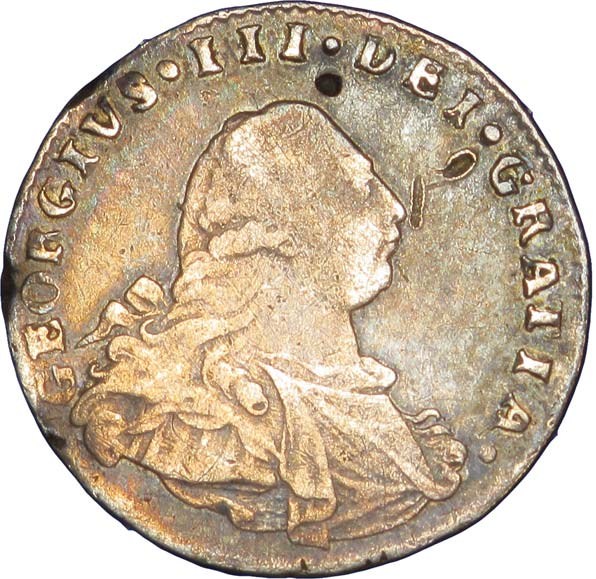
Older laureate and draped bust of King George III right, legend around.
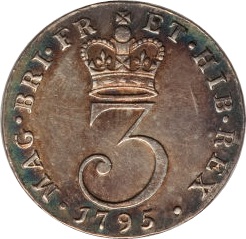
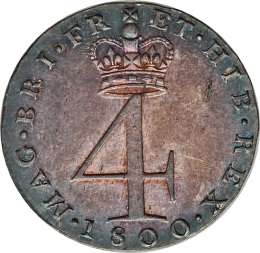
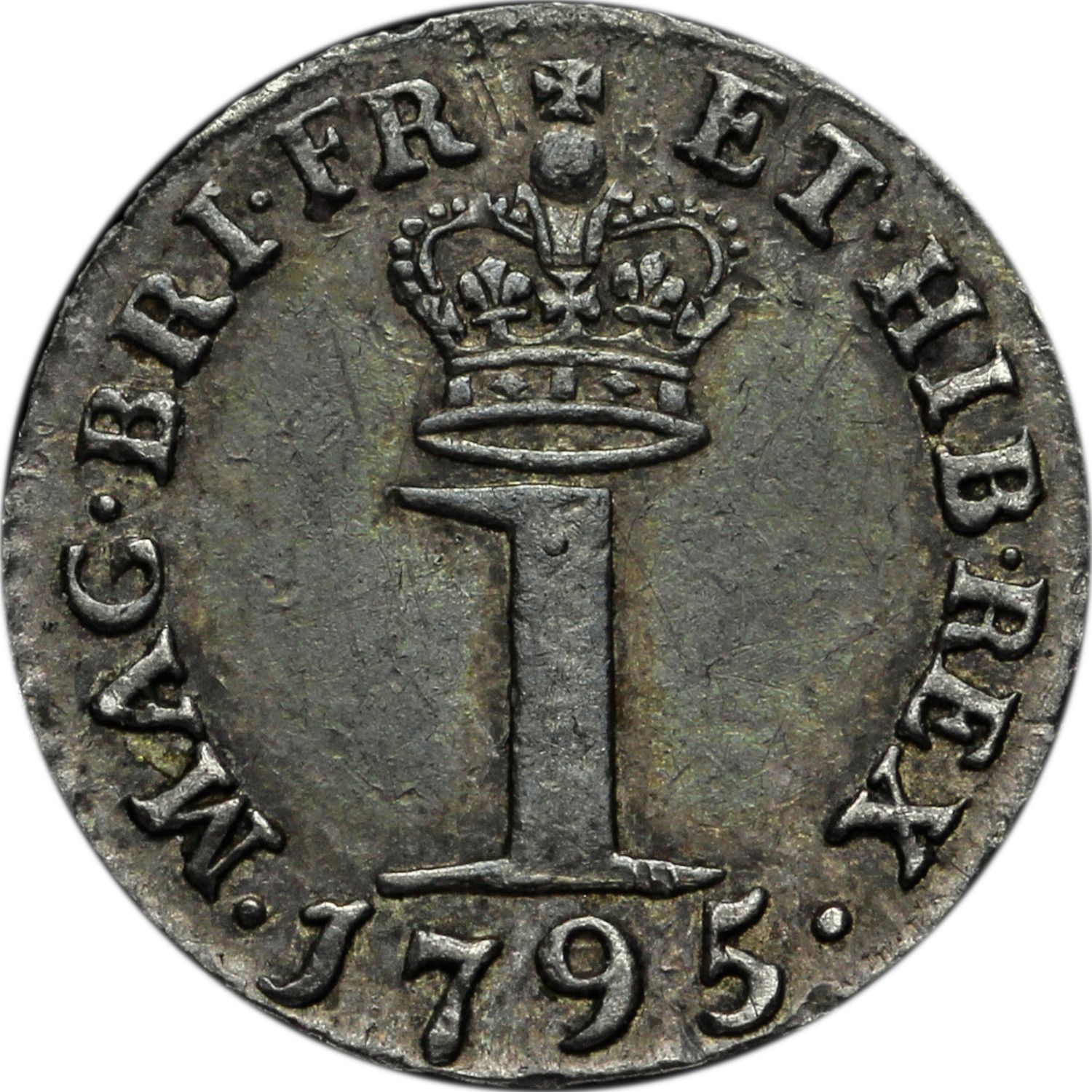
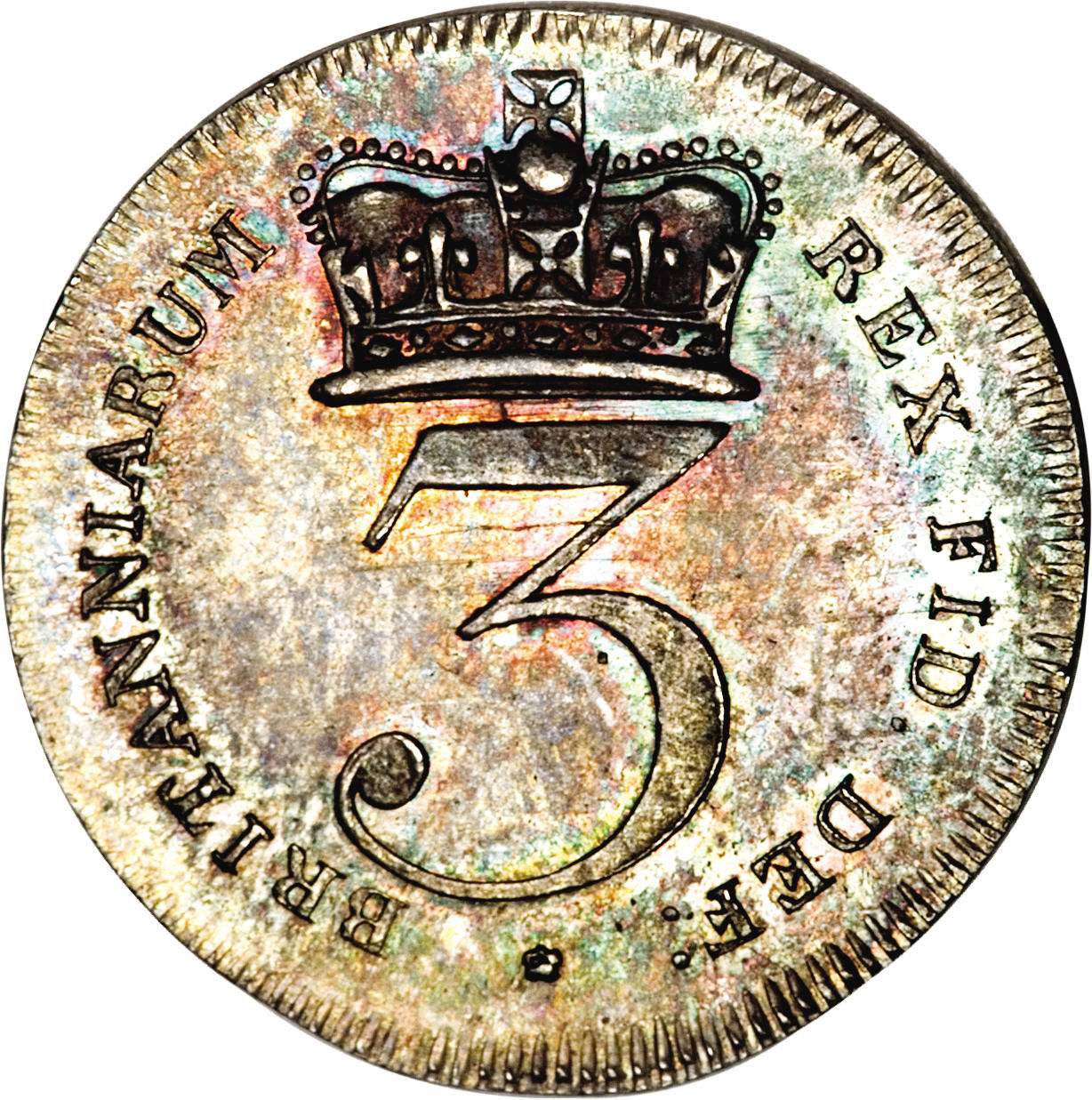
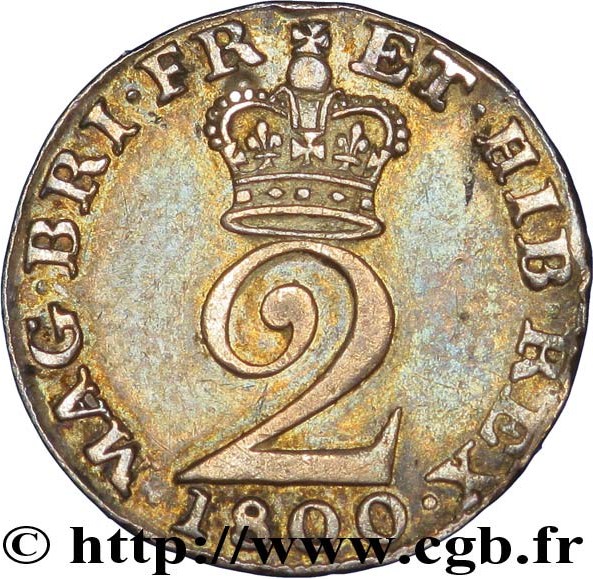
Central crowned denomination above date, legend around.
Find this on eBay
Affiliateincl. Maundy 2p price history
Daily limit reachedAbout the 1795 2 Pence - George III Normal numerals – incl. Maundy
The 1795 2 Pence - George III Normal numerals – incl. Maundy is a collector 2 pence coin issued from 1795 to 1800 in the Maundy Money series, struck in 92.5% silver. It weighs 1g and measures 14mm across. Reverse design: Central crowned denomination above date, legend around.
It is no longer legal tender, so its value is to collectors only.
Common questions
How much is the 1795 2 Pence - George III Normal numerals – incl. Maundy worth?
No verified sale of the 1795 2 Pence - George III Normal numerals – incl. Maundy has been logged on MyCoinage yet. Its silver content is worth about £1.19 at today's spot price, which puts a floor under its value.
Which years does this twopence cover?
Only 1795 and 1800, according to both Tony Clayton and CoinVarieties. Wikipedia's Royal Maundy article adds that every Maundy piece issued from 1800 to 1815 bears the date 1800, although most were struck later, because of wartime restrictions on striking silver coin.
How many were made?
No figure is published. CoinVarieties, citing the standard catalogues, gives the mintage as unknown for both 1795 and 1800, and because the 1800 dies were used for years afterwards, the coins dated 1800 cannot be tied to a single year's output.
How does it differ from the 1792 twopence?
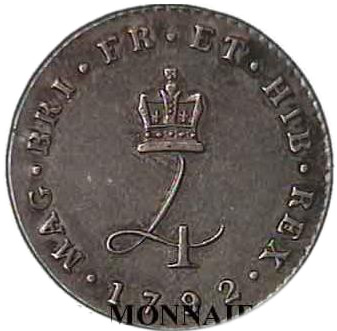
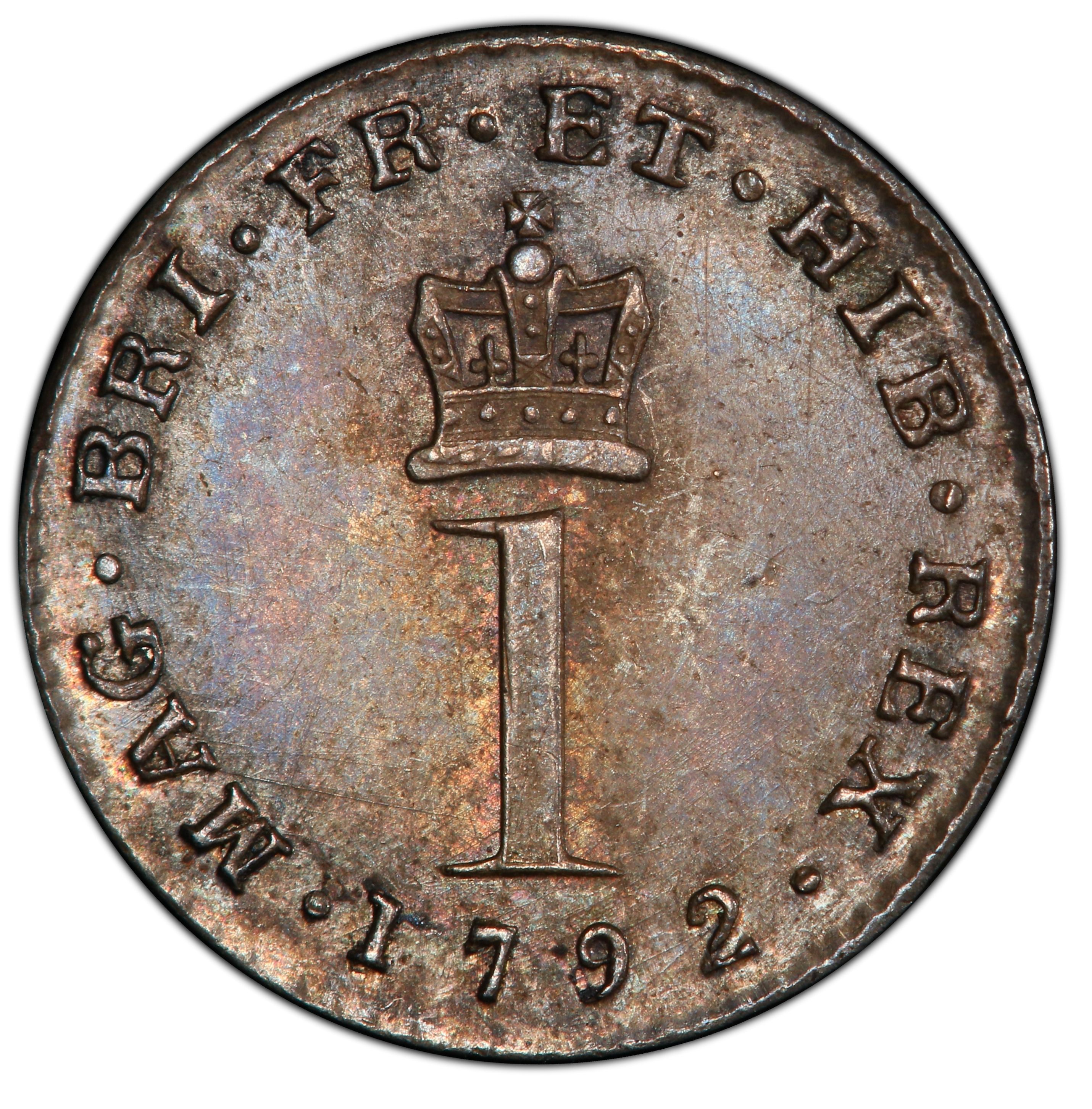
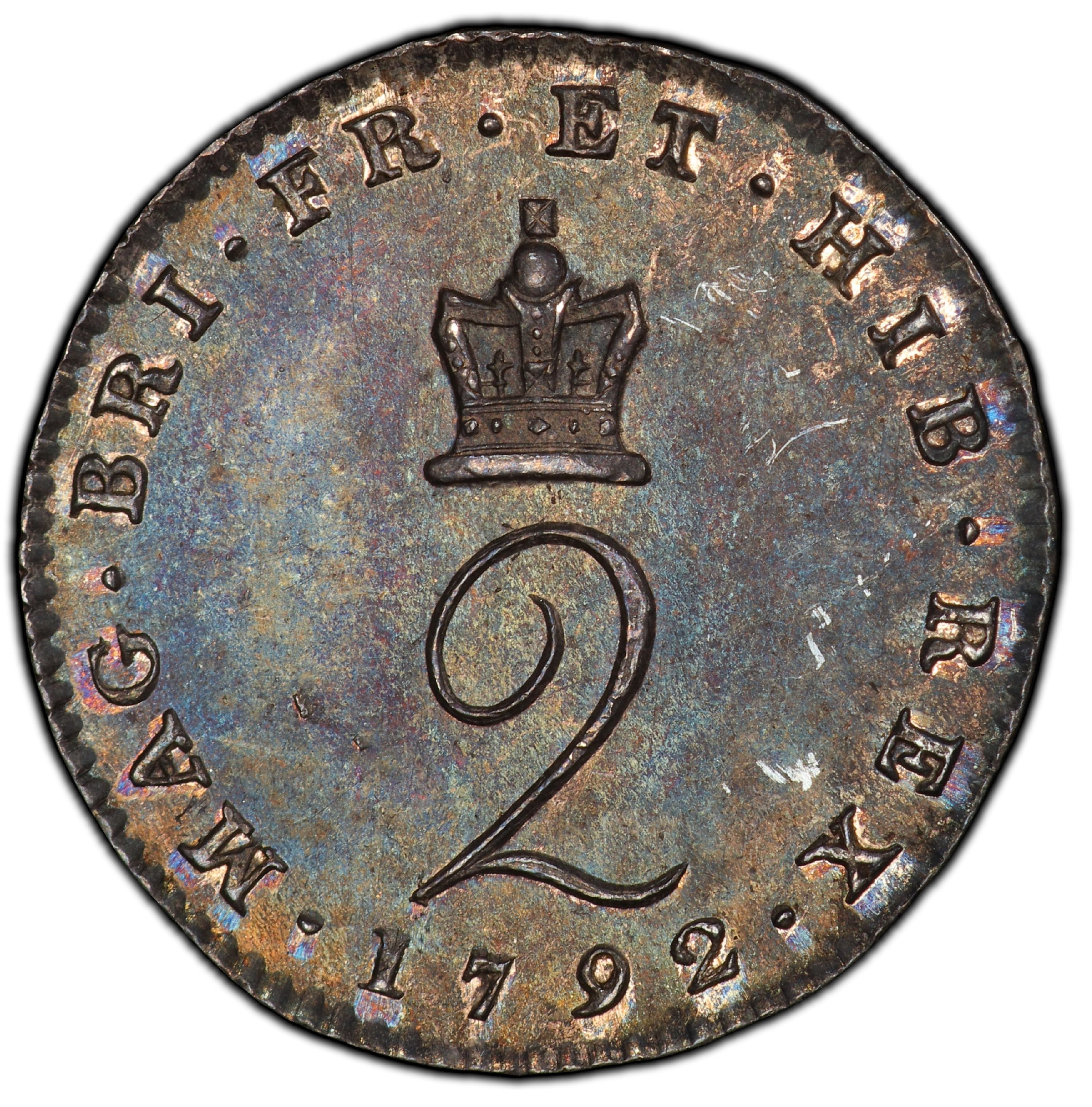
The 1792 coin has a small crown over a thin 'wire money' numeral. On this type the crowned 2 returns to a normal numeral, with the date below. Wikipedia describes the matching penny reverse of 1795 and 1800 as close to the first type but with a redesigned crown.
Is the 1795 or 1800 twopence legal tender?
Wikipedia states that at decimalisation all Maundy pieces were deemed by law to be denominated in new pence. In practice these twopences are collectors' coins and are never spent.
How do I identify the 1795 2 Pence - George III Normal numerals – incl. Maundy?
Check the weight 1g and diameter 14mm and the metal (92.5% silver) against the specification table on this page. The reverse design is described above.
History and design
This is the third design of George III's silver twopence, following the one-year 'wire money' issue of 1792. Tony Clayton and CoinVarieties both list only two dates, 1795 and 1800. Like the other small silver coins of the period it was made mainly for the Royal Maundy, the Maundy Thursday gift of silver from the sovereign, and Clayton's Maundy listing shows full four-coin sets for both years.
The date 1800 is misleading. Wikipedia's Royal Maundy article explains that, to get round statutory prohibitions on striking silver coin during the Napoleonic Wars, all Maundy pieces issued from 1800 to 1815 bear the date 1800, though most were struck later. The date was finally changed in 1816, after the prohibition ended. No mintage figure is published for either date.
The obverse shows the older laureate and draped bust of George III facing right, introduced in 1792. The reverse returns to a normal crowned numeral 2, with the date below; Aberdeen's museum example of 1800 is described as a crowned figure 2 with the date below, 14 mm across and weighing 1.04 g. Wikipedia describes the matching penny reverse of 1795 and 1800 as similar to the first type but with a redesigned crown. The Royal Mint Museum's examples weigh between 0.86 g and 1.01 g and have plain edges.
Varieties and errors
The Royal Mint Museum's own 1800 Maundy twopence (RMM 1060) is recorded as double-struck, so doubled strikes are a documented fault on this type.
Collecting notes
Because the 1800 date was kept for Maundy distributions up to 1815, an 1800 twopence may have been struck in any of those years, and nothing on the coin shows which. Look closely at the strike, as weak or doubled strikes are known, and at the surfaces for cleaning. The earlier type is the 1792 wire money twopence.
Sources
The history, design, varieties and collecting notes on this page are drawn from these sources. Prices come from recorded sales, not from them.
- Values of Coins of the UK: Two Pence, Tony Clayton, Coins of the UK (read 12 Oct 2026)
- Great Britain 1800 2 pence (and 1795 2 pence), CoinVarieties (read 12 Oct 2026)
- George III Maundy twopence, 1795 (RMM 1057), The Royal Mint Museum, via Museum Data Service (read 12 Oct 2026)
- George III Maundy twopence, 1800 (RMM 1060), The Royal Mint Museum, via Museum Data Service (read 12 Oct 2026)
- Royal Maundy, Wikipedia (read 12 Oct 2026)
- Maundy Twopence (George III), 1800 (ABDMS017225), Aberdeen Archives, Gallery and Museums, via Museum Data Service (read 12 Oct 2026)
- History of the British penny (1714 to 1901), Wikipedia (read 12 Oct 2026)
- Values of Maundy Sets, Tony Clayton, Coins of the UK (read 12 Oct 2026)
More from Maundy Money