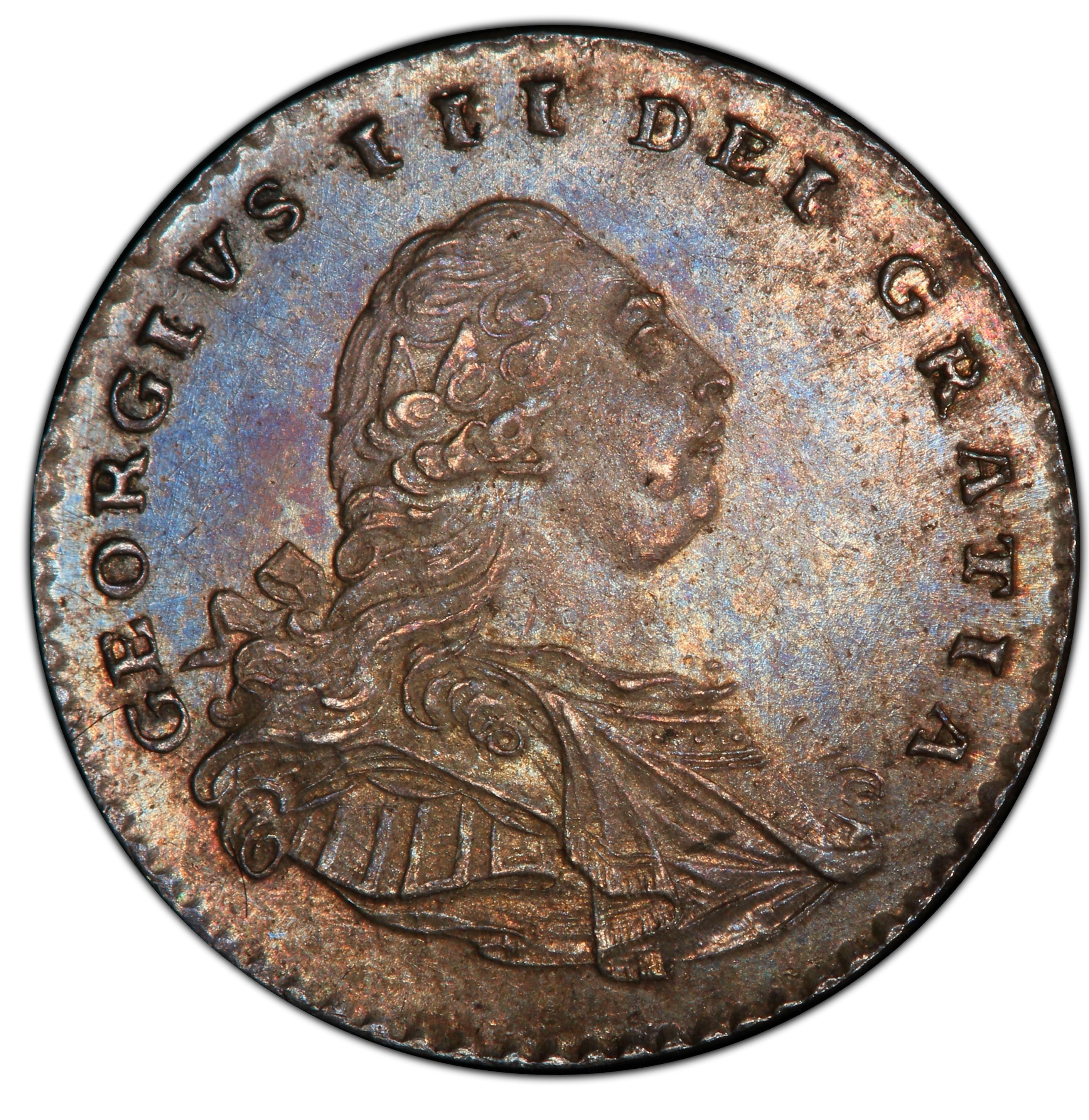
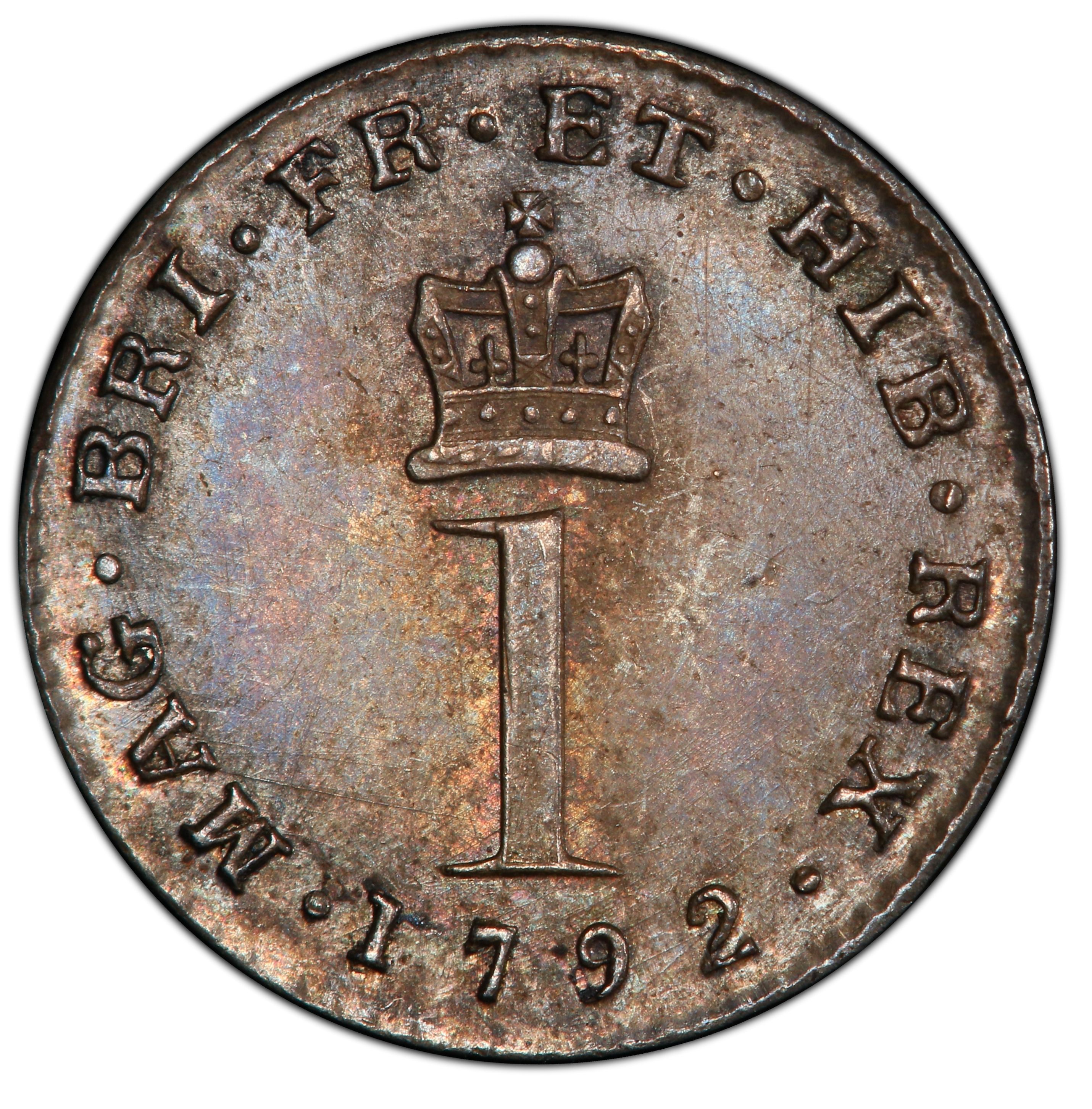
1 Penny - George III Thin numerals incl. Maundy (1792)
"Wire money"
| Country | United Kingdom |
| Year | 1792 |
| Denomination | 1 Penny |
| Mint | Royal Mint · Llantrisant |
| Series | Maundy Money |
| Circulation | Non-circulating |
| Demonetised | Yes |
| Composition | Silver (.925) (925/1000 fine) |
| Weight | 0.500g · 0.0149 t oz |
| Diameter | 12.0mm |
| Shape | Round |
| Edge | Plain |
| Orientation | Medal alignment ↑↑ |
| Obv. artist | Lewis Pingo |
| Grade scale | UK (EF/UNC) |
Older laureate and draped bust of King George III right, legend around.
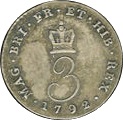
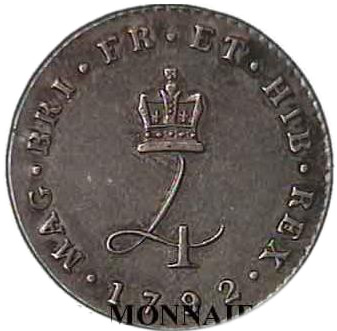
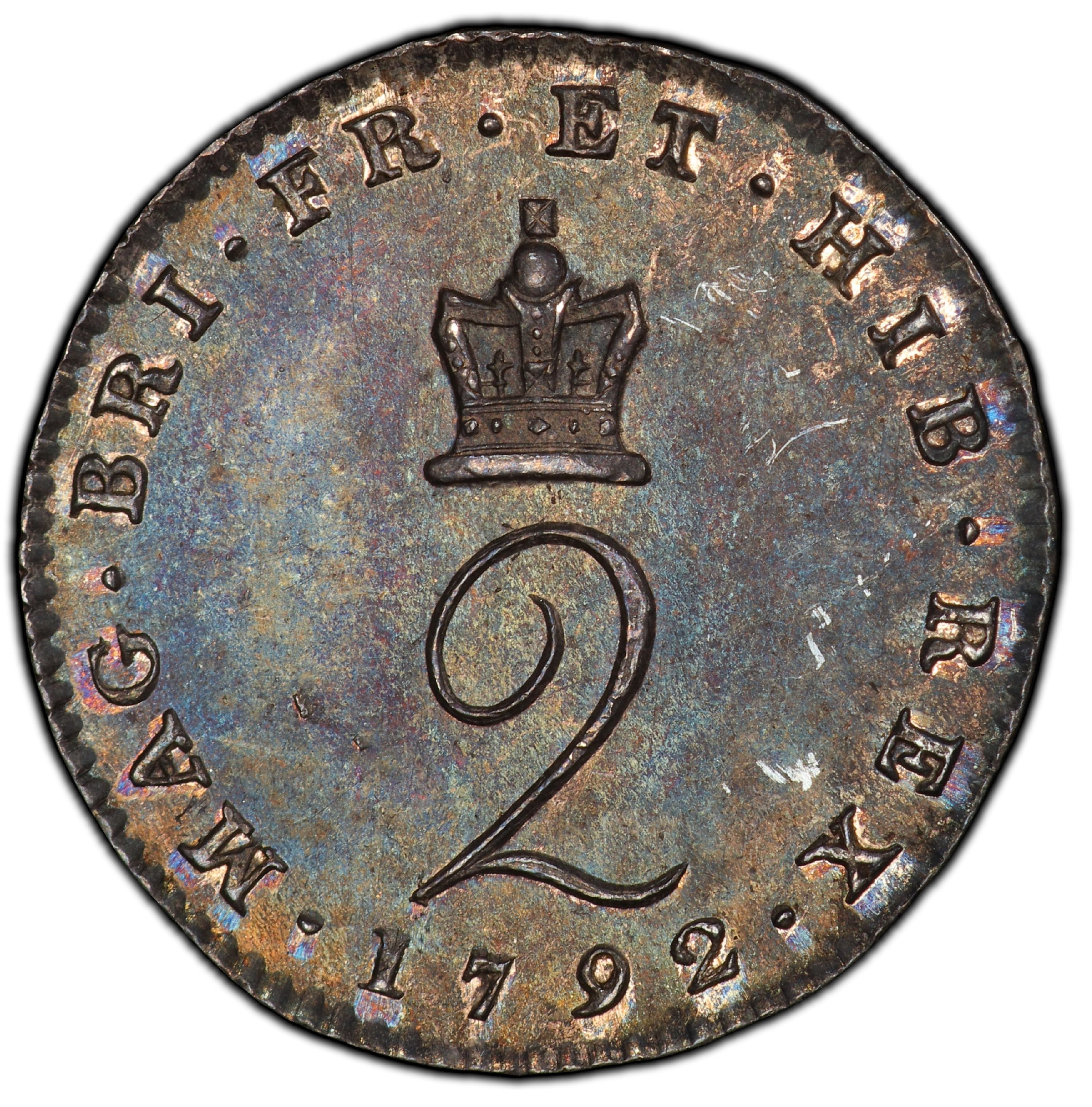
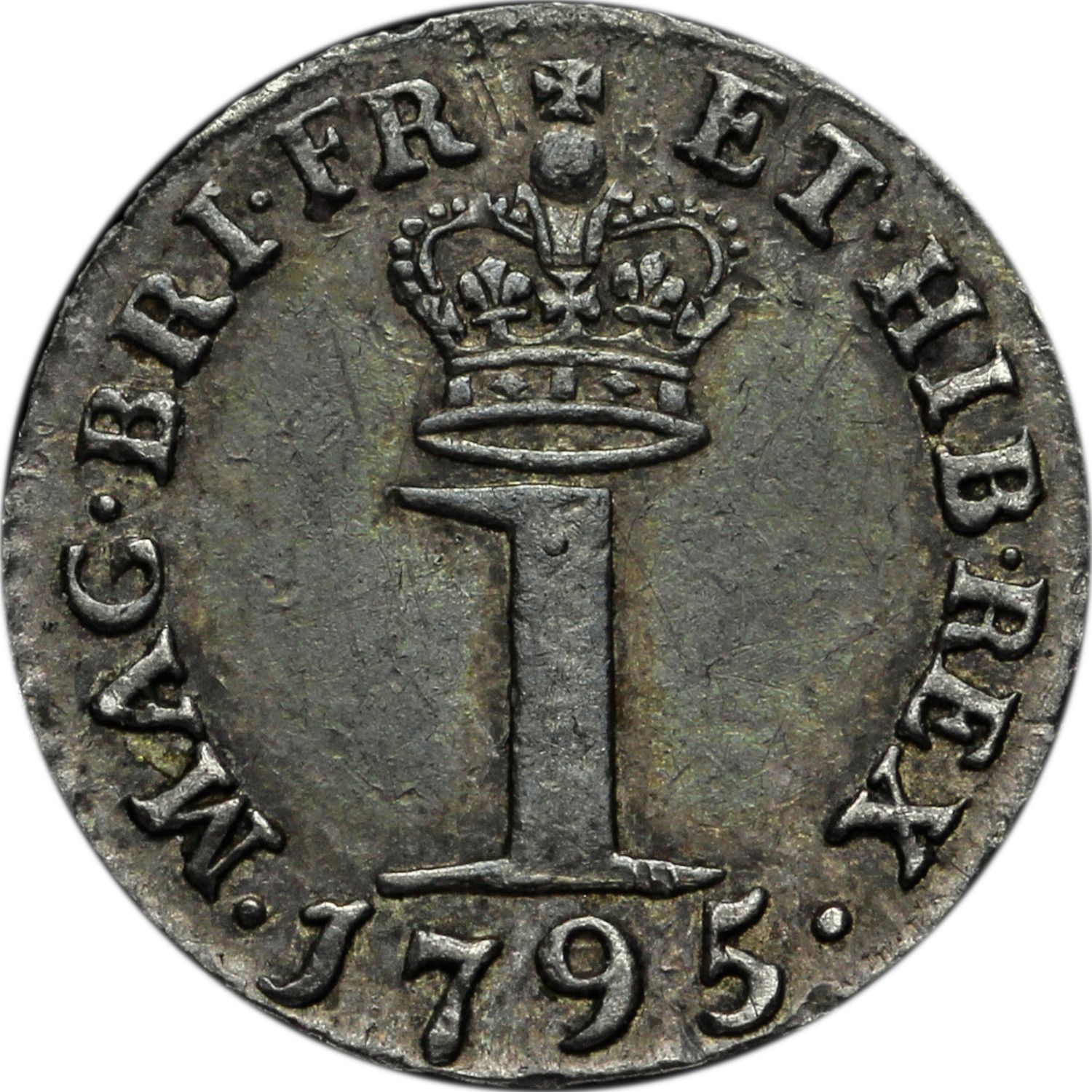
Central crowned denomination above date, legend around.
Find this on eBay
Affiliateincl. Maundy 1p price history
Daily limit reachedAbout the 1792 1 Penny - George III Thin numerals – incl. Maundy
The 1792 1 Penny - George III Thin numerals – incl. Maundy is a collector 1 penny coin in the Maundy Money series, struck in 92.5% silver. It weighs 0.5g and measures 12mm across. Reverse design: Central crowned denomination above date, legend around.
It is no longer legal tender, so its value is to collectors only.
Common questions
How much is the 1792 1 Penny - George III Thin numerals – incl. Maundy worth?
No verified sale of the 1792 1 Penny - George III Thin numerals – incl. Maundy has been logged on MyCoinage yet.
Why is the 1792 Maundy penny called wire money?
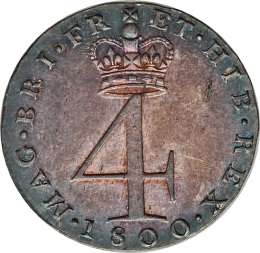
The 1792 Maundy coins have thin, narrow numerals of value. Wikipedia records that the narrow numeral 4 on the 1792 groat led to the name 'wire money'. The penny of that year has a matching small, thin numeral 1 under a smaller crown.
Is the 1792 Maundy penny rare?
It was struck for one year only, so it is a distinct type, but CoinVarieties says it is not rare, though difficult to find in nice condition. No mintage figure is published for 1792.
Who engraved the 1792 penny?
Wikipedia's article on Lewis Pingo, the Royal Mint's chief engraver from 1779, says he engraved the dies for the second variety of George III's Maundy money, citing Edward Hawkins's 'Silver Coins of England' of 1841. The 1792 issue introduced that second, older bust.
How do I identify the 1792 1 Penny - George III Thin numerals – incl. Maundy?
Check the weight 0.5g and diameter 12mm and the metal (92.5% silver) against the specification table on this page. The reverse design is described above.
History and design
Under George III the silver penny was struck mainly for the Royal Maundy, the sovereign's gift of money on Maundy Thursday. Wikipedia records that a new bust of the King was introduced on the penny in 1792, and that the third reverse of the reign was used in that year only. The 1792 penny is therefore a one-year type.
No mintage is published. CoinVarieties notes that the type is not rare but is difficult to find in nice condition, and the Royal Mint Museum holds an example of 0.48 g recorded as a Maundy penny. The 1792 Maundy coins are often called wire money; Wikipedia ties the name to the narrow numeral 4 on the groat of that year.
The obverse carries an older laureate and draped bust of George III facing right with GEORGIUS III DEI GRATIA. Wikipedia's article on Lewis Pingo, chief engraver at the Royal Mint from 1779, says he engraved the dies for the second variety of George III's Maundy money, citing Edward Hawkins's work of 1841.
The reverse was completely redesigned: a much smaller, thin numeral 1 under a smaller crown, with the legend MAG BRI FR ET HIB REX, "King of Great Britain, France and Ireland", running around the crown and the date. The coin is sterling silver with a plain edge, and the museum's example is struck with the dies aligned medal fashion.
Collecting notes
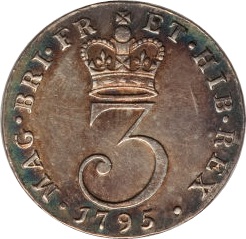
Tony Clayton's tables list the 1792 penny among the George III Maundy dates collected singly and in sets. Check that the thin numeral is sharp and that the surfaces are free of scratches, cleaning and mount marks. The four coins of 1792 are also collected as a set. The type was followed in 1795 by a penny with a normal numeral, covered at 1795 to 1800 Maundy penny.
Sources
The history, design, varieties and collecting notes on this page are drawn from these sources. Prices come from recorded sales, not from them.
- History of the British penny (1714 to 1901), Wikipedia (read 12 Oct 2026)
- Penny (British pre-decimal coin), Wikipedia (read 12 Oct 2026)
- Fourpence (British coin), Wikipedia (read 12 Oct 2026)
- Lewis Pingo, Wikipedia (read 12 Oct 2026)
- George III Maundy penny, 1792 (RMM 1064), The Royal Mint Museum, via Museum Data Service (read 12 Oct 2026)
- Great Britain 1792 penny, CoinVarieties (read 12 Oct 2026)
- Values of Silver (Maundy) Pennies, Tony Clayton, Coins of the UK (read 12 Oct 2026)
- Royal Maundy, Wikipedia (read 12 Oct 2026)
More from Maundy Money