1 Penny - George III incl. Maundy (1763–1786)
| Country | United Kingdom |
| Year | 1763–1786 |
| Denomination | 1 Penny |
| Mint | Royal Mint · Llantrisant |
| Series | Maundy Money |
| Circulation | Non-circulating |
| Demonetised | Yes |
| Composition | Silver (.925) (925/1000 fine) |
| Weight | 0.500g · 0.0149 t oz |
| Diameter | 12.0mm |
| Shape | Round |
| Edge | Plain |
| Orientation | Coin alignment ↑↓ |
| Grade scale | UK (EF/UNC) |
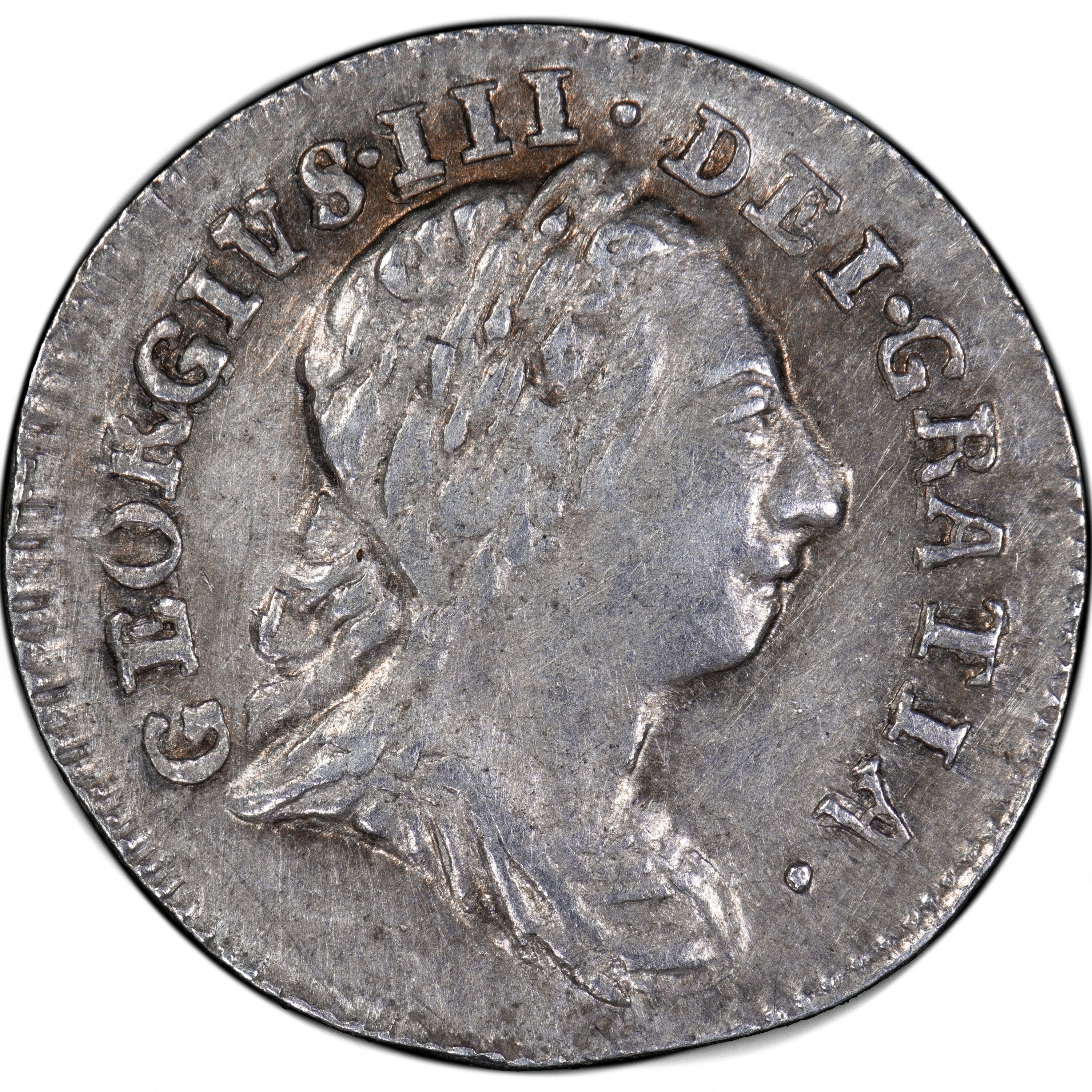
Young laureate and cuirassed bust of King George III right, legend around.
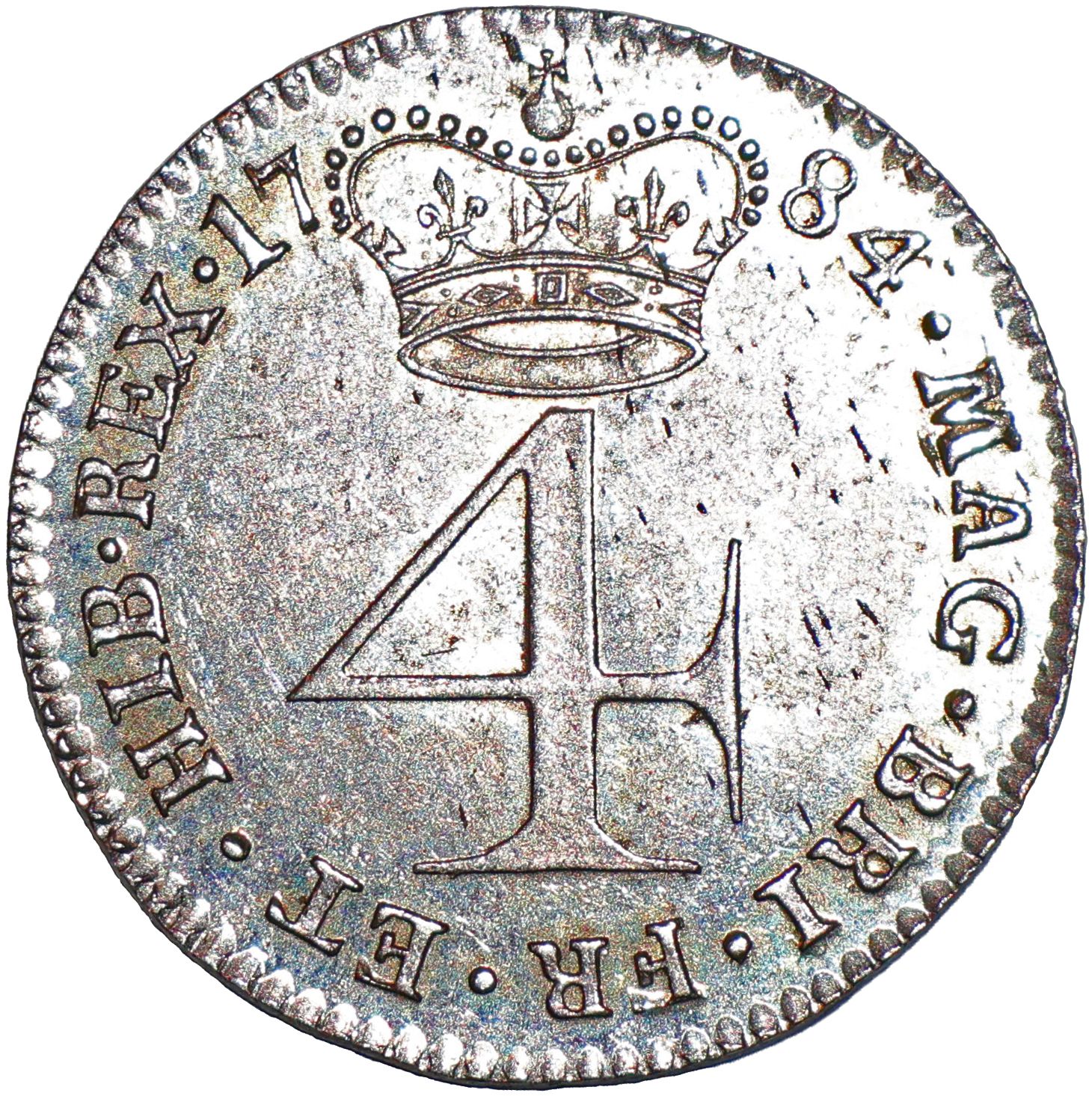
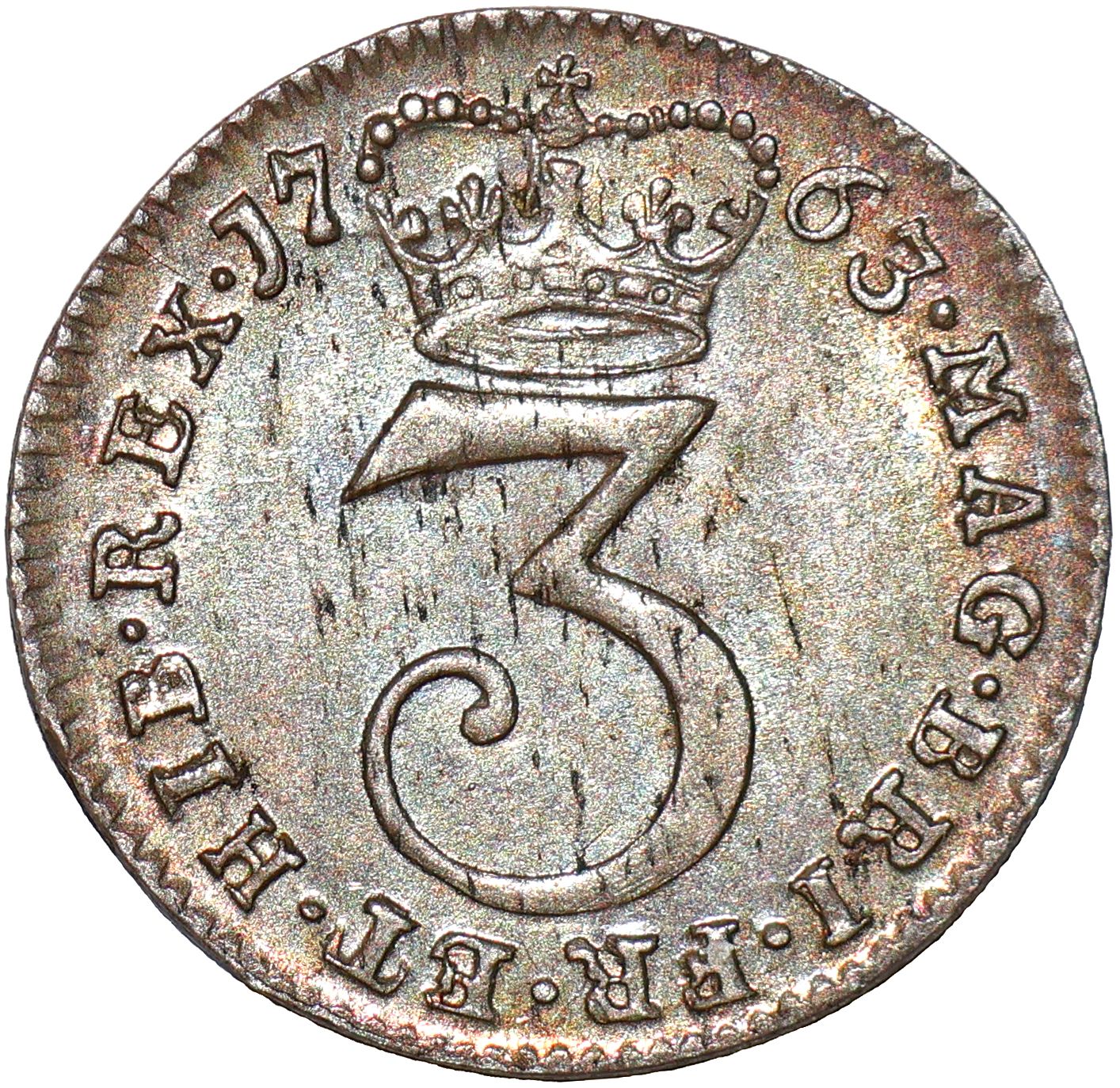
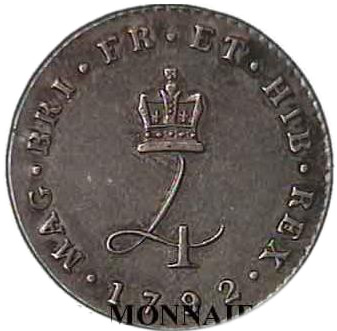
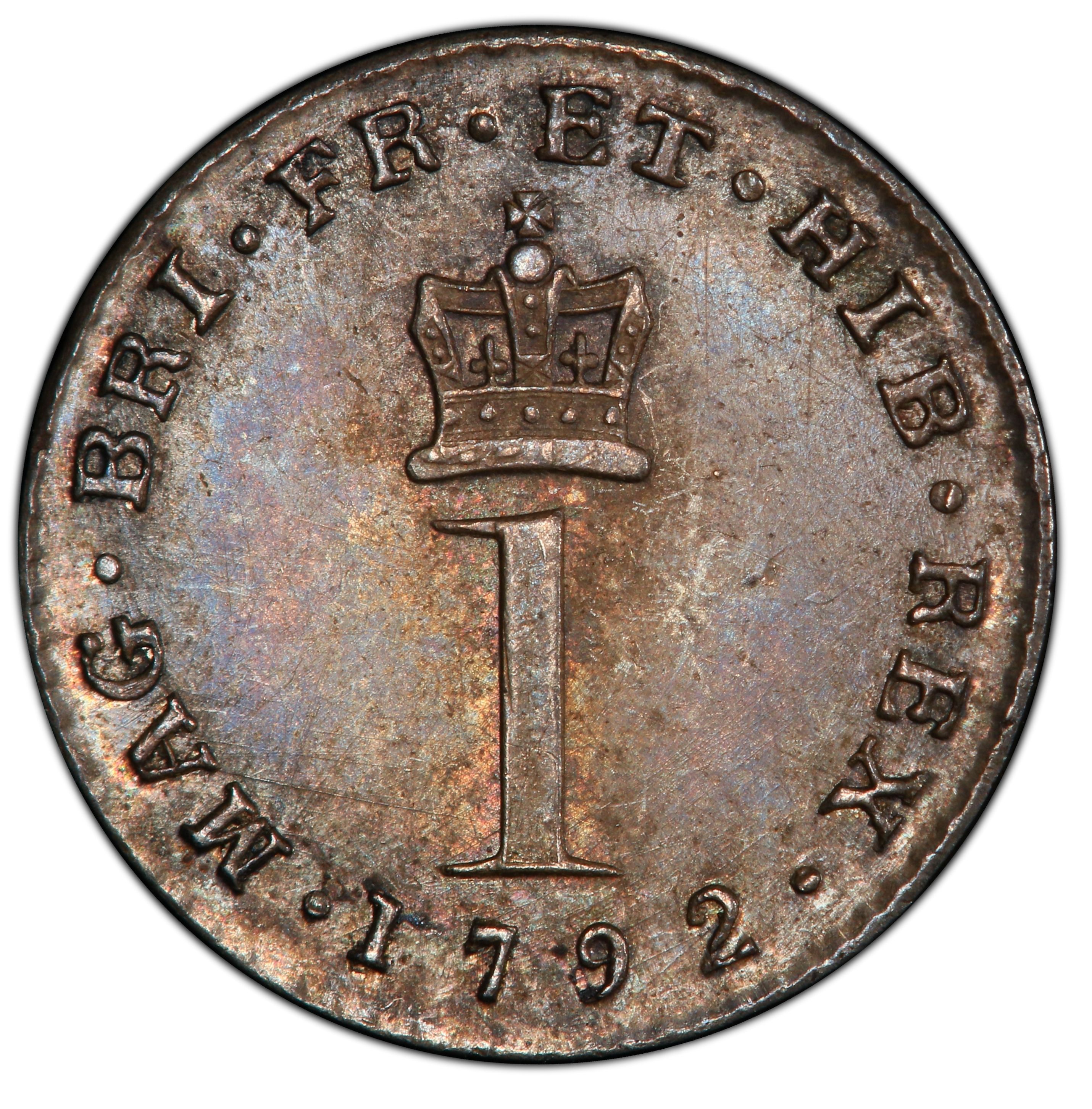
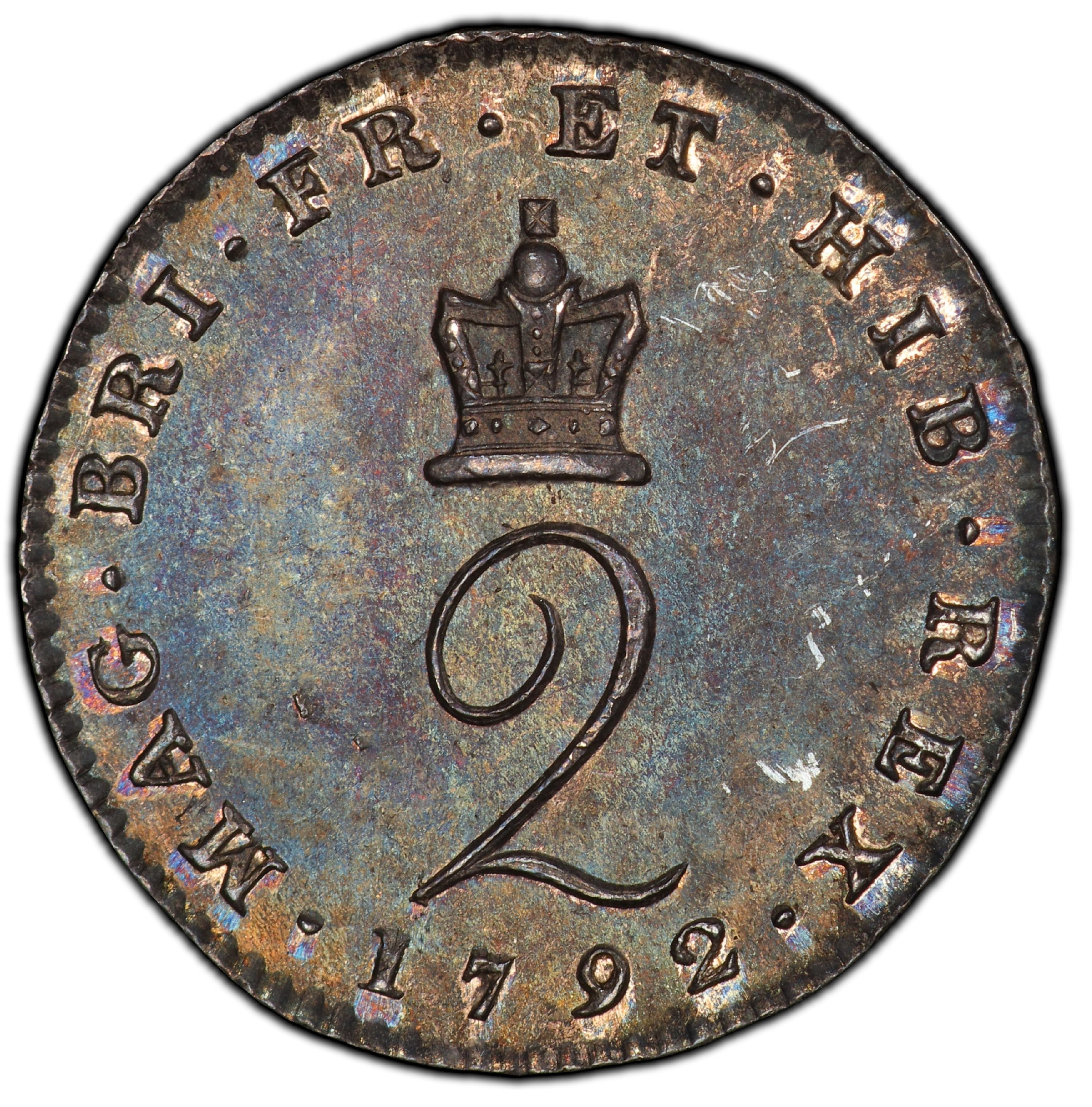
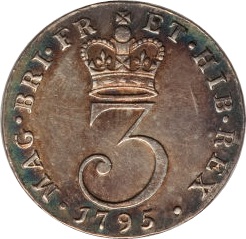
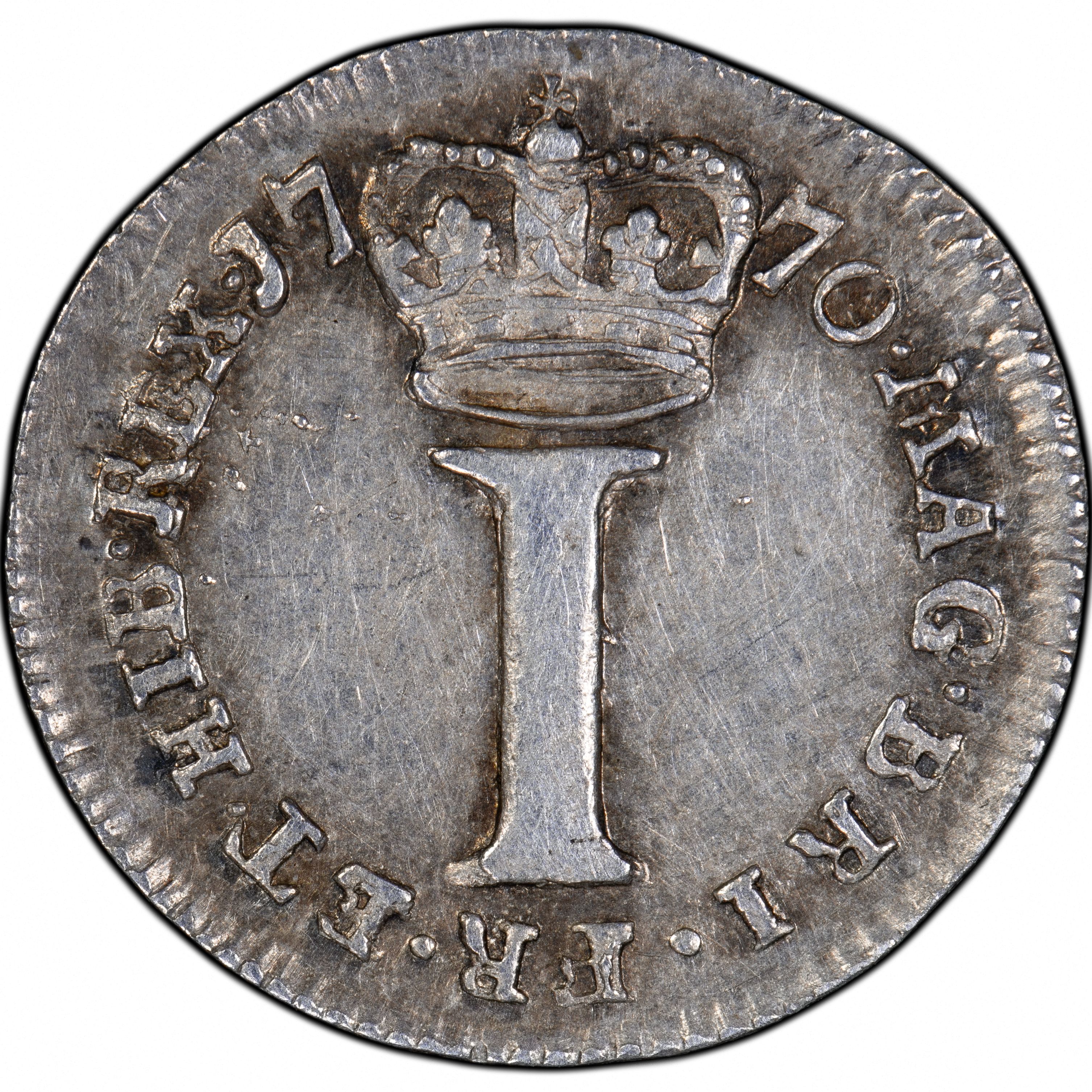
Large central denomination below crown dividing date, legend around.
1 Penny - George III incl. Maundy market value
Find this on eBay
Affiliate1 Penny - George III incl. Maundy price history
Daily limit reached1 Penny - George III incl. Maundy value by grade
Realised auction prices · ⭐ Pro Expand rows for individual sale records| Grade | Latest | Median | 30d Δ | All-time range | Sales (1yr) | Total sales | Last sale | |
|---|---|---|---|---|---|---|---|---|
| AU-55 | £112.66 🔒 | £112.66 (1) | – | £112.66 – £112.66 | 0 | 1 | 01-06-2024 | |
|
Loading…
|
||||||||
About the 1763 1 Penny - George III incl. Maundy
The 1763 1 Penny - George III incl. Maundy is a collector 1 penny coin issued from 1763 to 1786 in the Maundy Money series, struck in 92.5% silver. It weighs 0.5g and measures 12mm across. Reverse design: Large central denomination below crown dividing date, legend around.
It is no longer legal tender, so its value is to collectors only.
Common questions
How much is the 1763 1 Penny - George III incl. Maundy worth?
The 1763 1 Penny - George III incl. Maundy has a price in one grade on MyCoinage so far: £113 in AU-55, the median of its verified sales.
Which years were George III's early silver pennies struck?
Wikipedia lists 1763, 1766, 1770, 1772, 1776, 1779, 1780, 1781, 1784 and 1786, and Tony Clayton's tables give the same dates. Gaps were normal: enough pennies were sometimes struck at once to last several years of Maundy distributions.
Is the George III silver penny a Maundy coin?
Mostly. Wikipedia says the silver penny was by then used mainly as a Maundy piece, struck in numbers enough for the ceremony but not for general circulation. Some were still spent, and in some years the Maundy gift may have been made up wholly of pennies.
How many were made?
No mintage figures are published for these dates. CoinVarieties gives the recorded mintage as unknown, while noting that enough were saved that the type is not rare today.
Why was the reverse changed in 1781?
Wikipedia records that the relief of the crowned 1 was lowered in 1781, probably because the outline of the high numeral had been showing through on the King's head on the other side of such a thin coin.
How do I identify the 1763 1 Penny - George III incl. Maundy?
Check the weight 0.5g and diameter 12mm and the metal (92.5% silver) against the specification table on this page. The reverse design is described above.
History and design
By the reign of George III the silver penny had become too small to be much use in trade. Wikipedia explains that after 1727 silver cost so much that pennies were struck at a loss, and they were made mainly for the Royal Maundy, the Maundy Thursday gift of money from the sovereign to the poor. Mintages were enough for the ceremony but not for general circulation, and enough were sometimes struck at once to last several years.
George III's first penny was struck in 1763, 1766, 1770, 1772, 1776, 1779, 1780, 1781, 1784 and 1786. Wikipedia and Tony Clayton agree on these dates. No mintage figures are published, and CoinVarieties notes that enough were saved for the type not to be rare today.
The obverse shows a young laureate bust of the King facing right with GEORGIVS III DEI GRATIA, "George III by the Grace of God". The legend runs on to the reverse, MAG BRI FR ET HIB REX, "King of Great Britain, France and Ireland", around a crowned numeral 1 with the date divided across the crown. The coin is sterling silver, about 0.5 grams and 12 millimetres across.
The reverse was modified in 1781. Wikipedia records that the 1 was struck in lower relief from then until 1786, probably because the outline of the high numeral had been showing through on the King's head on the other side of so thin a coin.
Varieties and errors
The high relief reverse runs to 1780 and the flatter, low relief reverse from 1781 to 1786. A proof dated 1763 exists; the Royal Mint Museum holds one, weighing 0.77 g with a plain edge.
Collecting notes
Clayton's tables show full four-coin sets for some dates and odd denominations for others; 1779 and 1781 are listed as pennies only. Check for scratches, cleaning, mount marks and holes on such small coins. CoinVarieties notes the type is not rare, since enough were saved. The next type is the 1792 penny.
Sources
The history, design, varieties and collecting notes on this page are drawn from these sources. Prices come from recorded sales, not from them.
- History of the British penny (1714 to 1901), Wikipedia (read 12 Oct 2026)
- Penny (British pre-decimal coin), Wikipedia (read 12 Oct 2026)
- Values of Silver (Maundy) Pennies, and Values of Maundy Sets, Tony Clayton, Coins of the UK (read 12 Oct 2026)
- George III proof penny, 1763 (RMM 1061), The Royal Mint Museum, via Museum Data Service (read 12 Oct 2026)
- Great Britain 1763 penny, CoinVarieties (read 12 Oct 2026)
- Royal Maundy, Wikipedia (read 12 Oct 2026)
More from Maundy Money