4 Pence - George III incl. Maundy (1763–1786)
| Country | United Kingdom |
| Year | 1763–1786 |
| Denomination | 4 Pence |
| Mint | Royal Mint · Llantrisant |
| Series | Maundy Money |
| Circulation | Non-circulating |
| Demonetised | Yes |
| Composition | Silver (.925) (925/1000 fine) |
| Weight | 2.000g · 0.0595 t oz |
| Diameter | 19.0mm |
| Shape | Round |
| Edge | Plain |
| Orientation | Coin alignment ↑↓ |
| Grade scale | UK (EF/UNC) |
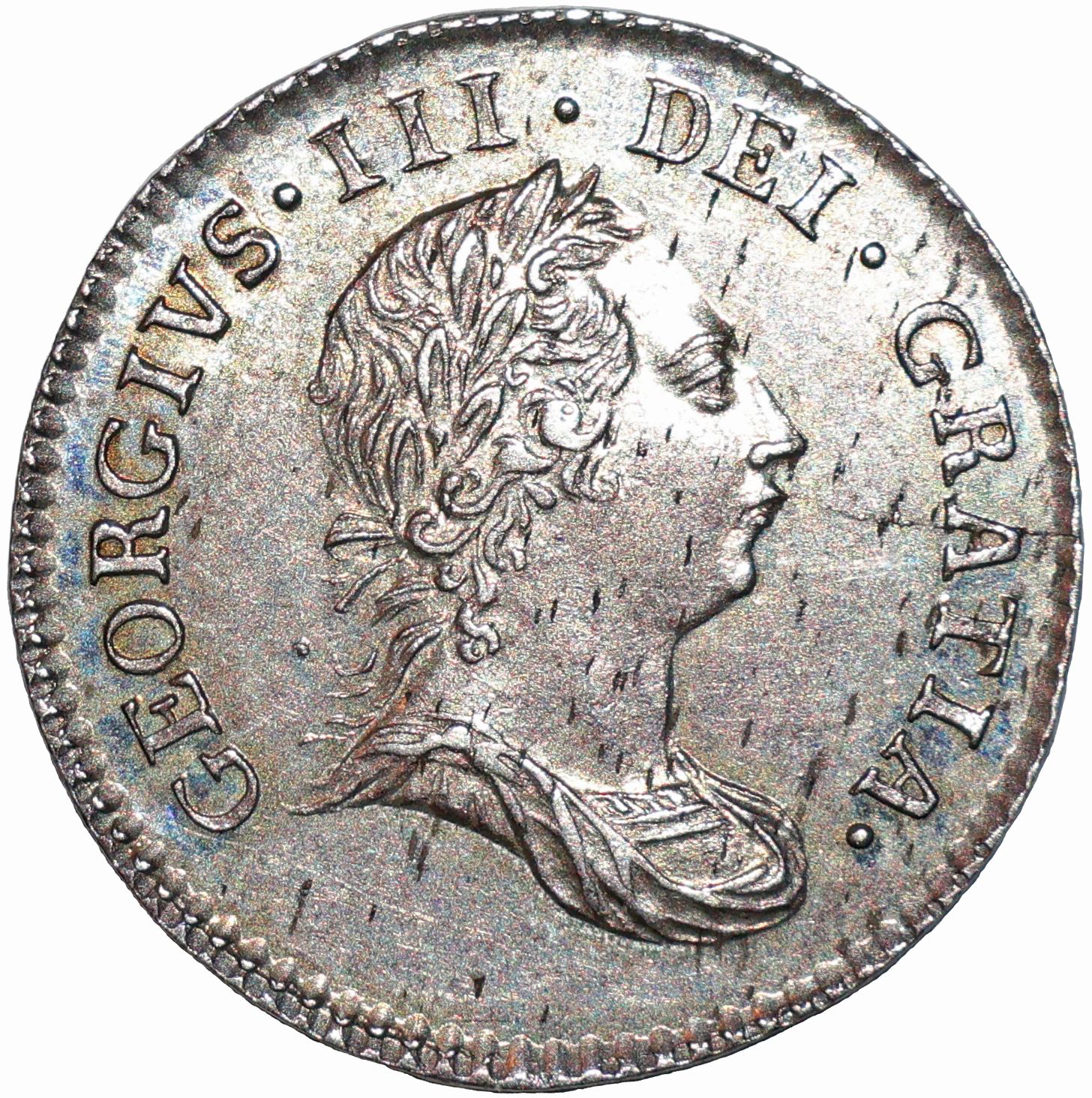
Young laureate and draped bust of King George III right, legend around.
GEORGIVS III DEI GRATIA
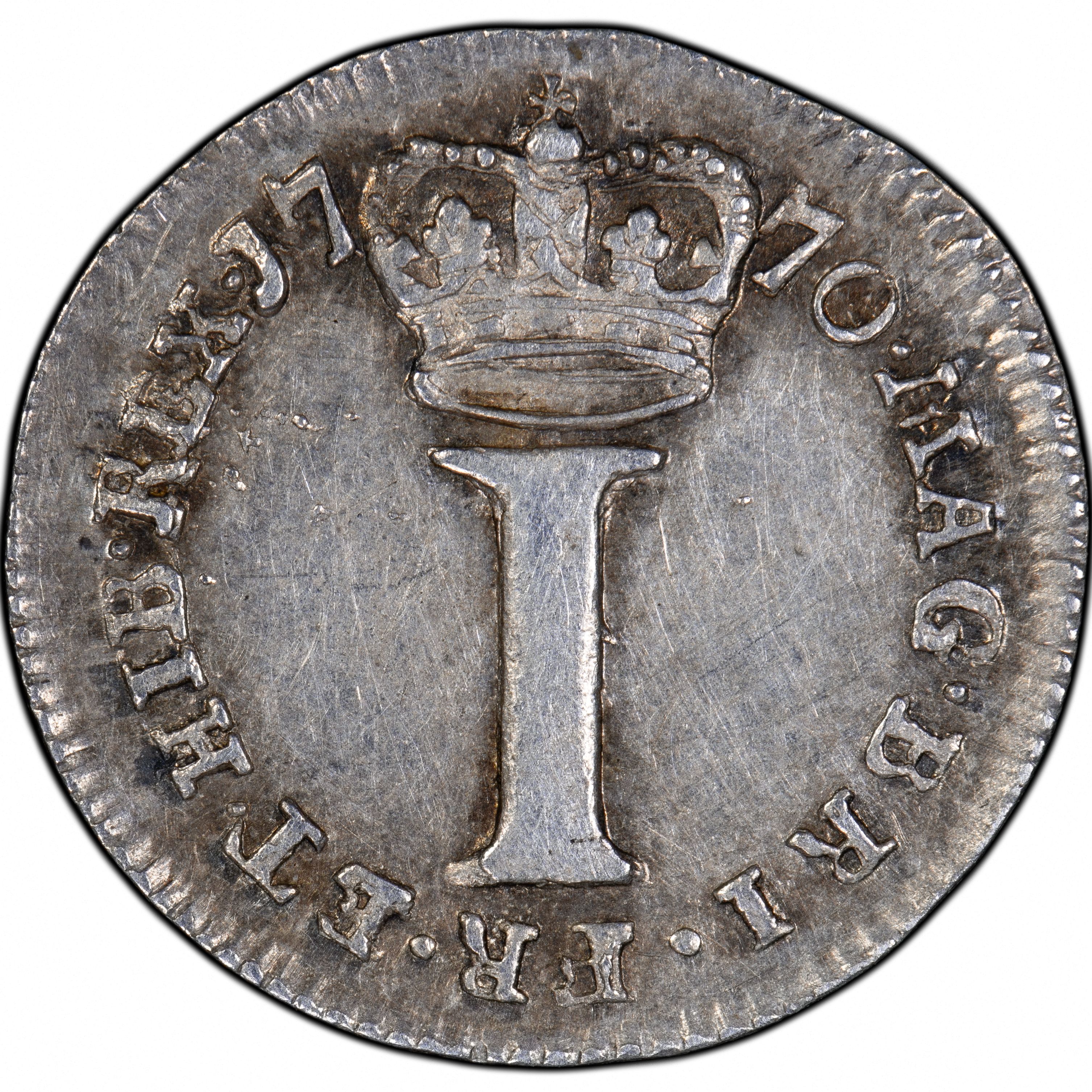
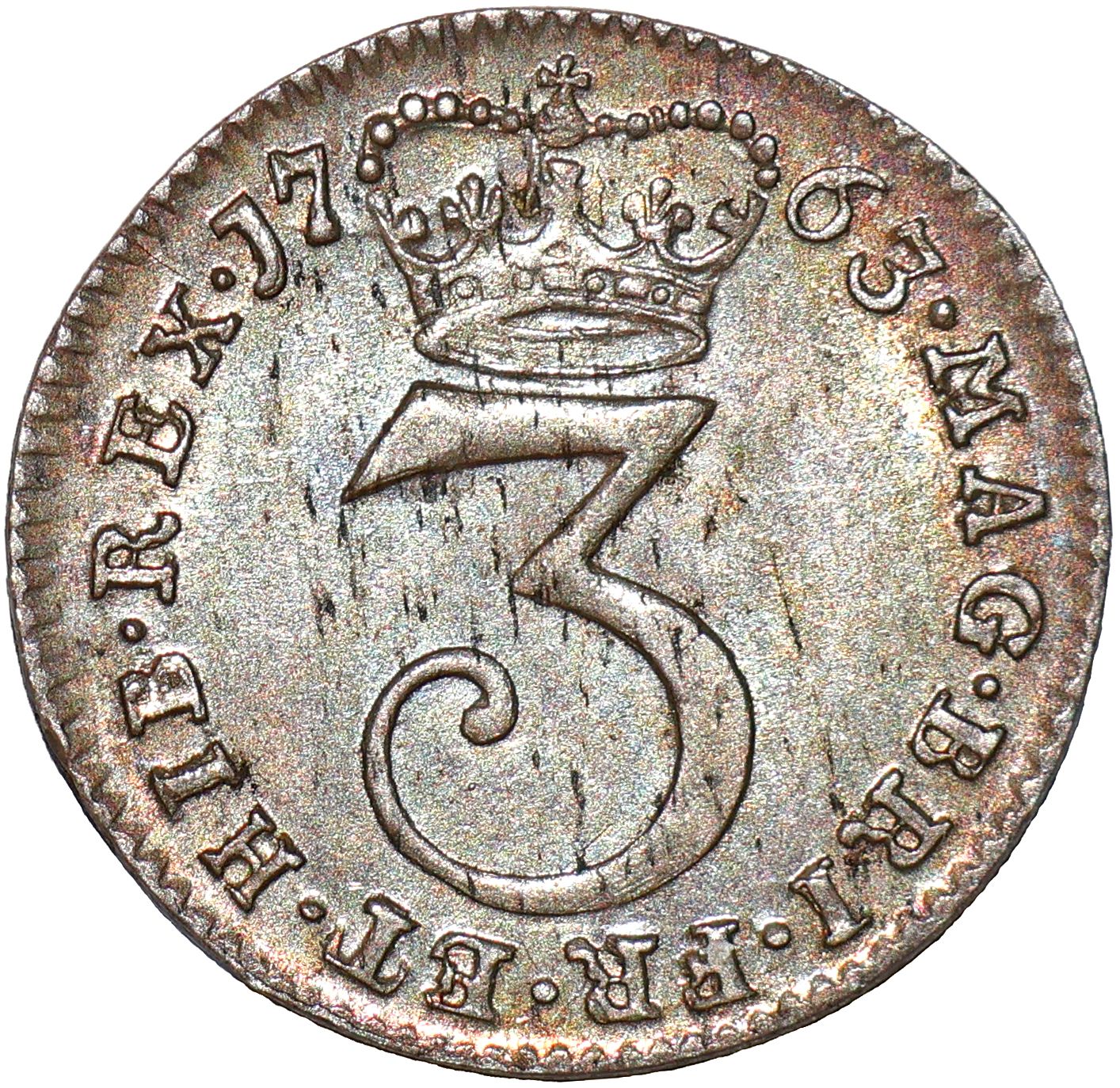
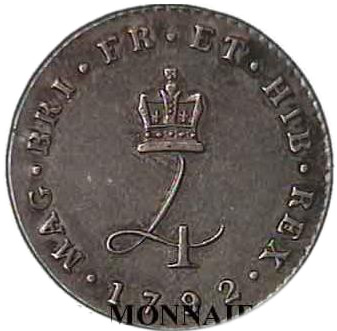
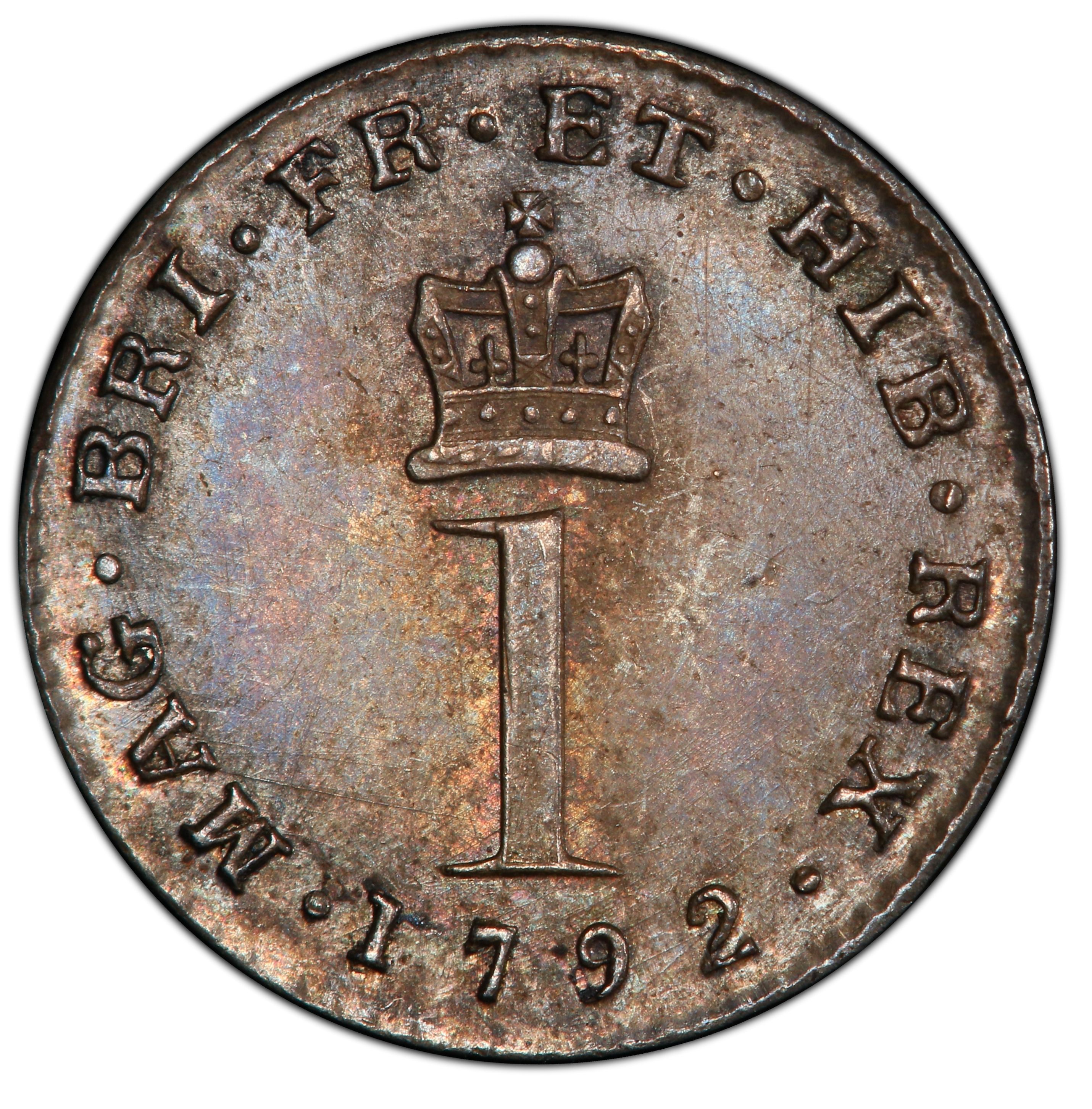
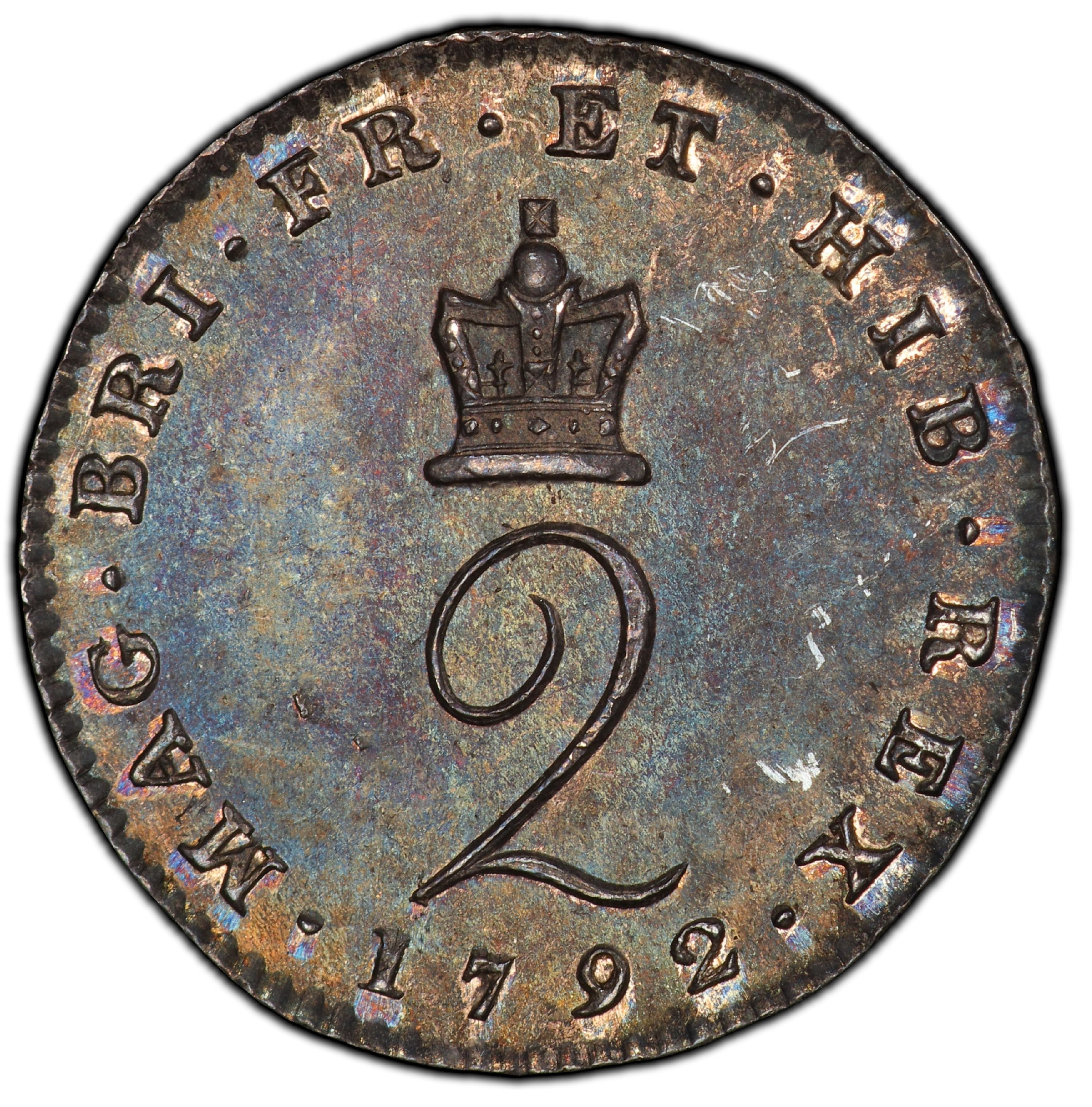
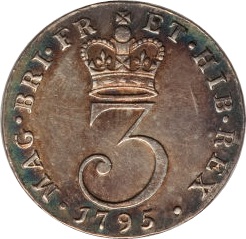
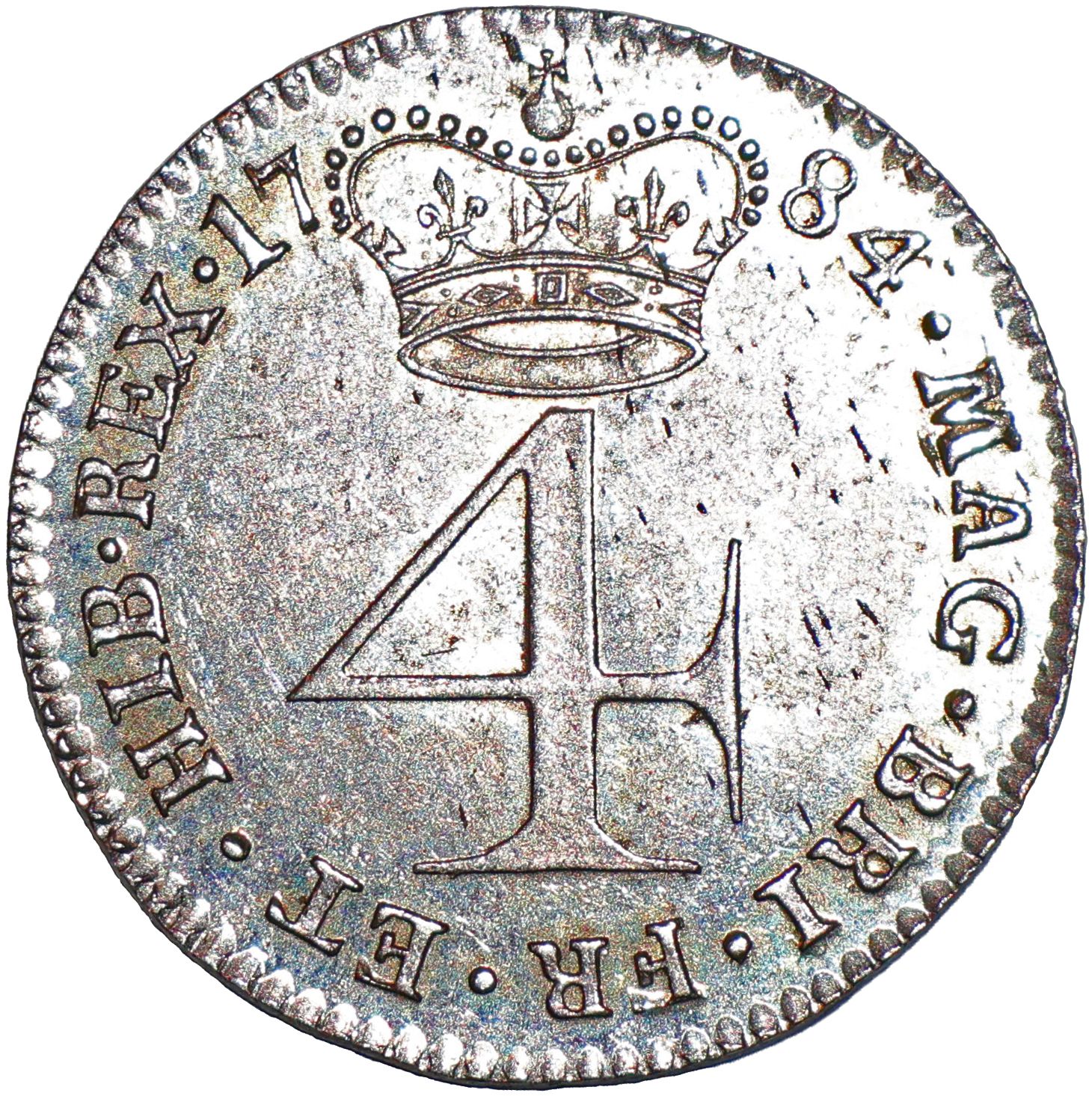
Central denomination below crown dividing date, legend around.
MAG BRI FR ET HIB REX
Find this on eBay
Affiliate4 Pence - George III incl. Maundy price history
Daily limit reachedAbout the 1763 4 Pence - George III incl. Maundy
The 1763 4 Pence - George III incl. Maundy is a collector 4 pence coin issued from 1763 to 1786 in the Maundy Money series, struck in 92.5% silver. It weighs 2g and measures 19mm across. Reverse design: Central denomination below crown dividing date, legend around.
It is no longer legal tender, so its value is to collectors only.
Common questions
How much is the 1763 4 Pence - George III incl. Maundy worth?
No verified sale of the 1763 4 Pence - George III incl. Maundy has been logged on MyCoinage yet. Its silver content is worth about £2.38 at today's spot price, which puts a floor under its value.
Which dates of the George III groat are there?
Tony Clayton lists 1763, 1765, 1766, 1770, 1772, 1776, 1780, 1784 and 1786 for this first type. A new design followed in 1792, then another in 1795 and 1800, and a smaller coin with Pistrucci's head from 1817.
Which George III fourpence is rarest?
The 1765. Wikipedia's fourpence article says 1765-dated groats are of the highest rarity among George III pieces. Clayton's values list shows the same gap.
How many were made?
No mintage figure is published for any date. CoinVarieties, citing the Krause and Spink catalogues, records each date it covers as unknown, while noting that enough were saved in Maundy sets that the type is not rare today.
Was the George III groat a circulating coin or Maundy money?
Both, in effect. Wikipedia says groats were issued irregularly for general circulation up to George III, and the Royal Mint Museum catalogues its 1763 to 1776 examples as currency. The fourpence was also part of Maundy sets, which is why many survive in good condition.
How do I identify the 1763 4 Pence - George III incl. Maundy?
Check the weight 2g and diameter 19mm and the metal (92.5% silver) against the specification table on this page. The reverse design is described above.
History and design
The fourpence, or groat, was still struck for general use when George III came to the throne. Wikipedia's groat article says groats were issued on an irregular basis for general circulation from Charles II to George III, and Clayton writes that the milled fourpence was made fairly regularly until this reign. Clayton lists George III's first groat for 1763, 1765, 1766, 1770, 1772, 1776, 1780, 1784 and 1786. No mintage figures are published.
The Royal Mint Museum catalogues its groats of 1763, 1772 and 1776 as currency coins. Clayton's Maundy list shows the fourpence in every year of this type, but in 1765, 1770 and 1776 it was struck alongside only some of the smaller coins, so those Maundy sets are incomplete.
The obverse shows a laureate bust of the King facing right, draped and in armour, with GEORGIVS III DEI GRATIA. Wikipedia's fourpence article says this first obverse may have been by Richard Yeo. The reverse has a crowned 4 with MAG BRI FR ET HIB REX and the date, the same titles used under George II. Wikipedia notes slight changes to the reverse in 1784 and 1786.
A Science Museum Group record of a 1763 groat gives both legends in this form. The Royal Mint Museum's 1763 example weighs 2.04 g, has a plain edge and coin alignment.
Varieties and errors
The 1772 groat exists with the 2 over a 0, recorded on the Royal Mint Museum's own example; CoinVarieties notes that this overdate carries a slight premium. Clayton also lists a 1763 proof, marked "ex rare". No mint errors are documented.
Collecting notes
The 1765 groat is the key date, described by Wikipedia as of the highest rarity among George III pieces. For the other dates CoinVarieties notes that enough were saved that the type is not rare, though nice examples take some finding. Check the last digit of a 1772 for the overdate, and look for mounting marks.
The threepence of 1762 to 1786 shares the portrait and legends, and the groat was followed by the 1792 wire money fourpence.
Sources
The history, design, varieties and collecting notes on this page are drawn from these sources. Prices come from recorded sales, not from them.
- Fourpence (British coin), Wikipedia (read 12 Oct 2026)
- Four Pence, Tony Clayton, Coins of the UK (read 12 Oct 2026)
- Values of Fourpence (Groats), Tony Clayton, Coins of the UK (read 12 Oct 2026)
- Values of Maundy Sets, Tony Clayton, Coins of the UK (read 12 Oct 2026)
- Groat (English coin), Wikipedia (read 12 Oct 2026)
- Groat coin (Maundy Money) of George III, 1763 (V&A no. 808-1906), Science Museum Group, via Museum Data Service (read 12 Oct 2026)
- George III fourpence, 1763 (RMM 1032), The Royal Mint Museum, via Museum Data Service (read 12 Oct 2026)
- George III fourpence, 1772 (RMM 1033), The Royal Mint Museum, via Museum Data Service (read 12 Oct 2026)
- Great Britain 1772 4 pence, CoinVarieties (read 12 Oct 2026)
- Great Britain 1763 4 pence, CoinVarieties (read 12 Oct 2026)
More from Maundy Money