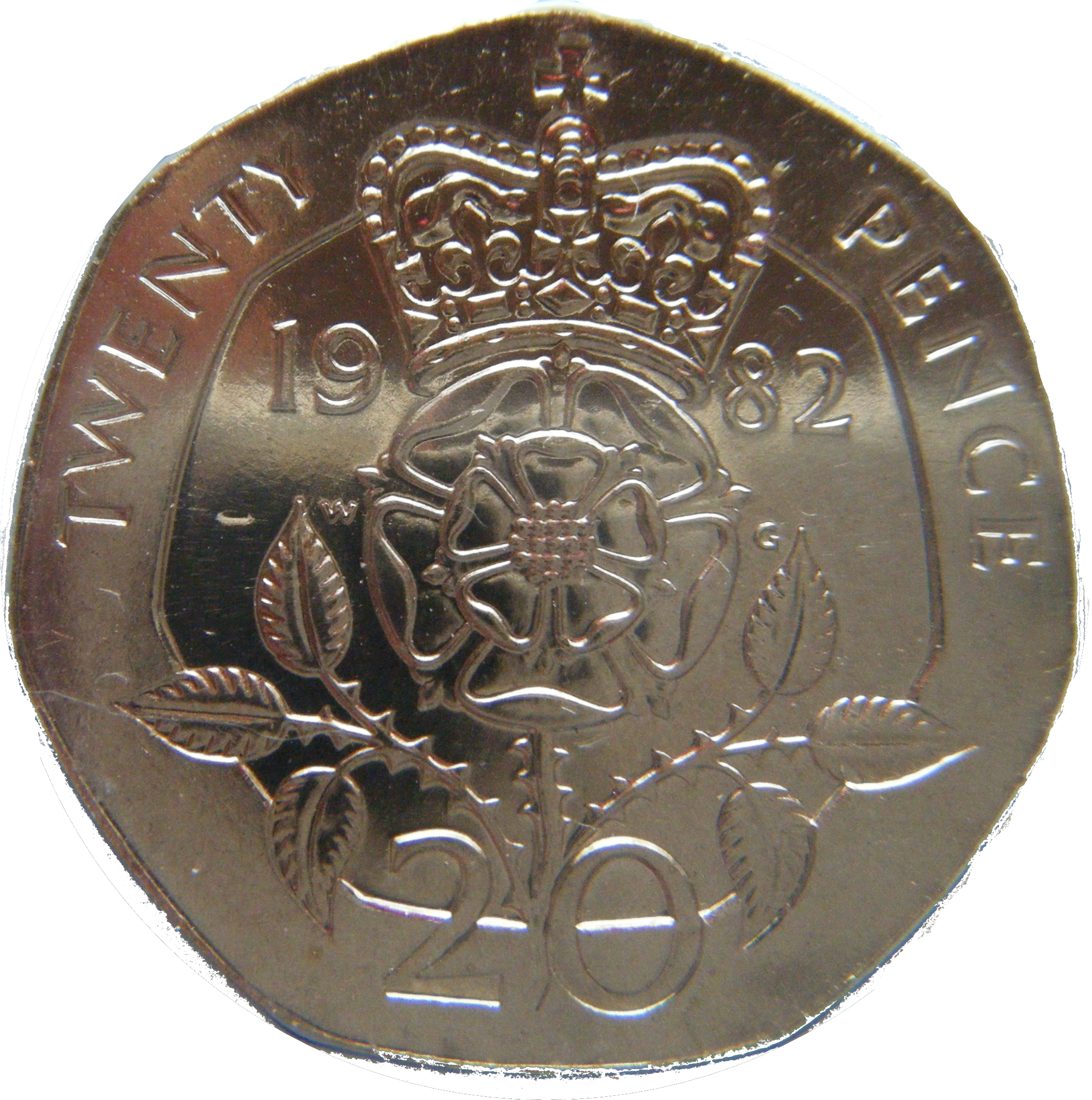
The 2008 undated 20p is the only modern British circulation coin with no date on either side, a Royal
Mint die-mismatch that produced an estimated 50,000-200,000 examples before the error was caught. Today it's
the most-collected modern decimal error, trading at £50-150 in everyday grade and £200-400 slabbed.
This guide covers identification, mintage, current realised prices and where to sell.
In brief. In 2008 the Royal Mint redesigned coinage with the Matthew Dent Royal Shield reverse,
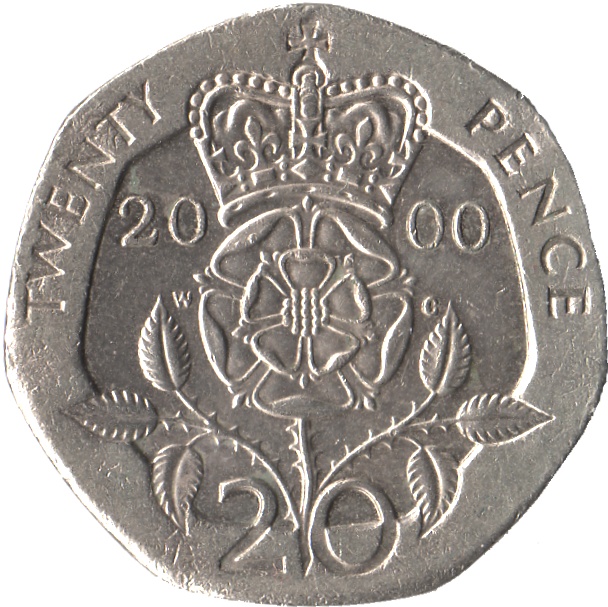
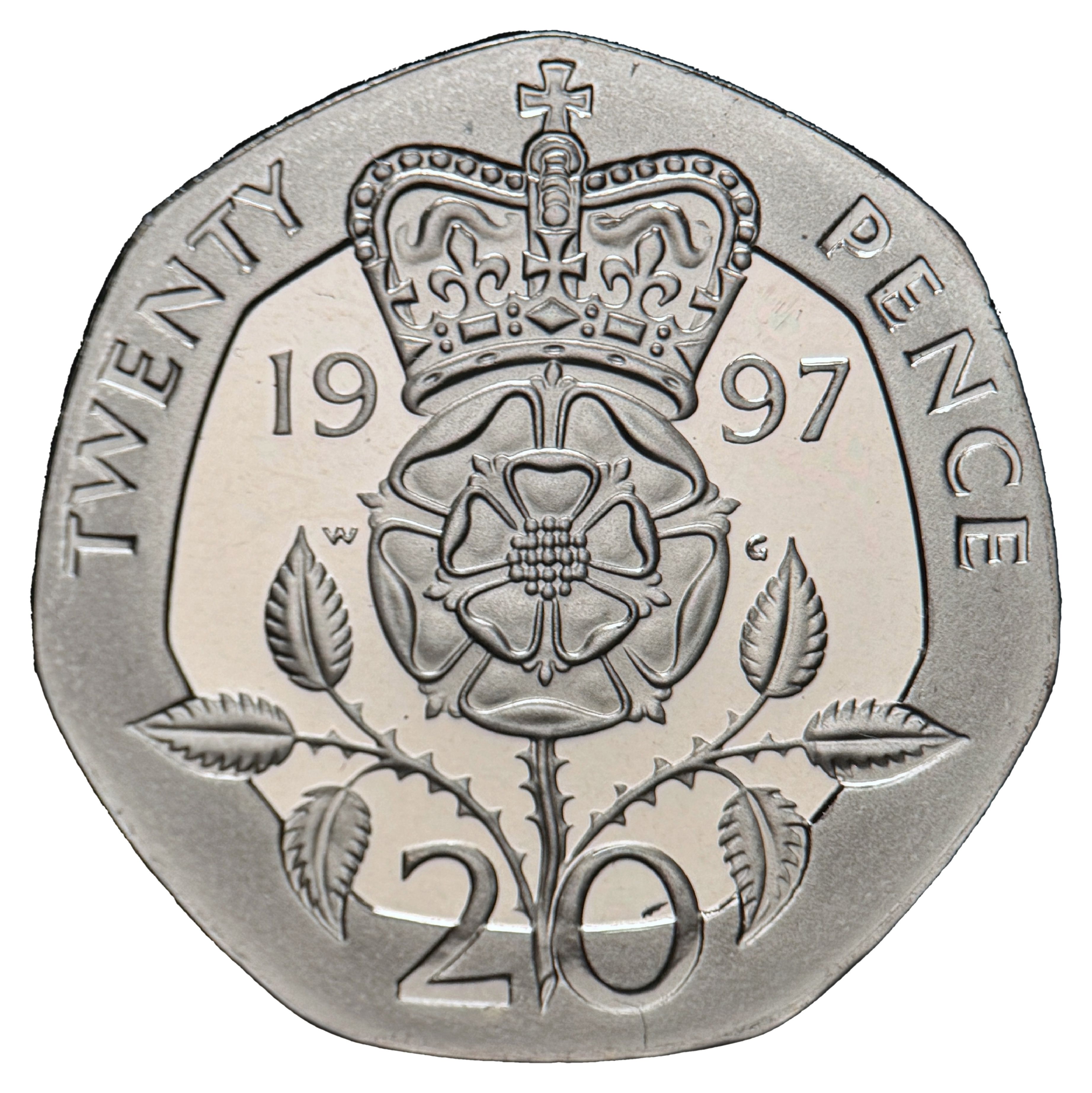
moving the date from the reverse to the obverse. A batch of 20ps mixed an OLD (pre-2008) obverse (no date) with
the NEW Royal Shield reverse (no date), producing the only modern UK coin with no year on either side.
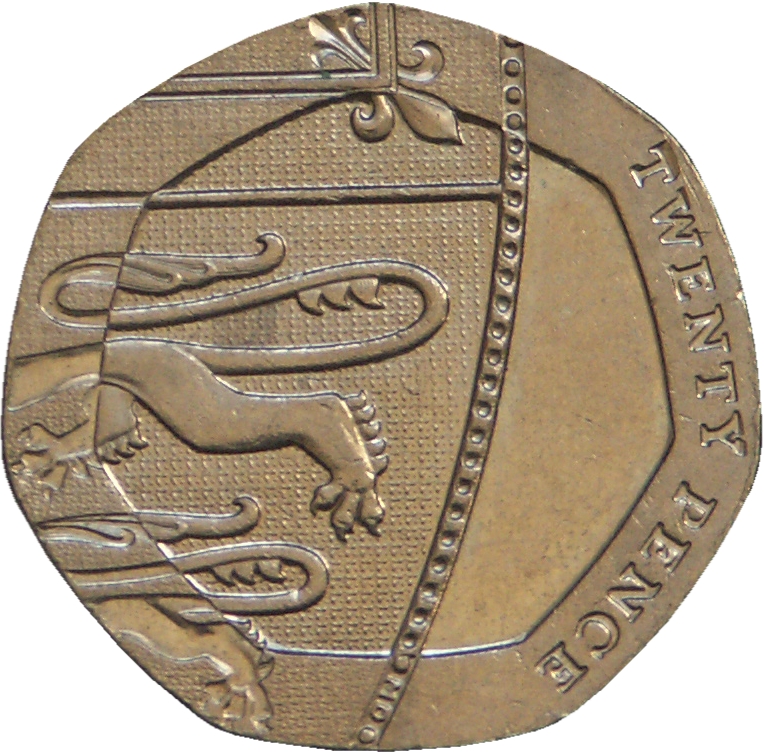
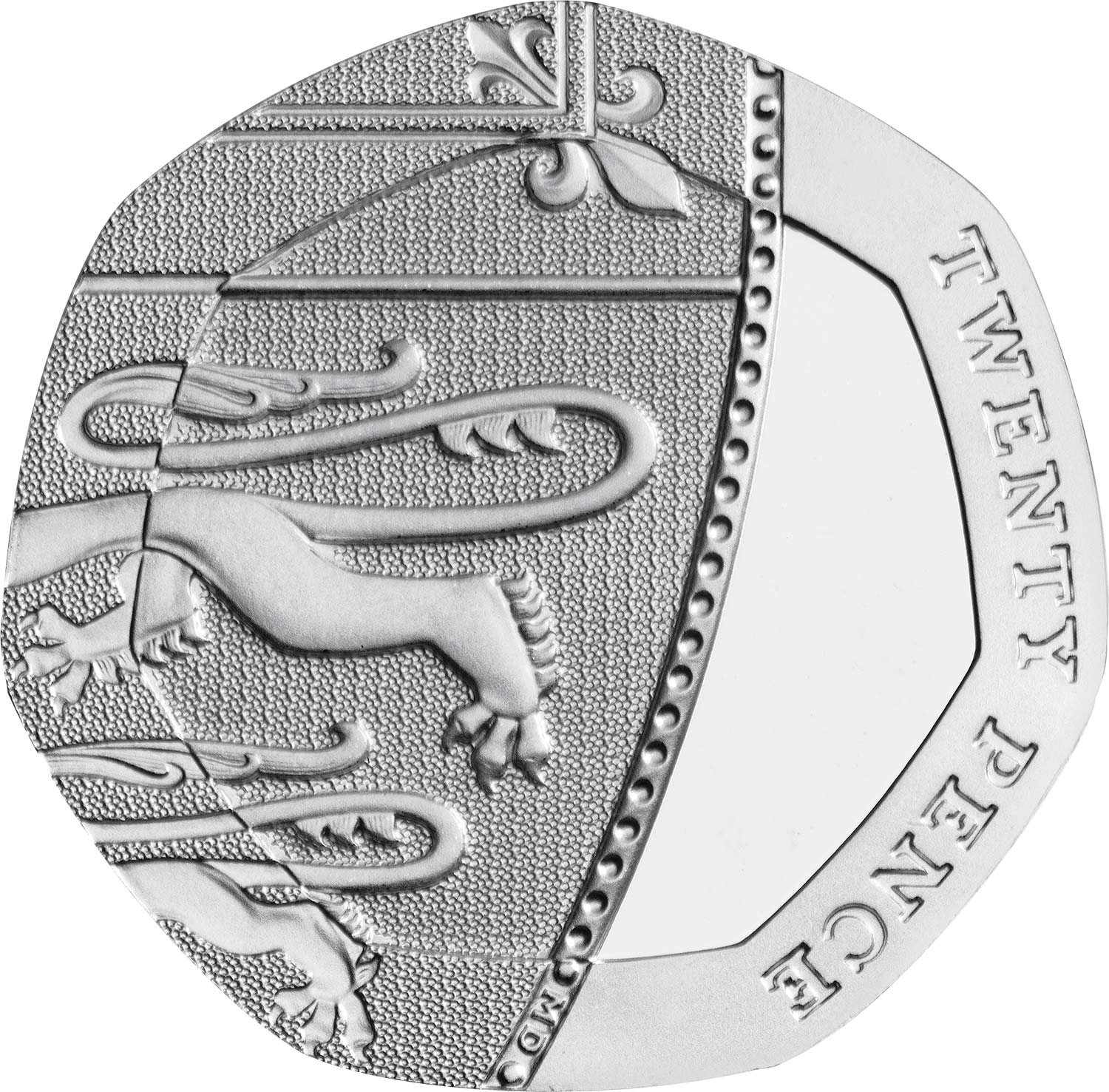
Identification: BOTH sides date-free, queen's portrait without "2008" below, partial Royal Shield reverse
rather than the older crowned-rose. Trades at £50-150 raw, £200-400
slabbed.
Current realised prices
| Grade | Realised price 2026 | Notes |
|---|
| Circulated (Fine to VF) | £50 – £100 | Most common condition; eBay flips dominate |
| EF / aUNC | £100 – £180 | Light wear, no surface damage |
| BU / mint state | £150 – £250 | Pulled from rolls, never circulated |
| Slabbed CGS UK / NGC MS-65+ | £220 – £400 | Authentication premium worth the £25-30 slab fee |
| Slabbed PCGS MS-66 or higher | £350 – £500+ | Top-tier auction realisations |
How to identify the undated 20p
Three checks, both sides:
- Obverse (queen's portrait side): inscription "ELIZABETH II D G REG F D". No date below the bust. The post-2008 obverse adds the date right below the queen's portrait; the pre-2008 obverse doesn't.
- Reverse (design side): partial Royal Shield design (a section of heraldic shield, by Matthew Dent, introduced 2008). No date. The pre-2008 reverse showed the crowned Tudor rose with the date.
- Both sides date-free? You have the mule. EITHER side with a date = regular 20p, not the error.
Featured 20p coins on MyCoinage
Buy or check 2008 undated 20p prices on eBay
The links below open eBay UK searches; if you buy through them, MyCoinage earns a small commission at no cost to you.
2008 undated 20p (sold prices) ↗
2008 undated 20p (Buy It Now) ↗
2008 20p mule ↗
Slabbed undated 20p (sold) ↗
20p collection lots (find one cheap) ↗
Royal Shield 20p (the standard issue) ↗
Frequently asked questions
How much is a 2008 undated 20p worth?
A genuine 2008 undated 20p (the obverse-reverse mule, where the 2008 redesign accidentally produced a coin with no date on either side) trades at £50-150 in everyday circulated grade and £100-250 in BU / mint state. Slabbed CGS or PCGS examples can fetch £200-400 depending on the grade. Estimated 50,000-200,000 entered circulation before the error was identified. It remains one of the most-collected modern British coin errors.
Why is the 2008 20p undated?
In 2008 the Royal Mint redesigned all the circulating coinage with the Matthew Dent "Royal Shield" reverse. Before 2008, every 20p had its DATE on the reverse. The new Royal Shield reverse moved the date to the OBVERSE (alongside the queen's portrait). However, a small batch of 20p coins were struck mixing an OLD obverse (without a date) with the NEW Royal Shield reverse (also without a date, by design). Result: the only modern British circulation coin with no year on either side. Hence "undated".
How do I tell if my 2008 20p is the undated mule?
Look at BOTH sides of any 2008-era 20p. Obverse: if the queen's portrait shows the inscription "ELIZABETH II D G REG F D" with NO date below it, you have the old (Maklouf-era) obverse. Reverse: if you see the partial Royal Shield design (a section of the heraldic shield, not the older crowned-Tudor-rose), you have the new 2008+ reverse. Both sides without a date = the undated mule. Either side WITH a date = a regular 20p, not the error.
Are there other undated UK coins?
No, in modern decimal coinage. The 2008 undated 20p is the only modern British circulation coin without a date. Hammered medieval coins (pre-1660) often have no date because dating coins wasn't the convention then; modern issues from 1662 onwards always carry a year. The 2008 20p mule is genuinely unique in 350+ years of dated British minting.
How many were made?
The Royal Mint has never published the exact count, but the most credible estimates from numismatic researchers (working from die-pair analysis and survival data) put it at 50,000 to 200,000 coins. By comparison, the standard 2008 20p had a mintage of 110,712,000. So the undated mule is roughly 1 in 1,000 of the 2008-era 20ps in circulation. With aggressive collecting since 2009 a meaningful fraction has been pulled from change; today's circulation rate is much lower than the original 1-in-1,000.
Is it legal to keep an undated 20p?
Yes, it's a genuine Royal Mint product, just one that resulted from a die mismatch rather than a planned issue. There's no legal issue with owning it, selling it, or spending it (though spending it at face value would be a substantial loss). The Royal Mint has acknowledged the error publicly. Some collectors have asked whether the Mint would buy them back; the answer is no, the Mint's position is that the coins are legal tender and can stay in circulation or be collected on the open market.
Are there other 2008 20p errors?
Various minor varieties exist alongside the famous undated mule. Some 2008 20ps have been found with the new obverse (date on obverse) AND the old reverse (date on reverse), effectively a "double dated" 2008 20p. This is the inverse mule and is also collectable but trades at lower prices than the undated version (typically £15-30). True die-clash errors and off-centre strikes from 2008 also exist; these are normal minting accidents and trade based on visual appeal rather than the systemic-mule story.
How do I authenticate an undated 20p?
For everyday-grade examples, the visual checks above are sufficient because the error is unmistakable when you know what you're looking for. For high-value examples (slabbed BU / mint state for sale at £150+) third-party grading by CGS UK, NGC or PCGS authenticates AND grades in one step. Any grading service will spot a doctored coin (e.g. a regular 2008 20p with the date physically removed) under 10x magnification.
Should I keep the 2008 undated 20p or sell it?
It's your call, but two factors. Long-term appreciation: the coin has held its value steadily since the error became widely known in 2009; it has not appreciated significantly in real terms since 2015. Liquidity: there's a steady eBay market with multiple sales per week, so selling is easy at £50-150. If you bought it from change for face value, the tax-free profit is real. Decision: keep one for the collection, sell duplicates if you have multiples.
How does this compare to the 1983 New Pence 2p?
Both are Royal Mint die-mismatch errors that became famous modern rarities. The 1983 "NEW PENCE" 2p (where a 1983 proof set received a 2p with the obsolete "NEW PENCE" reverse instead of the 1983 "TWO PENCE" reverse) trades at £500-1,500 because mintage was much lower (estimated under 5,000) and supply has been more aggressively pulled from circulation. The 2008 undated 20p is more numerous (50,000-200,000) so trades at the lower £50-150 tier. Both are legitimate Royal Mint errors with documented history; both are commonly faked, so authentication is essential at the higher value.
Where should I sell my 2008 undated 20p?
For raw circulated examples (worth £50-100): eBay UK with clear photos of both sides, in a category buyers actively browse. For BU / mint state (worth £150+): consider slabbing first (£25-30 grading fee) then selling slabbed. For BU slabbed examples worth £250+: BNTA-member dealer outright purchase or specialist auction consignment via
Baldwin's /
Spink. Avoid: pawn shops and "cash 4 coins" mall kiosks, they treat error coins as regular 20ps.
What does "mule" mean in numismatic terms?
A mule is a coin struck from two dies that don't belong together, usually because dies from different years or denominations got loaded into the same press by mistake. The name comes from the offspring of a horse and a donkey: a real animal but one that shouldn't exist. In British numismatics, the most famous mules are the 1983 "NEW PENCE" 2p, the 2008 undated 20p, the 1860/59 farthing (an old-date obverse paired with the new reverse), and various Victorian sovereign mules. Mules are genuine Royal Mint products, not counterfeits, but they were never meant to leave the factory.