Rarely sells: 1 verified sales in the last 12 months.
½ Penny - George I 2nd issue larger flan (1719–1724)
| Country | United Kingdom |
| Year | 1719–1724 |
| Denomination | ½ Penny |
| Mint | Royal Mint · Llantrisant |
| Circulation | Circulating |
| Demonetised | 1817 |
| Composition | Copper |
| Weight | 9.860g |
| Diameter | 27.0mm |
| Shape | Round |
| Orientation | Coin alignment ↑↓ |
| Grade scale | UK (EF/UNC) |
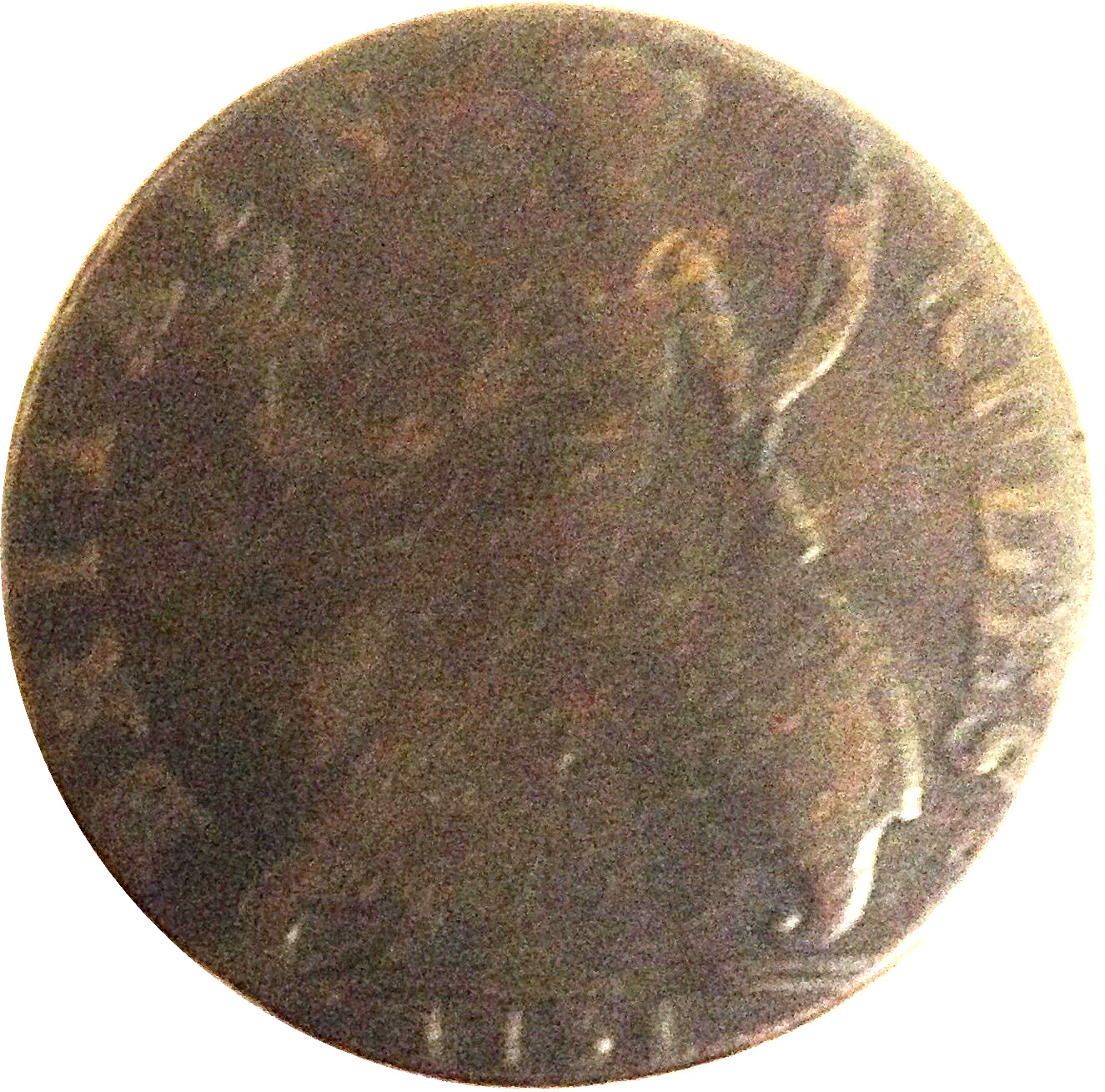
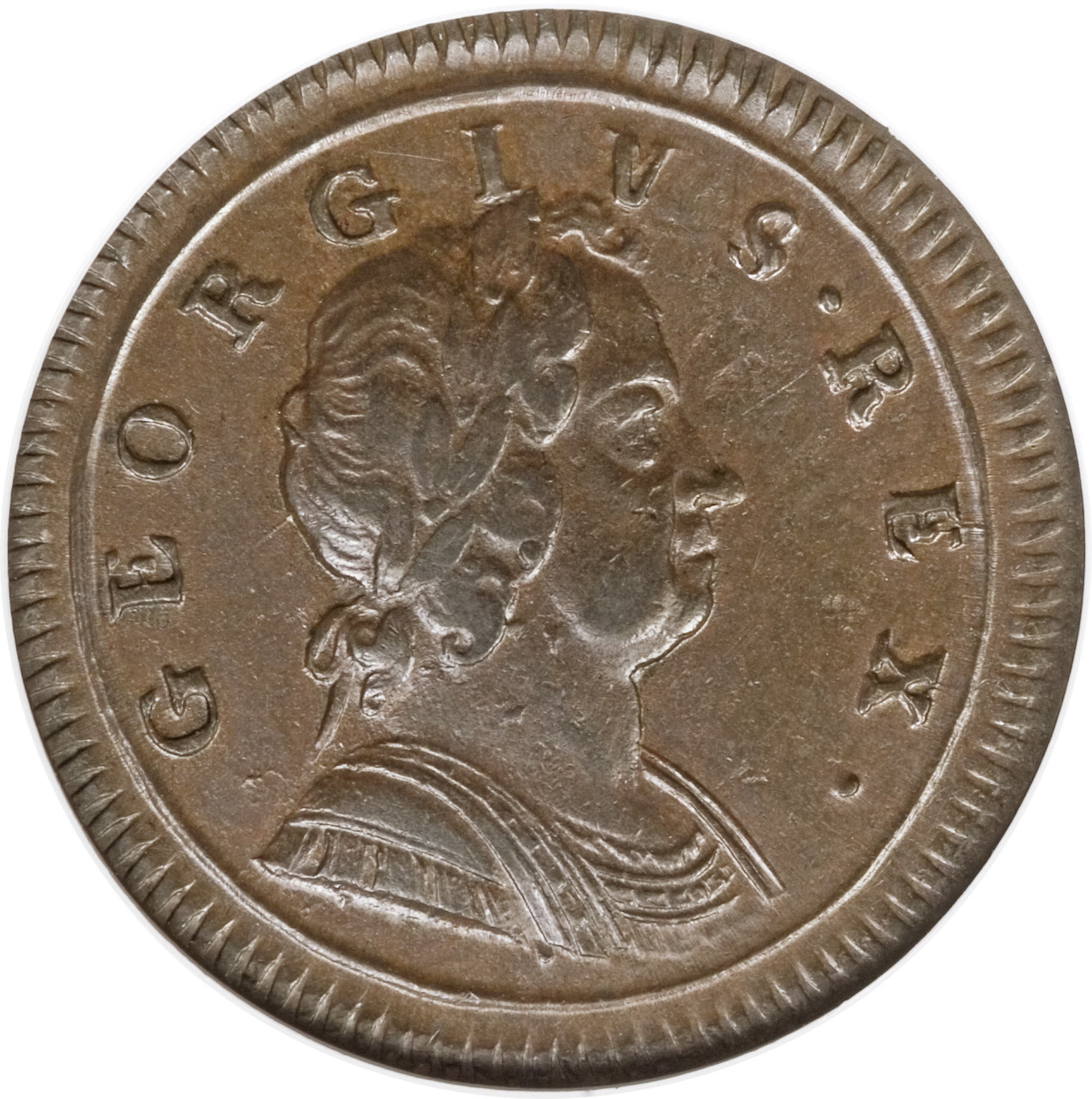
Laureate and cuirassed portrait of King George I facing right, legend continuous over bust.
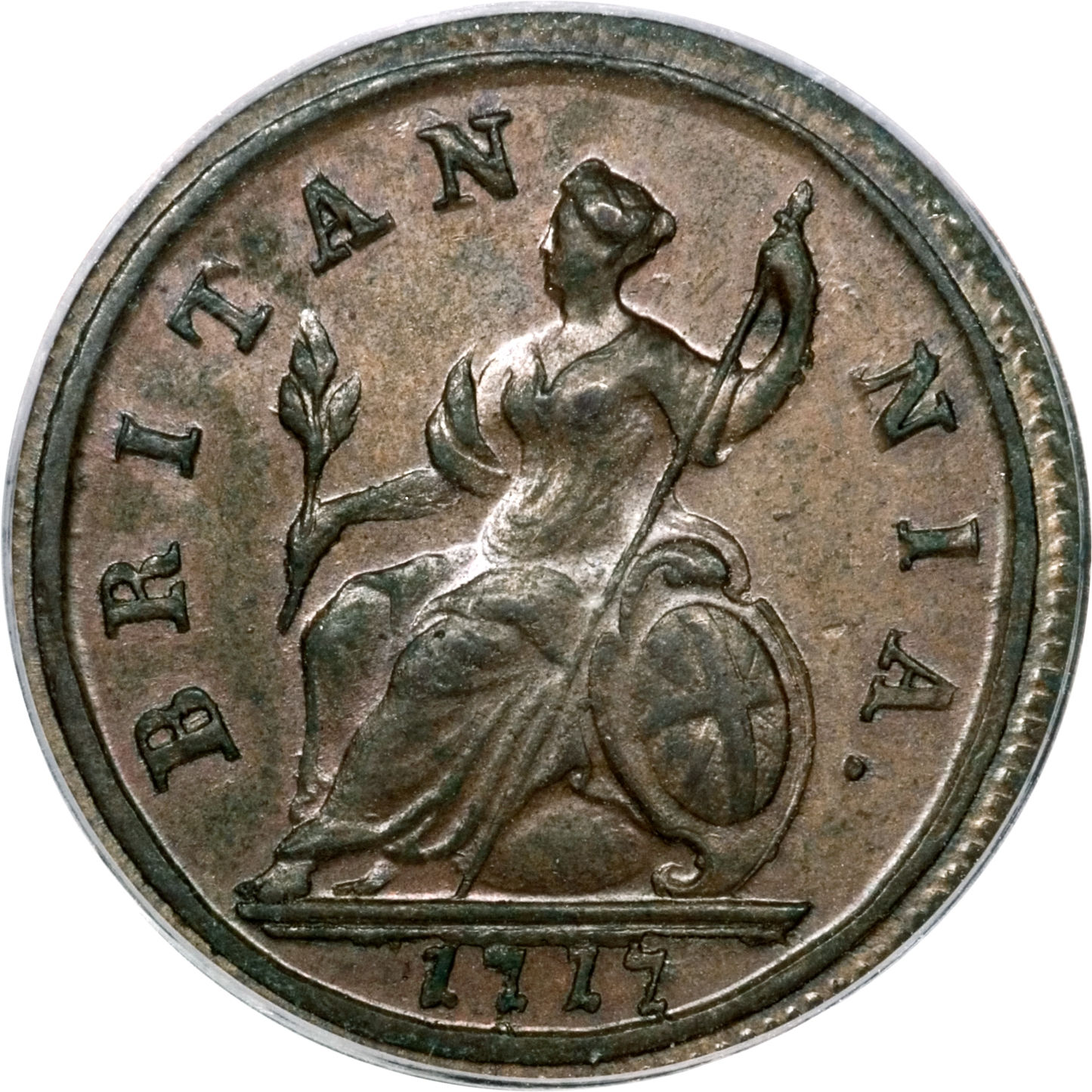
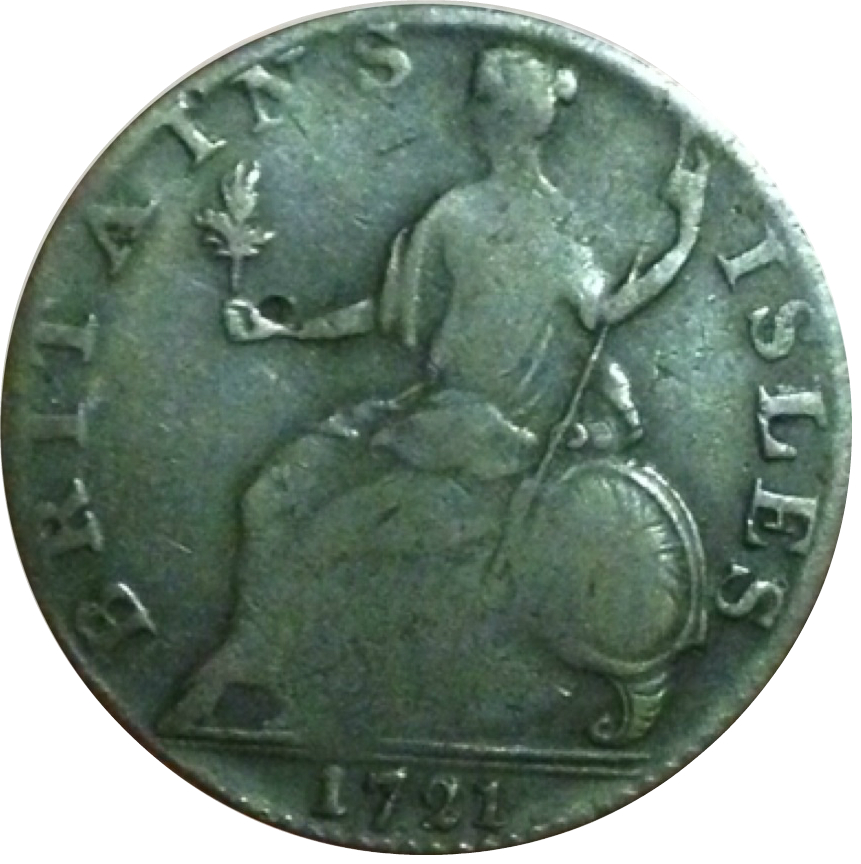
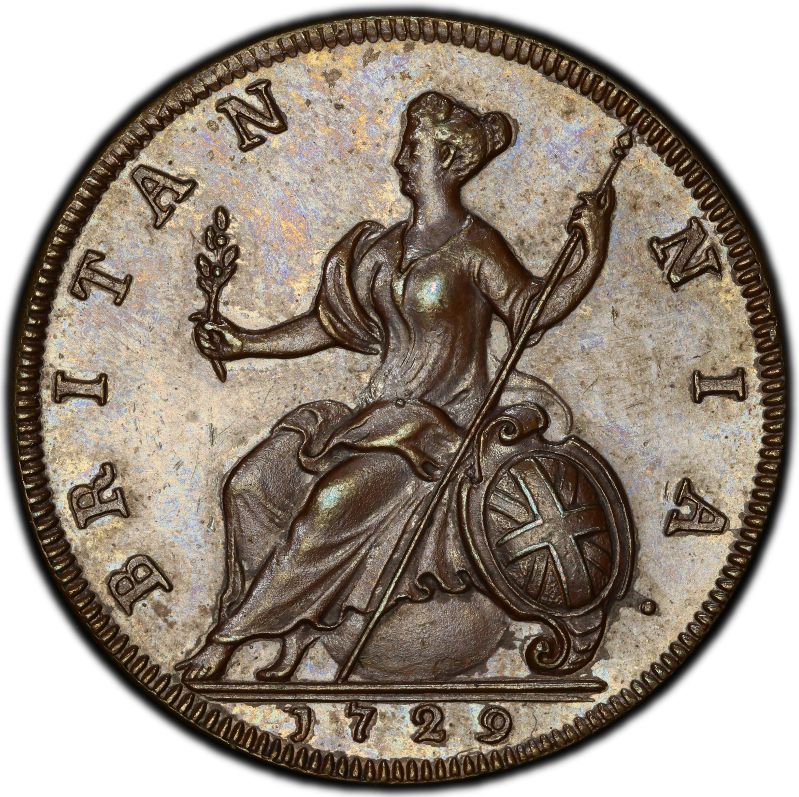
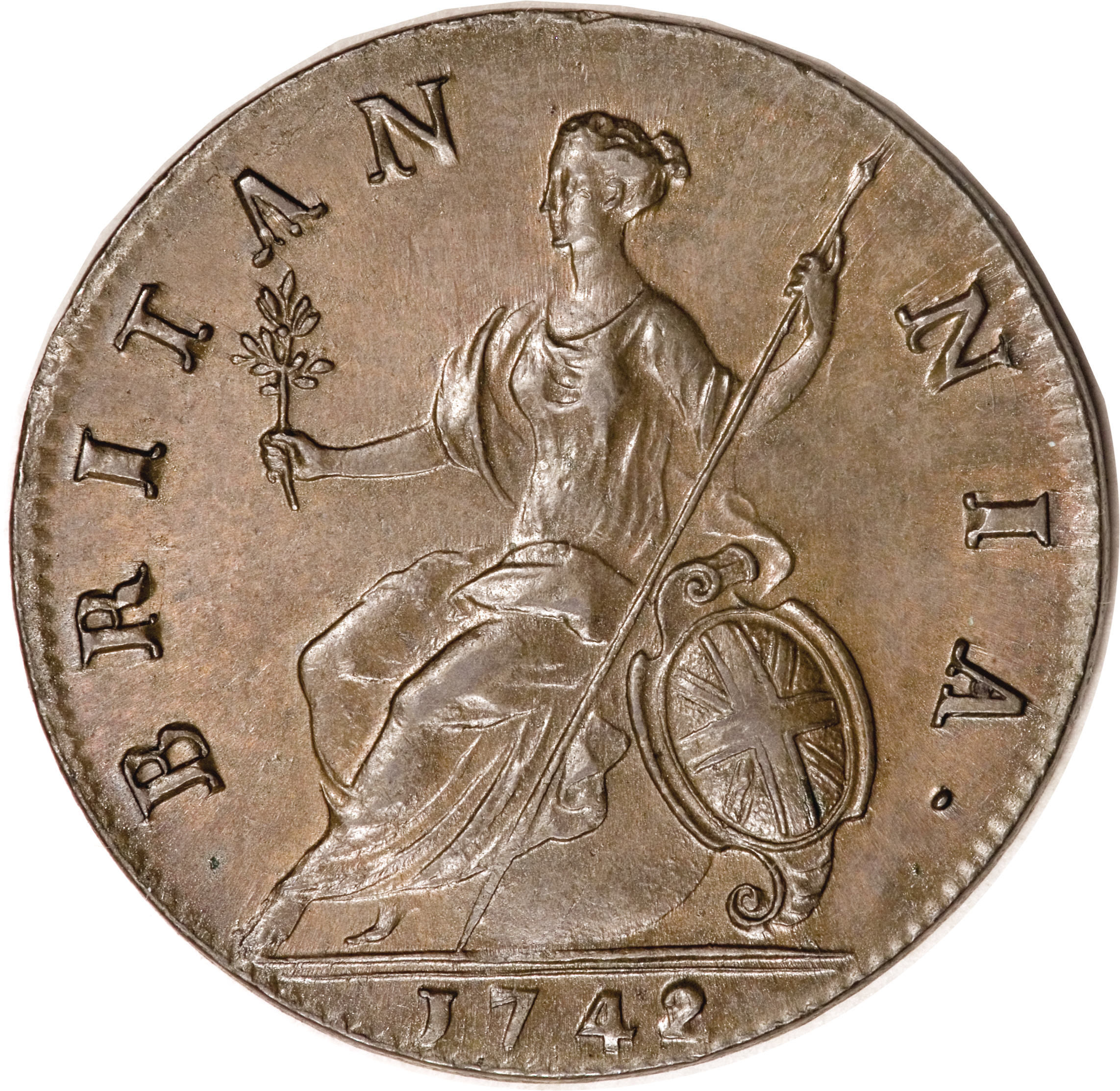
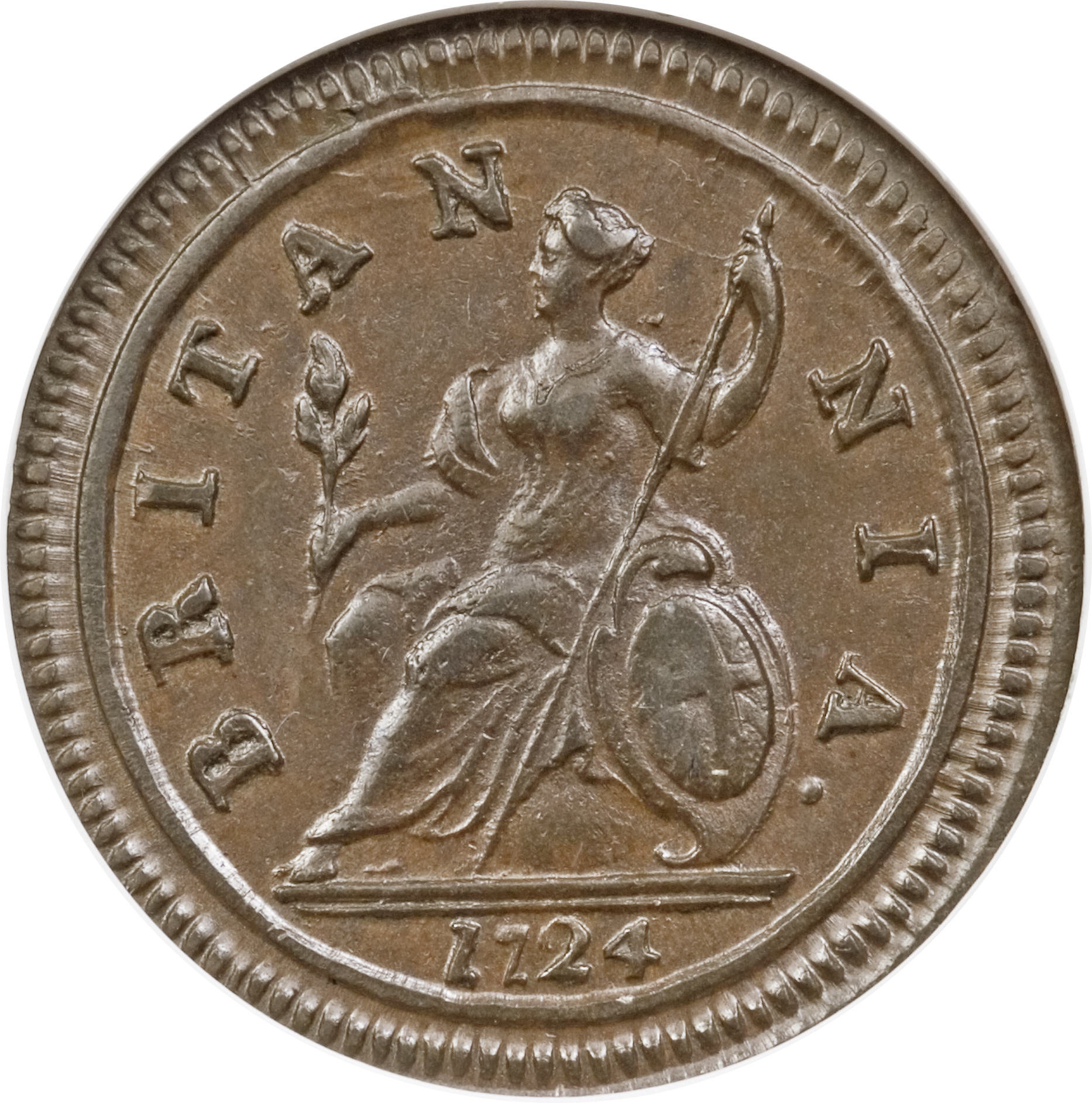
Seated figure of Britannia facing left, trident in left hand, olive branch in right, shield with Union flag resting on left, legend around, date in exergue.
larger flan Halfpenny market value
Find this on eBay
Affiliatelarger flan Halfpenny price history
Daily limit reachedlarger flan Halfpenny value by grade
Realised auction prices · ⭐ Pro Expand rows for individual sale records| Grade | Latest | Median | 30d Δ | All-time range | Sales (1yr) | Total sales | Last sale | |
|---|---|---|---|---|---|---|---|---|
| VF | £0.86 🔒 | £0.86 (1) | – | £0.86 – £0.86 | 1 | 1 | 10-08-2026 | |
|
Loading…
|
||||||||
About the 1719 Halfpenny - George I 2nd issue – larger flan
The 1719 Halfpenny - George I 2nd issue – larger flan is a circulating ½ penny coin issued from 1719 to 1724, struck in copper. It weighs 9.86g and measures 27mm across. Reverse design: Seated figure of Britannia facing left, trident in left hand, olive branch in right, shield with Union flag resting on left, legend around, date in exergue.
It is no longer legal tender (withdrawn 1817), so its value is to collectors only.
Common questions
How much is the 1719 Halfpenny - George I 2nd issue – larger flan worth?
The 1719 Halfpenny - George I 2nd issue – larger flan has a price in one grade on MyCoinage so far: £0.86 in VF, the median of its verified sales.
What changed on the halfpenny in 1719?
The size. The Dump halfpennies of 1717 and 1718 were small and thick; Wikipedia records that for the 1719 to 1724 issue the diameter was increased to 26 to 29 mm with the same weight of metal as before, giving a thinner, broader coin.
How many George I halfpennies were minted?
No mintage figures are published for any date from 1719 to 1724, so scarcity has to be judged from how often each date is seen. Clayton's list and Coin Hunter both cover every year of the type.
What varieties are there of the George I halfpenny?
Clayton and Coin Hunter both list a 1721 with a stop after the date, a 1722 with inverted As in place of the Vs on the obverse, and a 1723 without a stop on the reverse.
Is a George I halfpenny legal tender?
No. A proclamation of 5 December 1817, published in the London Gazette, declared that Mint halfpennies and farthings issued under proclamations before 26 July 1797 should no longer pass in any payment, and set 31 December 1817 as the date for handing them in at the Mint.
How do I identify the 1719 Halfpenny - George I 2nd issue – larger flan?
Check the weight 9.86g and diameter 27mm and the metal (copper) against the specification table on this page. The reverse design is described above.
History and design
George I's first halfpennies, the Dump issue of 1717 and 1718, were small and thick. Wikipedia's history of the halfpenny records that for the 1719 to 1724 issue the coin was enlarged to 26 to 29 mm across while keeping the same weight of metal, and Tony Clayton notes that it thus reverted to the dimensions of earlier reigns. The issue continued every year until 1724, and no more halfpennies were struck in the reign.
No mintage figures survive in the references for any of these dates. George II's halfpennies began in 1729, and Wikipedia describes them as the most prolific issue to that date, made alongside a flood of counterfeits.
The obverse carries a bust of George I facing right, and the reverse the seated Britannia with the date in the exergue, the arrangement Wikipedia describes for the Dump coins that preceded this issue. As with all British copper of the period, the coin has no statement of value and is known by its size.
Wikipedia's article on John Croker, Chief Engraver at the Mint from 1705 until his death in 1741, says he engraved almost all the dies for George I's coins.
Varieties and errors
Clayton's list and Coin Hunter's year pages agree on three varieties: a 1721 with a stop after the date, a 1722 with inverted As in place of the Vs on the obverse, and a 1723 with no stop on the reverse.
Collecting notes
These halfpennies are mostly found worn, so check the date, stops and lettering under magnification before calling a variety. The thinner, broader flan separates them from the 1717 and 1718 Dump halfpenny. They ceased to be current in December 1817, when a royal proclamation called in all Mint halfpennies and farthings issued before 26 July 1797.
Sources
The history, design, varieties and collecting notes on this page are drawn from these sources. Prices come from recorded sales, not from them.
- History of the halfpenny, Wikipedia (read 12 Oct 2026)
- Halfpennies, Tony Clayton, Coins of the UK (read 12 Oct 2026)
- Values of Halfpennies, Tony Clayton, Coins of the UK (read 12 Oct 2026)
- Coin values by year, 1719 to 1724 (year pages read one by one), Coin Hunter (read 12 Oct 2026)
- Pennies, Tony Clayton, Coins of the UK (read 12 Oct 2026)
- John Croker (engraver), Wikipedia (read 12 Oct 2026)
- Proclamation on copper coin, 5 December 1817, The London Gazette (read 12 Oct 2026)
More ½ Penny coins from nearby years