½ Penny - George II young bust (1729–1739)
| Country | United Kingdom |
| Year | 1729–1739 |
| Denomination | ½ Penny |
| Mint | Royal Mint · Llantrisant |
| Circulation | Circulating |
| Demonetised | 1817 |
| Composition | Copper |
| Weight | 9.860g |
| Diameter | 28.0mm |
| Shape | Round |
| Orientation | Coin alignment ↑↓ |
| Grade scale | UK (EF/UNC) |
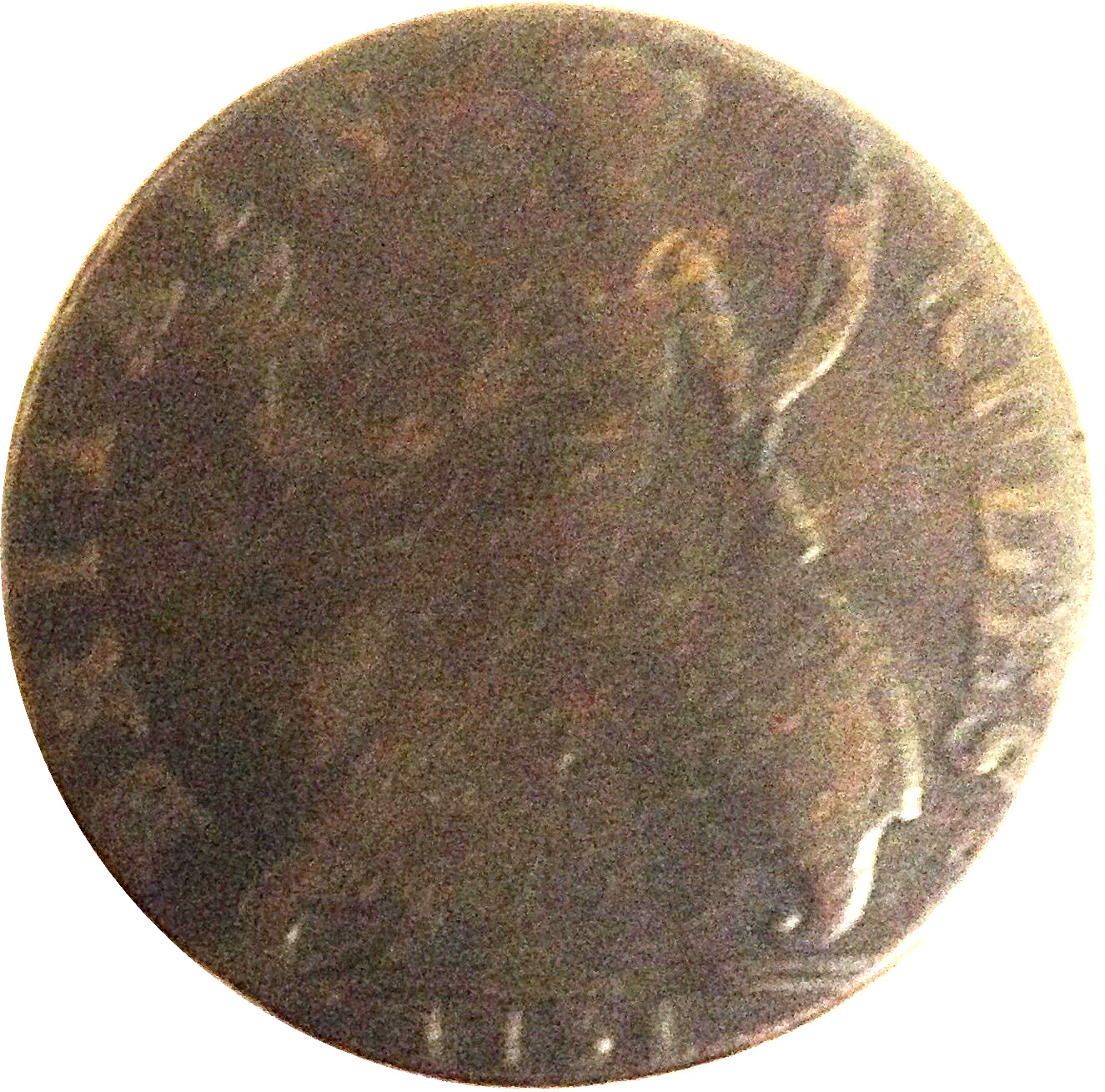
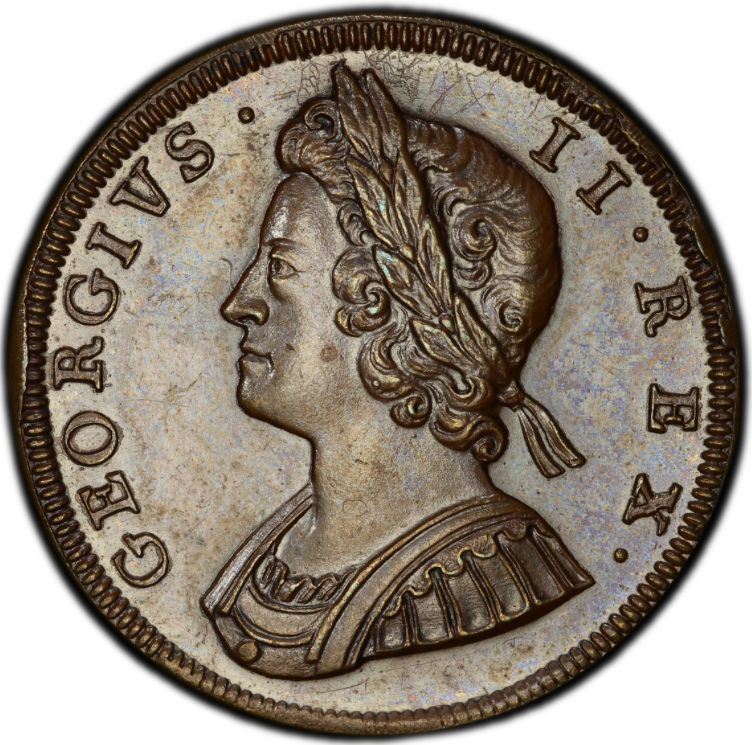
Young laureate and cuirassed portrait of King George II facing left, legend around.
GEORGIVS II REX
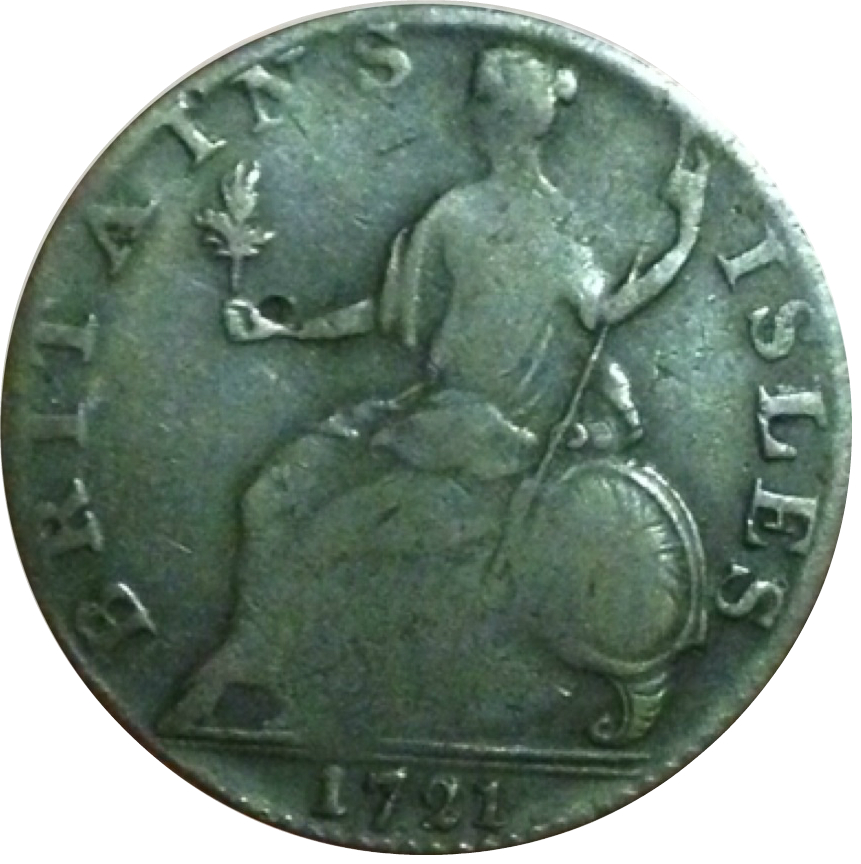
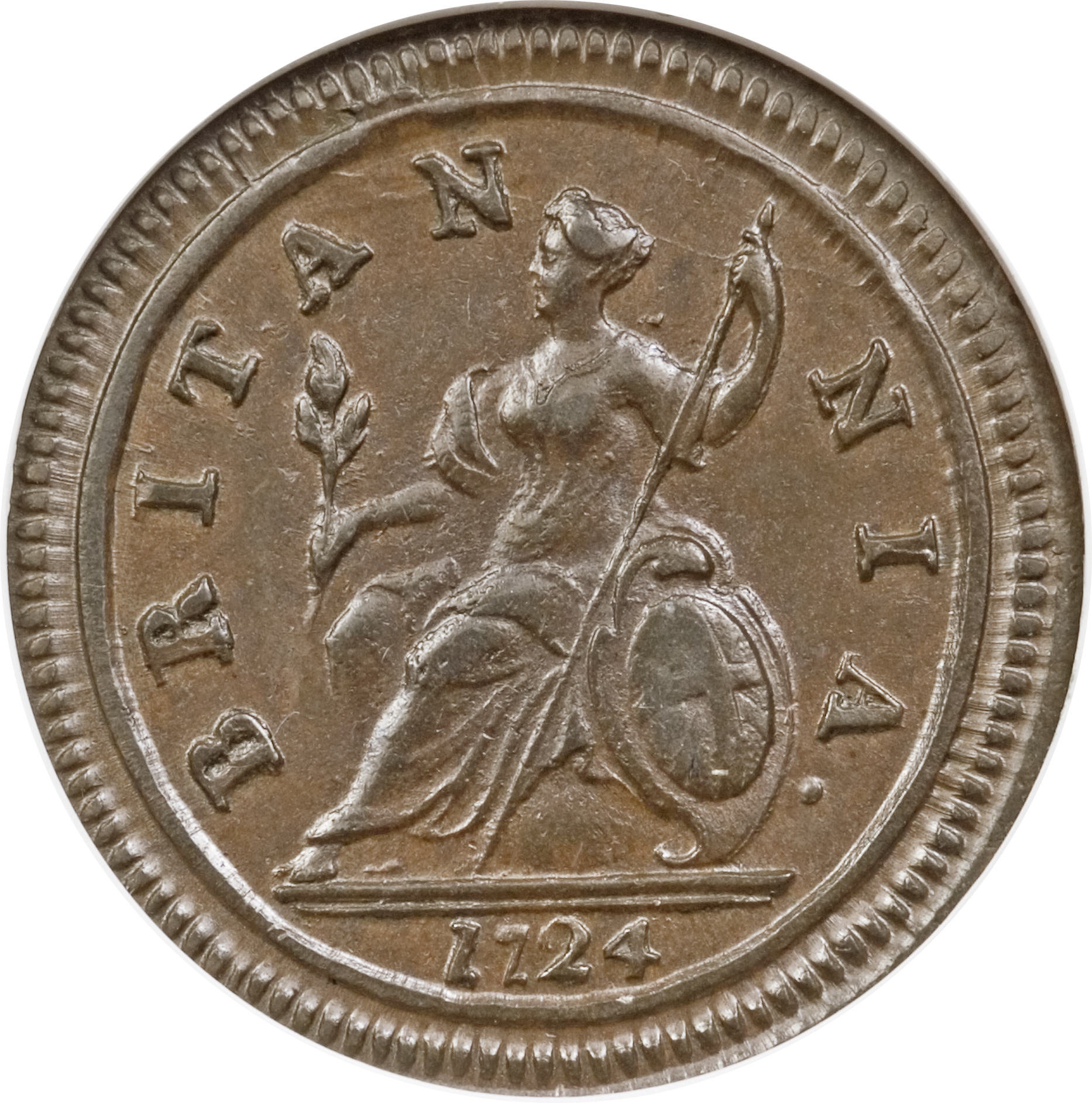
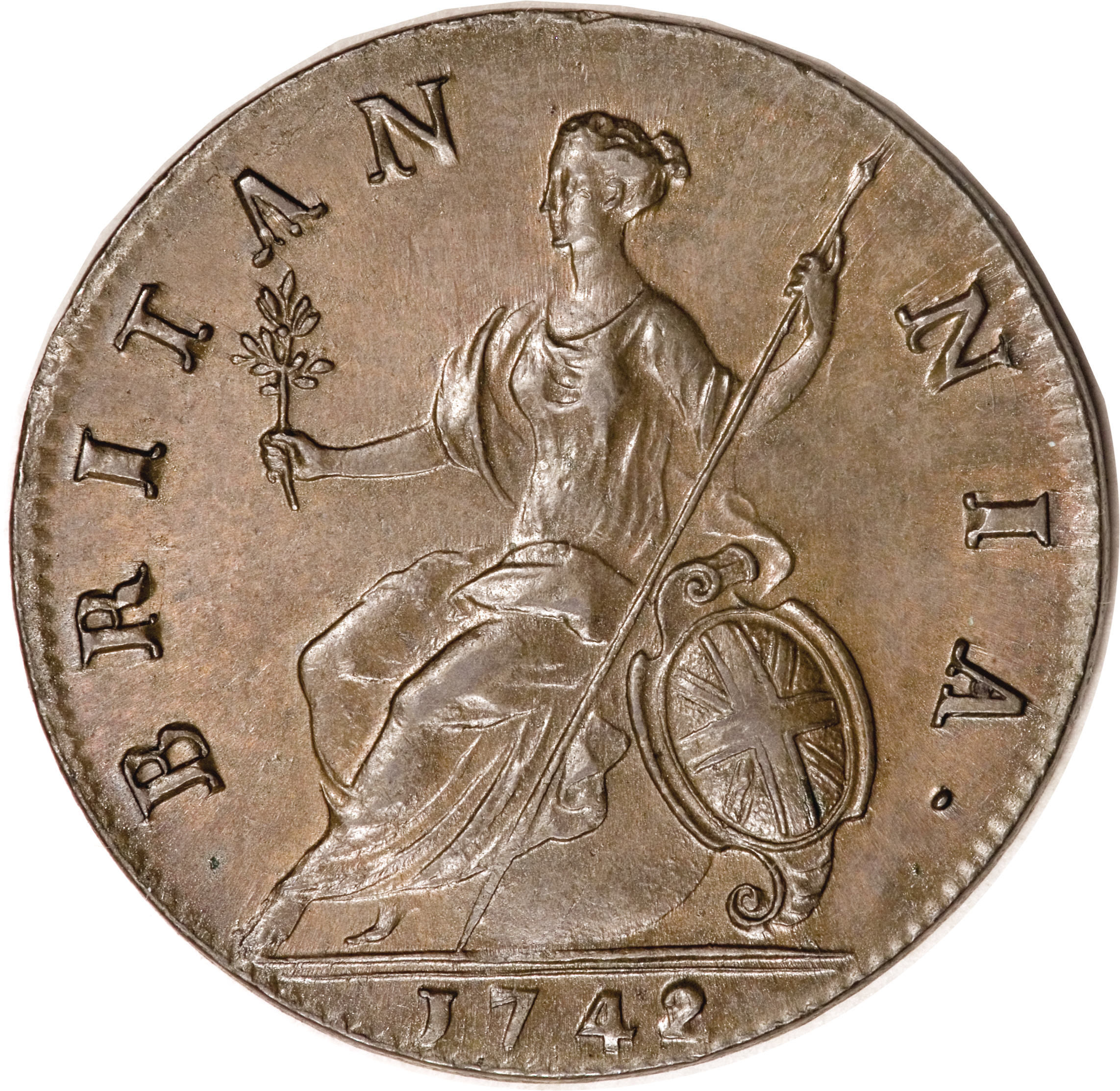
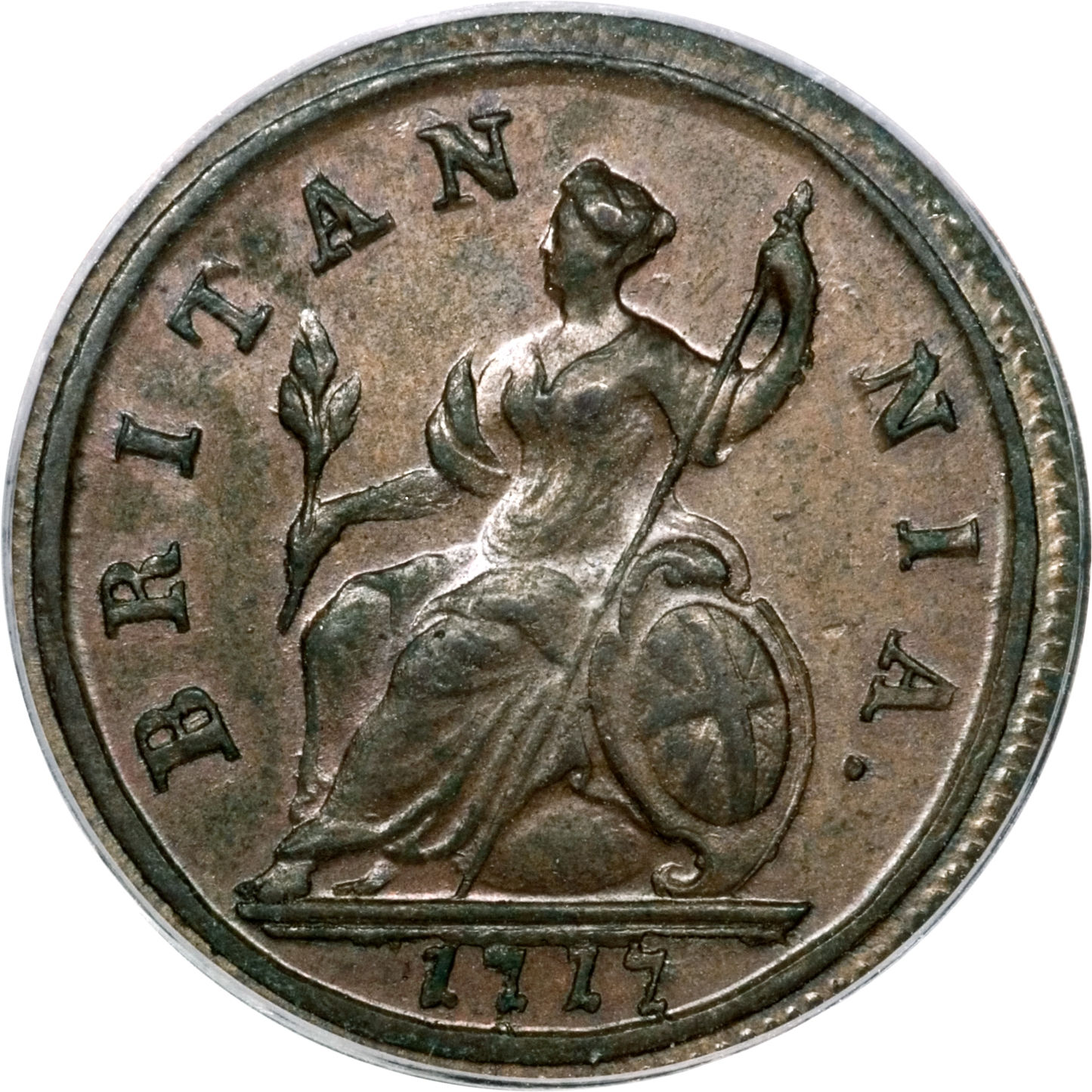
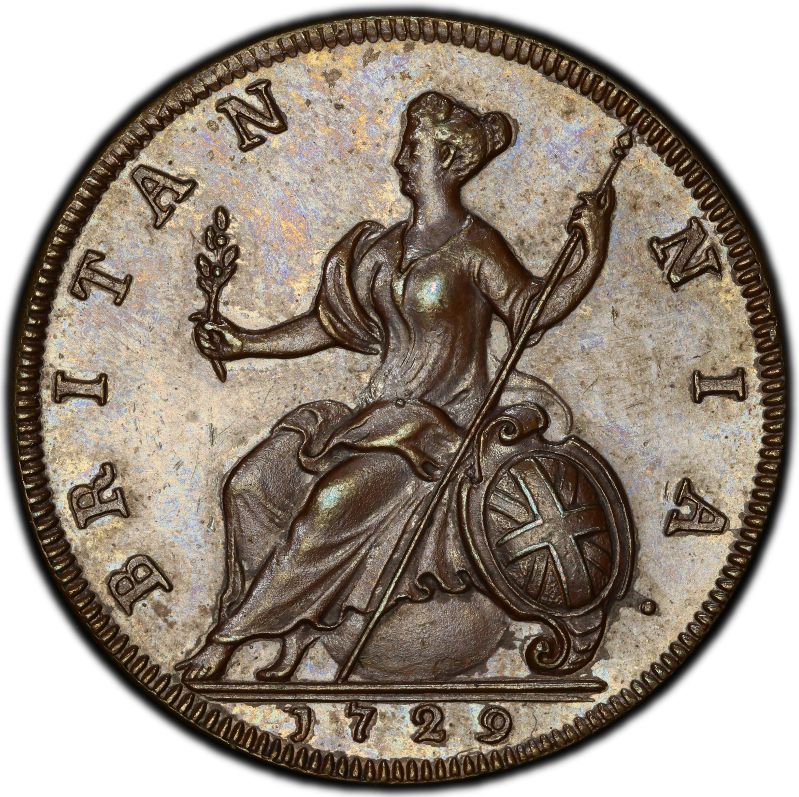
Seated figure of Britannia facing left, trident in left hand, olive branch in right, shield with Union flag resting on left, legend around, date in exergue.
BRITANNIA
Find this on eBay
AffiliateAbout the 1729 Halfpenny - George II young bust
The 1729 Halfpenny - George II young bust is a circulating ½ penny coin issued from 1729 to 1739, struck in copper. It weighs 9.86g and measures 28mm across. Reverse design: Seated figure of Britannia facing left, trident in left hand, olive branch in right, shield with Union flag resting on left, legend around, date in exergue.
It is no longer legal tender (withdrawn 1817), so its value is to collectors only.
Common questions
How much is the 1729 Halfpenny - George II young bust worth?
No verified sale of the 1729 Halfpenny - George II young bust has been logged on MyCoinage yet.
Which years were George II young bust halfpennies made?
Every year from 1729 to 1739. Wikipedia says halfpennies were produced in every year from 1729 to 1754 except 1741, and Clayton records the older portrait from 1740, which leaves 1729 to 1739 for the young bust.
What is the 1730 GEOGIVS halfpenny?
A 1730 halfpenny on which the King's name is misspelt GEOGIVS, missing the R. Both Tony Clayton and Coin Hunter list it as a separate variety of that year.
How many young bust halfpennies were minted?
No mintage figures are published for any date. Wikipedia calls George II's halfpennies the most prolific issue to that time, but no year-by-year numbers appear in Clayton, Coin Hunter or Wikipedia.
Is a George II halfpenny legal tender?
No. George II's halfpennies stopped being current in 1817. A proclamation of 5 December that year, printed in the London Gazette, called in Mint halfpennies and farthings issued before 26 July 1797, with 31 December 1817 set for bringing them to the Mint.
How do I identify the 1729 Halfpenny - George II young bust?
Check the weight 9.86g and diameter 28mm and the metal (copper) against the specification table on this page. The reverse design is described above.
History and design
George II's halfpennies began in 1729, five years after the last of his father's. Wikipedia's history of the halfpenny calls them the most prolific issue yet, struck in every year from 1729 to 1754 except 1741, and Tony Clayton records that a more elderly portrait was used from 1740. The young bust type therefore runs every year from 1729 to 1739.
Wikipedia stresses that the genuine coins were matched by a huge range of counterfeits, including pieces with deliberately altered legends to sidestep the law, and that for long periods forgeries outnumbered real coins. Clayton adds that after 1754 none were struck until 1770. No mintage figures are published for any date.
The obverse shows a laureate bust of George II in armour facing left, with GEORGIVS II REX. The reverse has Britannia seated left with spear and olive branch, her shield bearing the combined crosses of St George and St Andrew, BRITANNIA above and the date in the exergue, as described for a 1734 example in the Science Museum Group. There is no mark of value. Wikipedia gives the weight as 9.7 to 10.3 g and the diameter as 28 to 30 mm.
The Chief Engraver at the start of the reign was John Croker, who, according to Wikipedia, engraved many of George II's dies until 1740.
Varieties and errors
Clayton and Coin Hunter agree on a 1730 GEOGIVS error, a 1734 with the 4 over 3, and several missing stops: on the reverse of 1729, 1731 and 1732, and on the obverse of 1734. Clayton also lists a 1730 with no reverse stop, and Coin Hunter a 1730 without the stop after REX. For 1730 the two lists disagree about the date stop, Clayton listing no stop after the date and Coin Hunter a stop after it.
Collecting notes
Weigh any example and compare the lettering with a known genuine coin. Museum Wales holds a George II halfpenny catalogued as a counterfeit at 8.21 g, well under the 9.7 to 10.3 g that Wikipedia gives for genuine coins. Read the King's name for the GEOGIVS error and the stops with a lens. The old bust halfpenny follows from 1740. George II's halfpennies ceased to be current in December 1817, when a royal proclamation called in all Mint halfpennies and farthings issued before 26 July 1797.
Sources
The history, design, varieties and collecting notes on this page are drawn from these sources. Prices come from recorded sales, not from them.
- History of the halfpenny, Wikipedia (read 12 Oct 2026)
- Halfpennies, Tony Clayton, Coins of the UK (read 12 Oct 2026)
- Values of Halfpennies, Tony Clayton, Coins of the UK (read 12 Oct 2026)
- Coin values by year, 1729 to 1739 (year pages read one by one), Coin Hunter (read 12 Oct 2026)
- Halfpenny coin of George II, 1734 (V&A no. 250-1907), Science Museum Group, via Museum Data Service (read 12 Oct 2026)
- Pennies, Tony Clayton, Coins of the UK (read 12 Oct 2026)
- John Croker (engraver), Wikipedia (read 12 Oct 2026)
- George II halfpenny (counterfeit), Amgueddfa Cymru - Museum Wales, via Museum Data Service (read 12 Oct 2026)
- Proclamation on copper coin, 5 December 1817, The London Gazette (read 12 Oct 2026)
More ½ Penny coins from nearby years