½ Penny - George I 'Dump' issue (1717–1719)
"Dump halfpenny"
| Country | United Kingdom |
| Year | 1717–1719 |
| Denomination | ½ Penny |
| Mint | Royal Mint · Llantrisant |
| Circulation | Circulating |
| Demonetised | 1817 |
| Composition | Copper |
| Weight | 10.800g |
| Diameter | 26.0mm |
| Shape | Round |
| Edge | Plain |
| Orientation | Coin alignment ↑↓ |
| Grade scale | UK (EF/UNC) |
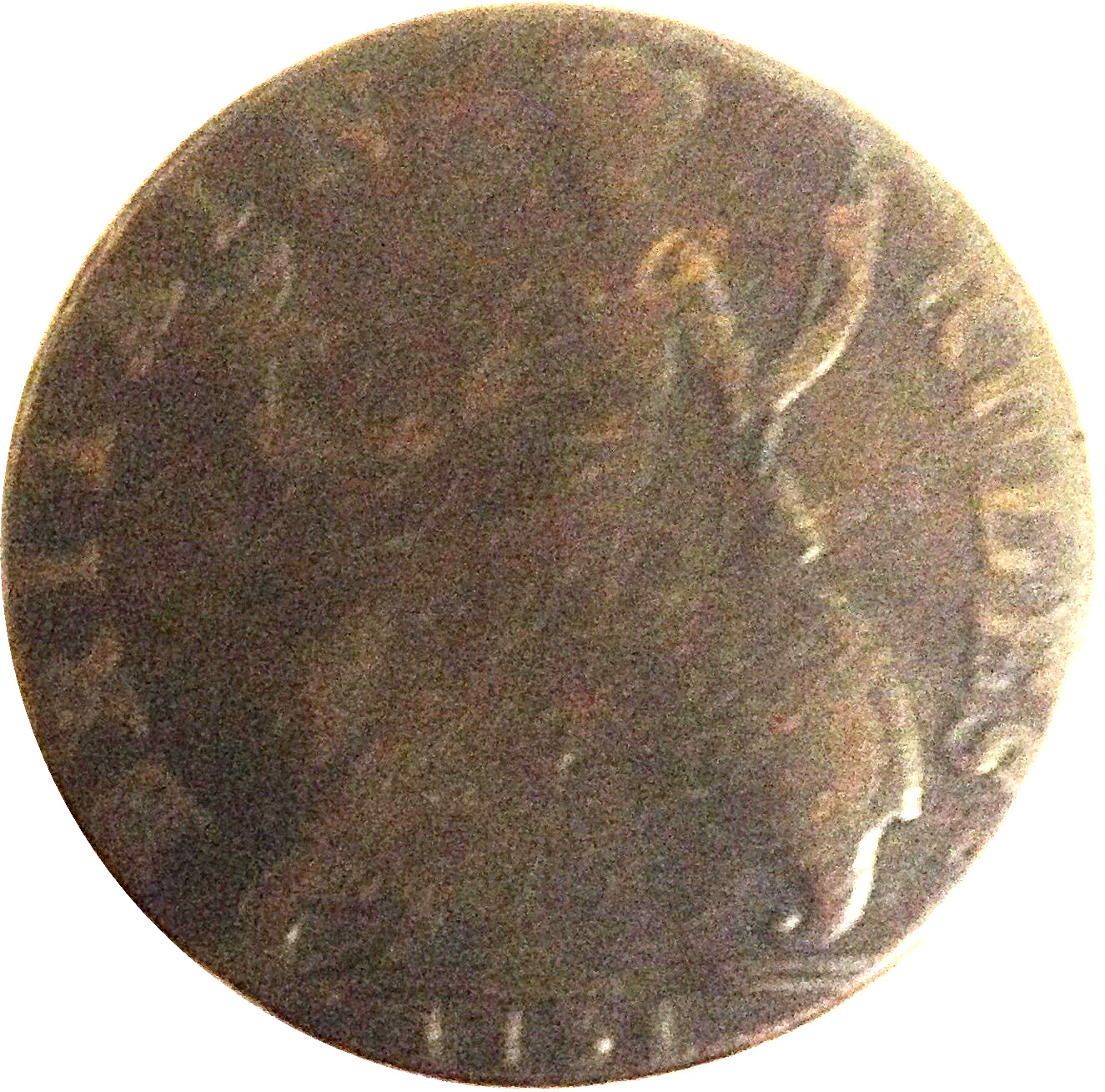
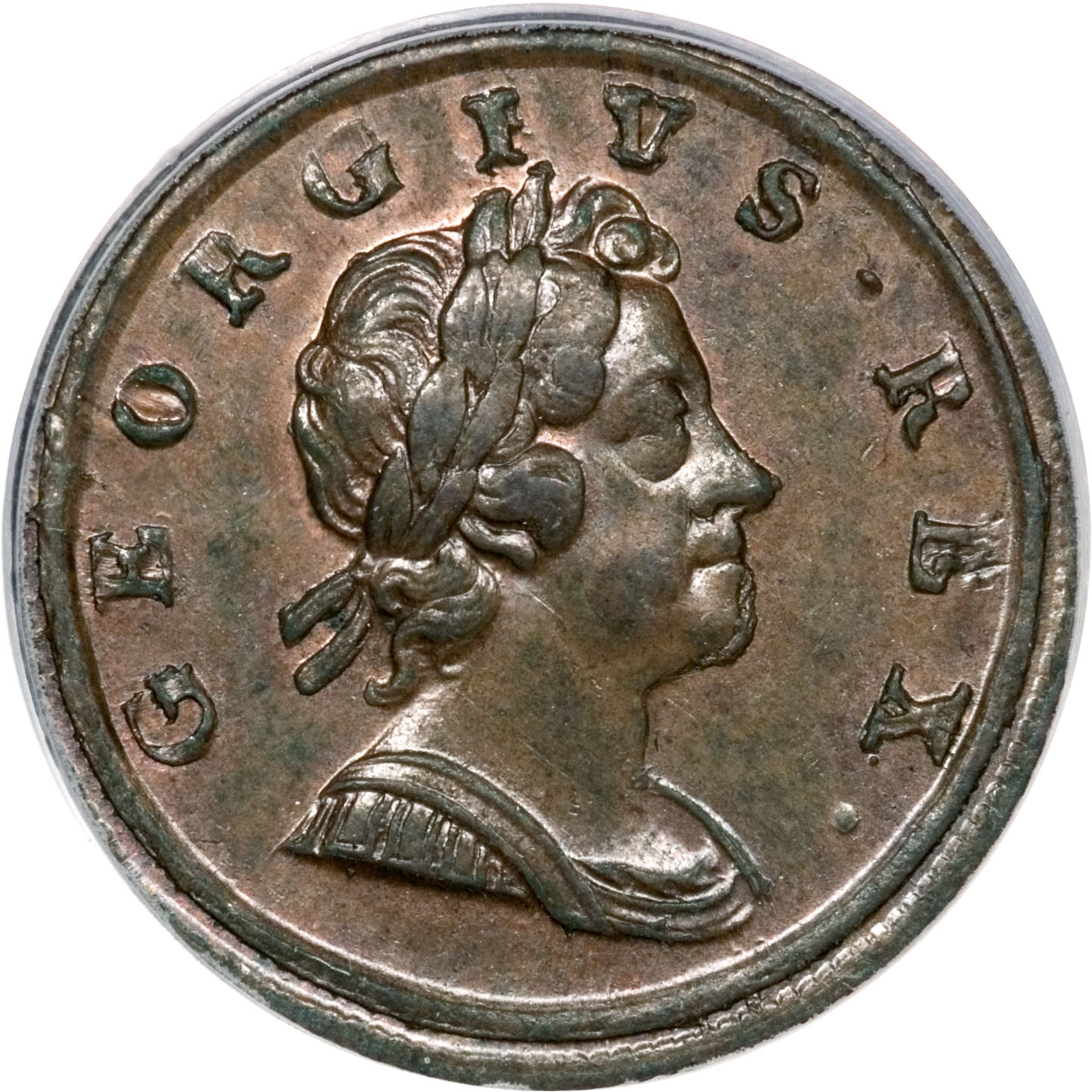
Laureate and cuirassed portrait of King George I facing right, legend continuous over bust.
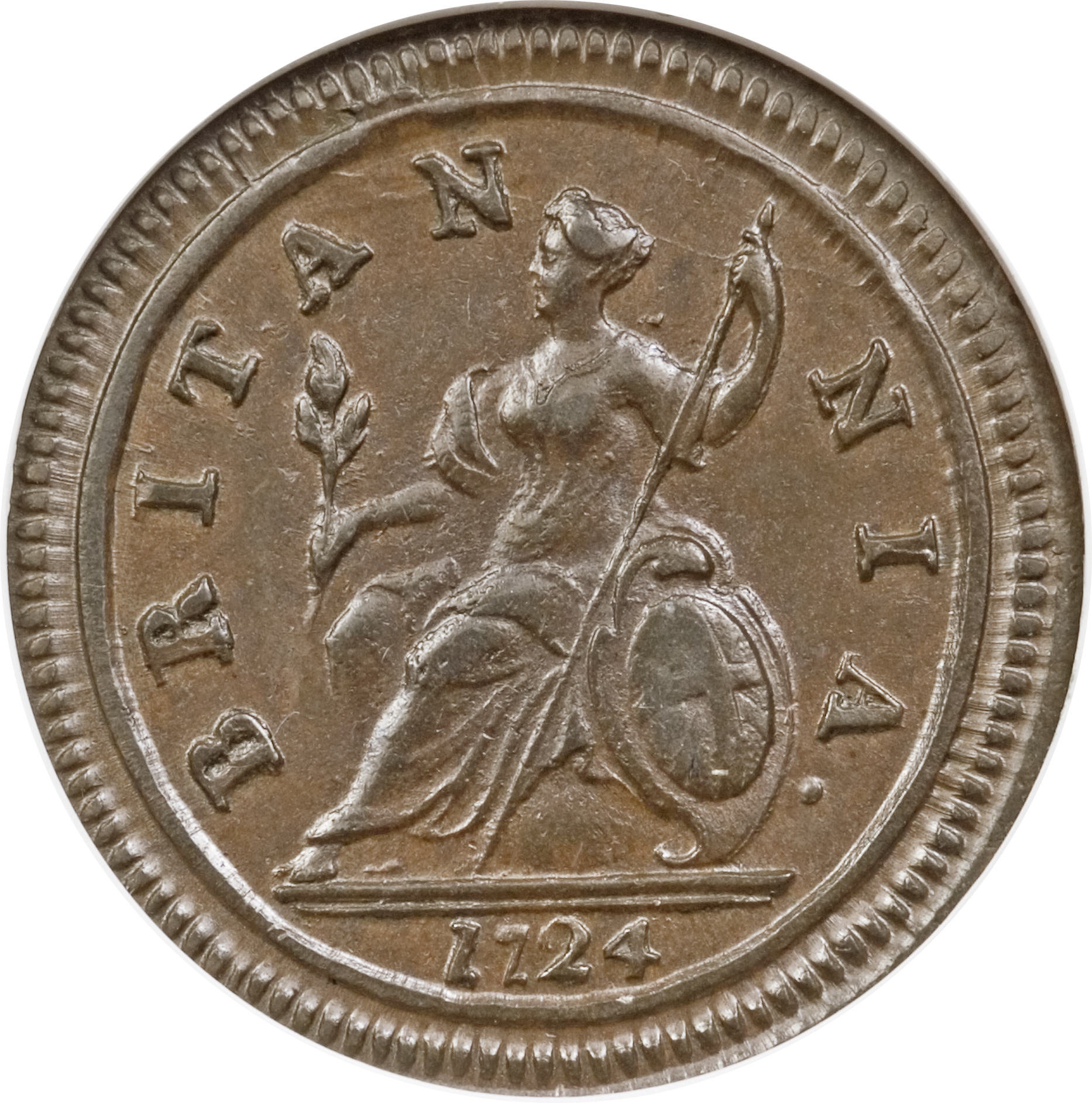
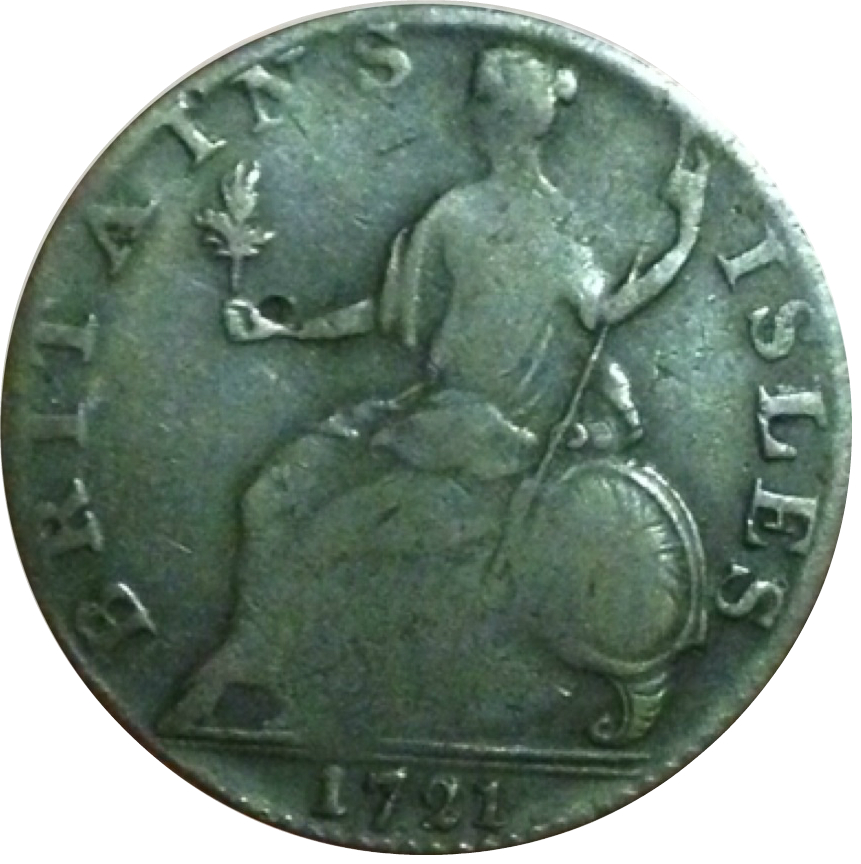
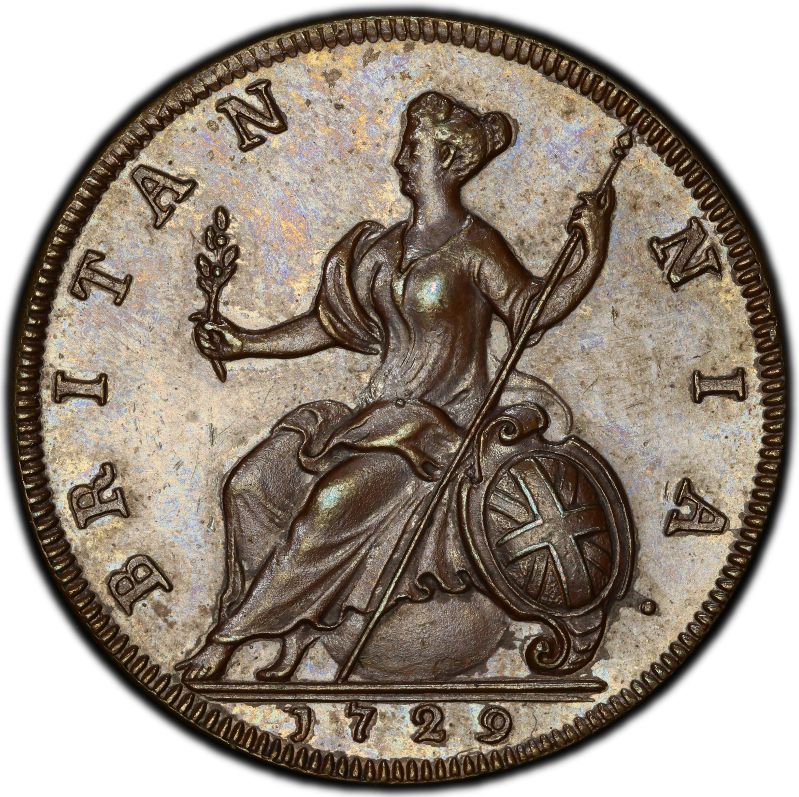
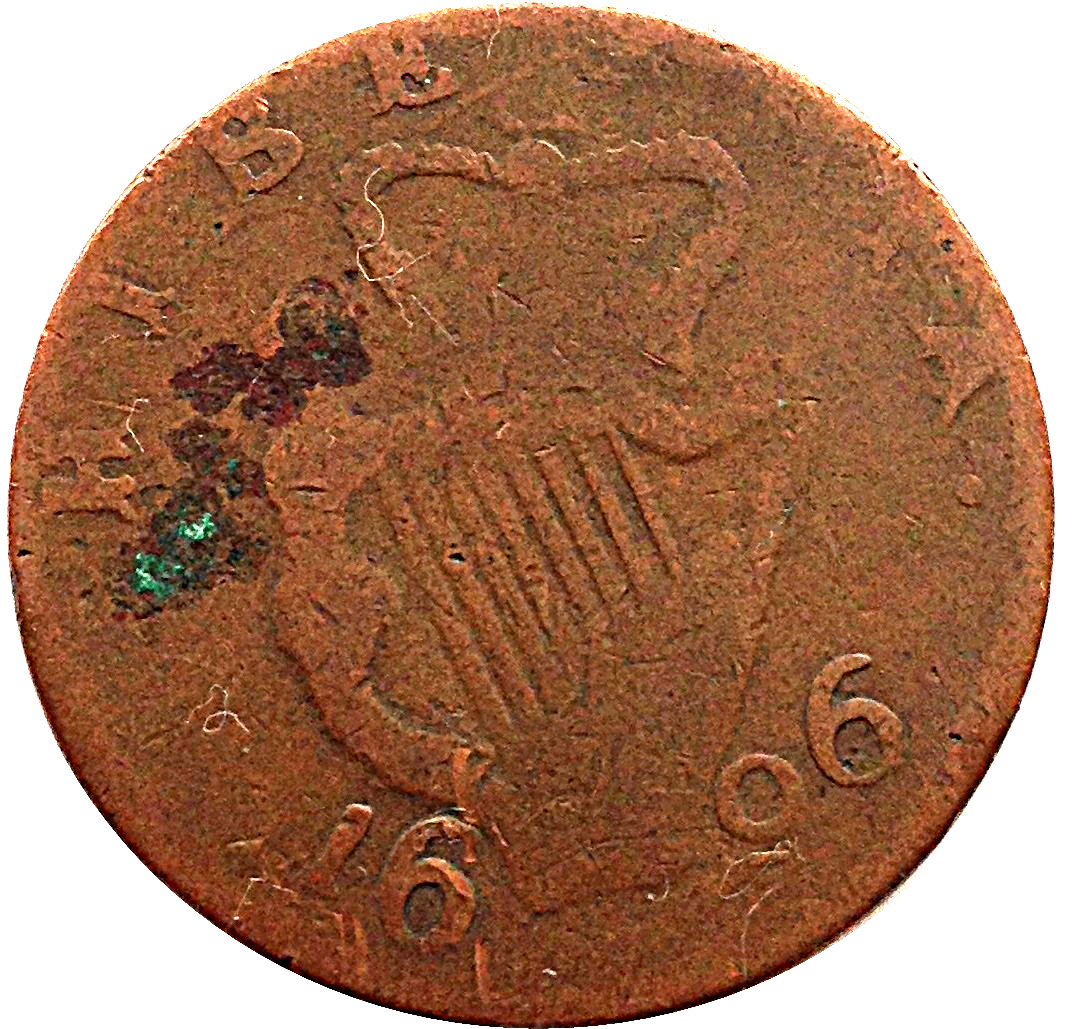
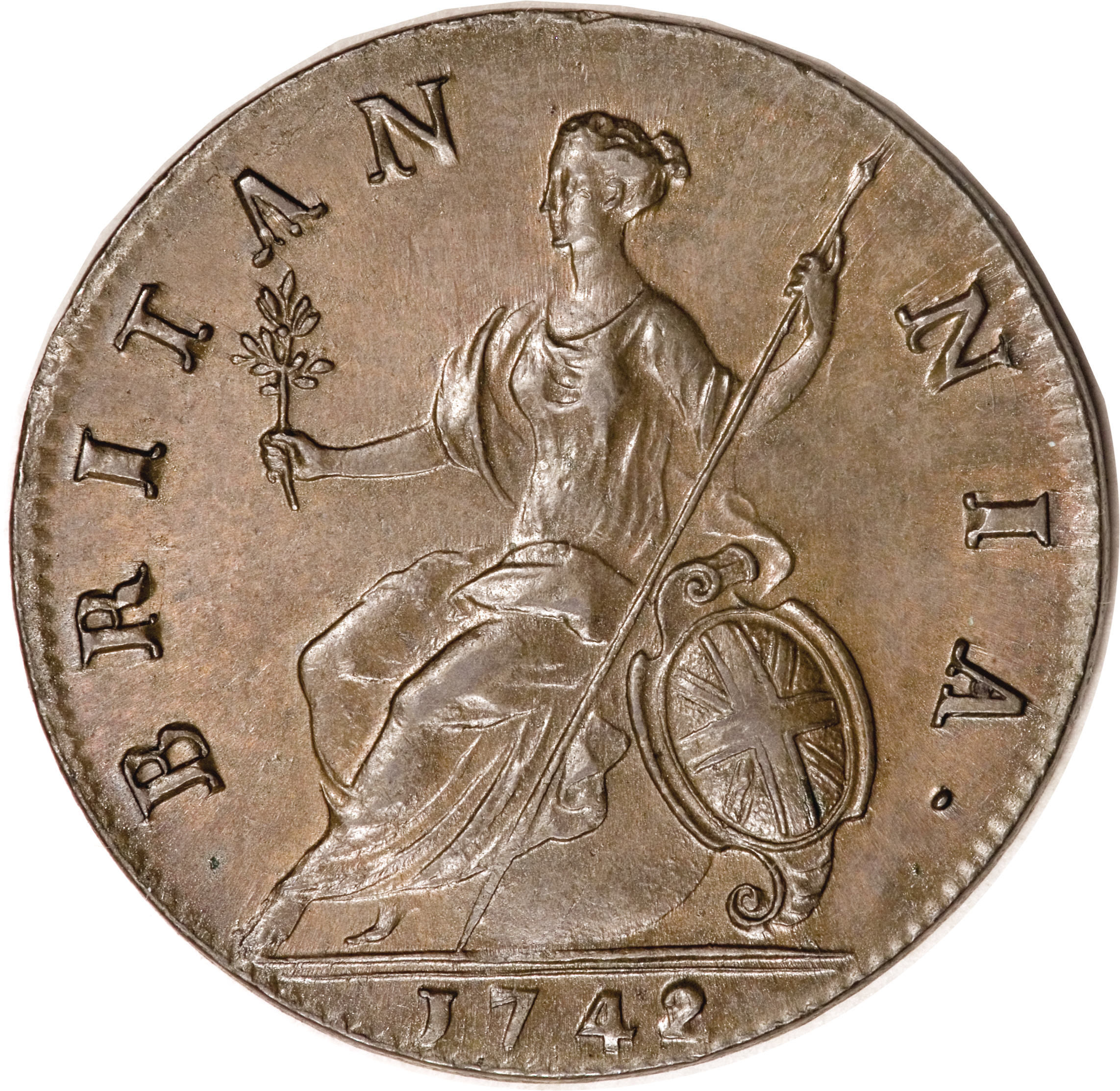
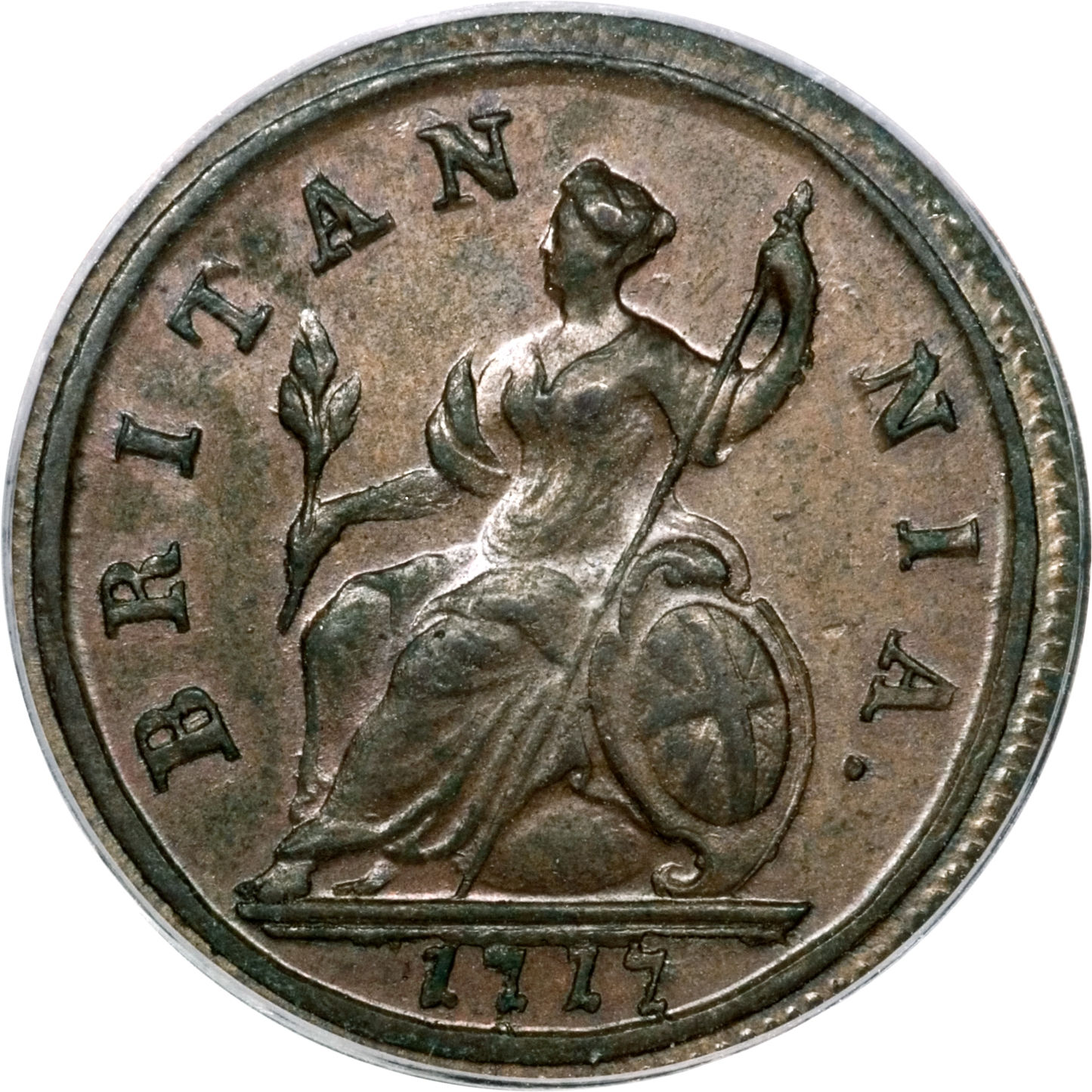
Seated figure of Britannia left, trident in left hand, olive branch in right, shield with Union flag resting on left, legend around, date in exergue.
Find this on eBay
AffiliateHalfpenny - George I 'Dump' issue price history
Daily limit reachedAbout the 1717 Halfpenny - George I 'Dump' issue
The 1717 Halfpenny - George I 'Dump' issue is a circulating ½ penny coin issued from 1717 to 1719, struck in copper. It weighs 10.8g and measures 26mm across. Reverse design: Seated figure of Britannia left, trident in left hand, olive branch in right, shield with Union flag resting on left, legend around, date in exergue.
It is no longer legal tender (withdrawn 1817), so its value is to collectors only.
Common questions
How much is the 1717 Halfpenny - George I 'Dump' issue worth?
No verified sale of the 1717 Halfpenny - George I 'Dump' issue has been logged on MyCoinage yet.
Why is the 1717 halfpenny called a 'Dump'?
Because it is smaller and thicker than the halfpennies before and after it. Wikipedia gives a weight of 9.4 to 10.3 g and a diameter of 25 to 27 mm for the 1717 and 1718 coins, and from 1719 the coin was enlarged to 26 to 29 mm with the same weight of metal.
How many Dump halfpennies were made?
No mintage is published for the 1717 or 1718 halfpenny, or for any later George I halfpenny. The Royal Mint Museum holds both a currency example and a proof of 1717.
Is a George I halfpenny legal tender?
No. A proclamation of 5 December 1817, printed in the London Gazette, ended the currency of all Mint halfpennies and farthings issued before 26 July 1797, so the Dump halfpenny stopped being current then. Holders were told to bring such coins to the Mint by 31 December 1817.
Why were no halfpennies struck between Anne's reign and 1717?
Wikipedia records that there was a glut of copper coin, so no copper halfpennies were needed in Queen Anne's reign. Soon after George I's accession the surplus was used up, and in 1717 a new contract was signed and a Royal Warrant issued for a new halfpenny.
How do I identify the 1717 Halfpenny - George I 'Dump' issue?
Check the weight 10.8g and diameter 26mm and the metal (copper) against the specification table on this page. The reverse design is described above.
History and design
There was no need for copper halfpennies under Queen Anne, Wikipedia explains, because of a glut of copper coin from earlier reigns. Soon after George I came to the throne in 1714 that surplus was used up, and in 1717 a new contract was signed and a Royal Warrant issued for a new halfpenny.
The coins dated 1717 and 1718 were smaller, thicker and a little lighter than earlier halfpennies, weighing 9.4 to 10.3 g at 25 to 27 mm across, and are known as the Dump issue. In 1719, as Tony Clayton notes, the coin went back to the earlier dimensions. No mintage is recorded for either date. The Royal Mint Museum holds both a currency example struck at the Tower, weighing 9.5 g, and a proof of 1717.
Wikipedia describes the Dump halfpenny as well struck, with the King's head in high relief facing right on the obverse and Britannia seated on the reverse, with BRITANNIA around her and the date in the exergue. The Culture Perth museum records the bust as laureate and cuirassed. Wikipedia gives the obverse legend as GEORGIVS REX, but two Culture Perth records read GEORGIVS DEI GRATIA, so the wording should be checked on the coin.
The coin carries no mark of value; the halfpenny is known from its size. Wikipedia's article on John Croker says he engraved almost all the dies for George I's coins.
Varieties and errors
The Royal Mint Museum's 1717 proof weighs 11 g and is struck with both sides the same way up, unlike the currency coin. Coin Hunter also lists a 1719 halfpenny of the Dump type as a pattern, made in the year the larger flan was introduced.
Collecting notes
Measure and look at the edge profile: a Dump is noticeably thicker and narrower than the 1719 to 1724 halfpenny. The high relief that Wikipedia praises also means the highest points of the bust and Britannia wear first. The Dump halfpenny stopped being current under a proclamation of 5 December 1817, which called in the Mint's copper issued before 26 July 1797.
Sources
The history, design, varieties and collecting notes on this page are drawn from these sources. Prices come from recorded sales, not from them.
- History of the halfpenny, Wikipedia (read 12 Oct 2026)
- Proclamation on copper coin, 5 December 1817, The London Gazette (read 12 Oct 2026)
- Halfpennies, Tony Clayton, Coins of the UK (read 12 Oct 2026)
- George I halfpenny, 1717 (RMM 350), The Royal Mint Museum, via Museum Data Service (read 12 Oct 2026)
- George I proof halfpenny, 1717 (RMM 349), The Royal Mint Museum, via Museum Data Service (read 12 Oct 2026)
- Coin values by year: 1717, 1718 and 1719, Coin Hunter (read 12 Oct 2026)
- George I halfpenny, 1717 (BC346), Culture Perth and Kinross, via Museum Data Service (read 12 Oct 2026)
- George I Dump halfpenny (3/1953.5), Bradford District Museums and Galleries, via Museum Data Service (read 12 Oct 2026)
- Pennies, Tony Clayton, Coins of the UK (read 12 Oct 2026)
- John Croker (engraver), Wikipedia (read 12 Oct 2026)
More ½ Penny coins from nearby years