50 Pence Trial (1967)
| Country | United Kingdom |
| Year | 1967 |
| Denomination | 50 Pence |
| Face value | 50p |
| Mint | Royal Mint · Llantrisant |
| Circulation | Non-circulating |
| Demonetised | Yes |
| Composition | Copper-nickel |
| Shape | Equilateral curve heptagon (7-sided) |
| Edge | Plain |
| Grade scale | UK (EF/UNC) |
© Royal Mint Museum
Blank.
Find this on eBay
Affiliate50 Pence Trial price history
Daily limit reachedAbout the 1967 50 Pence Trial
The 1967 50 Pence Trial is a collector 50 pence coin, struck in copper-nickel. Reverse design: Blank.
It is no longer legal tender, so its value is to collectors only.
Common questions
How much is the 1967 50 Pence Trial worth?
No verified sale of the 1967 50 Pence Trial has been logged on MyCoinage yet.
What is the 1967 50 pence trial?
It is a test piece in cupro-nickel struck at the Royal Mint while the shape of the new 50p was being developed. These trials carry little more than the figure 50 and have plain edges. They were never issued and are not coins.
Who came up with the seven-sided 50p?
H. G. Conway, the technical member of the Decimal Currency Board and then President of the Institution of Mechanical Engineers, suggested the equilateral curve heptagon. The Royal Mint Museum holds an early trial engraved with his name and the date 17 November 1967.
When did the real 50p come into use?
The 50p joined the 5p and 10p in circulation in October 1969, replacing the ten-shilling note. The trials of late 1967 came about two years earlier, while the shape was still being tested.
Why is the 50p seven-sided?
The Royal Mint says the equilateral curve heptagon made the coin easy to tell from round coins by sight and touch, while its constant breadth let it roll through vending machines. The 1967 trials were part of testing that shape.
History and design
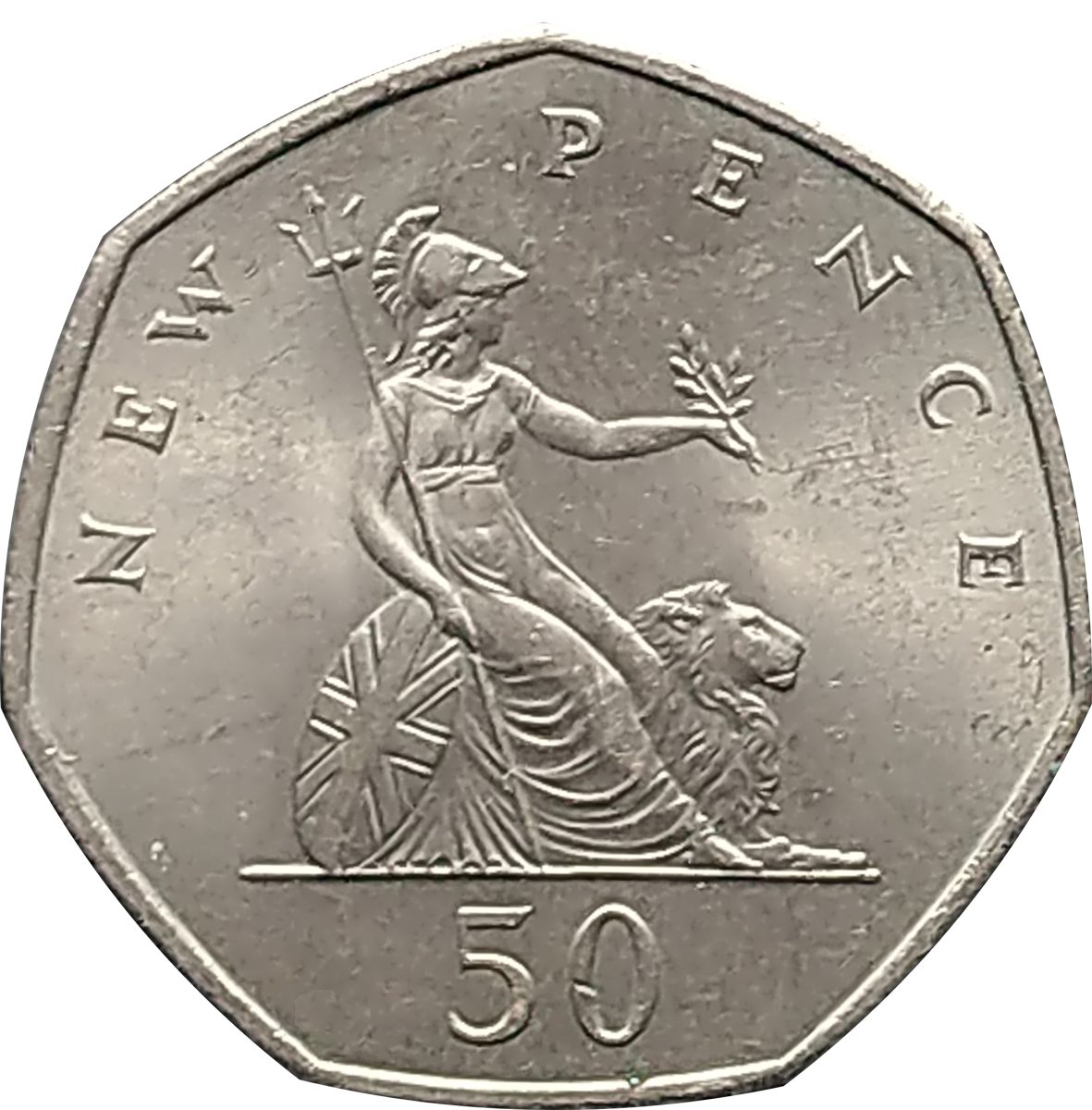
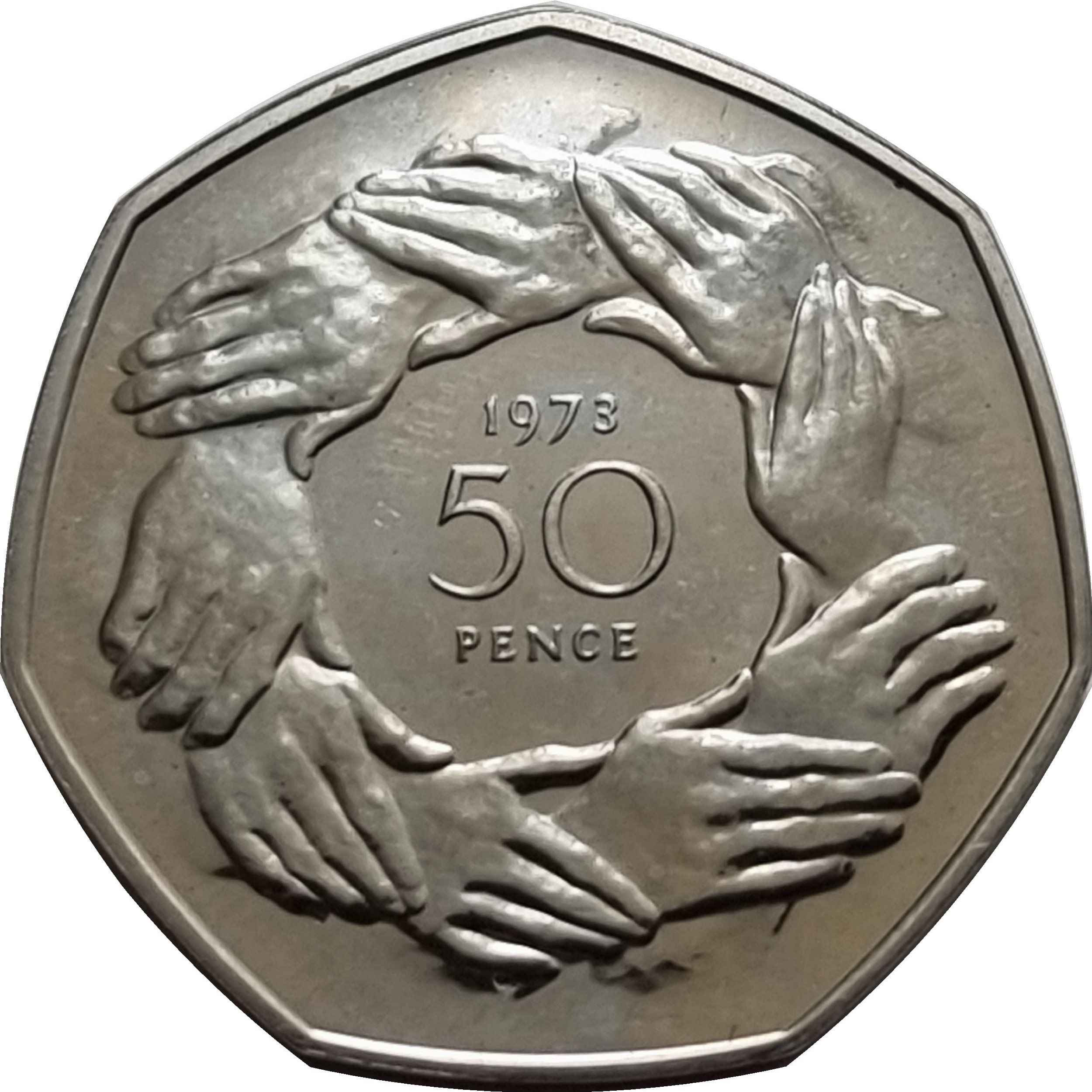
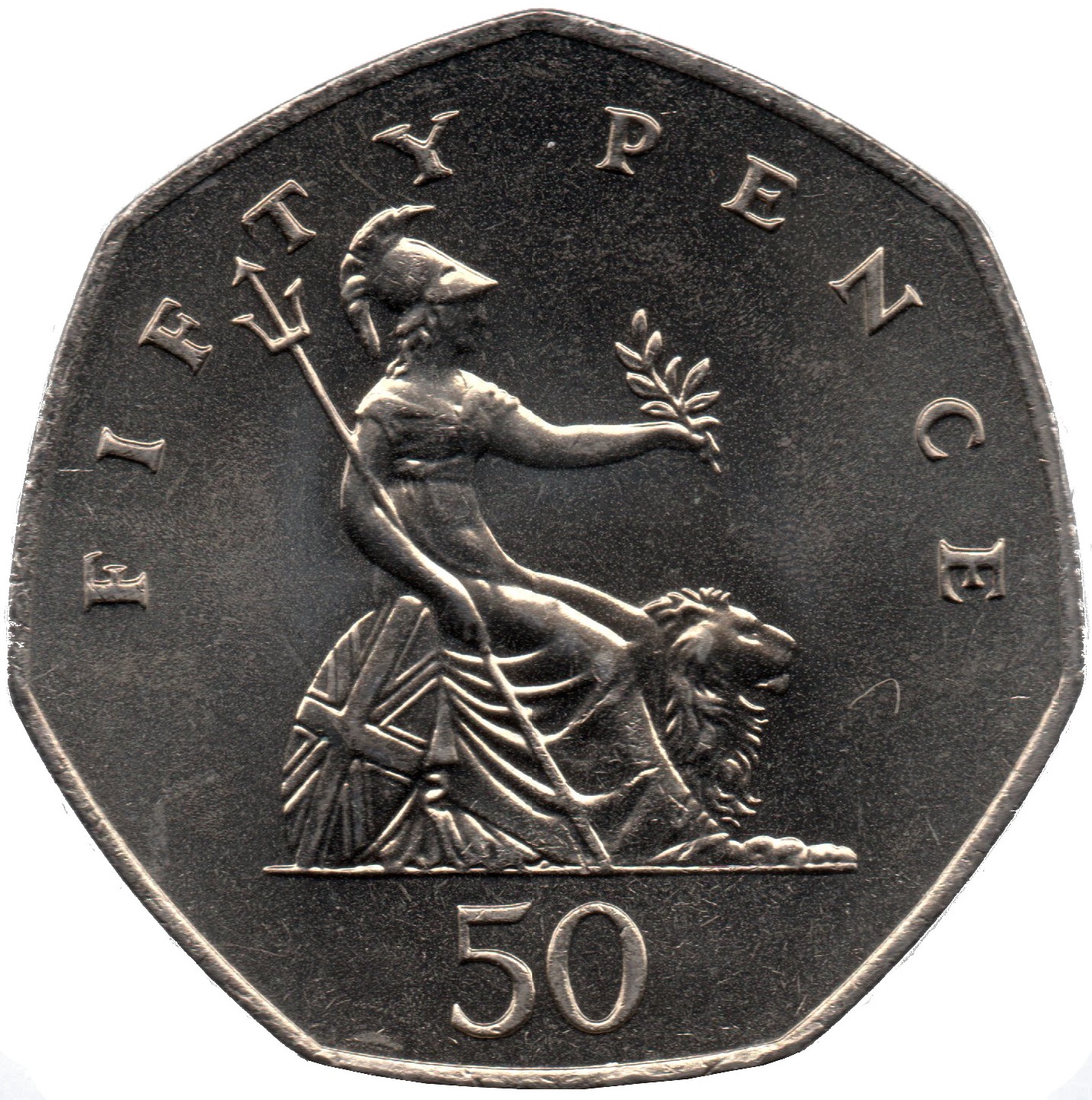
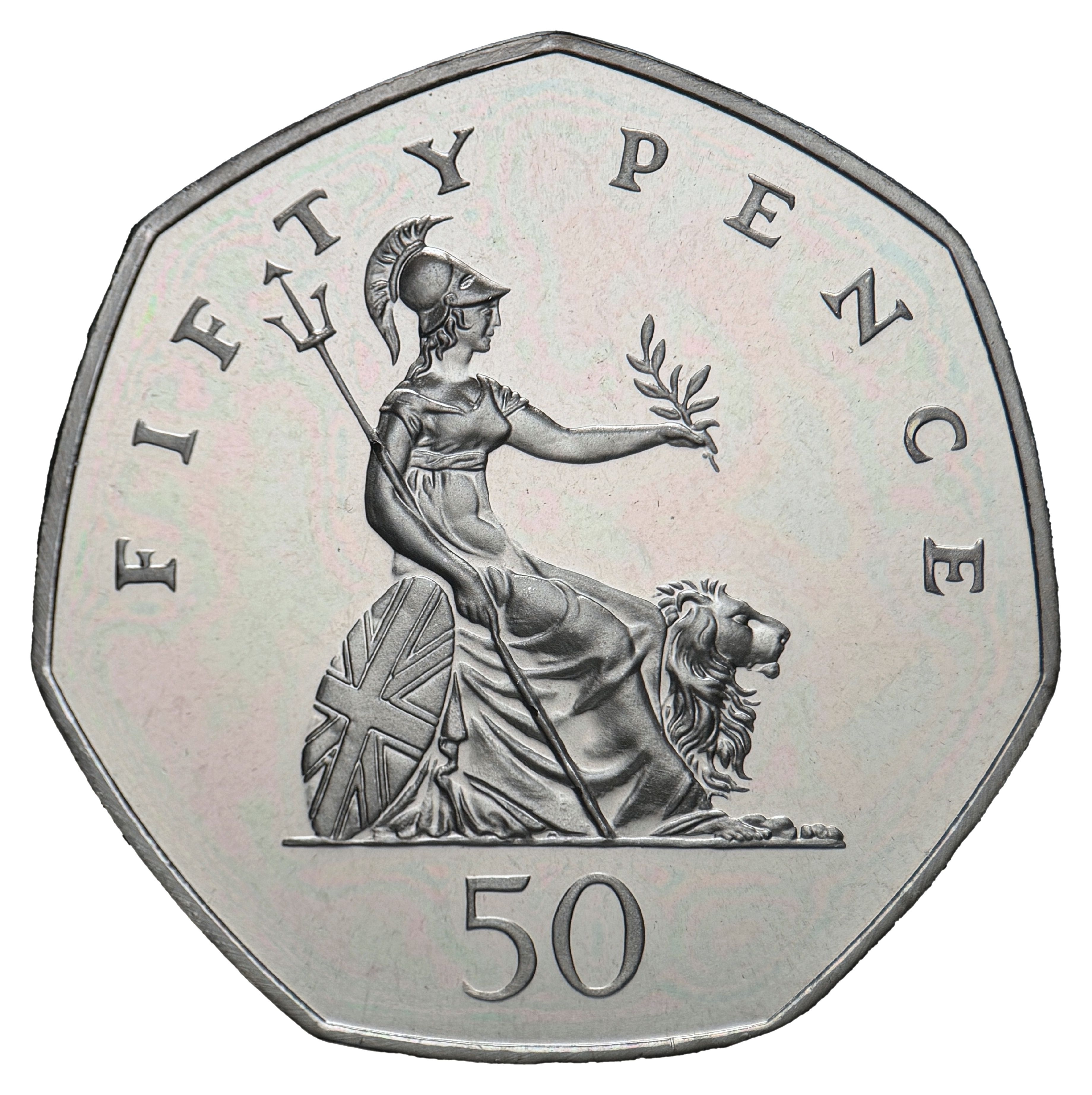
This piece is a technical trial, not a coin. When Britain moved to decimal currency, H. G. Conway, the technical member of the Decimal Currency Board and then President of the Institution of Mechanical Engineers, proposed a seven-sided 50p in the form of an equilateral curve heptagon. The Royal Mint struck cupro-nickel trial pieces of that shape at Tower Hill while the new coin was being developed.
The Royal Mint Museum holds a run of these trials. One is engraved MR CONWAY 17 / 11 / 67 and is described as coming from very early in the development. Two others are recorded as seven-sided trials of 13 December 1967. The finished 50p, with Christopher Ironside's Britannia, went into circulation in October 1969 to replace the ten-shilling note. No production figure exists for the trials.
There is no pictorial design. The Museum's trials carry the figure 50, on both sides in several cases, and some add the technical mark .005" R.C. on one side. The edges are plain. The shape is the point: the Royal Mint says the heptagon made the coin easy to tell from round coins by sight and touch, while its constant breadth allowed it to roll through vending machines.
Varieties and errors
Weights recorded by the Royal Mint Museum run from 9.64g for the Conway piece to about 13.1 to 13.85g for most trials and about 15.5g for a heavier group.
Collecting notes
The main reference group for these trials is the Royal Mint Museum's own collection, with numbers in the RMM 3430s and 3440s. Check the shape, the plain edge, the weight and any marks against the records above. For the coin that followed, see the 1969 new pence 50p.
Sources
The history, design, varieties and collecting notes on this page are drawn from these sources. Prices come from recorded sales, not from them.
- Elizabeth II trial fifty, seven-sided, 13 December 1967 (RMM 3434), The Royal Mint Museum, via Museum Data Service (read 10 Oct 2026)
- Elizabeth II trial fifty, seven-sided (RMM 3430), The Royal Mint Museum, via Museum Data Service (read 10 Oct 2026)
- Elizabeth II trial fifty, engraved MR CONWAY 17 / 11 / 67 (RMM 3446), The Royal Mint Museum, via Museum Data Service (read 10 Oct 2026)
- Elizabeth II trial fifty, seven-sided, marked 50 .005" R.C. (RMM 3440), The Royal Mint Museum, via Museum Data Service (read 10 Oct 2026)
- Decimalisation, Royal Mint Museum (read 10 Oct 2026)
- 50p Coin Designs and Specifications, The Royal Mint (read 9 Oct 2026)
More 50 Pence coins from nearby years