⅓ Guinea - George III Pattern (1775)
| Country | United Kingdom |
| Year | 1775 |
| Denomination | ⅓ Guinea |
| Face value | 35p |
| Mint | Royal Mint · Llantrisant |
| Circulation | Non-circulating |
| Demonetised | Yes |
| Composition | Gold (.9167) (917/1000 fine) |
| Weight | 2.800g · 0.0825 t oz |
| Shape | Round |
| Edge | Milled |
| Orientation | Medal alignment ↑↑ |
| Grade scale | UK (EF/UNC) |
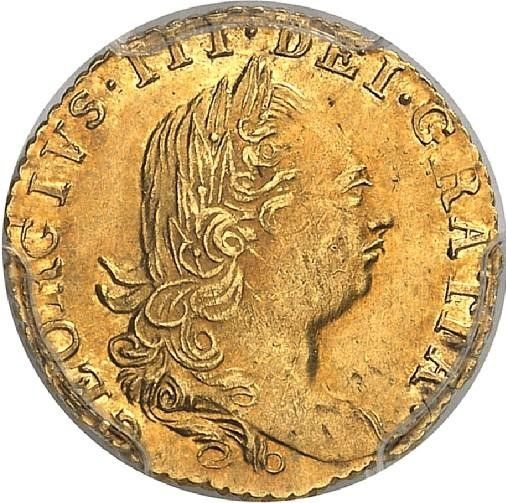
Laureate portrait of King George III right, legend around.
GEORGIVS. III. DEI. GRATIA.
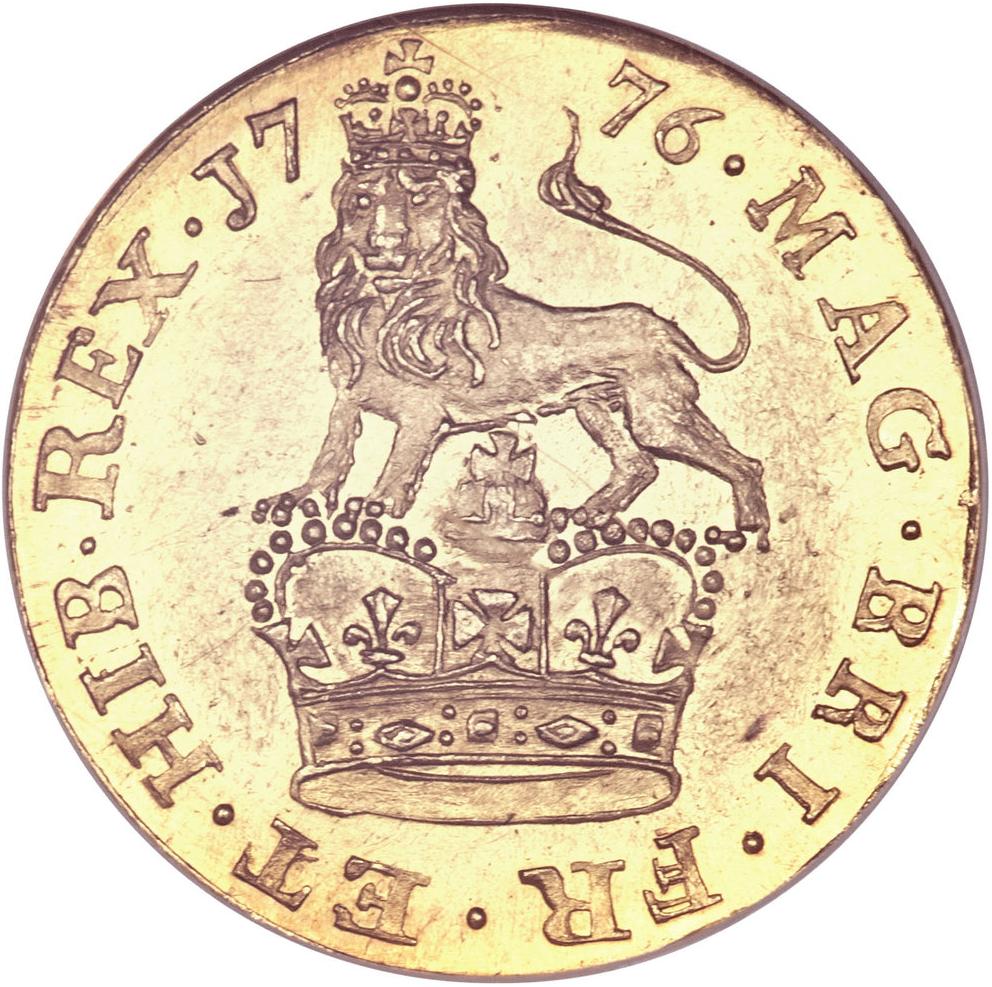
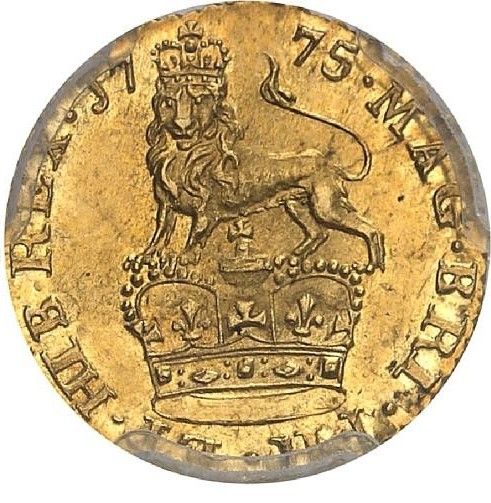
Crowned lion passant atop crown
MAG. BRI. FR. ET. HIB. REX.
Find this on eBay
AffiliateAbout the 1775 Third Guinea - George III Pattern
The 1775 Third Guinea - George III Pattern is a collector ⅓ guinea coin, struck in 91.67% gold. It weighs 2.8g. Reverse design: Crowned lion passant atop crown.
It is no longer legal tender, so its value is to collectors only.
Common questions
How much is the 1775 Third Guinea - George III Pattern worth?
No verified sale of the 1775 Third Guinea - George III Pattern has been logged on MyCoinage yet. Its gold content is worth about £239 at today's spot price, which puts a floor under its value.
Were third guineas issued in 1775?
No. The 1775 piece is a pattern. Wikipedia records that the seven shilling piece, or third guinea, was introduced by a proclamation of 29 November 1797, and Tony Clayton gives 1797 to 1813 as its years of issue.
What is on the reverse of the 1775 pattern third guinea?
A crowned lion standing left on a large crown with its cap, with the date split either side at the top and MAG. BRI. FR. ET. HIB. REX. around. The issued coin of 1797 used a crown alone.
How many 1775 pattern third guineas exist?
No number struck is recorded. Sovereign Rarities, offering a PCGS SP58 example, wrote that it could trace no more than three in private hands, and quoted a rarity of R4 in Wilson and Rasmussen and R6 in the Bull catalogue.
How does the 1775 pattern differ from the 1776 one?
Both show a crowned lion on a crown, but the 1775 piece is described with a grained edge, while the 1776 pattern by Richard Yeo has a plain edge in the Royal Mint Museum and Baldwin's descriptions. The two carry different Wilson and Rasmussen numbers, 136 and 137.
How do I identify the 1775 Third Guinea - George III Pattern?
Check the weight 2.8g and the metal (91.67% gold) against the specification table on this page. The reverse design is described above.
History and design
The third guinea, worth seven shillings, was not issued until 1797. Wikipedia records that it was introduced by a proclamation of 29 November 1797, when gold was short and the Bank of England needed coin to pay its dividends, and Tony Clayton gives its years of issue as 1797 to 1813. Patterns for the denomination were made more than twenty years earlier, in 1775 and 1776.
This is the earlier of the two. Sovereign Rarities, offering an example graded SP58 by PCGS, described it as the initial 1775 issue of the highest rarity, tracing no more than three examples in private hands. Why the Mint considered a seven shilling coin in the mid 1770s is not recorded.
The obverse shows a laureate head of George III facing right with the legend GEORGIVS. III. DEI. GRATIA. The reverse has a crowned lion standing left on a large crown, with the date divided either side at the top and the legend MAG. BRI. FR. ET. HIB. REX., for King of Great Britain, France and Ireland. The reverse is struck with the dies inverted relative to the obverse, and the edge is grained.
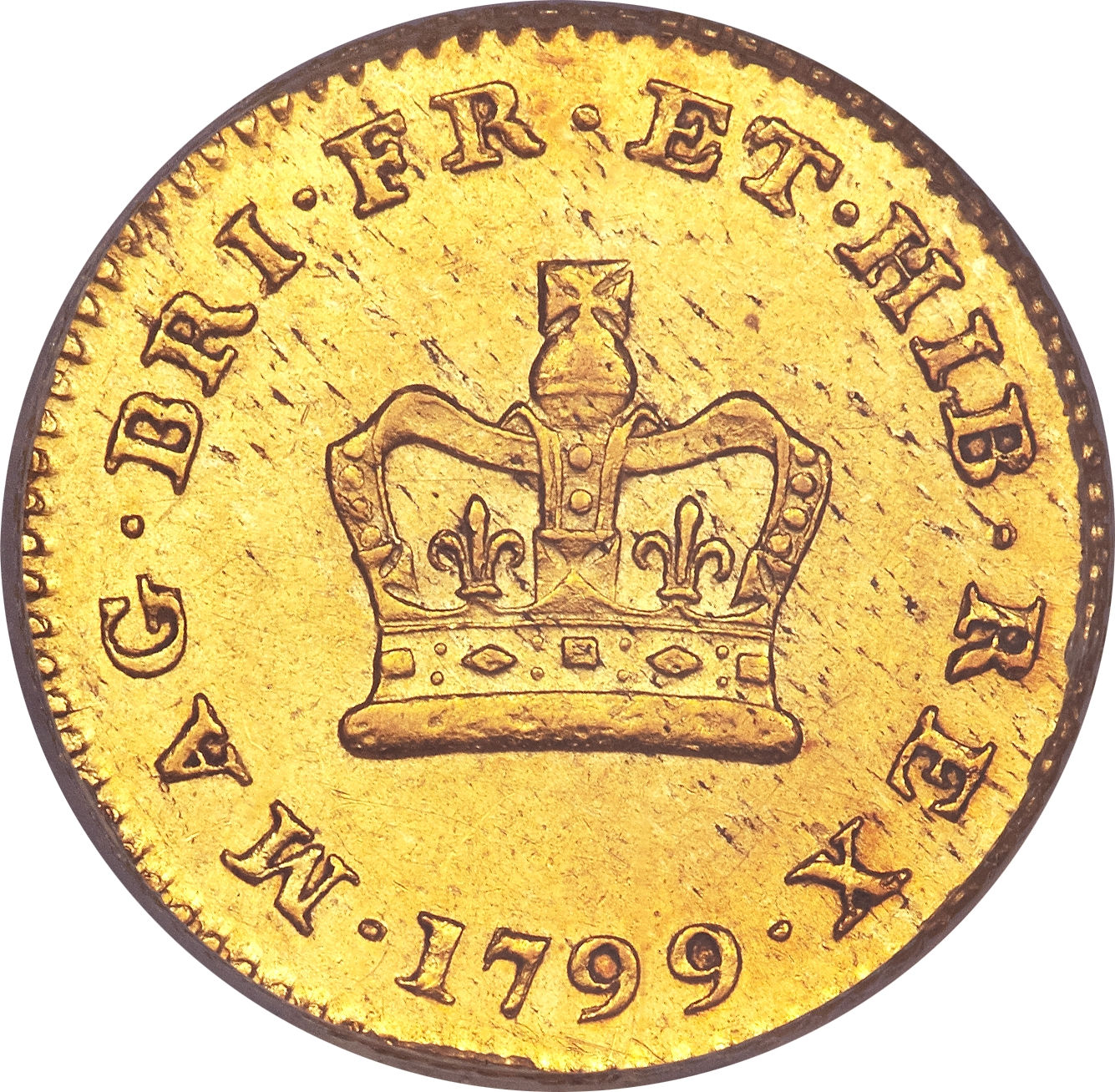
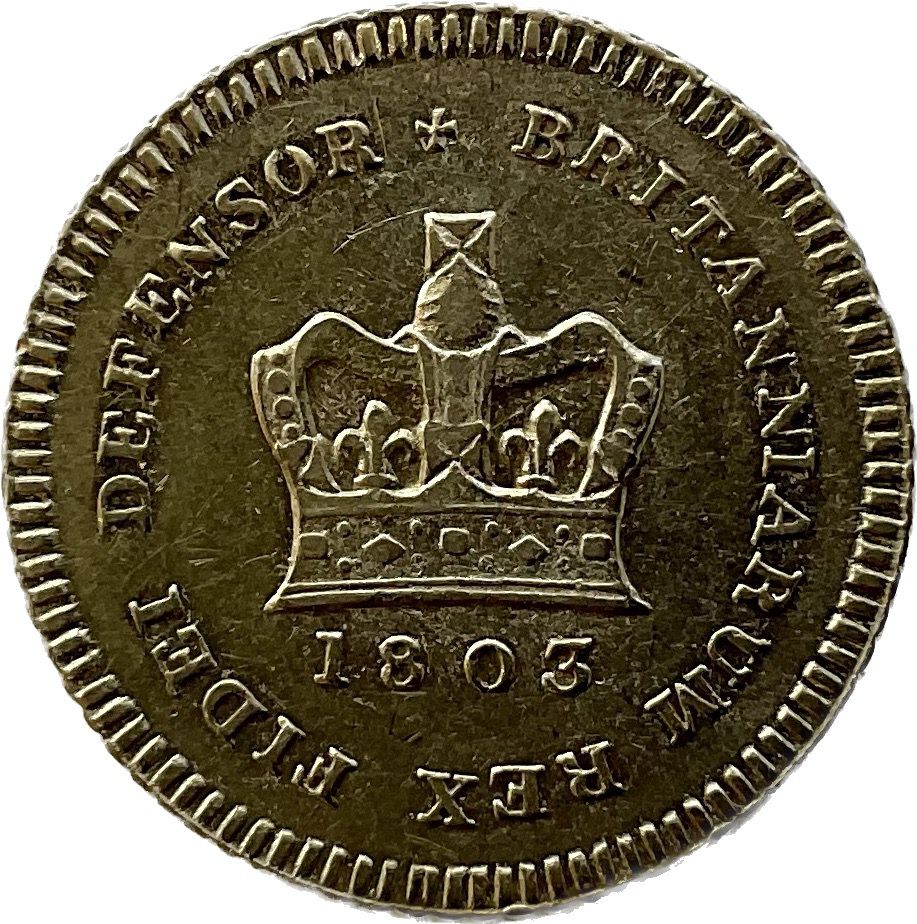
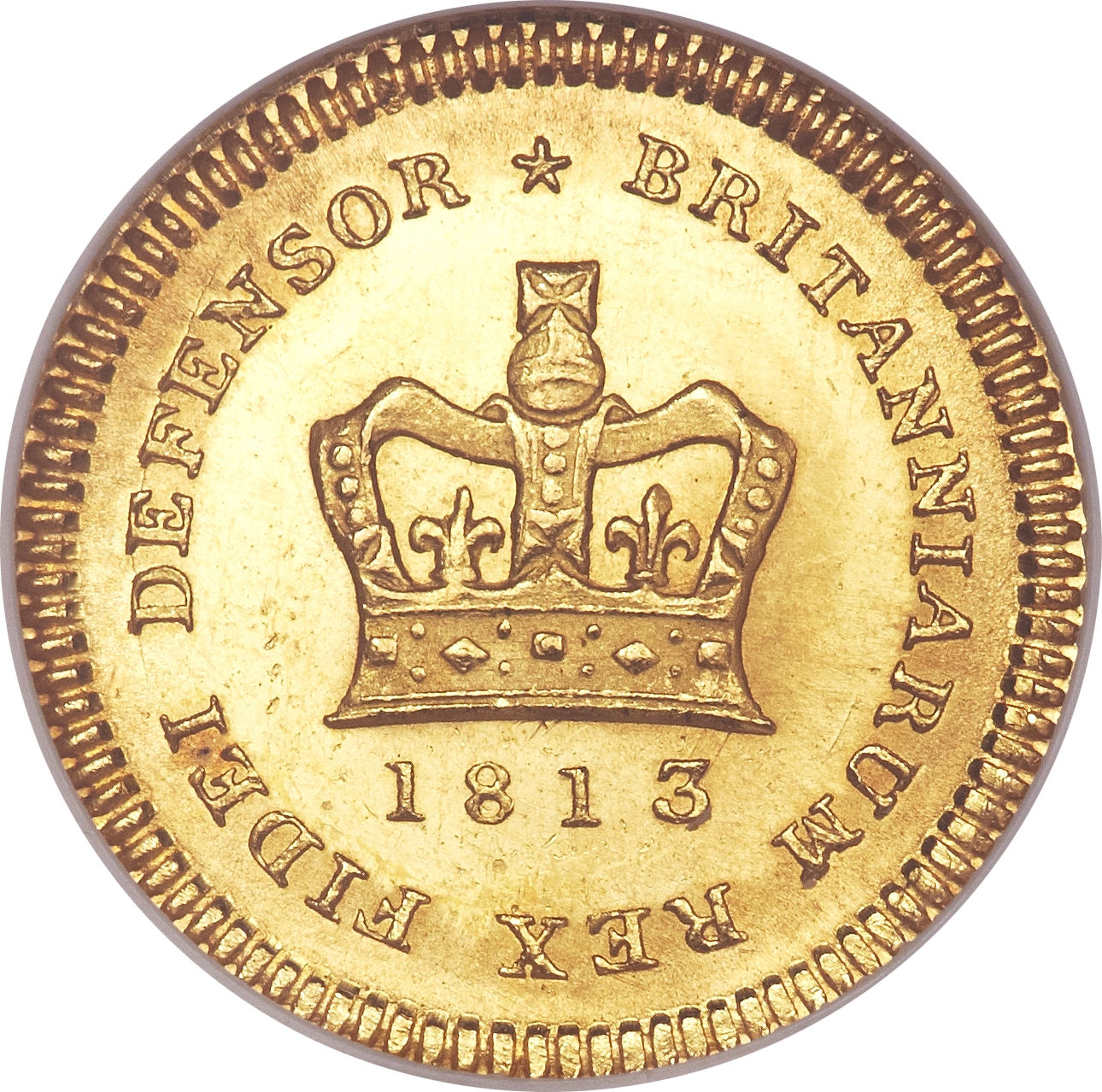
When the third guinea was finally issued in 1797, the reverse was simplified to a crown alone with the same legend and the date.
Collecting notes
No number struck is recorded, and examples are few. Sovereign Rarities cites the Douglas-Morris, Montagu and Murdoch sale catalogues among its references. It noted hairlines and a couple of tiny dark spots on its example, and explained that PCGS graded it as a specimen because these patterns are not very prooflike.
The 1775 and 1776 patterns are easily confused. Check the date and the edge: the [1776 pattern](/coin/⅓-guinea-george-iii-pattern-1776) has a plain edge in the descriptions of the Royal Mint Museum and Baldwin's examples. Neither date is a currency coin; the first issued third guineas are dated 1797.
Sources
The history, design, varieties and collecting notes on this page are drawn from these sources. Prices come from recorded sales, not from them.
- George III 1775 pattern Third-Guinea, SP58, rarest initial date, Sovereign Rarities (read 12 Oct 2026)
- Third guinea, Wikipedia (read 12 Oct 2026)
- Seven Shillings, and Seven and Six, Tony Clayton, Coins of the UK (read 12 Oct 2026)
- George III pattern third-guinea, 1776 (RMM 969), The Royal Mint Museum, via Museum Data Service (read 12 Oct 2026)
- 1776 George III Proof Third Guinea WR137, Baldwin's (read 12 Oct 2026)