Rarely sells: 2 verified sales in the last 12 months.
⅓ Guinea - George III (1797–1800)
"Seven shilling piece"
| Country | United Kingdom |
| Year | 1797–1800 |
| Denomination | ⅓ Guinea |
| Face value | 35p |
| Mint | Royal Mint · Llantrisant |
| Circulation | Circulating |
| Demonetised | 1891 |
| Composition | Gold (.9167) (917/1000 fine) |
| Weight | 2.800g · 0.0825 t oz |
| Diameter | 17.0mm |
| Shape | Round |
| Edge | Milled |
| Orientation | Medal alignment ↑↑ |
| Grade scale | UK (EF/UNC) |
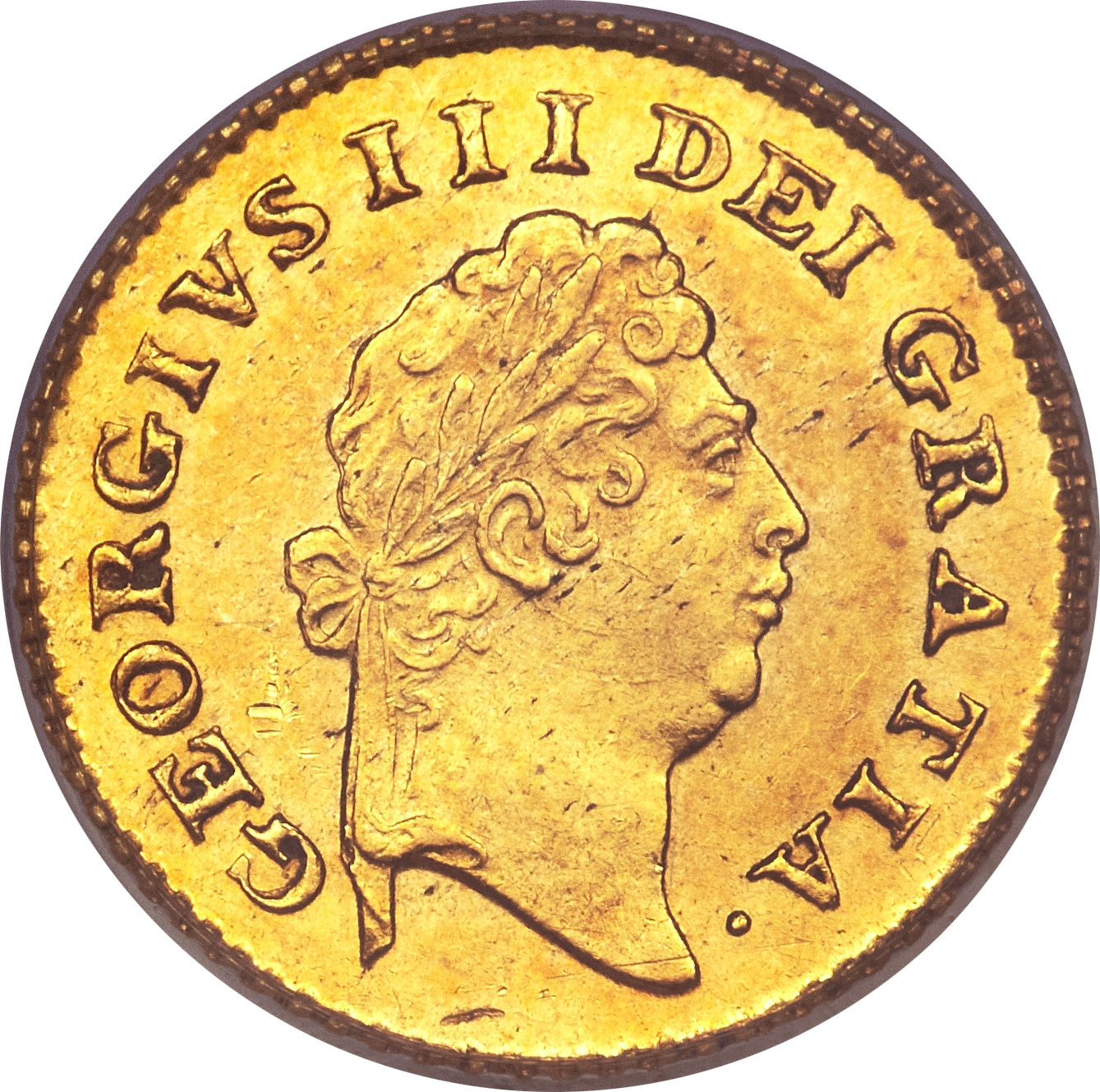
Laureate portrait of King George III right, legend around.
GEORGIVS III DEI GRATIA
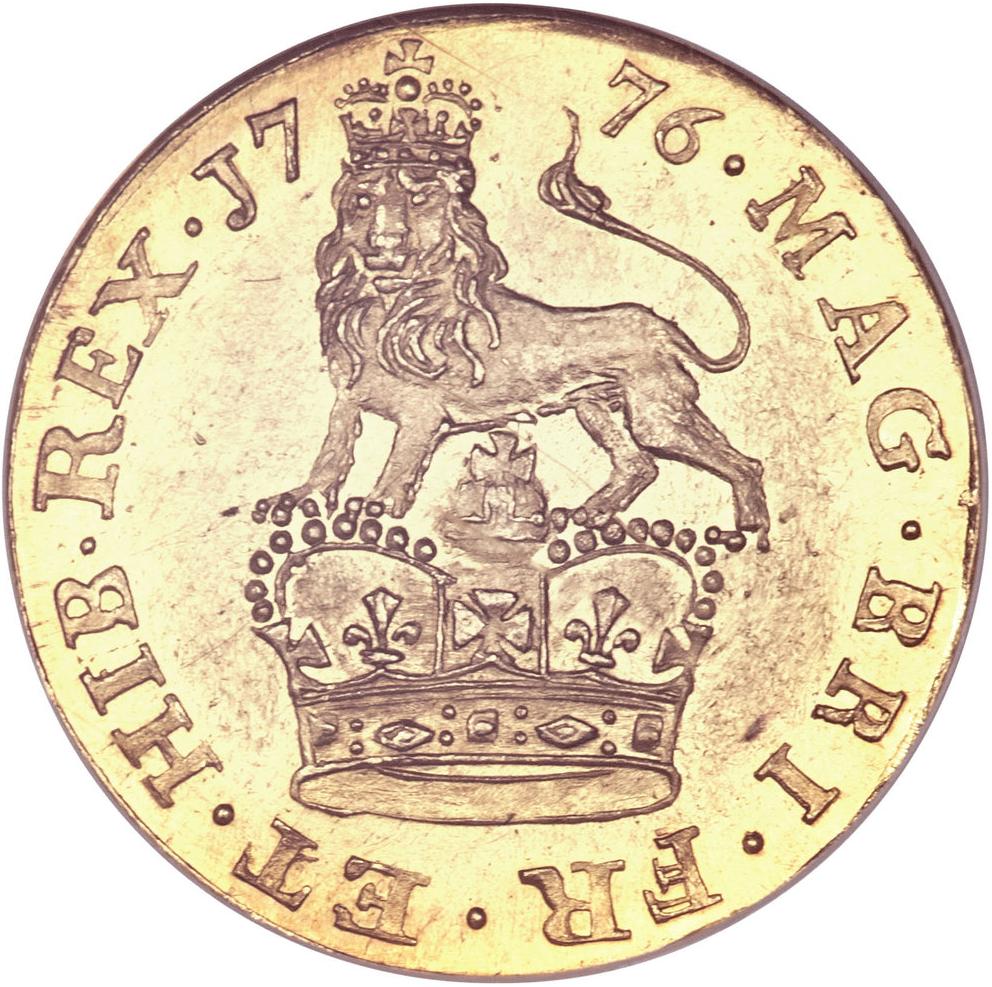
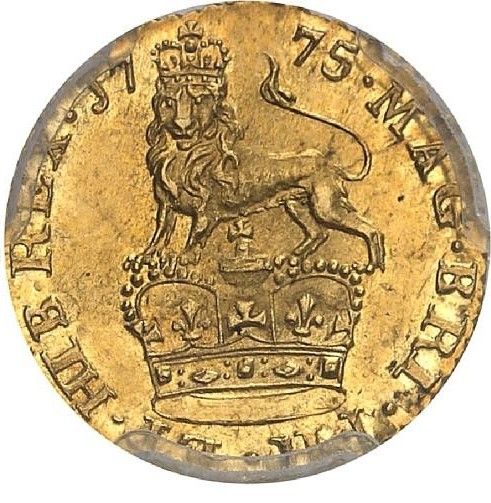
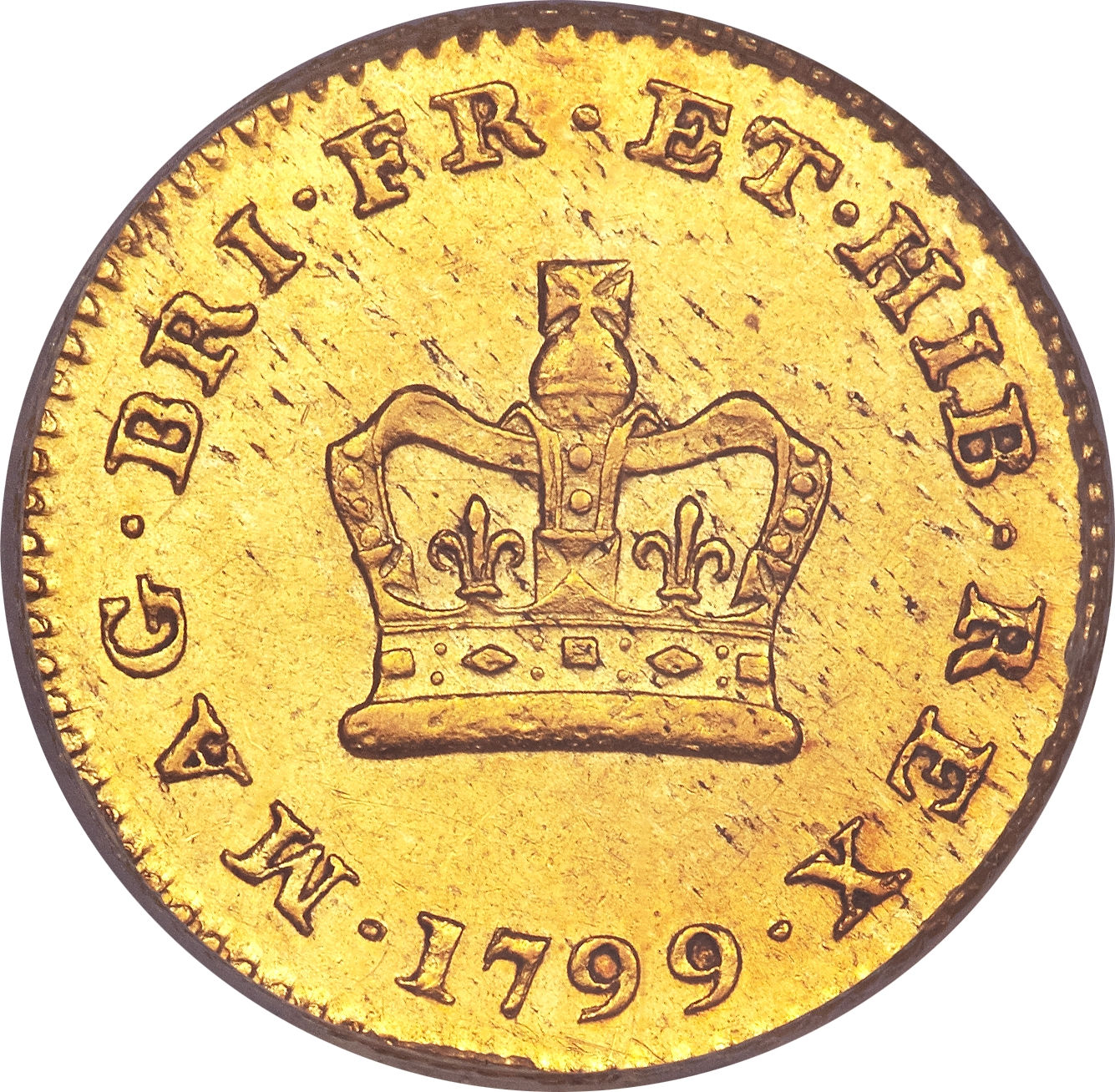
Crown centrally with legend around and date below.
MAG BRI FR ET HIB REX
Third Guinea - George III market value
Find this on eBay
AffiliateThird Guinea - George III value by grade
Realised auction prices · ⭐ Pro Expand rows for individual sale records| Grade | Latest | Median | 30d Δ | All-time range | Sales (1yr) | Total sales | Last sale | |
|---|---|---|---|---|---|---|---|---|
| UNC | £430.00 🔒 | £415.00 (2) | – | £400.00 – £430.00 | 0 | 2 | 01-06-2014 | |
|
Loading…
|
||||||||
| EF | £650.00 🔒 | £240.00 | – | £190.00 – £650.00 | 0 | 3 | 06-06-2021 | |
|
Loading…
|
||||||||
| VF | £600.00 🔒 | £380.00 | – | £24.00 – £600.00 | 1 | 8 | 08-03-2026 | |
|
Loading…
|
||||||||
| F | £460.00 🔒 | £290.00 (2) | – | £90.00 – £460.00 | 0 | 4 | 03-03-2024 | |
|
Loading…
|
||||||||
| VG | £140.00 🔒 | £140.00 (1) | – | £75.00 – £140.00 | 1 | 3 | 07-12-2025 | |
|
Loading…
|
||||||||
About the 1797 Third Guinea - George III
The 1797 Third Guinea - George III is a circulating ⅓ guinea coin issued from 1797 to 1800, struck in 91.67% gold. It weighs 2.8g and measures 17mm across. Reverse design: Crown centrally with legend around and date below.
It is no longer legal tender (withdrawn 1891), so its value is to collectors only.
Common questions
How much is the 1797 Third Guinea - George III worth?
Verified sold prices for the 1797 Third Guinea - George III run from £140 to £415 across 5 grades, taking the median for each grade. Condition makes the difference, so check the grade table above before pricing one. Its gold content is worth about £239 at today's spot price, which puts a floor under its value.
Why was the third guinea introduced?
To help the Bank of England pay its dividends. Wikipedia records that in 1797, during the French Revolutionary wars, gold was short and banknotes were made legal tender, so seven shilling pieces were struck, with odd amounts paid in silver. It was introduced by a proclamation of 29 November 1797.
How many third guineas were made in 1797?
No year-by-year mintage is recorded. Wikipedia says coins to a total value of 315,000 pounds were authorised in October 1797, which at seven shillings each would allow up to 900,000 pieces.
How do you tell a 1797 to 1800 third guinea from a later one?
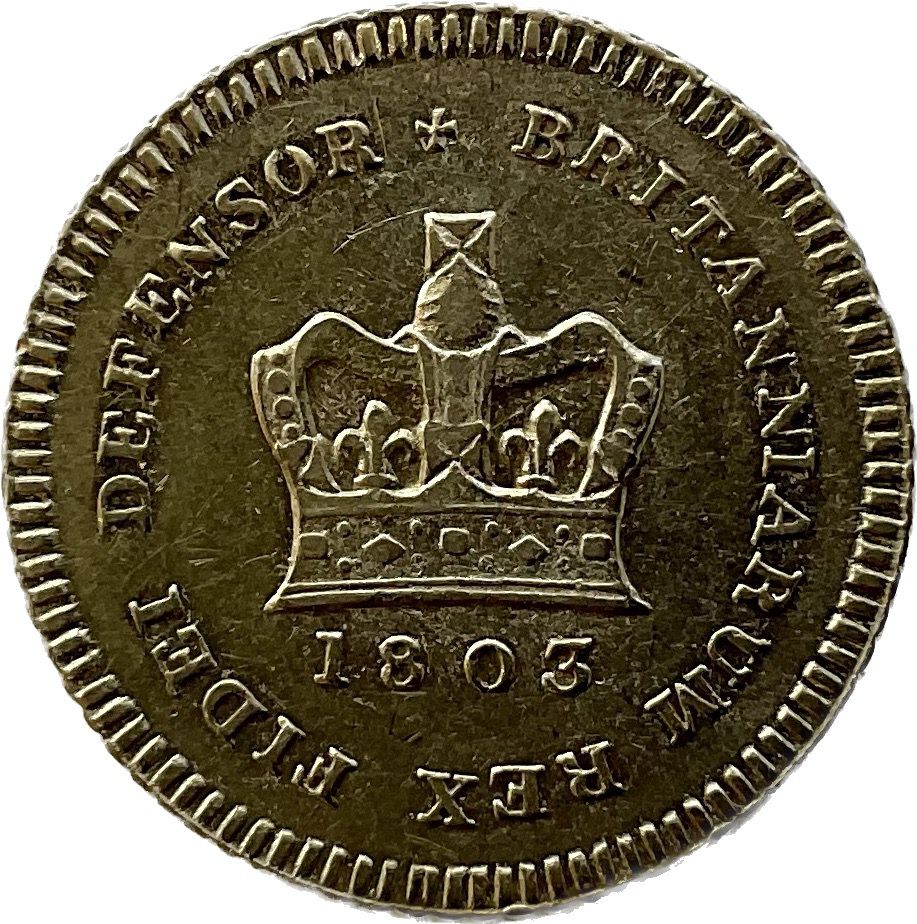
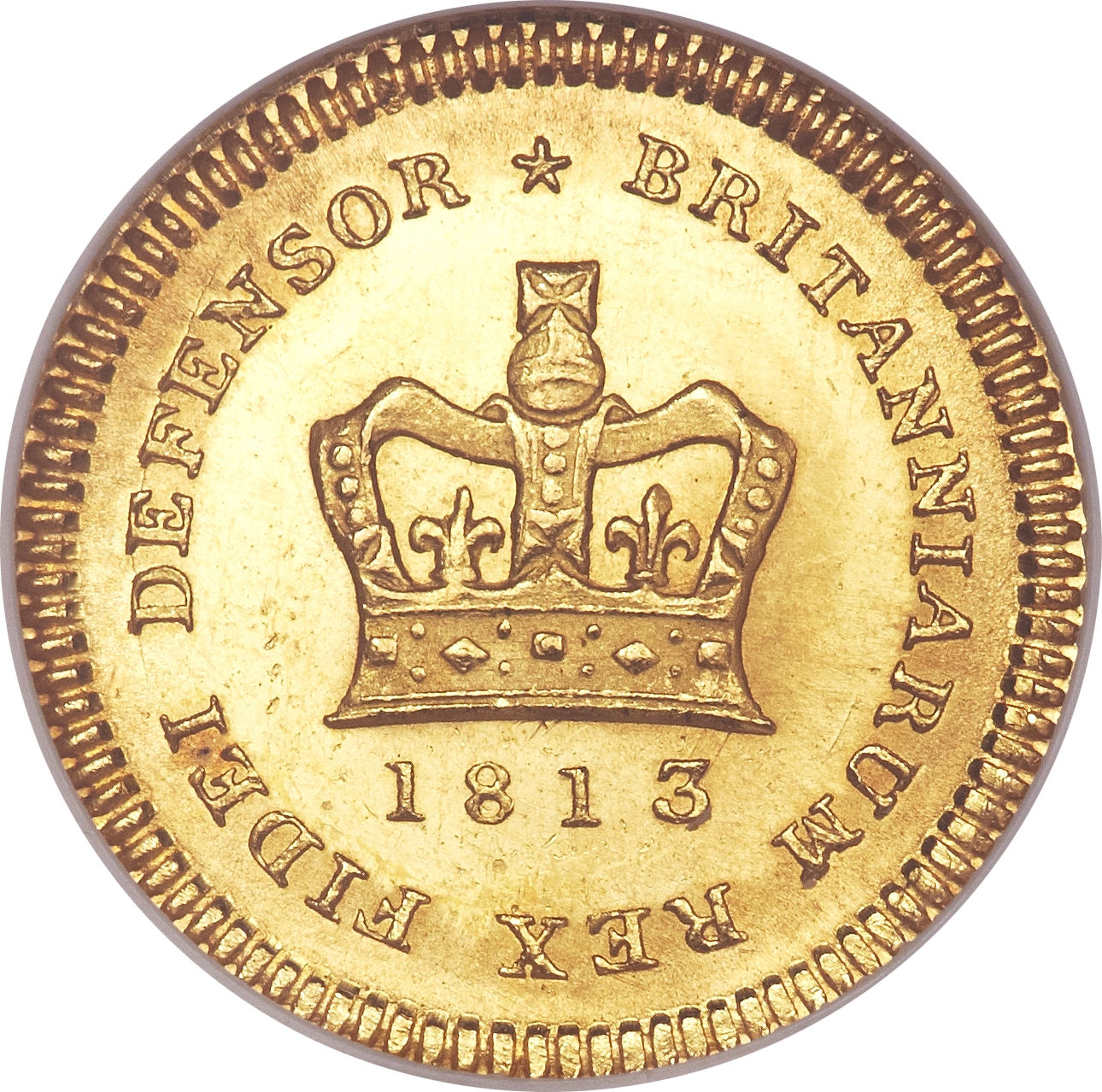
By the reverse legend. Until 1800 it reads MAG BRI FR ET HIB REX with the date, including the claim to France. From 1801 it reads FIDEI DEFENSOR BRITANNIARUM REX, with the date set separately under the crown, after the union with Ireland.
Is a 1797 third guinea legal tender?
No. Wikipedia's article on the sovereign records that all gold coins from before Victoria's reign were called in by a proclamation of 22 November 1890 and demonetised from 28 February 1891. The third guinea is now a collector's coin.
How do I identify the 1797 Third Guinea - George III?
Check the weight 2.8g and diameter 17mm and the metal (91.67% gold) against the specification table on this page. The reverse design is described above.
History and design
The third guinea was born of the financial crisis of 1797. Wikipedia records that during the French Revolutionary wars gold was short, the Bank of England's position was precarious and banknotes were given legal tender status in any amount. To pay the Bank's dividends it was decided to strike a gold coin of seven shillings, a third of the guinea's twenty-one, with odd amounts paid in silver. It was introduced by a proclamation of 29 November 1797, and coins to a value of 315,000 pounds were authorised in October that year.
This entry covers the first type, dated 1797 to 1800. The denomination continued until 1813, apart from 1805, 1807 and 1812, and Wikipedia notes that between 1800 and 1812 third and half guineas were the only gold coins struck, once guinea production had stopped in 1799. Tony Clayton adds that the coin also helped fill a gap left by the lack of silver coin. No mintage figure is recorded for any of the years.
The obverse shows the first bust used on the denomination, a laureate head of George III facing right with GEORGIVS III DEI GRATIA. Clayton calls it a strange portrait; it was used until 1803 and replaced in 1804. The Royal Mint credits the obverse portraits of the third guinea to Lewis Pingo and Nathaniel Marchant.
The reverse, credited to Pingo, is a large crown with the legend MAG BRI FR ET HIB REX and the date, King of Great Britain, France and Ireland. In 1801, after the union of Great Britain and Ireland, the King gave up his claim to the French throne and the legend changed to FIDEI DEFENSOR BRITANNIARUM REX with the date beneath the crown. The coin weighs 2.8 g, measures 17 mm and has a grained edge.
Collecting notes
The four dates of this type are 1797, 1798, 1799 and 1800. Coin Hunter lists the 1797 coin as the first head with the date in the legend. The Royal Mint Museum holds a 1798 example weighing 2.81 g with a grained edge.
Check the high points of the portrait and the crown for wear. The legend is the quickest way to separate this type from the later issues, such as the [1801 third guinea](/coin/⅓-guinea-george-iii-1801). Earlier pieces dated 1775 and 1776 are patterns, not currency. Like all pre-Victorian gold, the third guinea was demonetised from 28 February 1891.
Sources
The history, design, varieties and collecting notes on this page are drawn from these sources. Prices come from recorded sales, not from them.
- Third guinea, Wikipedia (read 12 Oct 2026)
- Seven Shillings, and Seven and Six, Tony Clayton, Coins of the UK (read 12 Oct 2026)
- George III Guinea Set, The Royal Mint (read 12 Oct 2026)
- George III third-guinea, 1798 (RMM 970), The Royal Mint Museum, via Museum Data Service (read 12 Oct 2026)
- British coins of George III (Seaby 3738), Wildwinds (read 12 Oct 2026)
- Sovereign (British coin), Wikipedia (read 12 Oct 2026)
- Guinea (coin), Wikipedia (read 12 Oct 2026)
- 1797 Coin Values, George III, Coin Hunter (read 12 Oct 2026)