Quick answer
Genuine gold sovereigns weigh 7.98 g, measure 22.05 mm in diameter and are struck in 22-carat gold (91.67% pure). Most counterfeits fail on weight, ring test, edge detail or magnet test. For any sovereign worth £400+, the safest authentication is a weight-and-dimension check paired with third-party grading or XRF testing by a dealer.
TL;DR
- Genuine sovereigns: 7.98 g, 22.05 mm, 1.52 mm thick, non-magnetic, distinct ring
- Common fakes: tungsten-cored, brass, plated base metal, cast copies
- Weight is the #1 tell, ±0.05 g is the acceptable margin
- Counterfeit Chinese "Victoria Jubilee" sovereigns flooded the market 2010-2018
- For anything pre-1900 or high-grade modern, NGC/PCGS grading is worth the £40
Table of contents
- Genuine sovereign specifications
- The weight and dimension test
- Magnet and acoustic tests
- Visual red flags
- Specifications table
- Where fakes come from
- Common questions
- FAQ
Genuine sovereign specifications
The modern British sovereign has had essentially unchanged physical specifications since 1817:
- Weight, 7.98805 g (7.98 g)
- Diameter, 22.05 mm
- Thickness, 1.52 mm
- Gold content, 7.32 g (0.2354 troy ounces) of pure gold
- Fineness, 22 carat (91.67% gold, 8.33% copper)
- Non-magnetic, gold and copper are both non-magnetic
Half-sovereigns are exactly half: 3.99 g, 19.3 mm, 1.22 mm thick.
For a full history and market data, see our sovereign values UK guide.
The weight and dimension test
A decent jeweller's scale (£20-£40) accurate to 0.01 g, plus digital callipers accurate to 0.01 mm, will expose 95% of fakes. Genuine sovereigns from the London Mint and branch mints all strike to tight tolerance.
Acceptable ranges
- Weight, 7.93 g to 8.03 g (±0.05 g)
- Diameter, 22.00 mm to 22.10 mm
- Thickness, 1.50 mm to 1.55 mm
Anything outside those ranges is either a worn genuine (losing weight only) or a fake.
Common fake weight patterns
- Tungsten-cored, correct weight, wrong density. Feels "off" in the hand; often gives a dull ring
- Brass copies, too light by 0.3-0.7 g
- Base-metal plated, correct volume but under 7 g
- Thick casts, slightly overweight, noticeably thicker than 1.52 mm
Magnet and acoustic tests
The magnet test
Gold and copper are non-magnetic. A sovereign that sticks to a strong rare-earth magnet, or even pulls slightly, is fake. Neutral response = genuine (or a well-made tungsten fake, which requires weight or XRF to catch).
The ring test
Balance the sovereign on a fingertip and tap gently with another coin. A genuine sovereign produces a clear, sustained "ping", a bell-like tone that rings for about a second. Fakes typically produce a dull clunk or short thud because the internal structure damps the ring.
Caveat: this test takes practice. Compare against a known genuine before relying on it.
Visual red flags
Counterfeits fail the eye test at close range. Check under a 10x loupe:
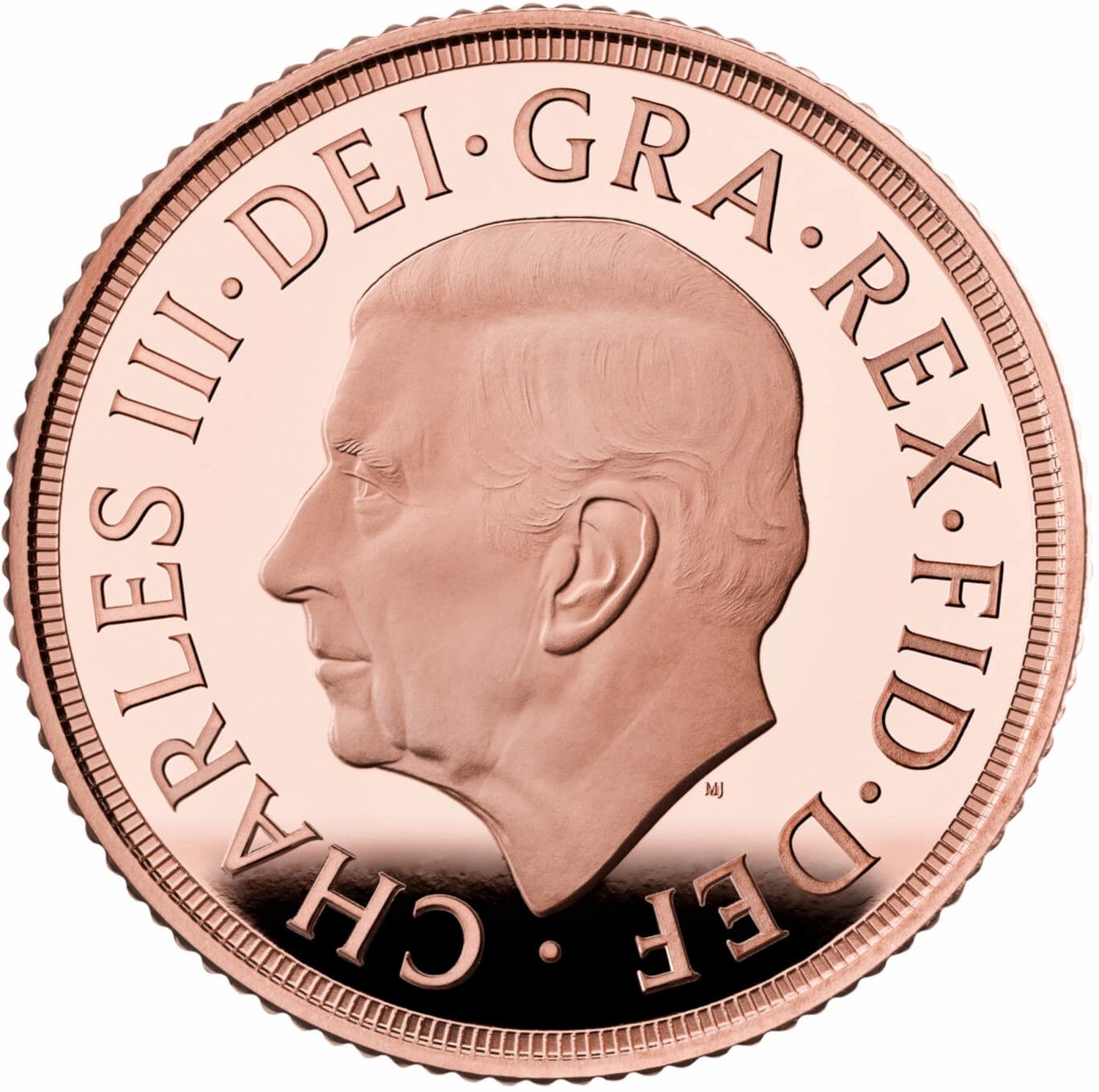
Obverse (monarch)
- Hair detail, genuine sovereigns have sharp, individual hair strands; casts show mushy, clumped hair
- Portrait edge, sharp transition on genuine; soft "cloudy" transition on fakes
- Rim lettering (when present), crisp on genuine; often "smeared" on fakes
Reverse (St George or shield)
- St George's spear, sharp point and fine detail on genuine; blunt or blurred on fakes
- Horse anatomy, individual muscle definition on genuine; slab-like on fakes
- Date, crisp digits on genuine; often slightly uneven on fakes, especially 2s and 6s
Edge
Genuine sovereigns have precisely-milled edge reeding. Fakes often show:
- Uneven spacing
- Fewer or more reeds than the specification (typical genuine: ~100 reeds)
- A visible seam from the casting mould on cast copies
Colour
Genuine sovereign gold has a distinctive warm orange-gold hue. Plated fakes look either too yellow (24k flash) or too rosy (high-copper alloys).
Specifications table
| Attribute | Genuine sovereign | Common fake indicator |
|---|---|---|
| Weight | 7.98 g ±0.05 | <7.5 g or >8.1 g |
| Diameter | 22.05 mm | <22.0 or >22.2 mm |
| Thickness | 1.52 mm | >1.6 mm (cast copies) |
| Gold fineness | 22ct (91.67%) | Base metal plated |
| Magnetic | No | Yes (steel core) |
| Ring test | Clear bell-like ping | Dull thud |
| Specific gravity | 17.76 | <17.0 or >18.5 |
Where fakes come from
Historically, sovereign counterfeiting has been dominated by:
- Lebanese and Italian forgeries (1950s-1970s), often 22k gold of correct weight but wrong date combinations; some are collectable in their own right
- Turkish "tourist" sovereigns, 22k gold but sold outside the legal tender market; not technically counterfeit if sold as replicas
- Chinese base-metal fakes (2008-present), wide-scale production of 1887 Jubilee, 1911 and 1925 dated pieces
- Homebrew casts, gold-plated resin or tungsten cores with thin gold skin; common on auction sites
If you're planning to buy sovereigns as an investment, only buy from:
- The Royal Mint directly
- LBMA-approved bullion dealers
- PCGS or NGC slabbed examples
- Established numismatic dealers with 20+ years' reputation
See what makes a coin rare? for broader context on provenance and demand, and track your sovereigns in the MyCoinage catalogue, each coin page includes an image reference for comparison and metals page shows live gold spot.
If you're insuring a sovereign collection, document every coin with weight, diameter, photographs and ideally a slab serial number. The coin collection insurance UK guide walks through the documentation specialist insurers expect.
Common questions
How heavy is a real sovereign?
7.98 g (7.98805 g to be exact). Half-sovereigns weigh 3.99 g.
Are sovereigns magnetic?
No. Both 22-carat gold and the copper alloy used are non-magnetic. Any magnetic pull indicates a steel or iron core and confirms the coin is fake.
Can I test a sovereign at home?
Weight, diameter, thickness, magnet and ring test will catch most fakes. For XRF (X-ray fluorescence) gold testing, visit a coin or bullion dealer, most offer it free or for a nominal fee.
Are tourist sovereigns illegal?
If sold honestly as replicas or commemorative bullion they're legal. If sold as genuine British sovereigns they're counterfeit under UK law. Turkish 22k-gold sovereigns are technically correct in gold content but carry non-UK mint marks.
FAQ
Q: What does a genuine sovereign sound like?
A: A clear, sustained bell-like ring when tapped on the edge with another coin. Dull thuds indicate a cored or cast fake.
Q: Are all pre-1917 sovereigns from London?
A: No. Branch mints operated at Sydney (S), Melbourne (M), Perth (P), Ottawa (C), Bombay (I) and Pretoria (SA). Mint marks appear above the date on the reverse.
Q: How can I tell a proof sovereign from a BU one?
A: Proofs have mirror fields and frosted devices. BU sovereigns have full lustre but no mirror. See proof vs BU vs uncirculated.
Q: What's the most faked sovereign date?
A: 1887 Jubilee Head and 1925 George V, both common dates with high sale volume, so fakes blend easily into legitimate listings.
Q: Should I slab my sovereigns?
A: If they're key dates, high grade, or you plan to auction them, yes. For standard bullion sovereigns traded at spot, no.
<!-- mc:outbound-resources-v1 -->
Authentication resources
- Royal Mint Museum: The Sovereign, official reference on sovereign specifications and design history.
- NGC UK and PCGS, third-party authentication services. Slab any sovereign you're unsure about; the £25–£50 fee is small relative to the cost of a fake.
- CGS UK, British grading service with strong sovereign coverage.
- BullionByPost and Atkinsons Bullion, major UK bullion dealers. Both offer free authentication for items they buy back, useful as a sanity check.
- The Britannia Coin Company, BNTA member with detailed sovereign authentication content on their blog.
- Predecimal.com forum, post photographs for free expert assessment from long-time British coin collectors.