Track your first 25 coins free.Live realised auction prices, no card needed. Pro (£1.99/month) adds unlimited tracking, price history and alerts.No card needed.
Sign up →
Free Tool · No Account Needed
UK Coin Identifier
Found a coin and not sure what it is? Answer four short questions, measure a worn coin, or type what
you know, and we'll match it to our catalogue of 7,000+ United Kingdom coins,
with realised auction values on every match.
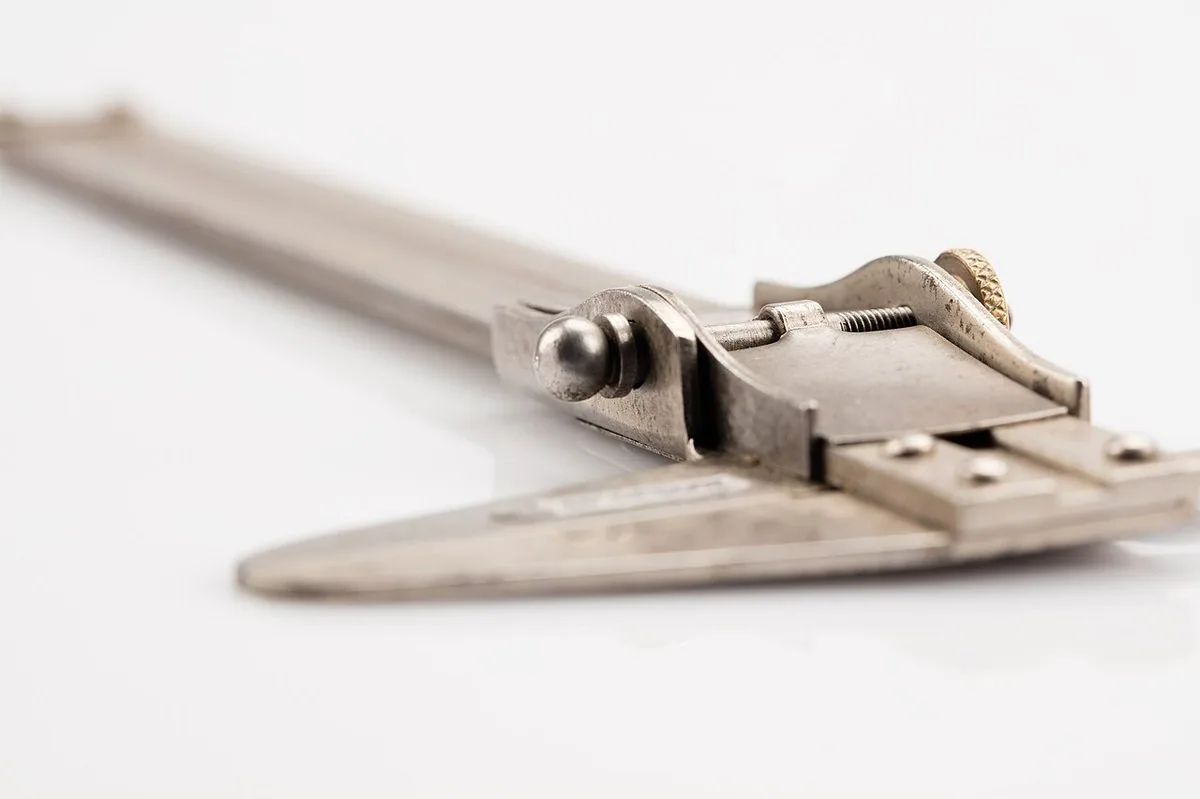
An antique sliding vernier caliper.Image: Sliding vernier caliper by Unknown author, Wikimedia Commons, licensed under CC BY 4.0
Diameter is the distance straight across the face, in millimetres. A ruler works;
calipers are better. Weight is optional but narrows things fast, so use kitchen or
pocket scales if you have them. Shape and colour settle the look-alikes.
Reference points: a 1p is 20.3mm and 3.56g; a 50p is 27.3mm and 8.0g; a £2 is 28.4mm and 12.0g.
Pre-decimal? A big copper penny is 31mm and 9.4g, a half crown 32.3mm and 14.1g.
The sizes and weights guide has every denomination.
How the identifier works
The question path narrows the catalogue one attribute at a time: portrait (which fixes the monarch and
reign), denomination, year, and finish. The measure path ranks every catalogued coin by how close its
official diameter and weight sit to your measurements, with shape and colour to separate look-alikes,
which works even when the coin is worn smooth. The text path reads a year, a denomination, a design or
a nickname the way site search does. Every path shows circulation strikes first and folds the proofs
and finishes of the same coin underneath, each linking to a full coin page with realised auction
prices, mintage figures, rarity scores and reference images. Every result is a real coin in the
catalogue.
Frequently asked
How accurate is this coin identifier?
It is a structured search of our 7,000+ catalogued British coins. Answer the portrait, denomination and year correctly and the tool narrows to the exact coin or a small handful of variants, with circulation strikes shown first and proofs folded underneath. For ambiguous coins (mules, errors, patterns) the result page links to the relevant guides.
What if I don't know the year?
The year is normally beneath the portrait on the obverse. If it has worn away, use "Measure it": diameter, weight, shape and colour usually narrow a dateless coin to a few candidates, and each card shows the years that coin was struck.
How do I identify a coin that is too worn to read?
Switch to the "Measure it" tab. Measure the diameter in millimetres with a ruler or calipers, weigh it in grams if you have scales, and note the shape and colour. The identifier ranks every catalogued coin by physical closeness, and a coin with no recorded diameter can still match on its weight.
How accurately do I need to measure?
The diameter search allows about a millimetre either way (less on small coins, more on crowns) and weight allows 12%, so a household ruler and kitchen scales are fine. Calipers and 0.01 g scales narrow the results further. Weigh the coin clean and dry; heavy wear can remove a few percent of the original weight.
What if it is not a British coin?
The identifier covers the United Kingdom by default, including pre-1707 England and Scotland. Switch the issuer control to add Jersey, Guernsey, Alderney, the Isle of Man, Gibraltar and the sterling territories, or to Ireland. For other countries, Numista is the place to start.
Can I identify a coin from a photo?
Not here. Apps such as CoinSnap and Coinoscope identify coins from a photo; come back with the name and the value is on the coin page. Google image search is unreliable for coins: a worn penny often comes back as a token, a medal or a foreign coin.
Does this work for Roman or ancient coins?
No. This identifier is scoped to British coinage from the hammered era to the present, plus the Crown Dependencies, the territories and Ireland. For Roman, Anglo-Saxon or other ancient coinage, the British Museum and the Portable Antiquities Scheme are the right starting points.
Is this a free service?
Yes, completely free with no account required. If you want to track the coins you find, free MyCoinage accounts let you save up to 25 coins to a personal collection.
What if my coin is fake?
Several common UK coins are widely counterfeited, most notably the Kew Gardens 50p and the £1 coin pre-2017. Once you have a match, our individual coin pages flag the common counterfeit tells and show genuine reference images.
WatchWhy Is The UK 2 Pence Coin So Big? A Rambling Look At British CurrencyTour of British coin designs, sizes and features (Atomic Shrimp) Video: Atomic Shrimp on YouTube
We use cookies to keep you signed in, a first-party cookie to see how the site is used, and Google Analytics.
No thanks turns off our own record; you can change it any time in your account.
Cookie Policy