Dual-Date Coins UK: Mules, Errors and What They're Worth
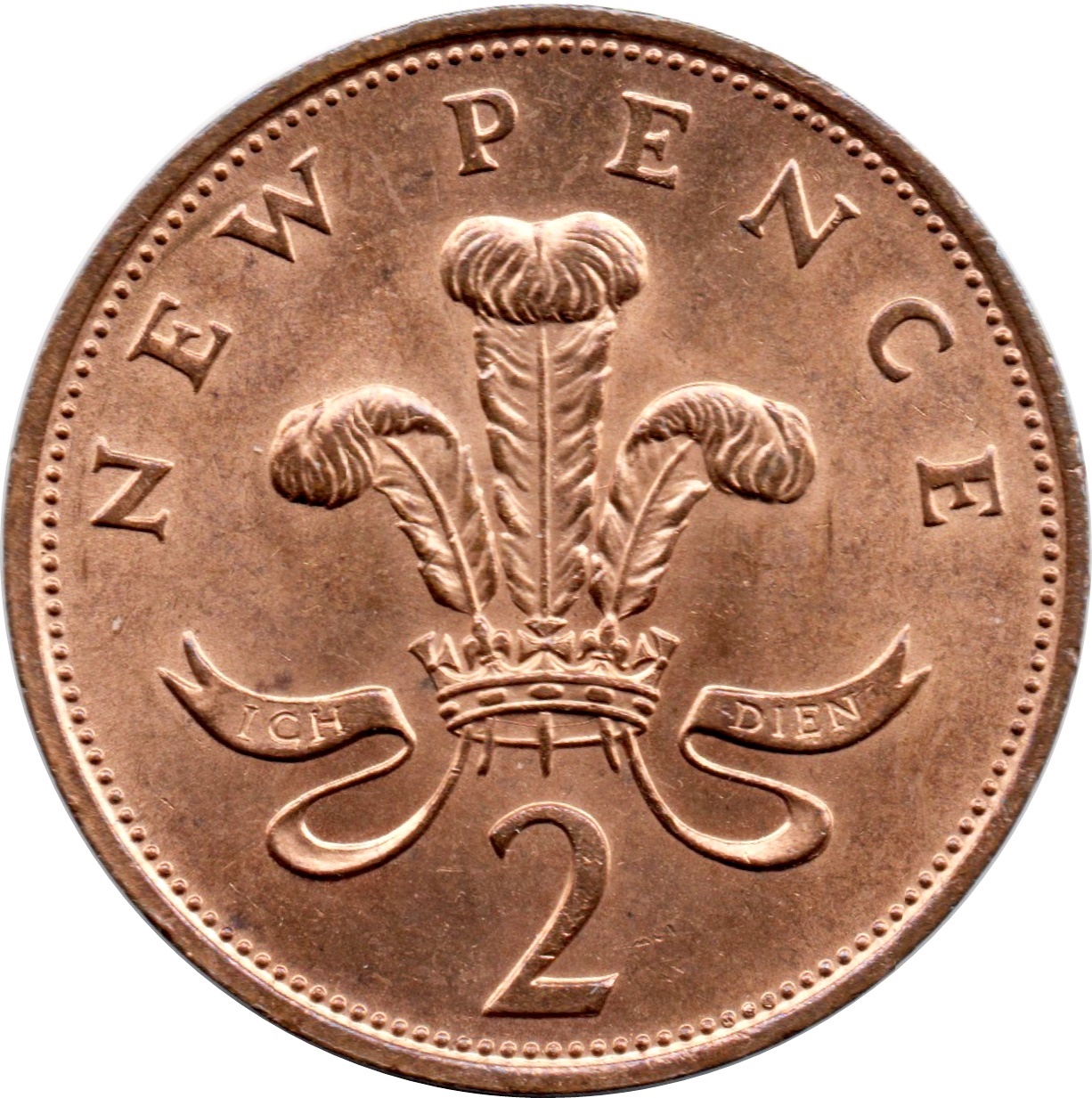
A dual-date coin is one where the obverse and reverse don't match in date logic, an old design paired with a new, or two design generations crossed at the press. The two famous UK examples are the 1983 NEW PENCE 2p (a 1983-dated coin still reading the 1971-81 legend) and the 2008 undated 20p mule (no date anywhere on the coin). Together they're the headline UK mules. This guide covers how dual-dates happen at the Royal Mint, how to identify a real one versus a damaged or counterfeit lookalike, realised auction prices and how to sell what you've found.
What is a dual-date coin?
Modern coin striking uses two dies fitted on a press: an obverse die (the portrait side) and a reverse die (the design side). When the Royal Mint changes the design of either side, new dies are produced and the old dies retired. The transition period is when mules happen.
A mule occurs when a die from the old design generation is mistakenly fitted alongside a die from the new generation. The resulting coin shows two faces that were never meant to coexist on the same piece. Three flavours:
- Cross-generation mule. Old obverse die paired with new reverse, or vice versa. Both UK headliners are this type: 1983 NEW PENCE (old reverse + new obverse) and 2008 undated 20p (old obverse + new reverse). Visible because the date logic of the two sides doesn't match.
- Cross-denomination mule. A die meant for one denomination paired with the die for another. Rare in modern UK production but documented in earlier eras.
- Twin obverse / twin reverse. Two obverse dies or two reverse dies fitted together by mistake. Extreme rarity. Almost no documented modern UK examples.
The defining feature of a dual-date coin is that the strike itself is normal: sharp, clean, all design elements correctly raised. The error is in the pairing, not the striking. This is what distinguishes a mule from physical post-mint damage.
The 1983 "New Pence" 2p error explained
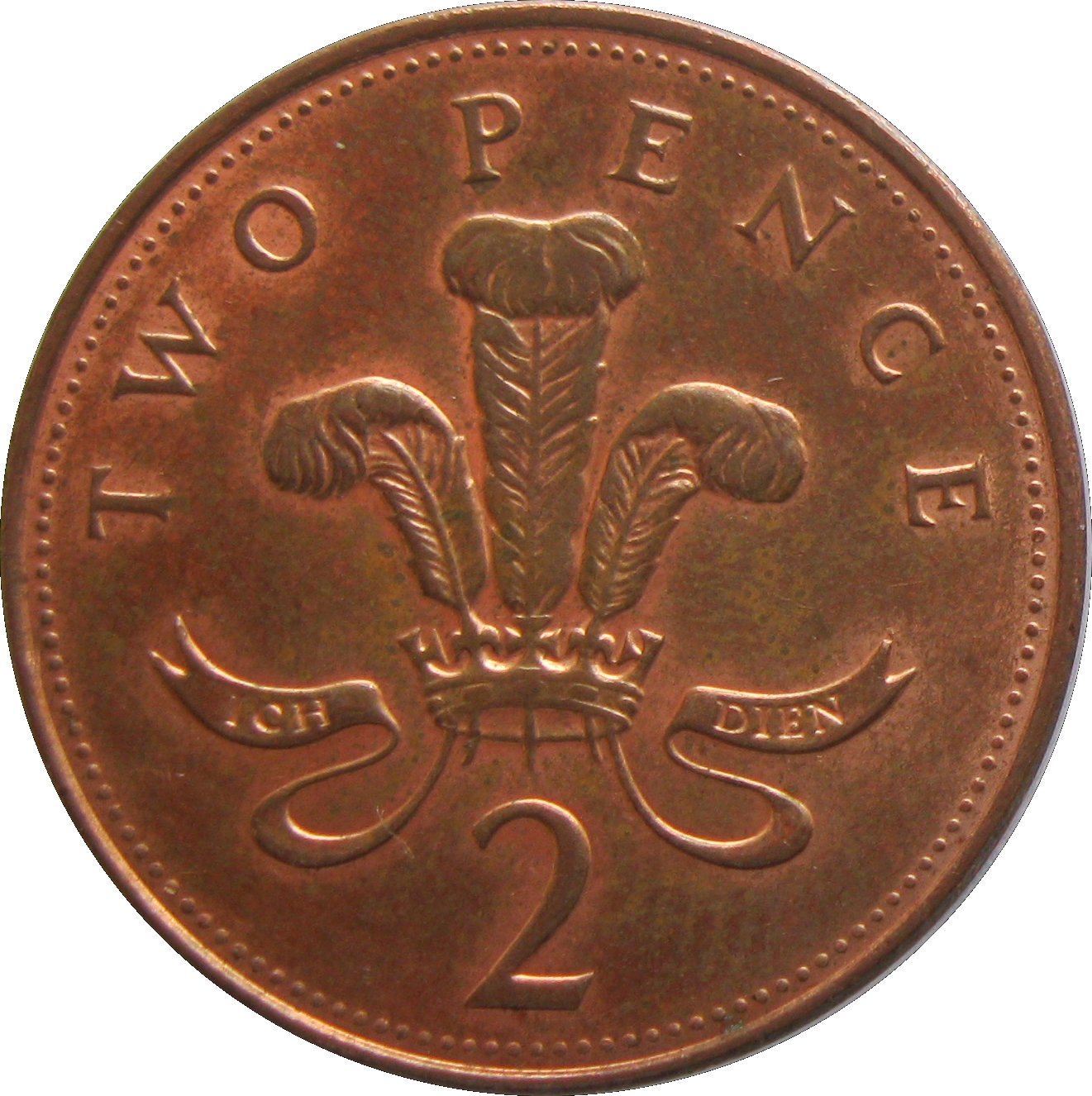
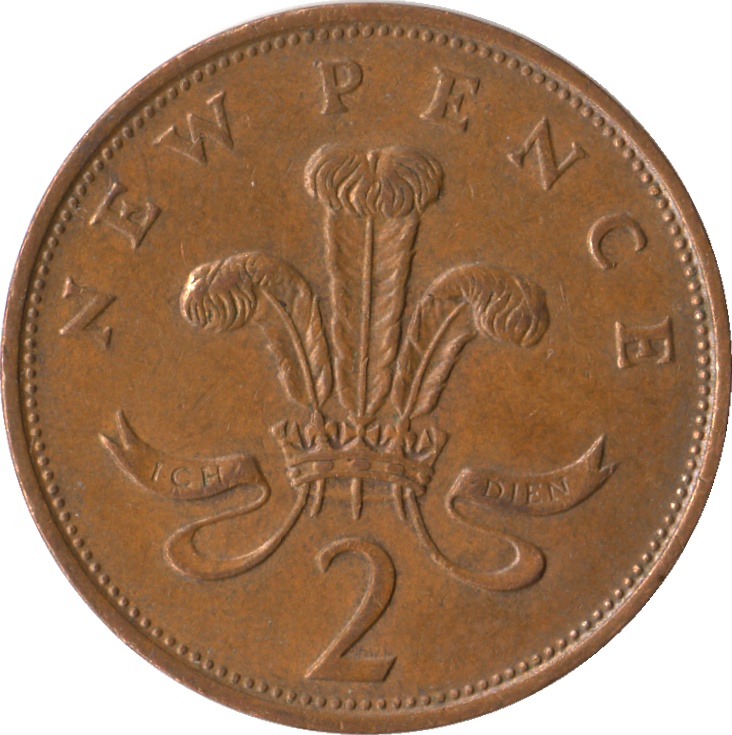
Following decimalisation in 1971, the new decimal pence carried the legend NEW PENCE on the reverse to distinguish them from the soon-to-be-demonetised pre-decimal pennies. The transitional NEW PENCE legend was used 1971–1981. From 1982 onwards (1p) and 1983 onwards (2p), the Royal Mint changed the legend to ONE PENNY and TWO PENCE respectively, signalling the end of the transition.
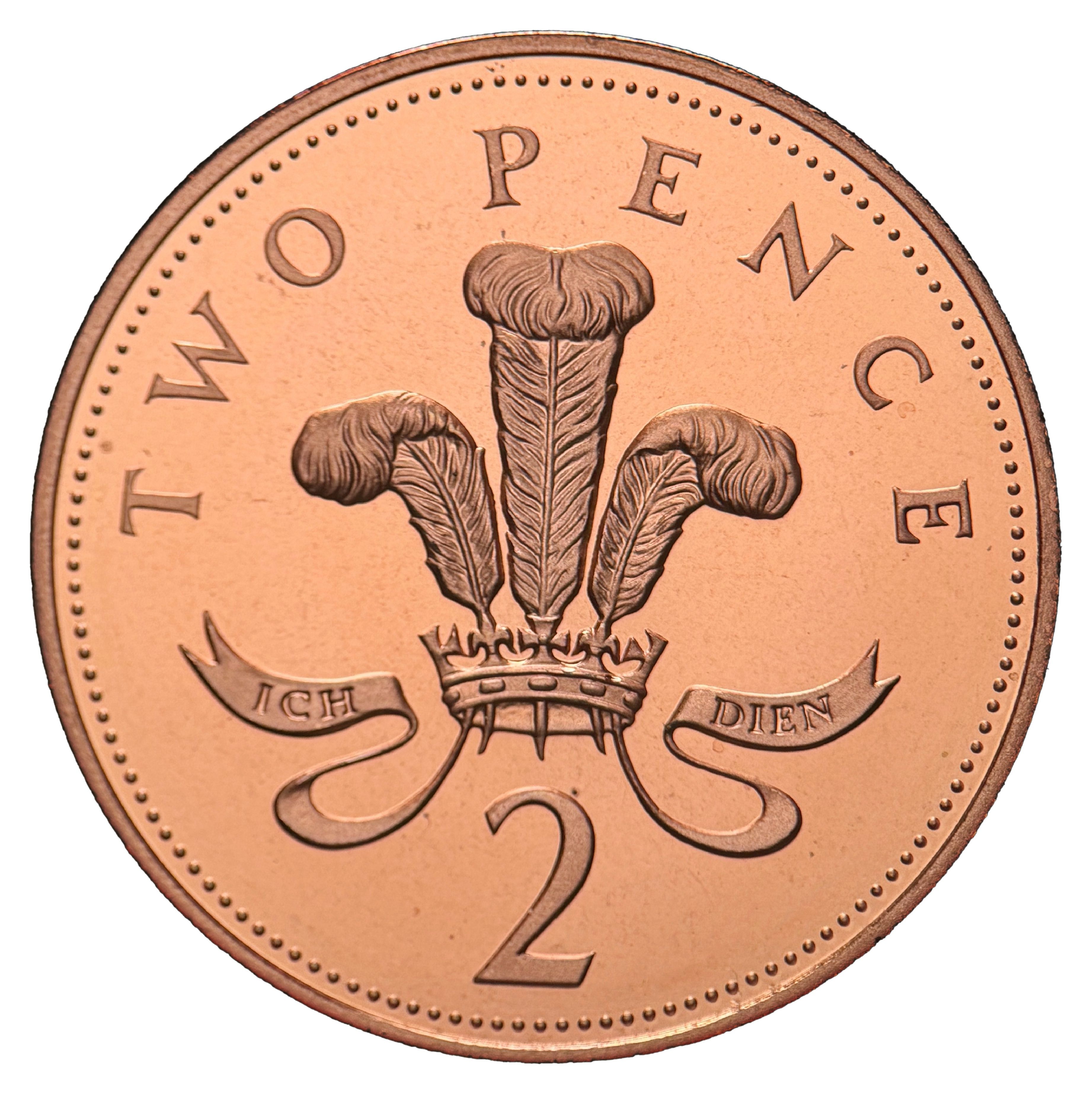
The 1983 2p was the first year for the TWO PENCE legend. New reverse dies were produced. The old NEW PENCE reverse dies were due to be retired. But during the striking of 1983 Royal Mint proof sets, an old NEW PENCE reverse die was mistakenly fitted on the proof press for a small batch. The result: 1983-dated proof 2p coins reading NEW PENCE instead of TWO PENCE.
Three things to know about this error:
- It's confined to proof sets. Authentic 1983 NEW PENCE 2ps are encapsulated proofs, not loose circulation coins. Earlier-dated coins (1971–1981) all read NEW PENCE and are common at face value, those are not the error. The error is specifically a 1983 specimen reading NEW PENCE.
- Mintage is unknown but small. The Royal Mint hasn't published a figure. Best estimates put the 1983 NEW PENCE proof error at a few thousand sets across the year's proof issue.
- Realised prices. £500–£1,500 for raw specimens; £1,000–£2,500 for slabbed PR-65+ examples. The error is one of the most-fakèd in UK numismatics; authentication is essential.
The 2008 undated 20p mule
The most famous UK error and the most findable in change. Detailed coverage in our dedicated guide; here is the mechanism summary:
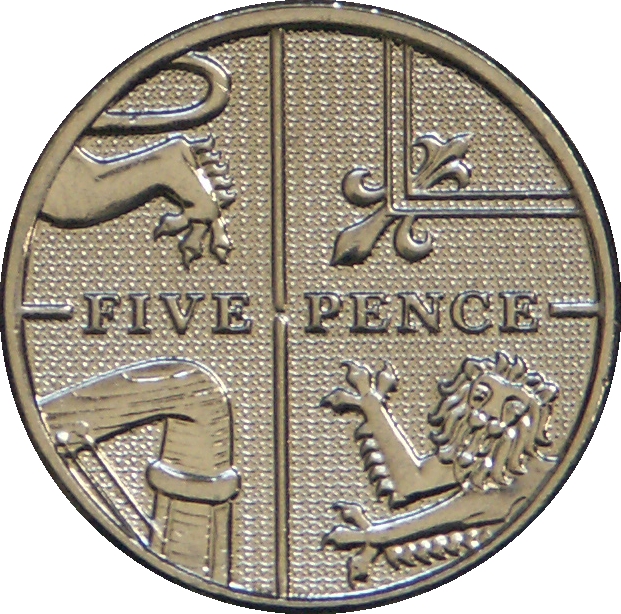
Until 2008, the 20p carried the date on the reverse (Tudor Rose design). The 2008 redesign, Matthew Dent's "Royal Shield" series, where the 1p, 2p, 5p, 10p, 20p and 50p reverses each show a piece of the Royal Coat of Arms shield, moved the date to the obverse. So pre-2008 20ps had date on reverse and post-2008 20ps had date on obverse.
During the die-set transition in 2008, a small batch of 20ps was struck pairing the new (now dateless) reverse with an old (still dateless) obverse from the previous design generation. The result: a 20p with no date anywhere on the coin. They were released into circulation undetected and only spotted later.
Estimates of how many entered circulation: 50,000 to 250,000, though the Royal Mint has not published a definitive figure. The undated 20p remains legal tender. Realised prices: £50–£100 for circulated specimens, £100–£200 for UNC. For full coverage including how to spot a real one versus a date-filed counterfeit, see our 2008 Undated 20p Mule guide.
Why mules happen at the Royal Mint
The Royal Mint produces around 2 billion coins a year. Mules are vanishingly rare in percentage terms but inevitable at that volume. The operational pathways for mules to enter circulation are well-documented:
- Die transition periods. When a design changes, new and old dies briefly coexist in tooling stores. The wrong die can be selected for fitting if the labels are ambiguous or the press operator is rushed. Almost all UK mules trace to design transitions: 1983 (new TWO PENCE legend), 2008 (new Royal Shield series), 2017 (new 12-sided £1).
- Multi-press production. The Royal Mint runs many presses simultaneously, each on a specific denomination. Cross-press contamination, a die from one press ending up on another, happens occasionally during shift changes or maintenance.
- Quality control gaps. Standard QC samples a small fraction of struck coins. Visible errors caught at QC are recycled. But errors not caught at QC, particularly subtle ones, can pass through to bagging and dispatch.
- Proof set production. Proof sets use slower presses with more careful inspection, but errors still slip through, particularly when the proof striking coincides with a design change. The 1983 NEW PENCE error is a classic example.
Modern automated systems have substantially reduced the mule error rate, but not eliminated it. The Royal Mint has confirmed several minor mule incidents since 2010 in addition to the famous 2008 undated 20p.
How to identify a real dual-date error vs a damaged coin
The single most important distinction in error coin authentication: strike vs damage. A genuine mint error has a normal, sharp strike with all design elements correctly raised, just different from the intended pairing. Post-mint damage disrupts the surface or alters the design after the coin has left the mint.
Five tests to distinguish:
- Surface integrity. A real error has clean, even mint surfaces. Damage shows scratches, gouges, abrasion patterns, file marks or chemical staining.
- Design relief. All design elements should sit at normal, full relief. If the "missing" element area is recessed below field level, it's been ground or filed off, not a mint error.
- Edge. Mint errors have normal edges. Filed-off-date counterfeits often show edge damage from clamping during the alteration.
- Weight and dimensions. A real error matches the host coin's spec exactly. Wrong weight or diameter usually means counterfeit, not error.
- Die-pair consistency. The two faces should each look like a normal Royal Mint strike for their respective design generation. If the "old" face looks unusually crude or the legend spacing is wrong, the coin may be a fantasy piece struck outside the mint.
Realised auction prices for known dual-date errors
| Error | Year | Coin | Typical realised range |
|---|---|---|---|
| NEW PENCE on 1983 proof | 1983 | 2p (proof) | £500, £2,500 |
| Undated mule | 2008 | 20p | £50, £200 |
| Wrong-planchet decimal strike | 1971–1972 | 2p on halfpenny blank | £500, £1,500 |
| Die-rotation 180° error | 2014–2017 | £2 (Magna Carta, Shakespeare etc) | £30, £100 |
| Missing edge inscription | Various | £2 bimetallic (esp. Newton) | £25, £75 |
| Brockage (struck-coin sticking to die) | Various | Various | £500, £3,000 |
| Off-centre strike (15%+) | Various | 50p, 20p | £15, £100 |
| Pattern / specimen mules (non-public) | Various | Various | £1,000, £10,000+ |
Ranges drawn from realised auction figures at Baldwin\'s, Spink, Noonans and dealer listings. Top of each band assumes slabbed authenticated examples in upper-grade preservation.
Selling a dual-date error you've found
The right venue depends on the coin's value tier. Three options, ranked by typical realised return:
- Specialist auction. For slabbed authenticated coins worth £500+, consign to Spink, Baldwin\'s or Noonans. Hammer commissions 15–20% but realisations on rare errors typically beat any private offer. Timeline: 3–6 months from consignment to settlement.
- eBay UK with grading slab. For coins worth £100–£500, a slabbed listing with clear photos and authentication certificate sells reliably and quickly. Listing fees are minimal and final-value fees ~12.8% plus payment processing. Avoid raw listings for valuable errors, buyers refuse to pay top prices for unverified coins.
- Specialist dealer cash purchase. Coin dealers focused on errors will buy privately for cash. Typical offer: 60–75% of likely auction realisation in exchange for the speed and certainty. Useful for the 2008 undated 20p where auction commission eats into a modest selling price.
Avoid generic estate dealers, jewellers and high-street antique shops, none recognise or pay for numismatic premium on errors. Avoid Facebook Marketplace and similar peer-to-peer platforms unless you can meet the buyer in person and the coin is slabbed.
Risk: fake mules in the secondary market
Both the 1983 NEW PENCE 2p and the 2008 undated 20p are heavily faked because they're famous, easy to describe and command four-figure prices in top grade. Three common counterfeit techniques:
- Filed-off date 20ps. A normal 2008-onwards 20p has the date area on the obverse ground, filed or chemically etched until the digits are no longer visible. Tell-tale: the field around where the date should be is slightly recessed below the surrounding metal, or shows fine abrasion patterns under raking light. A genuine undated mule has a clean, original obverse with no signs of work.
- Mislabelled NEW PENCE 2ps. Sellers offer a normal 1971–1981 NEW PENCE 2p (which read NEW PENCE legitimately) as the "1983 error". Tell-tale: the date is wrong. The genuine error is specifically 1983-dated. Always check the obverse date before paying.
- Counterfeit struck pieces. Outright fakes struck outside the Royal Mint, sometimes very convincing visually but failing on weight, alloy or edge profile. Tell-tale: weight off the host coin's spec by more than ±0.05 g; alloy colour slightly wrong (golden brass instead of copper-plated steel for the 2p, etc.); edge seams or unusually crude reeding.
For any candidate worth more than £100, professional grading from CGS UK, NGC or PCGS is the only way to settle the question definitively. The slab and certification are also what eBay buyers and auction houses require for top-end pricing.
Related coins on MyCoinage
Related guides
- UK Coin Errors List, the full headline list of British mint mistakes.
- 2008 Undated 20p Mule, deep dive on the most famous UK mule.
- 1983 New Pence 2p Error, full breakdown of the proof-set transition error.
- £2 Edge Inscription Errors, missing-edge bimetallic mules.
- I Found a Rare Coin: What To Do, the practical workflow if you spot one in change.
- Where to Sell Rare Coins UK, venue selection by realised value.