£2 Coin Edge Inscription Errors: Identify and Value Guide
Edge inscription errors on the bimetallic £2 are one of the most common error-coin categories in modern UK numismatics. Orientation errors (inscription upside-down relative to obverse) appear on virtually every year, with 2008 issues particularly noted. Missing inscriptions and wrong-edge errors are rarer and command bigger premiums. This guide covers identification, value bands, and how to test the edge orientation on your own coins.
"Standing on the shoulders of giants", the Newton inscription
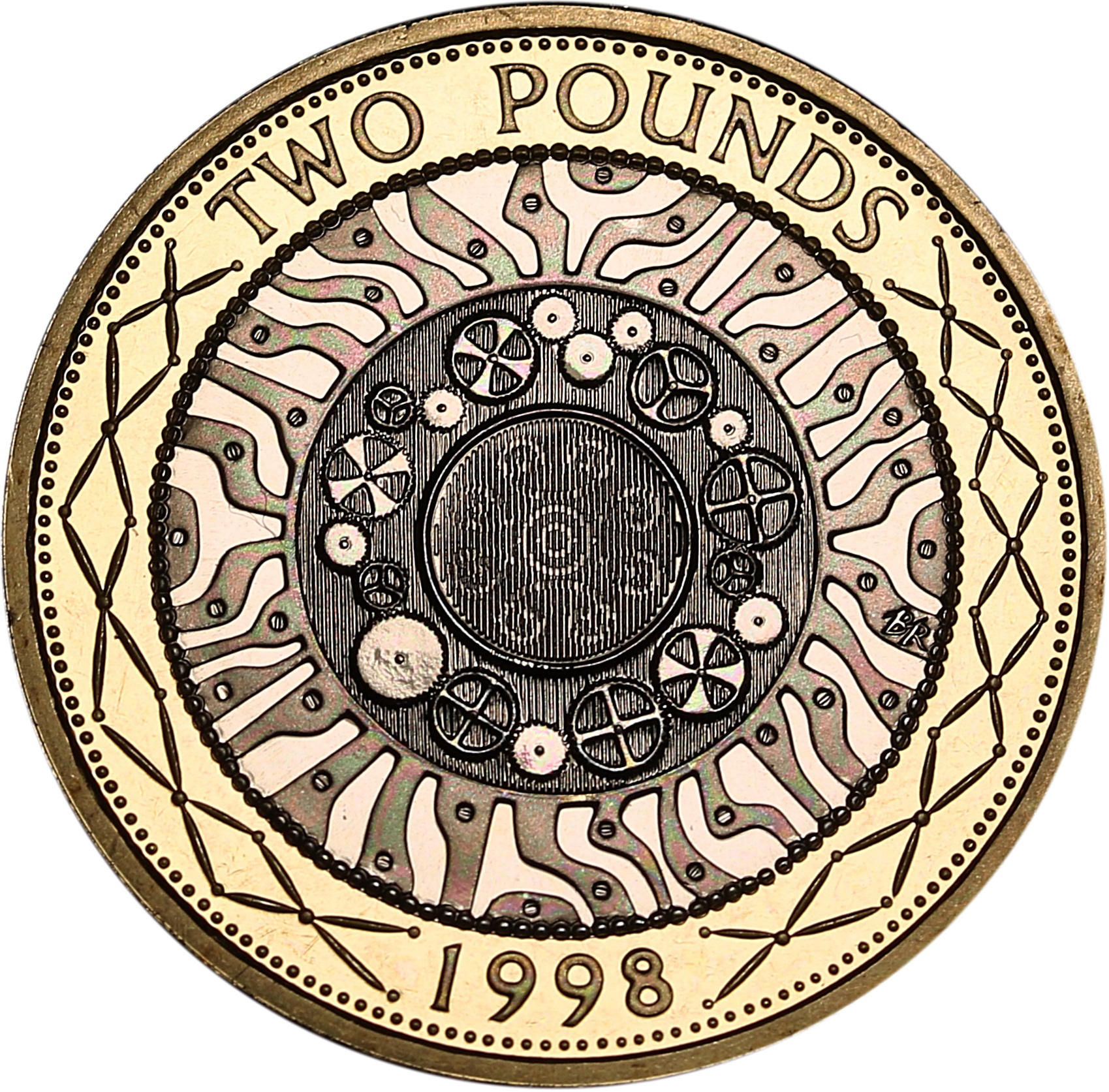
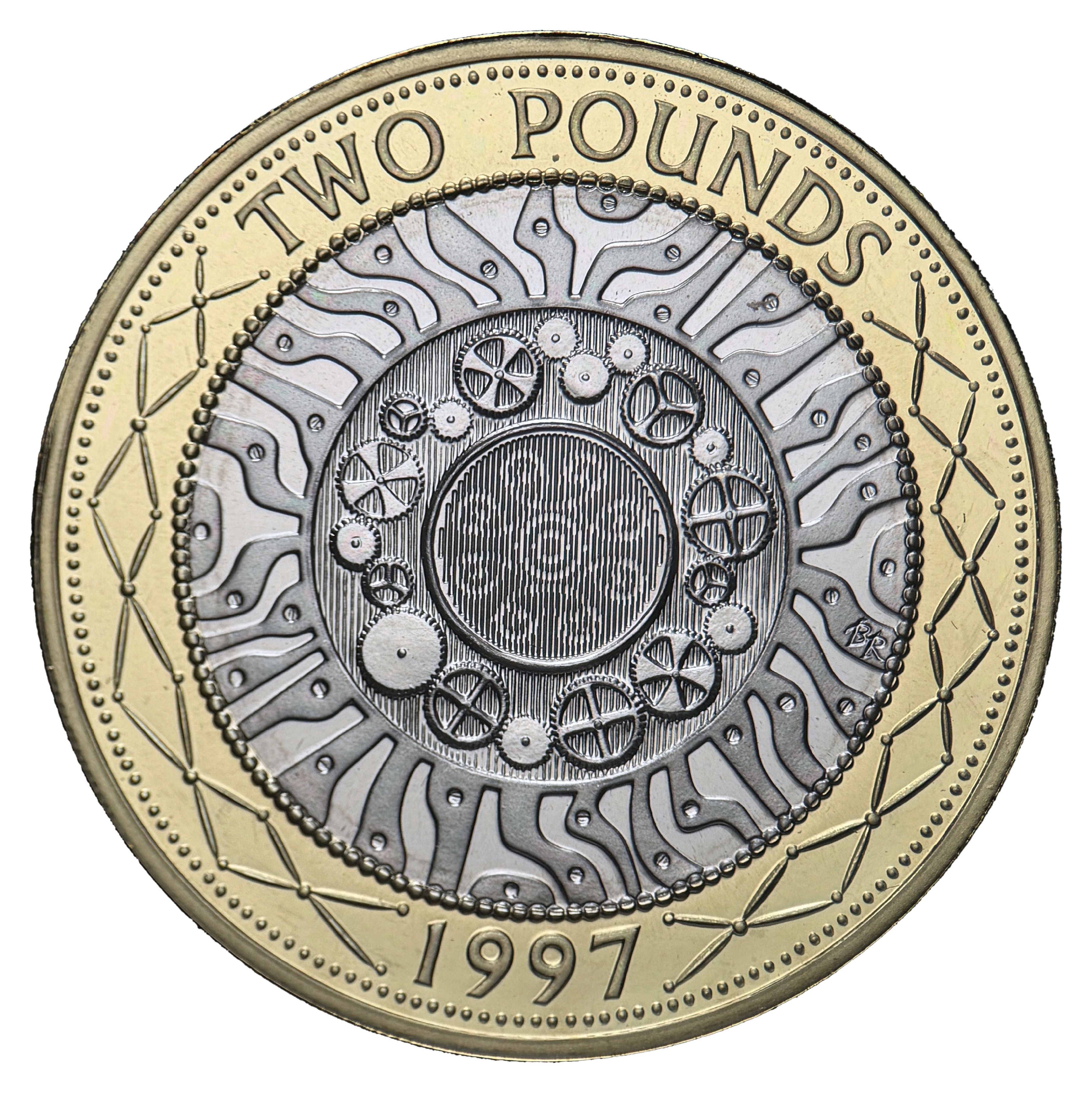
The most-quoted £2 edge inscription is "STANDING ON THE SHOULDERS OF GIANTS", drawn from Sir Isaac Newton\'s February 1675 letter to Robert Hooke. The full sentence reads "If I have seen further it is by standing on the shoulders of giants", a metaphor for the cumulative nature of scientific progress. The Royal Mint adopted this inscription as the standard edge text on the bimetallic £2 from its 1997 introduction through 2015, paired with the "Technology" reverse design featuring concentric rings symbolising the iron, industrial and electronic ages.
The inscription appears on the milled edge in raised lettering, separated by small symbols (typically four-pointed stars). It does NOT appear on commemorative £2 issues, which carry their own design-specific edge inscriptions. The 2017 Sir Isaac Newton commemorative £2 deliberately reused the same inscription as a tribute, even though the design was new.
Edge inscriptions by £2 design
Each commemorative £2 carries a unique edge inscription tied to the design theme. The standard reverse uses the Newton inscription. Documented commemorative inscriptions include:
| Year & design | Edge inscription |
|---|---|
| 1997–2015 Technology (standard) | STANDING ON THE SHOULDERS OF GIANTS |
| 2002 Commonwealth Games (all four) | SPIRIT OF FRIENDSHIP |
| 2003 DNA Double Helix | DEOXYRIBONUCLEIC ACID 1953–2003 |
| 2004 Trevithick Locomotive | R. TREVITHICK 1804 INVENTION INDUSTRY PROGRESS |
| 2005 Gunpowder Plot | REMEMBER REMEMBER THE FIFTH OF NOVEMBER |
| 2005 End of WWII (60th) | 1945 IN VICTORY MAGNANIMITY IN PEACE GOODWILL |
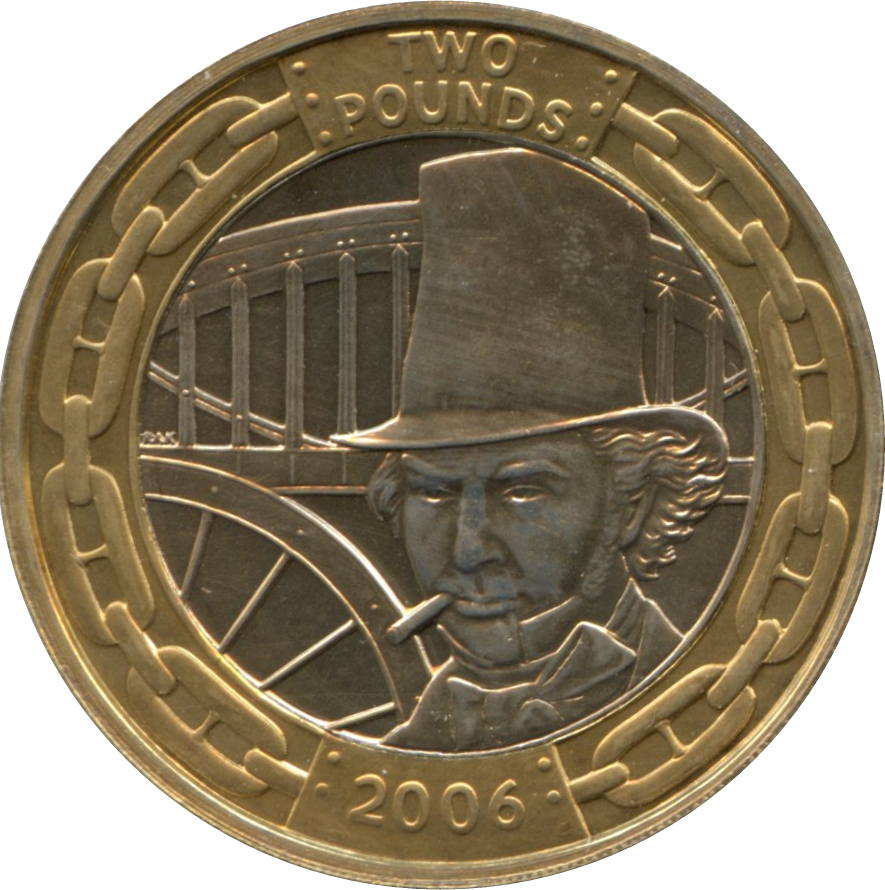
| 2006 Brunel (engineer) | SO MANY IRONS IN THE FIRE |
| 2007 Act of Union 1707 | UNITED INTO ONE KINGDOM |
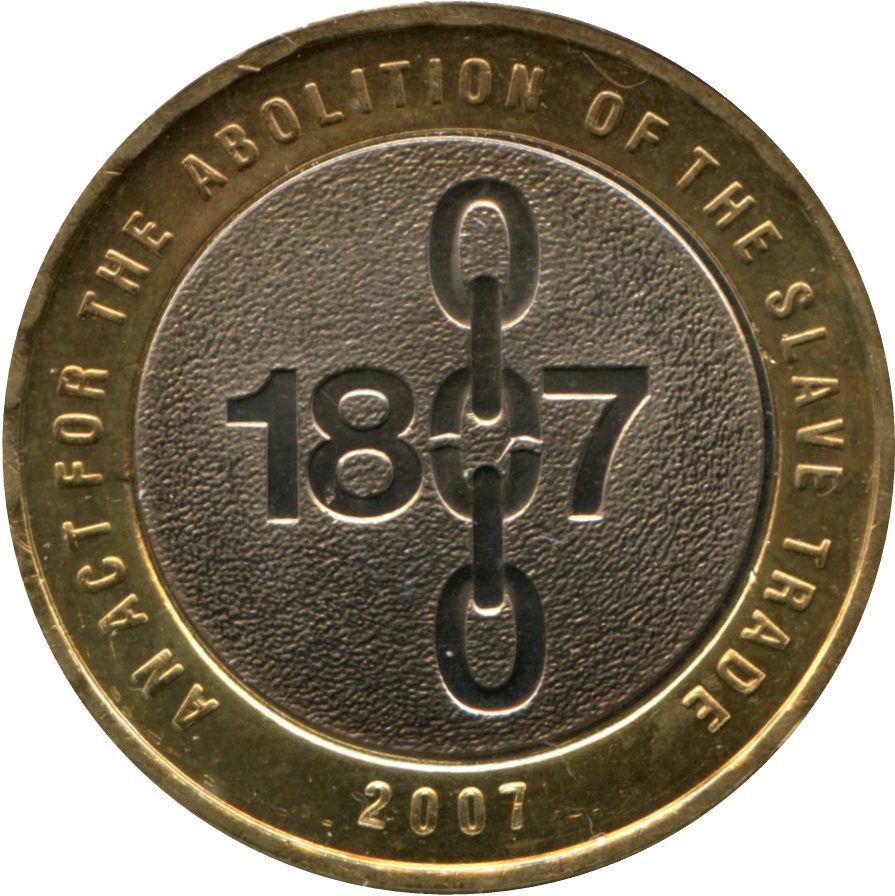
| 2007 Slavery Abolition | AM I NOT A MAN AND A BROTHER |
| 2008 Olympic Handover (Beijing→London) | I CALL THE WORLD TO WITNESS |
| 2009 Robert Burns | SHOULD AULD ACQUAINTANCE BE FORGOT |
| 2009 Charles Darwin | ON THE ORIGIN OF SPECIES 1859 |
| 2011 King James Bible | THE AUTHORISED VERSION |
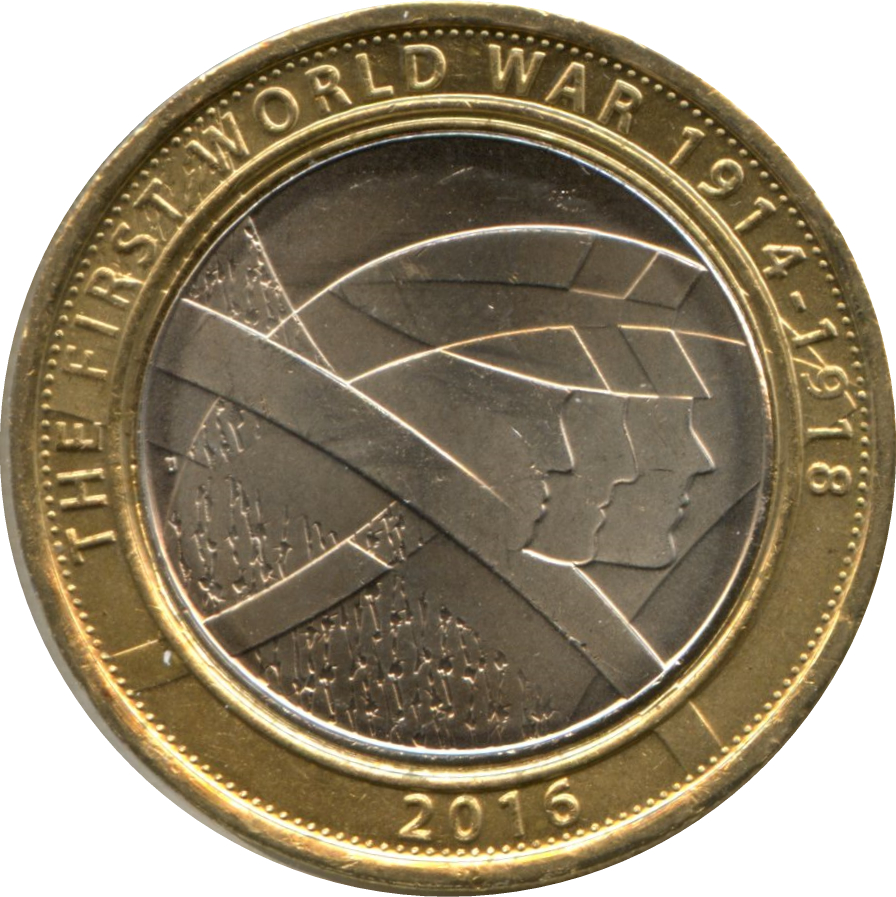
| 2014 First World War (Kitchener) | YOUR COUNTRY NEEDS YOU |
| 2014 Trinity House | SERVING THE MARINER |
| 2014 Commonwealth Games Glasgow | (plain milled edge, no inscription) |
| 2015 Magna Carta | FOUNDATION OF LIBERTY |
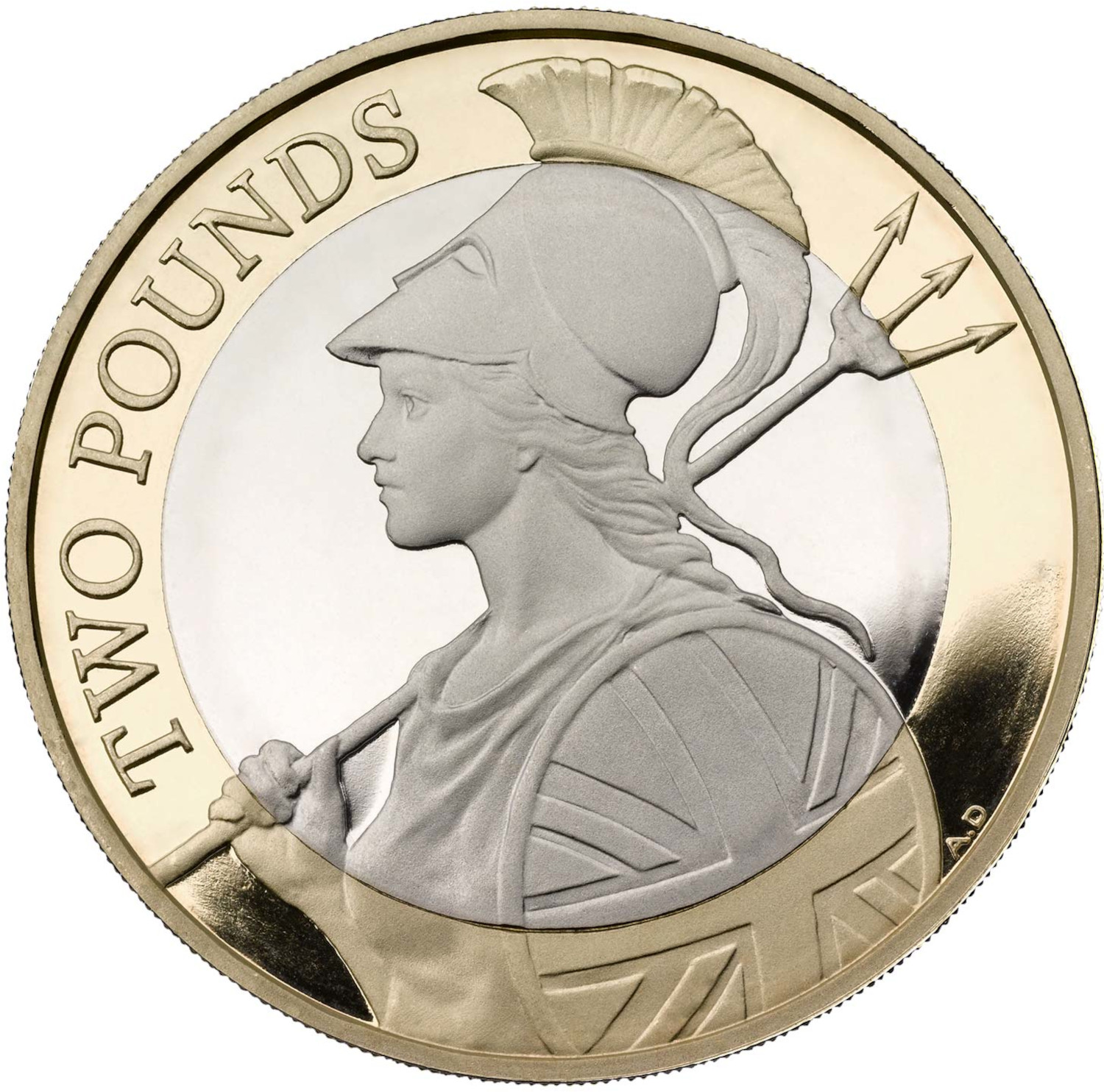
| 2015 Britannia (first) | WHAT IS PAST IS PROLOGUE |
| 2017 Sir Isaac Newton | STANDING ON THE SHOULDERS OF GIANTS |
Verified from Royal Mint product pages and Change Checker reference data. The 2014 Commonwealth Games Glasgow is one of the few modern £2 designs deliberately issued with a plain edge.
Orientation errors: the most common £2 error
The edge inscription on a correctly-struck £2 should orient consistently relative to the obverse. When the obverse (Queen\'s portrait or King\'s portrait) is upright, the inscription should read normally (left-to-right, right way up) when you rotate the coin to view the edge.
On an orientation error, the inscription reads upside-down relative to the obverse. This happens because the edge inscription is applied at a different stage of production than the obverse and reverse strike, and there is no mechanical link enforcing consistent orientation. The Royal Mint treats this as a "50/50 mint chance" rather than a strict tolerance error, but the secondary market consistently pays a premium for inverted examples.
Year-by-year, orientation errors appear on virtually every bimetallic £2 issue. The most prolific years are:
- 2008 Royal Arms £2. The highest-rate orientation error year on record. Confirmed inverted examples sell at £15–£30.
- 2008 London Handover £2. Combined with the low base mintage of 918,000, inverted examples reach £25–£50.
- 2014 Britannia £2. Documented orientation errors at £15–£30.
- 2002 Commonwealth Games (NI in particular). Inverted Northern Ireland examples at £55–£90 (high base price + error premium).
How to test edge orientation yourself
Five-minute test, no tools beyond your eyes:
- Hold the coin between thumb and forefinger with the obverse (monarch\'s portrait) facing you. Make sure the bust is upright (chin down, top of head up).
- Maintaining the obverse orientation, rotate the coin away from you so you can read the edge inscription as it travels around the rim.
- Read the inscription. On a correctly-struck coin, the text reads normally (left-to-right when scrolling past your eye, letters right-side up).
- On an inverted-edge error, the text reads upside-down: letters appear rotated 180° from what you would expect.
- Repeat by rotating the coin in the opposite direction. The inscription should be readable in one direction and upside-down in the other on a correctly-struck coin. On an inverted error, the orientations are swapped.
Build a small reference set of known-good orientation coins (any common-date BU £2 with inscription matches as a baseline) so you can spot the difference instantly when checking a new find.
Missing inscription and wrong-edge errors
Beyond orientation, two rarer error categories command higher premiums:
- Missing inscription. The edge has the standard milled pattern but no inscription is present. This is distinct from designs that were issued with plain edges by design (the 2014 Commonwealth Games Glasgow being the main example): a missing-inscription error is a coin from a year that should have an inscription, struck without one. Realised prices: £30–£80 with authentication.
- Wrong-edge errors. The most dramatic category, a £2 carries the edge inscription of a different denomination. Documented examples include £2 coins struck on blanks intended for the bimetallic £5 crown, with crown-specific edge text. Extremely rare; realised prices: £100–£400 at auction with full authentication. Always slab claims of wrong-edge errors before paying.
- Olympic 50p edge on £2. Anecdotally reported but largely unconfirmed in slabbed form. Treat any such claim as unverified until authenticated by CGS UK or NGC.
Premium values by error type
| Error type | Frequency | Typical premium over base coin |
|---|---|---|
| Orientation error (inverted edge) | Common (1–3% of certain years) | £8, £25 |
| Orientation error on rare-base coin (e.g. 2002 NI) | Uncommon | £25, £55 |
| Doubled inscription | Rare | £40, £100 |
| Missing inscription (plain edge where inscription expected) | Rare | £30, £80 |
| Reversed-text inscription (mirror-image) | Very rare | £60, £150 |
| Wrong-edge inscription (different denomination text) | Extremely rare | £100, £400 |
| Wrong-language inscription (foreign issue text) | Effectively unique | £500+ |
Premiums sit on top of the base coin\'s standard market price. Realised data aggregated from eBay UK sold listings, Noonans, Spink and Baldwin\'s over the past 24 months.
Authentication: confirming a real error
Edge inscription errors are easy to misidentify. Common mistakes:
- Holding the coin wrong way up. The most common false positive. Make sure you are reading the obverse upright, not flipped.
- Confusing rotation direction. An inscription that reads upside-down when rotated away from you should read upright when rotated towards you. If both directions show upside-down text, you have the obverse upside-down.
- Mistaking a plain-edge design for a missing-inscription error. The 2014 Commonwealth Games Glasgow has a plain edge by design and is not an error.
- Photo-only verification. Edge errors must be checked in hand or with multiple-angle photographs. A single photo rarely shows orientation unambiguously.
Featured £2 coins on MyCoinage
Browse every £2 in our database →
Frequently asked questions
What edge inscription errors exist on UK £2 coins?
What does "Standing on the shoulders of giants" mean on a £2?
How do I check the edge orientation on my £2?
Are 2008 £2 coins known for edge errors?
How much is an edge inscription error £2 worth?
Are edge inscription errors counted as "true" errors?
What edge inscriptions appear on UK £2 coins?
How do I find an edge error in my change?
Should I get an edge error coin slabbed?
Is the inverted-effigy error the same as an edge inscription error?
What is a wrong-edge error on a £2?
Where should I sell an error £2?
Further reading
- Rare £2 coins UK (top 15 ranked), the bimetallic circulating £2 reference.
- 2002 Commonwealth Games £2, the rarest circulating £2 deep-dive.
- Britannia bullion £2 guide, the silver investment series.
- £2 coin values UK (overview), the general £2 reference.
- UK coin errors list, every notable British minting mistake.
- Where to sell rare coins UK, auction commission breakdown.
- Change Checker £2 reference, community swap and error finds.
- The Royal Mint, first-party design and inscription reference.