Rarely sells: 1 verified sales in the last 12 months.
½ Penny - George III Pattern (1788)
| Country | United Kingdom |
| Year | 1788 |
| Denomination | ½ Penny |
| Mint | Royal Mint · Llantrisant |
| Circulation | Non-circulating |
| Demonetised | 1969 |
| Composition | Silver plated copper |
| Weight | 15.100g |
| Diameter | 31.0mm |
| Thickness | 2.50mm |
| Shape | Round |
| Edge | RENDER TO CAESAR THE THINGS WHICH ARE CAESARS |
| Orientation | Coin alignment ↑↓ |
| Obv. artist | Jean-Pierre Droz |
| Rev. artist | Jean-Pierre Droz |
| Grade scale | UK (EF/UNC) |
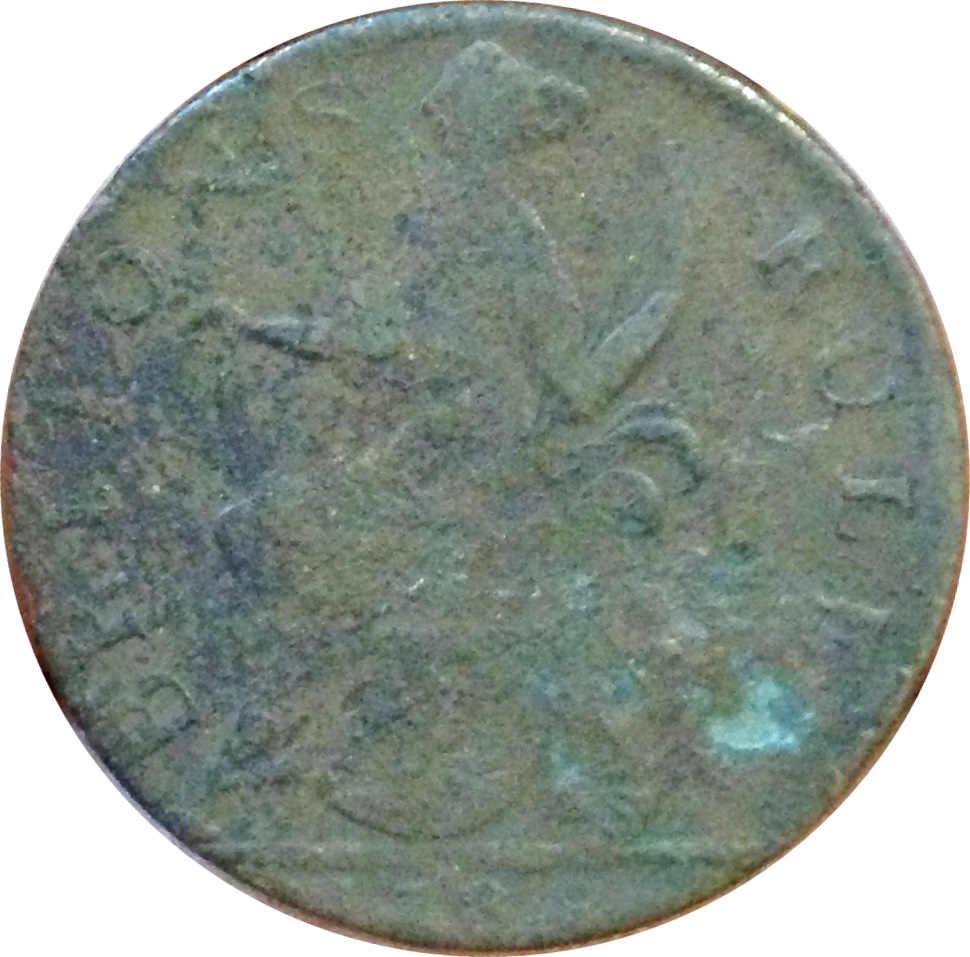
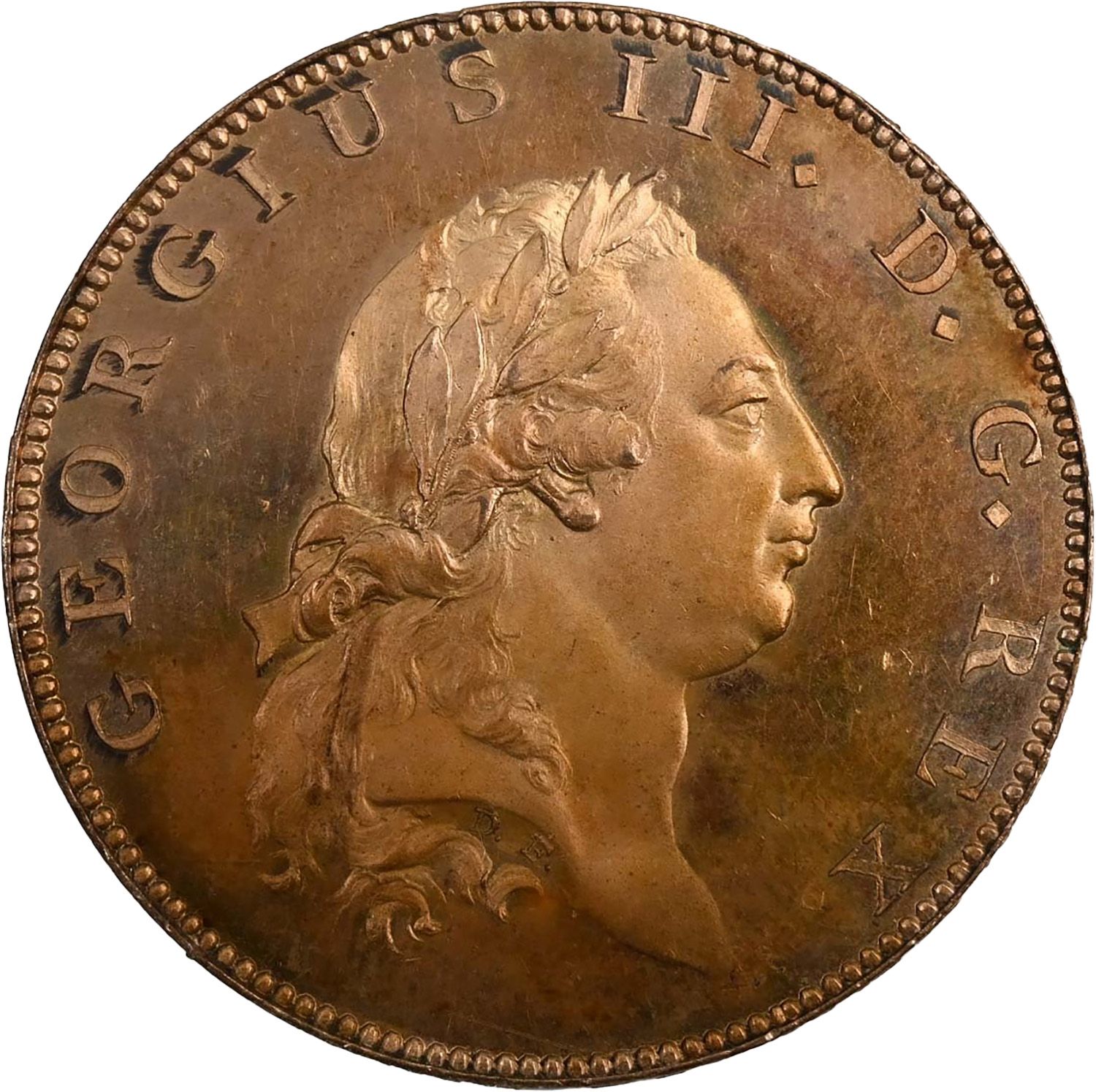
George III, Pattern Halfpenny, 1788, struck in brown-gilt, late Soho, long haired laureate head right, D.F. on truncation, Georgius III·D· G· Rex·, toothed border
GEORGIVS III D G REX
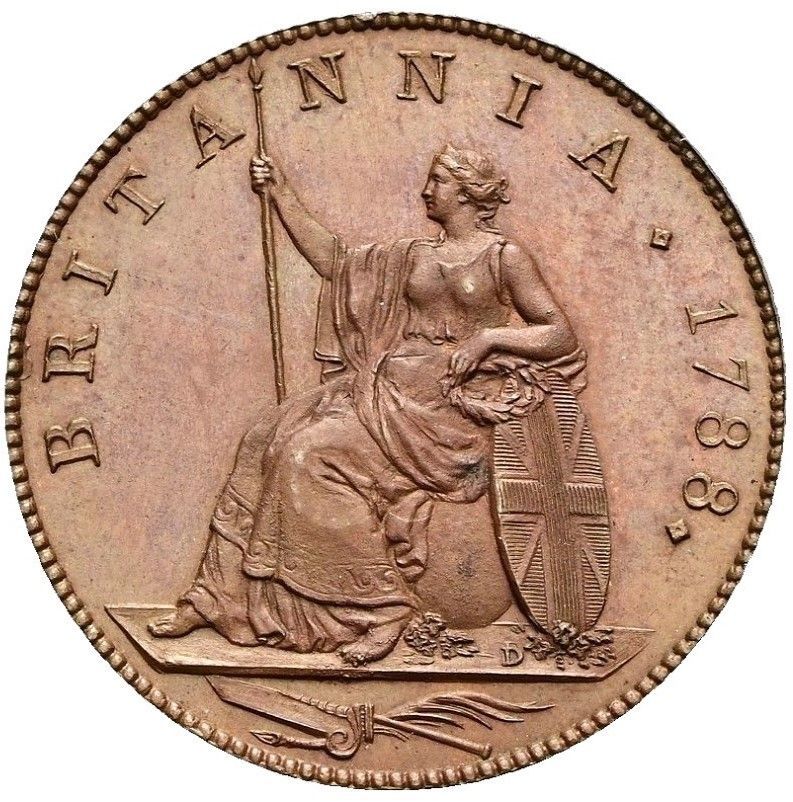
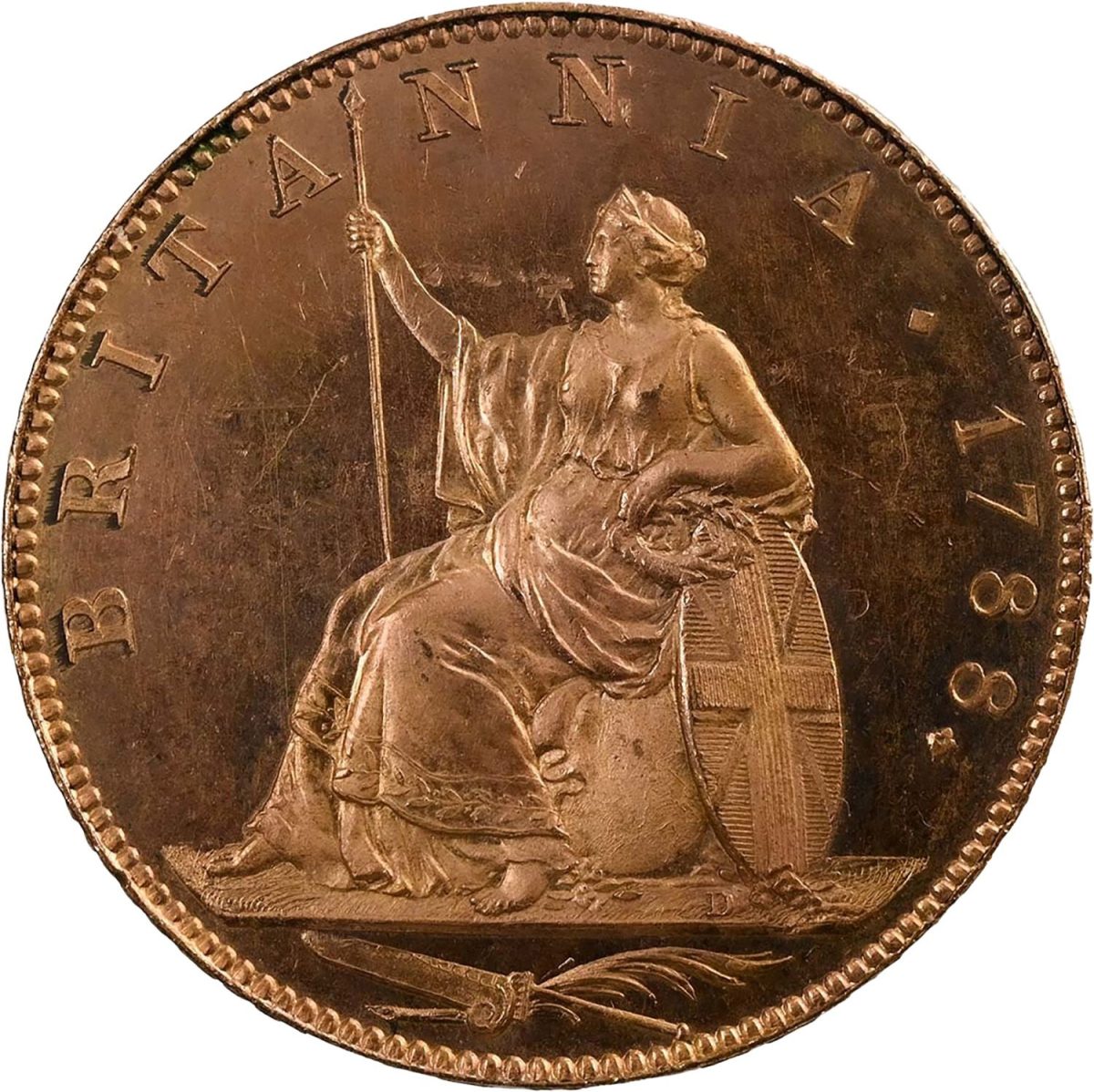
Britannia seated left on globe, leaf and berry border to robe, with shield and spear, D below, date in legend, followed by stop, Britannia., laurel branch and paddle in exergue
BRITANNIA 1788
Halfpenny - George III Pattern market value
Find this on eBay
AffiliateHalfpenny - George III Pattern price history
Daily limit reachedHalfpenny - George III Pattern value by grade
Realised auction prices · ⭐ Pro Expand rows for individual sale records| Grade | Latest | Median | 30d Δ | All-time range | Sales (1yr) | Total sales | Last sale | |
|---|---|---|---|---|---|---|---|---|
| UNC | £700.00 🔒 | £240.00 | – | £90.00 – £700.00 | 0 | 4 | 06-12-2015 | |
|
Loading…
|
||||||||
| EF | £500.00 🔒 | £500.00 (1) | – | £185.00 – £500.00 | 0 | 2 | 03-09-2023 | |
|
Loading…
|
||||||||
| VF | £150.00 🔒 | £301.00 (2) | – | £70.00 – £2,900.00 | 0 | 8 | 01-06-2025 | |
|
Loading…
|
||||||||
| F | £32.00 🔒 | £32.00 (1) | – | £32.00 – £32.00 | 0 | 1 | 01-09-2013 | |
|
Loading…
|
||||||||
| PR-65 | £3,200.00 🔒 | £1,765.00 (2) | – | £330.00 – £3,200.00 | 1 | 2 | 06-09-2026 | |
|
Loading…
|
||||||||
About the 1788 Halfpenny - George III Pattern
The 1788 Halfpenny - George III Pattern is a collector ½ penny coin, struck in silver plated copper. It weighs 15.1g and measures 31mm across. Reverse design: Britannia seated left on globe, leaf and berry border to robe, with shield and spear, D below, date in legend, followed by stop, Britannia., laurel branch and paddle in exergue.
It is no longer legal tender (withdrawn 1969), so its value is to collectors only.
Common questions
How much is the 1788 Halfpenny - George III Pattern worth?
Verified sold prices for the 1788 Halfpenny - George III Pattern run from £32.00 to £1,765 across 5 grades, taking the median for each grade. Condition makes the difference, so check the grade table above before pricing one.
Why was a pattern halfpenny made in 1788?
No official halfpenny had been struck since 1775. Tony Clayton records that Matthew Boulton set Droz to work at his Soho Mint in 1788, cutting dies for patterns for the English coinage, and this halfpenny is one of them. It was not adopted; the next regal halfpenny was the 1799 Soho coin.
What do the letters D.F. on the 1788 pattern mean?
They appear on the truncation of the bust on the late Soho strikings in the Ashmolean Museum, and are generally read as Droz's signature: a Perth record of his 1790 pattern shows the fuller DROZ F. The Ashmolean records no initials on its early Soho strikings, a useful way to tell the groups apart.
Is the 1788 pattern halfpenny found in silver?
Yes. Culture Perth and Kinross holds a silver striking, 31.6 mm across, with GEORGIVS III D G REX, BRITANNIA 1788 and the lettered edge. The Royal Mint Museum's two examples are gilt, and the Ashmolean holds gilt and plain copper pieces.
How do I identify the 1788 Halfpenny - George III Pattern?
Check the weight 15.1g and diameter 31mm and the metal (silver plated copper) against the specification table on this page. The reverse design is described above.
History and design
Jean-Pierre Droz, a Swiss medallist trained in France, came to Matthew Boulton's attention with a 1786 pattern whose lettered edge was made in a new kind of collar. Tony Clayton records that Boulton brought him to England in 1787 and set him to work at the Soho Mint in Birmingham in 1788, where he cut dies for patterns for the English coinage. This halfpenny is one of them. Droz left for France in the spring of 1791.
The pattern was struck in several metals and finishes, and the Ashmolean Museum divides its examples into early and late Soho strikings. The design was not taken up, and no figure for the number struck exists.
The obverse carries a laureate head of George III facing right with GEORGIVS III D G REX. The reverse shows Britannia seated left, holding a sceptre and wreath and resting her arm on a shield, with BRITANNIA 1788 around.
Some strikings have a raised edge inscription, RENDER TO CAESAR THE THINGS WHICH ARE CAESARS; others have a decorative guilloche edge. The Royal Mint Museum has a gilt example of each, Peck 962 with the guilloche edge and Peck 966 with the lettered edge, both about 15.9 g. On the Ashmolean's late Soho pieces the initials D.F. appear on the truncation of the bust.
Varieties and errors
The Ashmolean's early Soho copper pieces (BMC 943) have a guilloche edge and no initials. Its late Soho pieces in copper and gilt (BMC 962, 966 and 968) carry D.F. A solid silver striking with the lettered edge is in the Perth museum.
Collecting notes
Check three things against the references: the metal or finish, the edge (lettered or guilloche), and whether D.F. is on the truncation. Weights of the documented pieces run from 15.94 g to 16.25 g.
Clayton notes that the Soho dies later passed to W.J. Taylor, who struck from them again, and he believes die corrosion marks are the main way to recognise those later strikings. The bronzed version of this design has its own page, the 1788 bronzed pattern.
Sources
The history, design, varieties and collecting notes on this page are drawn from these sources. Prices come from recorded sales, not from them.
- George III pattern halfpenny, 1788 (RMM 1104), with RMM 1105, The Royal Mint Museum, via Museum Data Service (read 12 Oct 2026)
- Halfpenny, 1788 (late Soho), HCR152505, with HCR152509, HCR152511, HCR152513, HCR152558 and HCR152559, Heberden Coin Room, Ashmolean Museum (read 12 Oct 2026)
- Pictures of Half Penny Coins of George III, Tony Clayton, Coins of the UK (read 12 Oct 2026)
- Coin, Halfpenny, proof, 1788 (BC490), Culture Perth and Kinross, via Museum Data Service (read 12 Oct 2026)
- Coins of George III (Peck 966 and 968), Wildwinds (read 12 Oct 2026)
- George III pattern halfpenny, 1788 (RMM 1105), The Royal Mint Museum, via Museum Data Service (read 12 Oct 2026)
- The Penny, Tony Clayton, Coins of the UK (read 12 Oct 2026)
- Coin, Halfpenny, proof, 1790 (BC673), Culture Perth and Kinross, via Museum Data Service (read 12 Oct 2026)
More ½ Penny coins from nearby years