Common: 10,000,000 or more minted. Sells often: 56 verified sales in the last 12 months.
6 Pence - Victoria 1st portrait 2nd type (1867–1880)
| Country | United Kingdom |
| Year | 1867–1880 |
| Denomination | 6 Pence |
| Face value | 2.5p |
| Mintage by year |
Scarcest year: 388,000 struck
|
| Mint | Royal Mint · Llantrisant |
| Circulation | Circulating |
| Demonetised | 1980 |
| Composition | Silver (.925) (925/1000 fine) |
| Weight | 2.830g · 0.0842 t oz |
| Diameter | 19.3mm |
| Thickness | 1.00mm |
| Shape | Round |
| Orientation | Coin alignment ↑↓ |
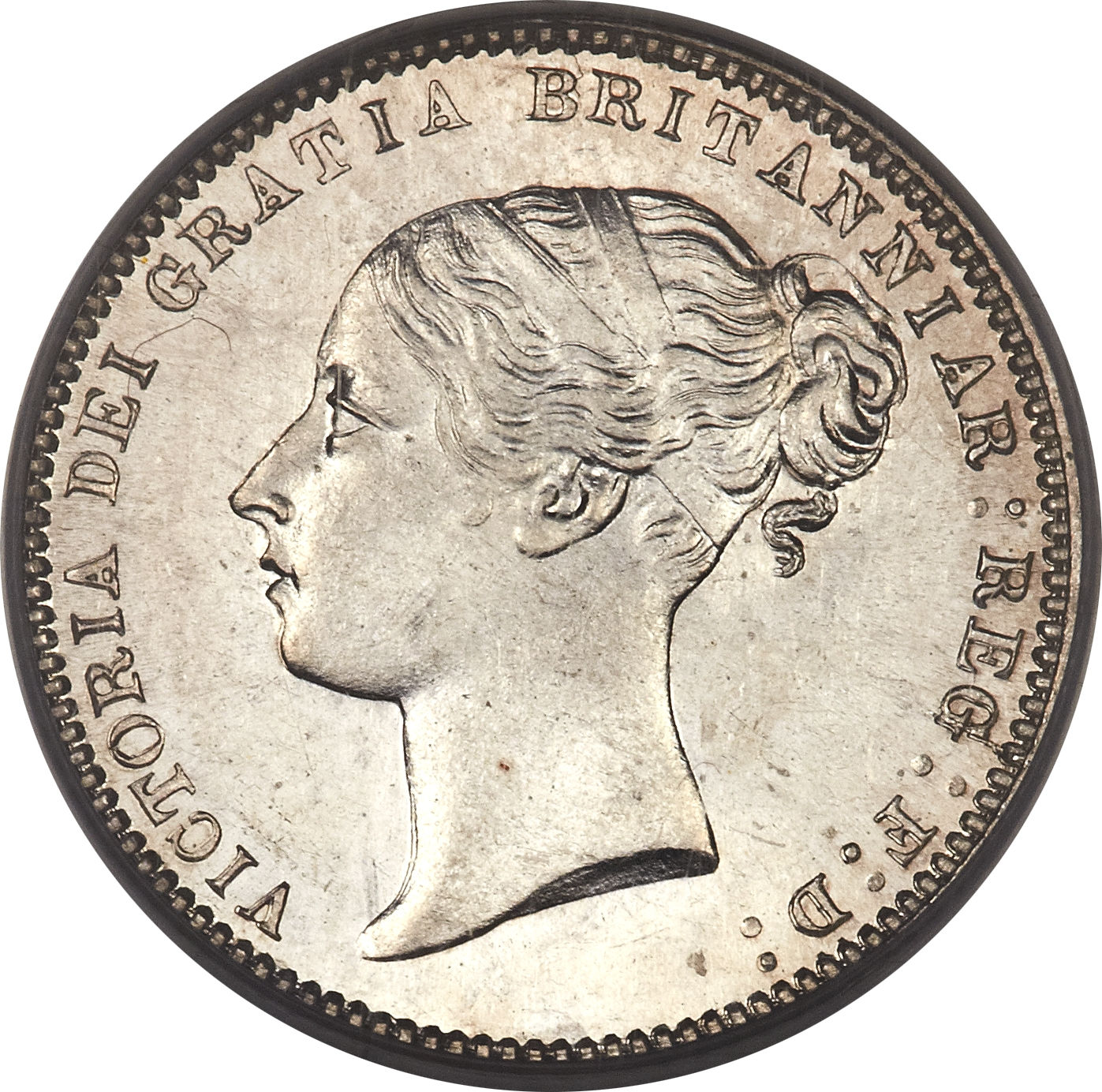
| Obv. artist | William Wyon |
| Rev. artist | Jean Baptiste Merlen |
| Grade scale | UK (EF/UNC) |
Young uncrowned portrait ('Young Head') of Queen Victoria left, legend around.
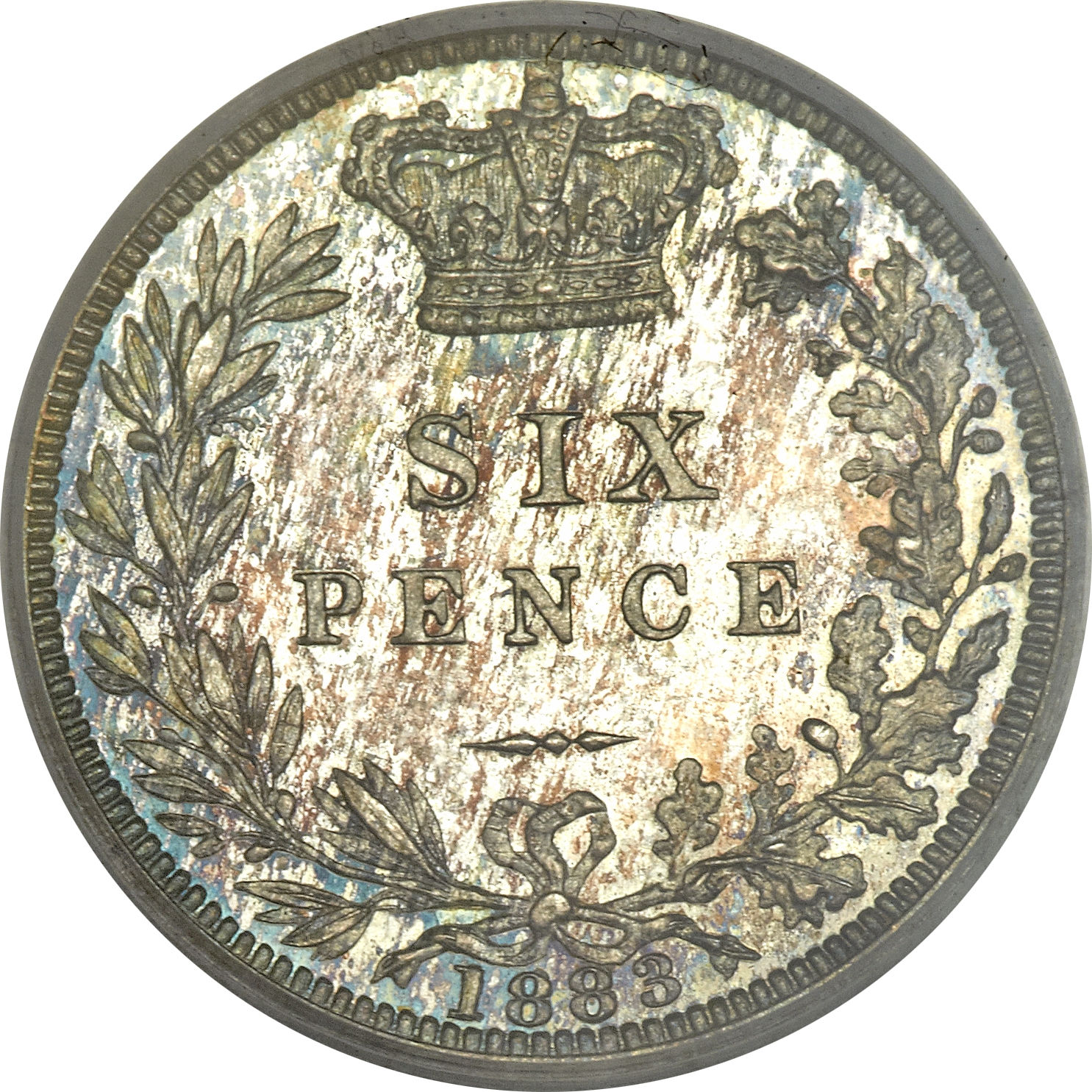
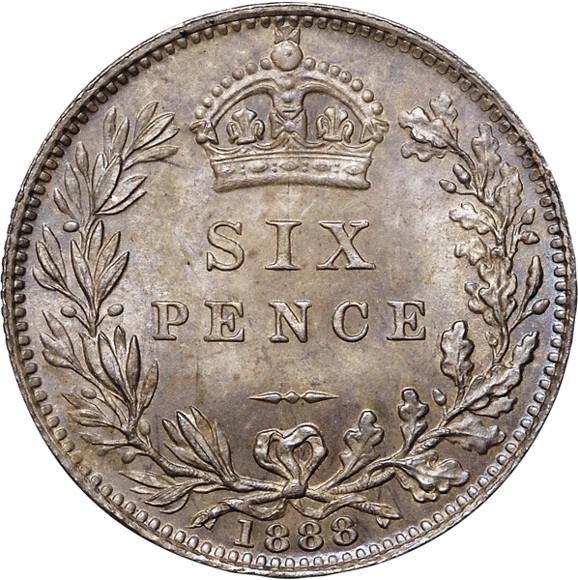
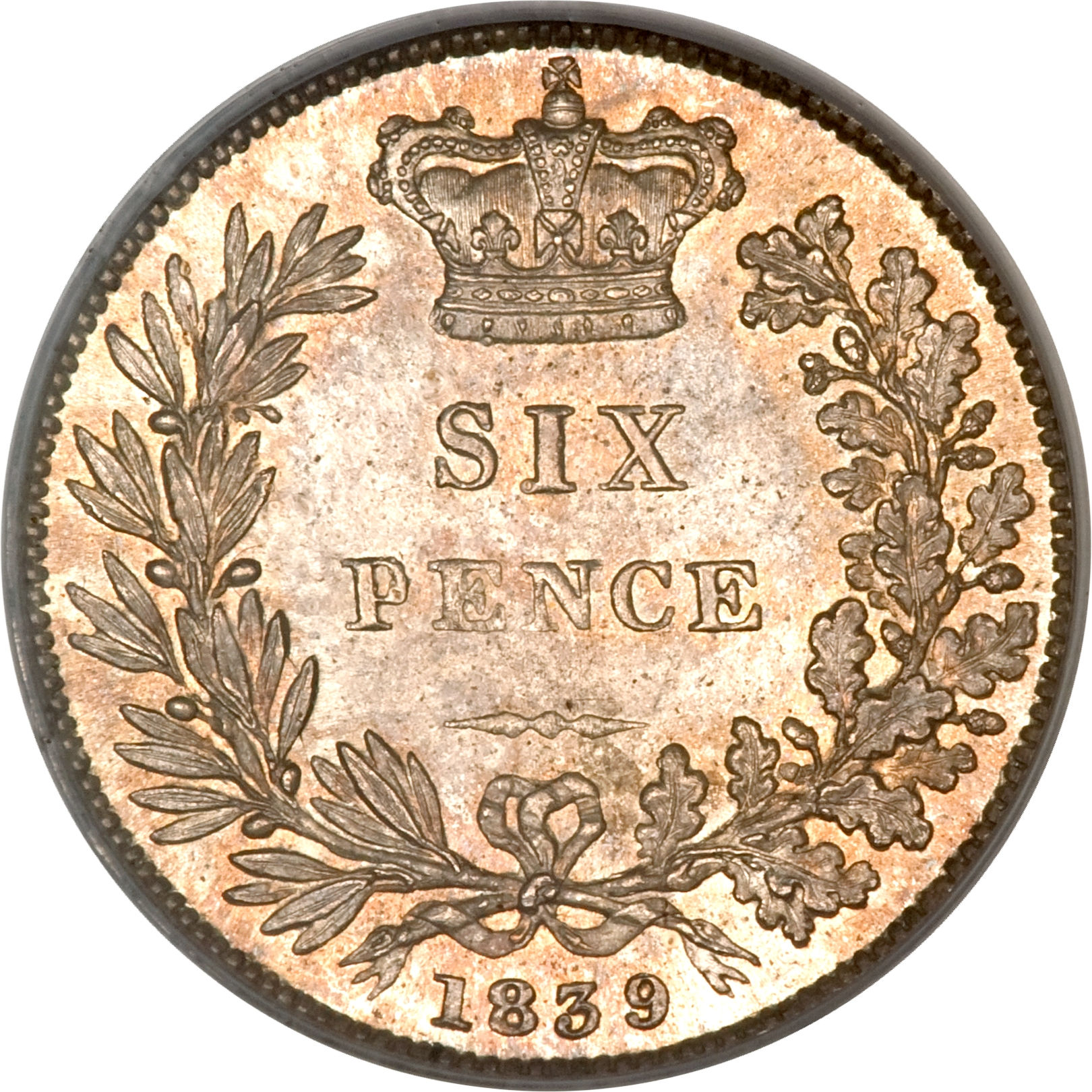
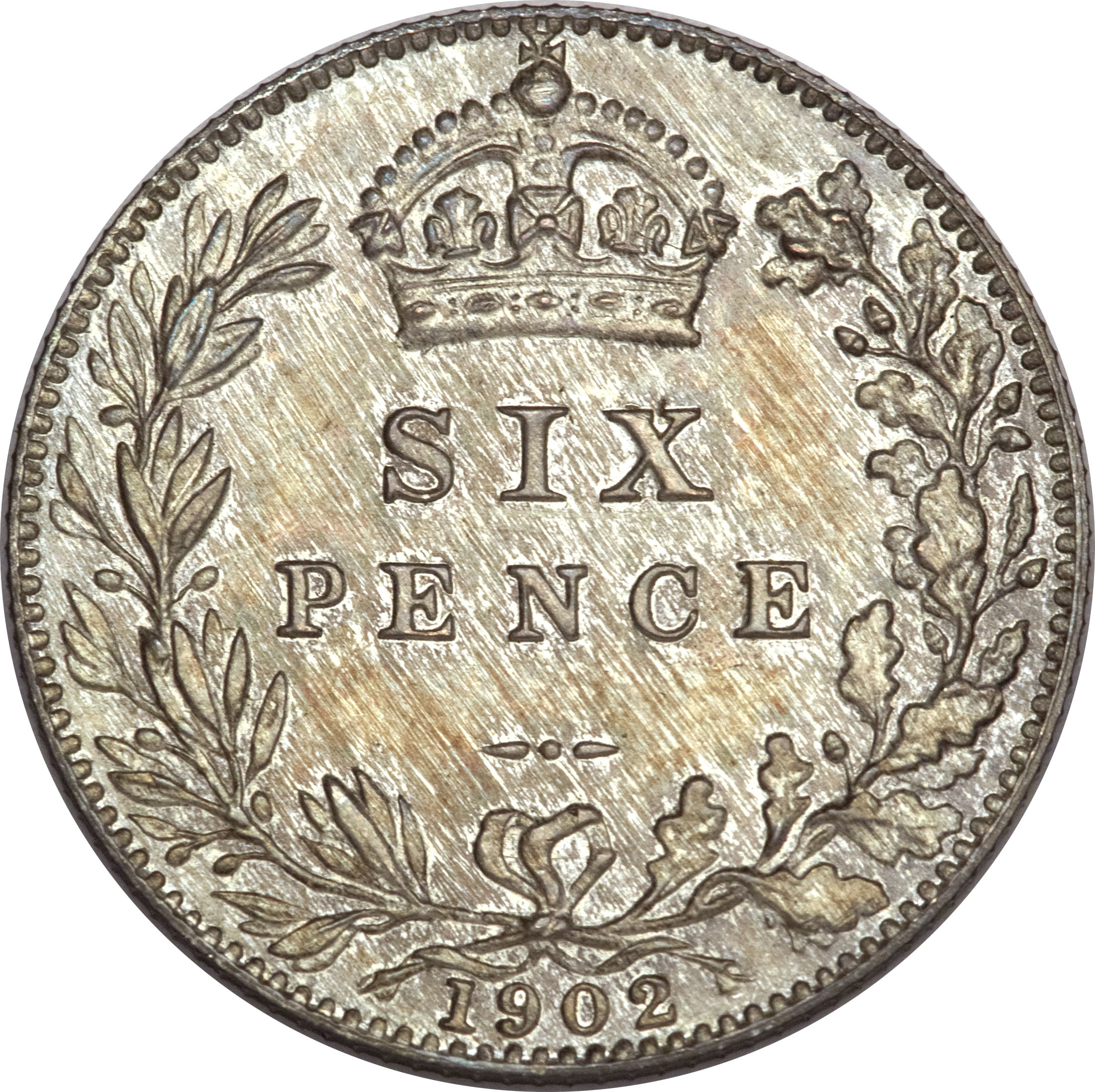
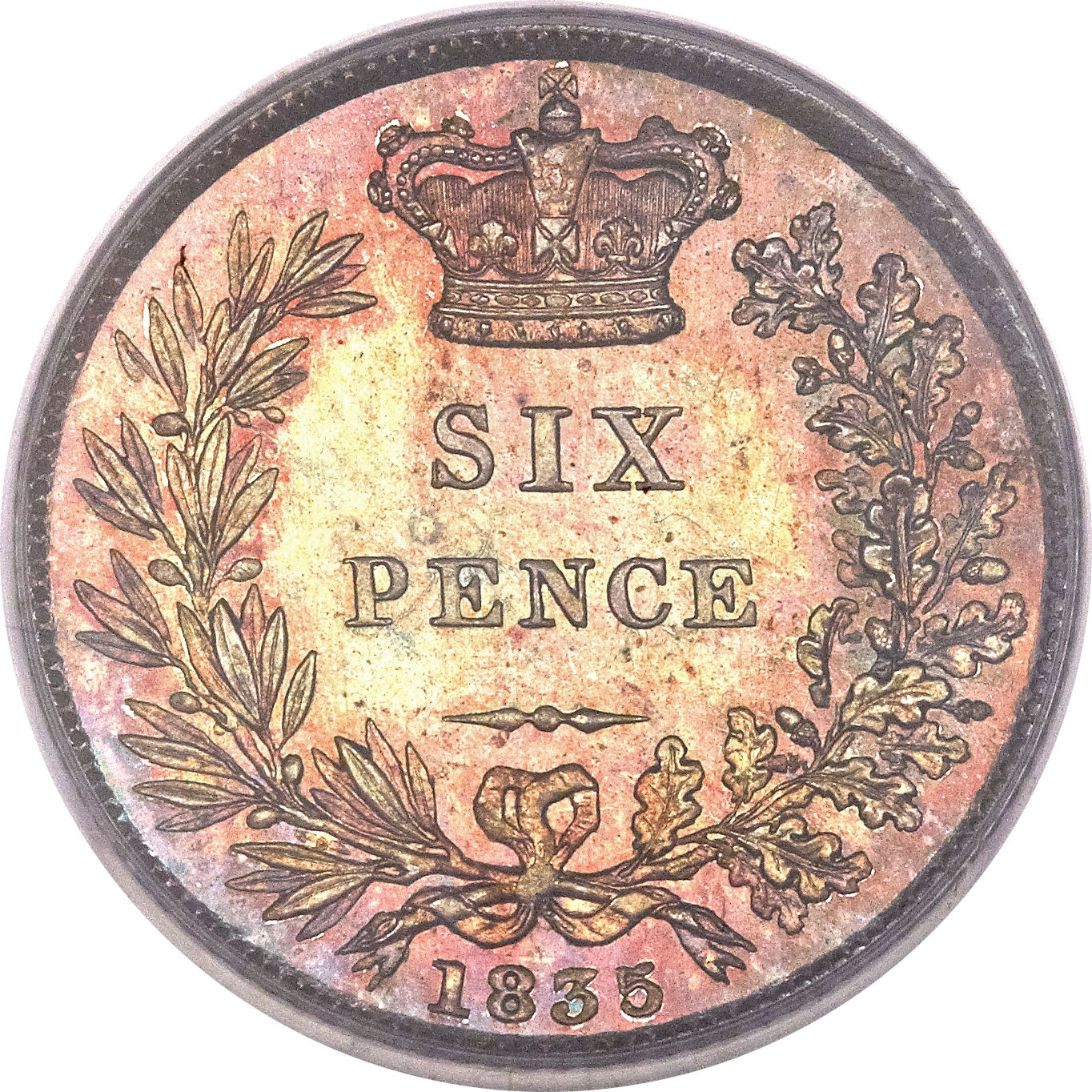
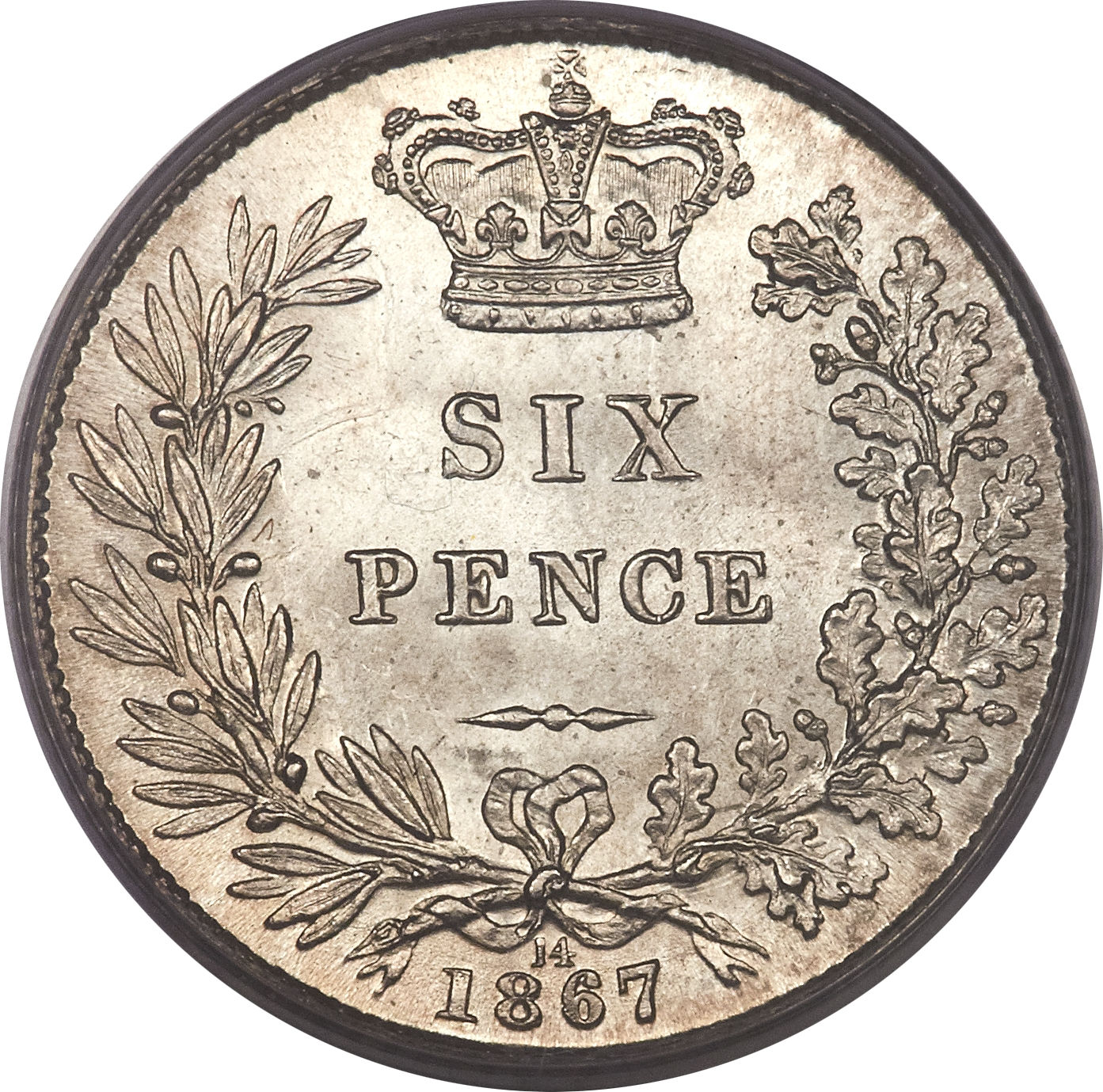
Crowned denomination within wreath, date below.
SIX PENCE
2nd type Sixpence market value
Find this on eBay
Affiliate2nd type Sixpence price history
Daily limit reached2nd type Sixpence value by year
1867 to 1880 · median sold prices| Year | Mintage | Circulated | Uncirculated | Sales | |
|---|---|---|---|---|---|
| 1867 | 1,362,200 | £50.52 | £240.00 | 15 | |
|
VF£12.50EF£28.00UNC£95.00
⭐ Pro: the 1867 coin's sales by grade, and the chart filtered to one year
Start 7-day free trial
|
|||||
| 1868 | 1,069,200 | £16.95 type | £160.00 type | ||
| 1869 scarcest | 388,000 | £16.95 type | £160.00 type | ||
| 1870 | 479,600 | £16.95 type | £160.00 type | ||
| 1871 | 3,662,600 | £15.33 | £160.00 type | 5 | |
|
VF£12.50EF£28.00UNC£95.00
⭐ Pro: the 1871 coin's sales by grade, and the chart filtered to one year
Start 7-day free trial
|
|||||
| 1872 | 3,382,000 | £16.15 | £160.00 type | 9 | |
|
VF£12.50EF£28.00UNC£95.00
⭐ Pro: the 1872 coin's sales by grade, and the chart filtered to one year
Start 7-day free trial
|
|||||
| 1873 | 4,594,700 | £16.00 | £7.64 (1) | 14 | |
|
VF£12.50EF£28.00UNC£95.00
⭐ Pro: the 1873 coin's sales by grade, and the chart filtered to one year
Start 7-day free trial
|
|||||
| 1874 | 4,225,700 | £19.65 | £114.56 (1) | 8 | |
|
VF£12.50EF£28.00UNC£95.00
⭐ Pro: the 1874 coin's sales by grade, and the chart filtered to one year
Start 7-day free trial
|
|||||
| 1875 | 3,256,500 | £16.95 type | £160.00 type | ||
| 1876 | 841,400 | £16.95 type | £160.00 type | ||
| 1877 | 4,066,400 | £13.70 | £160.00 type | 11 | |
|
VF£12.50EF£28.00UNC£95.00
⭐ Pro: the 1877 coin's sales by grade, and the chart filtered to one year
Start 7-day free trial
|
|||||
| 1878 | 2,624,500 | £16.95 type | £160.00 type | ||
| 1879 | 3,326,300 | £16.95 type | £160.00 type | ||
| 1880 | 3,892,000 | £19.16 | £160.00 type | 4 | |
|
VF£12.50EF£28.00UNC£95.00
⭐ Pro: the 1880 coin's sales by grade, and the chart filtered to one year
Start 7-day free trial
|
|||||
One row for each year the 6 Pence - Victoria 1st portrait – 2nd type was struck. Prices are medians of verified sold listings matched to that year from the listing: circulated is worn condition up to Extremely Fine, uncirculated is About Uncirculated or better. A count in brackets means fewer than three sales behind the figure; a grey figure marked "type" is the median across every year, shown where that year has no sale of its own yet; years with no sales yet fill in as sales are recorded. Most types have been searched year by year only since October 2026, so later years are still filling in. Use the grade table below for a price by condition across all years.
2nd type Sixpence value by grade
Realised auction prices · ⭐ Pro Expand rows for individual sale records| Grade | Latest | Median | 30d Δ | All-time range | Sales (1yr) | Total sales | Last sale | |
|---|---|---|---|---|---|---|---|---|
| UNC | £140.00 🔒 | £140.00 (1) | – | £140.00 – £240.00 | 0 | 3 | 05-12-2021 | |
|
Loading…
|
||||||||
| EF | £80.00 🔒 | £80.00 | – | £60.00 – £95.00 | 0 | 3 | 07-06-2015 | |
|
Loading…
|
||||||||
| VF | £18.87 🔒 eBay | £16.15 | ▲4.6% | £3.84 – £280.00 | 52 | 54 | 16-10-2026 | |
|
Loading…
|
||||||||
| F | £16.95 🔒 eBay | £24.48 (2) | – | £16.95 – £32.00 | 2 | 2 | 21-08-2026 | |
|
Loading…
|
||||||||
| Fair | £7.64 🔒 eBay | £7.64 (1) | – | £7.64 – £7.64 | 1 | 1 | 03-10-2026 | |
|
Loading…
|
||||||||
| MS-62 | £114.56 🔒 eBay | £114.56 (1) | – | £114.56 – £114.56 | 1 | 1 | 26-07-2026 | |
|
Loading…
|
||||||||
| MS-63 | £360.00 🔒 | £360.00 (1) | – | £360.00 – £360.00 | 0 | 1 | 06-09-2020 | |
|
Loading…
|
||||||||
| PR-65 | £2,200.00 🔒 | £2,200.00 (1) | – | £2,200.00 – £2,200.00 | 0 | 1 | 07-09-2014 | |
|
Loading…
|
||||||||
About the 1867 6 Pence - Victoria – 2nd type
The 1867 6 Pence - Victoria – 2nd type is a circulating 6 pence coin issued from 1867 to 1880, struck in 92.5% silver. It weighs 2.83g and measures 19.3mm across. Reverse design: Crowned denomination within wreath, date below.
Mintage figures are recorded for 14 years between 1867 and 1880, 37,171,100 coins in all. 1869 is the scarcest date, with 388,000 struck. It is no longer legal tender (withdrawn 1980), so its value is to collectors only.
Common questions
How much is the 1867 6 Pence - Victoria – 2nd type worth?
Verified sold prices for the 1867 6 Pence - Victoria – 2nd type run from £7.64 to £2,200 across 8 grades, taking the median for each grade. Condition makes the difference, so check the grade table above before pricing one. Its silver content is worth about £3.36 at today's spot price, which puts a floor under its value.
Which second Young Head sixpence is the rarest date?
1869, with 388,080 struck according to both Coin Hunter and Wikipedia, followed by 1870 with 479,613. Every other date of this type passed one million except 1876, where the references disagree (841,435 or 941,435).
What is the 1878 DRITANNIAR sixpence?
A die engraving error in which the B of BRITANNIAR was cut as a D, so the legend reads DRITANNIAR. Tony Clayton records it on die number 6 of 1878, and Coin Hunter lists it as a separate variety.
How do I tell the second Young Head from the first?
Tony Clayton describes the second head, used from 1867 to 1880, as being in lower relief than the first. Dates help too: every sixpence dated 1867 to 1879 belongs to this group, and most carry a die number above the date.
Is a Victorian sixpence still legal tender?
No. Sixpences were kept at decimalisation as 2.5 new pence, but they ceased to be legal tender on 30 June 1980, according to Wikipedia's sixpence and Decimal Day articles.
How do I identify the 1867 6 Pence - Victoria – 2nd type?
Check the weight 2.83g and diameter 19.3mm and the metal (92.5% silver) against the specification table on this page. The reverse design is described above.
History and design
In 1867 the sixpence received a slightly altered Young Head. Tony Clayton describes it as a lower-relief version of the portrait used since 1838, and treats the coins of 1867 to 1880 as the second Young Head type. The die numbers introduced in 1864 continued throughout, and Clayton's list for the sixpence runs to 1879.
Output was large in the 1870s, reaching 4,594,733 in 1873 on the figures of both Coin Hunter and Wikipedia. The exceptions are 1869, with 388,080, and 1870, with 479,613, which are the scarce dates of the type. The references differ on 1876: Coin Hunter has 841,435 and Wikipedia 941,435.
The obverse carries William Wyon's Young Head facing left, in its lower-relief form, with VICTORIA DEI GRATIA BRITANNIAR REG FD around. The reverse is unchanged: SIX PENCE within a wreath, crowned, with the date below, the design Wikipedia credits to Jean Baptiste Merlen in 1831.
Most coins have a die number just above the date. CoinVarieties records that 1871 and 1877 to 1880 were also struck without one.
Varieties and errors
The best known error of the type is the 1878 DRITANNIAR, a misspelt legend that Clayton records on die number 6. Coin Hunter and Clayton also list an 1878 8 over 7 overdate.
Collecting notes
A date run turns on 1869 and 1870. Die number collectors look for every number recorded for each year; Clayton's list is the usual checklist and he warns that numbers well outside the normal run deserve scepticism. Sixpences ceased to be legal tender on 30 June 1980. The type follows the first Young Head sixpence and gives way in 1880 to the third Young Head sixpence.
Sources
The history, design, varieties and collecting notes on this page are drawn from these sources. Prices come from recorded sales, not from them.
- Coin values by year, 1867 to 1880 (year pages read one by one), Coin Hunter (read 10 Oct 2026)
- Sixpence (British coin), Wikipedia (read 10 Oct 2026)
- Great Britain 1867, 1871, 1875 and 1879 6 pence (pages read one by one), CoinVarieties (read 10 Oct 2026)
- Six Pence, Tony Clayton, Coins of the UK (read 10 Oct 2026)
- William Wyon, Royal Mint Museum (read 10 Oct 2026)
- Jubilee coinage, Wikipedia (read 10 Oct 2026)
- Die Numbers, Tony Clayton, Coins of the UK (read 10 Oct 2026)
- Decimal Day, Wikipedia (read 10 Oct 2026)
- Values of Six Pence, Tony Clayton, Coins of the UK (read 10 Oct 2026)
More 6 Pence coins from nearby years