2 Shillings - George V Uniface Pattern (1926)
| Country | United Kingdom |
| Year | 1926 |
| Denomination | 2 Shillings |
| Face value | 10p |
| Mint | Royal Mint · Llantrisant |
| Circulation | Non-circulating |
| Demonetised | Yes |
| Composition | Silver |
| Weight | 11.220g |
| Shape | Round |
| Edge | Milled |
| Orientation | Medal alignment ↑↑ |
| Rev. artist | Francis Derwent Wood, Humphrey Paget |
| Grade scale | UK (EF/UNC) |
| Spink | S4Standard |
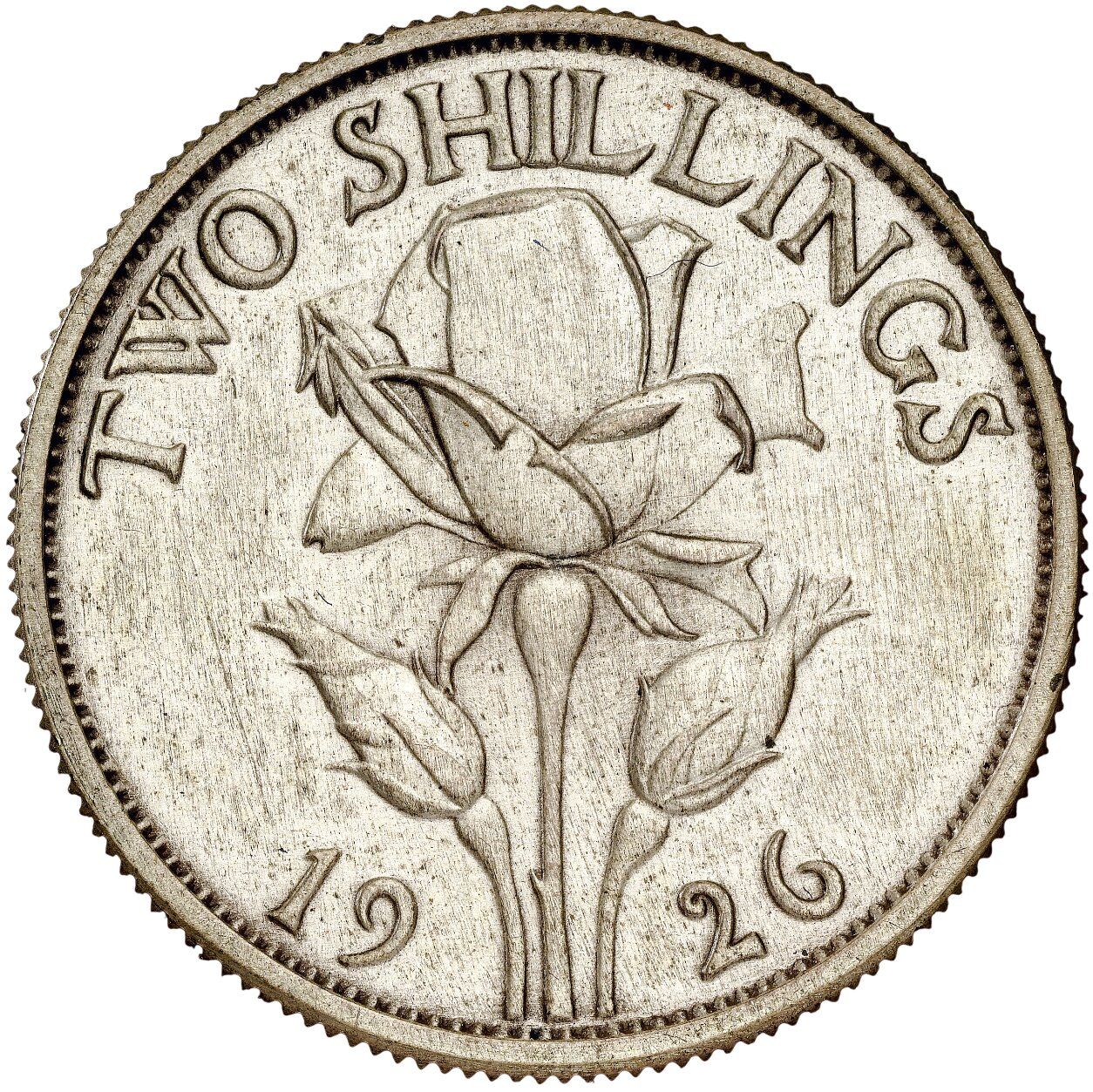
Three roses, one in full bloom, denomination above, divided date below.
Find this on eBay
AffiliateAbout the 1926 2 Shillings - George V Uniface Pattern
The 1926 2 Shillings - George V Uniface Pattern is a collector 2 shillings coin, struck in silver. It weighs 11.22g.
It is no longer legal tender, so its value is to collectors only.
Common questions
How much is the 1926 2 Shillings - George V Uniface Pattern worth?
No verified sale of the 1926 2 Shillings - George V Uniface Pattern has been logged on MyCoinage yet. Its silver content is worth up to £14.45 at today's spot price, which puts a floor under its value.
What is the 1926 uniface two shillings?
It is a pattern, a trial striking of a proposed florin reverse showing a rose, struck on one side only. The Royal Mint Museum says the Royal Mint Advisory Committee asked for patterns of this floral design in the mid 1920s, but support faded and it was never adopted.
Who designed the rose florin pattern?
The Royal Mint Museum credits the design to Francis Derwent Wood, Professor of Sculpture at the Royal College of Art, with the rose modelled by Humphrey Paget at the start of his career. The Royal Mint Museum's Paget page adds that he later made the uncrowned portrait of George VI for that King's coins and medals.
Was the uniface florin pattern ever legal tender?
No. It is a trial piece with a plain back, struck while new designs were being considered. The florin design actually adopted in 1927 was George Kruger Gray's heraldic one, with sceptres and shields around a central G.
How do I identify the 1926 2 Shillings - George V Uniface Pattern?
Check the weight 11.22g and the metal (silver) against the specification table on this page.
History and design
In the mid 1920s the Royal Mint was looking for new reverse designs for George V's silver coins. The Royal Mint Museum explains that the Deputy Master, Robert Johnson, wanted to refresh the heraldic designs, and had set up the Royal Mint Advisory Committee in 1922 to help.
According to the museum's record of its own example, serious consideration was given alongside heraldry to a series of designs showing floral emblems. The Committee thought the rose florin a promising alternative and asked for pattern pieces to be struck. Support faded, and in 1927 George Kruger Gray's heraldic designs were approved instead. This uniface piece is one of those 1926 patterns: a trial, never issued as coin.
The struck side shows a rose with the inscription TWO SHILLINGS and the date 1926. The museum describes it as strong and beautifully composed, modelled by Humphrey Paget, then at the start of his career, from designs supplied by Francis Derwent Wood, Professor of Sculpture at the Royal College of Art.
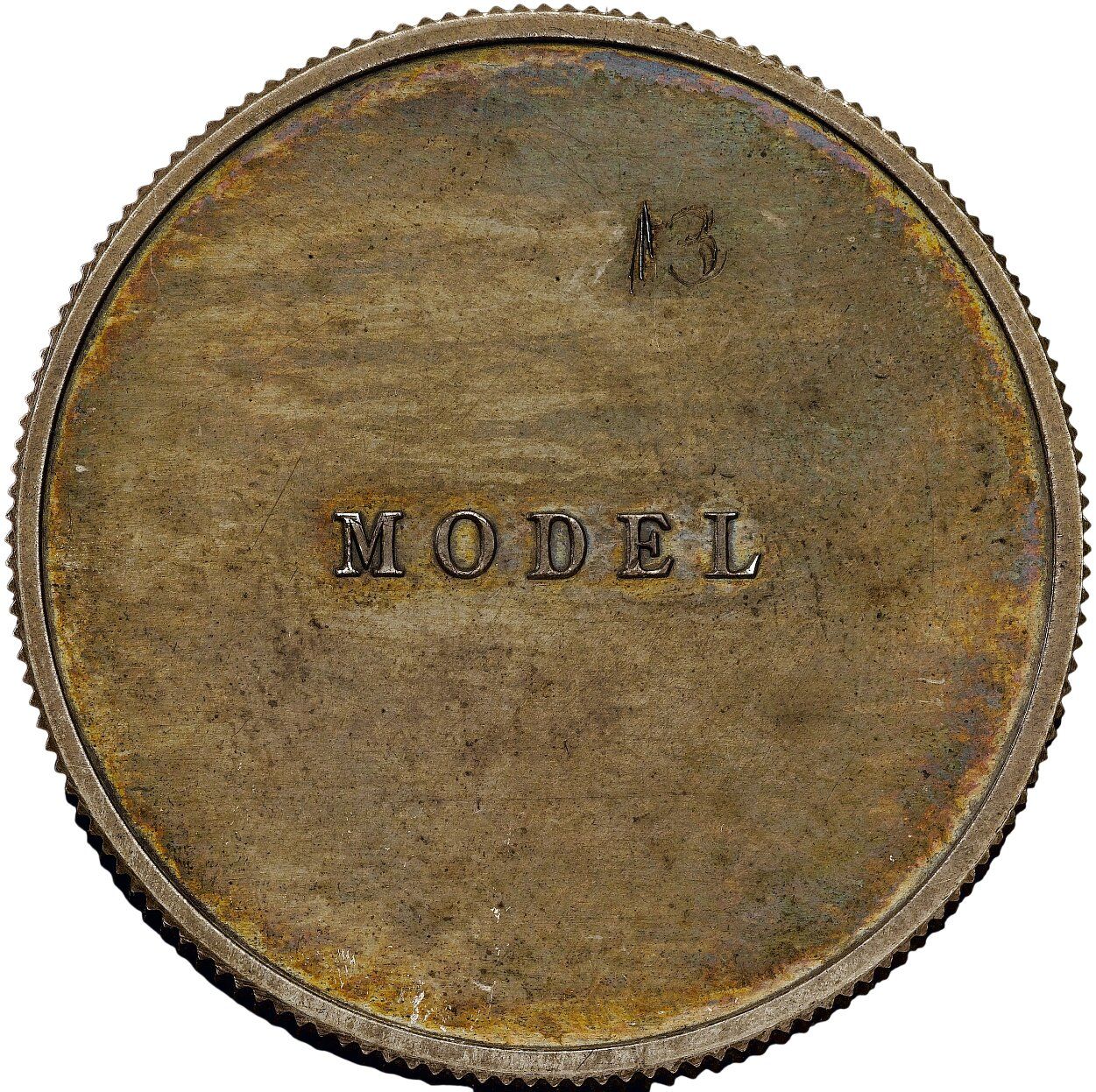
The other side is plain: the museum's example has MODEL on its back with a scratched number 13, weighs 11.22 g and has a milled edge. It carries no portrait of the King.
Collecting notes
Pieces of this kind sit in the Royal Mint Museum, which also holds a second 1926 uniface florin (RMM 1960, 9.51 g) and uniface half crowns dated 1926 with MODEL and SPECIMEN backs. No mintage is recorded. Any example offered for sale should be compared closely with the museum's description: a silver piece of about 11.2 g, struck on one side, with a milled edge.
The adopted design is quite different: the 1927 proclamation gave the florin a central G interlaced with four crowned sceptres and shields in the angles, the Kruger Gray florin of 1927 to 1936.
Sources
The history, design, varieties and collecting notes on this page are drawn from these sources. Prices come from recorded sales, not from them.
- George V uniface florin, 1926 (RMM 1957), The Royal Mint Museum, via Museum Data Service (read 10 Oct 2026)
- George V uniface florin, 1926 (RMM 1960), The Royal Mint Museum, via Museum Data Service (read 10 Oct 2026)
- George V, Royal Mint Museum (read 10 Oct 2026)
- Proclamation determining new designs for certain silver coins of the realm (3 November 1927), The London Gazette (read 10 Oct 2026)
- Humphrey Paget, Royal Mint Museum (read 10 Oct 2026)
- Object search: George V half-crown 1926, Museum Data Service (read 10 Oct 2026)
More 2 Shillings coins from nearby years