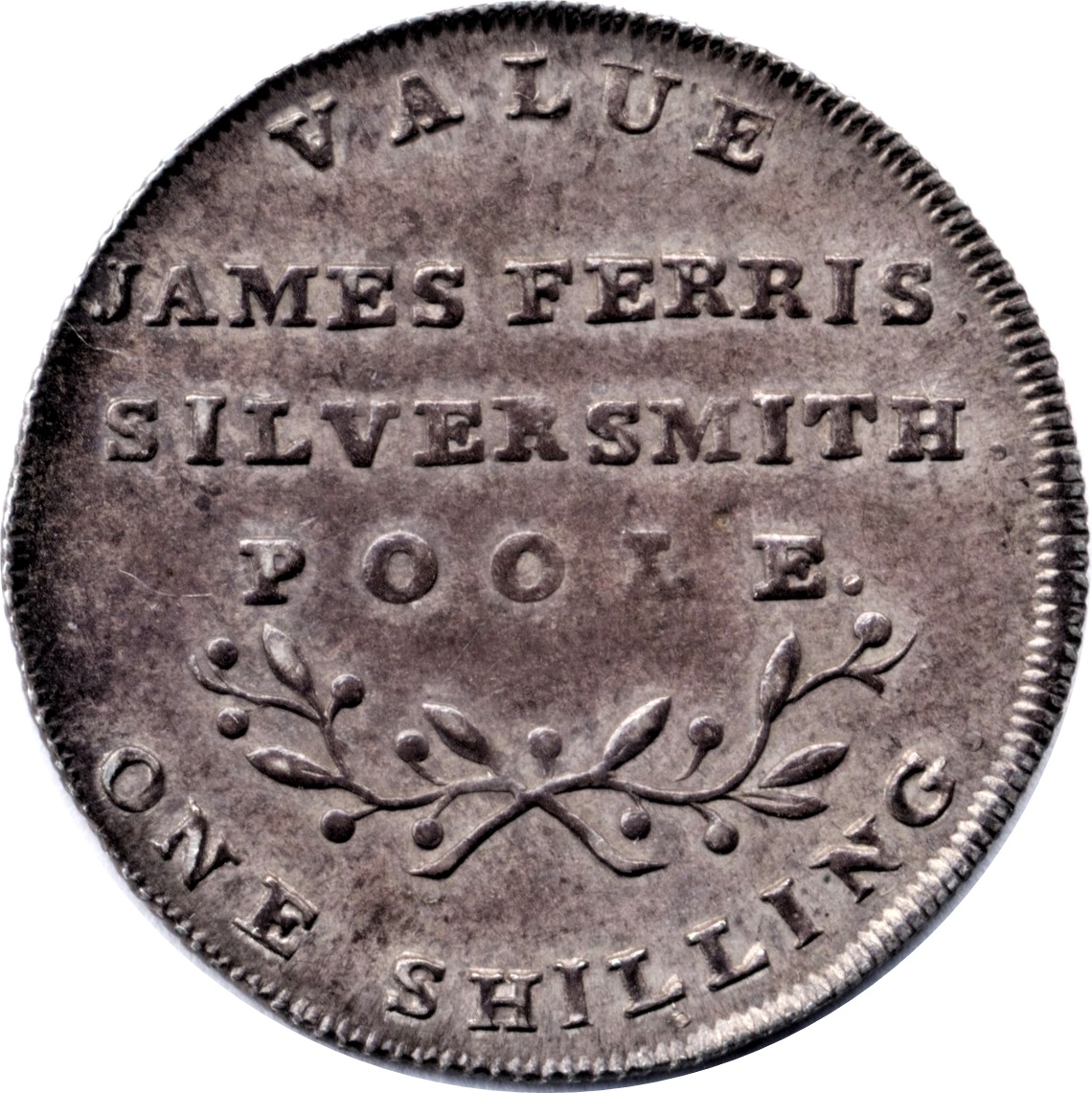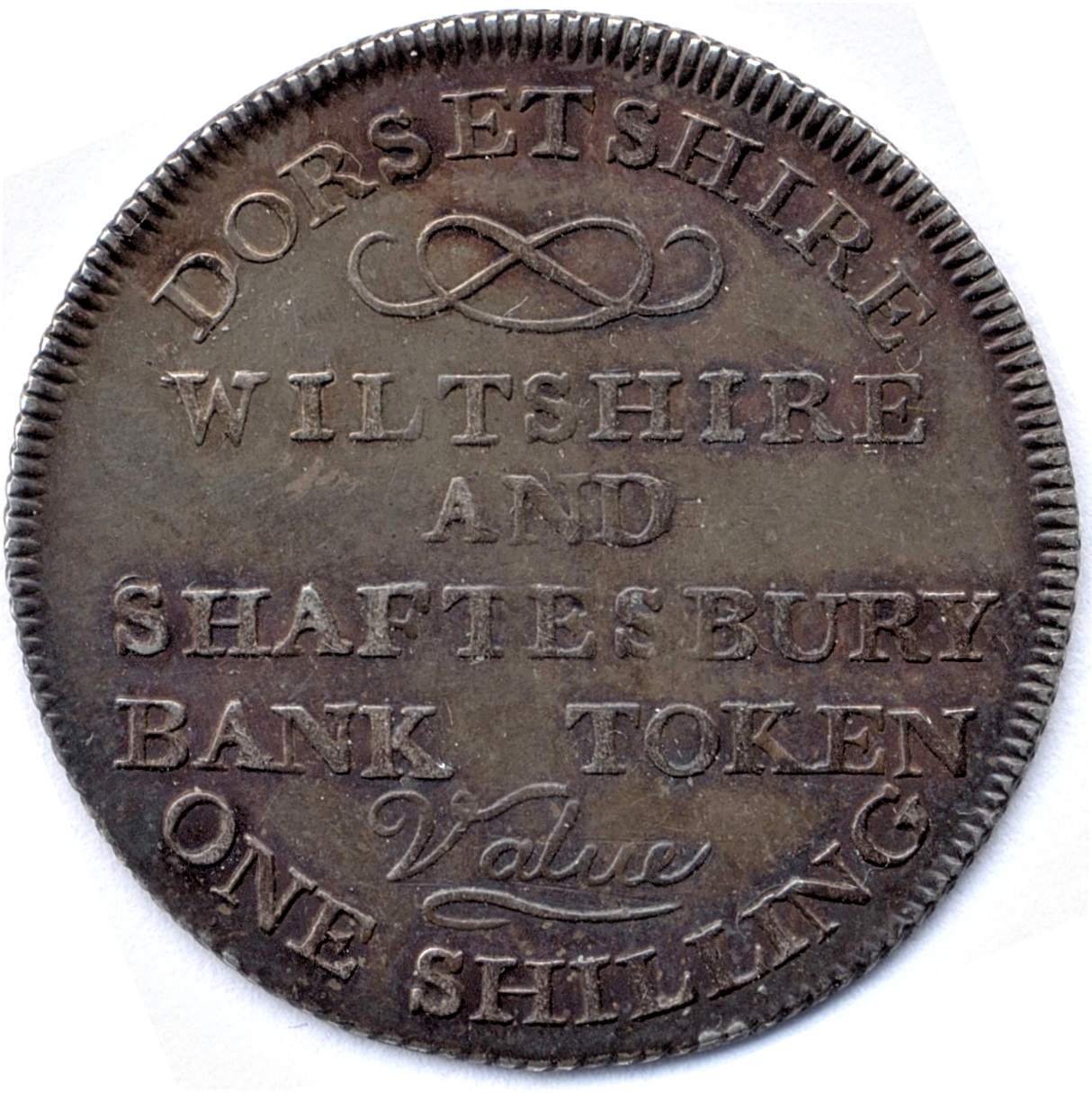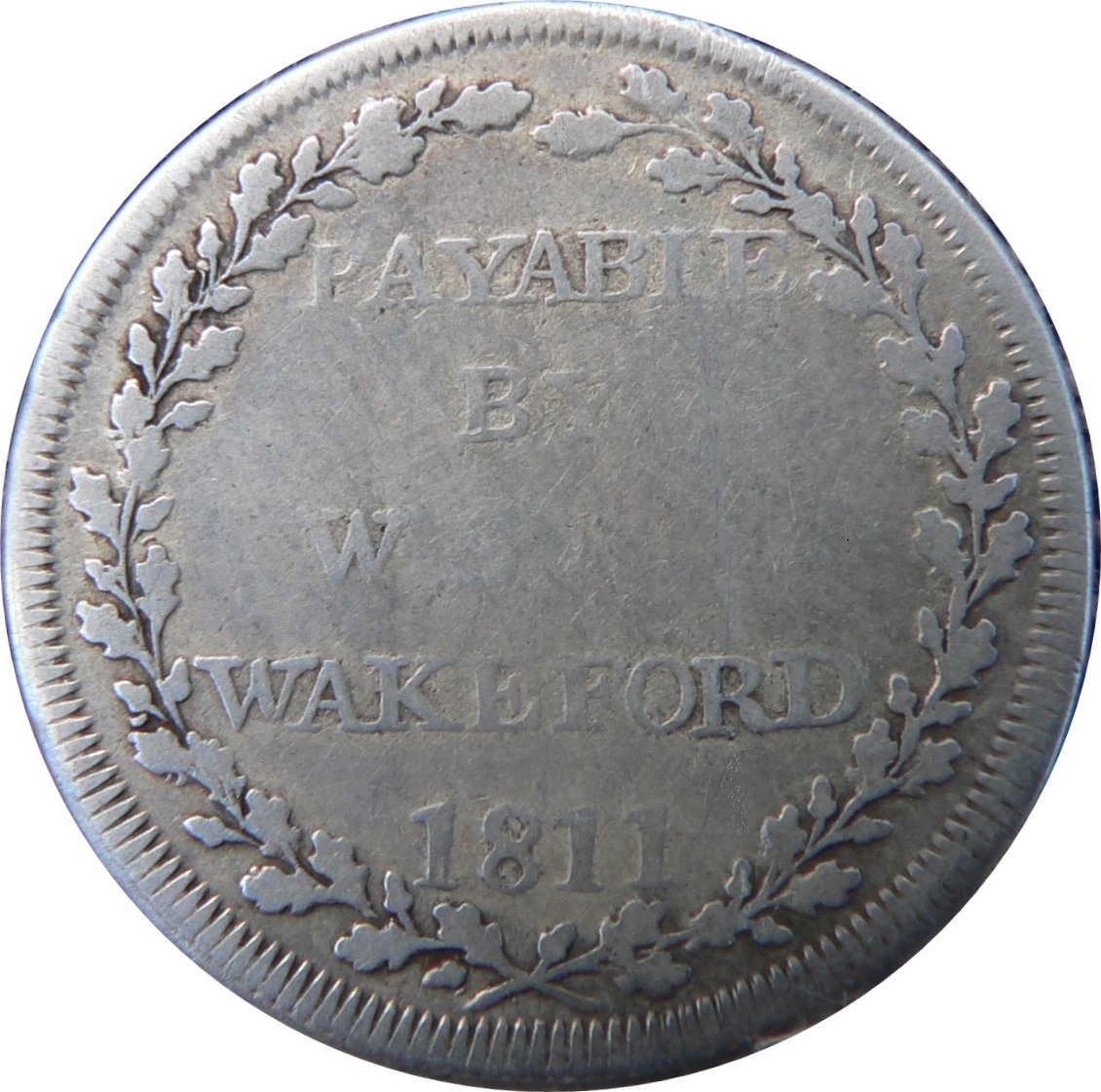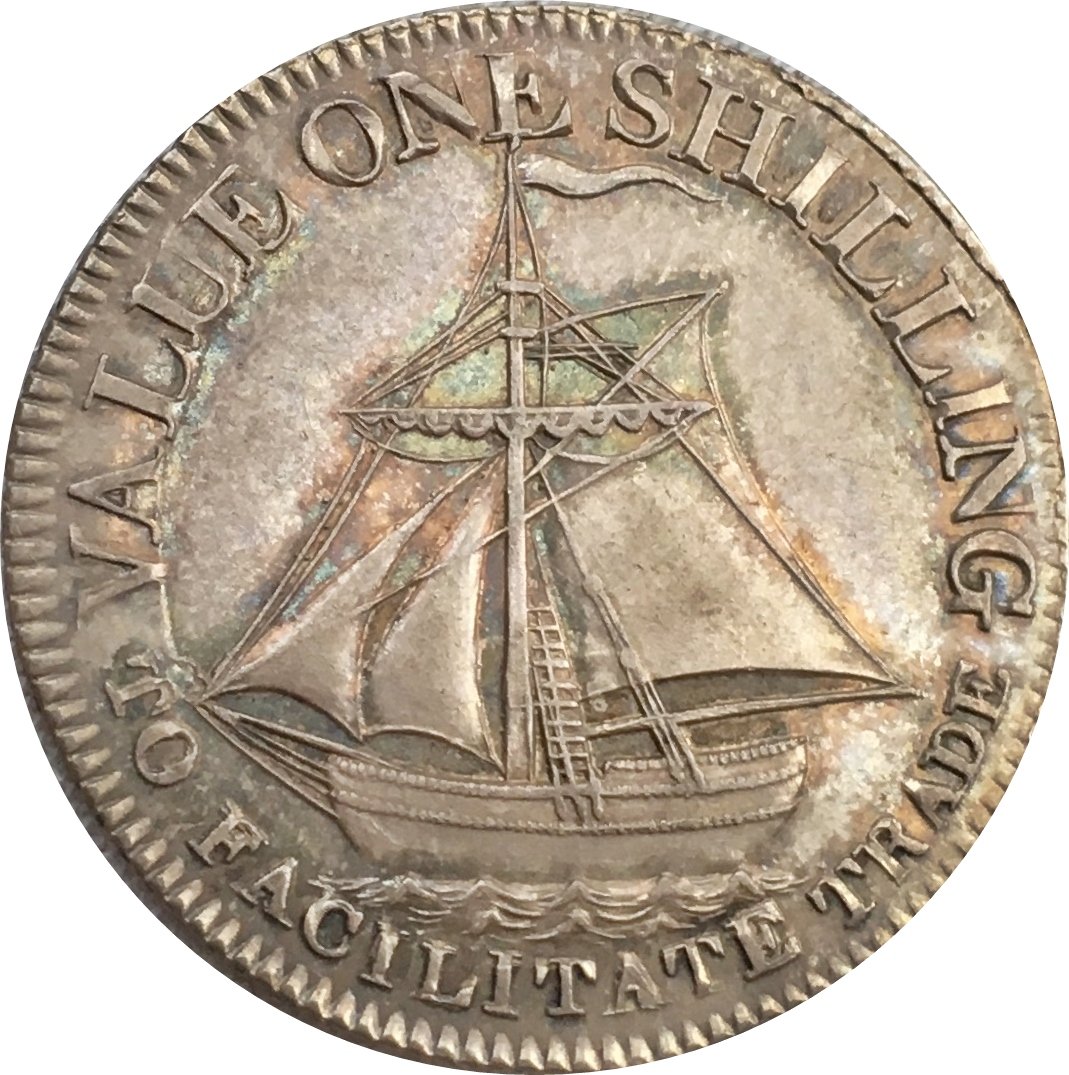
Rare: fewer than 500,000 minted. Sells occasionally: 5 verified sales in the last 12 months.
1 Shilling - George III Older bust (1787–1798)
| Country | United Kingdom |
| Year | 1787–1798 |
| Denomination | 1 Shilling |
| Face value | 5p |
| Mintage | 746,480 |
| Mint | Royal Mint · Llantrisant |
| Circulation | Circulating |
| Demonetised | Yes |
| Composition | Silver (.925) (925/1000 fine) |
| Weight | 6.020g · 0.1790 t oz |
| Diameter | 25.0mm |
| Shape | Round |
| Orientation | Medal alignment ↑↑ |
| Obv. artist | Lewis Pingo |
| Rev. artist | Lewis Pingo |
| Grade scale | UK (EF/UNC) |
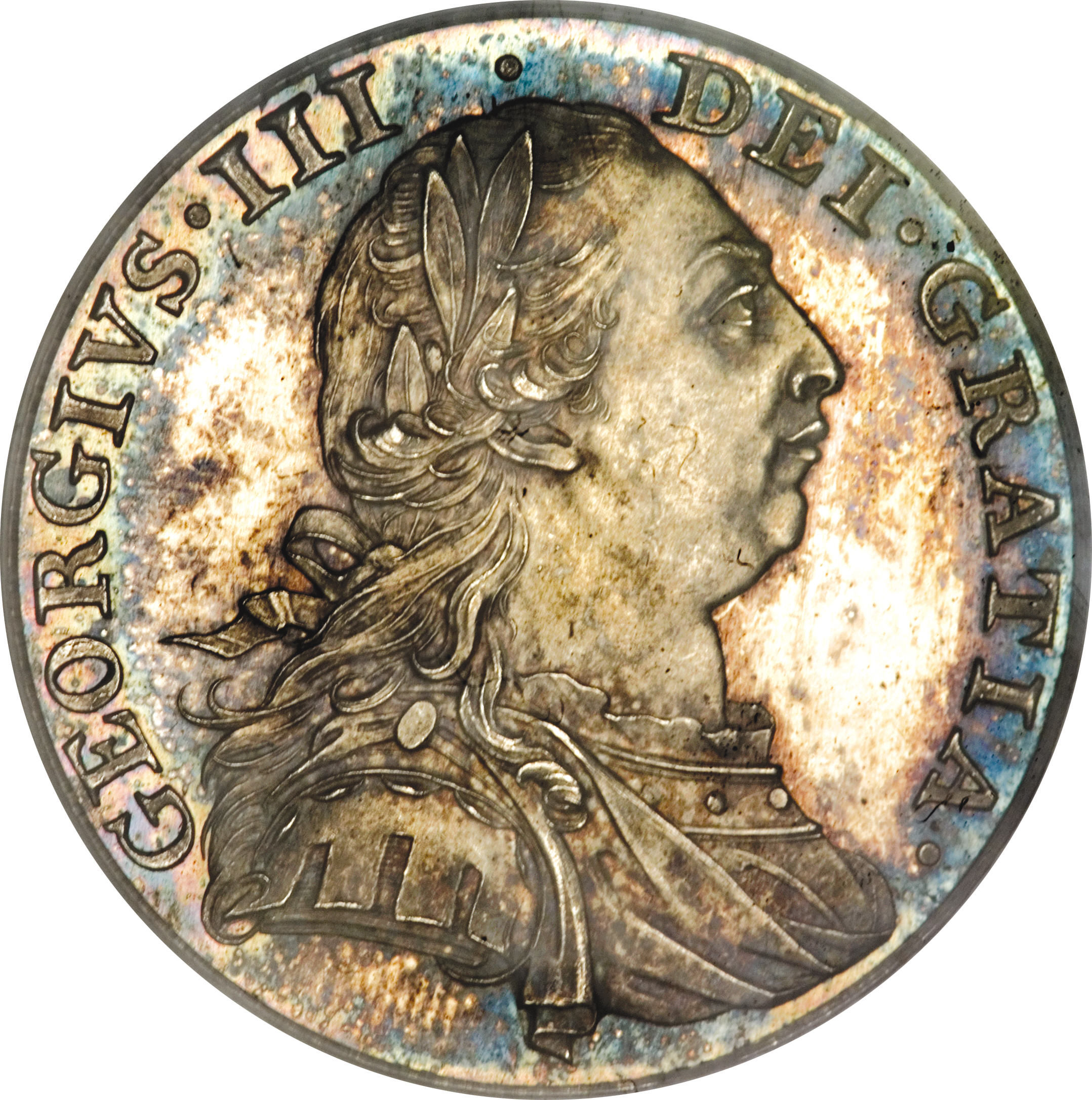
Older laureate and cuirassed bust of King George III right, legend around.
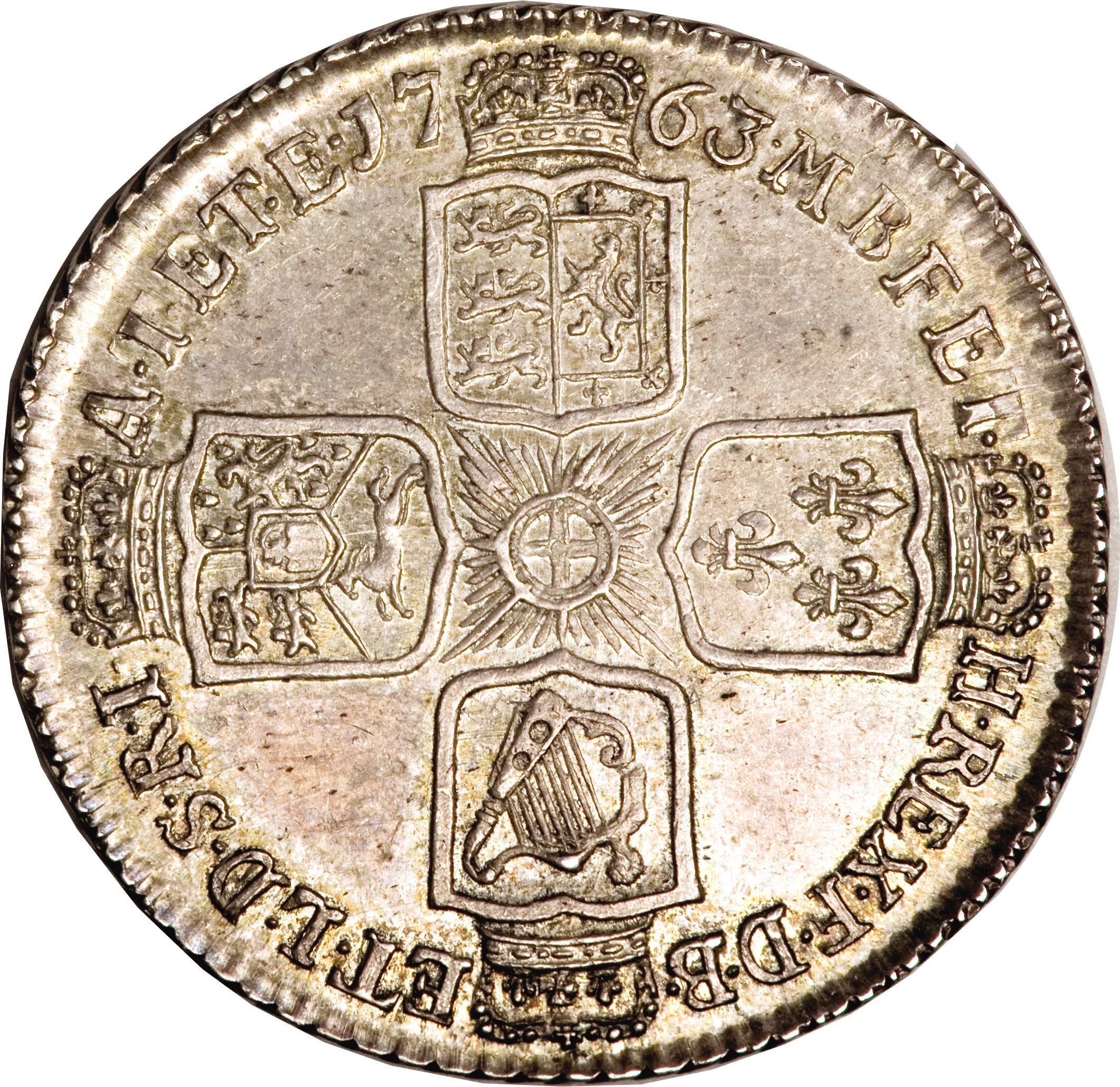
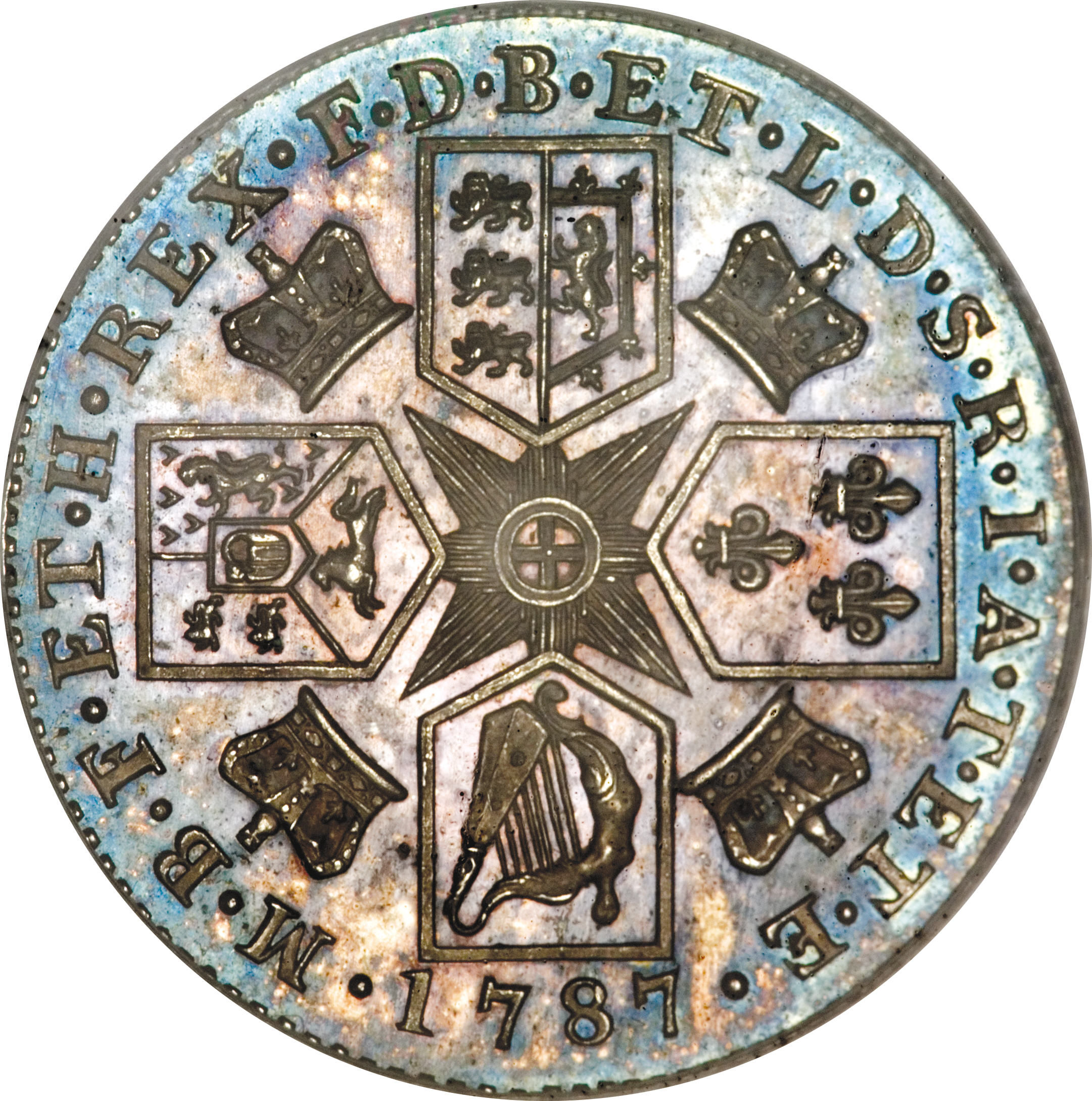
Cruciform shields with large Garter star central, crowns in angles, date below, legend around.
1 Shilling - George III Older bust market value
Find this on eBay
Affiliate1 Shilling - George III Older bust value by grade
Realised auction prices · ⭐ Pro Expand rows for individual sale records| Grade | Latest | Median | 30d Δ | All-time range | Sales (1yr) | Total sales | Last sale | |
|---|---|---|---|---|---|---|---|---|
| BU | £120.00 🔒 | £100.00 | – | £42.14 – £120.00 | 5 | 10 | 10-09-2026 | |
|
Loading…
|
||||||||
About the 1787 1 Shilling - George III Older bust
The 1787 1 Shilling - George III Older bust is a circulating 1 shilling coin issued from 1787 to 1798, struck in 92.5% silver. It weighs 6.02g and measures 25mm across. Reverse design: Cruciform shields with large Garter star central, crowns in angles, date below, legend around.
A mintage of 746,480 is recorded for one date of this type; figures for each year are not held. It is no longer legal tender, so its value is to collectors only.
Common questions
How much is the 1787 1 Shilling - George III Older bust worth?
The 1787 1 Shilling - George III Older bust has a price in one grade on MyCoinage so far: £100 in BU, the median of its verified sales. Its silver content is worth about £7.17 at today's spot price, which puts a floor under its value.
Is the 1787 shilling rare?
No. Tony Clayton calls the 1787 issue relatively common, especially beside the two great rarities of George III's shillings, the Northumberland shilling of 1763 and the Dorrien and Magens shilling of 1798. Some 1787 die varieties, such as the coin without obverse stops, are scarcer.
What is the semee of hearts on a 1787 shilling?
Semee is a heraldic term for 'dotted with'. On some 1787 reverses the Hanoverian shield is filled with small hearts; on others it is plain. Clayton and Coin Hunter list both, and they are the main way to sort 1787 shillings.
What is the Dorrien and Magens shilling?
A shilling of 1798 struck from silver sent to the Mint by London bankers, among them Magens Dorrien Magens. Clayton records that the Privy Council stopped the striking and most were melted; at least 14 are thought to survive.
Who engraved the 1787 shilling?
Lewis Pingo, the Royal Mint's chief engraver from 1779. Wikipedia, drawing on the Dictionary of National Biography, says he engraved the dies for George III's shillings and sixpences of 1787.
How do I identify the 1787 1 Shilling - George III Older bust?
Check the weight 6.02g and diameter 25mm and the metal (92.5% silver) against the specification table on this page. The reverse design is described above.
History and design
For the first decades of George III's reign the Royal Mint struck almost no silver. The Heritage catalogue quoted by Coinvarieties describes the 1787 coin as the first shilling issued since 1763, and notes that the Mint was producing far too little small change for the industrial boom, which led to a mass of private tokens. Wikipedia states that the 1787 silver was not meant for the public at all but was made as Christmas gifts for the Bank of England's customers.
The site's entry runs to 1798 because of a second, far rarer issue. Clayton tells how London bankers sent about 9,900 pounds weight of silver to the Mint to be coined, but the Lords of the Committee in Council ordered the striking stopped part way and nearly all the coins were melted. He thinks at least 14 survive. The coin takes its name from the bank of Magens Dorrien Magens, which Wikipedia confirms sent bullion to the Mint in 1798.
Lewis Pingo, chief engraver at the Royal Mint from 1779, engraved the dies for the shillings and sixpences of 1787, according to Wikipedia's article drawn from the Dictionary of National Biography. Museum records of 1787 shillings, such as those at Aberdeen, describe a laureate cuirassed bust facing right and a reverse of pointed shields in a cross with crowns between them.
The reverse is the key to the varieties. On some dies the Hanoverian shield is semee of hearts, a heraldic term for scattered with small hearts; on others it is plain. The obverse also varies in its stops. Coinvarieties gives a weight of 6.02 g in sterling silver.
Varieties and errors
Clayton lists a dot above the head, no dot above the head, and a scarcer obverse with no stops at all. Reverses come with or without hearts, and the no-hearts reverse also exists with no stops at the date. Coin Hunter lists the same group. Proofs are known, including a plain-edge proof with hearts described in a Heritage catalogue. The 1798 Dorrien and Magens shilling is the great rarity of the entry.
Collecting notes
Sort a 1787 shilling first by the Hanoverian shield (hearts or plain), then by the obverse stops. Wear shows first on the hair and laurel and on the crowns between the shields. Clayton calls the 1787 issue relatively common. A 1798 shilling needs expert authentication, given how few are known.
The coin that replaced it after the Great Recoinage is the 1816 to 1820 shilling.
Sources
The history, design, varieties and collecting notes on this page are drawn from these sources. Prices come from recorded sales, not from them.
- The Shilling, Tony Clayton, Coins of the UK (read 12 Oct 2026)
- Great Britain 1787 shilling, CoinVarieties (read 12 Oct 2026)
- Lewis Pingo, Wikipedia (read 12 Oct 2026)
- 1787 and 1798 Coin Values, George III (year pages read one by one), Coin Hunter (read 12 Oct 2026)
- Shilling (British coin), Wikipedia (read 12 Oct 2026)
- Magens Dorrien Magens, Wikipedia (read 12 Oct 2026)
- Values of Shillings, Tony Clayton, Coins of the UK (read 12 Oct 2026)
- Object search: George III shilling 1787, Museum Data Service (read 12 Oct 2026)
More 1 Shilling coins from nearby years