Rarely sells: 1 verified sales in the last 12 months.
1 Shilling - George I 2nd bust (1723–1727)
| Country | United Kingdom |
| Year | 1723–1727 |
| Denomination | 1 Shilling |
| Face value | 5p |
| Mint | Royal Mint · Llantrisant |
| Circulation | Circulating |
| Demonetised | Yes |
| Composition | Silver (.925) (925/1000 fine) |
| Weight | 6.020g · 0.1790 t oz |
| Diameter | 26.0mm |
| Shape | Round |
| Edge | Milled |
| Orientation | Coin alignment ↑↓ |
| Obv. artist | John Croker |
| Rev. artist | John Croker |
| Grade scale | UK (EF/UNC) |
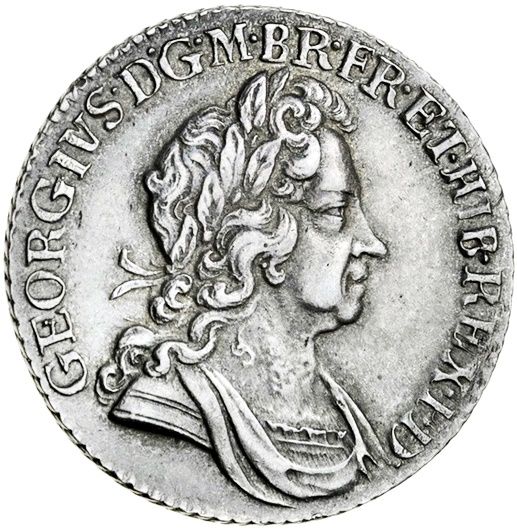
Second laureate and draped bust of King George I right, legend around.
GEORGIVS D G M BR FR ET HIB REX F D
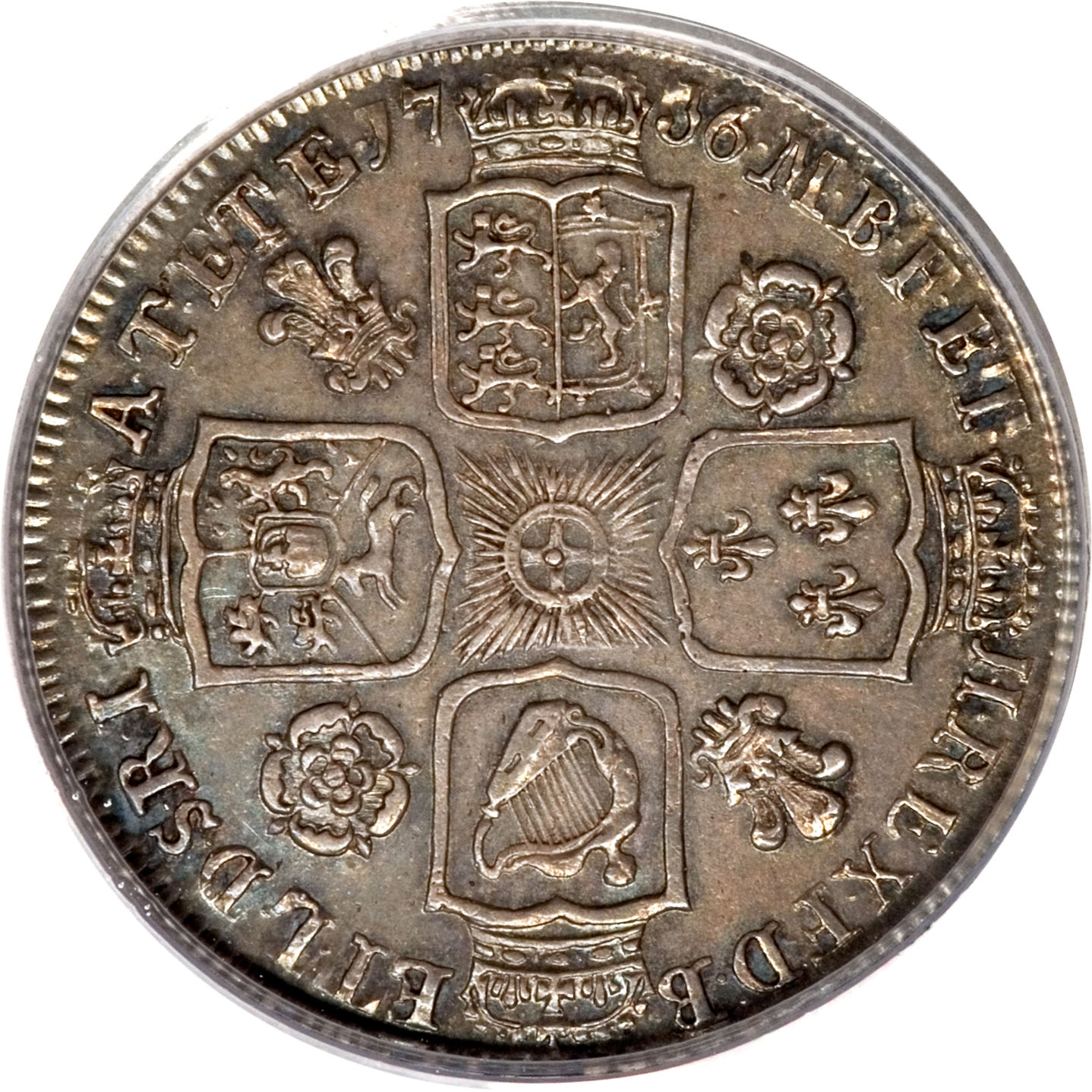
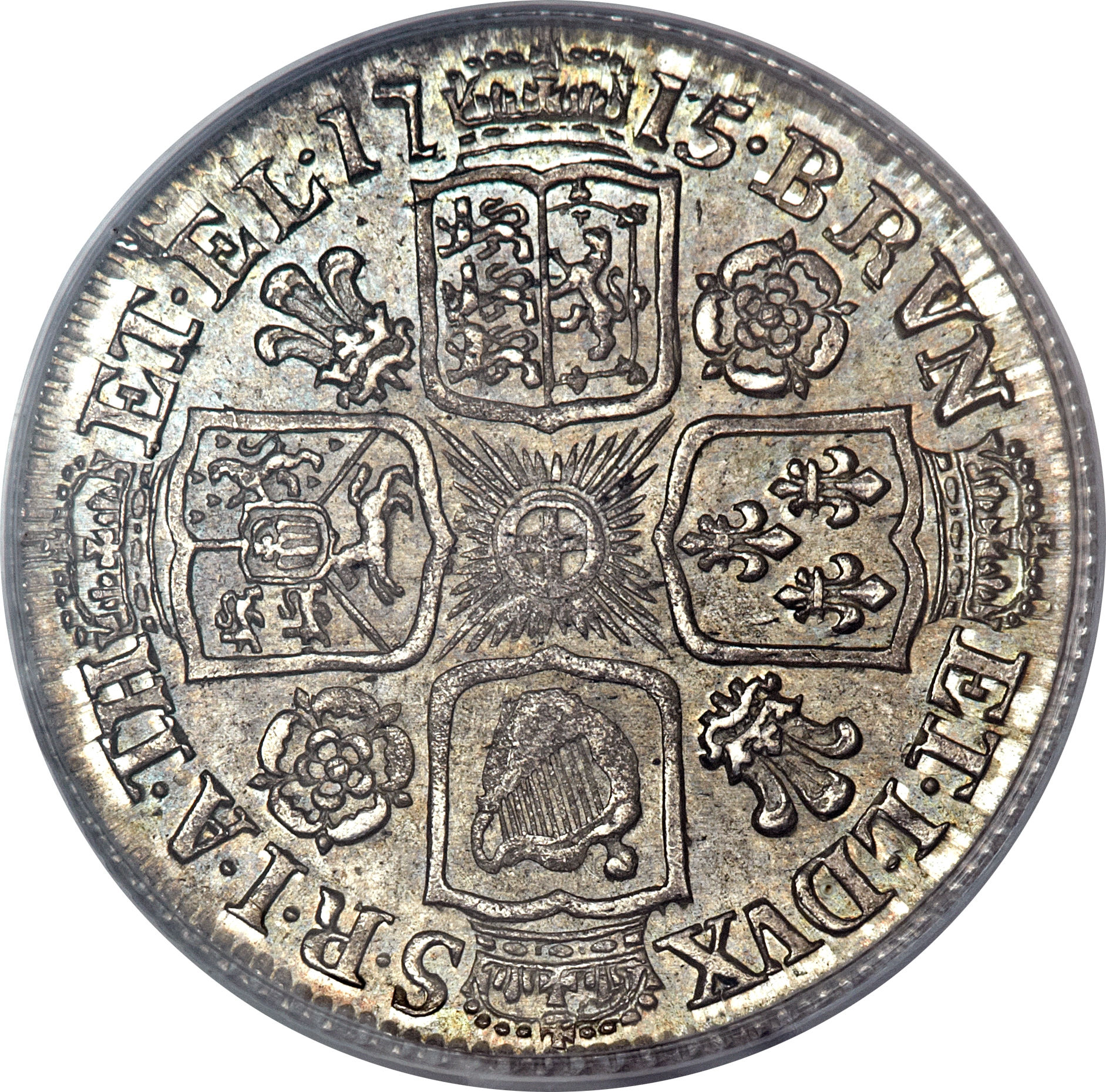
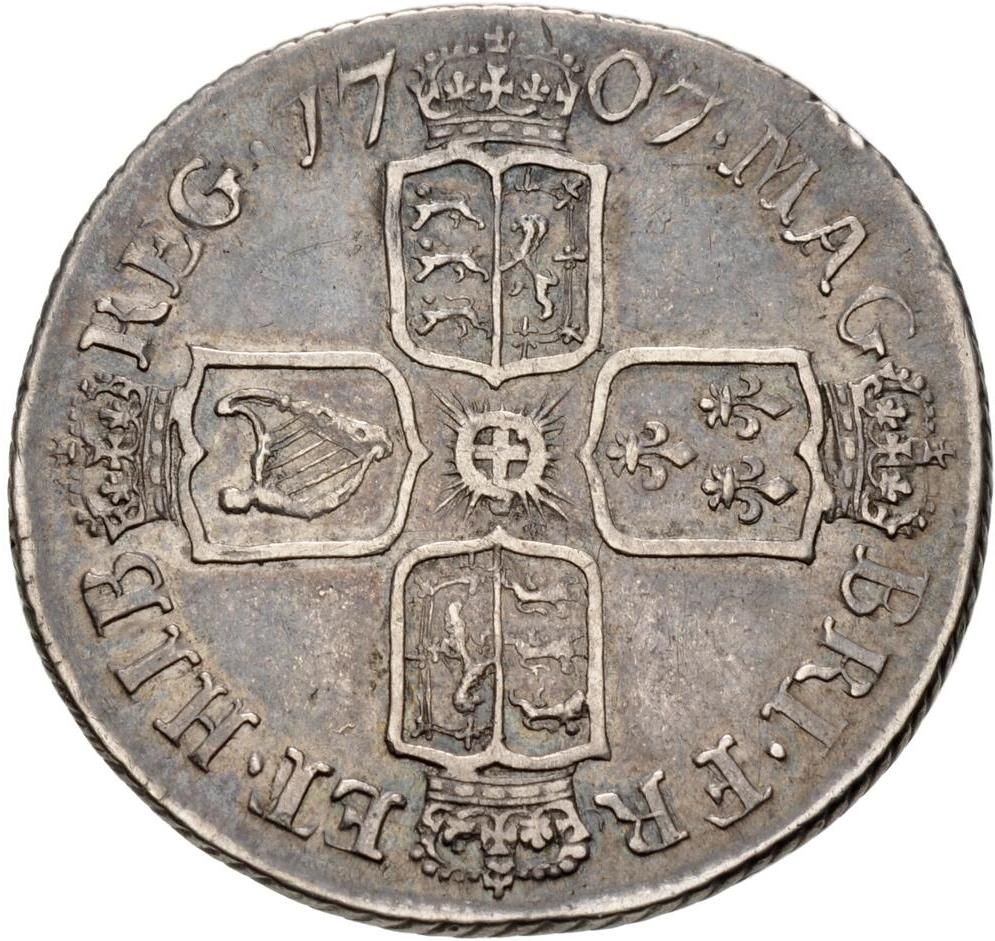
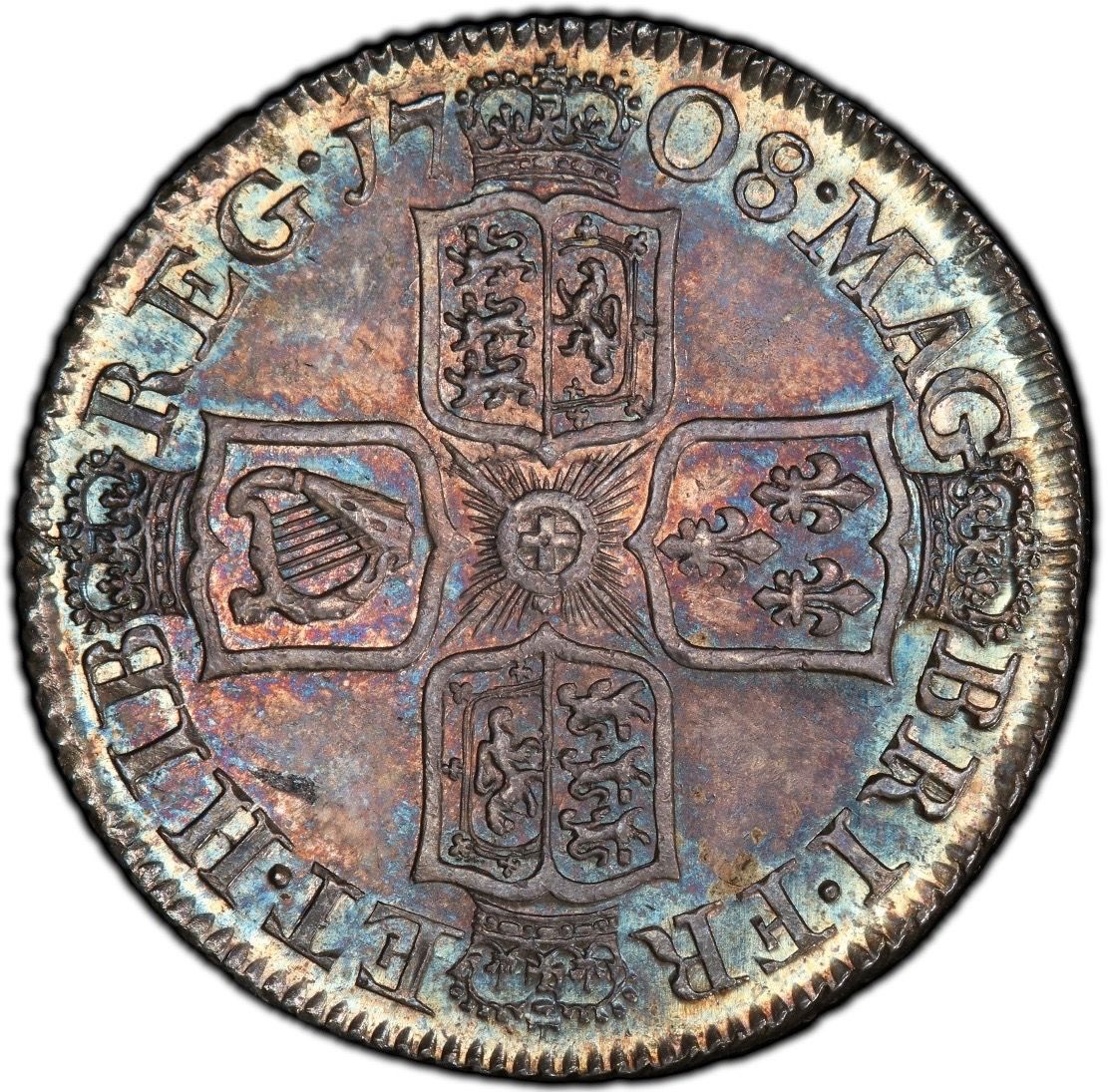
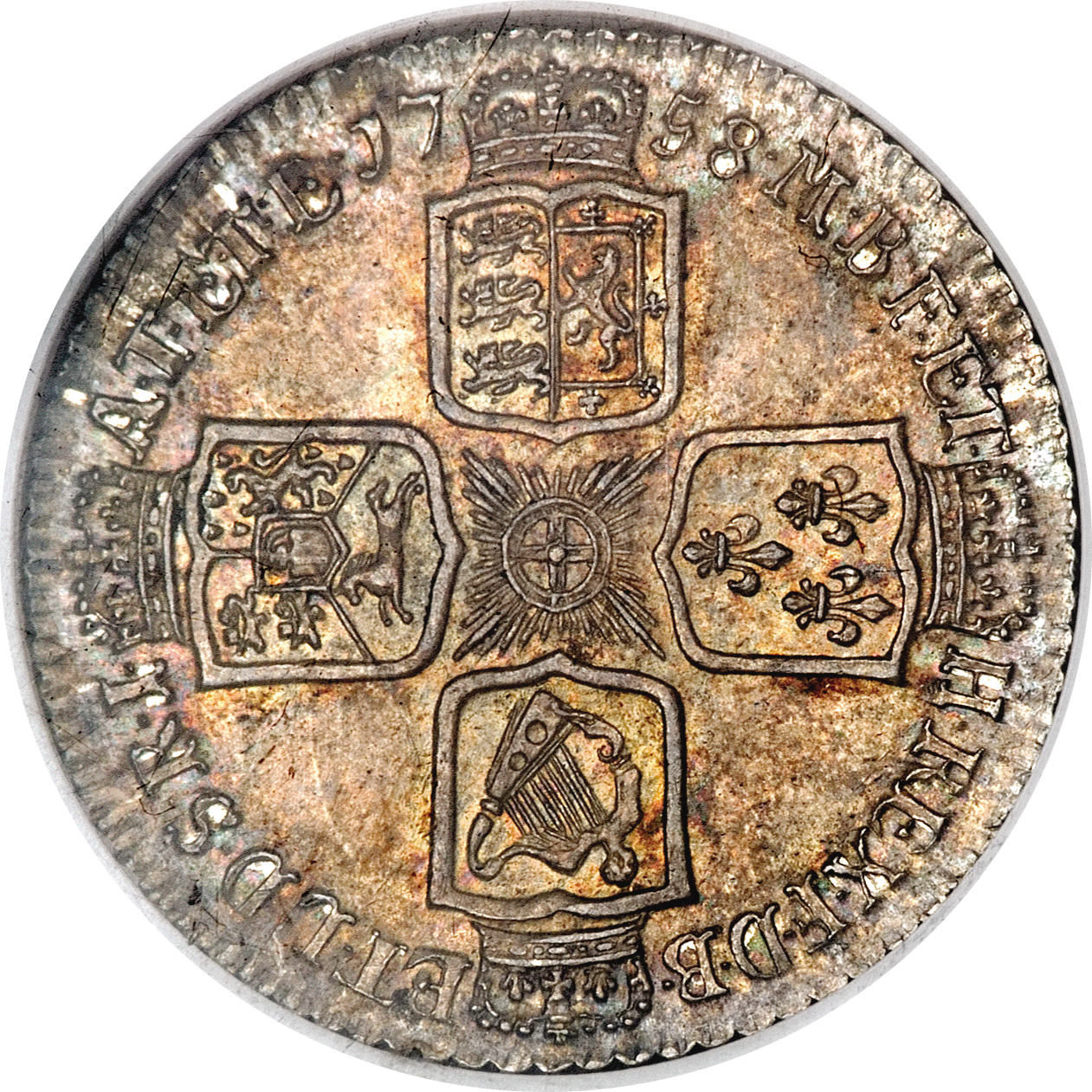
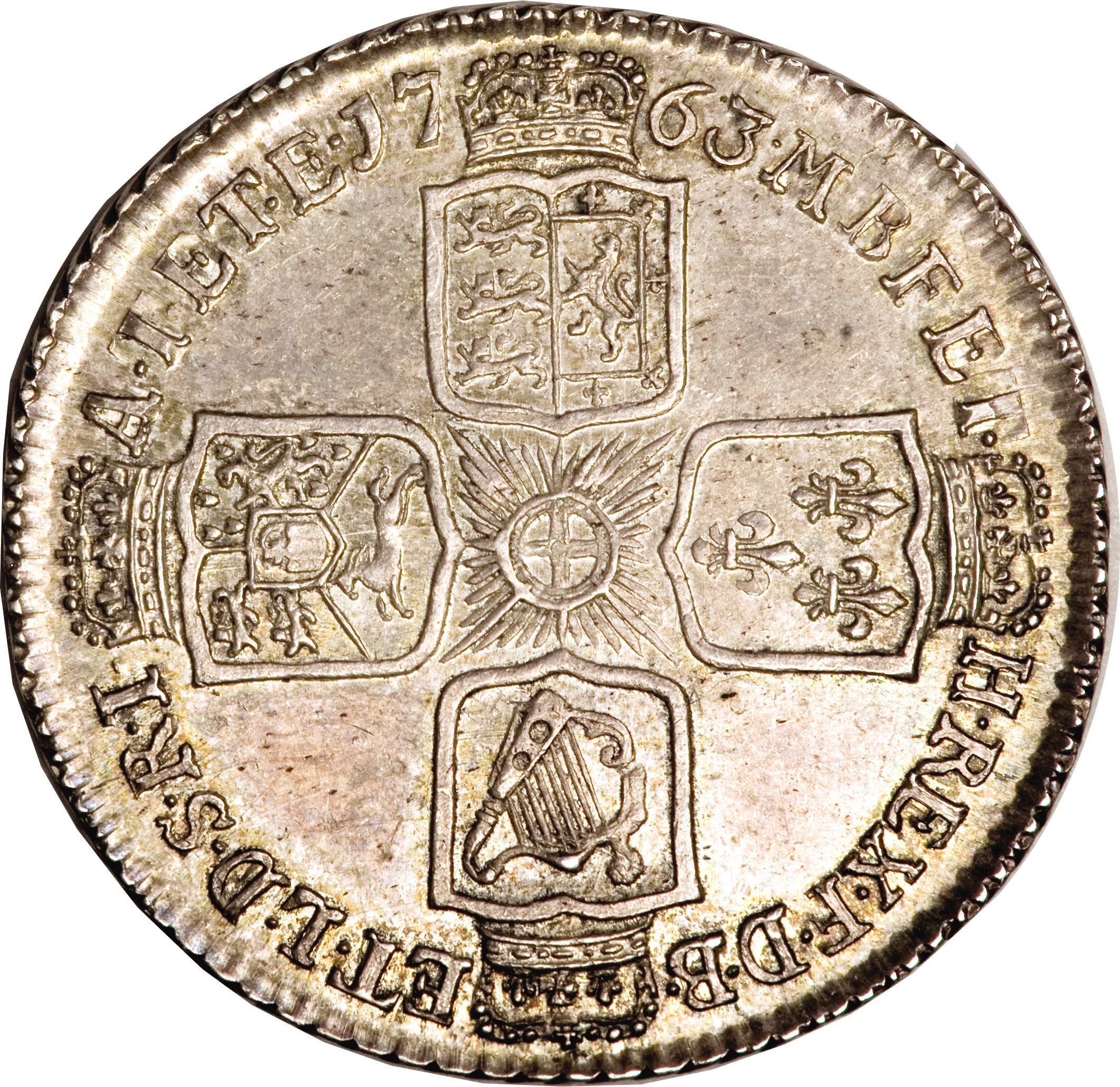
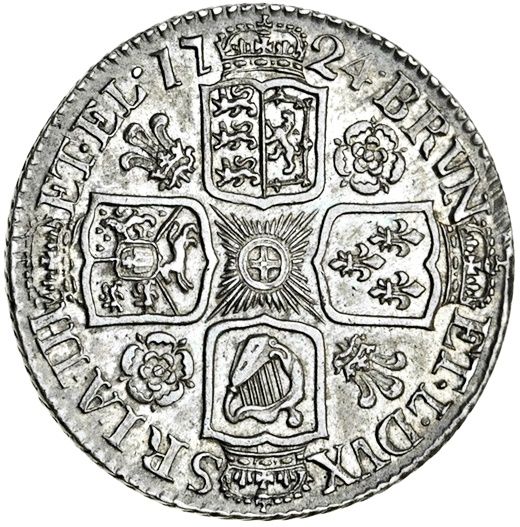
Crowned cruciform shields around central Garter star, divided date above, legend around.
BRVN ET L DVX S R I A TH ET EL
1 Shilling - George I 2nd bust market value
Find this on eBay
Affiliate1 Shilling - George I 2nd bust price history
Daily limit reached1 Shilling - George I 2nd bust value by grade
Realised auction prices · ⭐ Pro Expand rows for individual sale records| Grade | Latest | Median | 30d Δ | All-time range | Sales (1yr) | Total sales | Last sale | |
|---|---|---|---|---|---|---|---|---|
| VF | £140.00 🔒 | £51.60 | – | £12.90 – £140.00 | 1 | 6 | 10-09-2026 | |
|
Loading…
|
||||||||
About the 1723 1 Shilling - George I 2nd bust
The 1723 1 Shilling - George I 2nd bust is a circulating 1 shilling coin issued from 1723 to 1727, struck in 92.5% silver. It weighs 6.02g and measures 26mm across. Reverse design: Crowned cruciform shields around central Garter star, divided date above, legend around.
It is no longer legal tender, so its value is to collectors only.
Common questions
How much is the 1723 1 Shilling - George I 2nd bust worth?
The 1723 1 Shilling - George I 2nd bust has a price in one grade on MyCoinage so far: £51.60 in VF, the median of its verified sales. Its silver content is worth about £7.17 at today's spot price, which puts a floor under its value.
What does WCC under the bust of a George I shilling mean?
WCC stands for the Welsh Copper Company, whose silver was struck into shillings at the Tower Mint. The coins carry W.C.C. below the bust and plumes with interlinked Cs on the reverse. They exist dated 1723, 1724, 1725 and 1726.
How rare is the WCC shilling?
No mintage is published, but Gary Oddie's die study for the British Numismatic Society traced 94 specimens across all four dates and concluded that it had very likely found every die used. Tony Clayton lists all four WCC dates among the scarce George I shillings.
How many George I second bust shillings were made?
No mintage by date has been published for George I shillings. Clayton lists roses and plumes shillings for every date from 1723 to 1727, SSC coins of 1723 and the WCC series, and treats 1726 roses and plumes and 1727 as scarce.
Who engraved the George I shilling?
John Croker, Chief Engraver at the Royal Mint from 1705 until his death in 1741, engraved the dies for the gold and silver coins of Queen Anne and George I. The Royal Mint Museum says he also made the younger portrait of George II.
How do I identify the 1723 1 Shilling - George I 2nd bust?
Check the weight 6.02g and diameter 26mm and the metal (92.5% silver) against the specification table on this page. The reverse design is described above.
History and design
The second bust shilling was introduced in 1723, and Tony Clayton lists it for every year from 1723 to 1727, the last year of the reign. Most coins carry roses and plumes in the reverse angles. In 1723 both busts were in use, and the South Sea Company silver struck that year appears with either portrait. No mintage by date has been published.
The coins that set this type apart are the WCC shillings. Gary Oddie, writing for the British Numismatic Society, explains that the Welsh Copper Company, chartered in 1694 and revived in the speculation of 1720, refined silver from lead ores at its works in the Neath Valley and sent it to the Tower Mint. The resulting shillings are dated 1723, 1724, 1725 and 1726. Oddie traced 94 specimens and concluded that his die study very likely covers every die used, a measure of how small the issue was.
The obverse shows the second laureate bust of George I facing right, draped and in armour, with GEORGIVS D G M BR FR ET HIB REX F D. On the WCC coins the letters W.C.C. sit below the bust. John Croker, Chief Engraver from 1705, engraved the dies.
The reverse keeps four crowned shields in a cross, for England impaling Scotland, France, Ireland and the Electorate, around the Garter star, with BRVN ET L DVX S R I A TH ET EL and the date. The angles hold roses and plumes, SS and C on the 1723 South Sea Company coins, or, on the WCC shillings, plumes alternating with two interlinked Cs. The Royal Mint Museum records a grained edge.
Varieties and errors
The WCC dates are the main varieties. Clayton and Coin Hunter also list 1725 and 1727 shillings with no stops in the obverse legend. Oddie notes that a reported WCC reverse without stops is probably die filling rather than a separate die, so check such a coin under magnification.
Collecting notes
On a 1723 coin, compare the portrait with the first bust shilling before deciding which type it is. For a WCC shilling, confirm both W.C.C. under the bust and the plumes with interlinked Cs on the reverse, since the two always go together. Wear shows first on the hair and the shield crowns.
Sources
The history, design, varieties and collecting notes on this page are drawn from these sources. Prices come from recorded sales, not from them.
- The Welsh Copper Company and its Silver Shillings (Gary Oddie), British Numismatic Society Research Blog (read 12 Oct 2026)
- Values of Shillings, Tony Clayton, Coins of the UK (read 12 Oct 2026)
- Coin values by year, George I (year pages 1723 to 1727, read one by one), Coin Hunter (read 12 Oct 2026)
- Shilling coin of George I (1724, W.C.C.), Science Museum Group, via Museum Data Service (read 12 Oct 2026)
- Shilling of George I, 1724, WCC, second bust, Leicester Museums and Galleries, via Museum Data Service (read 12 Oct 2026)
- George I shilling, 1723 (WCC), The Royal Mint Museum, via Museum Data Service (read 12 Oct 2026)
- George II, Royal Mint Museum (read 12 Oct 2026)
- John Croker (engraver), Wikipedia (read 12 Oct 2026)
- One Shilling, Tony Clayton, Coins of the UK (read 12 Oct 2026)
More 1 Shilling coins from nearby years